
In This Article
Waterproof fishing boots are sealed rubber or neoprene boots that keep water out while you stand in shallows, brace on a wet deck, or squelch along a muddy bank. The best pairs combine continuous rubber construction, well-bonded waterproof seals, and an outsole that grips slick surfaces. Everything else is marketing.
Here’s the truth most anglers learn the hard way. A cold, soaked sock can end a trip faster than a dead fish finder or a snapped rod tip. The tackle box gets the glory, but your feet do the real work: hours of standing, shuffling and hauling. If they’re wet, you’re miserable, and miserable anglers go home early.
The idea isn’t new, either. The Wellington boot grew from a leather military style into a waterproof rubber workhorse, and every modern fishing boot descends from that humble gumboot.
What has changed is the price ladder. You can now spend a little or a lot, and the gap in dryness is smaller than the gap in price. In this guide I’ve sorted through current 2026 reviews, spec sheets and owner discussions to rank seven real boots, from affordable waterproof angler boots to offshore-grade armor. Along the way you’ll see how rubber boot construction and waterproof seals decide whether a boot lasts one season or ten. Think of budget fishing footwear as a game of informed trade-offs, not a compromise.
Prices below are ballpark ranges only, so check current price before you buy.
Quick Comparison: Waterproof Fishing Boots at a Glance
| Boot | Construction Type | Approx. Price Range | Standout Trait | Best For |
|---|---|---|---|---|
| TIDEWE Rubber Neoprene Boots | Rubber/neoprene | Roughly $50-$80 | Lowest entry cost | TIDEWE Rubber Neoprene Boots for first-timers on a budget |
| Kamik Ranger | 100% rubber | Roughly $60-$100 | Fully rubber shell | Kamik Ranger for simple, no-fuss dryness |
| Muck Edgewater Classic Tall | Rubber/neoprene tall boot | Roughly $90-$140 | Budget-tier name brand | Muck Edgewater Classic Tall for muddy banks |
| Huk Rogue Wave | Fishing-specific boot | Roughly $80-$130 | Reviewer-named value pick | Huk Rogue Wave for boat and dock anglers |
| LaCrosse Alpha Evolution | Hand-built rubber | Roughly $130-$190 | Standout footbed | LaCrosse Alpha Evolution for long bank walks |
| XTRATUF Legacy | Layered latex neoprene | Roughly $130-$190 | Wet-deck traction | XTRATUF Legacy for slippery boats |
| Grundéns Crewman Tall | Heavy-duty offshore boot | Roughly $130-$200 | Light for its class | Grundéns Crewman Tall for rough offshore water |
The table tells a simple story: the cheapest boots protect against water, while the pricier ones protect against everything else, including fatigue, slips and premature failure. If your fishing is occasional and mostly dry-bank stuff, the TIDEWE Rubber Neoprene Boots or Kamik Ranger cover the basics. If you’re on slick decks or hiking to your spots, the XTRATUF Legacy and LaCrosse Alpha Evolution justify their extra cost.
💬 Just one click — help others make better buying decisions too!😊
Top 7 Waterproof Fishing Boots: Expert Analysis
A note on method: I haven’t worn these boots, and I won’t pretend otherwise. What follows is analysis built from published spec details, professional gear reviews and owner discussions. Where I couldn’t verify review data for a boot, I say so.
1. TIDEWE Rubber Neoprene Boots — cheapest ticket to dry feet
The TIDEWE Rubber Neoprene Boots are the entry point for affordable waterproof angler boots. The rubber-and-neoprene recipe is the standard muck-boot formula: a rubber lower for puddle-proofing, a flexible neoprene shaft for comfort. One budget roundup lists the Camo G2 variant with 7mm neoprene and 800g insulation. In practice that means it leans cold-weather, so it can feel like an oven in July.
Here’s what the spec sheet won’t tell you: at this price, the weak points are usually seams and glue lines, not the rubber itself. Budget-focused reviewers still pick the TIDEWE Rubber Neoprene Boots as an affordable all-season option, and a unisex sizing format (M9/W10-style listings) makes shared pairs easy. I couldn’t verify a clean aggregate rating, so treat that as directional.
This boot suits casual anglers who fish a few times a season. If you hammer your boots weekly, you’ll probably outgrow them.
Pros:
- ✅ Lowest entry cost among waterproof fishing boots
- ✅ Neoprene shaft flexes with your calf
- ✅ Insulated versions handle cold mornings
Cons:
- ❌ Long-term durability is unproven versus heritage brands
- ❌ Warm versions run hot in summer
Price range: roughly $50-$80, so it’s strong value for light use.

2. Kamik Ranger — plain-spoken all-rubber protection
The Kamik Ranger earns its spot on simplicity. Outdoor Life’s reviewer named it best all-rubber, noting these 100 percent rubber men’s waterproof boots are still among the best available. That construction matters. With no fabric panels, there’s very little for water to creep through.
What does 100% rubber mean for you? Fewer places to leak, easier hose-down cleanup, and no neoprene to stink up over a season. The trade-off is that rubber doesn’t breathe, so feet get clammy on long, warm days. Pair these with moisture-wicking socks and you’re sorted.
I’d steer shore anglers, kayak launchers and anyone dragging a boat down a ramp toward this boot. It won’t wow you with comfort tech, and it doesn’t pretend to. Reviewers’ consensus is that it’s dependable rather than exciting, and for many anglers that’s precisely the point.
Pros:
- ✅ Fully rubber shell with minimal leak points
- ✅ Easy to rinse after saltwater or mud
- ✅ Strong value in budget fishing footwear
Cons:
- ❌ Rubber doesn’t breathe on warm days
- ❌ Basic cushioning compared with premium boots
Price range: roughly $60-$100, which is excellent value for the construction.
3. Muck Edgewater Classic Tall — budget-tier muck boot for bank bashing
Outdoor Life’s rubber-boot roundup tags the Muck Edgewater Classic Tall as its best budget pick. This is the cheaper door into a brand known for pull-on comfort. The tall-shaft style keeps shins, mud and splashes at bay when you’re stomping through marshy margins.
Owner forums offer a balanced picture. Many owners say Muck-style boots feel more comfortable than traditional all-rubber boots, but a recurring complaint is sweaty feet. Others report neoprene that stretches or soles that eventually loosen after heavy use. One long-time owner described Muck boots lasting over a decade, so results clearly vary. I’d call it a comfort-first boot, with durability depending on how hard you work it.
If you spend more time on muddy shorelines than on slick decks, this is a sensible fit. Pick a size that leaves room for a thick sock, because snug neoprene is no fun at hour six.
Pros:
- ✅ Comfort-forward tall shaft for bank fishing
- ✅ Budget-tier entry to a well-known brand
- ✅ Good mud and splash protection
Cons:
- ❌ Neoprene can run warm and sweaty
- ❌ Longevity reports vary widely between owners
Price range: roughly $90-$140, so it’s a fair price for the brand and comfort.
4. Huk Rogue Wave — the value pick for boat and dock days
Outdoor Life named the Huk Rogue Wave its Best Value fishing boot. Huk’s whole identity is fishing apparel, so this boot is designed for the angler’s environment rather than borrowed from the farm aisle. That distinction matters because fishing means wet decks, fish slime and the occasional splash that no rain boot is designed to handle.
Candidly, this is where my verifiable research thins out. The review calls it a value standout, but I couldn’t find enough independent owner discussion to summarize long-term sentiment. Take that as a reason to read current customer reviews before buying, and confirm shaft height and insulation level on the listing, since they vary by model.
On paper, the Huk Rogue Wave is worth considering if you want fishing-specific design without paying for an offshore pro boot. Anglers fishing from boats, docks and piers on mild days are the likeliest fit.
Pros:
- ✅ Designed specifically for anglers, not farmers
- ✅ Named best value by Outdoor Life
- ✅ Sits comfortably in affordable waterproof angler boots territory
Cons:
- ❌ Less long-term owner feedback than Alaska staples
- ❌ Check shaft height and insulation before buying
Price range: roughly $80-$130, so it’s strong value if the specs match your needs.
5. LaCrosse Alpha Evolution — best footbed for long bank walks
The LaCrosse Alpha Evolution was Outdoor Life’s pick for bank fishing, and the reviewer, who owns several pairs of rubber boots, said it has the best footbed by far. That’s a bigger deal than it sounds. A hike along a river bank can easily mean miles of walking in boots that weigh more than your sneakers.
Under the hood, LaCrosse’s rubber boot construction uses hand-laid natural rubber over a neoprene core, according to farm-gear reviewers. That layered build gives a flexible, non-chafing feel while resisting snags from thorns and gravel. A Vibram-style lug sole, which Outdoor Life prefers for muddy banks, helps with traction.
Owner discussions are mixed. Some swear by decades-old LaCrosse boots, while others report neoprene cracking where it meets the rubber, or soles separating after hard use. My read: excellent comfort, but inspect the flex zones regularly.
Pros:
- ✅ Standout footbed for all-day walking
- ✅ Layered rubber-over-neoprene build resists snags
- ✅ Versatile beyond fishing
Cons:
- ❌ Some owners report flex-zone cracking over time
- ❌ Higher price than entry-level waterproof fishing boots
Price range: roughly $130-$190, which is worthwhile if you walk a lot.

6. XTRATUF Legacy — the Alaskan deck standard
If boots had a hall of fame, the XTRATUF Legacy would have a wing. Reviewers describe it as synonymous with Alaska, a boot worn throughout the fishing industry, and farm-gear writers praise its incredible grip on wet, slippery surfaces. For anglers on boat decks, that traction is the whole point.
The Legacy is built from a seamless, layered latex neoprene compound with a built-in heel counter, cushioned insole and flexible shaft. The 15-inch version can be rolled down for casual use. A reviewer warns the boot is heavier than foam alternatives and advises sizing down, especially if you won’t wear thick socks.
One field worker said their XTRATUF boots held up great after LaCrosse boots cracked around the ankle. That’s one anecdote, not a law, but it matches the brand’s rugged reputation. Uninsulated models are mostly warm-weather boots, so winter anglers should look elsewhere.
Pros:
- ✅ Exceptional wet-deck traction
- ✅ Seamless layered build limits leak points
- ✅ Rolls down for versatile use
Cons:
- ❌ Heavier than foam-based competitors
- ❌ Uninsulated versions aren’t cold-weather boots
Price range: roughly $130-$190, so it’s premium but proven.
7. Grundéns Crewman Tall — offshore armor that’s surprisingly light
Outdoor Life crowned the Grundéns Crewman Tall its pick for extreme conditions. The reviewer, who has tested many rubber boots for fishing and hunting, found it surprisingly light and said it worked like a charm in waterproof tests. That’s high praise for a boot that suits fishing 40 or 50 miles offshore in rolling swells of 10 feet or more.
Why does lightness matter? Heavy boots drain energy on a heaving deck, and fatigue causes slips. A tall shaft also keeps heavy spray and sloshing deck water from topping the boot, a real concern when waves are throwing water around.
Let me be blunt: if you fish farm ponds and creek banks, this is overkill. But for charter captains, offshore anglers and anyone who treats wet weather as a daily condition, the Grundéns Crewman Tall is a purpose-built tool. I found less owner-forum chatter on this boot, so the evidence here rests on the professional review.
Pros:
- ✅ Tested as waterproof in offshore-style conditions
- ✅ Lighter than expected for a tall boot
- ✅ Tall shaft blocks deck spray
Cons:
- ❌ Overbuilt for casual bank or pond fishing
- ❌ Premium price for premium protection
Price range: roughly $130-$200, so it’s expensive but sensible for serious offshore use.
How to Choose Waterproof Fishing Boots
Picking boots shouldn’t feel like decoding a tax form. Work through these seven steps in order:
- Match the boot to your water. Deck fishing demands traction, bank fishing demands comfort and lugs, and offshore demands a tall, light shaft. Start here, because it eliminates half the options.
- Choose your material. All-rubber, like the Kamik Ranger, is simple and leak-resistant. Neoprene blends are comfier but warmer. Layered latex neoprene, as on the XTRATUF Legacy, is flexible and grippy.
- Pick your height. Taller shafts keep out deeper water but weigh more. Shorter ones feel agile but fail the moment water tops them.
- Check the outsole. Outdoor Life favors Vibram-style outsoles built for mud on most bank fishing. Wet decks prefer siping and grippy compounds.
- Decide on insulation. If you fish cold mornings or late fall, insulation matters. For summer, it’s a sweat sentence.
- Test fit with fishing socks. Sizing guidance for the XTRATUF Legacy says to size down if you skip thick socks, which shows how much sock choice changes fit.
- Set a realistic budget. Budget fishing footwear works for casual trips. Spend more only if your hours on the water justify it.
Notice that price appears last. That’s deliberate: buy for conditions first, then shop within your range.

Rubber Boot Construction: What Actually Keeps Water Out
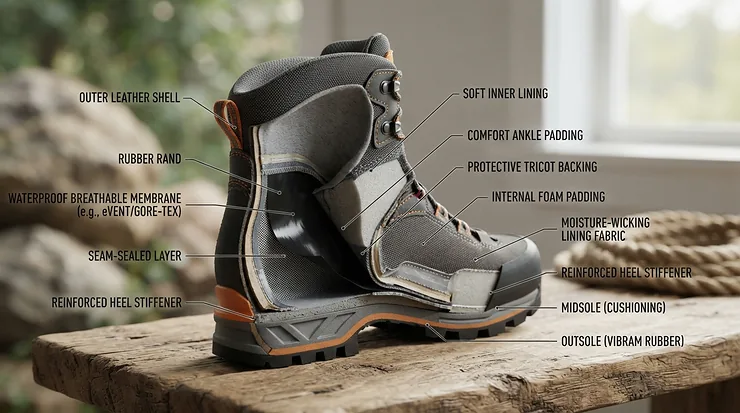
Understanding rubber boot construction takes the mystery out of why some boots last a decade and others quit in a season. Traditional rubber boots are vulcanized, a process where heat and curing agents cross-link rubber so its parts fuse into a unitary piece. A US patent describing rubber footwear manufacturing explains how vulcanization melds component parts into one construction, which is exactly why a well-made all-rubber boot has so few weak spots.
Now compare the main approaches:
- All-rubber construction: Few seams, easy cleaning, usually heavier and less breathable. The Kamik Ranger is the archetype.
- Rubber over neoprene core: Layers of hand-laid rubber over a neoprene core, as used by the LaCrosse Alpha Evolution, add flexibility and snag resistance.
- Neoprene shaft with rubber lower: The muck-boot formula behind the TIDEWE Rubber Neoprene Boots and Muck Edgewater Classic Tall is comfy but introduces a join between two materials.
- Seamless layered latex neoprene: The XTRATUF Legacy approach reduces seams in the first place.
Here’s the mental model I use: every join in a boot is a future argument with water. Fewer joins, fewer arguments. When forum owners describe cracking “where the neoprene meets the rubber,” they’re pointing at exactly that transition. Rubber boot construction isn’t glamorous, but it’s the quiet reason one boot outlives another.
Waterproof Seals: Where Boots Really Fail
Boots rarely fail in the middle of the rubber. They fail at the edges, and waterproof seals are the edges. Think of seals as the places where one material meets another: the sole bonding to the upper, the neoprene collar meeting the rubber foot, and the stitching or gluing around any panel.
Owners of various brands report the same patterns: soles coming unglued after being left in a hot truck, flex cracks at ankle creases, and seams giving up after repeated bending. These aren’t brand-specific sins. They’re the predictable result of stress concentrating where materials meet.
What does that mean at purchase time? Run your fingers around the sole-to-upper joint in the store and look for even, clean bonding. Flex the ankle area and watch for creases. At home, avoid cooking boots on a dashboard, because heat is the great enemy of adhesives.
Higher-priced boots generally invest more in waterproof seals through better bonding and layered construction, which is why LaCrosse Alpha Evolution and XTRATUF Legacy command premiums. But even affordable waterproof angler boots can last when you respect their weak spots.
Affordable Waterproof Angler Boots: What Your Money Actually Buys
Let’s talk dollars without drama. Affordable waterproof angler boots, meaning roughly the $50-$100 zone, buy you the one thing that matters most on day one: a waterproof barrier. What they typically skimp on is footbed quality, lining durability and long-term bonding.
| Budget Tier | Example | What You Get | What You Trade Away | Best For |
|---|---|---|---|---|
| Entry ($50-$80) | TIDEWE Rubber Neoprene Boots | Waterproofing, flexible neoprene | Proven longevity | Occasional anglers |
| Value ($60-$100) | Kamik Ranger | All-rubber simplicity | Cushioning, breathability | Shore anglers |
| Mid ($80-$140) | Huk Rogue Wave, Muck Edgewater Classic Tall | Fishing design or name-brand comfort | Premium traction or durability | Regular weekend anglers |
| Premium ($130+) | XTRATUF Legacy, LaCrosse Alpha Evolution, Grundéns Crewman Tall | Traction, comfort, build | Lower price | Frequent anglers, pros |
The table shows a clear pattern: you pay extra for traction, footbed comfort and construction that tolerates abuse. If you fish ten times a year, the cheapest tier is rational. If you fish fifty, a premium boot’s cost-per-trip often drops below a budget boot you replace every second season.
Smart budget fishing footwear strategy: buy the best boot you’ll use often, not the cheapest boot you’ll regret.
Budget Fishing Footwear vs Waders and Hip Boots
Not every wet-foot problem needs a boot. Sometimes the right answer is waders or hip boots, and knowing the difference saves money.
Hip boots, a classic of fishing and hunting gear, cover you to the thigh. Outdoor Life’s hip-boot guide lists the Frogg Toggs Rana hip wader as its budget pick, while higher-quality options keep you warmer and drier than bargain pairs. Chest waders go further. One roundup of waders praises a budget pair for being “100% waterproof,” though it warns that attached boots can run small.
So how does each stack up against waterproof fishing boots?
- Standard waterproof boots: Best for bank walking, boat decks, and shallow wading under ankle-to-knee depth. Light, easy, cheap.
- Hip boots: Best when you’ll wade thigh-deep but not deeper. Less comfortable for walking.
- Chest waders: Best for deep wading and cold water. Hotter, bulkier, more expensive.
My take: if you rarely wade deeper than your shins, boots win on simplicity. Budget fishing footwear should solve your actual water depth, not your imagined heroic river crossing. Chest waders look cool, but they’re a lot of gear for a farm-pond bass session.
Your First 30 Days: A Setup and Care Guide
New boots reward a little ritual. Here’s a practical schedule that Amazon listings never bother to give you:
Day 1: Fit test indoors. Wear your actual fishing socks and walk around for 20 minutes. Check for heel slip and toe pressure. If you’re between sizes, remember advice that XTRATUF Legacy boots often run best sized down.
Week 1: Short trips first. Break in on a casual outing before committing to a long day. Watch for hot spots on heels and ankles.
Every trip: Rinse and dry. Rinse mud, salt and fish slime off with fresh water. Dry them upright and out of direct heat. A hot truck or radiator is bad news for glue.
Monthly: Inspect the seams. Look at the sole bond, the ankle flex zone and the shaft-to-foot transition. Catching a hairline crack early is far cheaper than catching a soaked sock late.
Common first-month mistakes:
- Storing boots folded or crushed, which creases rubber.
- Skipping dry socks and blaming the boots for clamminess.
- Leaving boots in a closed car during summer.
Treat waterproof fishing boots like a tool, not a disposable. Ten minutes of care a month is the cheapest upgrade you’ll ever buy.
Real-World Scenarios: Which Boot Fits Which Angler?
Nothing clarifies a decision like a face. Here are three composite profiles. They’re illustrative, not real people.
The weekend bank angler. Imagine someone who fishes a local reservoir on Saturdays and walks a mile to a favorite point. Their priorities are footbed comfort and mud traction. The LaCrosse Alpha Evolution fits best, thanks to that standout footbed. If budget is tighter, the Muck Edgewater Classic Tall is a reasonable step down.
The dock-and-pier regular. This angler fishes from a boat or pier, on slick fiberglass and wet wood, a few times a month. Traction is the main thing. The XTRATUF Legacy is the safe bet, and the Huk Rogue Wave is a lower-priced alternative worth checking.
The occasional family-trip angler. Fishing happens about eight times a year, mostly in warm weather, on soft ground. Spending on premium gear is hard to justify. The Kamik Ranger or TIDEWE Rubber Neoprene Boots deliver dry feet at friendly prices.
The offshore charter crew. Long days, heavy swells and constant spray. The Grundéns Crewman Tall earns its keep here, with its reviewer-tested waterproof performance and light weight.
Match the boot to the life, and the decision mostly makes itself.
Common Problems and Practical Solutions
Even the best waterproof fishing boots can annoy you. Here are five frequent complaints and what to do about them:
- Sweaty feet. Neoprene and rubber don’t breathe. Owners of muck-style boots often mention heat. Solution: wear moisture-wicking socks, pick uninsulated boots for summer, and air out boots after each trip.
- Lingering smell. Some owners worry neoprene starts to smell over time. Solution: rinse, dry thoroughly and use boot deodorizers. All-rubber boots like the Kamik Ranger avoid the issue more easily.
- Sole separation. Reported across several brands after heavy use or heat exposure. Solution: avoid hot storage and inspect the sole bond monthly.
- Flex cracking at the ankle. Reported on some neoprene-to-rubber transitions. Solution: check this zone regularly and replace before it becomes a leak.
- Slipping on wet decks. The wrong outsole is the culprit. Solution: choose a grippy deck-oriented boot such as the XTRATUF Legacy instead of a mud-lug design.
Notice a pattern: nearly all failures link back to waterproof seals and storage habits, not to mysterious flaws.
Common Mistakes When Buying Waterproof Fishing Boots
Buying mistakes are cheap to avoid and expensive to make. Watch for these.
Mistake one: buying purely on price. Cheap is fine, but “cheapest” ignores traction, comfort and bonding. Decide what you can sacrifice first.
Mistake two: ignoring sock thickness. Sizing advice for premium boots exists because sock choice changes fit. Try boots on with the socks you’ll actually wear.
Mistake three: overbuying height. A tall offshore boot is a chore on a short creek walk. Heavier boots tire you out.
Mistake four: ignoring temperature. An insulated boot in July is a sauna, and an uninsulated boot in November is a cold-feet lesson. The farm-boot reviews put it bluntly: an uninsulated boot is useless in a cold winter.
Mistake five: trusting one source. Professional reviews and owner forums often disagree, and both contain truth. A boot can be tested as waterproof and still have owners who report sole separation after two years. Read both.
Mistake six: skipping the return policy. Fit is personal. Buy from a seller whose return window lets you test the boots on actual terrain.
Features That Actually Matter (And Those That Don’t)
Boot marketing loves buzzwords. Here’s a quick filter.
Features that matter:
- Outsole traction. Slips cause injuries. This is non-negotiable.
- Footbed comfort. You’ll stand for hours. A reviewer singled out the LaCrosse Alpha Evolution‘s footbed for this reason.
- Seam and sole integrity. This is where waterproof seals live or die.
- Correct height. Taller than you need is a burden, and shorter than you need is a leak.
- Weight. Lighter boots reduce fatigue, which is why the Grundéns Crewman Tall‘s low weight for its class is notable.
Features that matter less:
- Camo patterns. Fish don’t judge your wardrobe, though a camo boot is fine if it’s the right fit.
- Excess insulation. More grams of insulation isn’t better unless you’re fishing in cold.
- Fancy logo hardware. Pull tabs help, but they won’t rescue a bad boot.
The golden rule: pay for what you touch, feel and trust underfoot. Skip what you merely see.
Safety Guide: Wet Feet, Cold and Why Dry Boots Matter
Dry feet aren’t only about comfort. They’re about health. The CDC explains that trench foot occurs when feet are wet for long periods of time, causing pain, swelling and a heavy feeling in the feet. Its guidance is simple: clean and dry your feet, wear clean dry socks, and seek medical attention if you suspect trench foot.
This is rarely a problem for a casual afternoon, but long, wet multi-day trips can stack up the risk. A leaking boot, or a boot you fill by stepping over the top, can leave feet damp for hours.
Practical safeguards for anglers:
- Carry a spare pair of dry socks in a waterproof bag and swap during breaks.
- Pull boots off at lunch and let feet air out when conditions allow.
- Dry boots fully between trips, since damp liners invite trouble.
- Choose a height that prevents overtopping in your usual water.
Reliable waterproof fishing boots are a safety tool as much as a comfort item. Treat them that way.
Long-Term Cost and Maintenance: The Math Behind the Price Tag
Cost-per-trip is the most honest way to compare boots. Imagine two anglers. One buys a budget pair in the $50-$80 range and replaces them every two seasons. Another buys a premium pair in the $150-$190 range and gets four or five seasons of use. Over a decade, the totals can land surprisingly close, but the premium owner enjoyed better traction and comfort the whole time.
Of course, durability isn’t guaranteed at any price. Owners of established brands report both decade-long success stories and early failures. The difference often comes down to usage and care: hot storage, skipped rinses and ignored cracks shorten any boot’s life.
A few maintenance habits that pay off:
- Rinse after salt exposure, as salt is hard on adhesives and hardware.
- Store boots upright in a cool, shaded spot.
- Inspect waterproof seals monthly.
- Rotate pairs if you fish daily, so each pair dries completely.
So what’s the verdict on cost? Occasional anglers get the best return from budget fishing footwear like the Kamik Ranger. Frequent anglers usually win with a premium boot, because cost-per-trip falls as trips climb.

Frequently Asked Questions
❓ Are rubber boots better than neoprene for fishing?
❓ How tall should waterproof fishing boots be?
❓ Can budget fishing footwear really last?
❓ Do affordable waterproof angler boots leak more often?
❓ Should I size down in waterproof fishing boots?
Conclusion
So what should you actually buy? Start with your water, not your wallet. If you fish occasionally and want dependable dryness at a low cost, the Kamik Ranger and TIDEWE Rubber Neoprene Boots deliver the basics. If you walk banks for hours, the LaCrosse Alpha Evolution and Muck Edgewater Classic Tall lean toward comfort. If you stand on slick decks, the XTRATUF Legacy and Huk Rogue Wave deserve a look. And if you chase fish far offshore, the Grundéns Crewman Tall is the specialist.
Remember the three ideas that tie it all together. Rubber boot construction determines how many places water can sneak in. Waterproof seals decide how long that protection lasts. And your care routine decides whether any boot reaches its potential.
Whatever you choose, double-check current price and sizing before checkout, and read recent customer reviews alongside professional ones. Pick sensibly, treat them well, and your feet will stay out of the story entirely.
✨ Don’t Miss These Exclusive Deals!
🔍 Take your next fishing trip to the next level with these carefully selected waterproof fishing boots. Click on any highlighted boot to check current pricing and availability. These picks will help you stay dry, steady and comfortable on every cast your family will remember!
Recommended for You
- Fishing Boots For Cold Weather: 7 Proven Warm Picks (2026)
- Budget Waders For Beginner Anglers: 7 Best Buys
- Waders For Women: 7 Best Picks For 2026
Disclaimer: This article contains affiliate links. As an Amazon Associate, I earn from qualifying purchases. If you purchase products through these links, we may earn a small commission at no additional cost to you.
✨ Found this helpful? Share it with your friends! 💬🤗
