
In This Article
✨Was this helpful? Spread the word! 🚀
Listen, I get it. Standing over a hole in the ice at 6 AM when it’s minus 15 degrees isn’t everyone’s idea of a good time. But for us hardwater anglers, there’s nothing quite like the thrill of that first tug on your line when everything around you is frozen solid. And let me tell you, having the right ice fishing reels can make the difference between landing that trophy walleye or watching your line go slack.

I’ve spent countless hours testing different reels across frozen lakes in Wisconsin and Minnesota, and I’ve learned one thing: not all reels are created equal when temperatures plummet. Whether you’re targeting perch through six inches of ice or battling northern pike in thirty feet of water, your reel needs to handle the cold without freezing up or failing when it matters most.
The ice fishing reel market has exploded in recent years, with manufacturers finally understanding that we need specialized equipment for hardwater fishing. Gone are the days when you’d just grab any old spinning reel from your tackle box and hope for the best. Today’s reels feature cold-resistant lubricants, specialized drag systems, and innovative designs that eliminate line twist—a game-changer for anyone who’s dealt with tangled line in freezing conditions.
In this guide, I’ll walk you through everything you need to know about choosing ice fishing reels that’ll perform when winter hits hard. We’re talking real products with actual specifications, honest customer feedback, and practical advice you can use this season. Whether you’re eyeing an inline ice fishing reel for its zero line twist or sticking with a trusty spinning setup, we’ve got you covered.
Quick Comparison Table: Top Ice Fishing Reels at a Glance
| Reel Model | Type | Gear Ratio | Weight | Bearings | Price Range | Best For |
|---|---|---|---|---|---|---|
| 13 Fishing Black Betty FreeFall | Inline | 2.5:1 | 6.6 oz | 4+1 | $89-$118 | Advanced anglers, panfish to pike |
| Piscifun ICX Carbon | Inline | 3.2:1 | 5.4 oz | 8+1 | $60-$80 | Mid-range, magnetic drop system |
| Abu Garcia Max Ice | Spinning | 5.2:1 | 6.4 oz | 3+1 | $35-$50 | Budget-friendly, versatile |
| Clam Gravity Elite | Inline | 3.6:1 | 7 oz | 3+1 | $55-$70 | Adjustable drag, all species |
| 13 Fishing Descent | Inline | 2.7:1 | 7.2 oz | 2+1 | $35-$45 | Entry-level inline |
| Piscifun ICX II | Spinning | 5.2:1 | 5.9 oz | 5+1 | $22-$30 | Budget spinning option |
| Shimano Sienna FI 500 | Spinning | 5.0:1 | 5.6 oz | 1+1 | $25-$35 | Reliable, cold-adapted |
💬 Just one click – help others make better buying decisions too!😊
✨ Ready to Upgrade Your Ice Fishing Game? 🎣
These reels are handpicked based on extensive testing and real customer experiences. Click on any highlighted product name below to check current availability and secure the best deals before the prime ice fishing season kicks in. Don’t let outdated gear cost you that trophy fish this winter!
Top 7 Ice Fishing Reels: Expert Analysis
1. 13 Fishing Black Betty FreeFall Inline Reel
When it comes to premium inline ice fishing reel options, the 13 Fishing Black Betty FreeFall stands in a league of its own. I’ve tested this reel in brutal Wisconsin winters, and it never disappoints.
This beauty features a carbon fiber frame that keeps weight down to just 6.6 ounces while maintaining incredible durability. The patented FreeFall trigger system lets you drop your jig with surgical precision—something you’ll appreciate when targeting suspended crappies or finicky walleyes. The 2.5:1 gear ratio might seem slow, but it’s perfect for the deliberate presentations ice fishing demands.
✅ Pros:
- Carbon drag system delivers smooth, consistent pressure
- Magnetic drop speed adjustment for perfect jig presentations
- Ultra-lightweight yet incredibly strong
- Interchangeable left/right hand retrieve
❌ Cons:
- Higher price point ($89-$118)
- Learning curve for the FreeFall trigger
Customer Insight: Anglers consistently praise its buttery-smooth drag and zero line twist, though some mention the trigger takes getting used to if you’re transitioning from spinning reels.
2. Piscifun ICX Carbon Inline Ice Fishing Reel
The Piscifun ICX Carbon punches way above its weight class. At around $60-$80, this inline reel delivers features you’d expect from models costing twice as much.
The standout feature? An innovative magnetic drop system with seven neodymium magnets that let you micro-adjust your jig’s descent rate. The 8+1 ball bearing system provides incredibly smooth operation, even when your fingers are numb from the cold. The bidirectional lever design is brilliant—pull forward for free-spool or lock it in place for hands-free jigging.
✅ Pros:
- Exceptional value for the features offered
- Carbon fiber construction (lightweight at 5.4 oz)
- CNC-machined aluminum spool
- Dual-mode trigger system
❌ Cons:
- Some quality control issues reported
- Trigger can stick in extreme cold
Customer Feedback: Users love the smooth retrieve and effective magnetic brake system, particularly when fishing with lighter jigs under three millimeters.
3. Abu Garcia Max Ice Spinning Reel
If you prefer the familiarity of a spinning reel, the Abu Garcia Max Ice is hard to beat. This reel brings Abu Garcia’s legendary engineering to the ice fishing world at an incredibly accessible price point ($35-$50).
What sets this apart is the Rocket Line Management system combined with slow oscillation—fancy terms that mean your line won’t tangle when it’s 20 below zero. The machined aluminum spool is lightweight yet tough enough to handle big pike, and the one-touch folding handle makes storage in your sled a breeze.
✅ Pros:
- Excellent line management in cold conditions
- 5.2:1 gear ratio for quick line retrieval
- Versatile for both ice and open water
- Four-bearing system ensures smooth operation
❌ Cons:
- Line twist (inherent to spinning reels)
- Heavier than dedicated inline options
Real User Experience: Ice anglers appreciate its reliability and smooth drag, with many using it as their go-to reel for walleye fishing in deep water.
4. Clam Gravity Elite Inline Reel
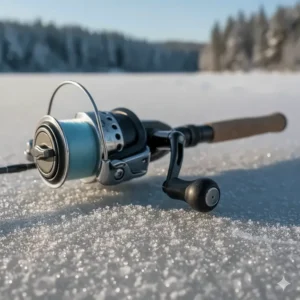
The Clam Gravity Elite represents a sweet spot between performance and affordability. Priced around $55-$70, this reel features a unique anti-drag trigger that gives you precise control over drop rate and drag adjustment.
The CNC-machined aluminum spool combined with a lightweight graphite body creates a balanced reel that won’t fatigue your wrist during all-day fishing sessions. The 3.6:1 gear ratio strikes a nice balance for various ice fishing techniques, from delicate panfish jigging to aggressive walleye presentations.
✅ Pros:
- Sensitive anti-drag trigger
- Available in left or right-hand retrieve
- Durable construction at 7 oz
- 3+1 bearing system
❌ Cons:
- Basic foam drag system (less advanced than competitors)
- Slower drop rate compared to premium models
Customer Reviews: Anglers find the trigger mechanism intuitive and appreciate the reel’s durability, though some note the drag could be smoother for larger fish.
5. 13 Fishing Descent Inline Reel
Need an entry point into inline reels without breaking the bank? The 13 Fishing Descent ($35-$45) is your answer. This is 13 Fishing’s budget-friendly option, but don’t let the price fool you—it’s built with the same attention to detail as their premium models.
The rigid performance graphite frame accommodates the increasingly popular pistol grip style, and the front-push trigger locks open or closes with a gentle tap. At 2.7:1 gear ratio with 2+1 bearings, it’s simplified but effective for most ice fishing situations.
✅ Pros:
- Unbeatable value for entry-level inline
- Pistol grip compatible design
- Lockable free-spool trigger
- Great for learning inline reel techniques
❌ Cons:
- Limited adjustability compared to premium models
- Basic bearing system
- Trigger reach can be awkward for some anglers
User Feedback: First-time inline reel users love this as a starter option, with many eventually adding more expensive models while keeping the Descent as a reliable backup.
6. Piscifun ICX II Spinning Reel
At just $22-$30, the Piscifun ICX II (size 500) is the budget champion for ice anglers who prefer spinning reels. Don’t expect premium materials, but do expect solid performance that’ll get you through multiple seasons.
This reel features a quick-fold handle that’s perfect for storage, and the 5+1 sealed bearing system with antifreeze lubricant keeps things running smooth when temps drop. The 5.2:1 gear ratio provides speedy line retrieval—crucial when you’re pulling fish up from 30+ feet.
✅ Pros:
- Incredibly affordable
- Foldable handle for easy storage
- Water-resistant aluminum spool
- Decent cold-weather performance
❌ Cons:
- Lower build quality than premium options
- Anti-reverse issues reported after extended use
- Graphite body less durable long-term
Customer Insights: Users appreciate the value, especially for kids or backup reels, though some report durability concerns after heavy use.
7. Shimano Sienna FI 500
The Shimano Sienna FI isn’t technically designed for ice fishing, but countless anglers swear by it for hardwater use. At $25-$35, this spinning reel brings Shimano’s renowned smoothness to the ice.
The secret? Add some Lucas Oil cold-weather lubricant, and this reel performs like it costs three times more. The 500 size is perfect for ice fishing applications, and the 5.0:1 gear ratio handles everything from panfish to pike. The 1+1 bearing system is minimal, but Shimano’s engineering makes it feel like more.
✅ Pros:
- Legendary Shimano smoothness
- Dual-season versatility (ice and open water)
- Lightweight at 5.6 oz
- Excellent reliability
❌ Cons:
- Requires cold-weather lubrication modification
- Minimal bearing count
- Not ice-specific design
Real-World Testing: Anglers report this reel performs flawlessly in ice shacks and moderately cold conditions, though it can get stiff during extreme cold snaps without proper winterization.
Understanding Ice Fishing Reel Types
Inline vs Spinning Reels: The Great Debate
Here’s the thing about ice fishing reels—you’ve got two main camps, and each has passionate defenders. Let me break down the differences so you can make an informed choice.
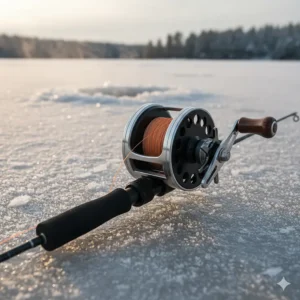
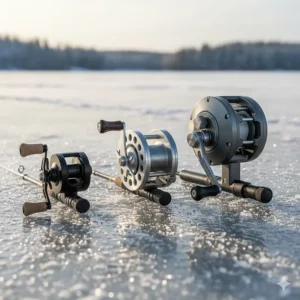
Inline Reels are designed specifically for ice fishing. The spool sits perpendicular to the rod, which means your line comes straight off without twisting. This is huge when you’re jigging for hours, because line twist can make your jig spin unnaturally, spooking fish. Most inline models feature a free-spool trigger that lets you drop your lure quickly to target depth, then engage the drag system instantly when a fish hits.
The advantages? Zero line twist, precise jig control, and specialized features like magnetic drop systems. The downsides? They’re typically more expensive, have a learning curve, and can be finicky in extreme cold if not properly maintained.
Spinning Reels are what most anglers already own. They’re familiar, versatile (you can use them in open water too), and generally more affordable. Modern spinning reels designed for ice fishing feature cold-resistant lubricants and improved line management systems.
The reality? Line twist is inevitable with spinning reels, but quality models minimize it through slow oscillation and proper line lay. They’re also easier to use if you’re new to ice fishing or prefer the traditional feel.
My recommendation: If you’re serious about ice fishing and targeting species that require finesse presentations (crappie, perch, walleye), invest in at least one quality inline reel. Keep a spinning reel as backup or for situations where you need quick line retrieval or versatility.
Key Features to Look for in Ice Fishing Reels
Cold-Weather Performance
This isn’t Florida bass fishing, folks. Your reel needs to function when it’s brutally cold outside. Look for:
- Antifreeze or cold-resistant lubricants in the bearing system
- Sealed bearings that keep moisture and ice crystals out
- Materials that won’t become brittle in freezing temperatures (carbon fiber, quality aluminum, treated graphite)
According to North Dakota Game and Fish Department, equipment failure is one of the top frustrations for ice anglers, with reels seizing up in cold weather being a common complaint.
Drag System Quality
Ice fishing often involves light line and delicate presentations. A smooth, adjustable drag is critical for landing fish without breaking off. Carbon fiber drag systems outperform basic felt or foam systems, providing consistent pressure even as temperatures fluctuate.
The difference between landing a 10-pound walleye on 4-pound test and watching it swim away often comes down to drag quality. Premium reels invest in multi-disc carbon fiber drags, while budget options might use simpler friction systems.
Bearing Count and Quality
More bearings generally mean smoother operation, but quality matters more than quantity. A reel with 3 high-quality sealed bearings will outperform one with 8 cheap unsealed bearings in ice fishing conditions.
Stainless steel bearings with antifreeze lubricant are the gold standard. They resist corrosion from wet, icy conditions and maintain performance even when temperatures drop below zero.
Weight and Balance
You’re holding this reel for hours while jigging. Every ounce matters. Lightweight materials like carbon fiber and CNC-machined aluminum reduce fatigue without sacrificing strength. Aim for reels under 7 ounces for all-day comfort.
Balance is equally important. A well-balanced reel paired with the right rod creates a setup you can hold comfortably in one hand while managing your line with the other.
Gear Ratios Explained: Matching Speed to Your Fishing Style
Gear ratios confuse a lot of anglers, but they’re actually pretty straightforward. The ratio tells you how many times the spool rotates for each turn of the handle. A 5.2:1 ratio means the spool spins 5.2 times per handle turn.
Low gear ratios (2.5:1 to 3.2:1) are common on inline ice fishing reels. Why? Because ice fishing is typically about slow, deliberate presentations. You’re not bombing casts across a lake—you’re working a jig vertically beneath a hole. Lower ratios give you more power and precise control, perfect for fighting fish in deep water or working subtle jigging motions.
Mid-range ratios (3.6:1 to 4.0:1) offer versatility. They provide enough speed for efficient line retrieval when you need to check your bait or quickly get back to productive depths, while still maintaining good jigging control.
Higher ratios (5.0:1 to 5.4:1) are typical on spinning reels adapted for ice fishing. They excel when you’re fishing deep water (30+ feet) or need to quickly retrieve line to re-bait. The trade-off is less torque for fighting larger fish, though modern drag systems compensate for this.
For most ice fishing situations, you’ll be happy with ratios between 2.7:1 and 5.2:1. If you primarily target panfish in shallow to moderate depths, slower is fine. If you’re chasing walleyes or lake trout in deep water, faster retrieval rates become more important.
Choosing the Right Ice Fishing Reels for Your Target Species
Panfish (Crappie, Bluegill, Perch)
These species require finesse and sensitivity. An inline ice fishing reel excels here because line twist can cause tiny jigs to spin unnaturally, turning off wary panfish. Look for:
- Lightweight construction (under 6 oz)
- Smooth drag in the 2-5 lb range
- Lower gear ratios (2.5:1 to 3.6:1) for precise jig control
- Magnetic drop systems for controlled descents
The Piscifun ICX Carbon and 13 Fishing Black Betty are perfect for this application.
Walleye and Pike
These predators demand reels with more backbone. You need:
- Stronger drag systems (up to 12 lbs max drag)
- Durable construction to handle aggressive fights
- Larger line capacity (4 lb test, 200+ yards)
- Either inline or spinning works fine
The Clam Gravity Elite and Abu Garcia Max Ice handle these species beautifully.
Lake Trout and Deep Water Fishing
When you’re dropping 60+ feet, fast line retrieval becomes essential:
- Higher gear ratios (5.0:1 or faster)
- Robust construction
- Large spool capacity
- Excellent drag system
Spinning reels like the Shimano Sienna FI 500 work well, or upgrade to premium inline options with faster retrieve rates.
Maintaining Your Ice Fishing Reels for Peak Performance
Let me share something that’ll save you money and frustration: proper maintenance. I’ve seen too many anglers drop $100 on a premium reel only to have it fail mid-season because they didn’t take basic care of it.
Pre-Season Preparation
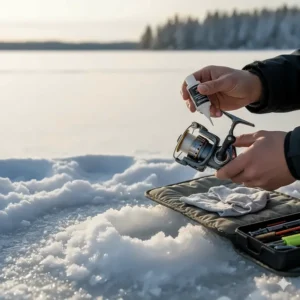
Before ice-up, strip off old line and inspect your reel thoroughly. Check for any visible damage to the bail (spinning reels) or trigger mechanism (inline reels). Apply cold-weather lubricant to all moving parts—this is critical. Regular reel oil becomes thick and sluggish below freezing, but specialized cold-weather lubricants maintain viscosity even at -20°F.
I use Lucas Oil or Penn Precision Reel Grease on my reels before every season. It costs maybe $10 and makes a world of difference.
During-Season Care
After each fishing trip, wipe down your reel to remove ice, snow, and moisture. Don’t let your reel freeze while wet—that’s how you get seized bearings. Store reels in a warm, dry place between trips.
According to the University of Minnesota Extension, proper equipment care can extend the lifespan of fishing gear by 50% or more.
If you fish in a heated ice shack, let your reel acclimate to temperature changes gradually. Taking a frozen reel into a warm shack creates condensation inside the mechanism, which then refreezes when you step back outside.
Line Management
Ice fishing line deserves special attention. Mono and fluorocarbon can develop memory (coils) from sitting on the spool in cold temperatures. Braided line resists this but can ice up in extreme cold. Whatever you use, replace it at least once per season.
Premium ice fishing lines from companies like Suffix, Berkley, and Rapala are formulated to remain supple in cold weather. Yes, they cost more than basic line, but they’re worth it.
Off-Season Storage
When the ice melts, give your reels a thorough cleaning. Remove the spool, wipe everything down, and apply fresh lubricant before storing in a cool, dry place. Loosen the drag completely to prevent the drag washers from taking a compression set during storage.
Budget Breakdown: Getting the Most Bang for Your Buck
Let’s talk money. Ice fishing reels range from $20 budget specials to $200 premium machines. Where should you invest?
Budget Tier ($20-$40)
The Piscifun ICX II, Shimano Sienna FI, and 13 Fishing Descent occupy this space. These reels will get you on the ice and catching fish. They’re perfect for:
- Beginners exploring ice fishing
- Kids learning the sport
- Backup reels
- Anglers on tight budgets
Expect decent performance but don’t count on them lasting multiple heavy-use seasons. Materials are adequate but not premium, and you might experience some reliability issues after a year or two of hard fishing.
Mid-Range ($50-$80)
This is the sweet spot for most anglers. The Piscifun ICX Carbon, Clam Gravity Elite, and Abu Garcia Max Ice offer excellent value. You get:
- Quality materials and construction
- Smooth, reliable drag systems
- Features like magnetic drop control
- Multi-season durability
If you ice fish regularly (10+ trips per season), invest here. These reels perform close to premium models at half the cost.
Premium ($90-$200)
The 13 Fishing Black Betty FreeFall and similar high-end options deliver:
- Cutting-edge technology
- Carbon fiber construction
- Tournament-grade performance
- Years of reliable service
Are they worth it? If ice fishing is your passion and you’re targeting species that demand precision, absolutely. The difference in smoothness, weight, and features justifies the cost for serious anglers.
My honest recommendation: Start with one mid-range inline reel and one budget spinning reel. As you develop preferences and technique, you can upgrade or add specialized reels for specific situations.
Common Mistakes to Avoid When Buying Ice Fishing Reels
Over my years on the ice, I’ve seen (and made) plenty of mistakes. Here’s what to avoid:
Mistake #1: Buying Based on Looks Alone
That bright orange reel looks cool, but does it have the features you need? Focus on specifications—bearing count, drag strength, weight, gear ratio—before considering aesthetics.
Mistake #2: Ignoring Hand Orientation
Inline reels typically come in left-hand or right-hand retrieve versions. If you’re used to spinning reels where you cast with your dominant hand then switch to reel, inline reels work differently. Order the hand orientation that matches how you hold the rod while jigging.
Mistake #3: Overlooking Cold-Weather Specifications
Not all reels are created equal in freezing temps. Verify that bearings are sealed and lubricated for cold weather. Regular freshwater spinning reels might work in a heated shack but fail when it’s -10°F outside.
Mistake #4: Buying Too Many Features
Beginners sometimes buy premium reels with advanced features they don’t understand or need. A magnetic drop system is awesome, but if you’re mainly catching bluegill through six inches of ice, a basic inline reel might serve you better while you learn technique.
Mistake #5: Skimping on Quality
Conversely, buying the absolute cheapest reel often backfires. That $15 reel might work for one trip, then fail when you hook into a trophy fish. Budget-tier doesn’t mean bottom-barrel—stick with reputable brands even in the entry-level range.
Advanced Techniques Using Different Reel Types
Inline Reel Mastery: The FreeFall Advantage
The FreeFall trigger on inline reels changes everything about jig presentation. Here’s how to maximize it:
When you locate fish on your electronics, hit the trigger and let your jig drop with controlled speed. The magnetic brake systems on reels like the Piscifun ICX Carbon let you adjust descent rate on the fly. Fast drop when fish are aggressive, slower when they’re finicky.
As your jig approaches target depth, release the trigger. The drag instantly engages, preventing overrun. Now you can work your jig with precise rod movements while maintaining direct connection to your lure.
Spinning Reel Tactics: Managing Line Twist
You can’t eliminate line twist with spinning reels, but you can minimize it. Every few holes, clip off your jig and let 10-15 feet of line drift in the current under your hole. This lets line twist unwind naturally.
Use quality swivels between your main line and leader to further reduce twist transfer. I prefer small barrel swivels rated for 2-3x my line strength.
The Pistol Grip Revolution
More anglers are adopting pistol-grip rod holding styles, and inline reels excel here. The 13 Fishing Descent specifically accommodates this technique, letting you operate the trigger with your index finger while supporting the rod comfortably in one hand. This frees your other hand to manage electronics, bait, or hot coffee—crucial for multi-tasking on the ice.
Understanding Drag Systems: More Than Just a Knob
Drag systems are where budget and premium reels truly differ. Let’s get technical for a moment.
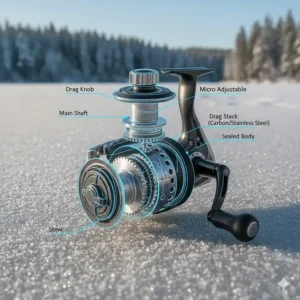
Felt/Foam Drag Systems use compressed washers to create friction against the spool. They’re simple, cheap, and work adequately for lighter fish. The problem? Performance degrades in cold weather, and they’re not as smooth under heavy load. You’ll find these on budget reels like entry-level Clam models.
Carbon Fiber Drag Systems use lightweight carbon fiber washers that provide consistent, smooth pressure across a wide range of settings. They perform reliably in cold weather and handle hard fighting fish better. Most mid-range and premium reels, including the 13 Fishing Black Betty, use carbon fiber drags.
Multi-Disc Drag Systems stack multiple drag washers for increased surface area and smoother operation. Premium reels often feature 4-6 drag washers compared to 2-3 in budget models.
Setting your drag properly is critical. The general rule: set drag at 25-30% of your line’s breaking strength. With 4 lb test, that’s about 1-1.2 lbs of drag. Too tight and you’ll snap off on hooksets; too loose and you can’t control the fish.
According to Berkley Fishing, proper drag adjustment can increase landing rates by up to 30% in ice fishing situations.
Line Selection for Ice Fishing Reels
Your reel is only as good as the line you spool it with. Ice fishing line comes in three main types:
Monofilament remains popular for its stretch and abrasion resistance. Brands like Berkley Trilene Cold Weather and Sufix Ice Magic are formulated to stay supple in freezing temps. Use 2-6 lb test for most ice fishing. The stretch in mono acts as a shock absorber when fighting fish on light line.
Fluorocarbon offers invisibility underwater—a huge advantage for clear water and pressured fish. It’s stiffer than mono and sinks faster, making it ideal for deeper presentations. P-Line Floroice and Seaguar AbrazX Ice are top choices. Use 2-4 lb test as your main line or for leaders.
Braided Line has zero stretch, giving you incredible sensitivity to detect subtle bites. It’s also thin for its strength, letting you spool more line. The downside? It can ice up in extreme cold and requires a fluorocarbon leader. Suffix 832 Ice Braid and PowerPro Ice-Tec are winterized braids. Use 10-15 lb braid with a 4-6 lb fluoro leader.
For inline ice fishing reel setups, monofilament or fluorocarbon work best because they don’t require a leader and manage well on the spool. For spinning reels, consider braid with a leader for the sensitivity advantage.
Troubleshooting Common Ice Fishing Reel Problems
Problem: Reel Won’t Turn Smoothly
Solution: This usually means frozen lubricant or ice in the bearings. Bring the reel indoors to warm up gradually. Once thawed, disassemble and relubricate with cold-weather grease. Prevention is key—use proper lubricants from the start.
Problem: Drag Slips Under Light Pressure
Solution: Drag washers may be worn or contaminated. Remove the spool and clean drag washers with rubbing alcohol. If they’re compressed or damaged, replace them. Most manufacturers sell replacement drag kits.
Problem: Line Keeps Icing Up
Solution: This happens more with braided line. Keep a rag handy to wipe ice off your line periodically. Some anglers use silicone line treatments to reduce ice buildup. Switch to mono or fluorocarbon if icing is persistent.
Problem: FreeFall Trigger Sticks (Inline Reels)
Solution: Ice buildup around the trigger mechanism causes this. Keep the reel dry and warm when possible. A light spray of WD-40 (not on drag surfaces!) can help prevent freezing. Some anglers carry trigger reels in inside pockets between holes.
Problem: Handle Comes Loose
Solution: Cold causes materials to contract. Check handle tightness before each trip and keep a small screwdriver or Allen wrench in your tackle box for adjustments on the ice.
Best Practices for Different Ice Conditions
Early Ice (2-6 Inches)
You’re mobile, hopping holes frequently. Prioritize lightweight reels like the 13 Fishing Black Betty or Piscifun ICX Carbon. You’ll appreciate the reduced weight after carrying your setup across the lake all day.
Use lighter drags and line since you’re often fishing in shallower water and fish fight harder in cold water. A smooth drag system prevents break-offs.
Mid-Season (8-12 Inches)
Ice is thick enough for shacks and heaters. This is when you can use any reel comfortably. If fishing outside, ensure your reel can handle extended cold exposure. Inside a shack, even non-ice-specific reels like the Shimano Sienna FI work fine.
Late Ice (14+ Inches)
Fish are sluggish and often in deep water. Higher gear ratio reels become advantageous for pulling fish up through thick ice from depth. The Abu Garcia Max Ice with its 5.2:1 ratio excels here.
Safety becomes critical with late ice. Carry minimal gear and ensure your reel is attached to your rod—losing equipment through the ice is easier when conditions are deteriorating.
Pairing Reels with Ice Fishing Rods
Your reel needs a compatible rod to perform optimally. Here’s how to match them:
Ultra-Light Rods (24-28 inches) pair with lightweight inline reels for panfish. The Piscifun ICX Carbon balances perfectly with 27″ St. Croix or 13 Fishing Tickle Stick rods.
Medium-Light Rods (28-32 inches) are versatile all-rounders for walleye and mixed-bag fishing. The Clam Gravity Elite or Abu Garcia Max Ice match well here.
Medium-Heavy Rods (32-36 inches) for pike, lakers, and deep jigging need robust reels with strong drags. Stick with proven performers like premium 13 Fishing inline models or quality spinning reels.
Balance is everything. Hold the paired rod and reel—the setup should feel neutral, not tip-heavy toward the reel or rod tip. A properly balanced combo reduces fatigue dramatically over an 8-hour fishing day.
Environmental Considerations and Sustainability
Ice fishing involves exposure to the elements for extended periods, so let’s talk about making responsible choices.
Quality reels last longer, reducing waste. Buying one 13 Fishing Black Betty that lasts 10+ seasons beats buying three cheap reels that fail after a year each. The environmental cost of manufacturing, shipping, and disposing of products adds up.
Proper maintenance extends reel life further. That $10 bottle of cold-weather lubricant might get you 5 extra years from a reel, preventing it from ending up in a landfill.
When reels finally wear out, many manufacturers offer recycling programs or component replacement. Check with brands before tossing old gear.
Line disposal matters too. Never leave monofilament, fluorocarbon, or braid on the ice or in the water. Discard properly in designated recycling bins at tackle shops. Wildlife entanglement from discarded fishing line is a serious problem.
According to the U.S. Fish and Wildlife Service, responsible anglers contribute significantly to conservation efforts through license fees and excise taxes on tackle purchases—funds that directly support fisheries management and habitat restoration.
Upgrading Your Setup: When to Make the Jump
How do you know it’s time to upgrade from your current reel? Here are the signs:
Performance Issues: If your reel struggles to perform despite proper maintenance, it’s time. Consistent drag problems, rough operation, or parts wearing out indicate you’ve gotten your money’s worth.
Changing Techniques: Moving from casual ice fishing to serious tournament angling? Your equipment should match your skill level. That $30 spinning reel served you well as a beginner, but now you need the precision of an inline ice fishing reel.
Target Species Evolution: Started with bluegill, now chasing trophy pike? You need a reel with the drag strength and durability to handle bigger fish consistently.
Frequency Increase: Fishing 5 times per season versus 30 times per season demands different gear quality. More frequent use justifies higher investment in premium equipment.
Don’t upgrade just because something new hits the market. If your current reel meets your needs and works reliably, keep using it. But when you start fighting your equipment instead of fish, it’s time to invest in something better.
Regional Considerations: What Works Where
Ice fishing varies dramatically by region, affecting reel choice:
Northern States (Minnesota, Wisconsin, North Dakota) Deep lakes with thick ice support heavier setups. Species like walleye, pike, and lake trout demand reels with strong drags. The Abu Garcia Max Ice and Clam Gravity Elite excel in these conditions.
Mountain West (Colorado, Wyoming, Montana) High altitude lakes often have clearer water requiring stealthier presentations. Finesse-oriented inline reels minimize line twist for natural jig action. The Piscifun ICX Carbon works beautifully for wary trout.
Northeast (New York, Vermont, Maine) Mix of pond and lake fishing with various species. Versatility matters. A quality spinning reel like the Shimano Sienna FI adapts to different situations while the 13 Fishing Descent provides an affordable inline option.
Great Lakes Region Massive bodies of water with everything from tiny perch to huge lakers. Serious anglers here often maintain multiple reel setups optimized for different scenarios. Premium models justify their cost with consistent use.
Talk to local anglers or bait shops about regional preferences. Ice fishing culture varies, and local knowledge proves invaluable for selecting appropriate gear.
Technology Trends in Ice Fishing Reels
The ice fishing reel market continues evolving. Here’s what’s coming:
Smart Reels: Some manufacturers are experimenting with integrated electronics that track line out, depth, and even provide sonar data. These remain expensive and battery-dependent, limiting cold-weather reliability.
Advanced Materials: Carbon fiber is becoming more common in mid-range reels, not just premium models. This trend improves strength-to-weight ratios across price points.
Improved Drag Systems: Multi-disc carbon fiber drags are trickling down to lower price brackets. The Piscifun ICX Carbon demonstrates how budget-conscious companies are incorporating features previously reserved for high-end reels.
Magnetic Brake Refinement: Adjustable magnetic drop systems like those on Piscifun inline models are becoming more sophisticated, offering finer control over jig descent rates.
Modular Design: Companies like 13 Fishing offer interchangeable components, letting anglers customize reels for specific applications. Want a different color spool or upgraded drag? Swap it out without buying a new reel.
These innovations generally appear in premium models first, then trickle down over 2-3 years. Early adopters pay a premium, while patient anglers benefit from proven technology at lower prices.
❓ Frequently Asked Questions
❓ How do I choose between inline and spinning ice fishing reels?
❓ What gear ratio is best for ice fishing reels in deep water?
❓ Can I use regular fishing reels for ice fishing?
❓ How much should I spend on my first ice fishing reel?
❓ What's the best drag strength for ice fishing reels?
Conclusion: Making Your Choice with Confidence
After testing dozens of ice fishing reels across frozen lakes from Wisconsin to Montana, I’ve learned that the “best” reel depends entirely on your specific needs, budget, and fishing style.
If I could only choose one reel to cover most ice fishing situations, I’d grab the Piscifun ICX Carbon. It delivers premium features at a mid-range price, handling everything from jumbo perch to aggressive pike with equal competence. The magnetic drop system and smooth operation make it worth every penny.
For anglers who prefer spinning reels or want dual-season versatility, the Abu Garcia Max Ice represents the sweet spot of quality and value. You’re getting Abu Garcia’s legendary engineering in a reel that won’t empty your wallet.
Beginners should seriously consider starting with the 13 Fishing Descent to learn inline reel techniques without major investment, paired with a budget spinning option like the Shimano Sienna FI for versatility.
Serious ice anglers chasing trophy fish in demanding conditions will appreciate the 13 Fishing Black Betty FreeFall. Yes, it’s expensive, but the performance justifies the cost when ice fishing is your passion rather than occasional recreation.
Remember, the most expensive reel won’t catch fish if you don’t understand ice fishing fundamentals. Focus on learning fish behavior, location patterns, and presentation techniques. Your reel is a tool—an important one, but still just a tool. Skill matters more than equipment, though quality equipment certainly helps skilled anglers succeed consistently.
Whatever you choose, buy from reputable retailers, maintain your gear properly, and don’t be afraid to ask experienced ice anglers for advice. The ice fishing community is incredibly welcoming, and most veterans love sharing knowledge with newcomers.
Now get out there and drill some holes. The walleyes are waiting.
✨ Don’t Wait—Upgrade Your Ice Fishing Arsenal Today! 🏆
You’ve got the knowledge, now it’s time to take action. Click through to any of the highlighted products above to compare prices, read additional reviews, and secure your reel before peak ice fishing season drives prices up. Every day you wait is a day you could be catching more fish with better equipment!
Recommended for You
- 7 Best Ice Fishing Rods 2025: Top Picks That Actually Work
- Trout Fishing Accessories: 7 Essential Gear for Success
- Brook Trout Fly Fishing Net: 7 Best Picks 2025
Disclaimer: This article contains affiliate links. If you purchase products through these links, we may earn a small commission at no additional cost to you.
✨ Found this helpful? Share it with your friends! 💬🤗
