
In This Article
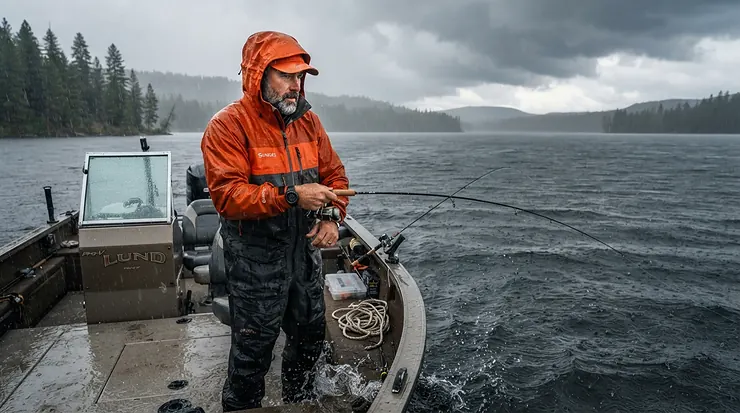
A packable rain jacket for fishing trips is a waterproof, breathable shell that folds into its own pocket or a small stuff sack, typically weighs well under a pound, and still lets you cast, mend line and net a fish without fighting your sleeves. It is rain insurance that costs almost no bag space.
Rain has a talent for arriving the exact minute the bite turns on. One second you’re watching a bobber; the next you’re trying to tie a fluorocarbon knot with water running down your wrist. The old answer was a bulky yellow slicker that lived in the truck and never made it to the water. The better answer in 2026 is a packable rain jacket for fishing trips that rides in your pack all day and only announces itself when the sky does.
The seven jackets below run from roughly 6 ounces to roughly 14, from throwaway-cheap to heirloom-tough, and from “keep it in the tackle bag forever” to “this belongs on a drift boat.” Along the way, we’ll translate spec-sheet jargon into what it actually means on a lake shore, a river run or a three-mile hike to a cutthroat pool. Waterproof claims are often quoted as hydrostatic head, a measurement in millimetres of how tall a column of water a fabric can hold back before it starts seeping through. It’s a handy yardstick, but never the whole story, because seams, zippers and ventilation decide how dry you really feel.
Whether you’re shopping for a compact travel rain jacket for a destination trip, building a list of ultralight gear, or just tired of soggy cuffs, this guide pulls fishing trip packing, backcountry fishing apparel layering and lightweight packable rainwear advice into one place. Everything here is based on published specs and aggregated reviews gathered in October 2026. It’s analysis, not hands-on testing, and we’ll flag where the evidence gets thin.
Quick Comparison: Packable Rain Jacket for Fishing Trips Picks at a Glance
Here’s the fast version for shoppers who skim before they commit. Weights are published or tested ballparks (men’s sizing where noted) and shift with size and model year, and prices are ranges at the time of research, so check current price before you buy.
| Jacket | Approx. Weight | Construction | Price Range | Best For |
|---|---|---|---|---|
| Frogg Toggs Ultra-Lite2 | Very light (suit listed ~10–13 oz) | Nonwoven, welded seams | Under ~$50 | Emergency backup |
| Marmot PreCip Eco | ~10 oz | 2.5-layer | ~$100–$130 | Budget all-rounder |
| Outdoor Research Helium | ~6–7 oz | 2.5-layer | ~$150–$190 | Ultralight, warm-season trips |
| Black Diamond Fineline Stretch | ~9.5–11 oz | 2.5-layer, stretch | ~$180–$220 | Active casters |
| Patagonia Torrentshell 3L | ~14 oz | 3-layer | ~$150–$200 | Boats, heavy rain, rough use |
| Simms Challenger | Medium weight | 2-layer | ~$190–$250 | Anglers wanting fishing features |
| Montbell Versalite | ~5.9 oz | 3-layer | ~$260–$300 | Hike-in fishing, breathability |
Read the table in two clusters. The Montbell Versalite and Outdoor Research Helium chase minimum weight, while the Patagonia Torrentshell 3L and Simms Challenger accept extra ounces in exchange for toughness and fishing-specific details. The Marmot PreCip Eco is the sensible middle, the Black Diamond Fineline Stretch earns its slot when casting freedom matters most, and the Frogg Toggs Ultra-Lite2 is a spare, not a plan.
💬 Just one click — help others make better buying decisions too!😊
Top 7 Picks: The Best Packable Rain Jacket for Fishing Trips
Seven real jackets, ordered roughly from budget to premium. Each verdict rests on published specs and aggregated review themes, not hands-on testing.
1. Frogg Toggs Ultra-Lite2 — cheapest insurance policy in your tackle bag
The headline is price: Frogg Toggs Ultra-Lite2 is among the least expensive ways to put a genuinely waterproof layer in a fishing bag, which is why it became the default “just in case” jacket. Instead of woven nylon with a laminated membrane, it uses breathable nonwoven polypropylene with welded seams. Retail listings put the full jacket-and-pants suit at roughly 10 to 13 ounces, so the jacket alone is a handful of ounces that stuffs into a pocket-sized sack. In practice, it can live at the bottom of a tackle bag forever without earning a single weight complaint.
Here’s what to weigh: this fabric isn’t built for abuse. Nonwoven material and treble hooks are a poor match, and brushy banks will find every weakness. Based on the construction, it suits bank anglers parked near the car, kayak launches, or anyone who needs a spare for a fishing buddy. It is not the shell for a week of relentless wet weather.
Reviewers consistently praise the low weight and steady-rain performance, while durability is the recurring complaint. Several backpacking and retailer reviewers report tearing or short lifespans, and others note it runs oversized.
Pros:
- ✅ Extremely light, packs into a tiny sack
- ✅ Keeps steady rain out for the money
- ✅ Welded seams and adjustable hood
Cons:
- ❌ Tears easily around hooks and brush
- ❌ Roomy cut and crinkly feel
Price range: under about $50 for the jacket or full suit at the time of research. Value verdict: excellent as an emergency backup, poor as your only shell.
2. Marmot PreCip Eco — best value all-rounder near $100
The standout is balance. Marmot PreCip Eco delivers pit zips, an adjustable hood and respectable waterproofing at a price that leaves money for flies. It uses a 2.5-layer construction with Marmot’s NanoPro Eco membrane under recycled nylon ripstop, and tested weights land around 10 ounces for the men’s version. That’s light enough to pack without thinking, and the jacket stows into one of its own hand pockets.
On paper, a 2.5-layer shell trades some durability and interior comfort for lower weight and cost. Testers liked the hood’s range of motion and the way it rolls into the collar, a real plus when you’re scanning water or tracking a rising fish, but found the painted interior liner clammy against bare skin. The takeaway: wear a thin long-sleeve underneath. I’d point most first-time buyers here, especially wade anglers and weekend lake fishers who want one dependable shell for fishing and hiking.
Owner feedback splits on longevity. Many describe wearing theirs for years, while a few report the interior coating breaking down over time.
Pros:
- ✅ Pit zips for real ventilation
- ✅ Hood moves with your head, rolls into collar
- ✅ Strong value for the money
Cons:
- ❌ Painted liner feels clammy on skin
- ❌ Some owners report coating deterioration
Price range: roughly $100–$130 at the time of research. Value verdict: the best “buy it and stop shopping” option for most budgets.
3. Outdoor Research Helium — featherweight filler for the fly-in bag
Weight is the whole story. Outdoor Research Helium weighs roughly 6 to 7 ounces depending on size and version, and a newer Helium UL is reported lower still. It’s a 2.5-layer Pertex Shield Diamond Fuse build with fully taped seams and a single chest pocket that doubles as the stuff sack, packing down to about the size of a grapefruit.
What the spec sheet won’t tell you is how it gets there: no pit zips and no hand pockets. Testers consistently flag limited breathability, which translates to a jacket that’s brilliant when rain arrives as a passing squall and merely tolerable during hours of drizzle, when moisture builds up inside. Its roughly 30-denier shell is sturdier than many ultralight fabrics but still more delicate than a 50-denier jacket near hooks and rod tips. Treat it as a warm-season, short-storm shell for trips where every ounce is spoken for.
Sentiment is mixed in a predictable way. Hikers adore the weight and packed size, while a minority of buyers report damp interiors or even soak-through in sustained rain.
Pros:
- ✅ Featherweight at roughly 6–7 ounces
- ✅ Packs to grapefruit size in its own pocket
- ✅ Fully taped seams with DWR finish
Cons:
- ❌ No pit zips, so venting is limited
- ❌ Breathability falls short in long rain
Price range: roughly $150–$190 at the time of research. Value verdict: strong if weight is the priority and the forecast is mild.
4. Black Diamond Fineline Stretch — stretch fabric made for casting
Stretch is the hook. Black Diamond Fineline Stretch weaves two-way stretch into its BD.dry 2.5-layer shell and adds underarm gussets, so your arm can sweep a long cast without the hem riding up. Published weights run roughly 9.5 to 11 ounces depending on size and who did the weighing, and it stows in its right-hand pocket with a carabiner loop. The brand rates it around 10,000 mm waterproof and 10,000 g/m² breathable, which is solid mid-pack territory.
The practical benefits show up in details: DWR-treated pit zips, a waterproof center zipper, flaps over the hand-pocket zippers, and a helmet-compatible hood, which suggests enough volume to wear over a cap. Testers describe it as best suited to friendly-to-moderate rain and not especially rugged, so think stream-hopping, paddling and stripping streamers rather than sliding down a rock face.
Review editors praise its weight-to-performance balance, and most retail reviewers rate it highly. A handful report leaks in prolonged downpours, which is consistent with a 2.5-layer design.
Pros:
- ✅ Two-way stretch for unrestricted casting
- ✅ Generous DWR-treated pit zips
- ✅ Stows into its own pocket
Cons:
- ❌ Not built for heavy abrasion
- ❌ Best in moderate, not relentless, rain
Price range: roughly $180–$220 at the time of research. Value verdict: worth it for active anglers who fish on the move.
5. Patagonia Torrentshell 3L — toughest shell of the seven
Durability is the standout. Patagonia Torrentshell 3L uses a three-layer H2No construction with recycled nylon and a hefty 50-denier face fabric, the kind that shrugs off boat cleats, rock ledges and the occasional errant hook. Tested weights cluster around 14 ounces for the men’s version and about 12.6 ounces for the women’s, making it the heaviest jacket here, though it still stuffs into its left hand pocket with a carabiner loop.
Here’s the trade. Thick fabric means weaker breathability, so the roughly 12-inch pit zips are mandatory equipment on warm, humid days. In return you get sturdier protection in sustained rain and a jacket that behaves more like a hardshell than a windbreaker with ambitions. Based on the spec comparison, this is the pick for boat anglers, steelheaders and anyone who treats gear roughly. For hike-in trips where every ounce counts, it’s overkill.
Reviewers consistently note the premium tricot-lined feel and reliable weather protection for the money, and many buyers cite Patagonia’s warranty as part of the value. A few critics find it less breathable and less flexible than costlier options.
Pros:
- ✅ Durable 50-denier face fabric
- ✅ Pit zips and adjustable hood
- ✅ Backed by a well-regarded warranty
Cons:
- ❌ Heaviest of the seven at about 14 ounces
- ❌ Thick fabric breathes less
Price range: roughly $150–$200 at the time of research. Value verdict: the best long-haul value if you can spare the ounces.
6. Simms Challenger — the angler-designed shell
The standout is pedigree: Simms Challenger comes from a fishing company and shows it. A 2-layer Toray waterproof-breathable shell with a durable water-repellent finish is paired with details most hiking jackets skip: a storm hood that rolls up behind the collar, a zippered chest pocket with a built-in sunglasses chamois, a drawcord hem with a kill-switch D-ring for boat lanyards, and reflective logos for visibility.
Let’s be honest about packability. It’s a medium-weight jacket, not an ultralight one, so it is the least compact of the seven. Retail copy calls it lightweight and reviewers praise it for spring and fall, yet it won’t vanish into a fly vest. That’s a fair compromise if your trips involve boats, open water or cold mornings, since reviewers note the longer cut covers you when seated and that it layers well beneath.
Aggregated reviews are strongly positive. Owners report staying dry in storms, and one bought a second after the first blew out of a boat. Common nitpicks include a snug neck and hood, baggy sizing and a loud back logo, and one full-time angler questioned long-term quality.
Pros:
- ✅ Fishing-specific details like chamois and kill-switch D-ring
- ✅ Longer cut covers you in a boat
- ✅ Layers well for cold mornings
Cons:
- ❌ Bulkiest and least packable of the seven
- ❌ Snug neck and baggy sizing for some
Price range: roughly $190–$250 at the time of research. Value verdict: justified for boat and open-water anglers, harder to justify for hike-ins.
7. Montbell Versalite — lightest and most breathable here
Featherweight with features is the pitch. The 2025 update of Montbell Versalite is reported at about 5.9 ounces, with a three-layer Super Dry-Tec construction, an ultra-thin 7-denier face fabric, long pit zips, a roll-up hood and fully taped seams. A European retailer lists a 20,000 mm water-resistance figure. A one-piece “K-Mono Cut” pattern reduces seams, which saves weight and removes potential leak points.
Why that matters: testers describe it as the most breathable rain jacket they’ve worn, the difference between a shell you tolerate and one you forget on a steep approach. The flip side is fragility. It favors low weight over toughness, so treat treble hooks, sharp rod guides and brush as threats. Some reviewers flagged a less-than-ideal main zipper, and one noted wetting out in a heavy downpour on an earlier version.
Sentiment from long-distance hikers is glowing, including one who carried it as the only shell on a 2,200-mile thru-hike. Anglers should read that as proof of comfort and weight, not hook resistance.
Pros:
- ✅ Roughly 5.9 ounces with full pit zips
- ✅ Standout breathability for sweaty hikes
- ✅ Fewer seams thanks to one-piece cut
Cons:
- ❌ Delicate 7-denier fabric near hooks
- ❌ Premium price and variable availability
Price range: roughly $260–$300 at the time of research, and availability varies by retailer, so check current availability before building a trip around it. Value verdict: the best for hike-in anglers who count grams.
How the Seven Compare on Construction and Durability
| Jacket | Construction | Pit Zips | Durability | Reviewer Sentiment | Best For |
|---|---|---|---|---|---|
| Frogg Toggs Ultra-Lite2 | Nonwoven, welded seams | None listed | Low | Light and dry, but fragile | Spare shell |
| Marmot PreCip Eco | 2.5-layer | Yes | Moderate | Good value, mixed on liner | Everyday anglers |
| Outdoor Research Helium | 2.5-layer | No | Moderate for weight | Loved for weight, mixed on breathability | Short storms |
| Black Diamond Fineline Stretch | 2.5-layer, stretch | Yes (DWR) | Moderate | Positive on comfort | Active casters |
| Patagonia Torrentshell 3L | 3-layer, 50-denier | Yes (~12 in.) | High | Positive on protection | Boats, rough use |
| Simms Challenger | 2-layer Toray | Not listed | Good | Positive, a few fit gripes | Open-water anglers |
| Montbell Versalite | 3-layer, 7-denier | Yes (long) | Low to moderate | Very positive on breathability | Hike-in fishing |
The pattern is hard to miss: ounces and toughness trade against each other almost one for one. The Patagonia Torrentshell 3L and Simms Challenger buy durability with weight, the Montbell Versalite and Outdoor Research Helium do the opposite, and the Marmot PreCip Eco and Black Diamond Fineline Stretch sit between them. Pick your failure mode first: would you rather carry a few extra ounces or replace a torn sleeve?
How to Choose a Packable Rain Jacket for Fishing Trips
Choose by matching your fishing style to five things: storm tolerance, construction, ventilation, fabric toughness and casting freedom. Tested roundups like Outdoor Life’s 2026 fishing rain gear guide sort picks by use case, such as cold weather, ponchos and fly fishing, rather than crowning a single winner, and that logic holds here. Work through these steps:
- Decide your storm tolerance. Passing squalls justify a 6-ounce shell; all-day drizzle deserves something heavier and better ventilated.
- Pick your construction. Three-layer jackets generally resist wear and feel better inside, while 2.5-layer jackets save weight and money.
- Demand ventilation. Pit zips matter more than a bigger waterproof number, because sweat soaks you from the inside.
- Match fabric denier to your hazards. Thin 7-denier fabric suits trails; 50-denier suits boat decks and hooks.
- Test your casting range. Raise both arms and mimic a forward cast; if the hem rides up, move on.
- Size for layers. Try it over your real midlayer, not a T-shirt.
- Check the small stuff. Look for a hood that stows, adjustable cuffs and a hem drawcord.
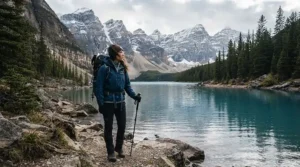
Features That Actually Matter (And Those That Don’t)
Marketing loves big numbers, but fishing rewards boring details. The features below earn their place; the others deserve a shrug.
What matters:
- ✅ Pit zips or other real venting. Without them, even breathable fabric turns into a sauna on a humid day.
- ✅ Taped seams and a waterproof front zipper. Water attacks seams, not fabric.
- ✅ Adjustable hood, cuffs and hem. These small cinches stop the drip down your wrist.
- ✅ Stretch or gussets. Casting is an overhead, repetitive motion, so mobility counts.
What doesn’t:
- ❌ A sky-high hydrostatic head number. Past roughly 10,000 mm, other factors decide your comfort.
- ❌ Extra pockets. More zippers mean more weight, and a single chest pocket handles a phone and licence.
- ❌ Loud branding. Reflective logos help safety, but the rest is cosmetic.
On paper, a spec sheet reads like a promise. In the field, ventilation and fit decide whether a packable rain jacket for fishing trips feels like gear or like a plastic bag with sleeves.
Packable Rain Jacket for Fishing Trips vs. Ponchos and Heavy Fishing Shells
Anglers usually weigh three options: a packable shell, a poncho, or a heavy fishing jacket (often paired with bibs). Each wins somewhere.
| Option | Packed Size | Weather Protection | Durability | Best For |
|---|---|---|---|---|
| Packable shell (e.g., Marmot PreCip Eco) | Small | Good in moderate rain | Moderate | Hiking, travel, general fishing |
| Poncho | Small | Covers pack, leaves arms exposed | Low to moderate | Budget bank fishing |
| Heavy fishing shell (e.g., Simms Challenger or heavier) | Larger | Strong in sustained rain | High | Boats, cold, saltwater |
Think of lightweight packable rainwear as the minimalist’s answer: it wins whenever you must carry the jacket more than you wear it. Ponchos cover your pack and breathe well, but the forearms and legs stay exposed and the hood lacks a bill, according to reviewers. Heavier shells win on a deck in sustained rain, but they eat space and never fit in a carry-on’s corners.
The honest conclusion from the comparison above: the packable shell is the best default for anglers who hike, fly or fish multiple waters, while a heavy shell makes sense only if you spend most days in a boat. If you do both, own both.
Fishing Trip Packing: Building an Ultralight Gear Kit Around Your Shell
Weight savings only matter if the jacket is in reach when the sky turns. Here is a practical routine for fishing trip packing that keeps your shell useful.
- Pack it last, on top. A rain jacket buried under a tackle box is a rain jacket you won’t use.
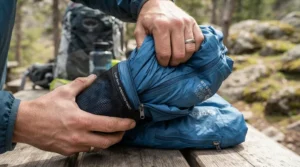
- Use a dedicated dry sack or the jacket’s own pocket. Either keeps it separate from damp waders and net rubber.
- Clip, don’t stuff, where possible. Jackets with carabiner loops, like the Black Diamond Fineline Stretch and Patagonia Torrentshell 3L, can hang from a pack strap and dry as you walk.
- Weigh your whole kit. Ultralight gear works as a system: a 6-ounce shell saves little if the vest carries three extra fly boxes.
- Dry it nightly. Hang the jacket inside out after each trip; trapped moisture, not rain, is what kills coatings.
The goal is a shell that earns its place twice: once for rain, once as a windbreaker for chilly dawn starts. Among ultralight gear choices, the Outdoor Research Helium and Montbell Versalite do this best. Stash them, forget them, and be quietly pleased when clouds roll in.
Backcountry Fishing Apparel: The Layering System Under Your Shell
A jacket is only one third of a dry day. Smart backcountry fishing apparel treats the shell as the roof of a three-part system: base layer, insulation, shell.
Base layer. Choose merino or synthetic. Cotton is the villain, because public-health guidance notes it loses insulating value when wet, while most synthetics retain insulation even when damp.
Midlayer. A fleece or synthetic puffy traps warmth without becoming useless in humidity. Because shells like the Marmot PreCip Eco don’t insulate, this layer does the real work, and adding or removing it is how you manage temperature when rain is steady.
Shell. This is where your packable rain jacket for fishing trips lives. Fit matters: a shell snug enough to avoid billowing but loose enough to layer lets you cast without binding.
Hat, buff and quick-dry gloves finish the system. Because water exits a breathable shell as vapor, a hot, sweaty underlayer can overwhelm even a premium jacket, so vent early, before you’re damp, not after.
Compact Travel Rain Jacket Strategy for Anglers Who Fly
Flying to fish adds a second constraint: luggage. A compact travel rain jacket should fold to the size of a toiletry bag, weigh next to nothing, and work equally well on a river and a rainy city street. Tropical-fishing guides note that many packable jackets weigh roughly 100 to 300 grams, so they barely register on a baggage allowance.
Wear the jacket on the plane. It frees pack space, and it is the one item you can’t afford to have in a lost bag. For tropical trips, prioritize breathability over weatherproofing, because humidity will drown you before rain does; that favors the Montbell Versalite or Outdoor Research Helium for light, sweaty days. For mixed climates (a Pacific Northwest steelhead run followed by a coastal city stopover), the Marmot PreCip Eco is the most versatile compact travel rain jacket here, while the Patagonia Torrentshell 3L looks better in town and handles heavier weather.
Skip anything bulkier than you’d comfortably carry through an airport. If it can’t live in a carry-on pocket, it isn’t truly a compact travel rain jacket.
Real-World Scenarios: Matching Jackets to Anglers
The following profiles are hypothetical, designed to show how the analysis plays out.
Scenario 1: The weekend wade angler on a $120 budget. She fishes small streams about 15 times a year and hikes a mile or two to get in. The Marmot PreCip Eco gives her pit zips and a useful hood for roughly $100–$130, and it covers hiking days too. Cost per wet outing stays low.
Scenario 2: The hike-in lake angler counting grams. He backpacks six miles to alpine water twice a summer, and his pack weighs under 20 pounds. The Montbell Versalite saves a few ounces and breathes better on the approach, though he must treat hooks carefully. If the budget is tighter, the Outdoor Research Helium is the consolation prize.
Scenario 3: The boat angler in shoulder season. She fishes open water in spring and fall, often in cold, windy rain. The Patagonia Torrentshell 3L or Simms Challenger wins here; extra weight is irrelevant when the boat carries it, and tougher fabric survives cleats and hooks.
Scenario 4: The occasional bank angler. He fishes a few times a year near the car. A Frogg Toggs Ultra-Lite2 lives in the trunk as an emergency layer, and he spends his savings on bait.
Problem and Solution Guide: Fixing the Most Common Rain Jacket Headaches
Even a good shell has quirks. These are the usual complaints and what to do about each.
Problem: the inside feels wet even though it’s not leaking. That’s condensation, not a leak. Open the pit zips, unzip the front a few inches, and wear a thin wicking base layer. On jackets without pit zips, like the Outdoor Research Helium, plan on partial unzipping.
Problem: hooks and brush shred thin fabric. Slip on a lightweight hook-guard habit: keep treble hooks in a closed fly patch or foam hook-keeper, and avoid leaning against sharp edges. Thin shells like the Montbell Versalite deserve extra caution.
Problem: water stops beading and the jacket “wets out.” The shell fabric is soaking up water because the DWR coating is worn, not because the membrane failed. Wash according to the label and reapply a treatment. Increasingly, brands and aftercare companies offer a PFAS-free durable water repellent, which matters as states move to restrict PFAS in consumer goods.
Problem: packing it wet. Always dry it before long storage, even if it means draping it over a chair overnight.
What to Expect Over Time: Long-Term Cost and Maintenance
Cheap jackets aren’t always cheap. Consider an illustrative calculation: a roughly $40 shell that tears after 10 outings costs about $4 per outing, while a roughly $120 jacket used for 60 outings costs about $2. That math is why durability counts as a feature, not a luxury.
| Tier | Typical Price Range | Likely Role | Value Logic |
|---|---|---|---|
| Budget (Frogg Toggs Ultra-Lite2) | Under ~$50 | Backup, spare | Low upfront, short lifespan |
| Mid (Marmot PreCip Eco, Black Diamond Fineline Stretch) | ~$100–$220 | Everyday shell | Best balance of cost and performance |
| Durable (Patagonia Torrentshell 3L, Simms Challenger) | ~$150–$250 | Workhorse | Highest lifetime value if used often |
| Premium ultralight (Montbell Versalite) | ~$260–$300 | Specialist | Pays off when weight is critical |
The value logic is straightforward. Spending more only makes sense if you use the jacket often enough, or if weight savings change how often you actually carry it. A $290 shell left at home saves nothing. Maintenance extends all of it: wash the jacket occasionally, refresh the water-repellent finish when beading fades, and keep sunscreen and bug spray off the fabric where you can, since labels often warn against such contaminants.
Safety Guide: Why Staying Dry Is More Than Comfort
Rain gear is safety gear. Public health guidance, including CDC’s hypothermia and frostbite advice, emphasizes wearing warm clothing and removing wet clothing immediately, and other CDC-published material notes hypothermia becomes most likely when a person is chilled by rain, sweat or immersion in cold water. You don’t need Arctic temperatures for that to matter; wet, windy days on open water can pull heat from your body faster than most anglers expect.
Practical rules follow. Carry a dry spare layer in a bag. Don’t wait until you’re shivering to put the shell on. Treat fumbling hands, confusion and shivering as warning signs, and head for shelter. On boats, remember a rain jacket doesn’t replace a life jacket; wear both. Finally, features like the kill-switch D-ring on the Simms Challenger exist for a reason, so use the lanyard.
Frequently Asked Questions
❓ What is the best packable rain jacket for fishing trips on a tight budget?
❓ How small does a compact travel rain jacket fold down?
❓ Is lightweight packable rainwear enough for all-day rain?
❓ Do I need pit zips on a shell for backcountry fishing apparel?
❓ How do I restore water repellency on a packable rain jacket?
Conclusion
The right packable rain jacket for fishing trips is the one that you’ll actually carry, and the one that survives your style of fishing. For most anglers, the Marmot PreCip Eco is the practical pick: light, vented and fairly priced. If you cast constantly and want freedom of motion, the Black Diamond Fineline Stretch is the better bet. Boat anglers who value toughness should look hard at the Patagonia Torrentshell 3L or the Simms Challenger, while gram-counters hiking to remote water will love the Montbell Versalite or Outdoor Research Helium. Keep the Frogg Toggs Ultra-Lite2 as the glovebox spare.
Remember the trade-offs: ounces versus toughness, breathability versus price, packed size versus fishing-specific features. Pair your choice with smart fishing trip packing, sensible backcountry fishing apparel layers, and a bit of care, and your shell will outlast several seasons of wet mornings. Whether you’re after a compact travel rain jacket for a fly-in adventure or lightweight packable rainwear for local water, the most useful jacket is the one already on your back when the sky opens. Prices change, so check current price and availability before you buy, and enjoy every wet, wonderful hour on the water.
✨ Ready to Gear Up Before the Next Forecast Turns?
🔍 Take your next trip from “hoping it won’t rain” to “bring it on” with a shell chosen for your fishing style. Click on any highlighted product name to check current pricing and availability. Pick your jacket, pack it on top, and keep casting!
Recommended for You
- Rain Bibs For Fishing From A Boat: 7 Best Picks To Stay Dry (2026)
- Rain Jacket For Fishing: 7 Best Affordable Picks (2026)
- Rain Gear For Fishing In Heavy Downpours: 7 Proven Picks (2026)
Disclaimer: This article contains affiliate links. As an Amazon Associate, I earn from qualifying purchases. If you purchase products through these links, we may earn a small commission at no additional cost to you.
✨ Found this helpful? Share it with your friends! 💬🤗
