
In This Article
Ice fishing looks like a postcard: crisp air, squeaky snow, a thermos steaming on an upturned bucket. Then the thermometer drifts to 34°F, the sky starts spitting sleet, and the postcard becomes a slushy wrestling match. Early ice, late ice, a mid-January thaw: wet days show up far more often than the brochures admit. The gear that shrugs off a bone-dry, minus-ten morning is rarely the gear that survives a wet-snow slog.
That gap is where rain gear for ice fishing earns its place. It doesn’t replace your warm suit. It’s a shield against water.
What Is Rain Gear for Ice Fishing?
Rain gear for ice fishing is a fully waterproof jacket-and-bib shell built to block rain, sleet, slush, and wet snow on the ice, usually layered over insulation. It trades raw warmth for sealed seams, tough fabric, and dependable water-shedding. That is exactly what a standard ice suit sometimes can’t promise on a soggy day.
Outdoor Life’s 2026 fishing rain gear roundup ranks jackets and bibs largely on membrane rating, fabric toughness, and fit. We’ll use the same lens here, but filter it through frozen-lake reality. You’ll also see how ice fishing wet weather gear, a slush proof fishing suit, and waterproof insulated apparel each solve a slightly different problem. Prices below are ranges only, so check current price before you buy.
Quick Comparison: Rain Gear for Ice Fishing at a Glance
| Pick | Category | Best For |
|---|---|---|
| Frogg Toggs Classic All-Sport Rain Suit | Budget nonwoven shell | Backup layer and setup days |
| Grundéns Tourney Jacket and Bibs | Mid-range foul-weather shell | Sleet-heavy shoulder-season trips |
| AFTCO Hydro Jacket and Bibs | High-rated membrane shell | Long, wet sessions on a budget |
| Grundéns Brigg 44 Jacket | PVC-coated heavy duty | Abrasion, slush, and fish slime |
| AFTCO Hydronaut Insulated Jacket and Bibs | Waterproof insulated apparel | Cold, wet days under 50°F |
| Eskimo Roughneck Jacket and Bibs | Float-assist workwear suit | Rugged, safety-minded anglers |
| Striker Ice Climate Jacket and Bibs | Premium float suit | Anglers who want one suit that does it all |
The table sorts the field by job rather than by brand. The Frogg Toggs Classic All-Sport Rain Suit and AFTCO Hydro Jacket and Bibs are pure shells, so you bring the warmth. The AFTCO Hydronaut Insulated Jacket and Bibs, Eskimo Roughneck Jacket and Bibs, and Striker Ice Climate Jacket and Bibs fold insulation in. If you hate carrying two systems, start with those three. If you already own a warm suit, a dedicated shell is the cheaper fix.
💬 Just one click — help others make better buying decisions too!😊
Top 7 Rain Gear for Ice Fishing Picks: Expert Analysis
Each pick below is judged on real specs and aggregated review sentiment. I haven’t field-tested any of them, and nothing here pretends otherwise. Where verified review data is thin, I say so.
1. Frogg Toggs Classic All-Sport Rain Suit — cheapest dry layer for shanty chores
Some days you need a dry shell, not a second mortgage. This two-piece suit is a packable lifeline you can toss in the sled and forget about until the sky turns.
Frogg Toggs builds it from a polypropylene nonwoven blend with a DriPore Gen 2 middle layer and fully taped seams. In practice, that means a feather-light, quiet shell that sheds sleet and wet snow without adding bulk. It also means this isn’t the fabric you drag across rough ice. Pull-on elastic-waist pants and an adjustable, removable hood make layering easy over bibs and a parka.
Based on the spec comparison, this is a setup-day and backup piece for anglers who face a handful of wet outings per season. It’s less ideal for all-day kneeling, because nonwoven material tears faster than coated nylon or PVC. Don’t expect warmth either; it’s shell-only.
Retail listings show the Classic hovering near 4.5 stars across a hundred-plus ratings, and reviewers consistently praise the value and staying dry. Reviews of the lighter Ultra-Lite2 sibling flag modest breathability and durability limits, a fair warning for this fabric family.
Pros:
- ✅ Ultralight, packable shell
- ✅ Fully taped seams
- ✅ Very low entry price
Cons:
- ❌ Nonwoven fabric tears under abrasion
- ❌ Limited breathability during hard work
Expect it to land under $100, often well under. For backup-shell duty, that’s tough to beat.
2. Grundéns Tourney Jacket and Bibs — mid-range shell with monsoon credentials
Grundéns is a commercial-fishing name, and commercial crews can’t go home just because it’s raining.
Outdoor Life’s 2026 testing singled out the Tourney Pro jacket for its heavy-weather waterproofing and stain resistance. The tester noted the coated fabric feels different from typical rain shells but handles harsh weather once you adjust. Grundéns bib comparisons also describe Tourney as the lightweight, comfortable option in the lineup. On paper, the real ice advantage is coverage. A matched jacket and bib stops water at the waist, where slush splashes and wet kneeling soak most shells. Membrane details vary by version, so confirm specs on the current listing.
This is a strong pick for anglers who want a true foul-weather shell for hole-drilling, shanty setup, and sleet-day sessions, with their own insulation underneath. Verified review counts for ice-specific use are thin, so treat the praise as informed expectation rather than proof. Grundéns owners in angling forums often single out the brand’s cuff design and toughness.
Pros:
- ✅ Heavy-weather waterproofing
- ✅ Lighter and more comfortable than PVC
- ✅ Matching bib completes the system
Cons:
- ❌ No insulation of its own
- ❌ No flotation assistance
Retail listings put bibs around $125-$140 and jackets around $135-$150 at the time of research. That makes it good value for a mid-range shell. Prices may vary.
3. AFTCO Hydro Jacket and Bibs — 30K waterproof membrane without flagship pricing
AFTCO built its name on tournament anglers who fish through whatever the sky throws at them. The Hydro line borrows that toughness at a friendlier price.
Outdoor Life named the Hydro jacket and bibs its pick for tournament anglers, noting a 30K waterproof membrane and features borrowed from pricier gear. In plain English, 30K sits at the high end of the consumer scale, far beyond what a soaked ice surface will throw at it. The tester also noted it isn’t quite as light as some of AFTCO’s other rain gear. That weight is arguably a feature on ice, because heavier face fabric shrugs off drag and kneeling.
Here’s what the spec sheet won’t tell you: the set is uninsulated. That works in your favor on mixed days. Add fleece when it’s frigid, shed it when sleet turns to drizzle, and one shell covers a wide temperature window.
Tackle Warehouse’s review team praised comfort and mobility and called the pricing reasonable compared with industry norms. Sample sizes across retailers remain small.
Pros:
- ✅ 30K waterproof membrane
- ✅ Features borrowed from pricier gear
- ✅ Comfortable, mobile fit
Cons:
- ❌ Heavier than some AFTCO rain sets
- ❌ No insulation or flotation
Plan on roughly $200 per piece, give or take. Solid value for a membrane this capable.
4. Grundéns Brigg 44 Jacket — PVC armor that laughs at slush and fish slime
Introduced in 1954, the Brigg is basically a work jacket that happens to be fully waterproof.
It pairs heavy cotton twill with a PVC coating, a combined fabric weight of roughly 15.6 ounces per yard. The coating is formulated to stay flexible in extreme cold. Internal neoprene cuffs seal around your wrists, and a double storm flap guards the front. On the ice, that adds up to abrasion resistance. Dragging a sled, kneeling at a rough hole edge, or leaning against a slushy shanty wall barely registers.
The honest trade-off is breathability. PVC doesn’t vent, so hauling gear across a lake can turn the inside into a sauna. This jacket suits stationary, wet, abrasive work, think guides, resort anglers, and anyone who lives on slushy ice. The relaxed cut leaves room for layers, but you’ll need to buy matching bibs separately.
Grundéns owners in angling forums repeatedly praise the neoprene cuffs for keeping water out of sleeves, though most feedback covers related Brigg and Petrus models.
Pros:
- ✅ Extreme abrasion resistance
- ✅ Neoprene cuffs seal wrists
- ✅ Stays flexible in frigid temperatures
Cons:
- ❌ Zero breathability when working hard
- ❌ Heavy and sold as a jacket only
Expect around $200, give or take. For people who hammer their gear daily, it’s money well spent.
5. AFTCO Hydronaut Insulated Jacket and Bibs — waterproof and warm in one layer
This is AFTCO’s answer when the brief reads waterproof insulated apparel. AFTCO describes the insulated Hydronaut as designed with the ice fisherman in mind.
The shell is two-layer nylon with a 30K waterproof membrane, DWR treatment, and 140 grams of synthetic insulation. Synthetic fill matters because it keeps working when damp, which wool and down struggle to do. The bibs add CORDURA-reinforced knees and seat, wide ComfortFlex shoulder straps, knee-high zippers with storm flaps, a relief zipper, and a safety D-ring. Those knee-high zippers let you get dressed over boots and vent without stripping down.
On cold, wet days under 50°F, this is a one-and-done option. It isn’t a deep-freeze suit, though. At minus-twenty you’ll still add layers. There’s no flotation either, so pair it with proper ice safety gear.
Review data is sparse. One shopper commenting on the related Hydronaut line felt competitors from Simms and Cabela’s offer better value at that price.
Pros:
- ✅ 30K membrane plus 140g insulation
- ✅ Reinforced knees and seat
- ✅ Relief zipper and D-ring
Cons:
- ❌ Premium price per piece
- ❌ No flotation assistance
Roughly $250-$300 per piece. You pay extra for the convenience of combining shell and warmth.
6. Eskimo Roughneck Jacket and Bibs — rugged float-assist suit at a friendly price
Eskimo took workwear bones and added ice-angler features, then slipped in breathable float assistance.
The shell is 600-denier DuraDry polyester with DWR and a 5k/5k waterproof-breathable rating, fully taped seams, and a Sherpa fleece lining. Reinforced knees and ankles and removable padded knees round it out. Outdoor Life called the Roughneck its most rugged flotation pick. The thick pads can stay in or slide out through interior pockets. A 5k rating is plenty for slush, wet snow, and kneeling. It isn’t downpour-grade, so pair it with a hood and some common sense on drenching days.
Who should buy? Anglers who want one suit covering cold, wet snow with a safety margin. The Sherpa lining runs warm, so it fits 10-30°F better than mild, drizzly days. Retail listings show very few ratings, so verified star data is too thin to rely on.
Pros:
- ✅ Float-assist technology built in
- ✅ Tough 600-denier fabric
- ✅ Removable padded knees
Cons:
- ❌ Modest 5k/5k membrane
- ❌ Fleece lining runs warm on mild days
Roughly $130-$230 per piece depending on sales. Strong value for the toughness.
7. Striker Ice Climate Jacket and Bibs — float suit that moonlights as rainwear
Outdoor Life crowned the Climate its best overall flotation suit. The reviewer valued its versatility: ice fishing, rainwear, waterfowl, and casual wear in one system.
The Sureflote flotation technology puts the safety feature inside the suit rather than leaving it to a separate vest. That’s the practical difference. Float-integrated clothing means one less thing to forget. Outdoor Life noted the jacket runs small, so size up.
Several forum owners rate Striker suits highly for warmth, pockets, and flotation. Sizing complaints recur, though. It’s a premium purchase, best for anglers on the ice most weekends who want a long-term, do-everything suit.
Pros:
- ✅ Flotation built into the suit
- ✅ Versatile across multiple uses
- ✅ Warm, well-pocketed design
Cons:
- ❌ Premium price tier
- ❌ Inconsistent sizing, jacket runs small
Comparison sites put Striker’s flagship ice gear in the several-hundred-dollar range per piece. Check current price.
Spec Showdown: All Seven Compared
| Product | Waterproofing | Insulation | Flotation | Price Range | Best For |
|---|---|---|---|---|---|
| Frogg Toggs Classic All-Sport Rain Suit | Taped seams, light to moderate rain | None | No | Under $100 | Backup shell |
| Grundéns Tourney Jacket and Bibs | Heavy-weather coated fabric | None | No | ~$125-$150/piece | Sleety shoulder season |
| AFTCO Hydro Jacket and Bibs | 30K membrane | None | No | ~$200/piece | Long wet sessions |
| Grundéns Brigg 44 Jacket | PVC-coated twill | None | No | ~$200 | Abrasive slush work |
| AFTCO Hydronaut Insulated Jacket and Bibs | 30K membrane | 140g synthetic | No | ~$250-$300/piece | Cold, wet days |
| Eskimo Roughneck Jacket and Bibs | 5k/5k | Sherpa fleece | Float assist | ~$130-$230/piece | Rugged value |
| Striker Ice Climate Jacket and Bibs | Waterproof shell | Insulated | Sureflote float | Premium tier | One-suit simplicity |
Looking at the comparison above, the AFTCO Hydro Jacket and Bibs deliver the strongest waterproofing per dollar, but you must supply warmth. If flotation matters, the Eskimo Roughneck Jacket and Bibs give you the cheapest entry. The AFTCO Hydronaut Insulated Jacket and Bibs and Striker Ice Climate Jacket and Bibs make sense only if you’ll use them often enough to justify the price.
How to Choose Rain Gear for Ice Fishing
Start with the answer, then the reasoning. Follow these steps:
- Match the membrane to your weather. For occasional drizzle, 5k-10k is enough. For sustained sleet or standing in wet snow, aim higher, around 15k-30k.
- Choose seams that are fully taped. Water finds stitching first, so taped seams are non-negotiable.
- Pick abrasion-proof fabric. Ice is rougher than rain. Heavier face fabric or PVC survives sled drags and kneeling better than featherweight nonwoven.
- Decide on flotation. A shell won’t keep you afloat. If you fish early or late ice, consider a float-assist suit, since In-Fisherman’s ice safety coverage explains how flotation changes self-rescue.
- Size up for layers. Rain shells fit over insulation. Too tight and you lose mobility and warmth.
- Check cuffs, hoods, and bib height. Neoprene or double-closure cuffs, a cinchable hood, and bibs keep water from sneaking in at the waist.
- Budget by frequency. Fewer than ten wet days a season favors budget shells. Weekly anglers should invest in durability.
Ice Fishing Wet Weather Gear: What Changes When Skies Turn Soggy
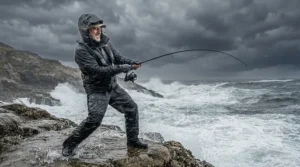
Ice fishing wet weather gear differs from standard cold-weather clothing in three ways. First, it assumes water arrives from above and below. Sleet falls on shoulders while slush wicks up through boots and bib hems. Second, it values drying speed over maximum loft. Third, it prioritizes sealed closures: storm flaps, taped seams, and cuffs.
That’s why a lot of ice fishing wet weather gear borrows from the commercial-fishing world. The Grundéns Brigg 44 Jacket and the AFTCO Hydro Jacket and Bibs descend from crews who fish in rain all day. Expect heavier fabrics, bigger hoods, and longer hems than typical winter parkas.
On a wet day, think in zones. Keep the torso dry with a sealed jacket. Protect the hips and knees with bibs. Then add waterproof boots, because the most expensive shell on earth can’t save wet feet. Good ice fishing wet weather gear forms a continuous barrier from hood to boot top, and gaps are where damp creeps in.
Slush Proof Fishing Suit: What the Label Really Promises
A slush proof fishing suit sounds like permission to walk through anything. It isn’t, and honesty matters here. The label means the fabric and seams resist water splashing, soaking, and pooling against your clothing. It doesn’t mean the ice underneath is safe.
Slush on a frozen lake is a warning sign. Idaho Fish and Game’s ice fishing safety guidance notes that slush means ice is no longer freezing from the bottom and may be weak or deteriorated. A slush proof fishing suit protects your clothes, not your life.
Where does it excel? Setup on firm, thick, but wet-topped ice. Kneeling at a hole. Hauling a sled across wet snow. For those jobs, look at fabric toughness first: the Grundéns Brigg 44 Jacket and Eskimo Roughneck Jacket and Bibs resist wear, while the AFTCO Hydro Jacket and Bibs add membrane muscle. A true slush proof fishing suit also needs bibs, since water pools at knee height.
Waterproof Insulated Apparel: Warmth That Survives Getting Wet
Waterproof insulated apparel combines two jobs, and the secret is the insulation type. Synthetic fill keeps much of its warmth when damp. Down and cotton don’t. That’s why the AFTCO Hydronaut Insulated Jacket and Bibs use 140 grams of synthetic insulation and the Eskimo Roughneck Jacket and Bibs rely on Sherpa fleece.
Waterproof insulated apparel also reduces layering fuss. You skip the bulky shell-over-parka dance. The cost is flexibility: once the insulation is sewn in, you can’t peel it off when sleet warms into drizzle. That’s where a separate shell, such as the Frogg Toggs Classic All-Sport Rain Suit, offers more control.
If your region sees mostly cold, wet snow, waterproof insulated apparel is the efficient choice. If your days swing from 15°F to 38°F, a shell over adjustable layers is smarter. Decide by your typical day, not your coldest one.
Rain Gear for Ice Fishing vs. an Insulated Ice Suit
| Factor | Dedicated Rain Gear | Insulated Float Suit |
|---|---|---|
| Waterproofing | Usually higher | Often moderate |
| Warmth | Add your own layers | Built in |
| Flotation | Rarely | Often included |
| Best For | AFTCO Hydro Jacket and Bibs, Frogg Toggs Classic All-Sport Rain Suit | Eskimo Roughneck Jacket and Bibs, Striker Ice Climate Jacket and Bibs |
The choice isn’t either-or. Rain gear for ice fishing wins on waterproof ratings and flexibility, while a float suit wins on safety and simplicity. Anglers who fish weekly often own both, with the suit for cold days and the shell for wet ones. For occasional anglers, a suit with a high membrane rating covers most needs.
Practical Usage Guide: The Three-Phase Layering System
Phase 1: Setup. Drag, drill, and haul in a light base layer plus your rain shell. You’ll overheat in a full parka, and sweat is just another source of wet.
Phase 2: Sit. Once you stop moving, add insulation under the shell or swap into your warm suit. Keep the shell handy so you can throw it back on when sleet starts.
Phase 3: Pack up. Re-shell before breaking down the shanty, because that’s when you’ll be wettest.
Maintenance: Rinse off slush and fish residue, then air-dry fully before storing. Follow the care label for washing, and refresh DWR treatments when water stops beading. Check zippers and cuffs before each season.
Common mistakes in the first 30 days:
- Buying too snug to fit over layers.
- Stuffing damp gear into a sled bag.
- Wearing cotton underneath.
- Ignoring cuff seals.
Real-World Scenarios: Three Anglers, Three Setups
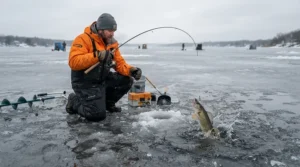
The weekend drive-up angler. Fishing eight to ten days a season on a tight budget, mostly early and late ice. The Frogg Toggs Classic All-Sport Rain Suit over existing winter clothes covers sleet and shanty chores for under $100.
The guide or daily regular. On the ice nearly every day, kneeling and hauling constantly. Durability is everything. The Grundéns Brigg 44 Jacket paired with Grundéns bibs, or the AFTCO Hydro Jacket and Bibs, will outlast lighter shells.
The cold-wet-snow Great Lakes angler. Faces damp 20-35°F days with wind. The AFTCO Hydronaut Insulated Jacket and Bibs or Eskimo Roughneck Jacket and Bibs deliver warmth plus waterproofing in one layer, and the Roughneck adds float assist.
Problem → Solution Guide
- Wet knees. Choose bibs with reinforced knees and add kneeling pads. The Eskimo Roughneck Jacket and Bibs include removable padded knees.
- Water up the sleeves. Look for neoprene or double-closure cuffs, like those on the Grundéns Brigg 44 Jacket.
- Sweating through your layers. Vent early, shed the shell during hauling, and avoid PVC when you’re moving.
- Stiff, frozen shell. Shake off slush before it freezes and dry gear indoors.
Long-Term Cost & Maintenance: Is Premium Rain Gear Worth It?
| Tier | Examples | Price Range | Value Verdict |
|---|---|---|---|
| Budget | Frogg Toggs Classic All-Sport Rain Suit | Under $100 | Great backup, shorter lifespan |
| Mid-range | Grundéns Tourney Jacket and Bibs, AFTCO Hydro Jacket and Bibs | ~$125-$200/piece | Best balance of protection and price |
| Premium | AFTCO Hydronaut Insulated Jacket and Bibs, Striker Ice Climate Jacket and Bibs | $250+/piece | Worth it for frequent anglers |
Think in cost per use, using illustrative math. A $200 shell used 25 days a year for four years costs about $2 per day. A budget suit used ten days over two seasons might run near $3 per day if it fails early. Durable gear often costs less per wet day, provided you actually use it. For occasional anglers, budget gear remains perfectly reasonable.
Safety Guide: Rain Gear Won’t Float, So Plan Accordingly
A rain shell blocks water. It doesn’t save you in a fall. The Wisconsin DNR’s ice safety advice recommends a personal flotation device or float coat, creepers on boots, a spud bar to check ice, and hand-held spikes with a length of light rope. It also stresses that no ice is ever 100% safe.
Practically, that means:
- Check ice with a spud bar as you go.
- Carry spikes in an easy-reach pocket.
- Tell someone your plan.
- Pack dry clothes in a waterproof bag.
- Treat slush as a warning sign.
Good rain gear for ice fishing keeps you comfortable. Good safety habits keep you alive.
FAQ
❓ How waterproof should rain gear for ice fishing be?
❓ Does rain gear for ice fishing keep you warm?
❓ Can I wear rain gear for ice fishing over a float suit?
❓ How do I care for rain gear for ice fishing?
❓ What size rain gear for ice fishing should I buy?
Conclusion
Wet days are part of ice fishing, and the right rain gear for ice fishing turns them from misery into just another good day on the lake. For tight budgets, the Frogg Toggs Classic All-Sport Rain Suit is a solid backup. For mid-range protection, the Grundéns Tourney Jacket and Bibs and AFTCO Hydro Jacket and Bibs deliver real waterproofing. For abrasion and slush, the Grundéns Brigg 44 Jacket is hard to beat. For warmth with waterproofing, look to the AFTCO Hydronaut Insulated Jacket and Bibs. And if safety plus simplicity matters most, the Eskimo Roughneck Jacket and Bibs and Striker Ice Climate Jacket and Bibs bring flotation into the picture.
Match the gear to your typical wet day, not your worst one, and remember no shell replaces ice safety habits. Check current price on any pick before you buy.
✨ Don’t Miss These Exclusive Deals!
🔍 Take your ice fishing comfort to the next level with these carefully selected products. Click on any highlighted item to check current pricing and availability. These picks will help you create dry, comfortable days on the ice your whole crew will love!
Recommended for You
- Packable Rain Jacket For Fishing Trips: 7 Best Picks 2026
- Rain Bibs For Fishing From A Boat: 7 Best Picks To Stay Dry (2026)
- Rain Jacket For Fishing: 7 Best Affordable Picks (2026)
Disclaimer: This article contains affiliate links. As an Amazon Associate, I earn from qualifying purchases. If you purchase products through these links, we may earn a small commission at no additional cost to you.
✨ Found this helpful? Share it with your friends! 💬🤗
