

In This Article
What are hip waders for bank fishing? They are waterproof, thigh-high boots or wading pants that keep your legs dry while you work the shoreline, step into the shallows, and push through mud, weeds, and wet grass to reach productive water. They are built for access, not for deep wading.

That one distinction changes how you should shop. Most buying guides treat hip waders as a stripped-down version of chest waders. For bank anglers, they are the smarter tool. Think about a typical outing. You park, hike a muddy trail, hop a ditch, and wade in just far enough to clear the brush behind you. Chest waders turn that walk into a sauna session. Hip waders let you move.
The category also has a practical edge on the budget side. As Field & Stream notes in its hip waders roundup, you can own a pair for occasional use without spending a fortune. Fewer seams, simpler construction, and an easy on-and-off routine make hip waders for bank fishing the lowest-friction way to stay dry.
So what does this guide add that a retail listing doesn’t? Honest analysis. I compared real specs and the review themes that repeat across independent roundups for seven genuine products, then translated them into what they mean on a muddy riverbank. I haven’t personally worn any of these pairs, so you won’t find invented testing stories here. Prices appear as ranges only, since they shift constantly. Check current pricing before you buy.
Along the way we’ll cover shallow water hip waders, bank fishing wader boots, the bank fishing gear that makes a day easier, shallow wading technique, and why quick-entry waders matter more than most people realize.
Quick Comparison: Hip Waders for Bank Fishing at a Glance
| Product | Type | Material | Price Range* | Best For |
|---|---|---|---|---|
| TIDEWE Hip Waders | Bootfoot | 2-ply PVC/nylon | Under $50 | First-timers and backup pairs |
| Foxelli Camo Hip Waders | Bootfoot | Lightweight PVC | $40-$90 | Light, easy shoreline strolls |
| Frogg Toggs Rana II | Bootfoot | Nylon-reinforced PVC | $70-$130 | All-round value |
| Kylebooker Breathable Hip Waders | Stockingfoot | Breathable fabric, neoprene booties | $60-$120 | Warm-weather comfort |
| Frogg Toggs Cascades Elite Cleated | Bootfoot | Cleated PVC | $100-$170 | Slick banks and clay |
| LaCrosse Grange 32 | Bootfoot | ZXT rubber | $150-$200 | Rough terrain, long-term use |
| Redington Escape | Wading pants | Four-ply breathable | $120-$200 | Mixed-season versatility |
*Ranges are approximate and based on research at the time of writing. Check current price on the retailer’s page.
Look closely at the spread. The TIDEWE Hip Waders and Foxelli Camo Hip Waders trade durability for price, which is a fair deal if you fish a handful of times a season. The Frogg Toggs Rana II sits in the sweet spot where weight, cost, and toughness meet. And if your banks are steep, rocky, or slimy, the LaCrosse Grange 32 and Frogg Toggs Cascades Elite Cleated justify their higher price with traction and puncture resistance that the budget pairs can’t match.
💬 Just one click — help others make better buying decisions too!😊
Top 7 Hip Waders for Bank Fishing: Expert Analysis
1. TIDEWE Hip Waders — lightweight entry price, boots included
The standout here is simple: a complete bootfoot setup for a price that barely registers. Roundups consistently single it out as a budget pick, and it comes with boots attached, so you skip the separate bank fishing wader boots purchase.
The construction is 2-ply PVC over nylon. In practice that means it’s light enough to carry in a backpack and flexible enough to climb a bank without feeling like you’re wearing stovepipes. The tradeoff is that PVC punctures more easily than rubber when you brush against briars or barbed wire. Based on the spec comparison, this is a shallow-water tool, not a bushwhacking tool.
Who should buy it? Beginners who aren’t sure they’ll fish enough to justify a premium pair, and anglers who want a spare in the truck. One independent roundup described it as holding up well for casual outings, which matches the construction. Reviewer sentiment I could verify skews positive on value and negative on long-term durability, so treat it as a season-or-two purchase.
Pros:
- ✅ Boots included, so no extra footwear needed
- ✅ Light enough for long shoreline walks
- ✅ Unisex sizing is widely available
Cons:
- ❌ PVC punctures more easily than rubber
- ❌ Limited arch support for all-day hiking
Price range: under $50. Value verdict: the cheapest sensible way to start hip wading.

2. Foxelli Camo Hip Waders — lightweight camo for stealthy shoreline work
Foxelli’s pitch is mobility. The pair is marketed for fishing and hunting, with a camo finish that helps if you’re stalking spooky fish in clear water or sharing the bank with waterfowl season. Camo isn’t a gimmick on a quiet creek; low-contrast clothing genuinely reduces how visible you are to wary fish.
On paper, a lightweight PVC build means less leg fatigue on a long walk to a remote bend. Reviews I found describe it as suited to less demanding conditions, which is honest framing: it’s built for easy banks, not rock scrambles. What the spec sheet won’t tell you is how it handles repeated flexing at the ankle, so buyers who fish several times a week should expect to inspect the boot seams periodically.
Here’s the thing most people overlook with lightweight bootfoot designs: sizing. Size up if you plan to wear thick socks in fall, because a cramped foot gets cold faster than a loose one. Think of it like winter gloves, where trapped air matters more than a tight fit.
Pros:
- ✅ Camo pattern helps with stealth
- ✅ Light weight reduces fatigue
- ✅ Works for fishing and waterfowl season
Cons:
- ❌ Not built for rough or thorny terrain
- ❌ Boot sole is basic for slick clay
Price range: roughly $40-$90. Value verdict: a good fit for light-duty use on friendly banks.
3. Frogg Toggs Rana II — the middle-ground workhorse
If I had to point a first-time buyer at one pair, this would be it. Field & Stream names it its best budget pick in the hip waders category, describing nylon-reinforced PVC, taped seams, and molded PVC boots that give better support than flimsy bootie designs.
Taped seams matter because seams are where cheap waders leak first. Reinforced nylon matters because it spreads stress across the fabric instead of letting a single snag tear a hole. And molded boots mean a more stable footing as you step down a sloped bank. One reviewer reported wearing the Rana II on a muddy bank and through weedy shallows with solid waterproofing, which is exactly the use case we care about.
It’s also lighter than a full rubber boot, so shallow water hip waders like these suit anglers who hike more than they stand. If you’re torn between this and the TIDEWE Hip Waders, the extra cost buys sturdier materials and a more supportive boot. Nothing flashy, just fewer compromises.
Pros:
- ✅ Taped seams reduce leak points
- ✅ Nylon reinforcement boosts durability
- ✅ Molded PVC boots give solid support
Cons:
- ❌ Less insulation for cold-water days
- ❌ Pricier than the pure budget pairs
Price range: around $70-$130. Value verdict: the strongest all-around value on this list.
4. Kylebooker Breathable Hip Waders — breathable comfort for warm-weather banks
This is the odd one out, and deliberately so. It’s a stockingfoot design with neoprene booties, meaning you bring your own wading boots. That’s a feature, not a flaw. A separate wading boot gives you better ankle support and sole grip than the molded boot on most bootfoot hip waders.
Breathability changes the experience in summer. PVC traps heat and sweat; breathable fabric lets moisture escape, so you aren’t wetter on the inside than on the outside. IntoFlyFishing names it the best-value pick, citing breathability, affordability, and comfortable neoprene booties.
The catch is the added cost and weight of bank fishing wader boots, plus a couple of extra minutes at the trailhead. But for anglers who fish long hot days or hike a mile or more, the comfort gain is real. Consider it the “grown-up” setup.
Pros:
- ✅ Breathable fabric keeps you cooler
- ✅ Neoprene booties fit under wading boots
- ✅ Lets you choose your own boot soles
Cons:
- ❌ Requires separate wading boots
- ❌ Fabric is less puncture-resistant than rubber
Price range: roughly $60-$120 (boots extra). Value verdict: excellent for hot weather, assuming you’ll buy decent boots.
5. Frogg Toggs Cascades Elite Cleated — grip when the bank turns to grease
Outdoor Life’s hip boot guide named this its best pick for slippery conditions, and the logic is straightforward. Cleated outsoles dig into soft mud and wet clay where smooth molded boots would slide.
Anyone who has fished a steep, rain-soaked bank knows the real hazard isn’t the water. It’s the trip down to the water. A cleated sole gives you the confidence to step down a slope with a rod in one hand and a net in the other. I’d weigh this pair for muddy reservoirs, clay creek banks, and anywhere the shoreline drops off sharply.
Cleats do have a downside: they can feel clumsy on smooth concrete or rock, and they pick up mud that you’ll want to clean off before moving between waters. We’ll get to that in the maintenance section. Consider this a specialist tool for treacherous footing.
Pros:
- ✅ Cleated sole bites into mud and clay
- ✅ Bootfoot design is fast to put on
- ✅ Strong choice for steep banks
Cons:
- ❌ Cleats clump with mud, adding weight
- ❌ Less comfortable on hard, flat surfaces
Price range: roughly $100-$170. Value verdict: worth it if your local banks are slick.
6. LaCrosse Grange 32 — rubber toughness for rough shorelines
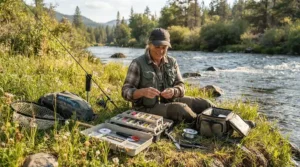
This is the heavyweight. LaCrosse introduced the Grange in 1951 and still builds it from ZXT rubber with an internal calf harness, EVA footbed, fiberglass shank, and a chevron cleated outsole. It’s uninsulated, rated for roughly 0 to 70°F per the manufacturer, and weighs about seven pounds per pair.
Seven pounds sounds heavy, and it is. But rubber shrugs off thorns, rocks, and barbed wire that would slice PVC. The calf harness locks your heel in so the boot doesn’t slide off your foot with every stride, which matters on long hikes. The fiberglass shank adds stiffness underfoot, so your arches don’t feel every stone.
The honest analysis: this pair makes sense when you fish rough terrain often, or want something to last many seasons. It makes less sense if you only fish easy, flat banks a few times a year. Rubber also lacks the packability of PVC, so don’t expect to stuff it into a daypack.
Pros:
- ✅ Rubber resists thorns and abrasion
- ✅ Calf harness keeps the heel locked
- ✅ Cleated outsole grips mud and rock
Cons:
- ❌ Heavier than PVC and fabric options
- ❌ Premium price for casual anglers
Price range: around $150-$200. Value verdict: a long-term investment, not a bargain.
7. Redington Escape — wading pants that bridge the seasons
Field & Stream picks this as its best wading pants option. They’re stockingfoot hip waders with four-ply breathable fabric all the way to an adjustable hook-and-loop belt. Wading pants sit higher on the body than traditional hip boots and fit better at the waist, which makes them more comfortable for long days.
Why does that matter on the bank? Because you’re not always standing in water. Between spots, you’re hiking, climbing, and squatting to unhook a snag. Wading pants move like regular outdoor pants, while rigid hip boots can feel like walking in a wetsuit. Add layers underneath in fall, and you’ve got a three-season piece.
Like the Kylebooker Breathable Hip Waders, they need separate wading boots, so budget for that. And with no real storage to speak of, you’ll rely on a vest or pack for your bank fishing gear.
Pros:
- ✅ Breathable four-ply fabric all the way up
- ✅ Waist belt gives a secure, comfortable fit
- ✅ Layers well for cool weather
Cons:
- ❌ Needs separate wading boots
- ❌ Fabric punctures more easily than rubber
Price range: roughly $120-$200 (boots extra). Value verdict: best for anglers who wade seasonally and hike a lot.
| Product | Walk-Comfort | Rough-Terrain Durability | Mud Traction | Best For |
|---|---|---|---|---|
| TIDEWE Hip Waders | Good | Low | Basic | Beginners |
| Foxelli Camo Hip Waders | Good | Low | Basic | Light-duty stealth |
| Frogg Toggs Rana II | Good | Medium | Good | All-round value |
| Kylebooker Breathable Hip Waders | Excellent | Medium | Depends on boots | Hot weather |
| Frogg Toggs Cascades Elite Cleated | Fair | Medium | Excellent | Slick banks |
| LaCrosse Grange 32 | Fair | High | Very good | Rough terrain |
| Redington Escape | Excellent | Medium | Depends on boots | Three-season hiking |
The pattern is clear. Comfort and durability pull in opposite directions: breathable fabrics win on a long walk, rubber wins when the terrain fights back. Ratings above are qualitative comparisons based on materials and published feature sets, not lab measurements, so use them for direction rather than precision. If you only remember one thing, remember this: match the material to the bank, not the other way around.
How to Choose Hip Waders for Bank Fishing
Picking the right pair is mostly about asking five honest questions.
- Bootfoot or stockingfoot? Bootfoot models are faster to put on and cheaper. They suit anglers who value convenience and plan short walks. Stockingfoot designs need separate boots but fit better and last longer.
- How rough is the shoreline? Thorns, rocks, and fence lines call for rubber. Soft mud and easy trails allow PVC or fabric.
- What’s the temperature range? Uninsulated rubber like the Grange is comfortable from roughly 0 to 70°F, per LaCrosse. Hot climates favor breathable fabrics.
- How far do you walk? Anything over half a mile pushes you toward lighter weight or wading pants.
- How often will you fish? Under ten trips a year? Buy the budget pair. Fifty? Buy once and cry once.
- Does it fit over your clothes? Size for your thickest layers, then check the length against your inseam.
A short word on shopping honestly: skim the one-star reviews first. They tell you what actually fails, whether that’s a leaking seam or a splitting boot, and that’s more useful than five-star enthusiasm.

Features That Actually Matter (And Those That Don’t)
What matters: Seam construction, sole traction, and fit. A leaking pair is just a bad pair of boots, so taped or vulcanized seams earn their keep. Traction decides whether you fish confidently or timidly. And fit controls whether your day ends with a smile or blisters.
Worth a second look: Adjustable straps and belt leashes keep the top from sagging as you move. A gravel guard or sealed ankle on stockingfoot designs keeps debris out of your boots.
What mostly doesn’t matter: Camo patterns, unless you’re hunting or fishing very clear water. Fancy colors. Marketing words like “ultra” and “pro.” And pockets, honestly. Hip waders offer minimal storage, as FlyFisherPro points out, so your bank fishing gear lives in a vest or sling pack instead.
The simplest filter I know: if a feature doesn’t change how dry, stable, or comfortable you are, it’s decoration.
Bank Fishing Wader Boots: Bootfoot vs. Separate Boots
Bank fishing wader boots deserve their own conversation, because they are the single biggest factor in whether your hip waders feel good or terrible.
Bootfoot (Attached Boots)
Convenient and quick. You step in and go. Rubber bootfoot designs like the LaCrosse Grange 32 pair stiff shanks with real traction, while PVC versions like the Frogg Toggs Rana II keep weight down. The limitation: you can’t swap soles, and a worn boot means a worn wader.
Stockingfoot With Wading Boots
Here you add dedicated bank fishing wader boots over neoprene booties. You gain ankle support, replaceable soles, and a better fit. This setup suits the Kylebooker Breathable Hip Waders and the Redington Escape.
Soles: Felt, Rubber, or Studded?
Rubber is the safe, widely accepted option, and studs add bite on mud and rock. Felt grips slick rocks well but is restricted in some places because it can carry invasive organisms between waters. The U.S. Fish and Wildlife Service’s Clean, Drain, Dry guidance is worth reading before you travel between waterbodies, and local rules vary, so check regulations where you fish.
For most bank anglers, a lugged rubber sole is the best blend of grip, legality, and easy cleaning.
Shallow Water Hip Waders vs. Chest Waders vs. Wet Wading
Which style actually suits the bank? The answer depends on depth, season, and how much you walk.
| Feature | Shallow Water Hip Waders | Chest Waders | Wet Wading |
|---|---|---|---|
| Typical depth | Up to upper thigh | Waist to chest | Any, but you get wet |
| Price tendency | Lower | Higher | Lowest |
| Heat on hot days | Moderate to low | High | Lowest |
| Storage | Minimal | Chest pockets | None |
| Best for | Banks, shallows, mud | Deeper wading | Warm weather, clean water |
Hip waders cost less than chest waders of the same brand and model, a point echoed by FlyFisherPro’s comparison. They also have fewer seams, which reduces leak risk. Outdoor Life makes the same observation in its hip boot guide, noting that boots have fewer seams to tear compared with full waders.
The tradeoff is depth. If you step past mid-thigh, water pours in over the top. Respect that line and shallow water hip waders will serve you well. Wet wading in shorts and sandals is cheaper and cooler, but it leaves you exposed to cold, sharp rocks, and unknown bottoms. For banks with muddy edges, I’d pick hip waders over wet wading almost every time.
Bank Fishing Gear: What to Carry With Your Hip Waders
Your waders solve one problem. The rest of your bank fishing gear solves the others. Here is a practical, minimalist loadout.
The Core Kit
- Sling pack or vest: Because hip waders have no pockets, this carries your tackle, tools, and a rain layer.
- Wading staff: A staff provides a stable third point of contact on uneven bottoms and soft mud.
- Net with a magnet release: Keeps your hands free while you unhook fish.
- Polarized sunglasses: They cut surface glare so you can read depth and spot hazards.
- Small towel and spare socks: The unglamorous heroes of cold, wet days.
Safety Extras
- Wading belt (if your waders have none): Helps limit water inflow after a fall.
- Whistle and phone in a waterproof pouch: Cheap insurance.
- Headlamp: Bank trips tend to run later than planned.
Keep the load tight and balanced. Every extra pound you carry adds fatigue, and fatigue makes slips more likely. Match your kit to your trip, and you’ll fish longer and safer.
Practical Usage Guide: Setup, Quick-Entry Waders Routine, and Maintenance
Here’s where most guides stop, and where the real value begins.
The Quick-Entry Routine
Quick-entry waders are really about a repeatable system. Hip waders are among the fastest to put on, since you can practically hop in and out of them with ease. Make it faster still:
- Stage your waders unfolded and turned right-side out at the tailgate.
- Sit on the tailgate, slide in one leg at a time, and tighten the belt leashes.
- Cinch the hip drawcord or belt snug, but not tight enough to restrict stepping.
- Run through a 10-second check: seams, straps, boot laces, sole mud.
First 30 Days: Avoid Common Mistakes
- Break in new boots on short trips before a long hike.
- Pack a spare pair of socks; wet feet from sweat count too.
- Inspect for pinholes by checking for damp spots after your first outings.
Maintenance Schedule
- After every trip: Rinse, brush off mud, and turn them inside out to dry. Hang them away from direct sun.
- Monthly: Check seams and boot soles for cracks. Patch small holes promptly with a repair kit.
- Seasonal: Store flat or hung loosely, never crumpled in a hot garage.
Clean boots and dry gear also protect waterways. Draining and drying equipment before moving to another waterbody is the core of the Clean, Drain, Dry approach, so build it into your routine rather than treating it as an afterthought.
Real-World Scenarios: Three Anglers, Three Pairs
Let’s make this concrete with three hypothetical profiles.
The Weekend Beginner
Maya fishes a local pond six or seven times a year. The banks are grassy and gentle. Her priority is low cost and no fuss. The TIDEWE Hip Waders or Frogg Toggs Rana II fit perfectly, with the Frogg Toggs Rana II edging ahead if she expects to add a few trips each season.
The Creek Hiker
Dan hikes a mile each way to a brushy trout creek and fishes weekly from May through October. He cares about breathability and packability. The Kylebooker Breathable Hip Waders or Redington Escape, paired with rubber-soled bank fishing wader boots, serve him best. The fabric stays cooler on the hike in, and he can swap boot soles when they wear out.
The Reservoir Regular
Priya fishes steep, clay-heavy reservoir banks, often after rain. Footing is her main concern. The Frogg Toggs Cascades Elite Cleated gives her the traction she needs, while the LaCrosse Grange 32 is the pick if she also deals with thorns and rocks.
The takeaway: budget, terrain, and walking distance, in that order, decide which pair wins. Not brand names.
Shallow Wading: Technique, Limits, and Cold-Water Safety
Shallow wading looks easy, and that’s exactly why people get hurt. Here are the habits that keep you upright.
Technique
- Shuffle, don’t stride. Slide your feet to feel the bottom before committing weight.
- Face upstream or into current, and keep your stance wide.
- Use a wading staff to probe depth and soft spots.
- Stay shallower than your wader’s top. For hip waders, that’s well below mid-thigh.
Why Cold Water Deserves Respect
Cold water drains body heat several times faster than cold air, and a sudden dunking can trigger cold shock, an involuntary gasp and hyperventilation response. Virginia’s Department of Wildlife Resources explains the risks and prevention steps in its cold-water safety guidance, and recommends a life jacket and a wader belt when you’re near cold water.
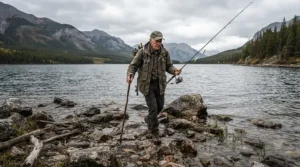
Do not wear hip waders or chest waders in a boat or kayak. Filled with water, they add weight that makes swimming difficult. If you fish from the bank and stay in the shallows, the risk is much lower, but a slip into deeper water can still turn serious in fall. When in doubt, step back.
Common Mistakes When Buying and Using Hip Waders for Bank Fishing
Let’s save you some money and grief.
- Buying on price alone. The cheapest pair is great until it leaks on your second trip. Match the pair to your terrain.
- Ignoring sizing. Too tight, and you lose circulation and warmth; too loose, and you trip. Try on with your thickest socks.
- Skipping boots on stockingfoot designs. Neoprene booties alone are not walking footwear. Budget for proper bank fishing wader boots.
- Wading too deep. Hip waders have a hard ceiling. Pass it and they become bags of cold water.
- Storing them wet. Trapped moisture breeds mildew and weakens seams.
- Forgetting about cleaning. Mud and plant matter are exactly how invasive species hitchhike.
- Overloading pockets and packs. Weight on your back plus soft mud is a slippery combination.
Most of these are free to fix. A few minutes of attention beats a ruined trip.
Long-Term Cost and Maintenance: What Hip Waders Really Cost You
Sticker price tells only part of the story. Total cost of ownership depends on how long a pair lasts and how often you fish.
| Pair | Upfront Range | Expected Lifespan* | Cost Logic | Best For |
|---|---|---|---|---|
| TIDEWE Hip Waders | Under $50 | Short to medium | Cheap per season if used lightly | Occasional anglers |
| Frogg Toggs Rana II | $70-$130 | Medium | Strong value for regular use | Regular anglers |
| LaCrosse Grange 32 | $150-$200 | Long | Higher upfront, lower per-trip cost | Frequent anglers |
| Redington Escape | $120-$200 plus boots | Medium to long | Pays off with versatility | Hikers and seasonal anglers |
*Lifespan is a general expectation based on materials, not a guarantee.
Here’s the math that matters. A budget pair that lasts two seasons costs roughly the same per trip as a premium pair that lasts ten, if you fish rarely. Fish weekly, though, and the premium rubber pair wins easily. The LaCrosse Grange 32 is the clearest example: expensive upfront, but its rubber build and replaceable-feeling durability spread the cost across many outings.
Don’t forget repair: a small patch kit costs far less than replacing waders. Treat maintenance as a form of savings, not a chore.
FAQ: Hip Waders for Bank Fishing
❓ Can you wear hip waders in a kayak or boat?
❓ How deep can you go in hip waders?
❓ Are bootfoot or stockingfoot hip waders better for bank fishing?
❓ Do hip waders need a belt?
❓ How do I stop my hip waders from leaking?
Conclusion: Pick the Pair That Fits Your Bank
Hip waders for bank fishing aren’t complicated once you strip away the marketing. They’re about dry legs, steady footing, and the freedom to walk without overheating. The right pair depends less on brand and more on what your shoreline throws at you.
If you’re new or fish lightly, the TIDEWE Hip Waders or Foxelli Camo Hip Waders get you in the water for very little. If you want one dependable pair for regular outings, the Frogg Toggs Rana II is the sensible middle path. Hot-weather hikers should look hard at the Kylebooker Breathable Hip Waders or Redington Escape with good bank fishing wader boots. Slick, muddy banks call for the Frogg Toggs Cascades Elite Cleated. And if your shoreline is rough and you plan to fish for years, the LaCrosse Grange 32 is the heavy-duty answer.
Whatever you choose, respect the water. Keep your shallow wading shallow, build a quick-entry waders routine you can run on autopilot, and pack smart bank fishing gear so you’re not fighting your own equipment. Clean, drain, and dry before you move on, and the water will be there for the next angler too.
Now go fish.
✨ Ready to Gear Up for Your Next Bank Trip?
🔍 Take your shoreline fishing to the next level with these carefully selected hip waders. Click on any highlighted product name to check current pricing and availability. The right pair will help you fish longer, stay drier, and enjoy every muddy mile of the bank!
Recommended for You
- Chest Waders For Fly Fishing: 7 Best Picks In 2026
- Rain Gear For Kayak Fishing: 7 Best Picks To Stay Dry In 2026
- Rain Gear For Ice Fishing: 7 Best Picks To Stay Dry In 2026
Disclaimer: This article contains affiliate links. As an Amazon Associate, I earn from qualifying purchases. If you purchase products through these links, we may earn a small commission at no additional cost to you.
✨ Found this helpful? Share it with your friends! 💬🤗
