
In This Article
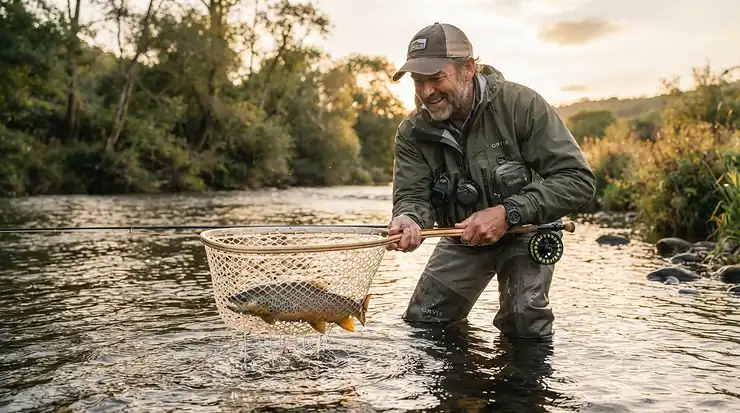
Chest waders for fly fishing are waterproof, suspender-held garments that cover you from your feet to mid-chest. They let you stand in a river, lake, or estuary for hours while staying dry, warm, and mobile. Modern pairs use breathable laminates instead of the rubber slabs waders used to be made from.
Here’s the thing about waders: nobody daydreams about them. Rods get the poetry. Reels get the engineering talk. Waders get a grudging purchase after the first cold, soggy, miserable afternoon. Yet your waders decide whether you fish for forty-five minutes or five hours, and whether you’re thinking about the trout or about your numb knees.
The market has moved a long way. Reviewers in 2026 describe breathable fabrics as standard, and the real differences now sit in construction, zippers, reinforcement, and fit. That’s good news for you, and it also makes the shopping trickier.
So this guide takes the long, honest route. We compare seven real models from budget to top-end, then translate the specs into what they mean in a river. After that come buying criteria, safety, care, and fly fishing technique in waders. Prices below are ranges only, because they shift constantly. Check current price before you buy.
Chest Waders for Fly Fishing at a Glance: Quick Comparison
Pressed for time? This table sorts the seven picks by build and budget. The ranges are approximate at the time of research and will vary by retailer and size.
| Product | Build | Best For | Price Range |
|---|---|---|---|
| Frogg Toggs Canyon II | 4-ply nylon upper, stockingfoot | Beginners, backup pair | Around $70-$100 |
| Orvis Clearwater | 4-layer breathable, convertible fit | Occasional anglers in moderate climates | Roughly $200-$300 |
| Simms Freestone | Toray Quadralam 4-ply | Best value for regular anglers | Roughly $300-$400 |
| Redington Escape | Breathable stockingfoot | Mid-priced all-rounder | Roughly $200-$300 |
| Orvis Pro Zipper | Cordura 4-layer upper, 5-layer lower | Rugged terrain, brush-heavy rivers | Roughly $700-$850 |
| Simms G3 Guide | Gore-Tex Pro Shell | Frequent anglers wanting comfort plus toughness | Roughly $600-$750 |
| Simms G4Z | Multi-layer Gore-Tex Pro, front zip | Guides and 100-day-a-year anglers | Roughly $850-$1,000 |
Looking at the table, the Frogg Toggs Canyon II is the clear entry ticket, and the Simms Freestone is where proven brand-name performance begins. The jump from the Simms G3 Guide to the Simms G4Z buys you a front zipper and tougher construction, not a different kind of comfort. If you fish fewer than twenty days a year, the top two rows of value are probably where your money works hardest.
💬 Just one click — help others make better buying decisions too! 😊
Top 7 Chest Waders for Fly Fishing: Expert Analysis
Every entry below pairs real specs with what those specs mean on the water. Review sentiment is aggregated from published reviews and angler discussions. Where review depth was thin, we say so rather than fill the gap.
1. Frogg Toggs Canyon II — lightest budget pair that’s still breathable
The standout here is weight. This is one of the lighter stockingfoot options in its bracket, which matters when you’re hiking a mile to a pool you’d rather not share.
The upper is 4-ply nylon, and published reviews describe breathability as better than most waders at the same price. Large sizes are cut for size 10-12 feet, a 38-inch inseam, and a 51-inch chest. The Canyon II adds an exterior chest pocket on top of the internal one, fixing a complaint about its predecessor’s tiny pocket.
Based on the spec comparison, this is a smart pick for beginners who aren’t sure fly fishing will stick. It also suits anglers who need a backup pair. What the spec sheet won’t tell you is that there’s no extra protection around the knees, so brush and kneeling on gravel will find the weak spots first.
Reviewers consistently praise the value and lightness. A common caution is durability compared with premium fabrics. Angler forum discussion suggests budget Frogg Toggs models tend to last a few seasons with careful use.
Pros:
- ✅ Very light for hiking to remote water
- ✅ Added exterior chest pocket for fly boxes
- ✅ Impressive breathability for the price
Cons:
- ❌ No knee reinforcement for brushy banks
- ❌ Shorter lifespan than premium fabrics
Price range: around $70-$100. Verdict: unbeatable as a low-risk first pair, but plan to replace it sooner.
2. Orvis Clearwater — the convertible gateway wader
The Clearwater’s party trick is side-release buckles. Drop the bib on a warm afternoon and you’ve got waist-high pants without leaving the river.
It uses a lightweight 4-layer breathable fabric, listed at a 30K/8K rating (waterproofness over breathability). That pairing suggests a design aimed at moderate climates, where heat management matters more than raw insulation. The handwarmer pocket is fleece-lined, and the chest pocket holds a large fly box without bulging.
Here’s what to weigh: this is entry-level Orvis, not the bombproof Pro line. It’s built for anglers who fish occasionally and want brand-backed quality without a four-figure outlay. One angler thread notes the neoprene foot runs a little small, so size boots carefully.
Published reviews repeatedly call the Clearwater the “gateway” wader, and several note five-plus seasons of use, though results vary with care. Repair and replacement decisions after the warranty window are at Orvis’s discretion, so keep your receipts.
Pros:
- ✅ Converts from chest to waist on hot days
- ✅ Fleece-lined handwarmer pocket
- ✅ Roomy chest pocket for fly boxes
Cons:
- ❌ Neoprene bootie runs small for some feet
- ❌ Not as abrasion-resistant as the Pro line
Price range: roughly $200-$300. Verdict: excellent middle-ground value for weekend anglers.
3. Simms Freestone — proven performance without the premium price
The Freestone’s edge is pedigree. It is the entry point into a brand with a long reputation for fit and durability.
All Freestone chest waders use Toray Quadralam fabric, a 4-ply construction that tends to outlast thinner waders at this price. The neoprene stocking feet are thick and generously sized, which suits larger feet. Microfleece-lined hand warmers and zip and flip-out pockets round out the layout.
The analytical case is simple. If you fish regularly but not professionally, this is where durability per dollar peaks. For about $100 more, the Freestone Z version adds a zipper, which reviewers call a total game changer. One caveat: the Freestone is not made in the US, a detail some buyers care about.
Reviewers consistently describe it as a great first serious pair. One guide reported five years from the previous generation without leaks, though that’s one data point, not a promise. Reasonably priced repair service is another point in its favor.
Pros:
- ✅ 4-ply Toray fabric holds up to regular use
- ✅ Thick, roomy neoprene stocking feet
- ✅ Comfortable harness and fleece-lined pockets
Cons:
- ❌ No front zipper on the standard version
- ❌ Not made in the US
Price range: roughly $300-$400. Verdict: the sweet spot for most serious hobbyists.
4. Redington Escape — mid-priced breathable all-rounder
The Escape’s pitch is straightforward: a breathable stockingfoot chest wader with a waterproof chest pocket, priced between budget and premium.
We’ll be upfront here. Verifiable review depth for this specific model was thinner than for the Simms and Orvis picks. Angler forum threads speak well of the Redington lineup in the roughly $150-$300 range, and a published roundup calls the Escape a good mid-priced wader. That’s encouraging, but it isn’t the same as a long-term durability record.
On paper, the Redington Escape fits anglers who want breathable construction without paying for a guide-grade fabric. What most buyers overlook is the trade-off in wear zones. Mid-priced waders generally use less reinforcement at the knees and seat than premium ones.
If you’re comparing it with the Orvis Clearwater, check sizing charts and bootie volume for your own feet. Fit often decides this contest more than fabric does.
Pros:
- ✅ Breathable stockingfoot design at a mid-range price
- ✅ Waterproof chest pocket for fly boxes
- ✅ Brand with a solid forum reputation
Cons:
- ❌ Less published long-term review data
- ❌ Likely lighter reinforcement than premium waders
Price range: roughly $200-$300. Verdict: reasonable value, best bought where returns are easy.
5. Orvis Pro Zipper — Cordura toughness with a waterproof zipper
The headline is the shell. Orvis built this wader from proprietary Cordura fabric, with 4 layers in the upper and 5 in the lower legs.
Orvis says its lab tests show the Orvis Pro Zipper is more puncture- and abrasion-resistant than its other waders. A TIZIP MasterSeal waterproof zipper makes getting in and out far easier, and removable knee pads protect the exact spot where budget waders fail. Reviewers describe it as the most durable non-Gore-Tex wader they’ve used.
Who should care? Anglers who crash through brush, scramble rocky banks, and kneel on gravel. The athletic fit runs snug, and a published review suggests sizing up. The comfort is described as close to Orvis’s lightest waders, though not quite matching them.
One reviewer reported no leaks after two years of use, and the company’s warranty service gets frequent praise in angler reviews. It’s still a small sample, so treat it as encouraging rather than conclusive.
Pros:
- ✅ Cordura shell resists punctures and abrasion
- ✅ Waterproof front zipper for easy on-and-off
- ✅ Removable knee pads for rough terrain
Cons:
- ❌ Athletic fit may require sizing up
- ❌ Premium price tag
Price range: roughly $700-$850. Verdict: worth it if you fish hard and often.

6. Simms G3 Guide — Gore-Tex comfort without the crunch
The G3’s signature is how it feels. Reviewers note it lacks the crunchy, plasticky quality of many breathable waders.
The fabric is Gore-Tex Pro Shell, and recent iterations use a four-layer laminate on the lower half, with a face fabric exclusive to Simms. Field & Stream’s reviewer deliberately scraped the waders against rock faces and trudged through thick, pokey cover, and wore only a thin merino layer and fleece pants underneath. Other upgrades include a reach-through hand warmer pocket, a flip-out tippet pocket, and a gravel guard with the boot hook removed to avoid fly-line snags.
Here’s the analysis. The Simms G3 Guide targets the angler who wants premium wader breathability for long days, with enough toughness to forget about the fabric. The jump from mid-priced waders is felt most when you’re sweating on a hike-in, then standing still in cold water.
The same reviewer called them the best fly fishing waders he’s ever worn. That’s one expert opinion, though, and a high price demands that you try the fit.
Pros:
- ✅ Quiet, flexible Gore-Tex fabric
- ✅ Four-layer lower leg balances breathability and toughness
- ✅ Thoughtful pockets and snag-free gravel guards
Cons:
- ❌ Costs several times the budget options
- ❌ No front zipper
Price range: roughly $600-$750. Verdict: the benchmark for comfort-focused anglers.
7. Simms G4Z — the guide-grade, zip-front flagship
The G4Z’s claim is raw toughness. Published roundups describe the G4Z line as some of the toughest waders in the world, and Field & Stream’s list names the Simms G4Z best overall.
It brings multi-layer Gore-Tex Pro construction and a front zipper, which makes it the premium choice for anglers who live in their waders. The wider Simms G4 family has a reputation in Alaska, where one guide reportedly got many hard seasons from a pair. That’s anecdotal, but it fits the way these waders are marketed.
What to weigh: you’re paying for a few extra seasons and a zipper that makes bathroom breaks less of a Cirque du Soleil routine. If you fish 50-plus days a year, that math starts to make sense. If you fish ten, the Simms Freestone gets you closer on value.
Reviewers consistently praise durability and comfort. The main complaint is price, which sits at the very top of the category.
Pros:
- ✅ Top-tier Gore-Tex Pro durability
- ✅ Front zipper simplifies on-and-off
- ✅ Proven in hard-use guiding conditions
Cons:
- ❌ Highest price in this lineup
- ❌ Overkill for occasional anglers
Price range: roughly $850-$1,000. Verdict: buy it if waders are daily workwear.
Side-by-Side Spec Snapshot
| Product | Fabric | Notable Feature | Best For |
|---|---|---|---|
| Frogg Toggs Canyon II | 4-ply nylon | Exterior plus internal chest pockets | Budget beginners |
| Orvis Clearwater | 4-layer breathable | Convertible to waist pants | Warm-weather weekend trips |
| Simms Freestone | Toray Quadralam 4-ply | Fleece-lined hand warmers | Regular all-season anglers |
| Redington Escape | Breathable multi-layer | Waterproof chest pocket | Mid-budget buyers |
| Orvis Pro Zipper | Cordura 4-layer upper, 5-layer lower | TIZIP zipper, knee pads | Brushy, abrasive terrain |
| Simms G3 Guide | Gore-Tex Pro Shell | Reach-through hand warmer | Comfort-first anglers |
| Simms G4Z | Multi-layer Gore-Tex Pro | Front zipper | Guides, high-volume anglers |
The pattern is clear: fabric toughness and convenience features scale with price, but breathability gains flatten out in the middle. The Orvis Pro Zipper is the pick for abrasive terrain, while the Simms G3 Guide wins on fabric comfort. If you only fish a handful of weekends a year, the Orvis Clearwater or Redington Escape covers the basics without the guilt.
How to Choose Chest Waders for Fly Fishing
What should you look for in chest waders for fly fishing? Match your fishing days, climate, and terrain to a fabric tier and fit, then confirm pockets, feet, and care requirements. Here are the steps in order of importance.
- Estimate your days on the water. Anglers fishing 50-plus days a year are generally better served by multi-layer Gore-Tex or Cordura, while casual anglers do fine with 3-layer fabrics.
- Match fabric to climate. Warm-weather anglers should prioritize breathable fly fishing waders, while cold-water anglers should think about layers or neoprene.
- Pick stockingfoot over bootfoot for versatility. Stockingfoot pairs with separate wading boots, which gives better ankle support and traction.
- Check the sizing chart, twice. Inseam, chest girth, and boot size all matter, and a wrong cut ruins a great fabric.
- Inspect pockets and hardware. A chest pocket big enough for a fly box and a hand warmer pocket matter more than flashy colors.
- Consider a zipper. A front zipper is a comfort upgrade and a bathroom-break upgrade.
- Plan for repairs. A brand with accessible repair service stretches your investment.
Wader Breathability Explained: What the Numbers Mean
Wader breathability is simply how well the fabric lets sweat vapor escape while blocking liquid water. Most manufacturers describe it with a moisture vapor transmission figure, measured in grams per square meter per day.
One manufacturer sheet lists a three-layer fabric at 4,000 g/m²/24hrs with 15,000mm waterproofing, and claims 5-layer fabrics have very limited breathability. The Orvis Clearwater is listed with a 30K/8K rating. Because test methods differ between brands, these numbers aren’t directly comparable, so treat them as rough guides rather than race results.
Wader breathability comes down to a few practical points:
- Layer count matters, but so does placement. Many premium waders use thinner laminates in the upper and thicker ones on the lower legs, where abrasion is worst.
- Dirty fabric breathes poorly. A stale layer of sunscreen, sweat, and grime clogs the membrane, and washing restores performance.
- Your base layer is half the equation. Merino or synthetic wicking layers move moisture away from skin, while cotton traps it like a sponge.
On paper, a pricier wader’s breathability advantage is real but incremental. The difference you’ll feel more often is comfort and fit, which is why trying waders on beats chasing numbers.
Breathable Fly Fishing Waders vs Neoprene and Nylon-PVC
Breathable fly fishing waders suit most anglers, but neoprene and nylon-PVC have their place. Here’s how the three compare.
| Feature | Breathable Laminate | Neoprene | Nylon/PVC |
|---|---|---|---|
| Breathability | Highest | Lowest | Low |
| Warmth | Layer-dependent | Excellent | Minimal |
| Weight | Light | Heavier | Moderate |
| Durability | Good to excellent | Good | Fair |
| Best For | Active wading, variable climates | Cold water, winter | Budget, occasional use |
Breathable models win for anyone who hikes, wades actively, or fishes across seasons. Neoprene earns its keep in near-freezing water where insulation outweighs sweat management. A guide-backed rule of thumb is that neoprene gives the best insulation in cold water, while breathable waders are the best bet when it’s warm.
If you fish mostly cold weather from a stationary position, neoprene deserves a look. Otherwise, a breathable wader plus layers is the more flexible system.
River Wading Chest Waders: Fit, Footing, and Features for Moving Water
River wading chest waders have different demands than lake gear. Current pushes, rocks roll, and the bottom is rarely friendly.
Fit comes first. Waders that bunch at the knee or bind at the crotch make every step feel like a negotiation. Reviewers of premium waders praise articulated seams for exactly this reason.
Next comes footwear. Stockingfoot waders pair with separate boots, letting you choose soles for your rivers. Studded rubber works well on slick rock, and some states restrict felt, which we cover below.
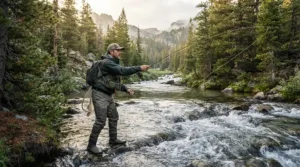
Then there’s the wader’s relationship with the current. The practical rule from guides is to avoid wading deeper than your knees whenever possible, since even moderate current gets hard to manage beyond that depth. Think of chest-high water as a decision, not a default.
Finally, check pockets and attachment points. Quality river wading chest waders let you carry a fly box, tippet, and a nipper without stuffing everything into a vest.
Fly Fishing Technique in Chest Waders: Wading, Casting, and Positioning
Your waders can improve or sabotage your fly fishing technique. Here’s how to work with them.
- Wade less, fish more. If you can present a fly from the bank, stay on the bank. Fish in higher water often hold tight to the edges, so wading in spooks them.
- Move slowly and shuffle. Slide your feet instead of lifting them, keeping three points of contact with the bottom.
- Face upstream or across current when casting. This keeps your balance in your strongest stance.
- Cast with your lower body quiet. Waders limit mobility at the hips, so rotate through the shoulders and forearm instead.
- Check for reach. If a cast requires leaning into the current, move your feet instead.
- Use a wading staff. It adds a third point of contact and helps gauge depth in stained water.
Good fly fishing technique in waders is mostly about restraint. The best anglers often look like they’re doing very little, and that calm is what keeps them upright.
Setup and Care Guide: Your First 30 Days in New Waders
A short routine protects your investment.
Before the first trip. Try the waders on with the layers you’ll actually wear, sit, squat, and step up on a stair. If something binds, exchange now.
On the water. Wear the wading belt every time. Check pockets so nothing sharp rests against the fabric.
After each trip. Rinse off mud and sand, then hang the waders to dry completely. Turn them inside out and open the booties to dry. Store them out of direct sunlight.
Monthly checks. To find leaks, turn the waders inside out and run your hand over the fabric while they’re lightly pressurized. Escaping air betrays pinholes. Reapply DWR (durable water repellent) when water stops beading.
Common first-month mistakes:
- Skipping the belt because it feels unnecessary
- Storing waders damp or crammed in a trunk
- Wearing cotton underneath
- Ignoring small abrasions until they become leaks
A little care adds seasons to any pair, and the Simms Freestone and Orvis Clearwater both reward owners who rinse and dry them promptly.
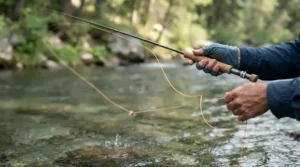
Which Waders Fit Which Angler? Real-World Scenarios
Specs only help if you see yourself in them. Here are three profiles.
The college student on a budget. A weekend angler fishing tailwaters ten times a year needs reliable dry legs. The Frogg Toggs Canyon II gets them on the water for the least money. If the budget stretches, the Orvis Clearwater adds convertibility for warm days.
The commuter angler fishing after work. Quick access matters when you’ve got ninety minutes of daylight. The Simms Freestone (or its zip version) balances durability with day-to-day convenience.
The brush-whacking trout hunter. If your rivers involve thorny banks, rocky scrambles, and constant kneeling, the Orvis Pro Zipper with its Cordura shell and knee pads is built for you. The Simms G4Z is the alternative if you prioritize Gore-Tex comfort and guide-grade toughness.
The best choice is the one that survives your terrain, not the one with the best marketing.
Common Mistakes When Buying Chest Waders for Fly Fishing
Most regrets trace back to a handful of errors.
- Buying on price alone. A cheap pair that leaks in October costs more than a decent pair bought once.
- Ignoring fit. A premium fabric in the wrong size feels worse than a budget wader that fits.
- Chasing breathability numbers. Test methods differ, so these figures only mean something within one brand’s lineup.
- Skipping the belt and staff. These are the cheapest safety items you’ll own.
- Over-buying features. A fifth pocket won’t help if your boots don’t grip.
- Forgetting layering. The wrong base layer ruins any wader’s breathability.
Features That Actually Matter (And Those That Don’t)
Matter most: correct fit, durable knee and seat reinforcement, a chest pocket that holds a fly box, and a belt that cinches properly. A front zipper is a genuine convenience for anyone who wears waders all day.
Matter somewhat: fleece-lined hand warmers, a flip-out tippet pocket, and removable knee pads. They’re helpful, not essential.
Mostly marketing: exotic color names, tiny spec differences between similar laminates, and gadget-heavy pocket maps. If a feature doesn’t solve a problem you’ve had on the water, skip it.
Long-Term Cost and Maintenance
Cost per season, not sticker price, is the honest metric. The figures below are illustrative estimates based on reported lifespans, not guarantees.
| Tier | Price Range | Reported Lifespan | Rough Cost per Season | Best For |
|---|---|---|---|---|
| Budget (Frogg Toggs Canyon II) | $70-$100 | A few seasons | $25-$35 | Beginners |
| Mid (Orvis Clearwater, Redington Escape) | $200-$300 | Several seasons | $40-$60 | Weekend anglers |
| Value (Simms Freestone) | $300-$400 | Many seasons | $50-$70 | Regular anglers |
| Premium (Orvis Pro Zipper, Simms G3 Guide, Simms G4Z) | $600-$1,000 | Many seasons | $100-$200 | High-volume anglers |
The table shows that premium waders don’t necessarily cost less per season for casual users. They shine when you fish enough days to wear out cheaper fabric quickly. Repair services and warranties can tilt the math further, so check what each brand offers before you commit.
Safety, Regulations, and Compliance for Wading Anglers
Waders keep you dry, but they can’t protect you from the river’s bad moods. The basics:
- Wear a wading belt. It slows water from rushing into your legs if you fall. Some experienced anglers debate its effect, but major safety guides still recommend it. See these wader safety guidelines for more.
- Consider a personal flotation device in deep or swift water.
- Use a staff in murky or fast water, and skip wading during peak runoff.
- Respect cold. Even summer trout water can cause hypothermia, so carry dry layers.
Regulations matter too. Some jurisdictions restrict felt-soled footwear to slow aquatic invasive species, and rules change. The Minnesota DNR explains how felt soles can carry invasive species and recommends cleaning and drying gear thoroughly. Check your state’s rules before every trip.
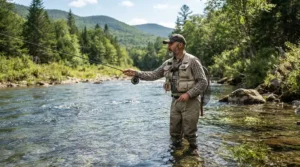
FAQ: Chest Waders for Fly Fishing
❓ How much do decent chest waders for fly fishing cost?
❓ Are stockingfoot chest waders for fly fishing better than bootfoot?
❓ Can I wear breathable fly fishing waders in summer?
❓ What should I wear under chest waders for fly fishing?
❓ How do I find a leak in river wading chest waders?
Conclusion
The best chest waders for fly fishing are the ones that fit your body, your rivers, and your calendar. Our seven picks cover the range. The Frogg Toggs Canyon II is the low-risk starter, while the Orvis Clearwater and Redington Escape cover the middle ground. The Simms Freestone is the value sweet spot, and the Orvis Pro Zipper is the answer for punishing terrain. The Simms G3 Guide is the comfort benchmark, and the Simms G4Z is the flagship for anglers who live in their waders.
Remember the bigger lessons. Wader breathability matters, but layering and fit matter just as much. River wading chest waders demand a belt, a staff, and some humility about depth. Good fly fishing technique means wading less than you think you need to.
Pick a tier, confirm the sizing chart, and check current price on the pair you like. Then go stand in a river and let the trout make you feel humble.
✨ Ready to Gear Up?
🔍 Take your time on the water to the next level with these carefully selected chest waders. Click any highlighted product name to check current pricing and availability, then get out there and make the next cast count! 🎣
Recommended for You
- Rain Gear For Kayak Fishing: 7 Best Picks To Stay Dry In 2026
- Rain Gear For Ice Fishing: 7 Best Picks To Stay Dry In 2026
- Packable Rain Jacket For Fishing Trips: 7 Best Picks 2026
Disclaimer: This article contains affiliate links. As an Amazon Associate, I earn from qualifying purchases. If you purchase products through these links, we may earn a small commission at no additional cost to you.
✨ Found this helpful? Share it with your friends! 💬🤗
