
In This Article
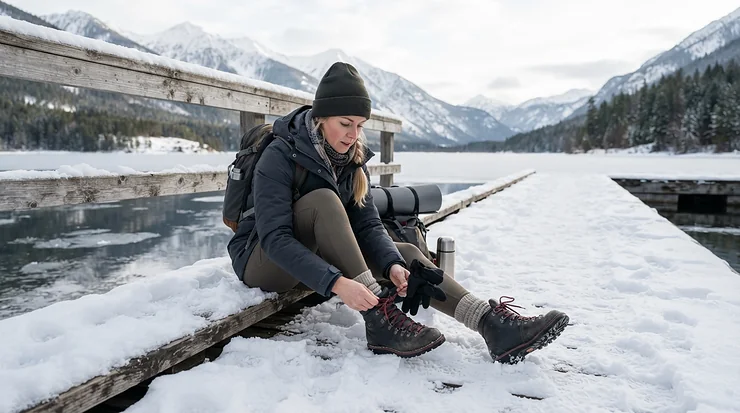
Fishing boots for cold weather are waterproof, insulated boots built to hold heat while you stand still on wet decks, icy banks, and slick docks. They combine a sealed rubber or neoprene shell, a rated insulation layer, and a grippy outsole, so cold and moisture never reach your toes.
Here’s the uncomfortable truth: your feet quit before your patience does. You can bundle your torso like an Arctic explorer, but if your toes go numb at 9 a.m., the day is over. Cold feet don’t just hurt. They drain focus, shorten sessions, and nudge you toward bad footing on a wet boat deck.
The tricky part is that “warm” isn’t one thing. Boots are insulated with materials like neoprene, felt, and synthetic fill, and the best-known synthetic is Thinsulate, which is sold by weight in grams. Then there’s the temperature number stamped on the box, which is a lab-style comfort claim and not a promise. Reviewers repeatedly note that boots rated to -40°F can feel cold well before that when you’re standing motionless.
So this guide does the sorting. We compared seven real boots across budget, mid-range, and premium tiers, using spec sheets, published reviews, and aggregated buyer sentiment. We also cover insulated cold weather fishing boots, the insulation rating decoder, warm angler footwear layering, and shoulder-season fishing, which is exactly where most anglers are standing right now in late October 2026.
Quick Comparison: Fishing Boots for Cold Weather at a Glance
| Product | Insulation / Build | Price Range | Best For |
|---|---|---|---|
| Kamik NationPlus | 200g Thinsulate liner, rubber shell | $80-$130 | Budget shore anglers |
| XTRATUF Ice 6″ Ankle Deck Boot | Insulated, waterproof ankle height | $80-$165 | Boat decks, mild-cold days |
| Muck Arctic Sport II | 5mm neoprene, fleece lining | $120-$170 | All-day standing, mixed temps |
| Simms Challenger Insulated Boot | 7mm neoprene, 14″ rubber shell | $200-$270 | Stud-ready wading and banks |
| LaCrosse Alphaburly Pro 1600G | 1600g Thinsulate Ultra, neoprene core | $200-$250 | Long, still sits in deep cold |
| Baffin Snow Monster | Multi-layer removable liner | Premium tier | Deep cold without the heft |
| Baffin Impact | 8-layer liner, double aluminum layers | $250-$300 | Polar-grade stationary fishing |
Looking at the table, the Kamik NationPlus delivers the lowest cost of entry, but its 200g fill is the thinnest in the group, so it suits short or active sessions. The Muck Arctic Sport II is the strongest all-rounder for people who stand a lot, while the LaCrosse Alphaburly Pro 1600G and Baffin Impact are the heavy hitters for sitting still in serious cold. Anyone shopping for shoulder-season fishing should note that the heaviest boots here will cook your feet above freezing.
💬 Just one click — help others make better buying decisions too!😊
Top 7 Fishing Boots for Cold Weather: Expert Analysis
A quick note on method. Everything below comes from manufacturer specs and published reviews, not personal ownership. Where verified review data is thin, we say so plainly. Prices are ranges, so check current pricing before you buy.
1. Kamik NationPlus — warmest-feeling budget pac
The Kamik NationPlus is a classic pac-style boot: a waterproof rubber shell wrapped around a removable insulated liner. That liner carries 200g of Thinsulate, and Kamik lists a -40°F comfort rating, which is optimistic for 200g, so treat it as a “walking around” number.
The shaft is about 11.5 inches and the pair weighs around 3.6 pounds, light enough that you won’t feel like you’re dragging concrete. A gusset tongue helps block slush. Based on the spec comparison, this is a shore-fishing and dock-walking boot, not a stand-motionless-for-six-hours boot.
Published reviews paint a mixed-but-fair picture. Reviewers at OutdoorGearLab praise the comfort and fit but call it not completely waterproof, and note the synthetic liner packs down over time. A few retail buyers report leaks, while others call it warm and dry for the money. One reviewer says it’s fine for an hour or two in very chilly climates, which fits the 200g fill.
Pros:
- ✅ Comfortable, true-to-size fit
- ✅ Removable liner dries faster
- ✅ Very low cost for insulated pac boots
Cons:
- ❌ 200g fill limits real-world deep-cold warmth
- ❌ Some buyers report leaks and liner compression
Expect roughly $80-$130 depending on retailer. Verdict: excellent value for fall and light-winter outings, but not a primary boot for harsh winter.
2. XTRATUF Ice 6″ Nylon Ankle Deck Boot — the deck-friendly warm option
The XTRATUF Ice 6″ Nylon Ankle Deck Boot is what you reach for when you’re on a boat and the forecast says “crisp,” not “apocalyptic.” Retail listings show it as waterproof and insulated, and the pair weighs about 2 pounds 4 ounces, which is feather-light by cold-weather standards.
That low weight is the real story. Ankle-height deck boots let you move, pivot, and brace against a rolling deck without the clumsy swing of a tall pac. The trade-off is obvious: a 6-inch shaft offers no protection if water gets above the ankle, and less insulation volume means less warmth at standstill.
On sentiment, the brand has a strong reputation. Outdoor Life describes XtraTuf as consistently among the best-built, longest-lasting footwear in the fishing space. The model’s retail rating at REI sits around 4.1 of 5 from a modest sample of reviews. Because verified detail on this specific insulated model is thinner than for the others, confirm the current insulation spec on the product page before purchase.
Pros:
- ✅ Lightweight and easy to move in
- ✅ Waterproof build suits wet decks
- ✅ Respected brand for durability
Cons:
- ❌ Ankle height won’t stop deeper water
- ❌ Less insulation for long, still sits
Prices run roughly $80-$165 depending on sales cycles. Verdict: a smart pick for shoulder-season boat days, not for ice or snow.
3. Muck Arctic Sport II — neoprene warmth that walks like a rain boot
The Muck Arctic Sport II is a hybrid, half rain boot and half winter boot. It uses a 5mm CR flex-foam neoprene bootie with a fleece lining inside a soft rubber shell, and Muck advertises comfort down to -40°F. A cushioned EVA midsole and aggressive tread round it out.
What does that mean in practice? Neoprene hugs the foot and traps warmth even when damp, which is why it’s a long-time favorite for standing jobs. Testers at OutdoorGearLab reported it kept them comfortable around 20°F and ranked it among the most insulated in their group. They also warned it can run hot above roughly 35-40°F, a detail that matters enormously for shoulder-season fishing.
Not every owner is thrilled. One verified retail reviewer complained the newer Arctic Sport II felt noticeably less warm than earlier Arctic Sport boots, so expectations around the -40°F claim should stay realistic. Retail averages for the mid-height version sit near 4.6 of 5 across about a hundred reviews.
Pros:
- ✅ Neoprene warmth with real flexibility
- ✅ Excellent grip on snow and slush
- ✅ Pull-on convenience, no laces
Cons:
- ❌ Overheats above roughly 40°F
- ❌ Some reviewers say newer version runs cooler
Typical range is $120-$170. Verdict: top value for anglers who stand all day in temperatures from about 10°F to 35°F.
4. Simms Challenger Insulated Boot — stud-ready for slick banks
The Simms Challenger Insulated Boot is built for the angler who actually works the water edge. It has a 14-inch vulcanized rubber shell, 7mm neoprene insulation, and a fleece lining. The Freestone rubber outsole accepts Simms’ Hardbite studs and cleats, and the sole is non-marking for boat decks.
Here’s why that matters. Slippery river rock and iced boat ramps are where cold-weather days turn dangerous, and a boot that takes studs lets you adapt the same pair to different terrain. At roughly 91 ounces per pair in a size 11, it’s substantial but not punishing. The 14-inch height means over-the-calf coverage, so you can step into shallow water without panic.
Sentiment is strongly positive but the sample is small: Backcountry shows about 4.6 of 5 from only eight reviews, and some other retail pages carry no reviews yet. Treat the praise as promising, not proven. Retail experts highlight the grip on docks, trails, and icy ramps.
Pros:
- ✅ Takes cleats and studs for icy footing
- ✅ 14-inch shell for extra splash protection
- ✅ Non-marking sole is boat-friendly
Cons:
- ❌ Heavy for walking long distances
- ❌ Limited review volume to confirm longevity
Plan on roughly $200-$270. Verdict: a premium fishing-specific boot that earns its price if you fish slick surfaces.
5. LaCrosse Alphaburly Pro 1600G — deep-cold insulation with a neoprene core
The LaCrosse Alphaburly Pro 1600G is marketed as a hunting boot, but its construction translates cleanly to anglers who sit on shore or in a skiff. It layers natural rubber over a neoprene core and adds 1600g of Thinsulate Ultra. Retailers list a comfort range of roughly -70°F to 30°F.
Remember that Thinsulate is rated per square meter. Going from 200g (the Kamik NationPlus) to 1600g is a leap, not a step. The 18-inch height gives serious splash protection, and an adjustable neoprene gusset helps with calf fit. The Burly Pro outsole sheds mud and, according to one review, held on ice better than several winter boots.
The honest downsides: it weighs about 5.5 pounds per pair, and reviewers note it isn’t a hiking boot and feels clunky on rocks. Ratings vary by seller, from a middling 3.4-3.8 on one retailer to much higher on others, so sizing and fit seem to drive opinion. One recommendation from the maker: size down if you’re between sizes.
Pros:
- ✅ 1600g insulation handles real deep cold
- ✅ 18-inch shaft blocks splash and slush
- ✅ Aggressive outsole sheds mud and snow
Cons:
- ❌ Heavy and bulky for long walks
- ❌ Too warm for mild shoulder-season days
Expect around $200-$250. Verdict: worth it for static, subfreezing sessions; overkill for mild fall mornings.

6. Baffin Snow Monster — polar-style warmth without the polar weight
The Baffin Snow Monster is the “I want extreme warmth but not a ski-boot lifestyle” option. A roundup lists it at about 2.1 pounds per boot, dramatically lighter than the Baffin Impact, with a rating near -94°F, and users report comfort around -50°F to -60°F. Treat that rating as a ceiling, not a guarantee.
The secret is Baffin’s multi-layer removable inner boot, which stacks a wicking layer, foam, hollow-fiber insulation, and a vaporized aluminum membrane. The practical upside is that the liner pulls out, so you can dry it overnight, which is a genuine quality-of-life feature when you’re fishing several cold days in a row.
Verified review data is limited compared with the Impact, and the lighter build means less structure than a full polar boot. Check current specs and sizing notes, since Baffin boots tend to be bulky around the foot. Pricing sits in the premium tier, so confirm the current figure at checkout.
Pros:
- ✅ Much lighter than polar-grade rivals
- ✅ Removable liner for faster drying
- ✅ Real extreme-cold capability
Cons:
- ❌ Limited verified review volume
- ❌ Premium price for a specialized boot
Verdict: a great middle path for anglers who fish deep cold but still need to walk, and a weaker fit for mild weather.
7. Baffin Impact — the polar-rated heavyweight
The Baffin Impact is the boot you buy when the forecast has a minus sign in front of a two-digit number. Baffin rates it to -148°F and describes an eight-layer removable liner with double aluminum membranes, a waterproof nylon upper, and a double-buckle closure with a snow collar.
OutdoorGearLab’s published Baffin Impact review calls it the warmest boot they have ever tested, but also thick, unwieldy, and heavy. They also reported seam leakage in a deep-water submersion test, so it’s a snow-and-slush boot, not a wading boot. Reported weights vary by source, from about 3.3 to 4.6 pounds per boot.
Buyers on a major retail listing average roughly 4.6 of 5 across more than a thousand reviews, with a recurring comment that the boot runs slightly small. Others call it big and bulky but very warm and dry.
Pros:
- ✅ Warmest boot in this guide by a wide margin
- ✅ Removable liner for drying
- ✅ Snow collar blocks drifting snow
Cons:
- ❌ Heavy and awkward for walking
- ❌ Not a deep-water or wading boot
Expect roughly $250-$300. Verdict: specialist gear that is brilliant for stationary extreme cold and ridiculous for a 38°F November walk.
Top 7 Specs at a Glance
| Product | Insulation | Rated To | Weight (Pair) | Retail Rating Snapshot | Best For |
|---|---|---|---|---|---|
| Kamik NationPlus | 200g Thinsulate | -40°F | ~3.6 lb | ~3.6/5 (small sample) | Budget buyers |
| XTRATUF Ice 6″ Ankle Deck Boot | Insulated (verify spec) | Not stated | ~2 lb 4 oz | ~4.1/5 | Boat decks |
| Muck Arctic Sport II | 5mm neoprene + fleece | -40°F | Not verified | ~4.6/5 | Standing all day |
| Simms Challenger Insulated Boot | 7mm neoprene + fleece | Not stated | ~5.7 lb | ~4.6/5 (8 reviews) | Studded traction |
| LaCrosse Alphaburly Pro 1600G | 1600g Thinsulate Ultra | -70°F | ~5.5 lb | Varies by seller | Deep-cold sits |
| Baffin Snow Monster | Multi-layer liner | ~-94°F | ~4.2 lb | Limited data | Light extreme cold |
| Baffin Impact | 8-layer liner | -148°F | ~6.6+ lb | ~4.6/5 (1,000+) | Polar conditions |
The pattern is obvious once you see it: more insulation almost always means more weight and a narrower temperature window. The Simms Challenger Insulated Boot and XTRATUF Ice 6″ Ankle Deck Boot don’t state a headline rating, which is arguably more honest than a number that looks heroic. Ratings are a snapshot at research time and vary by retailer, so use them as directional guidance rather than gospel.
✨ Don’t Miss These Exclusive Deals!
🔍 Take your cold-water days to the next level with these carefully selected boots. Click on any highlighted product name to check current pricing and availability. The right pair turns a shivering slog into a session you actually want to extend! 🎣
How to Choose Fishing Boots for Cold Weather
Choosing the right fishing boots for cold weather comes down to five or six honest questions. Answer them in order and the shortlist writes itself.
- Match warmth to how much you move. Active anglers generate heat, so a 200g-400g boot works. Stationary anglers need far more, because you stop making heat the moment you sit down.
- Check the shell, not just the liner. A waterproof rubber or neoprene shell keeps moisture out, and dry insulation is warm insulation.
- Read the insulation rating with suspicion. A stated temperature is a comfort claim from ideal conditions, so shave 20 to 30 degrees off it for real life.
- Choose height for your water. Ankle boots suit decks. Calf-high or taller boots suit banks, ramps, and shallow wading.
- Prioritize traction. If you fish ice-prone surfaces, favor soles that take studs or cleats. A warm slip is still a slip.
- Size for socks and swelling. Leave room for a thick sock and a little air. Tight boots squeeze out insulation and restrict circulation.
Sizing is the quiet killer. Several boots here are reported to run small or large, so read size notes before ordering. Overall, the decision tree is simpler than the marketing makes it seem: pick the lightest boot that still covers your coldest realistic day.
Insulation Rating Explained: What Grams and Temperatures Really Mean
The insulation rating on a boot comes in two flavors, and mixing them up leads to expensive mistakes. The first is a gram weight, which describes how much synthetic fill sits in each square meter of material. The second is a temperature rating, which is the manufacturer’s comfort claim.
Grams are the more useful number. A 200g boot, like the Kamik NationPlus, suits cool days and active use. A 400g to 800g boot handles colder, calmer days. Anything near 1600g, like the LaCrosse Alphaburly Pro 1600G, is built for patient sitting in real cold. The jump from 800g to 1600g is not subtle. It’s the difference between a good winter jacket and an expedition parka.
Neoprene and multi-layer liners are rated differently. The Muck Arctic Sport II, Simms Challenger Insulated Boot, and Baffin Impact don’t express warmth in grams, so you compare them by temperature claims and thickness. That’s why a disciplined buyer treats every insulation rating as a starting point.
Here’s the rule worth tattooing on your wrist: stated temperature ratings are measured under favorable conditions, so reviewers frequently report feeling cold well before the printed number. If your typical day is 15°F with a breeze, buy a boot rated far below that, because the cost of overbuying is a little heat, while the cost of underbuying is a ruined day.
Insulated Cold Weather Fishing Boots vs. Traditional Alternatives
Insulated cold weather fishing boots aren’t the only option, so here’s the honest comparison against what you might already own.
| Boot Type | Warmth | Waterproofing | Mobility | Best For |
|---|---|---|---|---|
| Insulated rubber/neoprene (Muck Arctic Sport II) | High | Excellent | Good | Long standing sessions |
| Pac boots (Kamik NationPlus) | Moderate | Good | Moderate | Shore walking, light use |
| Polar boots (Baffin Impact) | Extreme | Good (not for deep water) | Poor | Stationary deep cold |
| Uninsulated rubber boots | Low | Excellent | Excellent | Mild days with thick socks |
| Winter hiking boots | Moderate | Varies | Excellent | Walking approaches, not standing |
The table makes the trade-off blunt. Uninsulated rubber boots are fine in mild weather, but they conduct cold straight through to your foot, which is exactly why a dedicated insulated pair earns its keep. Pac-style options like the Kamik NationPlus split the difference, while neoprene boots such as the Muck Arctic Sport II hold warmth better when wet. If you hike far to your spot, a lighter option like the XTRATUF Ice 6″ Ankle Deck Boot beats any heavy pac on sheer stamina.
The practical takeaway: a hiking boot is a poor stand-in for fishing, because stationary cold plus damp ground will beat almost any hiker’s warmth. Rubber and neoprene exist for a reason.
Shoulder-Season Fishing: Matching Boots to Fall and Early Spring
Shoulder-season fishing is the sweet spot and the trap. Mornings sit near freezing, afternoons climb into the 40s, and your boots have to handle both. That’s where the biggest boots in this guide become a liability.
Consider the temperature window. The Muck Arctic Sport II is excellent in the cold part of the day but reviewers flag overheating above roughly 35-40°F. Meanwhile, the LaCrosse Alphaburly Pro 1600G and Baffin Impact are simply too much insulation for a 45°F afternoon, and sweaty feet get cold fast once you stop moving. This is the moisture problem in disguise.
For shoulder-season fishing, the sweet-spot choices are lighter. The Kamik NationPlus and XTRATUF Ice 6″ Ankle Deck Boot shine here because their lower insulation levels let your feet breathe. If your region swings between 25°F mornings and 50°F afternoons, consider a removable-liner design like the Baffin Snow Monster, which gives you a way to adjust, or pair a mid-weight boot with swappable socks.
A useful rule: if you’re likely to be above 40°F for most of the day, buy 200g to 400g-class warmth. If you’re likely to be below 20°F, step up to neoprene or 800g+. Between those numbers, layering your socks gives you flexibility the boot alone can’t.
Warm Angler Footwear: Socks, Liners, and Layering
Warm angler footwear is a system, not a single product. Even the best boot fails with the wrong sock, and cheap socks are the most common reason a good boot feels bad.
Start with moisture. A thin wicking liner sock pulls sweat off the skin, and a mid-weight merino or synthetic sock goes over it. Cotton is a trap, because it holds moisture and conducts heat away. Keep the layering loose, because compressing insulation kills its warmth, and a boot that’s too tight to wiggle your toes in is colder than a looser one.
Removable liners are an underrated advantage. Boots with liners, such as the Baffin Snow Monster, Baffin Impact, and Kamik NationPlus, let you dry the insulation overnight. That matters more than any spec on a multi-day trip. Neoprene boots like the Muck Arctic Sport II and Simms Challenger Insulated Boot don’t have that option, so dry them with air circulation instead.
Finally, consider the little accessories: insoles with real cushioning, a boot dryer for the evening, and a spare pair of dry socks in your bag. This is where warm angler footwear stops being a purchase and becomes a habit.
Practical Guide: Break In, Dry Out, and Maintain Your Boots
Here’s the transformation part: the stuff the listing never tells you.
First 30 days. Wear new boots around the house with the socks you’ll actually fish in. A boot that pinches at your kitchen table will cripple you at a cold bank. Check for heel slippage, a common complaint on a few models, and adjust with a thicker sock or insole.
After every trip. Pull liners and insoles if they’re removable, and let everything dry at room temperature. Skip high heat, which can warp rubber and degrade glue. Wipe rubber shells clean, especially after saltwater, because salt crystals eat seams.
Seasonal care. Store boots upright in a cool, dry place away from sunlight. Inspect seams before each season, since reviewers of several boots reported leaks at stress points. A small fix early is cheaper than a ruined pair.
Common mistakes. Overtightening laces or buckles, which cuts circulation. Wearing damp socks into dry boots. Skipping the insulation check and assuming the tag is enough. Fixing these three habits can extend the useful life of nearly any boot in this guide.

Real-World Scenarios: Which Boots Fit Which Angler
These aren’t invented testimonials, just worked examples built from the specs.
The weekend pier angler, 35-45°F, two-hour sessions. Budget is tight and warmth needs are modest. The Kamik NationPlus or XTRATUF Ice 6″ Ankle Deck Boot makes sense because both are light and affordable, and neither will cook your feet. Add a wicking sock and you’re set.
The winter shore angler, 10-25°F, five-hour sessions. You stand still and the damp ground is constant. The Muck Arctic Sport II is the natural fit, with the Simms Challenger Insulated Boot as an upgrade if icy footing is a concern. Consider cleats if you fish slick rock.
The ice or deep-cold stationary angler, below 0°F. Warmth is non-negotiable. The LaCrosse Alphaburly Pro 1600G handles most conditions, and the Baffin Impact is the safety margin for brutal days. If you also walk long distances, the lighter Baffin Snow Monster deserves a close look.
Budget, environment, and frequency all matter. The occasional angler should never pay for polar-grade gear, while the full-season angler should never cheap out on the boots that decide whether they stay out.
Cold Feet Problem → Solution Guide
Problem: toes go numb after an hour. Likely cause: not enough insulation for a stationary session, or compressed fill from tight sizing. Solution: step up in grams or neoprene thickness and loosen the fit.
Problem: boots feel warm, then clammy and cold. Likely cause: sweat. This is the shoulder-season trap. Solution: switch to a lighter boot, use wicking socks, and swap socks midday.
Problem: slipping on ramps and docks. Solution: choose a stud-compatible sole like the Simms Challenger Insulated Boot, or add traction aids.
Problem: leaking at the seam. Solution: check the boot’s water rating honestly. The Baffin Impact is a snow boot, not a wader, and reviewers reported seam leakage in a submersion test.
Problem: boots too heavy to walk in. Solution: weigh the walk. A lighter pair like the XTRATUF Ice 6″ Ankle Deck Boot or Baffin Snow Monster beats a heavy pac for long approaches.
Safety Guide: Frostbite, Trench Foot, and Cold-Water Reality
This isn’t scare-mongering. The CDC’s NIOSH program defines cold stress as including hypothermia, frostbite, and trench foot, and it notes that trench foot can occur at temperatures as high as 60°F if feet stay constantly wet.
That’s the key insight for anglers. You don’t need subzero weather to hurt your feet, just wet feet and time. Massachusetts health guidance adds that frostbite can develop in as little as five to ten minutes in extreme cold. In other words, a leaking boot on a 40°F day can matter more than a perfect boot on a 5°F day.
Practical safety habits: keep a dry spare sock pair, check your toes for numbness or color change, and warm up before you can’t feel your feet. If numbness, waxy skin, or persistent tingling appears, get somewhere warm and don’t walk on affected toes unless you have to. Medical care matters here, and these boots are tools, not guarantees.
Long-Term Cost and Value: What Your Boots Really Cost Per Season
Price tags mislead. Cost per season is the honest metric.
| Product | Price Range | Value Verdict | Best For |
|---|---|---|---|
| Kamik NationPlus | $80-$130 | Best entry price, shorter lifespan likely | Occasional anglers |
| XTRATUF Ice 6″ Ankle Deck Boot | $80-$165 | Strong durability reputation | Boat-based anglers |
| Muck Arctic Sport II | $120-$170 | Best warmth-per-dollar for standing | All-day standers |
| Simms Challenger Insulated Boot | $200-$270 | Premium, stud-ready, fishing-specific | Slick-bank anglers |
| LaCrosse Alphaburly Pro 1600G | $200-$250 | Heavy insulation, fair price | Deep-cold sitters |
| Baffin Snow Monster | Premium tier | Specialized, check pricing | Light extreme cold |
| Baffin Impact | $250-$300 | Overkill unless truly needed | Polar conditions |
Think in seasons. A boot at the top of the range that lasts six winters costs less per use than a bargain pair you replace every two. The Muck Arctic Sport II and LaCrosse Alphaburly Pro 1600G sit in a sweet spot because they offer strong warmth without polar-grade pricing, while the Baffin Impact only pays off if you genuinely fish in the cold it was designed for.
Maintenance affects value, too. Dry your liners, store boots properly, and check seams. A well-cared-for boot outlasts a neglected premium one, and the cheapest boot is the one you don’t have to replace. Prices change often, so check current listings before buying.
FAQ: Fishing Boots for Cold Weather
❓ What are the warmest fishing boots for cold weather?
❓ How many grams of insulation do I need for cold weather fishing?
❓ Are neoprene boots better than pac boots for cold weather fishing?
❓ What boots work best for shoulder-season fishing?
❓ Can cold weather fishing boots be worn for wading?
Conclusion: Pick the Boot for Your Coldest Real Day
Here’s the short version. Fishing boots for cold weather aren’t about the biggest number on the box. They’re about matching insulation, height, and traction to how you actually fish. The Kamik NationPlus and XTRATUF Ice 6″ Ankle Deck Boot cover mild and shoulder-season days, the Muck Arctic Sport II and Simms Challenger Insulated Boot cover the broad middle, and the LaCrosse Alphaburly Pro 1600G, Baffin Snow Monster, and Baffin Impact own the deep cold.
Keep three ideas close. First, treat every insulation rating as an optimistic estimate. Second, keep your feet dry, because the CDC’s frostbite prevention guidance rests on protecting extremities and avoiding prolonged wet and cold exposure. Third, buy for your real temperature range, not your heroic one.
If you’re still deciding, start with your coldest regular day and work upward. The right pair isn’t the warmest one on the list. It’s the one you’ll still be happily wearing when everyone else has gone home to thaw.
✨ Don’t Miss These Exclusive Deals!
🔍 Ready to upgrade your cold-water days? Click any highlighted boot above to check current pricing and availability, then lock in the pair that keeps you fishing longer. Your toes will thank you! 🎣
Recommended for You
- Budget Waders For Beginner Anglers: 7 Best Buys
- Waders For Women: 7 Best Picks For 2026
- Neoprene Waders For Cold Water Fishing: 7 Warmest Picks (2026)
Disclaimer: This article contains affiliate links. As an Amazon Associate, I earn from qualifying purchases. If you purchase products through these links, we may earn a small commission at no additional cost to you.
✨ Found this helpful? Share it with your friends! 💬🤗
