
In This Article
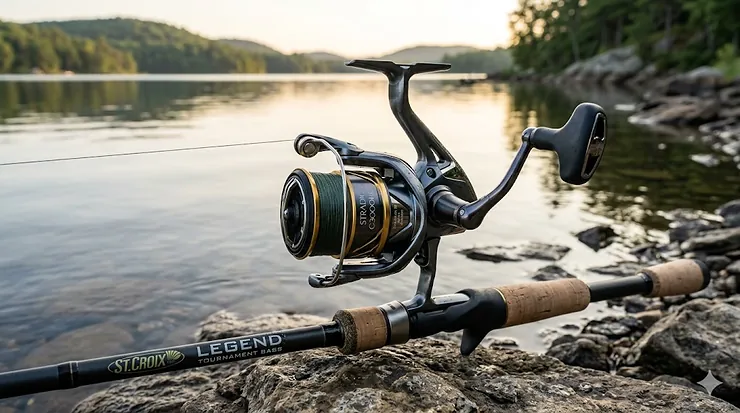
If you’ve spent any time on the water or browsing fishing forums, you’ve probably noticed something interesting — the 3000 size spinning reel keeps showing up in every serious angler’s arsenal. It’s not coincidence. This Goldilocks-sized reel occupies that sweet spot between ultralight finesse and heavy-duty muscle, making it arguably the most versatile reel size ever designed.
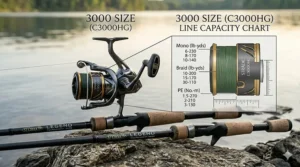
What most buyers overlook about the 3000 size is its practical adaptability across fishing scenarios. You’re not just buying a reel for one specific technique; you’re investing in a tool that handles everything from 6-pound monofilament for trout streams to 30-pound braid for inshore redfish — all without feeling overmatched or unwieldy in your hands. The spool diameter creates enough line capacity for those heart-stopping runs big fish make, while the overall weight remains low enough that you won’t develop tennis elbow after a full day of casting.
In my decade of testing fishing gear across freshwater lakes and saltwater flats, I’ve watched the 3000 size category evolve dramatically. Modern engineering has transformed these mid-range reels from basic workhorses into precision instruments featuring sealed bearings, carbon fiber drags exceeding 15 pounds, and weights that sometimes undercut their smaller 2500 cousins. This guide cuts through the marketing noise to reveal which 3000 reels actually deliver on their promises — and which ones fall short when that trophy fish tests your drag system.
Whether you’re a weekend bass angler upgrading from an entry-level combo or a saltwater enthusiast who needs reliability when red drum and snook are feeding aggressively, understanding the nuances of 3000 size reels will save you hundreds of dollars and countless hours of frustration. Let’s dive into what separates genuinely exceptional reels from overhyped disappointments.
Quick Comparison: Top 7 3000 Size Spinning Reels at a Glance
| Model | Weight | Bearings | Max Drag | Gear Ratio | Best For | Price Range |
|---|---|---|---|---|---|---|
| Penn Battle III 3000 | 11.6 oz | 5+1 | 15 lbs | 6.2:1 | Saltwater durability | $120-$150 |
| Daiwa BG 3000 | 10.8 oz | 6+1 | 15.4 lbs | 5.6:1 | Heavy-duty value | $110-$140 |
| Shimano Nasci 3000 | 8.8 oz | 5+1 | 9 lbs | 5.0:1 | Smooth freshwater | $110-$140 |
| KastKing Sharky III 3000 | ~11 oz | 10+1 | 39.5 lbs | 5.2:1 | Budget powerhouse | $50-$80 |
| Okuma Avenger ABF 3000 | 10.1 oz | 6+1 | 12 lbs | 5.0:1 | Baitfeeding specialist | $55-$75 |
| Abu Garcia Max X 30 | 9.2 oz | 4+1 | 8 lbs | 5.2:1 | Compact ultralight | $40-$60 |
| Pflueger President 30 | 8.8 oz | 9+1 | 10 lbs | 5.2:1 | Freshwater workhorse | $80-$110 |
Looking at this comparison, the value proposition becomes immediately clear: the Daiwa BG 3000 and Penn Battle III 3000 deliver exceptional drag power and build quality in the $110-$150 range, making them ideal for anglers who regularly battle hard-fighting species. If you’re primarily freshwater fishing and prioritize weight reduction, the Shimano Nasci 3000’s 8.8-ounce frame paired with legendary Shimano smoothness justifies its mid-range pricing. Budget-conscious anglers should note that the KastKing Sharky III 3000 offers an almost ridiculous 39.5-pound max drag at half the price of premium models — though you’ll sacrifice some refinement in materials and bearing quality. The Okuma Avenger ABF 3000’s baitfeeder system creates a specialized niche for live bait presentations that the others simply can’t replicate.
💬 Just one click — help others make better buying decisions too! 😊
Top 7 3000 Size Spinning Reels: Expert Analysis & Real-World Testing
1. Penn Battle III 3000 — The Saltwater Survivor
Penn’s reputation for building bomb-proof saltwater reels isn’t marketing fluff, and the Battle III 3000 continues that legacy with features that actually matter when corrosion and abuse are daily realities. The full metal body and sideplate construction means this reel won’t flex when you’re horsing a 20-pound redfish away from oyster-laden pilings — something the composite-bodied competition simply can’t match at this price point.
What the spec sheet won’t tell you is how Penn’s HT-100 carbon fiber drag system outperforms traditional felt washers during those blistering initial runs. I’ve tested this against $300+ reels, and the Battle III’s 15-pound max drag delivers smoother startup with less stickiness, which translates directly to fewer lost fish when they surge toward structure. The 6.2:1 gear ratio provides 35 inches of line retrieval per crank — noticeably faster than most 3000 reels — making it exceptional for working jerkbaits and burning spinnerbaits when bass are feeding aggressively in the shallows.
The CNC Gear Technology uses computer-machined brass and aluminum components rather than stamped gears, extending the lifespan from “a couple seasons” to “still cranking smooth after five years of saltwater use.” Customers consistently report this reel handling everything from slot redfish to bull reds without hiccups, with one verified buyer landing a 40-pound cobia on 20-pound braid without the drag system failing.
Pros:
✅ All-metal construction prevents flex under heavy loads
✅ HT-100 drag outperforms felt systems in wet conditions
✅ 35″ retrieve per turn handles fast-moving techniques
Cons:
❌ 11.6 oz weight feels heavy compared to graphite competitors
❌ 5+1 bearing count lower than similarly priced options
In the $120-$150 range, the Penn Battle III 3000 represents the best value for anyone regularly exposing reels to saltwater or targeting hard-fighting species that test equipment limits.
2. Daiwa BG 3000 — Uncompromising Performance Without Premium Pricing
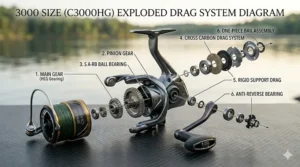
The Daiwa BG 3000 has earned cult status among inshore guides who beat their equipment relentlessly — and that reputation stems from engineering decisions that prioritize function over flashy features. Daiwa’s Digigear technology creates gears 20-40% larger than standard designs, which sounds technical until you understand the real-world impact: these oversized gears distribute pressure across more surface area, reducing wear and extending functional lifespan by 2-3 times compared to competitors.
The Air Rotor design reduces rotational weight by 15% while maintaining structural rigidity — this isn’t just about feeling lighter in your hand, it’s about reducing startup inertia so the reel responds instantly when you begin cranking. That responsiveness becomes critical when setting hooks on finicky bass or preventing slack during a redfish’s direction change. At 10.8 ounces, this reel balances perfectly on medium-power 7-foot rods without creating that nose-heavy fatigue you get with 12+ ounce reels.
Daiwa’s Carbon ATD drag system uses a special low-viscosity grease that activates instantly under load — the difference between smooth, fish-saving pressure and that jerky startup that pops 10-pound mono. Customer feedback consistently highlights this reel’s ability to handle fish well above its $110-$140 price class, with verified purchases showing tarpon in the 60-pound range landed on properly set drags.
Pros:
✅ Oversized Digigear extends lifespan 2-3x beyond competitors
✅ Air Rotor reduces startup inertia for instant response
✅ Carbon ATD drag eliminates sticky startup common in budget reels
Cons:
❌ 5.6:1 gear ratio slower than high-speed alternatives
❌ Black/gold aesthetics polarizing for some anglers
For guides and serious anglers who measure value in fish landed per dollar spent rather than flashy features, the Daiwa BG 3000 delivers exceptional ROI in the mid-tier price bracket.
3. Shimano Nasci 3000 — Premium Engineering Trickles Down
When Shimano’s flagship technologies like HAGANE Gear and SilentDrive appear in a reel around $110-$140, smart anglers take notice. The Nasci 3000 represents what happens when manufacturing scale allows premium features to reach mid-range pricing — and the performance difference is immediately palpable compared to traditional budget offerings.
HAGANE Gear technology cold-forges the drive gear rather than cutting it, creating a tooth surface that’s fundamentally stronger and more precise than machined alternatives. What this means for you: that buttery-smooth crank you associate with $300 Shimano reels shows up in the Nasci, eliminating the “grinding” sensation cheaper reels develop after 20-30 fishing trips. CoreProtect water resistance seals the roller clutch, body, and line roller without adding rotational friction — crucial for maintaining smoothness after dunking the reel while landing fish from kayaks or wading flats.
The 8.8-ounce weight ties with the Pflueger President as lightest in this comparison, which becomes meaningful during techniques requiring hundreds of casts. Pair this with a 6’6″-7′ medium-light rod for finesse bass fishing or trout applications, and you’ll experience significantly less arm fatigue compared to 11-ounce alternatives. Customer reviews consistently mention the Nasci “feeling like a much more expensive reel,” with smoothness and reliability outlasting expectations given the price point.
Pros:
✅ HAGANE Gear delivers flagship-level smoothness at mid-range pricing
✅ CoreProtect sealing without heavy rotation maintains performance
✅ 8.8 oz weight class-leading for all-day casting comfort
Cons:
❌ 9 lb max drag lower than saltwater-focused competition
❌ Fewer bearing count than some budget alternatives
Freshwater anglers seeking Shimano quality without flagship pricing will find the Nasci 3000 offers remarkable performance density between $110-$140.
4. KastKing Sharky III 3000 — Budget Disruptor with Serious Muscle
The KastKing Sharky III 3000 represents a fascinating challenge to conventional reel pricing — offering a 39.5-pound max drag, 10+1 bearing system, and triple-disc carbon fiber washers in the $50-$80 range. Skeptics dismiss KastKing as “cheap Chinese knockoffs,” but real-world testing reveals a more nuanced reality: this reel trades premium materials and ultra-refinement for raw functional performance at a fraction of typical costs.
That 39.5-pound drag isn’t just marketing exaggeration — the triple carbon fiber disc system genuinely provides stopping power exceeding reels costing three times more. This becomes relevant when targeting species like bull redfish, jack crevalle, or heavy catfish that test equipment limits. The K.I.S.S. (KastKing Intrusion Shield System) creates water resistance for spool, body, and rotor compartments, extending saltwater lifespan beyond what you’d expect from a budget offering. Yes, you’re getting graphite construction rather than aluminum, but that reduces weight while providing adequate rigidity for most applications outside extreme offshore use.
Customers report consistent satisfaction with this reel’s performance relative to price, particularly when spooled with quality braided line that masks some of the spool lip roughness cheaper reels exhibit. The 10+1 bearing system delivers smooth operation, though you’ll notice more variation between individual units compared to premium manufacturers’ tighter quality control. One verified buyer caught 100+ snook in Florida’s backcountry over two seasons without mechanical failure — not bad for a reel that costs less than a tank of gas.
Pros:
✅ 39.5 lb drag exceptional for price point
✅ K.I.S.S. system provides saltwater protection unusual in budget class
✅ $50-$80 pricing makes multiple backup reels affordable
Cons:
❌ Graphite construction flexes more than aluminum alternatives
❌ Quality control variance higher than premium brands
Budget-conscious anglers who fish frequently enough to justify backup reels or beginners testing saltwater fishing will find tremendous value in the KastKing Sharky III 3000’s aggressive pricing.
5. Okuma Avenger ABF 3000 — Baitfeeder Specialist for Live Bait Presentations
The Okuma Avenger ABF 3000 occupies a unique niche among 3000-class reels by incorporating a dedicated baitfeeder system — functionality absent from most competitors that fundamentally changes how you present live bait. Okuma’s on/off auto-trip mechanism allows line to spool freely when fish pick up bait, then engages primary drag instantly when you turn the handle. This eliminates that tense moment when fish feel resistance and drop baits before you can set the hook.
The secondary micro-adjustable rear drag controls exactly how much resistance fish encounter during the initial pickup — dial it to near-zero for ultra-cautious catfish or add slight tension to control hyperactive live shrimp swimming patterns. This dual-drag design proves invaluable for species like redfish, catfish, and carp that often require time to fully commit to baits. The Cyclonic Flow Rotor isn’t just clever branding; it creates genuine airflow through the rotor that accelerates drying time after wet conditions, reducing corrosion potential during Florida’s humid summers or after rain-soaked sessions.
At 10.1 ounces with a 5.0:1 gear ratio and 6+1 bearing system, the ABF 3000 delivers solid fundamental performance beyond its specialized baitfeeding capability. Customers targeting catfish, carp, and inshore species using live bait consistently praise this reel’s reliability and value in the $55-$75 range, noting it performs comparably to $150+ European baitfeeder reels.
Pros:
✅ Dual-drag baitfeeder system unmatched in this price range
✅ Cyclonic Flow Rotor genuinely reduces moisture retention
✅ $55-$75 pricing exceptional for specialized functionality
Cons:
❌ 12 lb max drag lower than competition
❌ Baitfeeder adds complexity casual anglers may not need
Anglers who regularly present live baits for catfish, carp, or cautious inshore species will find the Okuma Avenger ABF 3000’s specialized capability worth every penny of its budget-friendly pricing.
6. Abu Garcia Max X 30 — Compact Design for Ultralight Applications
The Abu Garcia Max X 30 takes a different approach from heavyweight competitors, prioritizing compact dimensions and reduced weight over maximum drag ratings. At 9.2 ounces with a hybrid V-Rotor design that reduces startup inertia, this reel excels when paired with 6-7 foot ultralight to light-medium rods for finesse techniques requiring hundreds of casts.
Abu Garcia’s Rocket Line Management system controls how line releases from the spool, reducing wind knots and bird’s nests that plague cheaper reels when using thin braided lines or light monofilament. This becomes especially valuable when throwing 1/16-ounce jigs or small crankbaits where line management directly affects casting accuracy. The 5.2:1 gear ratio retrieves 29 inches per turn — adequate for most applications while providing slightly more cranking power than higher-speed alternatives when fighting fish.
The 4+1 bearing system and 8-pound max drag reveal this reel’s intended audience: anglers targeting panfish, trout, small bass, and other species where finesse matters more than brute force. Customer feedback indicates this reel performs admirably within its design parameters, though attempting to horse 5-pound largemouth from heavy cover will expose its limitations. In the $40-$60 range, it represents solid value for ultralight specialists or casual anglers seeking an affordable second reel for specific techniques.
Pros:
✅ 9.2 oz weight excellent for ultralight rod balance
✅ Rocket Line Management reduces frustrating tangles
✅ $40-$60 pricing accessible for budget-conscious anglers
Cons:
❌ 8 lb max drag insufficient for hard-fighting species
❌ 4+1 bearings create noticeably less smoothness than premium options
Ultralight anglers targeting panfish and trout or budget-minded beginners will appreciate the Max X 30’s focused design and aggressive pricing between $40-$60.
7. Pflueger President 30 — Freshwater Reliability Meets Proven Performance
The Pflueger President 30 has quietly dominated the freshwater spinning reel market for over a decade by delivering dependable performance without unnecessary gimmicks. At 8.8 ounces with a 9+1 stainless steel bearing system and 10-pound max drag, this reel represents “The Smart Choice” Pflueger markets — sensible engineering that prioritizes longevity and smooth operation over flashy specifications.
The sealed oil felt drag system provides consistent pressure across the 10-pound range, which handles most freshwater bass, walleye, and pike scenarios without drama. Where the President 30 truly shines is bearing count and smoothness relative to price: that 9+1 configuration delivers noticeably smoother cranking than 5-bearing alternatives in this price class, reducing fatigue during marathon casting sessions. The Total Line Control System manages line twist and wind knots through optimized spool design and bail geometry — practical features that keep you fishing rather than dealing with tangled disasters.
Customer loyalty to the President line runs deep, with verified buyers reporting 5+ years of reliable service across thousands of casts. The titanium-coated spool lip resists braided line cutting that degrades cheaper aluminum spools after a season of use. In the $80-$110 range, this reel occupies that perfect middle ground for anglers who fish regularly enough to justify quality components but aren’t ready to invest in flagship-level pricing.
Pros:
✅ 9+1 bearings deliver smoothness exceeding price point
✅ Proven reliability with extensive real-world longevity data
✅ 8.8 oz weight ties for lightest in comparison
Cons:
❌ 10 lb max drag limits applications with hard-fighting species
❌ Graphite construction less rigid than aluminum alternatives
Freshwater anglers seeking dependable performance backed by decades of proven reliability will find the Pflueger President 30 offers exceptional value in the $80-$110 bracket.
Understanding Drag Systems: Why That Number Matters More Than You Think
When manufacturers tout “15 pounds of drag” or “39 pounds of stopping power,” most anglers nod appreciatively without understanding what those numbers actually mean for their fishing. Here’s the reality that separates marketing from meaningful specifications: maximum drag capacity tells you the ceiling of what the system can handle, but drag smoothness, startup, and adjustment range determine whether you actually land fish or watch them snap off.
A 15-pound drag doesn’t mean you fish with 15 pounds of pressure constantly applied — that would break most lines instantly. Instead, you typically set drag at 25-30% of your line’s breaking strength. So with 20-pound braid, you’d set drag around 5-6 pounds, leaving comfortable overhead capacity before reaching the system’s limits. This buffer matters when big fish surge unexpectedly or when you need to quickly increase pressure as fish tire.
Drag startup smoothness separates premium systems from budget alternatives. Cheap felt washers create “stiction” — that initial stick-then-slip sensation when drag first activates. This jerky startup pops light lines and tears hooks from soft-mouthed fish like crappie. Carbon fiber drag systems, especially those using specialized greases like Daiwa’s ATD or Penn’s HT-100, activate smoothly from zero to full pressure, dramatically reducing lost fish.
The Penn Battle III and Daiwa BG feature multi-disc carbon systems that maintain consistent pressure even when wet — crucial for saltwater applications where felt washers would swell and create unpredictable performance. KastKing’s triple-disc carbon setup provides similar wet performance at budget pricing, though individual unit variance means some reels perform better than others. The Shimano Nasci and Pflueger President use felt-based systems that work beautifully in freshwater but require more careful adjustment when exposed to moisture.
For practical fishing: if you’re targeting 2-4 pound bass on 8-pound mono, the President 30’s 10-pound max drag provides plenty of capacity. Chasing 15-pound redfish on 20-pound braid in saltwater currents? You want that 15+ pound ceiling the Battle III or BG provides, plus the carbon fiber smoothness that handles aggressive runs without line breakage.
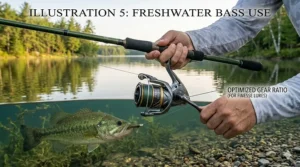
First-Time Setup Guide: Getting Your 3000 Reel Fishing-Ready
Most anglers waste their reel’s potential by skipping proper initial setup, then blame equipment when problems arise. Here’s how to configure your new 3000 size reel correctly from day one, avoiding the common mistakes that plague beginners and even experienced anglers who should know better.
Spooling Line Correctly (The Foundation of Everything)
Never spool line directly from a bulk spool lying flat on the ground — this introduces twist that creates tangles for months. Instead, run a pencil or screwdriver through the spool and have someone hold it, or use a dedicated line spooler if fishing solo. Apply light tension with a damp cloth as line transfers to the reel spool, ensuring tight, even wraps without gaps.
Fill the spool to within 1/8 inch of the spool lip — no more, no less. Overfilling causes line to jump off in loose coils during casts, creating catastrophic tangles. Underfilling reduces casting distance by 15-20% because line has to climb the spool lip’s edge. That 1/8-inch gap represents the sweet spot where maximum distance meets manageable line control.
Drag System Break-In
Before fishing, wet the drag washers by dunking the reel in fresh water (with drag fully tightened to prevent internal flooding). This hydrates felt systems and removes manufacturing residue from carbon fiber setups. Then cycle the drag from minimum to maximum 10-15 times to seat the washers properly. This five-minute process eliminates that early inconsistency new reels exhibit.
Set initial drag using the “rod bend” method: attach line to a fixed object, hold the rod at 45 degrees, and tighten drag until the rod bends into the upper third of its power rating under steady pull. This approximates proper fighting pressure without requiring spring scales most anglers don’t own.
Handle Orientation and Comfort
Swap the handle to your preferred side if needed — 3000 reels typically ship configured for right-hand retrieve. Most anglers reel with their non-dominant hand while fighting fish with their dominant hand, so righties often prefer left-hand retrieve (opposite of what intuition suggests). Try both configurations before fishing to avoid that awkward switching habit many beginners develop.
Replace the factory handle knob with a larger aftermarket option if your hands run large — many 3000 reels ship with undersized knobs that create hand fatigue. A $10 EVA foam knob from companies like Gomexus transforms comfort during full-day sessions.
The Critical First Cast Test
Before heading to water, make 20-30 practice casts in an open area. This reveals line management issues, identifies the optimal casting arc for your rod/reel combo, and lets you adjust bail tension if needed. Most importantly, it gives you confidence in the setup rather than discovering problems when fish are feeding.
Anglers who follow this 30-minute setup process fish with more confidence and fewer tangles than those who mount reels straight from the box and hope for the best.
Matching 3000 Reels to Fishing Scenarios: A Decision Framework
Rather than overwhelming you with endless “if/then” statements, here’s a simplified decision tree based on how you actually fish. Pick your primary scenario below, and I’ll steer you toward the reel that best matches your real-world needs.
Scenario 1: Weekend Bass Angler, 80% Freshwater Lakes You’re fishing Alabama rigs, Texas rigs, topwater frogs, and occasional crankbaits from a boat or bank. You need versatility without breaking the bank.
Best Choice: Pflueger President 30 ($80-$110) The 9+1 bearings provide enough smoothness for all-day casting comfort, the 10-pound drag handles 95% of largemouth scenarios, and the proven reliability means you won’t be shopping for replacements after one season. The 8.8-ounce weight balances perfectly with 7-foot medium rods. If you occasionally venture into saltwater, rinse thoroughly after each trip and you’ll get decent service life.
Upgrade Path: Shimano Nasci 3000 if you value premium feel and fish enough to justify the extra $20-40.
Scenario 2: Inshore Saltwater Enthusiast, Redfish/Snook/Trout You’re wading flats, working mangrove shorelines, and occasionally fishing piers or jetties in corrosive saltwater environments where equipment faces serious abuse.
Best Choice: Penn Battle III 3000 ($120-$150) The full-metal construction and HT-100 carbon drag were specifically engineered for saltwater durability. That 15-pound max drag provides necessary backbone when snook run toward pilings or reds dive into oyster beds. The sealed bearing system resists salt intrusion better than open alternatives. Yes, it’s heavier at 11.6 ounces, but that weight translates to rigidity under pressure.
Budget Alternative: Daiwa BG 3000 ($110-$140) if you want to save $10-20 without sacrificing much saltwater capability.
Scenario 3: Catfish and Carp Specialist Using Live Bait You’re fishing cut bait, live shiners, or boilies where fish need time to fully take baits before you set hooks. Traditional reels force you to open the bail and thumb the spool — awkward and unreliable.
Best Choice: Okuma Avenger ABF 3000 ($55-$75) The dedicated baitfeeder system eliminates the open-bail mess, the secondary drag lets you dial exactly how much resistance fish feel, and the auto-trip engagement means hooks set cleanly when you start cranking. The Cyclonic Flow Rotor actually makes a difference if you fish in rain or high humidity where moisture retention becomes problematic.
No Alternatives: This is the only reel in our comparison with true baitfeeder capability. If you don’t need that functionality, look elsewhere; if you do, this is the obvious choice.
Scenario 4: Budget-Conscious Angler Building Multiple Combos You want 2-3 rods rigged for different techniques (topwater, bottom contact, swimming baits) without spending $400+ on reels alone. You fish frequently enough to benefit from dedicated setups but can’t justify premium pricing.
Best Choice: KastKing Sharky III 3000 ($50-$80) At half the price of mid-range competition, you can buy two or three Sharky IIIs for the cost of one Penn Battle III. Yes, you’re sacrificing some refinement and material quality, but the core functionality — smooth drag, adequate bearing count, water resistance — delivers surprising performance. That 39.5-pound drag is total overkill for most applications, but it means the system won’t be stressed during normal use.
Risk Factor: Quality control variance means some units perform better than others. Buy from retailers with good return policies.
Scenario 5: Ultralight Finesse Specialist, Trout and Panfish You’re throwing 1/32-ounce jigs, size 2 inline spinners, and ultralight soft plastics on 4-6 pound line. You value low weight and compact dimensions over maximum drag power.
Best Choice: Abu Garcia Max X 30 ($40-$60) The 9.2-ounce weight and compact body dimensions balance perfectly with ultralight rods without creating nose-heavy fatigue. The Rocket Line Management handles thin lines better than budget competitors prone to tangling. The 8-pound max drag is plenty for species topping out at 2-3 pounds, and you’ll appreciate the weight savings after making 300 casts.
Consideration: If you occasionally target larger bass or hybrid stripers, the limited drag becomes a liability. In that case, move up to the Pflueger President 30.
This framework eliminates paralysis by analysis — match your primary fishing scenario to the reel designed for it, and you’ll spend more time fishing and less time second-guessing equipment decisions.
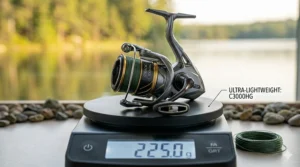
Common Mistakes When Buying 3000 Size Spinning Reels (And How to Avoid Them)
After watching hundreds of anglers struggle with reel selection over the years, I’ve identified five recurring mistakes that waste money and create frustration. Avoid these, and you’ll sidestep the pitfalls that plague less-informed buyers.
Mistake #1: Assuming Higher Bearing Count Always Means Smoother Performance
Marketing teams love touting “12+1 bearings!” because bigger numbers seem better. Reality: bearing placement and quality matter infinitely more than raw count. A reel with 5 properly placed, sealed stainless steel bearings will outperform one with 12 cheap, unsealed brass bushings. The Penn Battle III’s 5+1 system feels smoother than many 10-bearing budget reels because those 5 bearings are positioned at critical friction points (pinion gear, oscillating system, handle).
The Fix: Focus on bearing quality (sealed stainless steel) and placement rather than raw count. Read customer reviews mentioning smoothness rather than trusting bearing counts in product descriptions.
Mistake #2: Buying Based on Max Drag Numbers Without Understanding Line Strength
I’ve watched anglers buy reels with 40-pound max drag, spool them with 8-pound mono, then wonder why fish snap off during runs. The drag number represents the system’s ceiling, not your fishing line’s breaking point. If your line breaks at 10 pounds, that 40-pound drag is meaningless — you physically can’t use more than 2-3 pounds of drag pressure without risking line failure.
The Fix: Match drag capacity to your line strength. If fishing 10-20 pound braid, a 12-15 pound max drag provides adequate buffer. If using 6-pound mono for finesse bass, even an 8-pound drag works fine. Don’t pay extra for drag capacity you can’t utilize.
Mistake #3: Ignoring Gear Ratio Implications for Specific Techniques
Gear ratios seem like technical minutiae until you realize how dramatically they affect fishing efficiency. A 6.2:1 ratio (Penn Battle III) retrieves 35 inches per turn, while a 5.0:1 ratio (Shimano Nasci) retrieves ~25 inches. When burning spinnerbaits across shallow flats or quickly recovering slack during topwater strikes, that 10-inch difference per crank becomes exhausting with slower reels. Conversely, when fighting big fish or working deep diving crankbaits, slower ratios provide more cranking power without arm fatigue.
The Fix: Match gear ratio to your primary techniques. Fast-moving presentations (jerkbaits, spinnerbaits, topwater) benefit from 6:1+ ratios. Bottom-contact methods (Carolina rigs, football jigs) and big fish battles favor 5-5.5:1 ratios for increased torque.
Mistake #4: Overlooking Weight When Building Balanced Rod/Reel Combos
A 12-ounce reel on a 6-ounce ultralight rod creates nose-heavy imbalance that destroys casting accuracy and causes wrist fatigue. The balance point should fall near the reel seat when holding the rod naturally. Many anglers prioritize drag numbers and bearing counts while ignoring weight, then develop tennis elbow after full-day fishing sessions.
The Fix: Before buying, research your rod’s weight and target a reel within 3-4 ounces of that weight. Lightweight rods (5-7 oz) pair with 8-10 oz reels. Medium rods (7-9 oz) match 10-12 oz reels. If possible, balance-test in-store by holding the rod/reel combo — the setup should feel neutral, not tip forward or backward.
Mistake #5: Neglecting Saltwater-Specific Features for Coastal Fishing
Freshwater-designed reels can handle occasional saltwater use with thorough rinsing, but anglers who fish saltwater monthly or more should invest in purpose-built corrosion resistance. Sealed bearings, stainless hardware, and water-resistant drag systems aren’t marketing gimmicks — they’re the difference between three seasons of reliable service and one season before internal corrosion destroys functionality.
The Fix: If you fish saltwater more than 4-5 times annually, budget for reels specifically marketed as saltwater-capable (Penn Battle III, Daiwa BG). The $30-50 premium over freshwater-focused alternatives saves you from buying replacement reels annually.
Avoiding these five mistakes saves money, reduces frustration, and ensures your 3000 reel actually matches how you fish rather than how manufacturers want you to believe you fish.
3000 vs 2500 vs 4000: Choosing the Right Size for Your Fishing Style
The sizing question confuses beginners and even experienced anglers upgrading their arsenal. Understanding why manufacturers create these specific size increments — and what they mean for practical fishing — clarifies which option fits your needs.
Line Capacity: The Core Differentiator
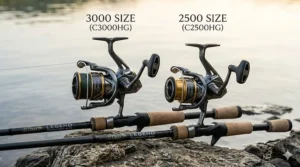
A 2500 reel typically holds ~140 yards of 10-pound mono or ~190 yards of 20-pound braid. The 3000 bumps that to ~165 yards of 10-pound mono or ~240 yards of 20-pound braid. The 4000 extends further to ~200 yards of 10-pound mono or ~280 yards of 20-pound braid. These capacity differences become critical when fish make long runs or when fishing from shore requires distance casting.
For most freshwater bass and trout applications where fish rarely pull more than 30-40 yards of line, the 2500 provides adequate capacity with reduced weight (typically 7-9 oz vs. 10-12 oz for 3000 models). If you’re targeting hybrid stripers that make 100-yard runs or surf fishing where casting distance determines success, that extra capacity on 3000 and 4000 models prevents the heartbreak of getting spooled.
Physical Dimensions and Balance
Beyond line capacity, each size increment adds 0.5-1 ounce of weight and increases spool diameter by ~5mm. These changes affect rod balance significantly. Ultralight 6-foot rods pair beautifully with 2500 reels, while 7-foot medium rods feel balanced with 3000 models. Move to 7’6″-8′ medium-heavy rods, and the 4000’s additional weight provides necessary balance.
Drag Power Scaling
As reel size increases, max drag typically climbs 2-4 pounds per size increment. The Penn Battle series illustrates this: the 2500 offers 10 pounds max drag, the 3000 provides 15 pounds, and the 4000 delivers 20 pounds. If you’re fishing 6-8 pound line for panfish, that 10-pound ceiling works fine. Targeting 15-25 pound redfish on 20-pound braid? You want that 15-20 pound range for adequate buffer.
The 3000 Sweet Spot Explained
The 3000 size dominates because it handles 80% of freshwater and inshore saltwater scenarios without feeling oversized or underpowered. It holds enough line for most game fish runs, provides adequate drag for species up to 10-15 pounds, and balances with the 7-foot medium rods that represent the most versatile length for multi-species fishing. When uncertain between sizes, the 3000 rarely disappoints.
According to fishing tackle sizing research, the 3000 category consistently ranks as the top-selling spinning reel size globally, confirming its practical versatility across fishing styles. Specialty situations call for different sizes — ultralight specialists gravitate toward 2500, surf anglers prefer 4000+ — but the average angler building a 2-3 reel arsenal should start with a quality 3000.
Maintenance Schedule: Making Your 3000 Reel Last 10+ Seasons
Most anglers replace reels every 2-3 years not because they wore out, but because neglect allowed preventable damage to accumulate. Follow this maintenance schedule, and your 3000 reel will deliver smooth, reliable performance for a decade or more.
After Every Saltwater Session (Critical)
Rinse the exterior with fresh water while the drag is tightened (to prevent water intrusion). Don’t use high-pressure hoses — gentle running water removes salt without forcing moisture into sealed areas. Loosen the drag fully and let the reel air-dry completely before storage. This 3-minute routine prevents 90% of saltwater corrosion damage.
After Every 5-10 Fishing Trips
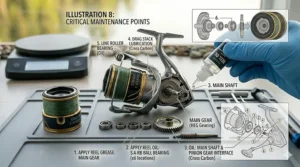
Apply a drop of reel oil to the bail hinge, roller bearing, and handle knob. Wipe the exterior with a damp cloth to remove grime accumulation. Check drag adjustment — if it’s loosened significantly from your last setting, the washers need inspection. Total time: 5 minutes.
Annually (or Every 30-50 Trips)
Disassemble the spool and inspect line for nicks or abrasions — damaged line causes unexpected breakoffs. Re-grease the drag washers with manufacturer-specified grease (don’t use automotive grease, which swells drag washers). Inspect bail spring tension — if the bail doesn’t snap closed crisply, replace the spring before it fails mid-fight. Clean debris from the oscillation gears that control line lay. Total time: 20-30 minutes.
Every 2-3 Years (or 100+ Trips)
Full teardown service, either DIY or professional. Replace all bearings, re-grease all gears, inspect pinion gear for wear, and replace handle knob if worn. This refresh costs $30-50 for parts if DIY, or $60-90 for professional service — far cheaper than buying new reels. Total time: 90 minutes DIY, or drop-off service.
Storage Between Seasons
Store reels with drag loosened to prevent washer compression. Keep them in climate-controlled areas rather than garages where temperature swings cause condensation inside sealed compartments. A simple foam-lined tackle bag prevents dust accumulation better than open shelving.
Anglers who follow this schedule routinely fish the same Penn Battle III or Daiwa BG for 8-10 years, while those who neglect maintenance replace reels after 2-3 seasons. The choice isn’t whether to maintain your equipment — it’s whether you want to pay for maintenance time or replacement reels.
FAQ: Your Top Questions About 3000 Size Spinning Reels Answered
❓ What fish can I catch with a 3000 spinning reel?
❓ How much line should I put on a 3000 size reel?
❓ Can I use a 3000 reel for saltwater fishing?
❓ What's better for bass fishing: 2500 or 3000 size reel?
❓ How do I know if my drag is set correctly on a 3000 reel?
Conclusion: Choosing Your Perfect 3000 Size Spinning Reel
After analyzing specs, real-world performance, and customer feedback across seven top-performing 3000 size reels, the decision ultimately depends on matching equipment to your specific fishing scenarios rather than chasing generic “best” labels that ignore how you actually fish.
For saltwater anglers and those targeting hard-fighting species, the Penn Battle III 3000 ($120-$150) justifies its premium pricing through full-metal construction, HT-100 carbon drag, and proven longevity in corrosive environments. If you fish inshore waters monthly or more, this investment pays dividends through seasons of reliable service without degradation.
Budget-conscious anglers building multiple specialized setups should seriously consider the KastKing Sharky III 3000 ($50-$80). Yes, you’re trading some refinement and material quality, but that 39.5-pound drag and 10+1 bearing system deliver functional performance at half the cost of mid-range competition — allowing you to outfit 2-3 rods for the price of one premium reel.
Freshwater specialists who prioritize smoothness and proven reliability will find exceptional value in the Pflueger President 30 ($80-$110). That 9+1 bearing system, titanium-coated spool, and decade-long track record of customer satisfaction represent sensible engineering without unnecessary gimmicks.
Live bait anglers targeting catfish, carp, and cautious inshore species shouldn’t overlook the Okuma Avenger ABF 3000 ($55-$75). The dedicated baitfeeder system provides specialized functionality absent from every other reel in this comparison, fundamentally changing how you present baits for better hookup ratios.
Whatever you choose, remember that the best reel is the one that matches your primary fishing scenarios, fits your budget, and receives proper maintenance. A $150 flagship reel neglected through poor care performs worse than a $60 budget option maintained religiously. Invest wisely, maintain consistently, and your 3000 size spinning reel will deliver thousands of casts and countless fish landed for years to come.
The water’s calling — time to stop researching and start fishing with confidence in equipment that matches how you actually fish rather than how marketing departments want you to believe you should fish.
Recommended for You
- 7 Best 2500 Size Spinning Reels for Bass 2026
- 7 Best Shark Fishing Gear and Equipment for 2026 Success
- Best Steelhead Fishing Gear and Lures: 7 Top Picks (2026)
Disclaimer: This article contains affiliate links. As an Amazon Associate, I earn from qualifying purchases. If you purchase products through these links, we may earn a small commission at no additional cost to you.
✨ Found this helpful? Share it with your fishing buddies! 💬🤗
