
In This Article
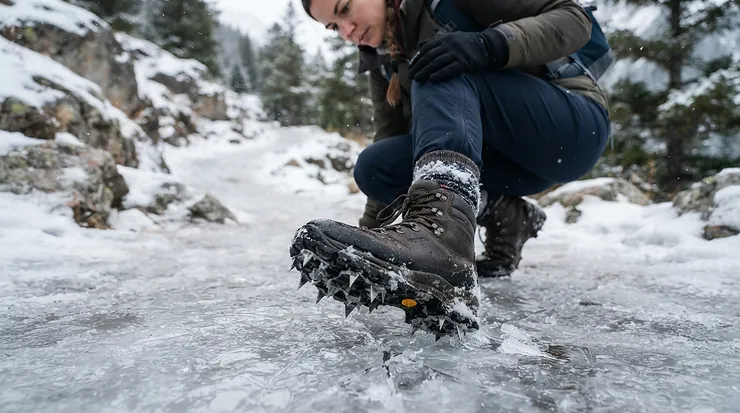
Fishing boots for ice fishing are insulated, waterproof boots built for standing still on frozen water for hours. They combine stationary-cold warmth, a shell that shrugs off slush and overflow, and an outsole that grips slick surfaces. They differ from ordinary snow boots because they put heat retention, moisture control, and traction on ice ahead of style.
Here’s what nobody tells you before your first hardwater season: the fish are the easy part. Cold feet are the real opponent. You can own the sharpest auger, the slickest flasher, and a shanty with cup holders. None of it matters once your toes go numb at 9 a.m. and you’ve got seven hours left. 🥶
Numb isn’t just annoying, either. CDC frostbite guidance points out that frozen skin loses feeling, so you may not realize damage is happening. Good boots are the cheapest insurance in your tackle box.
This guide ranks seven real boots using published specs and aggregated owner and editor feedback. Along the way we’ll decode temperature ratings, unpack insulated ice fishing footwear, sort out sub zero rated fishing boots, and explain what actually delivers traction on ice. Prices are ranges based on October 2026 research, so check current price before you buy.
Quick Comparison: Best Fishing Boots for Ice Fishing at a Glance
Before the deep dive, here’s the cheat sheet. Stated ratings come from manufacturer or retailer listings, and I’ll explain later why you should take them with a grain of salt.
| Boot | Stated Rating | Build | Price Range | Best For |
|---|---|---|---|---|
| Korkers Polar Vortex 1200 | -60°F comfort | Waterproof leather + bootie, BOA dial | $200-$250 | Korkers Polar Vortex 1200: all-round hardwater anglers |
| Baffin Impact | Polar-rated (listings vary) | Leather/nylon, removable multi-layer liner | $250-$300 | Baffin Impact: all-day shanty sitters |
| Baffin Snow Monster | Polar-rated (listings vary) | Arctic Rubber shell, lace-up | Premium tier | Baffin Snow Monster: active hole-hoppers in deep cold |
| Muck Arctic Pro | -60°F | 8mm neoprene, pull-on | $170-$200 | Muck Arctic Pro: wet, slushy days |
| Muck Arctic Ice Tall | -60°F to 30°F (tall) | Rubber/neoprene, Vibram sole | $190-$260 | Muck Arctic Ice Tall: wet-ice traction |
| Clam IceArmor Sub-Zero X | -40°F | Full rubber, wool liner | $150-$200 | Clam IceArmor Sub-Zero X: overflow and deep slush |
| Kamik Nationplus | -40°F | Suede/rubber, removable liner | $110-$150 | Kamik Nationplus: budget-conscious anglers |
Read the table for trade-offs rather than winners. The Korkers Polar Vortex 1200 and Muck Arctic Pro share a -60°F headline but get there very differently: one with Thinsulate and leather, the other with neoprene. If you’re price-sensitive, the Kamik Nationplus undercuts everything here, though its real-world comfort range is narrower than its printed rating suggests. Buyers who fish slush-heavy lakes should look hard at the Clam IceArmor Sub-Zero X.
💬 Just one click — help others make better buying decisions too!😊
Top 7 Fishing Boots for Ice Fishing: Expert Analysis
1. Korkers Polar Vortex 1200 — -60°F comfort with BOA convenience
The big idea is a lot of insulation in a boot that doesn’t feel like a cinder block. Korkers packs 1200 grams of 3M Thinsulate into a waterproof bootie and leather upper, with a -60°F comfort rating. That much insulation mass is what you want over a hole, and the aerogel frost-barrier footbed fights the cold creeping up from the ice itself.
The BOA M4 dial replaces laces, which is a small miracle when your hands are mittened and grumpy. The SnowTrac sole is compatible with OmniTrax interchangeable soles, so you can swap traction when conditions change. Based on the spec comparison, this suits the angler who hikes to tip-ups, hauls a sled, and still sits long enough to get cold.
Outdoor Life and Field & Stream both rank it at or near the top, praising warmth, light weight, and comfort whether walking or sitting. Common gripes are a shorter shaft than pac-style boots and no removable liner, which makes drying a planning exercise.
Pros:
- ✅ 1200g Thinsulate with -60°F comfort rating
- ✅ BOA dial makes on/off easy with gloves
- ✅ Swappable OmniTrax sole system for traction
Cons:
- ❌ No removable liner for quick drying
- ❌ Shorter shaft than some competitors
Price range: roughly $200-$250, and a strong value for the versatility.
2. Baffin Impact — polar-rated warmth for all-day sit-downs
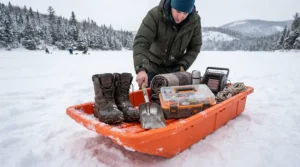
If the Korkers is a sports sedan, the Impact is a snowplow: slower, heavier, and nearly unstoppable in brutal cold. It uses a removable multi-layer liner with double B-Tek insulation, a double aluminum insole, and a waffle-comb footbed. The aluminum matters because the ice under you is the biggest heat thief when you’re standing still. Baffin positions the Impact for extended time in extreme cold at low to moderate activity levels, which is exactly shanty-sitting. One honest caution: published ratings are inconsistent. Some retailer copy cites -148°F, while Baffin’s Canadian distributor lists polar-rated performance between -45°C and -60°C. Treat the Impact as one of the warmest boots here, not as a literal -148°F promise. Editors rate it best for standing on ice, and one roundup says owners call it the warmest boot they’ve owned. It’s also heavier than the Snow Monster, so long walks cost you energy.
Pros:
- ✅ Removable liner you can dry or swap
- ✅ Aluminum insole blocks ground cold
- ✅ Praised for standing-still warmth
Cons:
- ❌ Heavy and bulky for long walks
- ❌ Inconsistent published temperature ratings
Price range: around $250-$300, worth it only if you really fish the deep freeze.
3. Baffin Snow Monster — polar warmth without the Impact’s weight
The Snow Monster is what you buy when you want arctic insulation but refuse to drag cinder blocks between holes. Baffin’s Arctic Rubber shell keeps the boot lightweight and flexible in the cold. Polar Rubber outsoles add grip, and Icepaw pads aim at better contact on ice. REI’s listing cites a -94°F rating, while another roundup lists about -49°F, so published numbers vary by model year and retailer. REI also notes that version is discontinued with a newer one available, so verify the current model. Analytically, this is the pick for active anglers who run-and-gun across big lakes and want warmth that doesn’t turn into sweat. Editors have called it the best lightweight option and the best lace-up. One roundup reports forum owners wearing them in roughly -50°F to -60°F working conditions, though that’s anecdotal. The trade-off is laces, which are slower than a BOA dial with cold fingers.
Pros:
- ✅ Lighter than other polar-rated boots
- ✅ Polar Rubber outsole with Icepaw grip pads
- ✅ Flexible shell that stays supple in deep cold
Cons:
- ❌ Laces are slower with heavy gloves
- ❌ Confusing model-year ratings and availability
Price range: premium tier, so check current price, and the value is solid for active anglers.
4. Muck Arctic Pro — 8mm neoprene, slip-on waterproof comfort
Neoprene is the camp-stove of boot materials: simple, flexible, and reliably warm. The Arctic Pro layers an 8mm neoprene bootie with fleece lining and 2mm of thermal foam beneath the footbed. It stands about 17 inches tall with a stretch topline designed to trap heat. A Bob-Tracker outsole handles grip, and Muck rates it to -60°F. Because the shell is fully waterproof and pulls on, it’s convenient for kneeling in slush. But honesty matters here. One reviewer noted that no standardized temperature rating system exists and called the number optimistic. An owner reported fine comfort around 28°F and said -60°F is a stretch unless you’re walking. A separate comparison found the Pro handled sitting on ice better than Muck’s Arctic Sport. Editors praise the outsole and flexibility, and note the topline takes a few tries to get used to.
Pros:
- ✅ Fully waterproof neoprene bootie
- ✅ Tall 17-inch shaft keeps out slush
- ✅ Flexible with a well-regarded outsole
Cons:
- ❌ Printed rating feels optimistic when sedentary
- ❌ Stretch topline takes practice to pull on
Price range: around $170-$200, and a good value for wet conditions.
5. Muck Arctic Ice Tall — Vibram Arctic Grip for wet-ice confidence
Slick, wet ice is where many boots quietly fail, and this one was built for exactly that. Muck pairs Vibram Arctic Grip A.T. pods for wet ice with an XS Trek Evo compound, and earlier product descriptions also cite a Vibram Icetrek base layer for dry ice. It includes a pull-tab and tall rubber coverage. Earlier launch coverage listed the tall at -60°F to 30°F and the mid at -40°F to 40°F, so it’s a cold-weather boot with a wide comfort band. Editors single out Arctic Ice models for wet-ice grip. Customer sentiment is mixed, though: Muck’s own site shows most reviewers giving five stars, while retail listings average in the mid-3s. Recurring complaints include a stiff fit and one report of an outsole separating after a season. That’s why the analysis is “great grip, verify durability.” It suits anglers who walk slushy lake edges, overflow zones, and driveways.
Pros:
- ✅ Vibram Arctic Grip built for wet ice
- ✅ Tall waterproof rubber coverage
- ✅ Pull-tab makes on/off easier
Cons:
- ❌ Some reports of stiff fit and outsole wear
- ❌ Pricier than comparable neoprene boots
Price range: roughly $190-$260, worth it if wet-ice traction is your priority.
6. Clam IceArmor Sub-Zero X — slush-proof rubber made for the ice
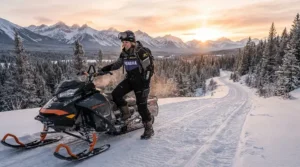
Built by a company that lives on frozen lakes, the Sub-Zero X leans into waterproofing above all. It’s a 100% waterproof rubber boot, made in the USA, with a removable wool-padded liner and a -40°F rating. A heel kick tab and a reflective tie-close cuff keep the details practical. Field & Stream calls it the best pick for deep snow and slush and notes that wool keeps retaining heat even when damp. The removable liner also makes drying out perspiration easy. The reported drawback is some condensation, which is physics: rubber doesn’t breathe. One roundup praises its grip on glare ice but says it’s better for 3 to 6 hour trips than expedition cold. Retail listings note the sizing runs small, so size up. Clam also sells replacement liners that fit this boot, a smart trick if you fish multi-day.
Pros:
- ✅ 100% waterproof rubber shell
- ✅ Removable wool liner dries quickly
- ✅ Heel kick tab for easy removal
Cons:
- ❌ Sizing runs small
- ❌ Some condensation inside the shell
Price range: around $150-$200, and a good value for slush-heavy lakes.
7. Kamik Nationplus — the budget -40°F workhorse
Every list needs one boot that proves you don’t need a second mortgage to stay warm. The Nationplus carries a -40°F comfort rating, waterproof suede upper, rubber lower, removable liner, and about 200g of 3M Thinsulate per OutdoorGearLab. It weighs around 3.6 pounds per pair. Here’s the honest analysis: OutdoorGearLab scored it 75 out of 100, calling it warm, comfortable, affordable, and decent on traction, but not fully waterproof. A Switchback Travel reviewer wore it comfortably down to about 14°F, far above the printed rating. So it’s right for early-season trips and active days, not -20°F all-day sit-downs. Customers repeatedly say it runs small, and one reviewer noted no wide sizes. The laces are also fiddly with cold hands.
Pros:
- ✅ Lowest price among the seven picks
- ✅ Removable liner for easier drying
- ✅ Decent traction on snow and light ice
Cons:
- ❌ Not fully waterproof in deep slush
- ❌ Runs small and narrow
Price range: roughly $110-$150, and unbeatable value for casual ice anglers.
Spec Showdown: How the Top 7 Stack Up
| Boot | Insulation / Liner | Traction | Closure & Height | Best For |
|---|---|---|---|---|
| Korkers Polar Vortex 1200 | 1200g Thinsulate bootie, no removable liner | SnowTrac, OmniTrax-compatible | BOA, 11 in | Korkers Polar Vortex 1200: versatility |
| Baffin Impact | Removable multi-layer liner, aluminum insole | Polar Rubber outsole | Lace, mid-calf | Baffin Impact: sedentary cold |
| Baffin Snow Monster | Lightweight polar-rated build | Polar Rubber + Icepaw pads | Lace-up | Baffin Snow Monster: active anglers |
| Muck Arctic Pro | 8mm neoprene + fleece + 2mm foam | Bob-Tracker | Pull-on, 17 in | Muck Arctic Pro: slush |
| Muck Arctic Ice Tall | Neoprene/fleece rubber build | Vibram Arctic Grip A.T. | Pull-on, tall | Muck Arctic Ice Tall: wet ice |
| Clam IceArmor Sub-Zero X | Removable wool-padded liner | Rubber outsole | Tie-close cuff, mid-calf | Clam IceArmor Sub-Zero X: overflow |
| Kamik Nationplus | ~200g Thinsulate, removable liner | Snowgrip rubber | Lace, 11.5 in | Kamik Nationplus: budget |
Looking at the comparison, the Korkers Polar Vortex 1200 offers the most flexible traction system, while the Muck Arctic Ice Tall is the specialist for wet ice. If drying overnight matters, three boots (the Baffin Impact, Clam IceArmor Sub-Zero X, and Kamik Nationplus) give you removable liners. The Muck Arctic Pro and Korkers Polar Vortex 1200 trade that convenience for sealed-in warmth.
Temperature Ratings Explained: Reading the Fine Print
Temperature ratings are the most-quoted and least-standardized number on any boot tag. European testing under EN 344 classified footwear by how much temperature dropped inside the boot over 30 minutes at set conditions, and a research comparison of EN 344 and thermal-foot methods shows even lab methods vary. In the US, brands often use their own approaches, and reviewers have openly noted the lack of one universal system.
Most ratings also assume you’re moving. A comparison of Muck’s Pro and Sport boots notes the official numbers presume some body heat from activity. Standing on a lake in a still wind is a different test entirely.
Real-world data backs that up. The Kamik Nationplus carries a -40°F rating, yet one reviewer found it comfortable down to about 14°F. A Muck Arctic Pro owner felt fine near 28°F and called -60°F a stretch. Even the Baffin Impact shows how published numbers diverge between retailers.
My practical rule, offered as analysis rather than a standard: treat the printed number as a best case and plan a cushion of 20 to 40 degrees when you’ll be sedentary.

Sub Zero Rated Fishing Boots: Do You Really Need Them?
Sub zero rated fishing boots sound like overkill until you’ve sat on a Minnesota lake in January. One buyer’s guide argues the -60°F class is the working minimum for stationary bucket fishing in the Upper Midwest and eastern Canada. That’s an opinion, but it matches the logic of low activity and wind.
A retailer’s rule of thumb links insulation grams to ratings: around 400g for -40°F at moderate activity, 600g for -60°F, and higher gram counts for even colder conditions. Treat those as rough guideposts, not a standard. Among our seven, the Korkers Polar Vortex 1200 and Muck Arctic Pro advertise -60°F, the Baffin Impact and Baffin Snow Monster are polar-rated, and the Clam IceArmor Sub-Zero X and Kamik Nationplus sit at -40°F.
The catch: more insulation also means more bulk, and bulk means sweat if you’re hauling a sled. Sweat then wrecks warmth faster than thin insulation ever would. If you mostly fish early ice or active days, -40°F is often enough. Save the heavyweights for sit-down sessions at the bottom of the thermometer.
Insulated Ice Fishing Footwear: Liners, Layers, and Moisture
Insulated ice fishing footwear comes in a few flavors. The Korkers Polar Vortex 1200 uses a Thinsulate bootie. The Clam IceArmor Sub-Zero X relies on a wool-padded removable liner. The Muck Arctic Pro uses neoprene plus fleece and thermal foam. The Baffin Impact stacks a multi-layer liner over an aluminum insole.
Here’s the quiet truth most spec sheets skip. One buyer’s guide frames extended warmth as a moisture problem, not a temperature problem. Sweat trapped in an insulated boot cools and chills you, which is why removable liners are underrated. Wool also helps because it keeps retaining heat even when damp, a point Field & Stream makes about Clam’s liner.
Frost barriers matter too. The aerogel footbed in the Korkers Polar Vortex 1200 and the aluminum insole in the Baffin Impact both aim at ground cold. Pair any of them with merino-blend socks rather than cotton, and carry a spare pair. A boot’s insulation can only do so much if your sock is soaked.
Traction on Ice: Soles, Cleats, and Staying Upright
Traction on ice isn’t one problem; it’s three. Glare ice, wet ice, and snow-covered slush each reward different outsoles. For wet ice, editors favor Vibram Arctic Grip, the technology in the Muck Arctic Ice Tall. The Korkers Polar Vortex 1200 lets you swap soles through its OmniTrax system. The Baffin Snow Monster uses Polar Rubber and Icepaw pads. And Norfin Klondike 2, a boot outside our top seven, markets retractable cleats for slippery ice.
Add-on cleats are cheap insurance for glare ice, but remember what traction can’t do. Michigan State University Extension warns that slush on ice is only about half as strong as clear ice and indicates it isn’t freezing from the bottom. It also recommends wearing two ice picks around your neck. Grip keeps you upright; it doesn’t make weak ice safe.
For most anglers, the best strategy is matching soles to your lake. Slushy overflow favors the Muck Arctic Ice Tall or Clam IceArmor Sub-Zero X. Wind-scoured glare ice favors swappable soles or cleats.
How to Choose Fishing Boots for Ice Fishing
Picking fishing boots for ice fishing comes down to six decisions, in this order.
- Match the rating to your activity. Sedentary anglers need more insulation than hole-hoppers, so plan a cushion below the printed number.
- Decide on a removable liner. If you fish multi-day trips, drying overnight matters more than a few extra ounces.
- Choose your shell. Rubber or neoprene shrugs off slush, while leather needs a dependable waterproof bootie.
- Pick traction for your ice. Wet ice needs Vibram-style pods, glare ice needs cleats or swappable soles.
- Check sizing quirks. The Clam IceArmor Sub-Zero X and Kamik Nationplus run small, and you need toe room for thick socks.
- Weigh weight against warmth. The Baffin Snow Monster trades some insulation bulk for easier walking.
Common Mistakes When Buying Fishing Boots for Ice Fishing
Most cold-foot stories trace back to a handful of avoidable errors.
- Trusting the printed number blindly. Owners report comfort far above stated ratings, so build in a margin.
- Buying too snug. Cramped toes cut circulation, and tight boots feel colder than roomy ones.
- Ignoring shaft height. Overflow and slush climb quickly, which is why the Muck Arctic Pro and Muck Arctic Ice Tall are popular for wet days.
- Skipping spare liners or socks. Moisture ruins warmth, and a swap often saves the day.
- Chasing the heaviest insulation. If you’re hiking, the Baffin Impact can overheat you.
- Forgetting sizing quirks. Reviewers say the Kamik Nationplus runs small, while the Sorel Caribou is often reported to run big.
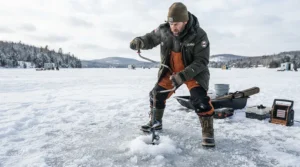
Ice Fishing Boots vs Traditional Alternatives
| Footwear Type | Stationary Warmth | Waterproofing | Traction on Ice | Best For |
|---|---|---|---|---|
| Dedicated ice boots like the Korkers Polar Vortex 1200 | Excellent | High | Strong, swappable | Serious hardwater anglers |
| Neoprene like the Muck Arctic Pro | Very good | Excellent | Good | Slush and wet days |
| Pac-style like the Sorel Caribou (-40°F, felt liner) | Good | Good | Decent | Mixed daily winter use |
| Insulated hiking boots | Moderate | Varies | Often limited | Short, active outings |
| Standard rubber boots | Low | Excellent | Limited | Mild, wet days only |
Dedicated fishing boots for ice fishing win on stationary warmth, but the margins differ. The Sorel Caribou is a legendary winter boot, though reviewers describe it as heavy, and it’s a general-purpose pick. Hiking boots can feel great for a mile and miserable by hour three. Standard rubber boots keep water out but offer almost no insulation, so they’re a mild-weather compromise at best.
Safety, Regulations & Compliance: Boots Don’t Replace Ice Sense
Great boots won’t save you from bad ice. The Minnesota DNR’s guidance says its thickness recommendations apply to new, clear ice and should be doubled for white or snow-covered ice. It also says to measure only clear ice, since slush and snow don’t count. Check local agencies for your own lake, because conditions vary even within small areas.
Safety gear belongs on your checklist beside your boots: ice picks, a float coat or life jacket, a rope, and a tape measure. Tell someone on shore where you’re going and when you’ll be back.
Boot-related cold injuries are also a real risk. CDC guidance notes hypothermia can occur above 40°F if you’re wet and chilled, which is why dry socks and removable liners matter. If your feet go numb or skin looks waxy or grayish-yellow, get warm and seek medical care.
Practical Usage Guide: Your First 30 Days in New Ice Boots
Day 0: fit check. Try boots on late in the day with the socks you’ll actually wear. Leave toe wiggle room, because trapped air insulates and tight boots restrict circulation.
Days 1-7: break-in. Wear them around the house and on short walks. Check heel slip and pressure points before your first trip, not on the lake.
On the ice. If you’re sweating on the walk out, loosen the closure or open the cuff and slow down. Pack spare socks and, where compatible, a spare liner (Clam sells replacement liners for the Clam IceArmor Sub-Zero X).
After every trip. Remove removable liners from boots like the Baffin Impact, Kamik Nationplus, and Clam IceArmor Sub-Zero X, and dry them separately. For the Korkers Polar Vortex 1200, which lacks a removable liner, dry with the tongue open and air moving.
Common first-month mistakes. Over-tightening laces, wearing cotton socks, and skipping drying. Each can erase the warmth you paid for.
Real-World Scenarios: Three Anglers, Three Boots
The weekend pike hunter. You fish northern lakes ten Saturdays a season, hike to tip-ups, and drag a sled. Your budget stretches to roughly $250. The Korkers Polar Vortex 1200 matches this profile: warm, relatively light, easy to adjust, and sole options for shifting ice.
The shanty regular. You park a heated shelter on a deep lake and sit for eight hours at the coldest part of winter. The Baffin Impact is built for exactly that low-activity cold, and its removable liner helps you dry out between trips. Walking distance matters less here than staying warm.
The budget family angler. You fish a nearby pond a handful of weekends, mostly in moderate cold, with kids in tow. The Kamik Nationplus at around $110 to $150 gives you real warmth and traction on a small budget. Just size up, and keep trips shorter on the coldest days.
FAQ
❓ How much should you spend on fishing boots for ice fishing?
❓ Do ice fishing boots run true to size?
❓ Is the Baffin Impact worth the extra money?
❓ Do you need ice cleats with insulated boots?
❓ Should you buy a spare liner for insulated ice fishing footwear?
Conclusion
The best fishing boots for ice fishing are the ones that match how you actually fish. If you want a versatile, warm, easy-on-and-off option, the Korkers Polar Vortex 1200 is the best all-rounder in this roundup. For true sit-down deep cold, the Baffin Impact earns its heft, while the Baffin Snow Monster serves active anglers who still want polar-rated warmth. The Muck Arctic Pro and Muck Arctic Ice Tall shine in wet conditions, with the latter leading on wet-ice traction. The Clam IceArmor Sub-Zero X is a slush specialist with a removable wool liner, and the Kamik Nationplus is the smart budget entry.
Remember the big lesson from the temperature ratings research: printed numbers are best-case, moisture is the sneaky enemy, and traction on ice is no substitute for checking thickness. Pick boots for your real routine, plan a cushion below the rating, and keep a dry spare close.
✨ Don’t Miss These Exclusive Deals!
🔍 Take your hardwater season to the next level with these carefully selected boots. Click on any highlighted item to check current pricing and availability. Warm, dry feet will keep you on the ice long enough to land the fish you came for!
Recommended for You
- Waterproof Fishing Boots: 7 Best Picks That Stay Dry (2026)
- Fishing Boots For Cold Weather: 7 Proven Warm Picks (2026)
- Budget Waders For Beginner Anglers: 7 Best Buys
Disclaimer: This article contains affiliate links. As an Amazon Associate, I earn from qualifying purchases. If you purchase products through these links, we may earn a small commission at no additional cost to you.
✨ Found this helpful? Share it with your friends! 💬🤗
