
In This Article
Picture this: You’re waist-deep in the surf, the sun just cresting the horizon, when suddenly your line screams off the reel. But instead of landing that trophy redfish, your rod buckles under pressure, the guides corrode from last month’s trip, or worse—the whole thing snaps like a twig. Sound familiar?
Here’s the truth nobody tells you: not all great saltwater fishing rods are created equal. The ocean doesn’t care about your budget or your brand loyalty. Saltwater is ruthless—it corrodes, it tests, it destroys anything not built to withstand its punishment. According to marine corrosion experts, salt spray can be even more corrosive than full immersion, attacking every weak point in your gear.
In 2025, anglers are facing a perfect storm of challenges. Fish are getting smarter, regulations are tightening, and fishing pressure is at an all-time high. You need a saltwater fishing rod that won’t just survive—it needs to give you every possible advantage when that once-in-a-lifetime fish takes your bait.
I’ve spent countless hours researching, testing, and analyzing the best options available on Amazon right now. We’re talking real products, actual prices, and honest feedback from anglers who’ve put these rods through hell and back. Whether you’re chasing stripers in the Northeast, redfish in the Gulf, or battling tuna offshore, this guide cuts through the marketing fluff to show you exactly what works.
Quick Comparison Table: Top 7 Great Saltwater Fishing Rods
| Rod Model | Price Range | Power | Best For | Corrosion Rating |
|---|---|---|---|---|
| Penn Battle III | $150-$180 | Medium-Heavy | Inshore/Nearshore | ⭐⭐⭐⭐⭐ |
| Ugly Stik GX2 | $40-$70 | Medium-Heavy | Budget All-around | ⭐⭐⭐⭐ |
| Shimano Teramar SE | $150-$190 | Medium-Heavy | Inshore Specialist | ⭐⭐⭐⭐⭐ |
| St. Croix Triumph | $140-$150 | Medium | Value Performance | ⭐⭐⭐⭐ |
| KastKing Perigee II | $50-$70 | Medium-Light | Budget Enthusiast | ⭐⭐⭐ |
| Daiwa BG Combo | $160-$180 | Medium-Heavy | Complete Package | ⭐⭐⭐⭐⭐ |
| Shimano Teramar NE | $180-$230 | Heavy | Northeast Specialist | ⭐⭐⭐⭐⭐ |
💬 Just one click – help others make better buying decisions too!😊
Top 7 Great Saltwater Fishing Rods: Expert Analysis
1. Penn Battle III Spinning Combo – The Reliable Workhorse
Price: $150-$180 | Power: Medium-Heavy | Length: 7′ – 10′
When you need a rod that simply refuses to quit, the Penn Battle III delivers in spades. This isn’t your grandfather’s Penn rod—though it carries that same legendary toughness that made the brand famous. The graphite composite construction strikes that sweet spot between sensitivity and raw power.
What really sets this apart? The proprietary PENN Dura-Guides. These one-piece stainless steel guides eliminate the most common failure point on traditional rods—guide insert pop-outs. Paired with the Battle III reel featuring HT-100 carbon fiber drag (25lb max drag), you’re getting a complete system engineered for saltwater punishment.
The 5+1 stainless steel bearing system provides buttery-smooth operation, while the full metal body laughs off corrosion. Anglers consistently report this combo handles everything from speckled trout to 40+ pound tarpon without breaking a sweat.
✅ Pros:
- Exceptional durability for the price point
- Complete combo ready out of the box
- Suitable for light inshore to heavy offshore
❌ Cons:
- Reel slightly heavier than premium alternatives
- Limited length options in some models
Customer Insight: One angler noted using the 7′ medium-heavy model for striped bass, reporting flawless performance after dozens of saltwater outings with minimal maintenance.
2. Ugly Stik GX2 – The Budget King That Refuses to Break
Price: $40-$70 | Power: Medium-Heavy | Length: 6’6″ – 7′
Don’t let the budget price fool you—the Ugly Stik GX2 has earned its legendary status through decades of abuse by anglers worldwide. The secret? UglyTech construction that blends graphite and fiberglass into something that feels almost indestructible.
You’ve probably seen the commercial where they try (and fail) to destroy one. That’s not marketing hyperbole—these rods genuinely bend in half and snap back. The Clear Tip design adds sensitivity you wouldn’t expect at this price, while Ugly Tuff guides resist line wear and saltwater corrosion admirably.
The reel included in combo packages is functional but basic. Serious anglers often upgrade to a higher-quality reel, but the rod itself punches way above its weight class. It’s perfect for beginners who’ll inevitably drop, drag, and generally abuse their first saltwater rod.
✅ Pros:
- Nearly indestructible construction
- Incredible value for money
- 7-year warranty on rod
❌ Cons:
- Combo reel quality is mediocre
- Less sensitive than premium graphite rods
Customer Insight: Multiple reviewers mention using their GX2 for both freshwater and saltwater applications, with one noting it handled a 48″ striped bass with ease on a medium-light model.
3. Shimano Teramar SE – Southeast Inshore Perfection
Price: $150-$190 | Power: Medium to Heavy | Length: 7′ – 7’6″
The Shimano Teramar SE represents what happens when you let regional experts design a rod specifically for their waters. Built using Shimano’s TC4 blank construction, these rods are tailored for southeastern inshore tactics—from popping corks for redfish to throwing topwater for snook.
The SeaGuide zirconia guides are optimized for braid, while the traditional cork handles provide comfortable all-day grip even in humid Gulf conditions. Models with Heavy power and above feature a rubber gimbal—crucial when you’re fighting trophy tarpon from a center console.
What separates this from competitors? The attention to balance. Shimano optimized the guide train for enhanced rod balance, reducing fatigue during marathon fishing sessions. Whether you’re sight-casting to tailing redfish or battling a bull red in current, the Teramar SE responds with precision.
✅ Pros:
- Regionally optimized design
- Excellent sensitivity with TC4 construction
- Premium components throughout
❌ Cons:
- Higher price than budget options
- Specialized for Southeast techniques
Customer Insight: Charter captains praise these rods for durability in client hands, with one noting smooth casting and great backbone for big carp contests.
4. St. Croix Triumph Inshore – Premium Performance Without Premium Price
Price: $140-$150 | Power: Medium | Length: 7′ – 7’6″
St. Croix broke new ground with the Triumph Inshore, offering SCII carbon construction and Sea Guide components at a price point that shocks competitors. These rods were designed with direct input from regional coastal anglers who know exactly what inshore fishing demands.
The fast and moderate-fast actions provide versatile casting options, while the full premium cork handles offer superior grip compared to foam alternatives. The unique “Sea Smoke” color scheme sets these apart visually, but the real story is performance.
St. Croix’s 5-year warranty backs these rods, giving you confidence in their durability commitment. The blanks are handcrafted in Fresnillo, Mexico, maintaining St. Croix’s quality standards while keeping costs manageable. For anglers who appreciate high-end features but can’t justify $300+ rod prices, the Triumph Inshore hits the sweet spot.
✅ Pros:
- Exceptional value for SCII carbon
- 5-year warranty
- Handcrafted quality control
❌ Cons:
- Limited to inshore models
- Customer service response times vary
Customer Insight: One angler caught a 35-pound pompano and 4-foot barracuda on consecutive casts while fishing Belize’s barrier reef, praising the rod’s performance under pressure.
5. KastKing Perigee II – The Twin-Tip Value Champion
Price: $50-$70 | Power: Medium-Light to Heavy | Length: 4’6″ – 7’6″
The KastKing Perigee II disrupts traditional pricing with Fuji O-Ring guides and 24-ton carbon KastFlex blanks at a fraction of what competitors charge. The twin-tip models are particularly clever—you get two different power tips with one rod, essentially doubling your versatility.
These rods feature Toray carbon fiber construction that provides surprising sensitivity for the price. The high-density EVA grips are comfortable for extended sessions, while the ergonomic graphite reel seat holds your reel secure even when battling aggressive fish.
Here’s the catch: Durability can be hit-or-miss. Some anglers report years of reliable service, while others experience premature breakage. KastKing’s customer service typically handles warranty claims well, but waiting for replacements is frustrating. Treat these rods with respect, don’t exceed line ratings, and they’ll serve you well.
✅ Pros:
- Twin-tip versatility
- Fuji components at budget price
- 42 size/power combinations available
❌ Cons:
- Durability concerns reported
- Guides can be delicate
Customer Insight: Southern California float-tube anglers praise these for spotted bay bass and occasional halibut, noting they match $200+ rods for a third of the price when handled carefully.
6. Daiwa BG Saltwater Combo – Black Gold Legacy Continues
Price: $160-$180 | Power: Medium-Heavy | Length: 7′ – 10′
Serious saltwater fishermen have trusted Daiwa Black Gold for decades, and the BG Combo shows exactly why. The HardBodyz aluminum construction creates a rigid, corrosion-resistant housing around Digigear technology that’s 20-40% larger than most competitors’ gears.
The graphite composite rod blanks are matched perfectly to each reel size, with cut-proof aluminum oxide guides that handle braid without flinching. Cork grips on inshore models and EVA foam on offshore variants ensure comfort across applications.
The BG reel’s Air Rotor system provides exceptional rotational balance, while the ATD (Automatic Tournament Drag) system delivers incredibly smooth drag performance. The 6 ball bearings + 1 roller bearing system ensures silky-smooth retrieves even under heavy loads. This is a true saltwater system designed to work together seamlessly.
✅ Pros:
- Perfectly matched rod/reel combo
- Digigear technology for longevity
- Available in inshore and offshore models
❌ Cons:
- Heavier than some modern designs
- Not eligible for free shipping (bulky item)
Customer Insight: Kayak anglers report the 2500 size handles 5-7 lb bass easily, noting it’s a workhorse that performs above expectations despite being slightly heavier than sealed Penn equivalents.
7. Shimano Teramar NE – Northeast Specialist Excellence
Price: $180-$230 | Power: Medium to Heavy | Length: 6’6″ – 7’6″
Built specifically for the rugged Northeast and Mid-Atlantic fisheries, the Shimano Teramar NE addresses the unique challenges of fishing from New England to the Jersey Coast. Shimano’s proven TC4 rod technology delivers exceptional weight-to-performance ratio.
The Fuji aluminum oxide guides are specifically designed for braid—essential for Northeast tactics. Fuji reel seats provide rock-solid reel mounting, while refined EVA grips and handle configurations enable all-day fishing without fatigue. Models are optimized for line ratings from 8 to 30-pound PowerPro braid.
What makes these special? Regional customization. The lengths, actions, and power ratings are tailored for Northeast species and techniques—from fluke fishing to surf casting for stripers and blues. It’s this attention to regional detail that makes the Teramar NE stand out from generic saltwater rods.
✅ Pros:
- Northeast-optimized specifications
- Premium TC4 construction
- Fuji components throughout
❌ Cons:
- Higher price point
- Specialized for Northeast fishing
Customer Insight: Shore anglers targeting striped bass, blackfish, and fluke consistently praise the lightweight feel combined with surprising power, calling them “high-end feel at mid-range price.”
✨ Don’t Miss These Exclusive Deals!
🔍 Take your saltwater fishing to the next level with these carefully selected products. Click on any highlighted item to check current pricing and availability. These rods will help you create authentic fishing memories your family will never forget!
Understanding Saltwater Fishing Rod Construction
Why Saltwater Rods Are Different
Let me break this down: freshwater and saltwater rods aren’t interchangeable despite what some manufacturers might suggest. Saltwater environments create unique stresses that standard rods simply can’t handle.
Corrosion Chemistry 101
When saltwater’s 3.5% salt content combines with oxygen, it creates an electrochemical reaction that attacks metal components aggressively. According to marine corrosion research, salt spray in surf zones is actually more corrosive than full submersion because it concentrates oxygen at the attack point. This is why those one-piece stainless steel guides on Penn Battle III rods matter—there are no weak points for salt to exploit.
Material Science Matters
Modern great saltwater fishing rods use advanced carbon fiber matrices that resist not just bending forces but also the chemical breakdown salt causes. TC4, SCII, and other proprietary carbon materials have higher modulus ratings and better resin systems than standard graphite. This isn’t marketing speak—it’s the difference between a rod lasting one season versus ten.
Rod Power and Action: Matching Your Target Species
Decoding Power Ratings
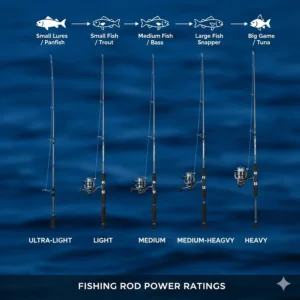
Ultra-Light to Light Power:
Perfect for small inshore species like speckled trout, small snook, and panfish. These rods flex easily, providing the sensitivity needed to detect subtle bites. However, they lack the backbone for larger fish.
Medium to Medium-Heavy Power:
The sweet spot for most inshore saltwater applications. Great saltwater fishing rods in this range handle redfish, striped bass, smaller tarpon, and most common inshore species. The KastKing Perigee II and St. Croix Triumph excel here.
Heavy to Extra-Heavy Power:
Designed for serious offshore work or targeting large inshore bruisers like bull redfish and big tarpon. The Shimano Teramar NE heavy models and Penn Battle III heavy configurations dominate this category.
Action Types Explained
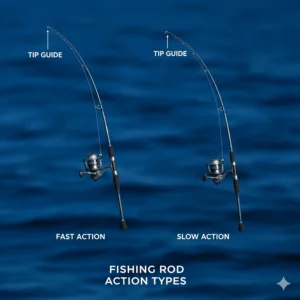
Fast Action:
The rod bends primarily in the top third. This provides excellent sensitivity and powerful hook sets—ideal for single-hook lures and finesse presentations. Most great saltwater fishing rods feature fast action because it excels at detecting bites in current.
Moderate-Fast Action:
Bends in the top half, offering versatility for various presentations. This is the most forgiving action for beginners because it helps prevent pulled hooks during the fight.
Moderate to Slow Action:
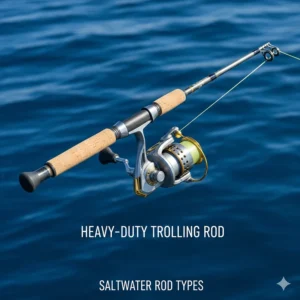
Bends deep into the butt section. Less common in saltwater applications but useful for certain offshore trolling situations where you need the whole rod to absorb shock.
Guide Materials: Your Line’s Best Friend or Worst Enemy
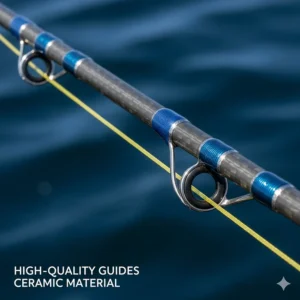
Premium Guide Options
Fuji Alconite:
Found on the KastKing Perigee II and higher-end models, alconite rings are significantly harder than traditional aluminum oxide. They resist groove formation from braided line while maintaining smooth casting performance.
Stainless Steel Frame Guides:
The gold standard for corrosion resistance. However, quality matters—cheap stainless will pit and corrode. Premium manufacturers like Penn, Shimano, and St. Croix use superior grade stainless that withstands years of saltwater exposure.
Ceramic/Zirconia Rings:
Extremely hard and smooth, perfect for braid. The Shimano Teramar SE’s SeaGuide zirconia guides represent cutting-edge technology that reduces friction and heat buildup during long casts.
Reel Seat Technology: Often Overlooked, Always Critical
Ever had your reel come loose mid-fight? That’s a reel seat failure, and it’s infuriating. Great saltwater fishing rods feature upgraded reel seat technology:
Graphite Composite Seats:
Lightweight and corrosion-proof but can crack under extreme stress. Best for lighter applications.
Anodized Aluminum:
Provides superior clamping strength and corrosion resistance. The Daiwa BG and Penn Battle III combos feature reinforced aluminum seats that lock down tight and stay that way.
Hybrid Systems:
Companies like St. Croix and Shimano combine materials—graphite bodies with stainless or aluminum hardware—to optimize weight, strength, and corrosion resistance.
Handle Materials and Ergonomics
Cork vs. EVA Foam
Premium Cork:
Traditional choice for good reason—it provides superior grip even when wet, naturally wicks moisture, and feels better in hand. The St. Croix Triumph and Shimano Teramar series feature agglomerated cork that resists breaking down over time. However, cork requires more maintenance and can mold if stored improperly.
EVA Foam:
More durable than cork, doesn’t absorb water, and easier to clean. The Penn Battle III and Daiwa BG offshore models use high-density EVA that maintains its shape through years of use. Downside? It can feel slippery when coated with fish slime or sunscreen.
Split vs. Full Handle:
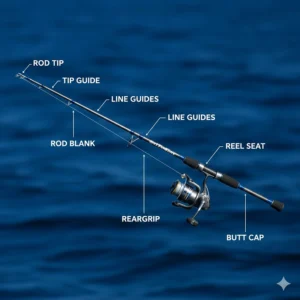
Split handle designs reduce weight and provide better palm contact with the blank for increased sensitivity—crucial for detecting subtle bites. Full handles offer more leverage for fighting large fish and working heavy lures. Choose based on your primary technique.
Critical Features Comparison: What Actually Matters
| Feature | Why It Matters | Best Examples |
|---|---|---|
| Blank Material | Determines sensitivity, power, weight | SCII (St. Croix), TC4 (Shimano) |
| Guide Quality | Prevents line damage, resists corrosion | Fuji (Perigee II), SeaGuide (Teramar) |
| Reel Seat | Keeps reel secure under load | Daiwa BG reinforced, Penn Dura-Seat |
| Handle Grip | Comfort during extended sessions | Premium cork (Triumph), EVA (BG) |
| Construction | One-piece vs. multi-piece | One-piece = more sensitivity |
Maintenance: Protecting Your Investment
The 5-Minute Post-Fishing Routine
Here’s what actually works (not just what manufacturers recommend):
Step 1: Immediate Rinse
Straight fresh water, moderate pressure. Focus on guides, reel seat, and handle. Don’t blast the reel directly—light misting only.
Step 2: Guide Inspection
Check each guide for salt buildup, especially the stripper guide (closest to reel). Use a soft toothbrush with warm water and mild soap for stubborn deposits.
Step 3: Reel Seat Care
Wipe down with a damp cloth. Apply a thin film of corrosion inhibitor (CorrosionX or similar) to metal parts. Don’t over-lubricate—excess attracts dirt.
Step 4: Handle Treatment
Cork: wipe with damp cloth, allow to air dry completely. EVA: wash with mild soap, rinse thoroughly.
Step 5: Storage
Store vertically in a cool, dry location. Never store rods horizontally under tension—this causes permanent set (bending).
Budget Breakdown: Getting Maximum Value
Under $100 – Entry Level Excellence
The Ugly Stik GX2 ($40-70) dominates this category. You’re sacrificing sensitivity and premium components, but gaining legendary durability. Perfect for beginners, rental gear, or beater rods you won’t cry over when they get dropped overboard.
The KastKing Perigee II ($50-70) offers more sensitivity and Fuji components at similar pricing. Higher performance ceiling but requires more careful handling.
$100-$200 – Sweet Spot Territory
This range delivers professional-grade performance without premium pricing:
- Penn Battle III Combo ($150-180): Complete system ready to fish
- Shimano Teramar SE ($150-190): Regional specialist excellence
- St. Croix Triumph ($140-150): Premium carbon at mid-range price
- Daiwa BG Combo ($160-180): Black Gold legacy value
Over $200 – Premium Performance
The Shimano Teramar NE ($180-230) represents the upper end of value-conscious premium rods. Beyond $250, you’re paying for incremental improvements that only expert anglers will notice.
Choosing the Right Length for Your Fishing Style
6’6″ – 7′ – Versatile All-Rounders
These lengths excel for:
- Boat fishing with limited casting room
- Working structure and docks
- Finesse presentations
- Kayak and small boat applications
The St. Croix Triumph and medium-power Shimano rods shine in this length range. You sacrifice casting distance for increased accuracy and better fish-fighting control in tight quarters.
7′ – 7’6″ – The Goldilocks Zone
Perfect for:
- General inshore fishing
- Flats fishing
- Medium-range casting
- Balanced versatility
Most great saltwater fishing rods fall into this sweet spot because it balances casting distance, accuracy, and fish-fighting leverage. The Penn Battle III 7′ models and Ugly Stik GX2 7′ configurations dominate sales for good reason.
8′ – 10′ – Distance Specialists
Essential for:
- Surf fishing
- Long-distance pier casting
- Reaching beyond breaking waves
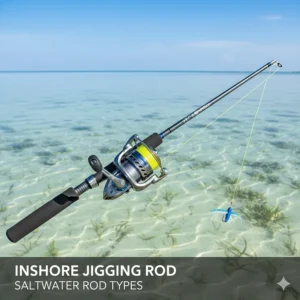
- Offshore jigging
The Penn Battle III and Daiwa BG offer extended length options for anglers who need maximum casting range.
Line Compatibility: Mono vs. Braid Considerations
Modern Braid Demands Modern Guides
Here’s what most articles won’t tell you: using braid on rods designed for monofilament destroys guides. Period. The friction and heat generated by braided line groove aluminum oxide guides within a season.
Great saltwater fishing rods built for 2025 feature:
- Harder guide materials (Fuji Alconite, zirconia, ceramic)
- Larger guide sizes to minimize friction
- More guides to distribute stress
The Shimano Teramar series, St. Croix Triumph, and KastKing Perigee II all feature braid-ready guide systems that won’t fail after your first season of heavy use.
Line Weight Matching
Light Lines (8-15lb):
Medium-light to medium power rods like the Perigee II and Triumph 7′ models. Perfect for targeting smaller inshore species with finesse.
Medium Lines (15-30lb):
Medium-heavy to heavy power. The Penn Battle III and Daiwa BG combos excel here. This covers 80% of inshore saltwater applications.
Heavy Lines (30lb+):
Heavy to extra-heavy power for targeting large fish or working heavy structure. Shimano Teramar NE heavy models and Penn Battle III offshore configurations.
Species-Specific Recommendations
Redfish and Speckled Trout
Best Choices:
- Shimano Teramar SE (7′ Medium)
- St. Croix Triumph Inshore (7′ Medium)
- Penn Battle III (7′ Medium-Heavy)
These species require sensitivity to detect subtle bites but enough backbone to pull fish from grass beds and oyster bars. Medium power with fast action is the winning combination.
Striped Bass
Best Choices:
- Shimano Teramar NE (7′ Medium-Heavy)
- Penn Battle III (7′ Medium-Heavy)
- Ugly Stik GX2 (7′ Medium-Heavy)
Stripers fight hard and often require setting hooks into bony mouths. Medium-heavy power with enough backbone to drive hooks home is essential. Northeast anglers particularly benefit from the regionally-optimized Teramar NE.
Snook and Tarpon
Best Choices:
- Shimano Teramar SE (7’6″ Heavy)
- Penn Battle III (8′ Heavy)
- Daiwa BG Combo (8′ Heavy)
These powerful inshore predators demand serious equipment. Heavy power rods with robust reel seats and gimbal support for extended fights. The Teramar SE’s rubber gimbal is specifically designed for tarpon battles.
Offshore Species (Tuna, Mahi, Grouper)
Best Choices:
- Penn Battle III (9′ – 10′ Heavy)
- Daiwa BG Combo (10′ Extra-Heavy)
- Shimano Teramar Offshore variants
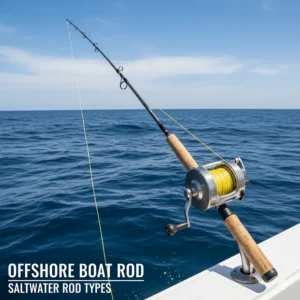
Offshore fishing requires specialized heavy equipment. Look for roller guides (where applicable), reinforced reel seats, and full EVA grips for all-day comfort.
Common Mistakes That Destroy Great Saltwater Fishing Rods
Mistake #1: Skipping the Rinse
“I’ll do it tomorrow” is the death sentence for saltwater gear. Salt crystals form within hours, working into every crevice. By tomorrow, corrosion has already started. Always rinse immediately after fishing.
Mistake #2: High-Pressure Spray Directly on Reels
Light misting yes, pressure washing no. Water forced into reel internals displaces protective grease and creates corrosion points. The Penn and Daiwa reels in these combos are water-resistant, not waterproof.
Mistake #3: Storing Rods Horizontally
Gravity is a patient enemy. Rods stored horizontally under even their own weight develop permanent set over months. Always store vertically or in protective tubes.
Mistake #4: Exceeding Line Weight Ratings
That 10lb test rod won’t handle 20lb braid just because “braid is stronger.” Line ratings account for rod power, guide size, and overall construction. Exceeding them causes premature failure—particularly common with the KastKing Perigee II.
Mistake #5: Using Rods as Boat Pushers or Pole Vaulting Aids
Seems obvious, but I’ve seen it happen countless times. Composite blanks are engineered for flexing under load along their length, not lateral stress from pushing off docks.
Advanced Technique: Matching Rod Action to Lure Type
Topwater Plugs
Ideal: Moderate to moderate-fast action
Why: Allows the rod to work the lure through its action while providing enough backbone for solid hook sets. The Ugly Stik GX2 and St. Croix Triumph excel here.
Soft Plastics and Jigs
Ideal: Fast action
Why: Maximum sensitivity to detect subtle bites, instant hook-setting power. The KastKing Perigee II and Shimano Teramar series deliver exceptional sensitivity for working these presentations.
Swimbaits and Crankbaits
Ideal: Moderate-fast action
Why: Provides enough give to prevent ripping treble hooks out while still maintaining control. Most great saltwater fishing rods in the medium-heavy category work well.
Live Bait
Ideal: Moderate action
Why: Allows fish to take bait without feeling excessive resistance. The more parabolic bend helps tire fish during extended fights. Penn Battle III medium power models are perfect for this application.
Seasonal Considerations: Adapting Your Rod Selection
Spring: Spawning Aggression
Fish are aggressive and feeding heavily pre-spawn. This is when medium-power rods shine—you want sensitivity to detect bites but enough power to handle fish at peak condition.
Summer: Deep Water and Heat
Fish move to deeper, cooler water. Longer rods (7’6″ – 8′) provide better casting distance to reach them. The Shimano Teramar NE’s range of lengths gives you options.
Fall: Feeding Frenzy
Baitfish migration triggers aggressive feeding. Medium-heavy to heavy power rods handle the larger fish and aggressive strikes. Penn Battle III and Daiwa BG combos dominate fall fishing.
Winter: Finesse and Depth
Fish are lethargic and require finesse presentations. Medium-light to medium power with fast action—the KastKing Perigee II’s twin-tip configuration provides winter versatility.
Travel Rods: Portable Great Saltwater Fishing Rods
Two-Piece vs. Multi-Piece
Two-Piece Benefits:
- Better sensitivity than 3+ piece rods
- Stronger ferrule (joint) connection
- More natural rod action
- Most of our top 7 are available in 2-piece configurations
Multi-Piece Benefits:
- Pack into carry-on luggage
- Easier transport in kayaks and small boats
- St. Croix offers 4-piece Triumph Travel models
The Trade-off:
Each ferrule connection reduces sensitivity slightly. For serious fishing, stick with two-piece. For travel convenience, modern 4-piece rods like St. Croix’s travel series minimize performance loss.
When to Upgrade: Reading the Warning Signs
Your Rod Needs Replacing If:
1. Visible Blank Damage
Cracks, chips, or stress marks visible on the blank. Even hairline cracks compromise structural integrity.
2. Guide Deterioration
Grooved or pitted guide rings damage line. Replace guides if possible, otherwise replace the rod.
3. Soft Spots in Blank
Press gently along blank length. Soft spots indicate resin failure—time for a new rod.
4. Permanent Set
If the rod no longer returns straight after flexing, the composite structure has failed.
5. Loose Reel Seat
While sometimes repairable, a chronically loose reel seat usually indicates broader structural issues.
FAQ: Your Saltwater Fishing Rod Questions Answered
❓ Can I use a saltwater fishing rod for freshwater?
❓ How often should I replace my saltwater fishing rod?
❓ What makes the Penn Battle III combo worth the extra cost over budget options?
❓ Are graphite rods better than fiberglass for saltwater?
❓ Why do some saltwater fishing rods cost over $300 when budget options exist?
Conclusion: Finding Your Perfect Great Saltwater Fishing Rod
After analyzing dozens of rods and real user experiences, here’s the truth: there’s no single “best” saltwater fishing rod for everyone. Your ideal rod depends on target species, fishing location, budget, and personal preferences.
For Budget-Conscious Beginners:
Start with the Ugly Stik GX2 ($40-70). It’s nearly indestructible, versatile, and lets you learn without breaking the bank. Once you’ve determined your favorite techniques, upgrade strategically.
For Serious Inshore Anglers:
The Shimano Teramar SE ($150-190) or St. Croix Triumph ($140-150) deliver premium performance without premium pricing. Regional optimization means you’re fishing with equipment designed specifically for your waters.
For All-Around Versatility:
The Penn Battle III Combo ($150-180) provides a complete, proven system that handles everything from small inshore species to offshore bruisers. Its legendary durability makes it a lifetime investment.
For Value-Conscious Enthusiasts:
The Daiwa BG Combo ($160-180) continues the Black Gold legacy with perfectly matched components and time-tested reliability.
Remember: the best rod is the one you’ll actually use. Don’t overthink it. Pick a rod from our top 7, learn its capabilities, maintain it properly, and focus on what really matters—getting on the water and catching fish.
The ocean is waiting. Your next great saltwater fishing adventure starts with the right rod in your hands. Now get out there and make it happen! 🎣
Recommended for You
- 7 Best Rod and Reel for Saltwater Fishing 2025 (Tested)
- 7 Best Saltwater Fishing Rod Combo 2025 – Expert Guide
- 7 Best Surf Fishing Lures That Catch Fish in 2025
Disclaimer: This article contains affiliate links. If you purchase products through these links, we may earn a small commission at no additional cost to you.
✨ Found this helpful? Share it with your friends! 💬🤗
