
In This Article
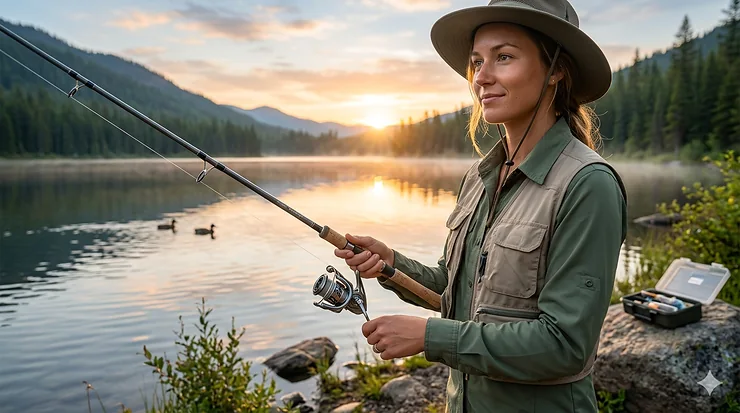
There’s something almost poetic about a medium light spinning rod. Not flashy. Not brute. Just perfectly calibrated for the moment a crappie sips your jig so softly you’d swear the wind moved the line — except you felt it, through 7 feet of graphite, right down into your palm.
That’s what a quality medium light spinning rod does. It amplifies the conversation between you and the fish.
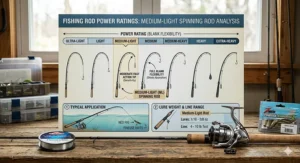
Walk into any bass tournament weigh-in and the finesse guys — the ones catching fish when nobody else can — are almost always throwing a medium light spinning rod. There’s a reason for that. A true ML rod (typically rated 4–10 lb line, ¼–½ oz lures) sits in the sweet spot: sensitive enough to telegraph subtle bites, forgiving enough not to tear out treble hooks, yet with enough backbone to actually land the fish. Think of it as the Swiss Army knife of freshwater fishing — equally at home on a drop-shot rig for bass, a jig for crappie, or a small swimbait for walleye.
What is a medium light spinning rod? Simply put, it’s a spinning rod with a power rating between ultralight and medium, designed to handle line weights from roughly 4 to 12 lbs and lure weights from 1/16 to 3/8 oz. The faster the action (where the blank bends), the more sensitivity you get at the tip; the slower the action, the more the whole rod loads on the cast — great for throwing crankbaits or small swimbaits.
In this guide, we dug through dozens of Amazon listings, real angler reviews, and independent test data to bring you the seven best options across every budget. Whether you’re chasing bluegill on a Sunday afternoon or finesse-fishing tournament bass, there’s a rod on this list built exactly for you.
Let’s get into it. 🎣
Quick Comparison: Top 7 Medium Light Spinning Rods at a Glance
| Rod | Length | Blank Material | Line Wt. | Lure Wt. | Price Range | Best For |
|---|---|---|---|---|---|---|
| St. Croix Triumph TSR | 7’0″ | SCII Carbon | 4–10 lb | 1/8–1/2 oz | $80–$110 | Best Overall |
| Ugly Stik Elite | 7’0″ | Graphite/Glass | 4–12 lb | 1/8–3/8 oz | $45–$65 | Best Durability |
| KastKing Perigee II | 7’0″ | Toray 24T Carbon | 4–10 lb | 1/8–3/8 oz | $40–$60 | Best Value |
| Lew’s Laser SG1 | 6’6″ | IM6 Graphite | 4–10 lb | 1/8–3/8 oz | $40–$55 | Best Under $50 |
| Fenwick HMX | 7’0″ | IM7 Carbon Blend | 4–10 lb | 1/8–3/8 oz | $55–$80 | Best Sensitivity |
| Ugly Stik GX2 | 7’0″ | Graphite/Glass | 4–12 lb | 1/8–3/8 oz | $30–$50 | Best Budget |
| Okuma Celilo CE-S | 6’6″ | Graphite Composite | 4–8 lb | 1/16–3/8 oz | $25–$40 | Best Panfish/Trout |
Reading the table: Price and sensitivity tend to move together, but not in a straight line. The St. Croix Triumph earns its premium price not just through better graphite, but through years of refinement in blank geometry and component quality that genuinely changes how a fish feels at the end of your line. Budget picks like the Okuma Celilo and Ugly Stik GX2 sacrifice some raw sensitivity but compensate with remarkable durability for the price — a real trade-off worth understanding before you buy.
💬 Just one click — help others make better buying decisions too! 😊
Top 7 Medium Light Spinning Rods: Expert Analysis
1. St. Croix Triumph Spinning Rod (TSR, Medium-Light/Fast, 7’0″) — Best Overall
If there’s one rod that genuinely earns the “best overall” tag without asterisks, it’s the St. Croix Triumph. The 7-foot, medium-light/fast configuration is a near-perfect finesse fishing rod for the angler who’s serious about feel.
The Triumph is built on St. Croix’s proprietary SCII carbon blank — a composition with a higher strain rate and refined resin that produces one of the most sensitive blanks in its price class. In real-world terms: when you’re fishing a Ned rig in 20 feet of water and that smallmouth barely moves your bait, you’ll still feel it. Hard aluminum-oxide guides with black stainless frames, a Sea Guide XDPS reel seat with sandblasted hoods, and a premium cork handle round out a component list that punches well above its price. Line rating is 4–10 lb, lure weight 1/8–1/2 oz, and at 4.2 oz the rod is genuinely light in hand during long sessions.
What most buyers overlook: the Triumph’s fast action loads beautifully on moderate casts — you’re not just flipping short distances, you can bomb a ¼ oz swimbait 50+ feet with respectable accuracy. The 5-year St. Croix Superstar warranty is also real and honored. Buyers consistently note the upgrade from budget rods feels immediate and obvious.
Customer feedback highlights the rod’s exceptional balance: anglers fishing drop-shots and Ned rigs call it transformative, particularly for night fishing when visual bite detection is impossible. Backed by a 5-year warranty.
✅ SCII carbon provides tournament-level sensitivity at a mid-range price
✅ Fast action excels at drop-shot, Ned rig, and small jig applications
✅ Premium cork handle, quality SeaGuide components
❌ Single-piece models less convenient for travel
❌ Costs more than the budget options — but you genuinely feel the difference
Price range: $80–$110 | Value verdict: Every dollar justified for the serious finesse angler.
2. Ugly Stik Elite Spinning Rod (7’0″, Medium-Light) — Best for Durability
The Ugly Stik Elite is what happens when a brand takes its legendary tank-like reputation and actually makes it more refined. This isn’t your grandfather’s Ugly Stik — it’s 35% more graphite than the previous GX2 generation, which translates directly into a noticeably lighter blank without sacrificing the brand’s famous indestructibility.
The Elite uses Ugly Tech construction (proprietary graphite/fiberglass blend), Ugly Tuff one-piece stainless steel guides with PVD coating, and the iconic Clear Tip® design that adds both sensitivity and strength. Line rating runs 4–12 lb, lure weight 1/8–3/8 oz. The premium cork handle is a real upgrade over the shrink-wrap grips found on cheaper rods — after 4 hours on the water, it matters. A 10-year warranty backs every Elite rod.
Here’s the honest take: the Ugly Stik Elite isn’t the most sensitive rod on this list, and it never claims to be. What it is, though, is exceptionally forgiving — its moderate-fast action is ideal if you’re fishing cranks, small spinners, or inline spinners where an overly stiff, fast-action rod will actually pull hooks. It’s also essentially indestructible. If you’ve ever snapped a rod by slamming a car door, sat on it, or letting a cousin borrow it, the Elite is the rod you need.
Anglers consistently rate it as the best “do-everything” rod when abuse resistance matters — popular with kayak fishermen and shore anglers who fish rough terrain.
✅ 10-year warranty, virtually unbreakable construction
✅ Premium cork handle, excellent balance
✅ Great for crankbaits and mid-depth presentations
❌ Heavier than pure graphite rods at the same price
❌ Moderate-fast action less ideal for deep-water finesse techniques
Price range: $45–$65 | Value verdict: Outstanding durability-to-price ratio.
3. KastKing Perigee II Spinning Rod (7’0″, Medium-Light) — Best Value
KastKing’s Perigee II has been quietly eating the lunch of rods costing twice as much for a few years running — and the medium-light configuration is arguably the star of the lineup.
Built on a Toray 24-ton carbon matrix KastFlex blank, the Perigee II delivers sensitivity that competes credibly with rods $30–$50 higher in price. The magic is in the components: Fuji O-Ring guides on a sub-$60 rod is legitimately unusual. Fuji guides reduce friction, protect your line, and last significantly longer than aluminum oxide alternatives found at this price. The rod also features KastKing’s PTS (Power Transition System) in the two-piece models, which uses a specialized spigot joint so the blank behaves like a one-piece when loaded on a cast.
Available in the Twin-Tip configuration — one rod body with two interchangeable tips (medium-light and medium power) — which is an absurdly practical option if you fish multiple presentations without wanting multiple rods. Lure weight 1/8–3/8 oz, line rating 4–10 lb, moderate-fast action.
The spec sheet won’t tell you this, but the Perigee II’s bare-finish blank actually communicates vibration more directly than many finished blanks at double the price — you can feel bottom composition change through the rod tip while dragging a jig.
Customer reviews highlight the Fuji guides and sensitivity as standout features, with many veteran anglers noting they’d fish it alongside rods costing $150+.
✅ Fuji O-Ring guides at this price range is rare and valuable
✅ Twin-tip option gives two rods in one
✅ KastFlex blank sensitivity above its price class
❌ Cosmetics aren’t as refined as premium brands
❌ Reel seat not as polished as St. Croix or Fenwick
Price range: $40–$60 | Value verdict: The best-performing rod under $60, full stop.
4. Lew’s Laser SG1 Spinning Rod (6’6″, Medium-Light) — Best Under $50
Lew’s has been making serious fishing tackle since 1949, and the Laser SG1 is a masterclass in delivering tournament-grade specs at a price that won’t make your partner question your priorities.
The SG1 uses a premium IM6 graphite blank — unfinished, for maximum sensitivity — with black-coated stainless steel guides featuring aluminum oxide inserts that manage line beautifully with both mono and braid. The signature touch is Lew’s exclusive graphite skeletal reel seat, which exposes the blank directly to your hand, letting you feel the rod instead of a thick plastic housing. Real-world difference? Yes — you can actually feel current changes and bottom contact on that skeletal seat in ways a full-surround reel seat won’t transmit.
The split-grip cork and EVA butt design keeps the rod balanced front-to-back, reducing hand fatigue on long sessions. At 6’6″, it’s slightly shorter than most competitors at this price point — ideal if you fish tight cover, small creek systems, or dock edges where a 7-foot rod becomes a liability. Line rating 4–10 lb, lure weight 1/8–3/8 oz, fast action.
Tournament anglers on a budget consistently call the SG1 the best-kept secret in affordable spinning rods. The 6’6″ medium-light is a particular favorite for Ned rigs and drop-shots in tight quarters.
✅ Skeletal reel seat transmits more sensitivity to your hand
✅ Excellent for finesse in tight cover
✅ Premium cork/EVA hybrid grip for all-day comfort
❌ 6’6″ length limits casting range versus 7-foot competitors
❌ Less backbone than stiffer ML rods for larger fish
Price range: $40–$55 | Value verdict: Outstanding finesse tool for tight-water anglers.
5. Fenwick HMX Spinning Rod (6’6″ or 7’0″, Medium-Light) — Best Sensitivity
Fenwick built its reputation on sensitivity — this is the brand that invented the first fiberglass rod blank back in 1952, according to the company’s own history — and the HMX series continues that tradition with modern materials.
The HMX blank uses IM7 graphite in a proprietary Cross-Scrim construction — overlapping carbon fiber layers at specific angles that create exceptional hoop strength while reducing weight. The practical result: this rod detects vibrations that many IM6 blanks simply filter out. The Chromium SS304 guide system is the other headline feature — 20 times tougher than conventional aluminum oxide guides and up to 55% lighter, which removes dead weight from the tip section and improves casting feel dramatically.
At 6’6″, the medium-light HMX is rated 4–10 lb line, lure weight 1/8–3/8 oz. The fast-taper action gives it an almost electric sensitivity at the tip — perfect for fishing tiny jigs in clear water where you need to feel even the most cautious panfish bite. Where most anglers go wrong with the HMX: they try to heavy-load it with larger lures. This rod is optimized for the lighter end of the ML spectrum — think 1/16 to ¼ oz — where its sensitivity shines brightest.
Anglers targeting crappie, trout, and walleye with finesse rigs consistently rate the HMX as the most feedback-rich rod in its price range. Several note detecting bites they’d have completely missed on comparable rods.
✅ IM7 Cross-Scrim blank — superior sensitivity to IM6 competitors
✅ Ultralight guide system improves tip response
✅ Fast taper excels at subtle bite detection
❌ Sensitivity comes at some cost to forgiveness — not ideal for cranks
❌ Slightly less available in some ML configurations on Amazon vs. competitors
Price range: $55–$80 | Value verdict: Best choice if bite detection is your top priority.
6. Ugly Stik GX2 Spinning Rod (7’0″, Medium-Light) — Best Budget Pick
The GX2 is the rod that’s introduced more Americans to fishing than perhaps any other single model — and for good reason. It’s nearly unbreakable, widely available, costs less than a decent dinner out, and can be in the water catching fish within an hour of arriving in a box.
The GX2 uses Ugly Tech construction (graphite/fiberglass blend), Ugly Tuff one-piece stainless guides that resist the insert pop-outs plaguing cheaper guide systems, and the signature Clear Tip® design — a semi-transparent tip section that adds both strength and marginal sensitivity improvement. Line rating 4–12 lb, lure weight 1/8–3/8 oz, moderate-fast action. The ergonomic reel seat exposes the blank for modest sensitivity improvement over fully enclosed designs.
Here’s the honest assessment: the GX2 isn’t the most sensitive rod on this list by a wide margin. The graphite/fiberglass composite is heavier and more vibration-damping than pure graphite blanks. But that same construction makes it nearly impervious to the kind of accidental abuse that kills $100+ rods. The moderate-fast action is also naturally forgiving — great for beginners learning to set hooks without tearing lips off fish.
What it excels at: teaching the next generation to fish, casual weekend crappie and bass trips, or as a backup rod you can throw in the car without anxiety.
✅ Near-indestructible for the price — 7-year warranty
✅ Forgiving action ideal for beginners and casual anglers
✅ Widely available, easy to replace components
❌ Noticeably heavier than graphite alternatives
❌ Sensitivity limits performance on finesse applications
Price range: $30–$50 | Value verdict: Best rod to start fishing or equip a beginner.
7. Okuma Celilo CE-S Spinning Rod (6’6″, Medium-Light) — Best for Panfish & Trout
The Okuma Celilo quietly lives at the intersection of “affordable enough to buy without thinking about it” and “good enough to use consistently for years.” It’s a cult favorite among panfish and trout specialists — and once you pick one up, you understand why.
The Celilo uses a sensitive graphite composite blank, aluminum oxide guide inserts (corrosion-resistant and slick), a stainless steel hooded reel seat, and both front and rear premium cork grips. Full cork top-to-bottom, on a rod in the $25–$40 range, is genuinely unusual. Cork transmits more vibration to your hand than EVA foam and is more comfortable during cold-weather sessions — a real benefit if you’re fishing spring trout season at dawn. Line rating 4–8 lb, lure weight 1/16–3/8 oz, fast action.
The CE-S medium-light configuration at 6’6″ is the sweet spot for dock fishing, trout streams, and pond crappie. The slightly lower line ceiling (8 lb) compared to competitors tells you something important: this rod is optimized specifically for lighter presentations, not as a general-purpose rod. Push it toward bigger lures and heavier line and it starts to lose its magic. Work it in its wheelhouse — light jigs, small spinners, split-shot rigs — and it punches well above its weight class.
Buyers routinely note the Celilo’s value is almost embarrassingly good, and several experienced anglers keep one rigged for panfish even while owning rods costing five times as much.
✅ Full cork handles rare at this price — better cold-weather feel
✅ Ideal for panfish, trout, and light lure presentations
✅ Aluminum oxide guides perform well with both mono and fluorocarbon
❌ Lower line rating limits versatility for larger species
❌ Graphite composite slightly less sensitive than pure graphite blanks
Price range: $25–$40 | Value verdict: The ultimate panfish and trout specialist on a tight budget.
How to Get the Most From Your Medium Light Spinning Rod: A Practical Field Guide
Buying the right rod is only half the equation. Here’s what the instruction manual doesn’t tell you.
Match your line to the rod’s lower rating first. Most anglers spool medium light spinning rods with 8 lb mono as a default — but drop to 6 lb fluorocarbon and you’ll instantly feel the difference in sensitivity. Fluorocarbon’s lower stretch transmits vibration more efficiently than monofilament, which is why finesse bass tournament anglers almost universally use it. With braid (8–10 lb) and a 6–8 lb fluorocarbon leader, you get the best of both worlds: zero stretch for sensitivity and the invisibility of fluoro at the business end.
Tip position during retrieval matters more than you think. For bottom-contact techniques like Ned rigs and drop shots, keep your rod tip at the 9 o’clock position (parallel to the water surface) rather than pointing up. This keeps direct contact with the lure and eliminates the bow of line that cushions bites before they reach your hand.
Don’t abuse the action with oversized lures. The most common mistake new medium light rod owners make is throwing ⅝ oz lures on a rod rated for ½ oz maximum. You’ll feel the rod struggling to properly load on the cast — short, mushy casts rather than crisp launches. If you’re regularly fishing heavier lures, step up to a medium power rod.
Reel seat cleaning extends sensitivity. Carbon fiber and graphite blanks are excellent vibration conductors — but only when there’s clean contact between the reel foot and the reel seat. Clean your reel seat threads and foot twice a season with a cotton swab and mild degreaser. It sounds obsessive. It works.
Store vertically or in a horizontal rod rack. Leaving ML rods horizontally on two support points (like a gun rack) for extended periods can introduce a subtle warp in lighter blanks over time. Rod tubes or vertical wall racks eliminate this risk entirely.
✨ Don’t Miss These Exclusive Deals!
🔍 Take your fishing to the next level with these carefully selected medium light spinning rods. Click on any highlighted product above to check current pricing and availability on Amazon. These rods will help you detect more bites, cast more accurately, and catch more fish.
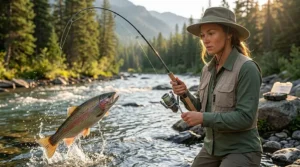
Which Medium Light Spinning Rod Matches Your Fishing Style? Real-World Scenarios
Not every angler needs the same rod. Here’s a framework that matches real fishing situations to the right choice from our list.
The Tournament Bass Finesse Angler: You’re fishing drop-shots and Ned rigs in clear water, competing for fish that have seen every lure in the tackle shop. Sensitivity is non-negotiable. The St. Croix Triumph TSR is your rod — its SCII carbon blank and fast action transmit subtle taps at depth that will read as “missed bite” on lesser rods. Pair it with 10 lb braid and a 6 lb fluorocarbon leader, and you’re fishing at a genuinely elite level.
The Weekend Crappie and Panfish Enthusiast: You hit the local reservoir every Saturday, dropping 1/32 and 1/16 oz jigs around brush piles and dock posts. The Okuma Celilo CE-S in 6’6″ medium-light is purpose-built for this. Its full cork grips feel great on early-morning cold hands, the fast action telegraphs crappie’s famously light bite, and at under $40 you’re not stressed about setting it down on a slippery fiberglass boat deck.
The New Angler Building Their First Setup: You’re learning. Technique matters, but so does not destroying an expensive rod on a fence post or a car door. The Ugly Stik GX2 medium-light is the answer. It’s forgiving enough to cover sloppy technique while you learn hook sets, tough enough to survive the inevitable abuse, and cheap enough to buy two.
The Budget-Conscious Bass Angler Who Fishes Often: You fish 40–60 days a year, you know your way around a spinning rod, but you’re not spending $150 on one. The KastKing Perigee II is your move. Fuji guides, a Toray 24-ton blank, and the Twin-Tip configuration give you real tournament-quality performance and two-rod versatility in a single $50–$60 purchase.
The Kayak Angler Who Travels to Fish: You need a two-piece rod that breaks down for transport, handles diverse presentations from topwater panfish to deeper bass finesse work, and doesn’t feel like a compromise when assembled. The Lew’s Laser SG1 6’6″ two-piece delivers, with its skeletal reel seat and fast-action IM6 blank packing down to a manageable 33 inches.
How to Choose a Medium Light Spinning Rod: 6 Things That Actually Matter
The fishing rod industry generates a lot of impressive-sounding jargon. Here’s what genuinely affects your fishing, ranked by importance.
1. Blank Material and Modulus. IM6, IM7, IM8, 24-ton, 30-ton, 36-ton graphite — these numbers describe carbon fiber stiffness (modulus). Higher modulus = lighter and more sensitive blank, but also more brittle. For a medium light spinning rod used in freshwater finesse fishing, IM6 to IM7 (or Toray 24-ton equivalent) is the sweet spot: sensitive enough to feel light bites, tough enough to survive normal use. According to research published by fishing tackle testing organizations, anglers can detect bites 40% more frequently with high-modulus graphite blanks than fiberglass-dominant composites.
2. Action Rating. For medium light spinning rods, fast action is generally preferable for finesse fishing (Ned rig, drop-shot, small jigs) because it bends primarily in the top third and transmits bite signals efficiently. Moderate-fast works well for moving baits (spinners, crankbaits) where the softer tip absorbs head shakes on the hookset. Moderate action is great for trout and panfish in current, where the whole rod absorbs the fight.
3. Guide Quality. According to the American Sportfishing Association, line friction at guides is one of the primary causes of casting distance loss and line wear. Fuji O-Ring and aluminum oxide guides represent the industry standard for smooth, durable performance. Cheap ceramic guides wear grooves that fray line within a single season — a risk particularly relevant for anglers using braided line.
4. Reel Seat Design. An exposed-blank or skeletal reel seat transmits more vibration to your palm than full-surround designs. This isn’t marketing — it’s physics. If sensitivity is your priority, choose a rod with minimal material between the blank and your hand.
5. Handle Material. Cork is lighter, more sensitive, and better in cold temperatures than EVA foam. EVA is more durable and cheaper to produce. For finesse applications, cork is worth the small premium. For durability-first applications, EVA is fine.
6. Length. Seven feet is the modern standard for versatility — long enough for casting distance, short enough for accuracy in most situations. Go shorter (6′ to 6’6″) for tight cover, small streams, or highly precise presentations. Go longer (7’3″+) for long-line finesse, slip-bobber fishing, or big water walleye work.
Medium Light Spinning Rod vs. Ultralight vs. Medium: What’s the Real Difference?
This comparison trips up more anglers than any other buying decision. Here’s a plain-language breakdown.
| Feature | Ultralight | Medium Light | Medium |
|---|---|---|---|
| Line Range | 2–6 lb | 4–10 lb | 6–15 lb |
| Lure Range | 1/32–1/4 oz | 1/16–1/2 oz | 1/8–3/4 oz |
| Best Species | Trout, small panfish | Bass, crappie, walleye, trout | Bass, walleye, pike |
| Fight Character | Full-rod flex | Tip-to-mid flex | Primarily mid-blank |
| Mistake Tolerance | Low | Moderate | High |
The medium light is the most versatile of the three by a significant margin. An ultralight in the hands of a beginner will snap under a 3-lb bass fighting near structure; a medium rod will feel numb and over-powered for drop-shotting a ¼ oz bait. The ML does neither perfectly, but it does everything adequately — and for most freshwater applications, “adequately” is more than enough.
What the table above doesn’t capture: the fun factor. A medium light rod on a 12-inch crappie is legitimately thrilling. That same fish on a medium rod registers as barely an inconvenience.
Features That Actually Matter (And Those That Don’t)
The fishing rod market is full of feature claims that sound impressive in ads and mean very little on the water. Let’s sort them out.
Matters a lot:
- Guide ring hardness (harder = less friction, less line wear)
- Blank modulus and construction method
- Reel seat blank exposure
- Handle material and grip surface area
- Action/power match to your primary technique
Matters somewhat:
- Rod weight (anything under 4.5 oz is genuinely light; claims of “7% lighter” are mostly marketing)
- Number of guides (more guides distribute load better, but only relevant above 7 guides)
- Thread wrap aesthetics and finish quality (indicates care in manufacture)
Doesn’t matter as much as advertised:
- “Nano technology” or “micro-resin” claims without third-party verification
- Brand name alone — budget rods from known brands often use the same blank suppliers as mid-tier rods at double the price
- Color schemes and cosmetics (zero effect on function)
- Rod tube included (nice, but doesn’t tell you anything about the rod)
Common Mistakes When Buying a Medium Light Spinning Rod
Even experienced anglers fall into these traps. Learn from their mistakes.
Buying too stiff for the application. The most common error is purchasing a rod rated “medium light” but with a very fast, stiff action for applications that need a softer tip. If you’re throwing light jerkbaits or small crankbaits, you want moderate-fast at most — the extra tip flex loads the rod on the cast and prevents ripping hooks during the fight. Going too stiff causes lost fish and short casts.
Ignoring the lower end of the lure rating. A medium light rod rated “1/8–1/2 oz” fishes very differently with a 1/8 oz lure versus a 1/2 oz lure. If you primarily fish 1/16 oz jigs for crappie, look for a rod whose lower lure bound is 1/32 or 1/16 oz — that means the action is tuned for lighter presentations. The Okuma Celilo’s 1/16 oz floor makes it noticeably better for ultralight panfish jigs than a rod with a 1/8 oz minimum.
Overlooking guide count and spacing. Rods with fewer guides have longer unsupported sections of line, which increases friction and reduces casting distance. Count the guides on any rod you’re considering: for a 7-foot spinning rod, 7–8 guides is standard; fewer suggests cost-cutting in the component budget.
Assuming all “medium light” power ratings are equivalent across brands. They aren’t. A Lew’s medium-light may feel meaningfully stiffer than an Okuma medium-light at the same length due to different blank geometries. Read actual line and lure ratings rather than power labels alone.
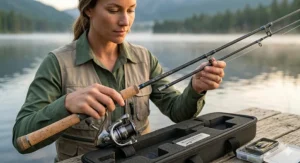
Medium Light Spinning Rods for Beginners vs. Experienced Anglers
These two groups have genuinely different needs, and buying the wrong rod for your experience level is one of the most common mistakes in fishing retail.
Beginners benefit from forgiving actions (moderate-fast), more durable blank materials (graphite/fiberglass composites over pure graphite), and longer warranties. The Ugly Stik GX2 and Ugly Stik Elite are both specifically excellent here. The composite blanks resist breakage from slamming into rocks, overcasting into trees, and the general chaos of learning. A beginner breaking a $35 GX2 is a minor annoyance. Breaking a $100 St. Croix the first week is a discouraging and expensive lesson.
Experienced anglers can exploit the performance advantages of high-modulus graphite blanks, skeletal reel seats, and premium guide systems because they understand technique-specific rod loading. The St. Croix Triumph and Fenwick HMX both reward technical finesse fishing — but they also reveal technique errors that a forgiving composite blank would mask. The sensitivity that lets a skilled angler detect a bass barely mouthing a Ned rig will also make a beginner feel every rock, weed, and debris bump as a potential bite, creating confusion rather than clarity.
The right approach for an angler transitioning from beginner to intermediate: start with the KastKing Perigee II. It delivers competitive sensitivity at moderate cost, with Fuji guides and a Toray blank that perform well even as your technique sharpens. It’s the rod that won’t make you feel limited as you improve.
For further reading on rod selection, Wired2Fish’s comprehensive guide to spinning rods and Outdoor Life’s tested reviews are both excellent resources maintained by experienced field testers.
❓ FAQ: Medium Light Spinning Rods
❓ What is a medium light spinning rod good for?
❓ What's the difference between medium light and medium power spinning rods?
❓ What length medium light spinning rod is best for bass fishing?
❓ Can I use a medium light spinning rod for trout and panfish?
❓ Is a medium light spinning rod good for beginners?
Conclusion: The Right Medium Light Spinning Rod Changes Everything
Here’s the thing nobody tells you in a fishing tackle store: the right rod doesn’t just catch more fish — it changes how fishing feels. That moment when you’re 25 feet offshore with a ¼ oz jig on the bottom and you feel — not see — a bass pick it up is one of the great sensory pleasures of the sport. A quality medium light spinning rod makes that moment possible. A cheap, insensitive one makes it luck.
For most anglers reading this, the St. Croix Triumph TSR is the target — premium sensitivity, tournament-tested construction, and a 5-year warranty at a price that won’t require a payment plan. If the budget is tighter, the KastKing Perigee II competes with rods costing twice as much and comes with Fuji guides that most $60 rods don’t bother with. Beginners: start with the Ugly Stik GX2 and graduate up when you’ve broken it or outgrown it, whichever comes first.
Whatever you choose from this list, you’re fishing with a real tool — not a toy. Match it to your technique, respect the lure weight ratings, and keep the line quality matched to the rod’s lower ratings for maximum sensitivity. Do that, and the rod will take care of the rest.
Now go fish. 🎣
✨ Don’t Miss These Exclusive Deals!
🔍 Ready to upgrade your finesse fishing setup? Click on any highlighted rod above to check current pricing on Amazon. Stock levels and prices change frequently — check today to lock in the best available deal!
Recommended for You
- 7 Best Baitcasters Under $150 in 2026 — Top Picks Reviewed
- 7 Best Left Hand Baitcasting Reels 2026
- 7 Best Magnetic Brake Baitcasters 2026
Disclaimer: This article contains affiliate links. As an Amazon Associate, I earn from qualifying purchases. If you purchase products through these links, we may earn a small commission at no additional cost to you.
✨ Found this helpful? Share it with your fishing buddies! 💬🤗
