
In This Article
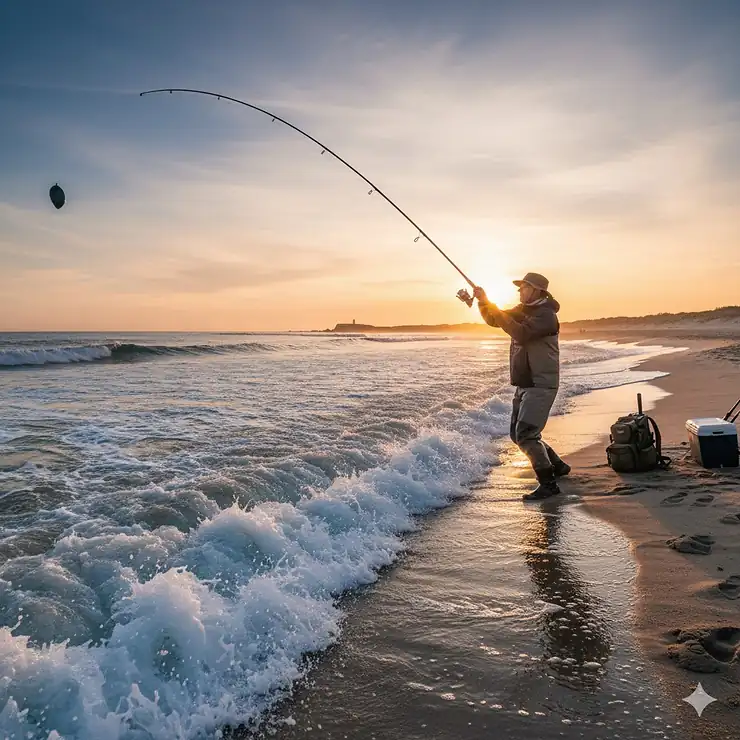
Standing at the water’s edge, watching waves crash against the shore, you know that landing that trophy catch comes down to one crucial piece of gear. The best fishing rods for surf fishing aren’t just about casting far—they’re about precision, power, and durability when it matters most. Whether you’re targeting striped bass off the Carolina coast or chasing red drum in Florida’s surf zone, your rod selection can make or break your entire fishing adventure.
I’ve spent countless hours testing rods from beaches, jetties, and rocky shores, and I’ll tell you this: not all surf rods are created equal. The best fishing rods for surf fishing balance sensitivity with backbone, allowing you to feel subtle bites while still having the muscle to fight powerful fish through crashing waves. Some anglers swear by 12-foot heavy-duty poles, while others prefer nimble 9-footers for jetty work. The truth? It depends on your fishing style, target species, and local conditions.
✨Was this helpful? Spread the word! 🚀
In this comprehensive guide, I’ll walk you through seven exceptional surf fishing rods that have proven their worth in real-world conditions. From budget-friendly options under $50 to premium rods that’ll last decades, we’ve got you covered. Plus, I’ll share insider tips on choosing the best pole for surf fishing based on your specific needs. Ready to upgrade your surf game? Let’s dive in.
Quick Comparison Table
| Rod Model | Length | Power | Pieces | Price Range | Best For |
|---|---|---|---|---|---|
| Penn Squadron III | 10-12′ | Med-Heavy | 2 | $65-$90 | All-around value |
| Ugly Stik Bigwater | 8-10′ | Med-Heavy | 1-2 | $55-$85 | Durability |
| Penn Carnage III | 10-12′ | Med-Heavy | 2 | $260-$280 | Premium performance |
| St. Croix Legend Surf | 9-12′ | Med-Heavy | 2 | $350-$450 | Elite sensitivity |
| Okuma Rockaway | 9-12′ | Medium | 2 | $80-$120 | Lightweight casting |
| Fiblink Surf | 9-15′ | Med-Heavy | 2-4 | $40-$70 | Travel convenience |
| Penn Battalion II | 10′ | Med-Heavy | 2 | $100-$130 | Best balance |
💬 Just one click – help others make better buying decisions too!😊
⚡ Ready to Catch More Fish?
🎣 These top-rated surf rods are waiting for you on Amazon. Click any highlighted product name to check real-time prices, read thousands of verified reviews, and get your gear delivered fast. Your next big catch starts with the right rod! 🌊
Top 7 Best Fishing Rods for Surf Fishing: Expert Analysis
1. Penn Squadron III Surf Spinning Rod – The Value Champion
The Penn Squadron III has become my go-to recommendation for anglers who want serious performance without the premium price tag. This rod delivers exceptional casting distance thanks to its graphite composite blank construction that balances strength and sensitivity beautifully.
Key Specifications:
- Available in 10′, 11′, and 12′ lengths
- Medium-heavy power with moderate-fast action
- 15-30lb line rating, 2-6oz lure capacity
- PENN’s virtually indestructible Dura-Guides
Price Range: $65-$90
What really sets this rod apart are those one-piece stainless steel Dura-Guides—no more frustrating insert pop-outs that plague cheaper rods. The comfortable shrink tube and EVA grips feel great even after hours of casting, and the graphite reel seat provides a solid anchor point for your reel.
Customer feedback consistently praises the Squadron III for its casting performance. One angler reported, “I can cast close to 100 yards consistently with this rod,” while another noted it’s perfect for catching fish in the OBX surf. The 2-piece construction makes transport a breeze.
✅ Pros:
- Exceptional value for money
- Durable Dura-Guide system
- Versatile for various surf conditions
❌ Cons:
- Heavier than premium carbon rods
- Tip may be vulnerable to hard impacts
2. Ugly Stik Bigwater Spinning Rod – The Indestructible Beast
When durability is your top priority, the Ugly Stik Bigwater stands alone. This rod has legendary toughness built into its DNA with Ugly Tech construction combining graphite and fiberglass for a rod that simply refuses to break.
Key Specifications:
- Available in 8′, 9′, and 10′ lengths
- Medium-heavy to heavy power
- 20-40lb line rating, 3/4-4oz lure capacity
- Ugly Tuff one-piece stainless steel guides
Price Range: $55-$85
The Bigwater features the famous Clear Tip design that adds both strength and sensitivity, letting you feel even light bites while maintaining the backbone to muscle big fish through the surf. Fuji reel seats and comfortable EVA grips round out the package, and it’s backed by a 7-year warranty that shows Ugly Stik’s confidence in their product.
Customers rave about its reliability. One reviewer shared, “This rod will pull the lips off a Sasquatch,” while another noted, “Almost indestructible… will land big fish easily.” The rod performs exceptionally well for beach and jetty fishing where you need power for long casts and hard fights.
✅ Pros:
- Legendary durability (7-year warranty)
- Excellent value
- Powerful backbone for big fish
❌ Cons:
- Heavier than carbon fiber alternatives
- Less sensitive than premium graphite rods
3. Penn Carnage III Surf Spinning Rod – The Performance Elite
If you’re serious about surf fishing and want top-tier performance, the Penn Carnage III delivers professional-grade results. The proprietary SLS3 blank construction creates an incredibly thin diameter blank that’s both lightweight and surprisingly strong.
Key Specifications:
- Available in 10′, 11′, and 12′ lengths
- Medium-heavy to heavy power
- 15-30lb line rating, 2-6oz lure capacity
- Fuji K-Series tangle-free guides with SiC inserts
Price Range: $260-$280
This rod uses Fuji K-Guides that eliminate line tangles, Fuji DPS reel seats, and custom rubberized shrink-wrapped handles with enhanced finger grooves. The lightweight feel combined with incredible sensitivity makes this rod shine for both bait fishing and lure casting. One angler noted they could reliably cast over 100 yards using a 6oz sinker with 50lb braided line.
Customer reviews highlight its premium feel and performance. Users describe it as having “a lot of backbone” while remaining lightweight and responsive. It’s particularly praised for targeting larger saltwater species like kingfish, yellowtail, and white sea bass.
✅ Pros:
- Lightweight SLS3 blank construction
- Premium Fuji components throughout
- Exceptional casting distance
❌ Cons:
- Premium pricing
- Reel seat size may not fit all reels
4. St. Croix Legend Surf Spinning Rod – The Ultimate Investment
The St. Croix Legend Surf represents the pinnacle of surf rod engineering. Built with high-modulus SCIV carbon and Fortified Resin System (FRS), this rod combines featherlight weight with remarkable durability.
Key Specifications:
- Available in 9′, 10′, 10’6″, 11′, and 12′ lengths
- Medium to heavy power options
- 10-25lb line rating, 1-6oz lure capacity
- Fuji K-Series KW tangle-free guides with titanium frames
Price Range: $350-$450
The Legend Surf features Integrated Poly Curve (IPC) tooling technology and Advanced Reinforcing Technology (ART) that create extraordinary performance. The 100% corrosion-proof titanium-framed guides, custom neoprene handles that grip better when wet, and Fuji DPS Deluxe reel seats make this a true premium rod.
Anglers who invest in the Legend Surf consistently report that it’s worth every penny. One user noted they could cast 3.5-4.5oz minnow jigs easily to 400-450 feet. Another said, “This is an amazing rod… able to cast large lures off the beach for tarpon and other large game fish.”
✅ Pros:
- Lightest and most sensitive in class
- 15-year transferable warranty
- Premium components throughout
❌ Cons:
- Highest price point
- May be overkill for casual anglers
5. Okuma Rockaway Surf Spinning Rod – The Balanced Performer
The Okuma Rockaway offers an impressive middle ground between affordability and performance. Its 24-ton carbon rod blank provides excellent sensitivity without breaking the bank.
Key Specifications:
- Available in 8′-12′ lengths
- Medium to medium-heavy power
- 10-20lb line rating, 1-4oz lure capacity
- SeaGuide XQ series 316-stainless steel frames
Price Range: $80-$120
This rod features UFR-II (Ultimate Flex Reinforcement) rod tip technology that increases lifting strength by up to 400% while maintaining sensitivity. The 50/50 tip-over-butt ferrule connection provides excellent balance, and zirconium inserts work with both braid and mono. Tapered shrink tube grips offer non-slip performance, and the rounded EVA butt cap improves casting leverage.
Customer feedback is generally positive, with anglers appreciating the lightweight feel and casting performance. One reviewer caught a 34″ striper and felt confident the rod could handle even larger fish. However, some users reported tip fragility issues, so careful handling is recommended.
✅ Pros:
- Lightweight 24-ton carbon construction
- Excellent sensitivity
- Good value for performance
❌ Cons:
- Tip can be fragile
- Less durable than fiberglass composite rods
6. Fiblink Surf Spinning Fishing Rod – The Travel Master
For anglers who need portability without sacrificing performance, the Fiblink Surf offers incredible value with 2-piece, 3-piece, and 4-piece configurations.
Key Specifications:
- Available in 9′, 10′, 11′, 12′, 13′, and 15′ lengths
- Medium-heavy power
- Multiple piece configurations (2/3/4-piece)
- Stainless steel guides with ceramic inserts
Price Range: $40-$70
The carbon fiber blank construction keeps weight down while maintaining strength for long casts and hard fights. Stainless steel guides with ceramic inserts minimize friction, and the non-slip diamond X-wrap rubber shrink tube handle with tapered rear grip provides excellent control in wet conditions. The DPS reel seat and anti-wear rubber butt cap complete the package.
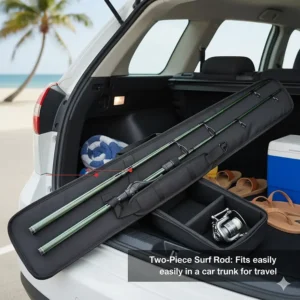
This rod shines for travelers and anglers with limited storage space. The multi-piece design packs down small enough to fit in car trunks or airplane luggage. While it may not have the refinement of premium rods, customer reviews praise its casting ability and fish-fighting power, especially considering the budget-friendly price.
✅ Pros:
- Outstanding value (often under $50)
- Multiple length options
- Travel-friendly multi-piece design
❌ Cons:
- Components not as refined as premium rods
- May lack durability of more expensive options
7. Penn Battalion II Surf Spinning Rod – The Reliable All-Rounder
The Penn Battalion II represents PENN’s commitment to building accessible, high-quality surf rods. This graphite composite rod delivers solid performance across various surf fishing scenarios.
Key Specifications:
- Available in 10′ and 12′ lengths
- Medium to medium-heavy power
- 12-20lb line rating, 2-5oz lure capacity
- Fuji Alconite guides
Price Range: $100-$130
What makes the Battalion II special is its balanced approach to surf fishing. The graphite composite blank provides sensitivity to detect bites while offering enough backbone for larger fish. Fuji Alconite guides resist saltwater corrosion exceptionally well, and rubber shrink tube handles provide secure grip even when wet.
Field testers consistently praise this rod’s versatility. It handles everything from casting heavy lures from piers to working bottom rigs from beaches. The 2-piece construction makes transport easy, and the moderate-fast action loads well for long casts. Users report catching kingfish, yellowtail, white sea bass, and stripers with confidence.
✅ Pros:
- Excellent all-around performance
- Fuji components
- Great balance of features and price
❌ Cons:
- Not the lightest option
- Middle-of-the-road in all categories
🎯 Don’t Wait – Upgrade Your Surf Setup Today!
⚡ Click on any product name above to view current Amazon prices, check availability in your preferred length, and read real customer reviews. Most orders ship free with Prime, and you’ll have your new rod ready for this weekend’s fishing trip! 🐟
Why Rod Selection Matters in Surf Fishing
Choosing the right surf rod isn’t just about aesthetics or brand loyalty—it directly impacts your success rate on the water. Think of it this way: you wouldn’t use a fly rod to catch marlin, and you shouldn’t use a bass rod to tackle surf conditions. The ocean environment presents unique challenges that demand specialized equipment.
Surf fishing requires casting heavy sinkers and baits past breaking waves, often distances of 75-150 yards depending on conditions. A properly matched rod for surf fishing loads smoothly during the cast, transferring maximum energy to your rig without excessive effort. This not only reduces fatigue during long sessions but also improves accuracy, helping you hit productive zones consistently.
Beyond casting, your rod serves as your primary tool for detecting bites in turbulent water. Waves create constant pressure on your line, making it challenging to distinguish between current and strikes. Rods with the proper action and sensitivity cut through this noise, transmitting even subtle takes directly to your hands. I’ve seen anglers miss countless fish simply because their rod wasn’t sensitive enough to telegraph light bites.
Fish-fighting capability matters enormously in surf fishing. You’re not just battling the fish—you’re also contending with current, waves, and structure. Strong saltwater species like striped bass, redfish, and snook make powerful runs that test your equipment’s limits. A rod with insufficient backbone bends too much, giving fish leverage and control. Conversely, an overly stiff rod doesn’t absorb shock properly, leading to pulled hooks or broken lines. The best fishing poles for surf fishing strike that perfect balance.
Understanding Rod Power and Action
Rod power and action are often confused, but understanding both is crucial for selecting the best fishing rods for surf fishing. Let me break down these concepts in practical terms that’ll help you make smarter buying decisions.
Rod Power Explained
Power refers to the rod’s resistance to bending under load—essentially, how much force is required to bend the rod. For surf fishing, you’ll typically encounter these power ratings:
Medium Power: Flexes through the upper half of the blank. Best for lighter lures (1-3oz) and smaller surf species like pompano, whiting, and surf perch. These rods provide excellent sensitivity but lack the backbone for heavy sinkers or large fish.
Medium-Heavy Power: The sweet spot for most surf fishing applications. Handles 2-6oz lures and sinkers comfortably while providing enough sensitivity to detect bites. Perfect for targeting striped bass, bluefish, redfish, and similar species.
Heavy Power: Designed for the biggest baits, heaviest sinkers (6-10oz), and largest fish. These rods excel in rough surf conditions where you need maximum casting distance and fish-fighting authority. However, they sacrifice some sensitivity.
Action Breakdown
Action describes where the rod bends along its length when pressure is applied. This characteristic dramatically affects casting feel and hookset effectiveness.
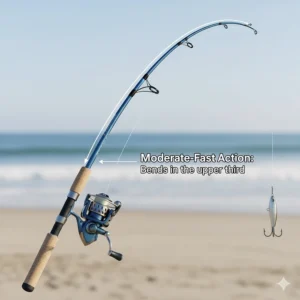
Fast Action: Bends primarily in the top third of the rod. Provides quick, powerful hooksets and excellent sensitivity. Most surf anglers prefer fast or moderate-fast actions because they load quickly during casts and recover rapidly for the next cast.
Moderate Action: Flexes through the middle section. Offers more forgiveness, making it easier to cast for beginners. The softer action can help cushion sudden lunges from strong fish, reducing the risk of break-offs.
Slow Action: Bends throughout the entire blank. Rarely used in surf fishing because it lacks the backbone needed for long casts with heavy terminal tackle.
For most situations, I recommend medium-heavy power with moderate-fast action. This combination handles the widest range of conditions and techniques you’ll encounter on the beach.
Key Features to Look For
When evaluating surf fishing rods, certain features separate outstanding performers from disappointing duds. Here’s what I focus on during testing:
Blank Construction Quality
The rod blank is the foundation of performance. Modern surf rods typically use graphite (carbon fiber), fiberglass, or composites blending both materials. Graphite offers superior sensitivity and lighter weight but can be brittle. Fiberglass provides incredible durability and forgiveness but weighs more. Composite blanks attempt to capture the best of both worlds.
Look for seamless construction without visible wrinkles, bumps, or inconsistencies in the finish. Premium blanks often feature multi-modulus carbon fiber that strategically places different carbon grades throughout the blank for optimized performance.
Guide System
Guides do more than hold your line—they distribute stress across the blank during casts and fights. The best fishing rods for surf fishing feature corrosion-resistant guides (typically stainless steel with ceramic, SiC, or zirconium inserts) sized and spaced appropriately for the rod length.
One-piece guide frames resist corrosion better than two-piece designs and eliminate the frustrating problem of ceramic insert pop-outs. Look for brands like Fuji, PacBay, or SeaGuide, which have proven track records in saltwater applications.
Handle and Grip Design
Extended fishing sessions demand comfortable handles. EVA foam and cork are popular materials, each with advantages. EVA provides better grip when wet and requires less maintenance. Cork feels more natural and comfortable but deteriorates faster in saltwater.
Split-grip designs reduce overall weight and improve balance, while full-length grips offer more hand positioning options during long casts. Rubber shrink tube sections provide excellent grip in wet conditions—a crucial consideration for surf fishing.
Reel Seat Durability
Your reel seat must securely hold your reel through repeated casts, fish fights, and potentially rough handling. Graphite reel seats are lightweight but can crack under stress. Metal seats (stainless steel or aluminum) offer superior durability and corrosion resistance. Premium rods often feature Fuji DPS or similar locking systems that provide rock-solid reel attachment.
Rod Length: Finding Your Sweet Spot
Rod length might be the most important decision you’ll make when selecting surf fishing equipment. Length directly impacts casting distance, leverage during fights, and maneuverability in different fishing situations. Let’s explore the practical implications of various lengths.
7-9 Foot Rods: The Precision Tools
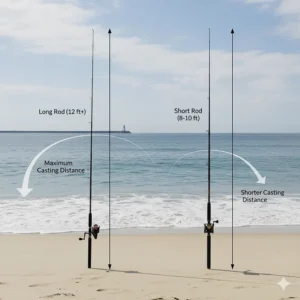
Shorter surf rods excel in specific scenarios. They’re ideal for jetty fishing where overhead obstructions limit casting room, pier fishing where you need to clear railings quickly, and situations requiring pinpoint accuracy. These lengths also work well when wading in the surf, as their lighter weight and better balance reduce fatigue.
However, shorter rods sacrifice casting distance and fish-fighting leverage. You’ll typically max out around 50-75 yards with optimal technique. For many inshore species like flounder, pompano, and smaller bluefish, this distance proves perfectly adequate.
10-11 Foot Rods: The Versatile Workhorses
This length range represents the most popular choice for all-around surf fishing. Ten to eleven-foot rods provide excellent casting distance (typically 100-125 yards with proper technique), adequate leverage for fighting strong fish, and reasonable maneuverability on crowded beaches.
Most of the best poles for surf fishing fall into this category because they balance multiple performance factors effectively. They’re long enough to keep your line above wave action during retrieves but not so unwieldy that casting becomes exhausting after an hour.
12-15 Foot Rods: The Distance Specialists
Longer rods shine when maximum casting distance is paramount. European-style surf casting employs rods up to 15 feet to achieve 200+ yard casts, though these techniques require significant practice and specific casting motions.
Twelve-foot rods strike a middle ground, providing excellent distance without the dramatic learning curve of ultra-long rods. They’re particularly effective when fishing from steep beaches where you need to cast beyond multiple sandbars or when targeting species that cruise far from shore.
The downsides? Increased weight leads to greater fatigue, reduced accuracy for shorter casts, and challenges in tight fishing situations. Transport also becomes more complicated, though most models break down into two pieces.
Matching Length to Your Fishing Style
Consider where and how you primarily fish. Beach anglers casting heavy baits for stripers generally prefer 10-12 foot rods. Jetty anglers working lures for bluefish might choose 9-10 foot options. Pier fishermen who need quick hooksets and accurate drops often select 8-9 foot models.
Material Matters: Graphite vs Fiberglass
The eternal debate in rod building centers on material selection. Understanding the characteristics of each material helps you select rods that match your fishing priorities.
Graphite (Carbon Fiber) Rods
Modern graphite rods dominate the surf fishing market, and for good reason. These blanks offer exceptional sensitivity, allowing you to detect subtle bites even in rough conditions. The lightweight construction reduces fatigue during extended fishing sessions, and graphite’s stiffness enables powerful, efficient hooksets.
High-modulus graphite (24-ton, 30-ton, or higher) provides even greater sensitivity and lighter weight but increases brittleness. Premium surf rods like the St. Croix Legend Surf and Penn Carnage III use high-modulus carbon extensively. Lower-modulus graphite offers more forgiveness at the cost of some sensitivity.
The main drawback? Graphite rods can break if mishandled. Slamming them in car doors, high-sticking large fish, or striking hard objects can cause catastrophic blank failure. They’re also more expensive than comparable fiberglass models.
Fiberglass Rods
Fiberglass rods like the Ugly Stik Bigwater provide legendary durability. These blanks flex deeply without breaking, making them nearly indestructible for normal fishing applications. They’re also more forgiving for novice anglers who haven’t perfected their casting technique.
The slower action of fiberglass helps cushion sudden fish runs, reducing the risk of pulled hooks or broken lines. They’re also typically less expensive than graphite alternatives.
However, fiberglass rods weigh significantly more, leading to faster fatigue. They’re also less sensitive, making bite detection more challenging in turbulent surf. The slower recovery during casting can reduce overall casting distance compared to crisp graphite blanks.
Composite Blends: Best of Both Worlds
Many manufacturers now offer composite rods that blend graphite and fiberglass in strategic proportions. Penn’s graphite composite blanks and similar designs attempt to capture graphite’s sensitivity and light weight while incorporating fiberglass’s durability and forgiveness.
These rods represent excellent value for anglers who want good performance without premium pricing. The Penn Squadron III and Battalion II both use composite construction to deliver solid performance at accessible price points.
Reel Seat and Handle Design
While often overlooked, reel seat and handle design significantly impact your fishing experience. These components directly affect comfort, control, and durability—factors that matter enormously during marathon fishing sessions.
Reel Seat Considerations
Your reel seat must accomplish two primary goals: securely holding your reel and withstanding saltwater corrosion. Graphite reel seats are lightweight and affordable but can crack under extreme stress or impact. They’re adequate for light-duty fishing but may disappoint serious surf anglers.
Metal reel seats crafted from stainless steel, aluminum, or specialized alloys offer superior durability and corrosion resistance. Premium options like Fuji DPS (Deluxe Pipe Seat) or Sea Guide systems feature sophisticated locking mechanisms that prevent reel movement during aggressive casts and fights.
Pay attention to reel seat dimensions. Some premium rods feature smaller-diameter seats optimized for compact spinning reels, which may not accommodate larger reels you already own. Verify compatibility before purchasing, especially with high-end models like the Penn Carnage III.
Handle Material and Design
Handle construction dramatically affects casting comfort and fish-fighting control. Let’s examine popular materials:
EVA Foam: This synthetic material dominates modern surf rods. EVA provides excellent wet-weather grip, resists saltwater degradation, and cleans easily. It’s also lightweight and durable. Split-grip EVA designs reduce overall weight and improve rod balance.
Cork: Traditional cork handles offer a more natural feel that many anglers prefer. Cork provides good grip and comfortable cushioning. However, it deteriorates faster in saltwater environments and requires more maintenance to preserve its appearance and function.
Rubber Shrink Tube: Many surf rods incorporate rubber shrink tube sections for maximum wet-weather grip. This material performs exceptionally well when your hands are soaked from spray or from unhooking fish. It’s also durable and inexpensive.
Neoprene: Premium rods like the St. Croix Legend Surf sometimes feature neoprene handles. This material provides superior wet grip and excellent durability. The textured surface improves control during powerful casts.
Handle Length and Configuration
Handle length affects casting leverage and comfort. Longer handles (18-24 inches) provide better leverage for two-handed casts, important for achieving maximum distance with heavy rigs. Shorter handles (12-16 inches) reduce overall rod weight and improve maneuverability.
Split-grip configurations place foam or cork sections above and below the reel seat with exposed blank between. This design reduces weight, improves balance, and allows you to feel blank vibrations more directly—enhancing sensitivity. Full-length handles offer more hand positioning options but add weight.
Guide Systems for Saltwater
Guide systems might seem like a minor detail, but they play crucial roles in casting performance, fish-fighting efficiency, and rod longevity. Understanding guide design helps you identify truly quality surf fishing rods.
Guide Frame Material
Stainless steel frames dominate saltwater applications due to excellent corrosion resistance. However, not all stainless steel is equal. Look for 316-grade stainless steel, which offers superior corrosion resistance compared to cheaper 304-grade steel.
Some premium rods feature titanium guide frames, which provide maximum corrosion resistance and reduced weight. However, they’re significantly more expensive and typically found only on top-tier models like the St. Croix Legend Surf.
Guide Insert Materials
The insert material dramatically affects casting distance and line life:
Ceramic Inserts: Basic and affordable, ceramic inserts offer decent performance for monofilament lines but generate more friction than advanced materials. They’re adequate for budget rods but not ideal for braided lines, which can wear grooves in softer ceramics.
Silicon Carbide (SiC): The gold standard for surf fishing. SiC inserts provide exceptional hardness, minimal friction, and excellent heat dissipation. They work beautifully with both monofilament and braided lines. Most quality surf rods feature SiC inserts throughout.
Zirconium Inserts: Extremely hard and durable, zirconium inserts resist groove formation from braided lines better than ceramic options. They’re common on mid-range to upper-tier rods like the Okuma Rockaway series.
Alconite Inserts: Fuji’s Alconite material combines lightweight construction with excellent durability. These inserts work well for both mono and braid applications.
Guide Spacing and Sizing
Proper guide spacing distributes stress evenly across the blank during casts and fights. Guides should gradually increase in size from tip to butt, creating smooth line flow during casts. Too few guides create stress points that can cause blank failure. Too many guides add unnecessary weight and create friction points.
The best fishing rods for surf fishing typically feature 6-9 guides depending on rod length. Twelve-foot rods might use 8-9 guides, while 9-foot models need only 6-7 guides for proper stress distribution.
One-Piece vs. Two-Piece Guide Frames
One-piece guide frames like Penn’s Dura-Guides eliminate the weak point where two-piece frames connect. This design prevents the frustrating problem of ceramic insert pop-outs that plague cheaper rods. The frames are also easier to clean and maintain.
Two-piece frames (typically stainless steel frames with ceramic or SiC inserts pressed in) are more common and less expensive. Quality construction minimizes problems, but budget rods sometimes experience insert failure after extended use.
Budget Considerations: Getting the Most Value
Surf fishing rods span an enormous price range from under $50 to over $500. Understanding what you’re paying for at each price point helps you maximize value based on your fishing frequency and goals.
Budget Tier ($40-$80): Getting Started
Budget rods like the Fiblink Surf and entry-level Ugly Stik models provide functional performance for casual anglers. You’ll get basic composite or fiberglass blanks, adequate guide systems, and simple reel seats.
These rods work fine for learning surf fishing basics and occasional fishing trips. However, they typically sacrifice sensitivity, durability, and refinement. Components may corrode faster, blanks might not cast as efficiently, and overall fit and finish will be utilitarian.
Best For: Beginners testing whether they enjoy surf fishing, anglers on tight budgets, or situations where rod damage/theft is likely (crowded tourist beaches).
Mid-Range ($80-$150): The Sweet Spot
This price range offers the best value for regular surf anglers. Rods like the Penn Squadron III, Penn Battalion II, and Okuma Rockaway provide quality graphite or composite blanks, corrosion-resistant guides with ceramic or SiC inserts, and solid reel seats.
You’ll notice improved casting performance, better sensitivity, and enhanced durability compared to budget options. Many mid-range rods last for years with proper maintenance and deliver performance that satisfies all but the most demanding anglers.
Best For: Anglers who fish multiple times per month, those upgrading from budget gear, or anyone wanting solid performance without premium pricing.
Premium Tier ($200-$500+): Maximum Performance
Premium rods like the Penn Carnage III and St. Croix Legend Surf represent the pinnacle of surf rod design. You’re paying for high-modulus graphite blanks with advanced manufacturing techniques, premium Fuji components throughout, corrosion-proof materials, and exceptional warranties.
The performance differences become noticeable. Lighter weight reduces fatigue, superior sensitivity detects subtle bites, and refined casting characteristics improve distance and accuracy. These rods also tend to last longer with proper care.
Best For: Serious anglers who fish frequently, tournament anglers needing every advantage, or enthusiasts who simply want the best equipment available.
The Real Cost of Ownership
Consider total cost beyond initial purchase. Cheaper rods might require replacement after one or two seasons, while quality mid-range or premium rods can last a decade or more. Factor in warranty coverage—some manufacturers like St. Croix and Ugly Stik offer excellent warranty programs that protect your investment.
Also consider your target species and fishing conditions. If you’re primarily targeting smaller inshore species in calm conditions, a budget rod performs adequately. If you’re battling large striped bass in rough surf, investing in quality equipment pays dividends through better fish-landing percentages and longer equipment life.
Maintenance and Care Tips
Proper maintenance extends your surf rod’s life dramatically and ensures consistent performance. Saltwater is incredibly corrosive, and beach sand is abrasive—both present constant threats to your equipment.
Post-Trip Cleaning Routine
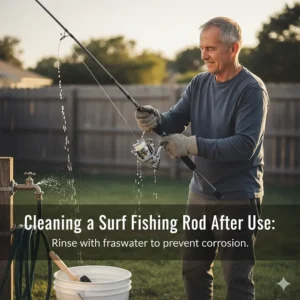
After every surf fishing session, thoroughly rinse your rod with fresh water. Pay special attention to guides, reel seat threads, and handle connections. Use a gentle spray rather than high pressure, which can force saltwater into ferrule connections or under reel seats.
For guides, I use a soft brush to remove salt deposits that accumulate around frames and inserts. These deposits can create rough spots that damage fishing line. Check each guide by running a cotton swab around the insert—if it catches or snags, salt crystals are present and need removal.
Wipe down handles with a damp cloth to remove sand, salt, and fish slime. For cork handles, avoid excessive water exposure, which can cause deterioration. EVA foam handles tolerate moisture better and clean easily with mild soap and water.
Ferrule Care
Two-piece rod ferrules require special attention. Sand trapped in ferrule connections causes wear that eventually creates loose, wobbly joints. After rinsing with fresh water, carefully wipe both male and female ferrule sections with a clean, dry cloth.
Periodically apply a light coat of ferrule wax or paraffin to male ferrules. This protects against corrosion and ensures smooth assembly. Avoid applying too much—excess wax can attract sand and create grinding paste that damages ferrule surfaces.
Storage Best Practices
Never store surf rods while still wet or dirty. Saltwater trapped in ferrules, around guides, or under reel seats will corrode components even during storage.
Store rods vertically if possible, supported from the butt end. This prevents blank warping that can occur when rods rest horizontally for extended periods. Keep rods away from extreme temperatures and direct sunlight, which can degrade blank materials and handle components.
For transportation, use quality rod tubes or bags that protect against impacts. Rods bouncing around in truck beds or car trunks can sustain damage from repeated impacts. Graphite rods are particularly vulnerable.
Annual Maintenance
Once per year (or more frequently if you fish very often), perform detailed inspection and maintenance. Check all guides for cracks in frames or inserts. Run fishing line through each guide slowly, feeling for rough spots that indicate wear or damage.
Inspect the reel seat for cracks, corrosion, or loose components. Test locking mechanisms to ensure they still provide secure reel attachment. Examine the rod blank for any stress fractures, particularly near ferrule connections and just above the handle.
For rods with cork handles, consider applying cork sealant to maintain water resistance and prevent cracking. EVA handles generally don’t require special treatment beyond regular cleaning.
Common Mistakes to Avoid
I’ve watched countless anglers undermine their surf fishing success through simple, preventable mistakes. Learn from these common errors to get more from your equipment and improve your catch rates.
Mistake #1: High-Sticking Fish
This is the #1 cause of broken surf rods. High-sticking occurs when you lift the rod past 90 degrees while fighting a fish, concentrating all stress on the tip section. Graphite rods especially are vulnerable to catastrophic failure when high-sticked.
Instead, keep your rod angle between 45-75 degrees. Let your rod’s bend and your reel’s drag do the work. If a fish makes a powerful run directly toward you, reel down rather than raising the rod higher. This technique protects your equipment and actually provides better fish control.
Mistake #2: Wrong Line Weight
Using line that’s too heavy or too light for your rod’s specifications creates problems. Overly heavy line prevents the rod from loading properly during casts, reducing distance. It also increases stress on the blank during fights.
Conversely, line that’s too light may not be strong enough for your target species, or it might not provide enough casting weight to load the rod efficiently. Always stay within your rod’s rated line weight range.
Mistake #3: Ignoring Wind Conditions
Wind dramatically affects casting performance with different rod types. Stiff, fast-action rods tend to throw tighter loops that cut through wind better. Slower-action rods create wider loops that catch wind and lose distance.
When facing strong headwinds, side-cast to keep your lure trajectory lower. With tailwinds, you can use higher casting angles to maximize assistance from the wind. Crosswinds require adjustments to your aim point to compensate for drift.
Mistake #4: Improper Rod Storage
I’ve seen expensive rods destroyed because they were carelessly stored. Propping rods in corners where they can fall, storing them where they’re exposed to high heat or UV radiation, or tossing them loosely in vehicles creates unnecessary damage risks.
Invest in proper rod storage solutions. Wall-mounted racks protect rods when not in use. Quality rod tubes or bags prevent transportation damage. These simple precautions protect your investment.
Mistake #5: Neglecting Regular Inspections
Many anglers don’t discover problems until mid-cast or mid-fight—the worst possible times. Regularly inspect your rod for stress cracks, loose guides, damaged inserts, and reel seat issues. Catching problems early allows for repairs before they cause failures during critical moments.
Check your rod before each fishing trip. Run your hand along the blank feeling for rough spots or cracks. Wiggle each guide gently to verify secure attachment. Examine reel seat locking mechanisms. This 2-minute inspection can prevent disasters.
FAQ
❓ What length rod is best for surf fishing?
❓ Can I use a regular fishing rod for surf fishing?
❓ What's the difference between spinning and casting surf rods?
❓ How much should I spend on a surf fishing rod?
❓ What rod power is best for striped bass surf fishing?
Conclusion: Choose Your Perfect Surf Rod Today
Selecting the best fishing rods for surf fishing doesn’t have to be overwhelming. Whether you’re drawn to the incredible value of the Penn Squadron III, the legendary durability of the Ugly Stik Bigwater, or the elite performance of the St. Croix Legend Surf, there’s a perfect rod waiting to transform your surf fishing adventures.
Remember, the “best” rod is the one that matches YOUR fishing style, target species, and budget. A $50 Fiblink rod that you use every weekend delivers more value than a $400 St. Croix sitting in your garage. Start with understanding where you’ll primarily fish, what species you’re targeting, and how often you’ll be casting. Then choose a rod that aligns with those realities.
The ocean is calling, and with the right rod in your hands, you’re ready to answer. Don’t let analysis paralysis keep you off the beach another weekend. Select a rod from our top 7, get out there, and experience the thrill of feeling that first strike vibrate through a perfectly matched surf rod. Your next trophy catch is waiting just beyond the breakers.
🌟 Make Your Move – Start Catching More Today!
🎣 Your ideal surf rod is just one click away. Browse our top recommendations, compare features and prices, and order with confidence knowing you’re getting expert-vetted equipment. Free shipping on most orders, plus hassle-free returns if needed. Time to upgrade your surf game! 🏆
Recommended for You
- Best Fishing Rod for Surf Casting: 7 Top Picks 2025
- Best Rods for Shore Fishing: 7 Expert-Tested Models 2025
- Best Surf Fishing Gear: 7 Must-Have Essentials 2025
Disclaimer: This article contains affiliate links. If you purchase products through these links, we may earn a small commission at no additional cost to you.
✨ Found this helpful? Share it with your friends! 💬🤗
