
In This Article
There’s nothing quite like the thrill of hooking a powerful redfish in the surf or battling a feisty striper from your boat. But here’s the thing—your success hinges on having the right gear. A quality saltwater fishing rod combo can make the difference between landing your trophy catch and watching it swim away.
According to NOAA Fisheries, recreational saltwater fishing is immensely popular, with anglers taking millions of trips annually to catch various species in federal waters. Whether you’re targeting inshore species or venturing into deeper waters, having dependable equipment is crucial.
The challenge? The market is flooded with options. Walk into any tackle shop, and you’ll face walls of spinning combos, each claiming to be the best. Some are genuinely excellent. Others are marketing hype wrapped in flashy packaging. After testing dozens of setups and spending countless hours researching, I’ve narrowed down the seven saltwater fishing rod combo options that truly deliver performance, durability, and value.
Quick Comparison Table
| Combo | Best For | Rod Length | Price Range | Rating |
|---|---|---|---|---|
| Penn Fierce III | Budget Inshore | 7′ | $80-$110 | ⭐⭐⭐⭐ |
| Penn Battle III | Mid-Range Power | 7′-8′ | $130-$180 | ⭐⭐⭐⭐⭐ |
| Daiwa BG | Premium Inshore | 7′ | $140-$170 | ⭐⭐⭐⭐⭐ |
| Ugly Stik GX2 | Value & Durability | 7′ | $50-$70 | ⭐⭐⭐⭐ |
| KastKing Centron | Best Budget | 6′-8′ | $60-$90 | ⭐⭐⭐⭐ |
| PLUSINNO Telescopic | Travel Friendly | 6.9′ | $40-$60 | ⭐⭐⭐½ |
| Shakespeare Bigwater | Surf Fishing | 10′ | $90-$120 | ⭐⭐⭐⭐ |
💬 **Just one click – help others make better buying decisions too!**😊
Top 7 Saltwater Fishing Rod Combo: Expert Analysis
1. Penn Fierce III Spinning Combo – Best Budget Inshore Choice
If you’re looking for serious saltwater performance without emptying your wallet, the Penn Fierce III delivers exactly what inshore anglers need. This combo punches well above its weight class.
Key Specifications:
- 7′ graphite composite rod
- Full metal body reel with 4+1 stainless steel bearings
- HT-100 carbon fiber drag washers (12-15 lb max drag depending on size)
The standout feature here is the build quality. Penn engineered this combo with a full metal body and sideplate that keeps gears aligned even when you’re battling stubborn fish. The Techno-Balanced rotor ensures smooth retrieves, while the one-piece stainless steel Dura-Guides eliminate the annoying insert pop-outs that plague cheaper rods.
Customer feedback consistently praises its durability. One angler reported using it for pier and offshore fishing in Florida, handling everything from mangrove snapper to bonnethead sharks without issues. However, some note the reel feels heavier than expected, especially in 4000+ sizes—something to consider for all-day fishing sessions.
✅ Pros:
- Exceptional value under $100
- True saltwater corrosion resistance
- Smooth HT-100 drag system
❌ Cons:
- Heavier than premium options
- Limited to medium-heavy power
Price: $80-$110 | Best For: Budget-conscious inshore anglers
2. Penn Battle III Spinning Combo – Ultimate All-Around Performer
The Penn Battle III represents the sweet spot where performance meets affordability. It’s the combo I recommend most often to serious anglers ready to upgrade from entry-level gear.
Key Specifications:
- 6+1 bearing system (vs. 4+1 in Fierce)
- Full metal body, sideplate, and rotor
- Enhanced HT-100 drag
- Available in 7′ to 9′ lengths
What separates this from the Fierce? Two additional bearings, upgraded drag, and a full metal rotor instead of graphite. These improvements translate to noticeably smoother operation and better performance when fighting larger fish. The Battle series is widely regarded as one of the best saltwater spinning combos for both inshore and offshore applications.
The rubber-inlaid spool is brilliant for braid fishing—no backing needed, just tie directly to the spool. During testing, casting distance improved significantly compared to standard spools, and the even line lay prevented frustrating tangles.
One reviewer mentioned using this for Costa Rican jack crevalle and enjoyed a five-minute battle with a 20-pounder—the setup handled it beautifully.
✅ Pros:
- Superior bearing system
- Excellent for both inshore and nearshore
- Braid-ready spool design
❌ Cons:
- Pricier than Fierce III
- Larger sizes can be bulky
Price: $130-$180 | Best For: Serious saltwater enthusiasts
3. Daiwa BG Inshore Spinning Combo – Premium Performance Standard
When you want Japanese engineering precision, the Daiwa BG delivers exceptional quality that’s been trusted by saltwater anglers for decades.
Key Specifications:
- 100% graphite composite blank
- 6+1 bearing Digigear system
- Aluminum body construction
- Cut-proof aluminum oxide guides
The Digigear technology creates an ultra-smooth retrieve that outperforms many combos twice its price. The machined aluminum spool with ABS (Anti-Backlash System) ensures consistent performance, while the Twist Buster II line roller reduces line twist—a common problem with spinning reels.
Where this combo truly shines is balance. The 7′ rod perfectly complements the reel weight, reducing fatigue during extended fishing sessions. The cork grip provides excellent traction even when wet, giving you confidence when fighting powerful fish.
Customer reviews mention it handles like a 3000 size despite being rated as 2500, giving you extra capacity for bigger targets. One kayak angler specifically chose this for skinny water inshore fishing, citing its reliability and smooth operation.
✅ Pros:
- Exceptionally smooth Digigear system
- Perfect weight distribution
- Japanese quality standards
❌ Cons:
- Premium price point
- Limited length options
Price: $140-$170 | Best For: Quality-focused inshore anglers
4. Shakespeare Ugly Stik GX2 Combo – Legendary Durability
The Ugly Stik name is synonymous with toughness. This isn’t the prettiest rod on the water, but it might outlast everything else in your garage.
Key Specifications:
- Ugly Tech graphite-fiberglass construction
- 3 bearing spinning reel with 5.1:1 gear ratio
- 7′ medium-heavy one-piece design
- 7-year warranty
Ugly Stik’s secret weapon is their proprietary Ugly Tech construction—a blend of graphite and fiberglass that creates incredible strength without sacrificing sensitivity. You can literally bend these rods nearly in half without breaking them. I’ve seen anglers accidentally slam car doors on them and keep fishing.
The trade-off? These combos are heavier and less sensitive than all-graphite alternatives. But for beginners, rough handling, or situations where gear takes abuse (think kids, boat decks, surf zone), nothing beats this reliability.
Customer feedback highlights its versatility—equally comfortable handling bonnethead sharks, mangrove snapper, and inshore species. The 50-size reel gets the job done, though some find the bail a bit large.
✅ Pros:
- Nearly indestructible construction
- Excellent beginner-friendly setup
- Unbeatable 7-year warranty
❌ Cons:
- Heavier than competitors
- Less sensitivity for finesse techniques
Price: $50-$70 | Best For: Beginners and rough-use applications
5. KastKing Centron Lite Spinning Combo – Best Budget Performance
Looking for maximum features at minimum cost? The KastKing Centron Lite offers impressive specifications that rival combos costing twice as much.
Key Specifications:
- IM6 Graphite 2-piece blanks
- 9+1 MaxiDur ball bearings
- 5.2:1 gear ratio with triple disc drag
- Available in 6′ to 7’6″ lengths
KastKing made their reputation by offering tournament-level features at budget prices, and the Centron Lite exemplifies this philosophy. Nine bearings plus one anti-reverse bearing create silky-smooth operation. The IM6 graphite blank provides sensitivity for detecting subtle bites while maintaining backbone for setting hooks.
The stainless steel guides with ceramic ring inserts work flawlessly with both mono and braid. Contoured EVA handles with fighting butts give you leverage when battling larger species. At this price point, you’re getting features typically reserved for $150+ combos.
Customer reviews praise the packaging, fast shipping, and “beautiful combo setup.” Several anglers own multiple Centron reels because they trust the quality for daily use.
✅ Pros:
- 9+1 bearing system under $90
- Versatile length options
- Excellent value proposition
❌ Cons:
- Brand less established than Penn/Daiwa
- Not rated for extreme offshore use
Price: $60-$90 | Best For: Value-seeking anglers
6. PLUSINNO Telescopic Combo – Ultimate Travel Companion
Heading on vacation or short on storage space? The PLUSINNO Telescopic collapses down to a portable size while still delivering solid fishing performance.
Key Specifications:
- 6.9′ carbon fiber mixed with fiberglass
- Telescopic design (compact when collapsed)
- 12+1 bearing system
- Complete kit with tackle, lures, and carrier bag
This combo prioritizes convenience without completely sacrificing performance. The carbon fiber-fiberglass blend provides decent strength, while the stainless steel hooded reel seat resists saltwater corrosion. The anti-seawater corrosion design throughout extends the combo’s lifespan in harsh conditions.
What makes this special is the full kit approach. You get fishing line, various lures, hooks, and accessories in one package—perfect for novices who don’t want to shop for individual components. The included carrier bag makes transportation effortless.
Be realistic about expectations. This won’t match the performance of full-size, one-piece rods, but for travel, backpacking, or casual fishing, it’s remarkably capable. Customer feedback indicates it handles freshwater and light saltwater applications well.
✅ Pros:
- Extremely portable when collapsed
- Complete starter kit included
- Budget-friendly entry point
❌ Cons:
- Less power than one-piece rods
- Not ideal for heavy saltwater species
Price: $40-$60 | Best For: Travelers and casual anglers
7. Shakespeare Ugly Stik Bigwater Combo – Surf Fishing Specialist
When you need serious length and power for surf casting, the Ugly Stik Bigwater brings that famous Ugly Stik toughness to the beach.
Key Specifications:
- 10′ medium-heavy surf rod
- 2-piece telescopic design
- Ugly Tech construction for maximum durability
- Stainless steel guides with ceramic inserts
Surf fishing demands different specs—longer rods for casting distance, heavier power ratings for battling fish in crashing waves, and rock-solid construction to handle sandy, salty environments. The Bigwater delivers all three.
The 10′ length provides the leverage needed for bombing casts beyond the breaking waves where game fish cruise. The medium-heavy power rating handles everything from pompano to bull reds. The two-piece design makes transport manageable, while Ugly Tech construction ensures it survives being stabbed into sand rod holders.
The EVA grips resist water absorption, maintaining comfortable handling even during long sessions. Stainless steel guides with ceramic inserts smoothly channel line without creating friction hot spots that damage braided lines.
✅ Pros:
- Excellent casting distance
- Purpose-built for surf conditions
- Ugly Stik legendary toughness
❌ Cons:
- Overkill for boat or kayak fishing
- Heavier than inshore-specific combos
Price: $90-$120 | Best For: Dedicated surf casters
✨ Don’t Miss These Exclusive Deals!
🔍 Take your saltwater fishing to the next level with these carefully selected products. Click on any highlighted item to check current pricing and availability. These combos will help you catch authentic trophy fish your friends will admire!
Understanding Saltwater Fishing Rod Combo Components
Choosing a saltwater fishing rod combo requires understanding how individual components work together as a system.
Rod Material Matters
Modern fishing rods use three primary materials:
Graphite (Carbon Fiber): Lightweight and extremely sensitive, graphite rods transmit subtle bites directly to your hand. They cast well and reduce fatigue during long sessions. However, graphite can be brittle—drop one wrong, and you might crack the blank.
Fiberglass: Heavier but virtually indestructible, fiberglass provides flexibility that forgives mistakes. Perfect for beginners or situations involving rough handling. The trade-off is reduced sensitivity and increased weight.
Composite: Blends graphite and fiberglass to balance sensitivity, strength, and cost. Many budget-friendly combos use composite construction to achieve good performance without premium pricing.
Reel Features That Matter
Not all spinning reels are created equal, especially for saltwater:
Bearing Count: More bearings generally mean smoother operation. Quality matters more than quantity—five high-grade bearings outperform ten cheap ones. Look for stainless steel or shielded bearings for saltwater durability.
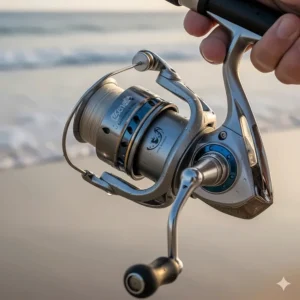
Drag System: The drag prevents line breakage by allowing fish to take line instead of snapping it. Carbon fiber drag washers (like Penn’s HT-100) provide smooth, consistent pressure across the drag range. Cheaper felt washers work but wear faster.
Body Material: Full metal bodies maintain precise gear alignment under stress. Graphite bodies reduce weight but may flex slightly during heavy fights. For serious saltwater use, metal construction proves more reliable long-term.
Gear Ratio: Higher ratios (6.2:1) retrieve line faster, ideal for techniques requiring quick lure retrieves. Lower ratios (5.1:1) provide more cranking power for fighting big fish or working heavy lures.
Power and Action Explained
Power describes the rod’s resistance to bending:
- Light: Small fish, finesse techniques
- Medium: Versatile all-around use
- Medium-Heavy: Larger inshore species
- Heavy: Offshore, surf, big game fish
Action indicates where the rod bends:
- Fast: Bends primarily in the upper third, maximum sensitivity
- Moderate: Bends in upper half, balanced performance
- Slow: Bends throughout length, maximum casting distance
For most saltwater applications, medium to medium-heavy power with fast to moderate-fast action provides the best versatility.
Saltwater Fishing Rod Combo vs. Separate Components
| Factor | Pre-Matched Combo | Separate Components |
|---|---|---|
| Cost | 20-30% savings typically | Higher initial investment |
| Compatibility | Guaranteed perfect match | Research required |
| Convenience | Ready to fish immediately | Assembly and matching needed |
| Customization | Limited options | Unlimited combinations |
| Performance | Good for most anglers | Optimized for specific needs |
Combo Advantages: Manufacturers engineer combos with balanced components that work together harmoniously. The reel size matches the rod power. The drag capacity aligns with line ratings. Everything arrives ready to spool line and start fishing. For beginners through intermediate anglers, this simplicity is invaluable.
When to Buy Separately: Advanced anglers with specific techniques or target species often prefer custom pairings. If you’re tournament fishing, pursuing specific trophy species, or have unique preferences, investing time to match individual components makes sense. You’ll pay more but get exactly what you want.
Bottom Line: Unless you have specific requirements that off-the-shelf combos don’t meet, pre-matched options offer excellent value and performance for 90% of saltwater fishing situations.
Essential Saltwater Combo Maintenance
Saltwater is incredibly corrosive. Proper maintenance extends your combo’s lifespan significantly.
After Every Saltwater Trip
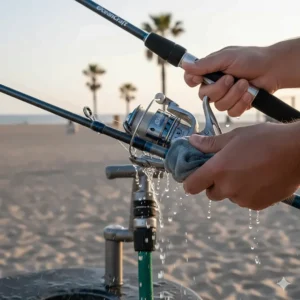
Immediate Rinse: Use freshwater to thoroughly rinse your combo, paying special attention to the reel. Don’t use high-pressure hoses—gentle streams prevent forcing salt into sealed components.
Guides Check: Inspect rod guides for cracks or grooves that can fray line. Aluminum oxide guides should feel smooth when you run your finger inside them.
Reel Wipe Down: Use a soft cloth to dry the reel body, paying attention to the drag knob and handle areas where salt crystallizes.
Monthly Maintenance
Lubrication: Apply a drop of reel oil to bearings and moving parts. Avoid over-lubricating—excess oil attracts dirt and sand.
Drag Check: Test your drag system under load to ensure smooth, consistent pressure. If it sticks or jerks, cleaning or replacement may be necessary.
Line Inspection: Check the first 10-15 feet of line for abrasion or weakening. Saltwater, sun, and fish teeth damage line over time.
Annual Service
Consider professional reel servicing annually for heavily-used equipment. Technicians disassemble, clean, replace worn components, and properly lubricate everything. This $30-50 investment prevents costly repairs and maintains peak performance.
Matching Your Combo to Target Species
Different saltwater fish require different approaches:
Inshore Species (Redfish, Snook, Seatrout)
Recommended Setup: 7′ medium to medium-heavy rod, 3000-4000 size reel, 10-20 lb braid
These species typically range 2-10 pounds with occasional larger specimens. Medium power provides enough backbone to drive hooks home while maintaining sensitivity for detecting subtle bites. Inshore waters often have structure (docks, mangroves, oyster bars) requiring some power to turn fish quickly.
Surf Zone (Pompano, Whiting, Redfish)
Recommended Setup: 9′-11′ medium-heavy rod, 4000-6000 size reel, 15-30 lb braid
Surf fishing demands distance casting to reach feeding fish beyond breaking waves. Longer rods generate casting momentum. Medium-heavy power handles punching through wind and muscling fish through currents and waves.
Nearshore/Light Offshore (Spanish Mackerel, King Mackerel, Bonito)
Recommended Setup: 7′-8′ medium-heavy to heavy rod, 4000-5000 size reel, 20-40 lb braid
Fast-moving pelagic species require quick hook sets and strong drag systems. These fish make blistering runs—your reel needs adequate line capacity and a smooth drag to prevent break-offs.
Top Saltwater Fishing Locations in the USA
The United States offers incredible saltwater fishing opportunities across its extensive coastlines, with NOAA Fisheries managing recreational fisheries from 3 to 200 nautical miles offshore.
Florida Keys: Legendary flats fishing for bonefish, permit, and tarpon. Inshore waters teem with snook, redfish, and seatrout.
Outer Banks, North Carolina: Surf fishing paradise with drum, bluefish, and stripers. Offshore waters offer marlin and tuna.
Texas Coast: Expansive bay systems and surf zones produce trophy speckled trout, redfish, and flounder.
Southern California: Kelp beds harbor calico bass, halibut, and yellowtail. Offshore tuna and dorado attract serious anglers.
Louisiana Marshes: Productive inshore waters with abundant redfish, seatrout, and sheepshead in intricate marsh systems.
Beginner Mistakes to Avoid
Over-Spooling Line
Filling your reel’s spool completely seems logical, but overfilling causes line management nightmares. Stop filling when line reaches about 1/8″ below the spool lip. This prevents loops from jumping off during casts.
Wrong Line Choice
Monofilament stretches and provides shock absorption but has memory and larger diameter. Braided line offers zero stretch for better hooksets, smaller diameter for increased capacity, but lacks forgiveness. For beginners, try 15-20 lb braid with a 20-30 lb monofilament or fluorocarbon leader—best of both worlds.
Neglecting Drag Settings
Setting your drag before fishing prevents disasters. With line tied to something solid, the drag should slip smoothly at approximately 30% of your line’s breaking strength. Too tight, and you’ll break off. Too loose, and you can’t effectively fight fish.
Using Freshwater Gear in Saltwater
Freshwater reels lack corrosion-resistant components and sealed bearings. Using them in saltwater guarantees premature failure. Always use saltwater-rated equipment for ocean fishing—it’s engineered to withstand harsh conditions.
Frequently Asked Questions
❓ What size reel should I choose for my first saltwater fishing rod combo?
❓ Can I use freshwater combos for saltwater fishing?
❓ How much should I spend on my first saltwater fishing rod combo?
❓ What's the difference between spinning and baitcasting combos?
❓ Do I need different combos for inshore vs offshore fishing?
Conclusion: Choosing Your Perfect Saltwater Fishing Rod Combo
Finding the right saltwater fishing rod combo doesn’t need to overwhelm you. Focus on these key decision points:
Budget: Determine what you’re comfortable investing. The $60-$110 range offers solid performance with options like the Penn Fierce III or KastKing Centron. Stepping up to $130-$180 gets premium features with the Penn Battle III or Daiwa BG.
Fishing Style: Match your combo to where you’ll fish most. Inshore anglers should prioritize 7′ medium to medium-heavy setups. Surf fishermen need 9′-11′ rods for casting distance. Travelers benefit from telescopic designs like the PLUSINNO.
Experience Level: Beginners thrive with forgiving, durable setups like the Ugly Stik GX2 that tolerate mistakes. Experienced anglers may prefer sensitive, specialized combos optimized for specific techniques or species.
Target Species: Consider what you’re chasing. Smaller inshore fish like seatrout require different specs than powerful surf zone reds or offshore pelagics.
Remember, the best combo is the one you’ll actually use. A $200 premium setup gathering dust in your garage doesn’t outperform a $90 combo on the water every weekend. Start with quality equipment that matches your budget and experience level, then upgrade as your skills and specific needs develop.
The seven combos detailed in this guide all deliver reliable saltwater performance. Whether you choose the budget-friendly Penn Fierce III, the premium Daiwa BG, or the legendary Ugly Stik durability, you’re getting equipment that will help you catch more fish and create lasting memories on the water.
Tight lines! 🎣
Recommended for You
- 7 Best Surf Fishing Lures That Catch Fish in 2025
- Surf Fishing Reels: 7 Best Models That Dominate Beaches in 2025
- Best Surf Fishing Rod: 7 Proven Winners for 2025
Disclaimer: This article contains affiliate links. If you purchase products through these links, we may earn a small commission at no additional cost to you.
✨ Found this helpful? Share it with your friends! 💬🤗
