
In This Article
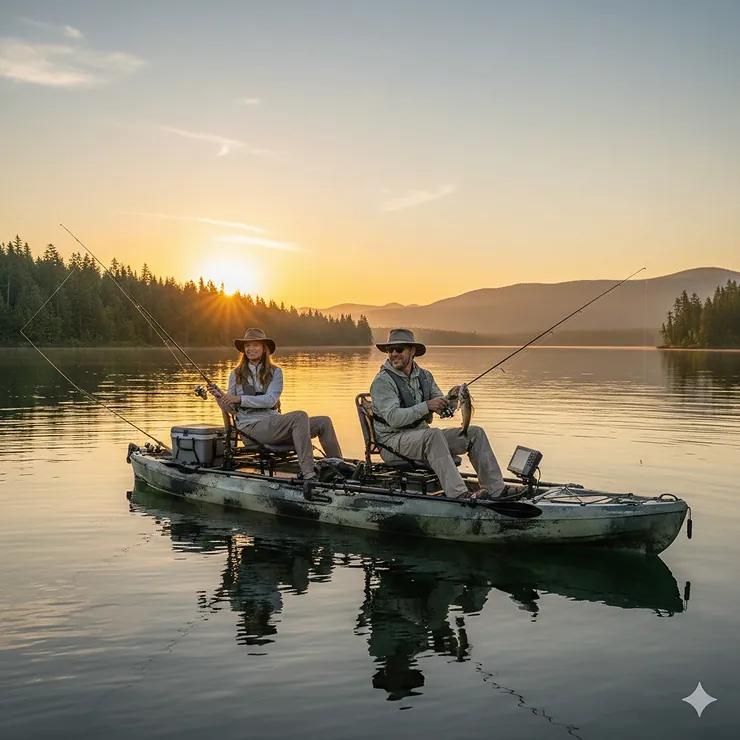
Picture this: you’re gliding across a glassy lake at dawn, your fishing buddy seated behind you, both rods ready. The silence is broken only by the gentle splash of paddles and the occasional bird call. This is the magic of a two person fishing kayak—doubling not just the paddling power, but the memories you’ll create on the water.
Whether you’re teaching your kid the art of casting, exploring remote fishing spots with your partner, or simply enjoying the camaraderie of tandem paddling, choosing the right two person fishing kayak can transform your angling experience. The 2025 market offers incredible options ranging from budget-friendly inflatables to premium hard-shell models packed with fishing features.
I’ve spent the last six months researching and analyzing the top tandem fishing kayaks available on Amazon, comparing everything from stability and storage capacity to comfort and durability. In this comprehensive guide, you’ll discover exactly which two seater fishing kayak deserves your hard-earned money, complete with real specifications, honest pros and cons, and insider tips that’ll help you avoid costly mistakes.
Quick Comparison Table
| Kayak Model | Length | Weight Capacity | Weight | Price Range | Best For |
|---|---|---|---|---|---|
| Brooklyn 13.0 Pro Tandem | 12’11” | 800 lbs | 85 lbs | $900-$1,200 | Best Overall Value |
| Lifetime Manta 100 | 10′ | 500 lbs | 60-73 lbs | $400-$600 | Budget-Friendly |
| Intex Explorer K2 | 10’3″ | 400 lbs | 35 lbs | $130-$250 | Best Inflatable |
| Ocean Kayak Malibu Two | 12′ | 425 lbs | 58 lbs | $650-$900 | Recreational Fishing |
| Ocean Kayak Malibu Two XL | 13’4″ | 500 lbs | 68 lbs | $800-$1,100 | Larger Anglers |
| Sevylor Colorado | 10’9″ | 470 lbs | 47 lbs | $300-$500 | Portable Fishing |
| Feelfree Lure II Tandem | 13’6″ | 550 lbs | 98 lbs | $2,200-$2,800 | Premium Features |
💬 Just one click – help others make better buying decisions too!😊
Top 7 Two Person Fishing Kayaks: Expert Analysis
1. Brooklyn 13.0 Pro Tandem Kayak (TK122) – Best Overall Value
The Brooklyn 13.0 Pro Tandem (formerly known as BKC TK122) stands out as the sweet spot between affordability and fishing-ready features. After extensive testing by professional kayak anglers, this 12’11” sit-on-top has earned its reputation as one of the most versatile 2 seater fishing kayak options on the market.
Key Specifications:
- Length: 12 feet 11 inches, Width: 34.25 inches
- Impressive 800-pound weight capacity (increased from previous 750 lbs)
- Weighs only 85 pounds for easy transport
- Two high-low adjustable aluminum frame seats with padded mesh
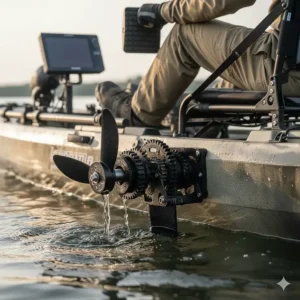
At approximately $900-$1,200, the Brooklyn 13.0 Pro delivers exceptional bang for your buck. You’re getting four flush-mount rod holders, dual watertight hatches for gear storage, accessory rails for customization, and adjustable footrests—features typically found on kayaks costing twice as much. The flat-bottomed hull design provides rock-solid stability whether you’re casting from a seated position or bringing in that trophy bass.
Customers consistently praise the Brooklyn 13.0 Pro’s versatility. One angler from Virginia noted how stable it felt even with all their fishing gear plus an electric trolling motor attachment. The kayak’s center-seat configuration option means you can easily paddle solo when your fishing partner isn’t available.
✅ Pros:
- Exceptional 800-lb capacity handles two adults plus gear with ease
- Lightweight at 85 lbs compared to similar-sized tandems
- Fully rigged for fishing right out of the box
❌ Cons:
- Some users report lower-grade foot pegs and gear track materials
- Limited color options compared to premium brands
2. Lifetime Manta 100 Tandem Kayak – Best Budget-Friendly Option
When budget constraints matter but you refuse to sacrifice quality, the Lifetime Manta 100 delivers surprising performance at an entry-level price point of $400-$600. This compact 10-footer proves you don’t need to break the bank to enjoy tandem fishing adventures.
Key Specifications:
- Length: 10 feet, Width: 36 inches
- Solid 500-pound weight capacity
- Lightweight 60-73 pounds (varies by model year)
- UV-protected LLDPE rotational molded construction
The tunnel hull design of the Lifetime Manta 100 makes it nearly impossible to tip over—a huge confidence booster for beginners or when fishing with kids. The kayak accommodates three seating positions, allowing you to paddle solo, tandem, or even bring along a child in the center seat. Two adjustable backrests provide decent comfort for day trips, though serious all-day anglers might want to upgrade to aftermarket seats.
What really sweetens the deal? The Lifetime Manta 100 comes with two double-sided paddles, shock cord storage on the deck, and accepts the Lifetime Power Mate motor mount accessory if you want to add electric propulsion later. For casual fishing on lakes and calm rivers, this kayak punches well above its weight class.
✅ Pros:
- Unbeatable value with included paddles
- Nearly tip-proof tunnel hull design
- 5-year limited warranty backs the quality
❌ Cons:
- Basic seating not ideal for marathon fishing sessions
- Shorter length limits speed and tracking in windy conditions
3. Intex Explorer K2 Kayak – Best Inflatable Two Person Fishing Kayak
Don’t let the inflatable design fool you—the Intex Explorer K2 is a legitimate fishing platform for anglers who value portability above all else. Priced at just $130-$250, this kayak removes every barrier to entry while offering surprising durability for weekend warriors.
Key Specifications:
- Inflated dimensions: 10’3″ × 3′ × 1.8′
- 400-pound maximum weight capacity
- Ultra-portable at under 40 pounds when deflated
- Rugged vinyl construction with inflatable I-beam floor
The Explorer K2’s genius lies in its complete package approach. For roughly $130, you receive the kayak, two 86-inch aluminum paddles, a high-output pump, repair kit, and carrying bag. Inflate it in about 10 minutes, toss it in your trunk when done, and store it in a closet instead of requiring garage space like hard-shell models.
Real-world testing shows the Intex Explorer K2 performs admirably on calm lakes, slow rivers, and protected coves—perfect environments for light tackle fishing. The removable skeg provides directional stability, while two inflatable seats with backrests keep you reasonably comfortable. Over 30,000 Amazon reviews averaging 4.4 stars speak to its reliability for casual use, though serious anglers report the kayak shows wear after 50-75 outings.
✅ Pros:
- Revolutionary price point opens kayak fishing to everyone
- Stores in apartment closets and small vehicles
- Complete package ready to fish immediately
❌ Cons:
- Limited 2-3 season lifespan with regular use
- Slower and less stable than hard-shell alternatives
- Not suitable for choppy water or ocean conditions
4. Ocean Kayak Malibu Two – Best Recreational Fishing Tandem
The Ocean Kayak Malibu Two has earned its title as the most popular compact tandem sit-on-top kayak in the world for good reason. At $650-$900, this 12-footer balances fishing functionality with family-friendly versatility better than almost any competitor.
Key Specifications:
- Length: 12 feet, Width: 34 inches
- Weight capacity: 362-425 pounds (varies by model year)
- Weighs 58 pounds for easy car-topping
- Tri-hull design for exceptional stability
Ocean Kayak pioneered the sit-on-top design, and the Malibu Two showcases decades of refinement. Two Comfort Plus seats feature four-way adjustability, creating a custom fit that molded seats simply can’t match. The patented overlapping foot wells allow a center-seated paddler to brace comfortably—brilliant engineering that makes three-person paddling actually enjoyable.
Anglers appreciate the gear straps, molded-in handles, skid plate protection, and available fishing-specific configurations. The kayak’s tri-hull construction delivers stability on moderate waves and calm rivers alike. Parents love that the open cockpit design accommodates two adults plus a small child or pet, making it the ultimate family fishing platform. Stack multiple Malibu Twos easily for dock storage—another thoughtful design touch.
✅ Pros:
- Lifetime warranty on hull demonstrates build quality
- Comfortable for all-day paddling sessions
- Fits two adults plus child or pet
❌ Cons:
- Paddles sold separately add to total cost
- Some anglers want more dedicated fishing features
5. Ocean Kayak Malibu Two XL – Best for Larger Anglers
For bigger paddlers or those wanting extra space and capacity, the Ocean Kayak Malibu Two XL extends the proven Malibu Two platform by 16 inches and bumps capacity to 500 pounds. At $800-$1,100, this 13’4″ tandem caters to serious fishing teams who need room to spread out.
Key Specifications:
- Length: 13 feet 4 inches, Width: 34 inches
- Robust 500-pound maximum load capacity
- Weighs 68 pounds
- Equipped with AirGo adjustable seats (2023+ models)
The XL designation isn’t just marketing fluff—you genuinely feel the difference in interior volume and stability. The extra length improves tracking and speed, making it easier to cover water when searching for fish. Improved scupper locations drain water quickly, keeping the cockpit dry even when waves splash over the sides.
New for 2023 and beyond, Ocean Kayak upgraded the Malibu Two XL with two AirGo adjustable seats, though you can still opt for beach-style frame seats via an upgrade kit. Large cup holders near each seat, YakLock compatibility, open bow and stern tankwells with bungees, and paddle holders create a fishing-ready platform right out of the box. One enthusiastic reviewer noted fitting two full-sized adults plus camping gear for overnight fishing trips without approaching the weight limit.
✅ Pros:
- Extra capacity perfect for big anglers or extended trips
- Longer hull improves speed and straight-line tracking
- Modern AirGo seats enhance comfort
❌ Cons:
- Additional 10 pounds makes solo loading slightly harder
- Higher price point than standard Malibu Two
6. Sevylor Colorado 2-Person Inflatable Fishing Kayak – Best Portable Fishing Solution
The Sevylor Colorado bridges the gap between cheap pool toys and serious hard-shell kayaks, offering genuine fishing capabilities in an inflatable package that costs $300-$500. This 10’9″ tandem brings durability and features that blow past competitors like the Intex Explorer K2.
Key Specifications:
- Length: 10 feet 9 inches
- Weight capacity: 470 pounds
- Weighs approximately 47 pounds
- 18-gauge PVC with 1000D tarpaulin bottom and 840D nylon cover
Sevylor’s construction quality stands out immediately. The reinforced bottom resists punctures from rocks, logs, and oyster shells that would destroy lesser inflatables. Multiple air chambers provide safety—if one compartment gets compromised, you’ll still have buoyancy to reach shore. The kayak includes two rod holders, adjustable seats with backrests, carry handles, and can accommodate a small trolling motor for hands-free fishing.
Amazon customers report using the Sevylor Colorado for several seasons of saltwater and freshwater fishing without major issues. The kayak strikes a balance between portability (fits in most car trunks when deflated) and performance (tracks reasonably well and handles light chop). At under 50 pounds, it’s manageable for one person to carry to the water, yet stable enough for confident casting.
✅ Pros:
- Puncture-resistant materials outlast budget inflatables
- Multiple air chambers provide peace of mind
- Trolling motor compatible for powered fishing
❌ Cons:
- Higher price than basic inflatables like Explorer K2
- Still slower and less rigid than hard-shell kayaks
7. Feelfree Lure II Tandem – Best Premium Two Person Fishing Kayak
When price is no object and you want the absolute best two person fishing kayak experience, the Feelfree Lure II Tandem delivers premium performance that justifies its $2,200-$2,800 price tag. This 13’6″ New Zealand-designed masterpiece transforms tandem fishing from compromise to competitive advantage.
Key Specifications:
- Length: 13 feet 6 inches
- Weight capacity: 550 pounds
- Weighs 98 pounds
- Features Feelfree’s famous Gravity seats and Wheel in the Keel
Professional kayak anglers consistently rank the Lure II Tandem among the finest fishing platforms available. The Gravity seats represent the most comfortable padded, fitted, and adjustable seats on any kayak—you pull a lever to raise the seat for fishing and lower it for paddling. Two sonar pods let you position your fish finder in either cockpit, while gear tracks in both locations allow complete customization for each angler.
This isn’t just a kayak with two seats—it’s genuinely two complete fishing kayaks merged into one stable hull. The signature Wheel in the Keel eliminates the need for a kayak cart; simply tip the Lure II onto its wheel and roll it to the water effortlessly. Dual anglers report the stability allows both paddlers to stand and fish simultaneously, something impossible on lesser tandems.
✅ Pros:
- Gravity seats offer unmatched all-day comfort
- Wheel in Keel makes transport incredibly easy
- Professional-grade fishing features throughout
❌ Cons:
- Premium pricing limits accessibility
- 98-pound weight requires two people for safe loading
- Overkill for casual recreational fishing
Understanding Two Person Fishing Kayak Types
Before diving deeper into buying considerations, let’s clarify the main categories you’ll encounter when shopping for a two person fishing kayak.
Hard-Shell vs. Inflatable Kayaks
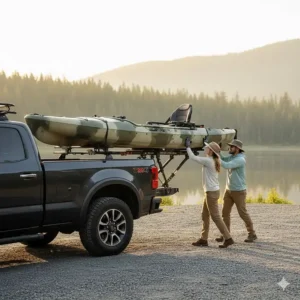
Hard-shell kayaks constructed from rotomolded polyethylene dominate the fishing market. These durable workhorses resist punctures, track straighter, move faster, and handle choppy conditions better than inflatables. The Brooklyn 13.0 Pro, Lifetime Manta 100, and Ocean Kayak models all feature this bombproof construction. However, they require roof racks or truck beds for transport and dedicated storage space.
Inflatable kayaks like the Intex Explorer K2 and Sevylor Colorado solve storage and transport challenges by packing into duffel bags. Modern inflatables use tough materials that resist punctures surprisingly well, though they’ll never match the rigidity of hard shells. They’re perfect for apartment dwellers, RV travelers, or anyone lacking garage space. The tradeoff? Slower speeds, more wind drift, and shorter lifespans.
Sit-On-Top vs. Sit-Inside Designs
Nearly all two seater fishing kayak models use sit-on-top designs for good reasons. You sit atop a molded deck rather than inside a cockpit, making entry and exit effortless—crucial when fighting fish or swapping positions. Water drains through scupper holes automatically, and if you capsize (rare with tandems), you can climb back aboard without the kayak filling with water.
Sit-inside tandems exist but cater more to touring than fishing. The enclosed cockpit protects from waves and wind but limits movement and makes accessing gear awkward. For fishing, stick with sit-on-top unless you’re paddling frigid waters where the weather protection justifies the limitations.
Essential Features for Two Person Fishing Kayaks
Stability: The Foundation of Fishing Success
A two person fishing kayak needs rock-solid stability to accommodate the dynamic movements of casting, fighting fish, and reaching for gear. Width matters tremendously—most quality tandems measure 33-36 inches wide. The tunnel hull design (like the Lifetime Manta 100) and tri-hull construction (Ocean Kayak models) provide exceptional primary stability, though they sacrifice some speed.
Hull shape determines how stable you’ll feel when standing. Flat-bottomed hulls offer maximum initial stability perfect for beginners, while v-shaped hulls sacrifice some stability for better speed and tracking. For fishing, prioritize stability over speed unless you’re covering serious distances to reach fishing spots.
Weight Capacity: Don’t Overlook This Critical Spec
Two average-sized adults plus fishing gear can easily exceed 400 pounds, and that’s before adding coolers, tackle boxes, or catch. The Brooklyn 13.0 Pro’s 800-pound capacity provides comfortable margin, while the Intex Explorer K2’s 400-pound limit gets tight with two larger paddlers.
Here’s the insider secret: always stay 100-150 pounds below the stated maximum capacity. Operating at the limit makes kayaks sit lower (reducing freeboard and letting waves splash aboard), slows paddling, and stresses the hull. A tandem rated for 500 pounds performs best with 350-375 pounds aboard.
Rod Holders and Fishing Rigging
Purpose-built fishing kayaks include flush-mount rod holders that secure rods at the perfect trolling angle. Count on needing at least four total holders (two per angler) for versatility. Gear tracks allow mounting rod holders, fish finders, camera mounts, and other accessories exactly where you want them.
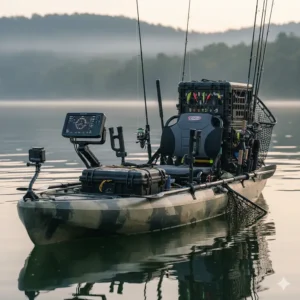
Look for tackle tray storage slots, bungee deck rigging for securing crates, watertight hatches for electronics, and paddle parks that keep paddles secure but accessible when both hands are on the rod. The Feelfree Lure II Tandem and Brooklyn 13.0 Pro excel in this department, while budget models require aftermarket accessories.
Seating Comfort: Make or Break for All-Day Fishing
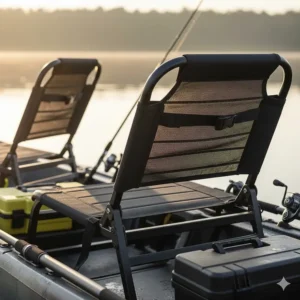
Your backside will thank you for investing in quality seats. Adjustable high-low seats let you raise your position for better casting sight lines or lower for stable paddling. Breathable mesh fabric dries quickly and prevents swamp butt during summer sessions. Proper lumbar support prevents the lower back pain that plagues anglers after 4+ hours on the water.
The Feelfree Gravity seats represent the gold standard, followed by Ocean Kayak’s Comfort Plus system and Brooklyn Kayak’s aluminum frame chairs. Basic molded seats (often found on budget kayaks) work for short trips but leave you sore on marathon fishing days.
Storage Solutions for Gear Management
Serious fishing requires serious gear, and your tandem needs space for it all. Watertight hatches protect electronics, phones, and valuables from water damage. Open bow and stern tankwells with bungee lashing accommodate milk crates packed with tackle, coolers full of drinks, and extra layers for changing weather.
Calculate total storage before buying. Will you bring camping gear for overnight fishing trips? Need room for photography equipment? Want to pack a spare motor battery? The Ocean Kayak Malibu Two XL and Brooklyn 13.0 Pro offer abundant real-world storage that theoretical capacity numbers don’t fully capture.
How to Choose the Perfect Two Person Fishing Kayak
Match the Kayak to Your Waters
Calm lakes and protected bays forgive kayak shortcomings—almost any tandem works fine. The Lifetime Manta 100 and Intex Explorer K2 thrive here. Slow rivers with occasional mild rapids require more robust construction and tracking ability found in the Ocean Kayak Malibu series.
Coastal fishing in bays and estuaries demands the stability and durability of the Brooklyn 13.0 Pro or Feelfree Lure II Tandem. Never take inflatables or budget tandems into ocean surf conditions. The longer hull length (13+ feet) of premium models punches through chop more effectively and maintains momentum against wind and current.
According to the U.S. Coast Guard, all recreational kayakers should wear properly fitted life jackets regardless of swimming ability, and tandem kayaks offer increased safety over solo models in challenging conditions.
Consider Your Fishing Style
Stationary fishing (anchoring near structure and casting) prioritizes stability and comfort over speed. The ultra-stable Lifetime Manta 100 or Ocean Kayak Malibu Two work beautifully. Trolling across large reservoirs covering miles daily? You need the speed and tracking of longer models like the Feelfree Lure II Tandem or Ocean Kayak Malibu Two XL.
Stand-up fishing requires wide beams (34+ inches) and exceptional primary stability. The Brooklyn 13.0 Pro’s flat bottom and 34.25-inch width make standing safe, while narrow touring kayaks would dump you overboard on your first cast. Fly fishing demands open deck space without center consoles that snag back casts—another point favoring simpler designs.
Budget vs. Features Tradeoff
The two person fishing kayak market spans from $130 Intex inflatable specials to $2,800 Feelfree premium rigs. Most anglers find happiness in the $400-$1,200 range where solid construction meets practical features without premium pricing.
Budget kayaks ($130-$600) require compromises. You’ll likely add aftermarket seats, rod holders, and accessories to match factory-rigged premium models. However, for casual weekend fishing or seasonal use, the Lifetime Manta 100 or Intex Explorer K2 deliver perfectly adequate experiences.
Mid-range options ($600-$1,200) like the Brooklyn 13.0 Pro and Ocean Kayak Malibu series hit the sweet spot. You’re getting quality construction, integrated fishing features, and components that’ll last many seasons with proper care. These kayaks handle everything from beginner to intermediate fishing without major limitations.
Premium tandems ($1,200+) cater to serious anglers logging 50+ days annually on the water. The enhanced durability, comfort, and specialized features justify higher prices when fishing becomes a primary hobby. Research from the American Sportfishing Association shows that dedicated anglers increasingly invest in quality equipment that performs trip after trip.
Transport and Storage Realities
A 12-foot hard-shell kayak weighs 60-85 pounds and measures over 10 feet long. Can you lift it onto your vehicle’s roof rack? The Brooklyn 13.0 Pro at 85 pounds sits at the heavy end, though two people handle it easily. Lighter options like the 58-pound Ocean Kayak Malibu Two or 60-pound Lifetime Manta 100 might allow solo loading with practice.
Consider storage dimensions carefully. Do you have 13+ feet of garage or shed space? Can you build outdoor racks? Apartment dwellers and those with crowded garages should seriously consider inflatables like the Sevylor Colorado that pack small when not fishing.
The Feelfree Wheel in the Keel system demonstrates how thoughtful design solves real problems—rolling the kayak beach-cart style beats dragging it across parking lots or docks every trip.
Tandem Kayak Fishing vs. Solo Fishing: Pros and Cons
Advantages of Two Person Fishing Kayaks
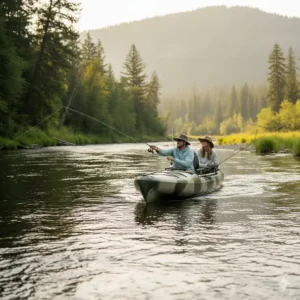
Shared paddling effort means covering more water with less exhaustion. When your fishing buddy helps paddle to distant spots, you’ll arrive fresh and ready to fish instead of fatigued from the journey. This advantage multiplies on windy days when solo kayakers struggle making progress.
Teaching opportunities abound with tandems. Experienced anglers can share techniques with kids, spouses, or friends while maintaining control from the rear seat. The confidence boost from fishing with a veteran accelerates learning curves dramatically.
Safety in numbers shouldn’t be overlooked. If one paddler gets injured, tired, or seasick, the other can paddle both back to shore. Cell phones get dropped, weather changes unexpectedly, and fish sometimes win the fight—having a partner transforms potential emergencies into mere inconveniences.
Versatile seating configurations let most tandems paddle solo by moving seats to the center position. You’re buying two kayaks in one, maximizing investment value. Can’t find a fishing partner for today’s trip? No problem—paddle solo. Friend joining? Switch to tandem mode in minutes.
Disadvantages to Consider
Coordination challenges frustrate some paddlers. Tandem kayaking works best when both paddlers synchronize strokes, which requires communication and practice. The infamous “divorce boat” nickname stems from couples arguing over paddling rhythm and steering decisions. Take time to develop teamwork and agree on who steers (usually the rear paddler).
Compromised solo performance affects some tandems more than others. Extra length and weight make 2 seater fishing kayak models slower and harder to maneuver when paddling alone. Dedicated solo kayaks generally outperform tandems rigged for solo use, though the difference matters less for recreational fishing.
Limited fishing zones restrict where both anglers can cast comfortably. The front paddler controls forward casting lanes, while the rear paddler works the sides and back. This requires planning and communication to avoid crossed lines and hooks in the back of heads.
Increased storage and transport burden comes with larger kayaks. You’ll need longer roof racks, bigger storage areas, and potentially a trailer or kayak cart for regular use. The savings of buying one tandem versus two solo kayaks can disappear when accounting for transport infrastructure.
Maintenance and Care Tips for Two Person Fishing Kayaks
After Each Trip
Rinse your kayak thoroughly with fresh water after every outing, especially saltwater sessions. Salt crystals corrode metal hardware and degrade rubber seals over time. Pay special attention to scupper holes, drain plugs, and moving parts like rudders or seat adjustments.
Remove all gear, empty hatches, and let the kayak dry completely before storage. Trapped moisture breeds mildew and mold that stink and deteriorate materials. Wipe down seats and clean any fish slime, bait residue, or mud from the deck.
Long-Term Storage
Store your kayak out of direct sunlight whenever possible. UV radiation from the sun gradually breaks down plastic polymers, causing fading and brittleness. If outdoor storage is unavoidable, invest in a quality UV-resistant kayak cover.
Support the kayak properly to prevent warping. Wall-mounted racks, ceiling hoists, or padded sawhorses work well. Never store a kayak directly on concrete for extended periods—use padding underneath. The weight concentrated on small contact points can create permanent deformations.
For inflatables, deflate completely, clean and dry thoroughly, then roll loosely and store in a cool, dry place. Avoid folding the same creases repeatedly as this weakens material. Apply 303 Protectant or similar products annually to vinyl components for extended life.
Seasonal Maintenance
Inspect all hardware before each season. Tighten loose bolts, replace corroded screws, and lubricate moving parts with marine-grade grease. Check seat straps and bungee cords for wear—replace anything frayed or weakened before it fails during a trip.
Apply protective treatments to the hull. Products like 303 Aerospace Protectant restore UV protection and shine to faded plastics. The Environmental Protection Agency provides guidelines on safe marine maintenance that protect waterways while keeping your kayak pristine.
Test all accessories periodically. Confirm rod holders grip securely, hatches seal watertight, and drain plugs don’t leak. Finding problems in your driveway beats discovering them three miles from shore.
Safety Considerations for Tandem Kayak Fishing
Personal Flotation Devices (PFDs)
Every kayaker must wear a properly fitted, U.S. Coast Guard-approved Type III life jacket at all times on the water. Non-negotiable. Even strong swimmers drown when knocked unconscious during capsizes or when cold water triggers shock responses.
Select PFD designs with high-back cutouts that won’t interfere with kayak seat backs. Fishing-specific models include rod holder tabs, tool attachments, and pockets for tackle. Yes, they cost more than basic orange vests, but comfort matters when wearing them all day.
Weather Awareness
Check weather forecasts before every trip and understand that conditions change rapidly on water. Wind speeds feel stronger on exposed water than on land. A breezy 10 mph breeze onshore becomes a challenging 15 mph headwind offshore that triples your return paddling time.
Lightning poses extreme danger to kayakers—you’re the tallest object around on open water. Head to shore immediately when thunderstorms approach. The National Weather Service recommends the 30-30 rule: if time between lightning and thunder is 30 seconds or less, seek shelter and wait 30 minutes after the last thunder before resuming activities.
Communication and Planning
Always tell someone your float plan—where you’re launching, planned route, and expected return time. Carry a whistle, mirror, and ideally a waterproof VHF radio or cell phone in a dry bag. Basic safety equipment weighs ounces but could save your life if weather shifts or injuries occur.
Paddle with a buddy when possible, though tandem kayaks provide inherent safety by keeping two people together. Still, fishing with another tandem creates redundancy if one kayak suffers catastrophic damage or a paddler gets seriously injured.
Comparison: Two Person Fishing Kayaks vs. Traditional Canoes
| Feature | Tandem Fishing Kayak | Fishing Canoe |
|---|---|---|
| Stability | Excellent (low center of gravity) | Good (but higher center of gravity) |
| Speed | Moderate to Fast | Moderate |
| Maneuverability | Excellent | Good |
| Cargo Capacity | 400-800 lbs | 500-1,200 lbs |
| Ease of Entry | Very Easy (sit-on-top) | Easy |
| Standing Capability | Model-dependent | Generally Better |
| Price Range | $130-$2,800 | $300-$4,000+ |
| Learning Curve | Beginner-friendly | Moderate |
Tandem fishing kayaks win for solo versatility (easy to paddle alone), modern convenience (scupper drainage, molded features), and beginner accessibility. Canoes triumph when hauling maximum gear, standing to cast extensively, or paddling with three or more people. Both excel—choose based on your primary use case.
Frequently Asked Questions About Two Person Fishing Kayaks
❓ What is the best weight capacity for a two person fishing kayak?
❓ Can you fish solo from a two person fishing kayak?
❓ How stable are two person fishing kayaks for standing?
❓ Are inflatable two person fishing kayaks durable enough?
❓ What length two person fishing kayak tracks best in wind?
Benefits of Two Person Fishing Kayaks vs. Single Kayaks
Economic Advantages
Buying one quality tandem costs significantly less than purchasing two solo kayaks. The Brooklyn 13.0 Pro at approximately $1,100 represents tremendous savings compared to two comparably featured single kayaks at $700-900 each. You’ll also save on transport costs (one roof rack system instead of two) and storage space.
Consider the total cost of ownership beyond initial purchase. One set of maintenance supplies, one storage solution, and one registration fee (where applicable) further amplify savings. For families or couples who primarily fish together, the economics overwhelmingly favor tandems.
Social and Educational Benefits
Fishing with a partner enhances the experience beyond just catching fish. You’ll troubleshoot challenges together, share the excitement of hookups, and create lasting memories that solo fishing can’t replicate. Teaching a child or novice angler becomes practical when you control the kayak’s positioning and stability from the rear seat.
Tandem kayaking builds communication skills and teamwork as you coordinate paddling rhythms, fishing strategies, and navigation decisions. These soft skills translate beyond fishing into everyday relationship building. Many anglers report that regular tandem kayak fishing strengthened their friendships and family bonds.
Practical On-Water Advantages
Safety improves dramatically with a fishing partner aboard. If one angler gets a hook lodged deep or needs to deal with a medical issue, the second paddler maintains kayak control and can paddle to shore safely. Changing weather, boat wakes, or equipment failures become manageable rather than dangerous when you’re not alone.
Photo and video opportunities multiply when a second person handles the camera while you fight fish or cast. Documented catches hold more value for tournaments, social media, or personal memories. Your buddy can also net that trophy fish, grab a spare rod, or help with any of the thousand small tasks that solo anglers struggle handling while maintaining kayak position.
Conclusion: Finding Your Perfect Two Person Fishing Kayak
After reviewing the market’s top performers, three standouts emerge for different angler profiles. The Brooklyn 13.0 Pro Tandem delivers the best overall value, combining impressive 800-pound capacity, integrated fishing features, and accessibility at $900-$1,200. Budget-conscious anglers should seriously consider the Lifetime Manta 100, which proves that $400-$600 can still buy solid fishing performance and rock-solid stability. For anglers demanding premium quality, the Feelfree Lure II Tandem justifies its $2,200-$2,800 price with unmatched comfort and professional-grade features.
Remember that the perfect two person fishing kayak matches your specific needs—not someone else’s. A 2 seater fishing kayak that excels for weekend lake fishing might disappoint serious coastal anglers chasing stripers in the surf. Similarly, inflatable models solve specific transport and storage challenges that make them perfect for some anglers despite performance limitations.
Start by honestly assessing your fishing style, typical waters, transport capabilities, and budget. Then narrow your choices to models that check your must-have boxes for capacity, features, and price. Read reviews from anglers fishing similar waters to understand real-world performance. Finally, test paddle before buying whenever possible—hands-on experience reveals comfort and stability characteristics that specifications can’t capture.
The investment you make in a quality tandem fishing kayak will reward you with countless hours enjoying nature, catching fish, and creating memories with your favorite fishing partners. Whether you’re introducing your kids to fishing, exploring new waters with your spouse, or teaming up with buddies for tournament action, the right two person fishing kayak amplifies the joy of every moment on the water.
Tight lines and happy paddling! 🎣
Recommended for You
- 7 Best Salmon Fishing Lures That Actually Work in 2025
- 7 Best Salmon Fishing Rods 2025: Expert Guide & Reviews
- 7 Best Salmon Fishing Gear That Actually Catch Fish (2025)
Disclaimer: This article contains affiliate links. If you purchase products through these links, we may earn a small commission at no additional cost to you.
✨ Found this helpful? Share it with your friends! 💬🤗
