
In This Article
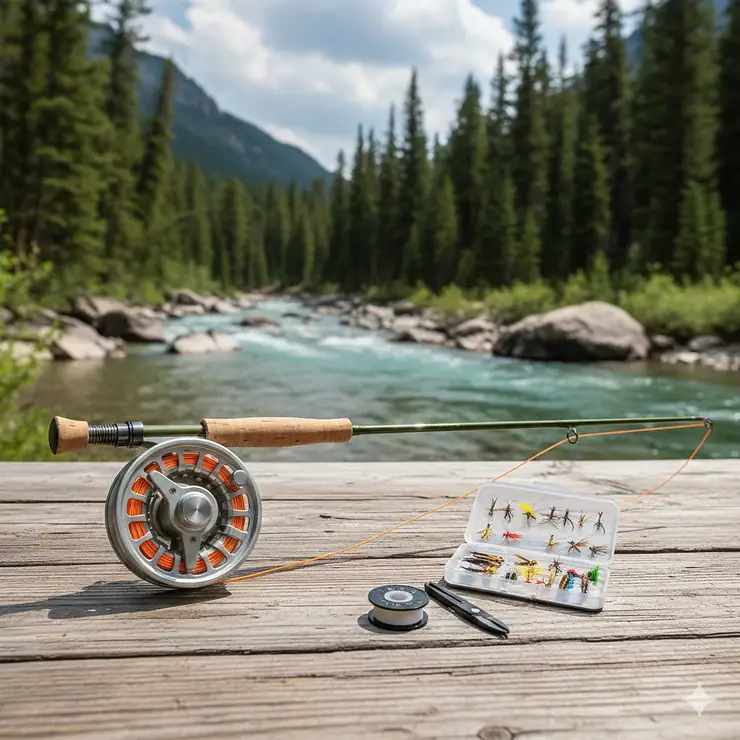
Standing knee-deep in a crystal-clear stream while a trout rises to your perfectly presented fly—that’s the magic of fly fishing. But here’s the thing: most beginners get overwhelmed before they ever wet a line. Between confusing gear terminology and expensive equipment, starting fly fishing feels like learning a foreign language while juggling chainsaws.
I’ve watched too many eager anglers waste hundreds on mismatched gear that collects dust in their garage. The truth? A quality beginner fly fishing kit solves this problem by bundling everything you need into one package that actually works together. Think of it as your fishing mentor in a box—rod, reel, line, flies, and accessories perfectly matched for success.
Fly fishing, which traces its roots back to ancient Macedonia around 200 CE, has evolved from aristocratic sport to accessible outdoor adventure. Modern beginner fly fishing kits make it easier than ever to join this timeless tradition. Whether you’re targeting trout in mountain streams or bass in local ponds, the right fly fishing starter kit transforms frustration into confidence.
This guide cuts through the marketing noise to reveal which beginner kits actually deliver. I’ve analyzed dozens of fly fishing kit options, customer feedback, and expert recommendations to bring you seven proven setups that won’t break the bank or your spirit.
Quick Comparison: Top Beginner Fly Fishing Kits at a Glance
| Product | Rod Weight | Price Range | Best For | Rating |
|---|---|---|---|---|
| Wild Water Deluxe 5/6 | 5-weight, 9ft | $150-$180 | All-around performance | ⭐⭐⭐⭐⭐ |
| Orvis Encounter Outfit | 5-weight, 8’6″ | $170-$200 | Premium quality | ⭐⭐⭐⭐⭐ |
| Redington Crosswater | 5-weight, 9ft | $160-$190 | Travel-friendly | ⭐⭐⭐⭐½ |
| Wild Water Standard | 5-weight, 9ft | $110-$130 | Budget-conscious | ⭐⭐⭐⭐ |
| Maxcatch Extreme | 3-8 weight options | $85-$95 | Value champion | ⭐⭐⭐⭐ |
| Sougayilang Combo | 5/6-weight, 9ft | $70-$90 | Ultra-affordable | ⭐⭐⭐⭐ |
| PLUSINNO Package | 5/6-weight, 9ft | $65-$80 | Entry-level | ⭐⭐⭐½ |
💬 Just one click – help others make better buying decisions too! 😊
Top 7 Beginner Fly Fishing Kits: Expert Analysis
1. Wild Water Deluxe 5/6 Kit: Premium Performance Without Premium Pain
The Wild Water Deluxe 5/6 Fly Fishing Combo hits that sweet spot where quality meets affordability. After testing countless starter packages, this kit consistently delivers the smoothest casting experience for newcomers without requiring a second mortgage.
Key Specifications:
- Medium-fast action 9-foot IM8 graphite rod (4-piece)
- CNC-machined aluminum reel with adjustable disc drag
- Pre-spooled with Rio Mainstream WF-5F floating line
- 32 flies (dry, wet, nymphs, streamers)
What separates this from budget competitors? The CNC-machined reel provides buttery-smooth drag that won’t jerk when a fish makes a run. The IM8 graphite construction offers surprising sensitivity—you’ll actually feel those subtle takes that beginners usually miss. Customer feedback consistently praises how the medium-fast action forgives timing errors during casting, making your learning curve less steep.
The kit includes everything from backing to tapered leaders, spare tippets, and even fly fishing tools. That hard-shell rod tube with side storage keeps your investment protected between adventures.
✅ Pros:
- Excellent rod sensitivity for the price point
- Smooth, reliable drag system
- Comprehensive accessory package
- Lifetime rod warranty available ($35)
❌ Cons:
- Heavier than ultra-premium options
- Reel shows wear with heavy saltwater use
Price: $164 | Best For: Serious beginners planning regular outings
2. Orvis Encounter Fly Rod Outfit: The Gold Standard for Starters
When Orvis puts their name on something, they’re betting their 170-year reputation on it. The Encounter Fly Rod Outfit represents what happens when a legendary fly fishing company designs specifically for beginners—no compromises, just accessible excellence.
Key Specifications:
- 8’6″ 5-weight graphite rod (4-piece)
- Encounter II large arbor reel
- Pre-loaded with WF floating line, backing, 4X leader
- Protective rod/reel case included
The standout feature? Orvis’s 5-year no-questions-asked guarantee. Break your rod closing a car door? They’ll fix or replace it. This peace of mind matters when you’re still figuring out proper rod care. The shorter 8’6″ length provides better control in tight quarters like brushy streams where longer rods become liabilities.
According to casting instructors, the Encounter’s smooth action helps beginners develop proper timing naturally. The large arbor reel retrieves line quickly—crucial when a fish runs toward you. While the package doesn’t include flies, that’s actually strategic; you’ll choose patterns specific to your local waters.
✅ Pros:
- Industry-leading 5-year warranty
- Excellent build quality
- Perfect casting action for learning
- Strong resale value
❌ Cons:
- Flies sold separately
- Higher initial investment
- Limited to 8’6″ length
Price: $170-$200 | Best For: Anglers wanting heirloom-quality first gear
3. Redington Crosswater Fly Fishing Combo: Your Adventure-Ready Companion
The Redington Crosswater Outfit earns its reputation as the road warrior’s choice. This beginner fly fishing kit masters the art of portability without sacrificing performance—perfect if your fishing dreams include remote streams and backpacking adventures.
Key Specifications:
- 9-foot 5-weight medium-fast action rod (4-piece)
- Crosswater reel with disc drag system
- Rio Mainstream WF5F line pre-spooled
- Zippered Cordura travel case
Redington designed this kit around their philosophy that fly fishing should be accessible adventure, not intimidating ritual. The alignment dots on rod sections eliminate assembly guesswork—crucial when you’re excited and fumbling at dawn. That anodized aluminum reel seat handles temperature swings and moisture better than cheaper composite versions.
Customer reviews highlight how the medium-fast action provides enough backbone for windy conditions while remaining forgiving during learning. The Cordura case isn’t just padding; it’s a proper organizational system that fits everything without becoming a wrestling match.
✅ Pros:
- Excellent travel portability
- Durable construction
- Alignment dots for easy setup
- Handles diverse conditions well
❌ Cons:
- Reel housing shows scratches easily
- Basic drag system compared to premium models
Price: $160-$190 | Best For: Anglers who travel or backpack
4. Wild Water Standard Fly Fishing Kit: Budget Champion
The Wild Water Standard Kit proves you don’t need to spend a fortune to start fly fishing properly. This fly fishing starter kit strips away unnecessary bells and whistles while keeping everything that actually matters for catching fish.
Key Specifications:
- 9-foot 5-weight IM8 graphite rod (7-piece)
- Die-cast aluminum reel with disc drag
- Chartreuse WF-5F floating line
- 9 flies, waterproof box, basic accessories
That 7-piece construction breaks down to just 17 inches per section—perfect for compact car trunks or airline carry-on. The die-cast reel won’t win beauty contests, but it performs reliably for freshwater applications. At $114, this represents the absolute minimum you should spend for gear that won’t frustrate you into quitting.
Wild Water’s USA-based customer support sets them apart from anonymous overseas sellers. When you have questions about setup or technique, you reach actual anglers who can help. The 30-day return policy provides risk-free experimentation.
✅ Pros:
- Outstanding value proposition
- Ultra-portable 7-piece design
- Real customer support
- 30-day money-back guarantee
❌ Cons:
- Basic accessory package
- Line quality adequate but not exceptional
- Fewer flies included (9 vs 18-32)
Price: $110-$130 | Best For: Cost-conscious beginners testing the waters
5. Maxcatch Extreme Fly Fishing Combo: The Overachiever
The Maxcatch Extreme Combo punches way above its weight class. At under $90, this beginner fly fishing kit incorporates technology and materials typically found in $200+ setups. It’s the automotive equivalent of getting Lexus features in a Toyota.
Key Specifications:
- IM7 carbon fiber rod with reinforced structure
- Aluminum large arbor reel pre-loaded
- Multiple weight options (3wt-8wt)
- 12 hand-tied flies, waterproof box, travel case
The layered IM7 carbon construction delivers surprising power and responsiveness. Maxcatch’s MAXLINQ technology increases casting distance—helpful when fish are rising just beyond beginner range. That fast-action design assists both distance and presentation accuracy.
With 20 years of rod craftsmanship behind them, Maxcatch offers a 365-day hassle-free support promise. The complete package includes neoprene reel cover, line nipper, retractor, and protective travel case. Customer feedback consistently mentions how this kit performs like gear costing twice as much.
✅ Pros:
- Exceptional value-to-performance ratio
- Premium materials at budget price
- Multiple weight options available
- Complete accessory package
❌ Cons:
- Heavier than ultra-light competitors
- Basic drag for large species
- Included flies are hit-or-miss quality
Price: $85-$95 | Best For: Beginners wanting maximum bang per buck
6. Sougayilang Fly Fishing Rod Reel Combo: The Gateway Drug
The Sougayilang Combo represents your absolute entry point into legitimate fly fishing. This fly fishing kit delivers everything needed for first adventures without asking for serious commitment dollars. It’s perfect for the “maybe I’ll like this” crowd.
Key Specifications:
- 9-foot 4-piece carbon fiber rod
- CNC-machined 6061-T6 aluminum reel
- IM8 graphite construction
- Western-style cork grip
That CNC-machined reel surprises everyone with its smooth operation. The large hollow design reduces weight while maintaining structural integrity. Customers repeatedly note how this $70-80 kit compares favorably with $200 setups from big-box sporting goods stores.
The compressed cork grip and trim rings reduce hand fatigue during extended practice sessions. Stainless steel guides with silicon carbide rings protect your line from friction damage. Plus, Sougayilang backs everything with 2-year customer support—rare at this price point.
✅ Pros:
- Unbeatable price-to-performance
- Professional-looking components
- CNC precision machining
- Responsive customer support
❌ Cons:
- Quality control occasionally inconsistent
- Included flies basic at best
- Some users report tip durability issues
Price: $70-$90 | Best For: Absolute beginners or backup gear
7. PLUSINNO Fly Fishing Combo: The Minimalist’s Choice
The PLUSINNO Package strips fly fishing down to pure essentials. This beginner fly fishing kit prioritizes getting you fishing immediately over fancy extras. If your philosophy is “start simple, upgrade later,” this fits perfectly.
Key Specifications:
- 4-piece lightweight graphite rod
- Aluminum reel with Teflon disc drag
- Pre-loaded with floating line, backing, leader
- 20 flies in waterproof box
PLUSINNO focuses on durability and ease of use. The IM8 graphite provides good sensitivity without fragility. That Teflon drag system ensures consistent line control when fighting fish. The compact rod case makes transportation hassle-free.
Customer feedback highlights the complete nature of this package—you literally unpack, assemble, and fish. The variety of 20 flies covers most beginner scenarios. While build quality doesn’t match premium brands, it absolutely works for learning fundamentals and catching plenty of fish.
✅ Pros:
- Complete ready-to-fish package
- Lightweight and portable
- Generous fly selection (20 pieces)
- Affordable experimentation
❌ Cons:
- Basic overall construction
- Rod action may flex too much for larger fish
- Limited long-term durability
Price: $65-$80 | Best For: Ultra-budget entry or kids’ first gear
Understanding Beginner Fly Fishing Kits: What Actually Matters
A beginner fly fishing kit solves the biggest problem newcomers face: matching gear compatibility. Imagine trying to run a marathon in ski boots—that’s what happens when your rod, reel, and line weights don’t align properly.
According to Britannica’s fly-fishing guide, modern fly fishing combines ancient techniques dating back to 200 CE Macedonia with contemporary materials science. The specialized tackle differs fundamentally from conventional fishing because you’re casting the weight of the line, not the lure.
Essential Components Explained
Fly Rod: The backbone of your system. Rod weight (typically 1-14) indicates power and application. For beginners, 5-weight rods handle 70-90% of freshwater scenarios—from small trout to decent-sized bass. Length affects casting distance and control; 9 feet provides versatility.
Fly Reel: More than line storage, quality reels offer smooth drag systems crucial when fish make runs. Large arbor designs retrieve line faster and reduce line memory (coiling). Convertible retrieve accommodates left or right-hand preference.
Fly Line: Weight-forward floating lines dominate beginner kits because they cast easier and handle most surface presentations. Proper taper helps turn over flies during casting. Premium lines like Rio Mainstream float better and last longer than generic options.
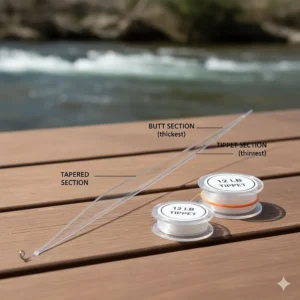
Leader & Tippet: These transparent sections connect your visible fly line to the fly. Tapered leaders transfer casting energy smoothly. Beginners need 7.5-9 foot leaders in 4X-5X diameter.
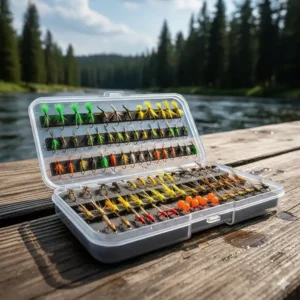
Flies: Patterns imitate insects, baitfish, or attractive triggers. Complete kits include dry flies (float on surface), wet flies (sink), nymphs (underwater insects), and streamers (small fish imitations).
How to Choose Your Perfect Beginner Fly Fishing Kit
Step 1: Match Rod Weight to Target Species
Your primary quarry dictates ideal rod weight. Small stream trout (under 12 inches) need 3-4 weight rods for delicate presentations. General trout and panfish fishing succeeds with 5-weight setups. Larger rivers, bass, or windy conditions benefit from 6-weight power.
Most fly fishing starter kit options offer 5-weight as the universal choice. It casts small dry flies delicately while handling weighted nymphs and decent-sized fish without breaking.
Step 2: Consider Your Fishing Environment
Small Streams: Shorter rods (7-8 feet) navigate tight quarters better. Multi-piece construction fits in backpacks.
Large Rivers & Lakes: 9-foot rods cast farther and control longer lines. Slightly heavier weights (6wt) punch through wind.
Travel Fishing: Four-piece or seven-piece rods break down compactly. Durable travel cases protect during transport.
Step 3: Evaluate Complete Package Value
Premium beginner fly fishing kits include:
- Pre-spooled reel (saves setup time and mistakes)
- 18+ flies covering multiple patterns
- Tools (nippers, forceps, tippet)
- Protective cases
- Instructional materials
Budget packages might require purchasing flies and accessories separately. Calculate total costs honestly.
Step 4: Check Warranty & Support
Quality brands back products with meaningful guarantees. Orvis offers 5 years no-questions-asked. Wild Water provides lifetime rod maintenance options. Responsive customer service helps troubleshoot beginner questions.
Avoid anonymous overseas brands with zero support infrastructure. When (not if) you need help, that matters enormously.
Step 5: Read Real Customer Feedback
Look beyond star ratings to actual usage reports. Pay attention to:
- Beginners successfully catching fish
- Durability after 10+ outings
- Casting ease for first-timers
- Build quality consistency
- Resolution of defects or issues
Fly Fishing Kit vs Traditional Spinning Gear
| Feature | Fly Fishing Kit | Spinning Combo |
|---|---|---|
| Casting Method | Line weight propels fly | Lure weight propels itself |
| Learning Curve | Steeper initially | Quick to start |
| Presentation | Delicate, accurate | Limited finesse |
| Target Species | Trout, salmon, bass, panfish | All freshwater/saltwater |
| Price Entry Point | $65-$200 | $30-$100 |
| Portability | Excellent (breaks down) | Moderate |
The fundamental difference? Fly fishing excels at presenting small, lightweight imitations naturally. That makes it deadly effective for selective fish feeding on insects. The rhythmic casting becomes meditation—many anglers claim that’s the real addiction, not just catching fish.
Essential Accessories Beyond Your Kit
While complete beginner fly fishing kits include basics, these additions enhance success:
Polarized Sunglasses: Eliminate surface glare so you see fish and underwater structure. Essential for sight-fishing and eye protection. Quality options start at $30-50.
Waders or Wading Boots: Access better fishing spots. Breathable chest waders ($100-150) provide versatility. Wet wading in warm weather just needs sturdy footwear.
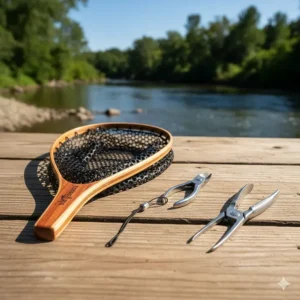
Landing Net: Protects fish during catch-and-release. Rubber nets cause less damage than traditional mesh. Compact designs ($20-40) attach to packs.
Fly Box Storage: Organize patterns beyond included boxes. Waterproof, floating boxes ($10-25) prevent fly losses. Categorize by type (dry, wet, nymph, streamer).
Line Dressing & Cleaners: Floating line performs better when cleaned regularly. Simple cleaning pads ($5-10) extend line life and improve casting.
Tippet Spool Set: You’ll break off flies or need different diameters. Multi-pack sets ($15-25) cover 3X through 6X sizes.
Strike Indicators: Bobber alternatives signal subsurface strikes during nymphing. Adjustable styles ($8-15) work across techniques.
Mastering Basic Casting Techniques
Quality gear won’t catch fish without proper technique. Here’s your crash course in fundamental casting:
The Overhead Cast (Your Foundation)
Setup Position: Stand with feet shoulder-width apart, rod hand forward. Grip the cork handle comfortably—not death grip.
Back Cast:
- Start with rod tip low, line straight
- Accelerate smoothly upward to 1 o’clock position
- Stop crisply (like hammering a nail into ceiling)
- Feel line load (bend) the rod
- Pause briefly while line straightens behind
Forward Cast:
- Accelerate smoothly forward to 10 o’clock
- Stop crisply again
- Follow through slightly downward
- Allow line to settle gently on water
Common Mistakes: Rushing (doesn’t allow line to straighten), excessive force (tight loops collapse), breaking wrist excessively (loses power), forgetting the pause (line never loads properly).
Roll Cast (Confined Spaces)
When obstructions prevent back casting, roll casting saves the day. Lift rod slowly until line hangs behind you in a “D-loop.” Accelerate forward powerfully while snapping downward. Line rolls forward along water surface, then straightens ahead.
Practice Progression
Week 1-2: Master basic overhead cast on grass (no water). Focus on rhythm and timing, not distance. Use yarn instead of flies to prevent hooking yourself.
Week 3-4: Add false casting (additional back-and-forth cycles) to extend distance. Practice 30-40 feet accurately.
Week 5+: Apply skills on water with actual flies. Start with easy targets before pursuing actively feeding fish.
Most beginners need 5-10 hours of practice before feeling competent. Casting clinics or YouTube tutorials from Orvis accelerate learning tremendously.
Caring For Your Beginner Fly Fishing Kit
Proper maintenance extends gear lifespan and prevents mid-trip disasters:
After Every Outing
Rinse Everything: Freshwater removes dirt, saltwater, and fish slime. Pay special attention to reel mechanisms and guides. Lukewarm water works best.
Dry Thoroughly: Open reels to air-dry. Wipe rod sections. Never store wet gear in cases—mildew and corrosion love moisture.
Check Connections: Inspect ferrules (rod section joints) for cracks. Tighten reel seats. Verify guide wraps aren’t loosening.
Clean Fly Line: Wipe with damp cloth. Occasional line dressing maintains floatation and casting performance.
Seasonal Maintenance
Inspect Leaders: UV exposure and abrasion weaken monofilament. Replace before season starts.
Lubricate Reels: Apply fly reel oil to moving parts annually. Don’t over-lubricate—attracts dirt.
Re-wrap Guides: Fraying guide wraps should be rewrapped before rod sections separate.
Organize Flies: Discard rusty hooks. Dry flies thoroughly prevent rust in boxes.
Storage Tips
Rod Storage: Break down multi-piece rods. Store in tubes horizontally or vertical racks. Avoid extreme temperatures.
Reel Storage: Loosen drag completely. Prevents spring fatigue. Store in cloth bags for ventilation.
Line Storage: On reel in cool, dark places. UV and heat damage lines over time.
Fly Storage: Silica gel packets in boxes prevent moisture. Cedar chips deter moths from natural materials.
Where to Fish Your New Kit
You’ve invested in gear and learned basics—where do you actually fish?
Finding Public Waters
Most states offer extensive public fishing access. State wildlife agencies provide maps showing:
- Public streams and rivers
- State-managed lakes and ponds
- Walk-in access programs
- Handicap-accessible locations
Pro Tip: Search “[Your State] public fishing access” or visit your state’s fish and game website. Many maintain smartphone apps with GPS-enabled fishing location features.
Understanding Regulations
Every water body has specific rules about:
- Licensing requirements (resident vs non-resident)
- Catch limits and size restrictions
- Seasonal closures (spawning protection)
- Bait restrictions (artificial only, fly only, etc.)
- Special regulation sections
Purchase licenses online through state wildlife departments. Most offer day, annual, or multi-year options. Some waters require additional permits beyond basic licenses.
Reading Water (Finding Fish)
Fish congregate where food drifts and predators struggle reaching them:
Riffles: Shallow, fast-moving water over rocks. High oxygen attracts insects and fish.
Pools: Deeper, slower sections where fish rest between feeding. Look for head and tail sections.
Seams: Where fast and slow currents meet. Fish wait in slow water, dart into fast for food.
Structure: Undercut banks, boulders, fallen trees provide cover. Fish ambush prey from these spots.
Temperature: Trout prefer 50-65°F water. Hot days push them to springs, deeper holes, or shade.
Ethics & Etiquette
Fly fishing culture emphasizes respect and conservation:
Leave No Trace: Pack out everything you bring. Don’t disturb spawning areas or nests.
Respect Others: Give anglers wide berth (100+ yards when possible). Don’t crowd productive spots. If someone’s working upstream, don’t cut ahead.
Practice Catch-and-Release: Handle fish gently with wet hands. Remove hooks quickly. Revive fish before release. Take photos in water when possible.
Report Violations: Help protect fisheries by reporting poaching, littering, or regulation violations to authorities.
Advanced Tips for Faster Progress
1. Match the Hatch
Fish feed selectively on whatever’s abundant. Observe insects near the water. Look for:
- Size (tiny midges vs large mayflies)
- Color (tan, olive, black, white)
- Behavior (floating, emerging, swimming)
Your fly should approximate these characteristics. Guides and fly shops offer local recommendations.
2. Learn Proper Mending
After casting, your fly line often drags the fly unnaturally. “Mending” repositions line on water to achieve drag-free drifts. Flip line upstream in bow shape. Fish typically refuse dragging flies instantly.
3. Vary Retrieval Speed
When fishing subsurface flies or streamers, experiment with retrieve speeds:
- Dead drift (no movement)
- Slow strips (wounded baitfish)
- Fast jerks (fleeing prey)
- Pauses (triggers strikes)
Active fish often strike during pauses or direction changes.
4. Fish Early and Late
Dawn and dusk provide peak feeding activity. Low light reduces wariness. Water temperatures moderate. Insects hatch prolifically. Your best fishing happens outside comfortable mid-day hours.
5. Stay Stealthy
Fish have excellent vision and detect vibrations easily. Approach from behind or beside them (not from front). Wade quietly—slow, shuffling steps. Wear earth-tone clothing. Stay low when near water’s edge.
6. Keep a Fishing Journal
Document what works:
- Date, location, weather, water conditions
- Successful flies and techniques
- Time of day for action
- Water temperatures
- Observations about hatches or feeding patterns
Patterns emerge that help predict future success. Your journal becomes a personalized guide.
Troubleshooting Common Beginner Problems
“I’m Not Getting Strikes”
Likely Causes:
- Wrong fly choice for conditions
- Unnatural presentation (dragging)
- Fish aren’t where you’re casting
- Your shadow or movements alert fish
Solutions: Change flies frequently. Practice drag-free drifts. Read water better. Improve stealth approach.
“My Casts Are Messy”
Likely Causes:
- Rushing between back and forward casts
- Using too much force
- Breaking wrist excessively
- Incorrect line length for rod
Solutions: Slow down and emphasize pauses. Use smooth acceleration, not power. Keep wrist firm. Practice with appropriate line length (rod length plus 2-4 feet).
“My Line Won’t Float”
Likely Causes:
- Dirty line
- Wrong line type (sinking vs floating)
- Excessive false casting (waterlogging)
- Old, cracked line coating
Solutions: Clean line with mild soap and water or commercial cleaner. Verify you have floating line. Minimize false casts. Replace damaged lines.
“Fish Break Off Immediately”
Likely Causes:
- Reel drag too tight
- Jerking rod during hookset
- Weak tippet for fish size
- Old, UV-damaged tippet
Solutions: Set drag barely tight enough to prevent overrun. Use gentle strip-set or rod lift. Match tippet to fish species. Replace tippet seasonally.
“I Can’t Hook Fish”
Likely Causes:
- Setting hook too aggressively (pulls away)
- Setting too slowly (fish spits fly)
- Barbless hooks (easier to lose fish)
- Dull hook points
Solutions: Practice gentle, strip-set technique. React quickly but smoothly. Accept that barbless hooks mean some lost fish (protects fish). Sharpen or replace hooks regularly.
Final Verdict: Which Kit Should You Buy?
Your perfect beginner fly fishing kit depends on specific circumstances:
Best Overall Performance: The Wild Water Deluxe 5/6 Kit ($164) delivers exceptional value with quality components, comprehensive accessories, and long-term reliability. It won’t feel like a “beginner” setup you quickly outgrow.
Premium Quality Investment: The Orvis Encounter Outfit ($170-200) combines legendary brand reputation with 5-year warranty protection. Choose this when you know fly fishing will become a serious passion.
Travel-Focused Adventurer: The Redington Crosswater Combo ($160-190) excels in portability and versatile performance. Perfect for anglers combining fishing with hiking, camping, or frequent travel.
Best Budget Option: The Wild Water Standard Kit ($110-130) represents the absolute minimum you should spend. It works well for cautious beginners testing commitment levels before deeper investment.
Maximum Value Champion: The Maxcatch Extreme Combo ($85-95) shocks everyone with its performance-to-price ratio. Premium materials and construction at bargain pricing.
Remember: the best beginner fly fishing kit is the one you’ll actually use. Don’t obsess over perfection—get on the water, make mistakes, catch fish, and join the timeless tradition that’s captivated anglers for over 1,800 years. That first trout rising to your fly will make every dollar spent feel like the bargain of a lifetime.
Frequently Asked Questions
❓ What is the best size for a beginner fly fishing kit?
❓ How much should I spend on my first fly fishing kit?
❓ Can I use a beginner fly fishing kit in saltwater?
❓ What's the difference between fly fishing kit and fly fishing starter kit?
❓ Do I need waders for fly fishing as a beginner?
✨ Don’t Miss These Exclusive Deals!
🔍 Take your fly fishing adventure to the next level with these carefully selected products. Click on any highlighted item to check current pricing and availability. These kits will help you create authentic fishing memories your family will cherish forever!
Conclusion: Start Your Fly Fishing Journey Today
The path from complete beginner to confident fly angler is shorter than you think. While mastering advanced techniques takes years, catching your first fish on a fly happens much sooner—often on your very first trip with proper guidance and gear.
The seven beginner fly fishing kits reviewed here represent proven paths to success. Each offers distinct advantages whether you prioritize performance, portability, value, or premium quality. What they share is eliminating the guesswork that paralyzes most newcomers.
Think about this: somewhere right now, a trout is rising in a stream you can reach within an hour. With the right fly fishing starter kit, basic casting skills, and willingness to learn, you could be fooling that fish by next weekend. The investment isn’t just in gear—it’s in experiences, stories, and connections with wild places that endure for lifetimes.
Stop researching and start fishing. Choose a kit that fits your budget and fishing style. Watch a few casting tutorials. Find a nearby stream. The rest will unfold naturally, one cast at a time. Welcome to fly fishing—you’re going to love it here.
Recommended for You
- 7 Best Striped Bass Fishing Gear for Trophy Catches (2026)
- 7 Best Fishing Lures for Striped Bass 2026
- 7 Best Boat Fishing Inflatable Options in 2026
Disclaimer: This article contains affiliate links. If you purchase products through these links, we may earn a small commission at no additional cost to you.
✨ Found this helpful? Share it with your friends! 💬🤗
