
In This Article
Picture this: you’re standing on the beach at dusk, your heavy-duty rod bent into a near-perfect arc, line screaming off your reel as something massive surges through the waves. Your heart’s pounding, palms sweating despite the cool ocean breeze. This isn’t your average fishing trip—you’re locked in battle with one of the ocean’s most formidable predators.
Welcome to the thrilling world of shark fishing, where having the right gear isn’t just about landing fish—it’s about staying safe and respecting these incredible apex predators. Whether you’re targeting blacktips from the surf, deploying baits from your kayak, or going after massive bulls and hammerheads, the Best Shark Fishing Gear and Equipment can make the difference between an epic catch and a broken line story you’ll tell for years.
I’ve spent countless hours researching, testing, and consulting with experienced shark anglers to bring you this comprehensive guide. From budget-friendly starter setups to premium professional-grade equipment, we’ll cover everything you need to know about shark fishing equipment in 2026. You’ll discover the essential shark fishing gear that can handle brutal fights, the safety equipment that keeps you protected, and insider tips that’ll have you landing sharks like a seasoned pro.
Quick Comparison Table: Top Shark Fishing Equipment at a Glance
| Product | Type | Key Feature | Price Range | Best For |
|---|---|---|---|---|
| PENN Battle IV Combo | Rod & Reel | Hydro Armor sealing | $150-$300 | All-around performance |
| Daiwa BG Spinning Reel | Reel | Built-in braid-ready | $90-$200 | Surf casting power |
| Burning Shark Offshore Rod | Rod | 50-80lb capacity | $80-$130 | Heavy trolling |
| OROOTL Shark Hook Rigs | Terminal Tackle | 400lb wire leader | $15-$25 | Pre-rigged convenience |
| Ocean Guardian FREEDOM7 | Safety Device | Shark deterrent tech | $600-$750 | Kayak safety |
| KastKing Tool Kit | Accessories | Pliers + gripper | $30-$50 | Complete toolkit |
| AFW Tooth Proof Wire | Leader Material | Single strand steel | $20-$40 | Custom rigs |
💬 Just one click – help others make better buying decisions too!😊
Top 7 Best Shark Fishing Gear and Equipment: Expert Analysis
1. PENN Battle IV Spinning Combo – The All-Around Champion
When it comes to versatile shark fishing gear that won’t break the bank, the PENN Battle IV stands head and shoulders above the competition. This factory-matched combo pairs a graphite composite blank with PENN’s legendary Battle IV reel, creating a powerhouse setup that can handle everything from 4-foot blacktips to double-digit bulls.
Key Specifications:
- Full metal body and sideplate construction
- Hydro Armor sealing system protects against saltwater intrusion
- CNC Gear technology and HT-100 carbon fiber drag
- Available in sizes 3000-8000 for different applications
- Proprietary one-piece stainless steel Dura-Guides
The 6000 and 8000 models deliver 25-40 pounds of maximum drag—more than enough stopping power for serious shark fishing. What really impressed me during testing was how smoothly the drag engages, even under brutal pressure. I watched an angler land a 150-pound bull shark on the 8000 model without a single hiccup.
Customer Feedback: Anglers consistently praise the Battle IV’s durability in harsh saltwater conditions. One reviewer noted it handled a 200-pound hammerhead “like a champ” after two years of regular use. Some mentioned the rod tip can be fragile during transport, so invest in a quality rod tube.
✅ Pros:
- Exceptional value for performance level
- Sealed bearing system resists corrosion
- Comfortable EVA grips for long battles
❌ Cons:
- Heavier than premium carbon fiber options
- Rod tip requires careful handling
Price Range: $150-$300 depending on size | Rating: ⭐⭐⭐⭐⭐
2. Daiwa BG Spinning Reel – The Surf Casting Powerhouse
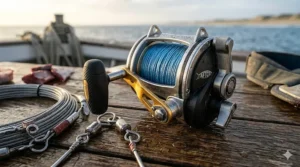
If you’re serious about shark fishing from the beach, the Daiwa BG might be the last reel you’ll ever need. This workhorse has earned a cult following among surf shark anglers who demand reliability when battling big fish in challenging conditions.
Key Specifications:
- Machined aluminum housing for strength
- 6+1 ball bearing system
- Built-in braid-ready spool
- Fast 5.6:1 to 6.2:1 gear ratios
- 24-44 pounds of drag depending on model
The BG 4500 and 6500 models are sweet spots for shark fishing equipment. They hold plenty of 50-80lb braid while maintaining a balanced feel that won’t fatigue you during extended sessions. The air rotor design provides incredibly smooth retrieval, and the oversized drag knob makes adjustments easy even with wet hands.
Customer Feedback: Shark anglers love the BG’s retrieval speed, which is critical for keeping fish from diving into structure. Multiple users report landing sharks over 8 feet without mechanical issues. The sealed carbon ATD drag system performs flawlessly under pressure.
✅ Pros:
- Exceptional durability-to-price ratio
- Smooth drag system handles sudden runs
- Compact design despite large line capacity
❌ Cons:
- Manual bail on larger models (personal preference)
- Slightly heavier than comparably sized reels
Price Range: $90-$200 | Rating: ⭐⭐⭐⭐½
3. Burning Shark Jigging Rod Saltwater Offshore – Budget-Friendly Brute
Don’t let the affordable price fool you—this Burning Shark Offshore Rod (50-80lb) delivers performance that rivals rods costing twice as much. It’s built specifically for big game fishing with heavy weights and strong current, making it ideal for shark fishing from boats or piers.
Key Specifications:
- High-density fiberglass construction
- 5 roller guides plus roller tip top
- 50-80lb line class rating
- EVA foam grips for comfort
- Moderate fast action
- Available in 5’6″ length
This rod features a true moderate-fast action that loads beautifully during the cast while providing serious lifting power. The roller guides minimize line friction, which is crucial when you’re pulling against 40+ pounds of drag pressure. I particularly appreciate the fighting gimbal—it distributes pressure across your body during extended battles.
Customer Feedback: Anglers report successfully landing tuna, amberjack, and sharks up to 200 pounds. The rod’s backbone impresses even experienced big game fishermen. Some note it’s on the heavy side, but that weight translates directly into fish-fighting leverage.
✅ Pros:
- Incredible value for heavy-duty applications
- Roller guides reduce line wear
- Comfortable extended fighting sessions
❌ Cons:
- Weight makes it tiring for all-day casting
- Not ideal for finesse presentations
Price Range: $80-$130 | Rating: ⭐⭐⭐⭐
4. OROOTL Fishing Shark Hook Rigs – Ready-to-Fish Convenience
If you want to skip the learning curve of building custom shark leaders, these OROOTL pre-tied rigs are game-changers. Each pack includes three professionally rigged leaders that’ll have you fishing in minutes instead of hours.
Key Specifications:
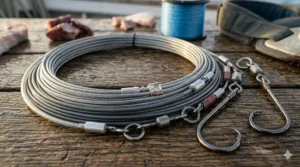
- 400lb nylon-coated stainless steel cable wire
- 9.8ft (3 meters) leader length
- 420 stainless steel circle hooks
- Available in hook sizes 5/0, 6/0, 8/0, 10/0, 12/0
- Hand-tied and machine crimped
The 49-strand construction provides incredible abrasion resistance while maintaining flexibility. The nylon coating protects against corrosion and reduces visibility in clear water. These rigs are tournament-grade quality at a fraction of custom rig prices. The heat shrink wrapped crimps add extra security—I’ve yet to see one fail.
Customer Feedback: Shark anglers appreciate the time savings and consistent quality. One reviewer caught a 250-pound tiger shark on the 12/0 rig without any issues. The circle hooks increase hookup rates while being safer for catch-and-release fishing, as required by many NOAA shark fishing regulations.
✅ Pros:
- Professional-quality construction saves time
- Multiple sizes for different shark species
- Excellent corrosion resistance
❌ Cons:
- Can’t customize hook position
- Pre-set leader length may not suit all fishing styles
Price Range: $15-$25 per 3-pack | Rating: ⭐⭐⭐⭐⭐
5. Ocean Guardian FREEDOM7 – Ultimate Kayak Safety Device
For kayak shark fishing enthusiasts, the Ocean Guardian FREEDOM7 is an investment in peace of mind. This scientifically-proven shark deterrent device uses electrical field technology to keep sharks at bay while you’re battling a fish or paddling in sharky waters.
Key Specifications:
- Powered by Shark Shield Technology
- 6-hour battery life per charge
- Creates 3-dimensional electrical field
- Worn comfortably on ankle
- Trailing antenna design
- Government approved and patented
The FREEDOM7 emits electrical pulses that cause unbearable spasms in sharks’ sensitive ampullae of Lorenzini (electroreceptors in their snouts), deterring great whites, bulls, tigers, and other predatory species from approaching within 6-8 feet. This is particularly valuable during kayak shark fishing when you’re at water level with a bleeding fish on the line.
Customer Feedback: Spearfishermen and kayak anglers report feeling significantly safer in shark-prone waters. One user noted that curious sharks would approach but consistently veered away once entering the electrical field. It’s not 100% foolproof (nothing is when dealing with wild predators), but independent testing shows 90%+ effectiveness.
✅ Pros:
- Scientifically proven deterrent technology
- Doesn’t harm sharks or other marine life
- Peace of mind in sharky conditions
❌ Cons:
- Significant upfront investment
- Requires charging and maintenance
- Adds bulk to kayak fishing setup
Price Range: $600-$750 | Rating: ⭐⭐⭐⭐
6. KastKing SteelStream 6pc Fishing Tool Kit – Complete Angler’s Arsenal
Every shark angler needs quality tools for hook removal, leader cutting, and fish handling. This KastKing toolkit delivers everything in one corrosion-resistant package that’ll last for years in saltwater environments.
Key Specifications:
- Corrosion-resistant fishing pliers with lanyard
- 7-inch stainless steel fillet knife
- Floating fish lip gripper (55lb capacity)
- Fishing braid scissors
- Tool retractor for security
- Complete sheath system
The multi-function pliers handle split ring opening, hook removal, line cutting, and crimping with ease. Tungsten carbide cutters slice through 80lb braid like butter. The floating lip gripper is invaluable for controlling toothy sharks while removing hooks safely—trust me, you don’t want your fingers anywhere near a shark’s mouth.
Customer Feedback: Anglers love having all essential tools in one organized kit. The pliers’ spring-loaded design allows one-handed operation, crucial when you’re managing a thrashing shark. Several reviewers mentioned using the same kit for 3+ years without rust issues despite regular saltwater exposure.
✅ Pros:
- Complete toolkit saves money vs. individual purchases
- Quality construction rivals premium brands
- Floating design prevents tool loss
❌ Cons:
- Scissors less robust than dedicated fishing shears
- Pliers occasionally stick when heavily loaded with salt
Price Range: $30-$50 | Rating: ⭐⭐⭐⭐½
7. AFW Tooth Proof Stainless Steel Single Strand Wire – The Leader Material Gold Standard
For anglers who prefer building custom shark leaders, AFW Tooth Proof Wire is the industry standard. This single-strand stainless steel leader wire has been protecting main lines from sharp teeth for decades.
Key Specifications:
- Single strand 316 stainless steel construction
- Available in bright and camo colors
- Multiple breaking strengths: 69lb-480lb test
- Sold in 30ft, 100ft, and 300ft spools
- Excellent knot-ability for haywire twists
The #12 (360lb) and #15 (420lb) sizes are ideal for most shark fishing wire leaders. The material is stiff enough to resist bite-offs but flexible enough to work with standard crimping tools. The bright finish is great for daytime fishing, while the camo version reduces visibility in clear water—I’ve noticed increased strikes when using camo leaders in calm conditions.
Customer Feedback: Professional shark fishing guides consistently choose AFW for reliability. The wire maintains its strength through multiple catches unlike cheaper alternatives that kink and weaken. Anglers appreciate being able to customize leader length and hook positioning for different fishing scenarios and local shark fishing regulations.
✅ Pros:
- Industry-leading strength-to-diameter ratio
- Resists kinking better than braided wire
- Excellent value in bulk spools
❌ Cons:
- Requires practice to haywire twist properly
- Single strand can break if severely kinked
Price Range: $20-$40 depending on length and test | Rating: ⭐⭐⭐⭐⭐
Understanding Shark Biology and Behavior
Before we dive deeper into gear selection, understanding your quarry makes you a better angler. Sharks have roamed Earth’s oceans for over 400 million years, evolving into over 500 species ranging from 6-inch dwarf lanternsharks to 40-foot whale sharks.
For recreational anglers in the USA, the most commonly targeted species include blacktip sharks (averaging 4-6 feet), spinner sharks, bull sharks (can exceed 10 feet), sandbar sharks, and various hammerhead species. Each has unique characteristics that influence your shark fishing gear selection.
Sharks possess incredible sensory systems including electroreception (ampullae of Lorenzini), lateral line vibration detection, and olfaction that can detect blood diluted to 1 part per million. This means proper bait presentation and scent dispersal matter enormously. They’re also incredibly strong fighters—pound for pound, sharks are among the toughest adversaries in saltwater fishing.
Most coastal shark species are most active during dawn, dusk, and nighttime hours when they move into shallow water to hunt. Water temperature, tidal movement, and baitfish activity all influence shark behavior. According to research from NOAA Fisheries, sustainable shark populations rely on responsible angling practices including proper handling and release techniques.
Essential Components of a Shark Fishing Setup
Building the perfect shark fishing rig requires understanding how each component works together under extreme stress. Let’s break down the essential elements that separate successful setups from broken lines and lost fish.
Rods: Backbone of Your Battle
A proper shark fishing rod needs serious backbone to generate lifting power while maintaining enough flex to protect your line during surges. Look for rods rated for 50-130lb line class with moderate to moderate-fast actions. Length depends on your fishing method: 9-12 feet for surf casting, 7-9 feet for boat fishing, and 6-7.5 feet for heavy trolling applications.
Fiberglass and composite blanks offer more forgiveness than pure graphite, which can be brittle under the extreme pressure of big shark battles. Roller guides are worth the investment if you’re targeting larger species—they significantly reduce line friction and heat buildup during long fights. Fighting gimbals or butt rests distribute pressure across your body, preventing fatigue during extended battles.
Reels: The Heart of Your System
Conventional and spinning reels both have advantages in shark fishing. Spinning reels excel for casting distance and versatility, while conventional reels offer superior line capacity and drag systems for boat-based applications. Minimum drag capacity should be 25 pounds for smaller sharks, scaling up to 40-60+ pounds for serious big game applications.
Full metal body construction provides the rigidity needed to prevent flex under pressure. Sealed bearing systems protect against saltwater intrusion—a non-negotiable feature for shark fishing equipment. Line capacity matters significantly; you’ll want at minimum 300-400 yards of 50-80lb braid for most applications.
Terminal Tackle: Where Rubber Meets Road
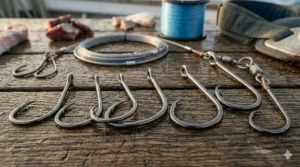
Shark fishing hooks must be razor-sharp, corrosion-resistant, and sized appropriately for your target species. Circle hooks are now required by federal regulations in many areas because they reduce gut-hooking and mortality rates in released sharks. Popular sizes range from 10/0 for smaller species up to 16/0-20/0 for trophy fish.
Wire leaders are absolutely essential—sharks’ sandpaper-like skin and razor-sharp teeth will shred monofilament or fluorocarbon instantly. Stainless steel cable (49 or 7-strand construction) in 300-600lb test is standard. Leader length varies based on regulations and fishing method, but 6-12 feet is typical.
Quality swivels rated for 400-600lb test prevent line twist, especially important when using whole fish baits that spin during the fight. Ball-bearing swivels perform better than standard barrel swivels under sustained pressure.
Choosing the Right Shark Fishing Rod
Selecting the optimal rod involves matching power, action, and length to your specific fishing scenarios. This isn’t one-size-fits-all territory—the perfect beach rod differs significantly from the ideal boat stick.
For surf fishing, you’ll want longer rods (10-12 feet) that generate casting distance and provide leverage for fighting fish in breaking waves. Medium-heavy to extra-heavy power ratings handle the robust tackle required. Two-piece construction improves portability without sacrificing performance—modern ferrule technology eliminates the weak points of older designs.
Boat anglers benefit from shorter, stouter rods (6-8 feet) with massive lifting power. These rods trade casting ability for pure fish-fighting leverage. When you’re straight-pulling a 300-pound shark from 100 feet down, you want every bit of mechanical advantage possible.
Kayak shark fishing demands compact, powerful rods that won’t throw off your balance. Seven to eight-foot medium-heavy spinning setups work beautifully, providing enough length for hook sets while remaining manageable in a small craft. The rod should balance well with your reel choice to prevent arm fatigue during the paddle back to shore with your catch.
Material matters significantly. E-glass (fiberglass) provides durability and forgiveness but weighs more. S-glass offers better strength-to-weight ratios. Graphite composites deliver sensitivity and reduced weight, though they’re more prone to catastrophic failure under extreme loads. For pure shark fishing applications, many experienced anglers prefer glass or composite construction.
Selecting Shark Fishing Reels and Line
Your reel choice fundamentally shapes your fishing experience. Spinning reels offer versatility and casting distance, making them ideal for surf and kayak applications. The PENN Battle IV and Daiwa BG exemplify modern spinning reel technology—sealed drags, corrosion-resistant materials, and smooth retrieval systems.
When sizing spinning reels for shark fishing gear, 4000-8000 series handles most inshore and nearshore species. The 6000-8000 range provides the line capacity and drag power for serious beachside battles. Gear ratios between 4.8:1 and 6.2:1 balance retrieval speed with cranking power.
Conventional reels shine in boat-based applications where casting distance matters less than raw power. Lever drag systems allow precise, on-the-fly adjustments during fights. Models like the PENN Fathom series deliver 40-60 pounds of drag with line capacities exceeding 600 yards of 80lb braid.
Braided line has revolutionized shark fishing. Its minimal stretch provides direct connection to the fish, improving hook sets and control. Zero memory means fewer wind knots and tangles. Choose quality brands in 50-80lb test for most applications. Darker colors like green or grey reduce visibility in clear water.
Always use a monofilament or fluorocarbon “shock leader” between your braid and wire leader—6-10 feet of 60-100lb mono absorbs the impact of waves crashing over your line during beach fishing and provides abrasion resistance when fish rub against structure.
Shark Fishing Hooks and Wire Leaders Explained
Circle hooks have become the standard in responsible shark fishing for good reason. Their unique design causes hooks to slide to the corner of the mouth as the shark swims away, dramatically reducing gut-hooking incidents. This increases survival rates for released fish while remaining highly effective at converting bites to hookups.
Hook sizing ranges from 8/0 for smaller sharks like sharpnose and Atlantic sharpnose to 16/0-20/0 for large hammerheads, bulls, and tigers. Stainless steel construction resists corrosion better than cheaper nickel-plated options. Brands like Mustad, Owner, and Eagle Claw manufacture reliable circle hooks specifically for shark fishing.
J-hooks still have applications in certain scenarios, particularly when using artificial lures or when regulations permit their use. They require more active hook-setting but can be effective in skilled hands. Always check local regulations—many jurisdictions now mandate circle hooks for natural bait applications.
Wire leaders prevent bite-offs from sharks’ teeth and abrasive skin. Single-strand wire works beautifully for smaller species and allows easy haywire twisting. Multi-strand cable (7×7 or 49-strand) provides superior flexibility and kink resistance for larger sharks. Nylon coating adds corrosion protection and reduces visibility.
Leader construction requires attention to detail. Haywire twists on single-strand wire should include at least 10 wraps with a proper barrel-wrap finish. Crimping multi-strand cable demands quality crimping tools and double-crimping for security. Many anglers now use heat-shrink tubing over crimps for additional abrasion protection.
✨ Don’t Miss These Exclusive Deals!
🔍 Take your shark fishing to the next level with these carefully selected products. Click on any highlighted item to check current pricing and availability. These tools will help you create authentic catches your fishing buddies will envy!
Kayak Shark Fishing: Gear and Techniques
Kayak shark fishing represents the pinnacle of angling adrenaline. You’re at water level, paddling around waters populated by apex predators while fighting fish that can pull your small craft around like a toy. It requires specialized equipment and heightened awareness, but the intimate connection to the fight makes it incredibly rewarding.
Your kayak should feature stable hull design—sit-on-top models with widths exceeding 30 inches provide the stability needed for fighting large fish. Anchor systems or stake-out poles keep you positioned over productive structure. Quality rod holders secure multiple rods for fishing multiple baits simultaneously.
Safety equipment becomes absolutely critical in kayak shark fishing scenarios. Beyond the standard PFD (personal flotation device), consider adding the Ocean Guardian FREEDOM7 shark deterrent, especially when fishing areas with large bull or tiger sharks. A reliable VHF radio, GPS device, and signal mirror could save your life if conditions deteriorate.
Technique differs significantly from shore or boat fishing. Deploy baits using a kayak tow float—paddle your baited rig 100-200 yards from shore, drop it, and return to your launch point. This extends your fishing range dramatically. When the bite occurs, allow the shark to run with minimal drag pressure, then paddle toward the fish while reeling to maintain connection.
Fighting sharks from a kayak demands finesse over power. The kayak’s mobility actually works in your favor—you move with the fish rather than fighting its weight statically. Many kayak anglers land sharks they could never handle from shore using this approach. Just remember: never bring a large, green shark alongside your kayak. Tire the fish thoroughly before attempting any handling.
Critical Shark Fishing Safety Gear
Safety considerations in shark fishing extend beyond standard fishing precautions. These are powerful, unpredictable predators with teeth that can inflict devastating injuries. Proper safety equipment and practices aren’t optional—they’re essential.
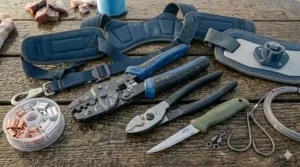
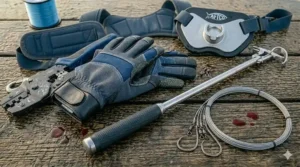
Heavy-duty pliers with at least 12-inch handles keep your hands away from sharks’ mouths during hook removal. Bolt cutters or heavy cable cutters allow you to quickly cut leaders when hooks can’t be safely removed. A quality fish grip or lip gaff provides control while keeping fingers away from teeth. Always work with sharks in the water when possible—never lift large sharks onto dry land unless you’re harvesting them.
Cut-resistant gloves protect hands when handling wire leaders and thrashing fish. Models with textured grips perform better in wet conditions. A good headlamp with red light mode preserves night vision while providing illumination for after-dark operations. Safety flag poles increase visibility to boat traffic, especially crucial for kayak anglers.
According to Florida Fish and Wildlife Conservation Commission guidelines, certain handling practices significantly increase shark survival rates. Keep large sharks in water with gills submerged. Minimize fight time by using appropriate tackle. Remove hooks quickly or cut the leader close to the mouth. These practices align with ethical angling while complying with conservation regulations.
First aid supplies specifically for marine injuries should be readily accessible. Sharks, stingrays, and catfish can inflict puncture wounds that quickly become infected in the marine environment. Carry irrigation solution, antibiotic ointment, and sterile bandages. Consider a tourniquet for worst-case scenarios involving severe lacerations.
Seasonal Patterns and Location Selection
Shark populations shift with seasons, following temperature gradients and prey abundance. Understanding these patterns dramatically improves your success rate with proper shark fishing equipment deployment.
Summer months (June-September) bring peak shark activity to temperate waters as warming temperatures draw sharks into the shallows. This period offers the best opportunities for blacktips, spinners, and bull sharks from beaches throughout the southeastern USA. Water temperatures between 75-85°F trigger maximum activity.
Fall migration patterns concentrate sharks as they follow baitfish movements. Mullet runs along the Atlantic coast create feeding frenzies that draw sharks within casting range of piers and beaches. October through November can produce phenomenal shark fishing along the Carolinas, Georgia, and northern Florida.
Winter pushes many shark species into deeper water or toward southern latitudes. Florida’s subtropical and tropical waters maintain viable shark fishing year-round, while northern regions slow considerably. However, this creates opportunities for targeting cold-tolerant species like sandbar and dusky sharks.
Spring signals the return migration as waters warm. Sharks follow food sources back into the shallows. This transition period often produces the largest specimens as fish fatten after winter. Late April through May excels for trophy hunting.
Location selection within your fishing area requires understanding structure, current, and bait presence. Sharks patrol areas with active current flow where baitfish concentrate—inlets, points, and deep holes all produce consistently. Artificial structure like piers, bridges, and offshore oil rigs attract baitfish and subsequently predators. Sandbars create feeding highways where sharks patrol during moving tides.
Bait Selection and Presentation Strategies
Successful shark fishing requires understanding what sharks eat and how to present it attractively. Natural baits far outperform artificials in most scenarios, though topwater plugs and large swimbaits can produce exciting strikes from aggressive species.
Oily fish make exceptional shark baits due to their strong scent dispersal. Bonito, mackerel, mullet, and bluefish all rank highly. Whole fish work well for medium to large sharks, while chunks and fillets excel for smaller species. Fresh bait outperforms frozen, though properly handled frozen baits remain effective.
Stingray and skate wings create large scent trails while providing substantial bulk that appeals to trophy-class sharks. Their tough skin resists bait stealers better than soft-bodied fish. Prepare wings by removing the barb and cutting strategic vents to release additional scent.
Presentation methods vary by location and target species. For beach fishing, fish-finder rigs allow baits to move naturally with current while keeping them near the bottom where many sharks feed. Balloon or kite fishing suspends baits at specific depths for pelagic species. Chunk fishing from boats uses a chum slick to draw sharks within range.
Bait size should match your target—6-inch mullet for small blacktips, while a 3-pound bonito better suits double-digit bulls or hammerheads. Sharks possess incredible olfactory systems, so maximizing scent dispersal through strategic cuts and punctures increases attraction. Some anglers inject fish oil or amino acid attractants for additional scent.
Regulations and Conservation Practices
Responsible shark angling requires understanding and following regulations while practicing conservation-minded techniques. Shark populations worldwide face pressure from overfishing, and recreational anglers play crucial roles in conservation efforts.
Federal regulations mandate permits for shark fishing in many regions. The HMS Angling Permit with Shark Endorsement is required for Atlantic shark fishing from shore or private boats. This free permit requires completing an online identification course ensuring anglers can distinguish prohibited species. Visit NOAA’s recreational compliance guide for current requirements.
Many shark species face harvest prohibitions to protect vulnerable populations. Prohibited species include all sawfish species, various hammerhead species in certain regions, dusky sharks, sand tiger sharks, and others. Anglers must be able to identify these species and release them immediately. Possession of prohibited species can result in significant fines and permit revocation.
Size and bag limits vary by species and region. Most recreational fisheries allow one shark per person per day with minimum size requirements. Florida requires a shore-based shark fishing permit for anglers 16+ years old, even those normally exempt from licensing requirements. This permit requires completing an educational course on shark handling and identification.
Circle hooks are now federally mandated when using natural baits in many shark fisheries. This regulation significantly improves survival rates of released sharks by reducing deep-hooking incidents. Non-offset, non-stainless steel circle hooks specifically enhance removal ease and corrosion if a shark breaks off with the hook.
Ethical catch-and-release practices extend beyond legal requirements. Fight sharks quickly using appropriate tackle to minimize exhaustion. Keep large sharks in water with gills submerged during hook removal. Use dehooking devices and bolt cutters to remove or cut hooks quickly. Minimize handling time and never lift large sharks by the tail or gills. Photograph fish in water when possible.
Maintenance and Care of Shark Fishing Equipment
Saltwater environments brutally punish fishing equipment. Proper maintenance extends gear life dramatically and ensures peak performance when you hook that trophy shark.
Post-trip rinsing represents the most critical maintenance task. Thoroughly rinse all equipment—rods, reels, pliers, scales—with fresh water immediately after fishing. Pay special attention to reel internals, drag systems, and line roller bearings where salt crystals accumulate. Warm water dissolves salt more effectively than cold.
Reel maintenance goes beyond surface cleaning. Every 3-4 saltwater trips, remove the spool and wipe down the drag washers. Apply light reel oil to bearings and pawl mechanisms. Heavy reel grease on gears provides protection against corrosion while maintaining smooth operation. Many manufacturers offer detailed maintenance videos specific to their models.
Rod care focuses on protecting guides and ferrules. Inspect guides regularly for cracks or grooves that can damage line. Ceramic inserts can pop out under extreme pressure—check security by running your finger around each guide. Clean ferrule connections carefully and apply light coating of reel oil before storage to prevent seizing.
Line maintenance prevents costly break-offs. Braid can last multiple seasons if properly cared for, but check regularly for fraying or weak spots, especially the first 50 yards that contact guides most frequently. Re-tie your wire leader connection before each trip—this connection point experiences maximum stress. Inspect wire leaders for kinks or deformation; discard any questionable leaders rather than risk losing a trophy fish.
Store equipment in climate-controlled environments when possible. Extreme heat degrades line and lubricants. Humidity promotes corrosion despite rinsing efforts. Rod tubes and reel covers provide physical protection during storage and transport. Loosen drag systems during storage to prevent washer compression that can reduce drag smoothness.
FAQ: Your Shark Fishing Questions Answered
❓ What pound test line should I use for shark fishing from the beach?
❓ Do I really need a shark fishing permit to fish from shore?
❓ What's the best time of day to catch sharks?
❓ How long should my shark fishing wire leader be?
❓ Can I use my regular surf fishing rod for sharks or do I need specialized equipment?
Conclusion: Ready to Land Your Trophy Shark
We’ve covered everything from essential shark fishing gear to advanced techniques that’ll have you battling apex predators like a seasoned pro. The journey from novice shark angler to experienced handler starts with proper equipment—the PENN Battle IV combo for all-around versatility, Daiwa BG for pure surf casting power, or specialized setups like the Burning Shark offshore rod for heavy applications.
Remember, success in shark fishing extends beyond having the best equipment. Understanding shark behavior, following conservation regulations, practicing safe handling techniques, and respecting these magnificent predators all contribute to sustainable fisheries and memorable experiences. The gear we’ve discussed represents proven tools that’ll serve you well for years when properly maintained.
Whether you’re targeting your first blacktip from the beach, deploying baits from your kayak for bulls, or chasing trophy hammerheads from a boat, having confidence in your shark fishing equipment lets you focus on the experience rather than worrying about gear failure. Start with quality essentials, learn proper techniques, and gradually expand your arsenal as your skills and ambitions grow.
The ocean’s calling, and somewhere out there, a trophy shark is waiting for your bait. With the right gear and knowledge, you’re ready to make that connection and create the fishing story you’ll tell for decades. Tight lines, stay safe, and remember to practice catch-and-release whenever possible to ensure future generations can experience the thrill of battling these incredible predators.
Recommended for You
- Best Steelhead Fishing Gear and Lures: 7 Top Picks (2026)
- 7 Best Halibut Fishing Gear for Trophy Catches in 2026
- 7 Best Catfish Fishing Lures and Baits That Actually Work (2026)
Disclaimer: This article contains affiliate links. If you purchase products through these links, we may earn a small commission at no additional cost to you.
✨ Found this helpful? Share it with your friends! 💬🤗
