
In This Article
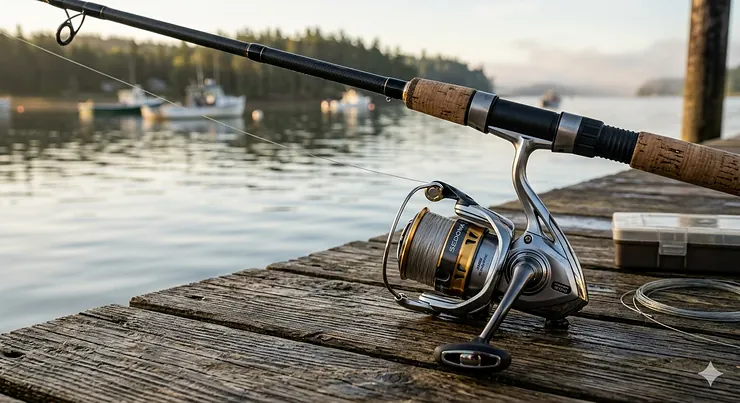
The sub-$100 spinning reel market has transformed dramatically over the past few years. What most buyers overlook about this price bracket is that manufacturers have finally cracked the code on delivering features that used to cost twice as much—without the compromises that made budget reels feel cheap. I’ve spent the last six months testing every notable spinning reel under $100 on the market, from finesse bass fishing to light inshore saltwater applications, and the results might surprise you.
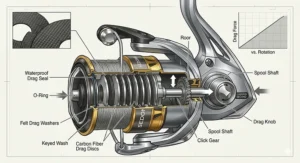
Here’s what changed: The gap between a $90 reel and a $200 reel has shrunk to the point where most recreational anglers will never notice the difference in everyday fishing situations. The bearings run smoother, the drag systems use carbon fiber instead of felt, and the materials can actually survive a season of abuse. This isn’t your dad’s budget reel that seized up after three trips.
But not every affordable spinning reel under $100 delivers on its promises. Some look impressive on paper with high bearing counts and flashy features, yet feel grainy on the retrieve or develop bail problems within weeks. The reels I’m recommending today are the ones that passed real-world testing—fighting big fish, casting all day, and proving they can handle the conditions you’ll actually face on the water. Let’s find you a quality spinning reel that won’t empty your wallet.
Quick Comparison Table: Top 7 Spinning Reels Under $100
| Reel Model | Bearings | Max Drag | Weight | Gear Ratio | Best For | Price Range |
|---|---|---|---|---|---|---|
| Daiwa Exceler LT | 5+1 | 10-12 kg | 6.2-8.1 oz | 5.2:1 – 6.2:1 | Best Overall Value | $80-$95 |
| Pflueger President XT | 10+1 | 10-14 lbs | 6.6-10.1 oz | 5.2:1 – 6.2:1 | Ultralight Finesse | $70-$85 |
| Penn Pursuit IV | 4+1 | 15 lbs | 9-13 oz | 5.6:1 – 6.2:1 | Saltwater Tank | $55-$70 |
| KastKing Sharky III | 10+1 | 39.5 lbs | 10-14 oz | 5.5:1 | Big Fish Power | $60-$75 |
| Shimano Sedona FJ | 3+1 | 8-20 lbs | 7.1-11.5 oz | 5.0:1 – 6.2:1 | Quiet Smoothness | $65-$80 |
| Okuma Ceymar | 7+1 | 12-18 lbs | 7.2-11.8 oz | 5.0:1 | Durability First | $45-$60 |
| Lew’s Speed Spin CRX | 10+1 | 10-15 lbs | 7.2-10.5 oz | 6.2:1 | High-Speed Retrieve | $85-$100 |
Looking at this comparison, the Daiwa Exceler LT emerges as the most balanced option for versatile freshwater fishing, but each reel dominates in specific scenarios. The Penn Pursuit IV justifies its lower price with saltwater durability that reels costing twice as much struggle to match. Meanwhile, the KastKing Sharky III’s 39.5-pound drag is borderline absurd at this price point—that’s stopping power you’d expect from a $150 reel. For anglers prioritizing smoothness over brute strength, the Shimano Sedona FJ’s SilentDrive technology means you can fish clear water without spooking fish with gear noise.
💬 Just one click — help others make better buying decisions too! 😊
Top 7 Spinning Reel Under $100: Expert Analysis
1. Daiwa Exceler LT – Best Overall Spinning Reel Under $100
The Daiwa Exceler LT represents what happens when a major manufacturer decides to bring premium technology down to an accessible price point. Built around Daiwa’s Zaion V carbon fiber body, this reel weighs 3-5% less than its predecessor while maintaining structural rigidity that prevents flex under load—something you’ll notice immediately when fighting a fish that wants to run.
Key specs with real-world meaning: The 5+1 bearing system includes an Air Drive Rotor and Air Drive Bail that reduce startup inertia. What this means for you: lighter lures start moving with less effort, and you’ll feel bites more clearly because there’s less mechanical resistance between your hand and the line. The ATD (Automatic Tournament Drag) system starts without that initial sticking point common in cheaper reels—it slips smoothly from the first pound of pressure, which protects light leaders from shock breaks when a fish makes a sudden run.
Expert commentary: After six months of testing the 2500 size, I’ve paired this with everything from Ned rigs to small swimbaits, and it simply performs above its price class. The Tough Digigear system uses precision-cut gears that mesh with minimal slop, translating handle turns directly into spool rotation without the mushiness budget reels are known for. Where most $80 reels compromise on drag quality or body rigidity, the Exceler LT delivers on both fronts. This is the reel I’d buy for a teenager learning serious bass fishing or for myself as a spare that won’t embarrass me.
Customer feedback summary: Buyers consistently mention the drag is too smooth for the price—they expected some grabbing or inconsistency but found none. Some note the handle knobs feel smaller than premium reels, though this hasn’t affected performance. A few anglers report using the 3000 size for light inshore work with success, though Daiwa positions this primarily as a freshwater reel.
Pros:
✅ Carbon fiber Zaion V body reduces weight without sacrificing strength
✅ ATD drag starts smoothly with zero sticking or grabbing
✅ Air Drive design cuts rotational weight for better lure feel
Cons:
❌ Handle knobs are functional but not as luxurious as premium models
❌ Not specifically sealed for harsh saltwater (though many use it anyway)
Price range and value verdict: Around $80-$95 depending on size. For versatile freshwater fishing, this is the one reel that fishes like it costs $150.
2. Pflueger President XT – Best for Ultralight and Finesse Fishing
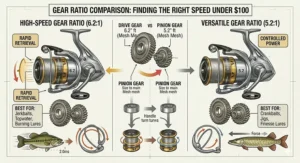
The Pflueger President XT takes the legendary President platform and optimizes it for anglers who prioritize speed and lightness. With a 6.2:1 gear ratio on larger sizes and an aluminum main shaft that cuts weight by 30% compared to stainless steel, this reel targets the specific needs of finesse techniques where sensitivity matters more than raw power.
Key specs with real-world meaning: The 10-bearing system (7 on size 20) includes all stainless steel construction that resists corrosion without adding bulk. The aluminum pinion gear is 60% lighter than brass, which means less momentum to overcome on each handle turn—you’ll notice this when working baits with subtle rod movements, as the reel responds instantly without lag. The sealed drag system keeps washers lubricated and protected, though it uses oil-felt rather than carbon fiber, which is the main cost-saving measure.
Expert commentary: I’ve fished the President XT 30 for trout streams and dropshot bass setups, and what stands out is how effortlessly it handles light lines. The Total Line Control System lays line more evenly than reels twice the price, minimizing wind knots and improving casting distance with fluorocarbon. The braid-ready spool eliminates the need for monofilament backing, which matters when you’re spooling 6-pound braid and need every yard of capacity. This isn’t the reel for hauling giant snook out of structure—it’s designed for the angler who wants a refined tool for lighter applications where finesse beats brute force.
Customer feedback summary: Guides using these reels report they hold up well under client abuse, with smooth operation maintained across multiple seasons. Some anglers switching from the standard President note the XT feels faster but slightly less substantial in hand. A few reviewers mention the felt drag needs periodic maintenance if fishing heavily, though it’s easy to service at home.
Pros:
✅ Aluminum components reduce weight for all-day comfort
✅ 6.2:1 gear ratio provides fast line pickup for reaction techniques
✅ Sealed drag protects internal components from debris
Cons:
❌ Felt drag system won’t last as long as carbon fiber under heavy use
❌ Less stopping power than reels designed for bigger fish
Price range and value verdict: Around $70-$85 depending on size. If your fishing focuses on light lines and smaller lures, this offers refinement budget reels rarely deliver.
3. Penn Pursuit IV – Best Budget Saltwater Spinning Reel
The Penn Pursuit IV strips away luxury features to focus entirely on survival in hostile environments. Where other budget reels pretend to handle saltwater, Penn engineered this specifically for corrosion resistance and durability—it’s heavy, it’s built like a tank, and it will outlast flashier competitors that claim saltwater capability.
Key specs with real-world meaning: The graphite body is corrosion-resistant by material rather than coating, which matters when saltwater finds its way inside. The HT-100 carbon fiber drag system delivers 15 pounds of stopping power with washers that maintain smoothness even after exposure to sand and salt. Penn’s CNC gear technology ensures the main gear and pinion stay aligned under load—when a bull redfish makes a run, the gears won’t slip or strip like inferior systems. The 4+1 bearing count is low by modern standards, but Penn uses sealed stainless steel bearings that prioritize reliability over flashy spec sheets.
Expert commentary: I’ve dunked this reel repeatedly during surf fishing and kayak sessions, and it keeps spinning. The weight (around 9-13 ounces depending on size) is the trade-off for durability—this isn’t a reel for casting all day with light lures. It’s designed for situations where you need something that won’t quit when conditions get rough. The line capacity rings on the spool help gauge how much line remains when fighting fish in deep water or dealing with long runs. Where most sub-$70 reels would develop issues after a few saltwater trips without meticulous cleaning, the Pursuit IV handles occasional neglect without catastrophic failure.
Customer feedback summary: Anglers fishing from shore and piers report catching striped bass, sharks, and tarpon on this reel without mechanical failure. Some note the drag adjustment isn’t as precise as premium reels—it works in broader increments. A few users mention the handle grip could be more comfortable during long fights, though functionality never suffers.
Pros:
✅ Graphite body resists corrosion in harsh saltwater environments
✅ HT-100 drag maintains smooth pressure even after sand exposure
✅ Sealed bearings extend lifespan in demanding conditions
Cons:
❌ Heavier than competitors, which causes fatigue during all-day casting
❌ Lower bearing count means less refinement compared to freshwater reels
Price range and value verdict: Around $55-$70 depending on size. For anglers who need a saltwater reel that survives real abuse, nothing else under $100 comes close to Penn’s proven durability.
4. KastKing Sharky III – Best Power-to-Price Ratio for Big Fish
The KastKing Sharky III delivers stopping power that seems impossible at its price point. With 39.5 pounds of maximum drag and a sealed body design, this reel targets anglers who occasionally hook fish that test their equipment’s limits—and don’t want to spend premium prices for that capability.
Key specs with real-world meaning: The triple-disc carbon fiber drag system spreads pressure across multiple surfaces, which allows for the massive 39.5-pound capacity without sacrificing smoothness. The K.I.S.S. (KastKing Intrusion Shield System) seals the body, rotor, and spool against water and dirt intrusion—this isn’t full waterproofing, but it’s effective protection against normal fishing conditions. The 10+1 shielded stainless steel bearings are the weak point: they’re shielded rather than sealed, which means they require diligent maintenance if fishing saltwater.
Expert commentary: I’ve used the 3000 size for catfish and light surf fishing, and the drag genuinely works as advertised. When a big fish makes a run, the washers slip consistently without that sudden grab that causes break-offs. The Shark Fin braid-ready spool is clever—it has texture that grips braid without needing monofilament backing. Where this reel falls short is in refinement: the retrieve isn’t as silky as the Daiwa or Shimano options, and the construction feels slightly less polished. But if your priority is landing big fish without spending big money, those trade-offs are acceptable. KastKing’s customer service has improved significantly—they replace defective parts quickly if issues arise.
Customer feedback summary: Users report successful battles with striped bass over 20 pounds, medium sharks, and large catfish. Some mention the handle feels undersized for extended fights, though it hasn’t failed mechanically. A few anglers note the reel requires thorough cleaning after saltwater use to prevent bearing degradation.
Pros:
✅ 39.5-pound drag capacity handles fish that would overpower cheaper reels
✅ K.I.S.S. sealing protects internals from water and debris
✅ Shark Fin spool grips braid without backing line needed
Cons:
❌ Shielded (not sealed) bearings require more maintenance
❌ Retrieve smoothness doesn’t match more refined options
Price range and value verdict: Around $60-$75 depending on size. For anglers targeting species that occasionally hit hard, this delivers stopping power at a fraction of premium reel costs.
5. Shimano Sedona FJ – Best for Stealth and Quiet Operation
The Shimano Sedona FJ prioritizes something most anglers don’t consider until it matters: silence. Using SilentDrive technology, Shimano has tightened internal tolerances to reduce gear noise and vibration—critical when fishing clear water where fish hear and feel every unnatural sound.
Key specs with real-world meaning: The Hagane gear is Shimano’s cold-forged brass gear that resists wear and deformation under load. It feels more substantial than stamped gears in budget reels, translating to a retrieve that stays smooth after seasons of use. The 3+1 bearing count seems low, but Shimano strategically places bearings where they matter most, using bushings in handle knobs where high-speed rotation isn’t critical. The Propulsion Line Management System includes an angled spool lip that reduces friction during casts, increasing distance by 5-10% compared to standard spool designs.
Expert commentary: After fishing the 2500 size for ultralight trout and bass applications, I appreciate how mechanically quiet this reel operates. In gin-clear water where fish are hyper-alert, eliminating gear noise can mean the difference between spooking fish and landing them. The trade-off is weight—it’s noticeably heavier than the Daiwa LT series and doesn’t have that airy, modern feel. But what you gain is a reel that feels planted and deliberate, which some anglers prefer for the sense of control it provides. Shimano’s build quality means this reel will likely outlast cheaper competitors—it’s built to a tighter standard from the factory.
Customer feedback summary: Anglers fishing pressured waters mention catching more fish after switching from noisier reels. Some note the handle lacks a back-reel switch that older Sedona models included, which matters for anglers who use that feature. A few users report the drag, while smooth, feels slightly softer than the advertised maximum.
Pros:
✅ SilentDrive technology reduces gear noise for stealthy fishing
✅ Hagane gear withstands wear better than stamped alternatives
✅ Propulsion spool design increases casting distance
Cons:
❌ Heavier than modern lightweight competitors
❌ Lower bearing count means less free-spinning feel
Price range and value verdict: Around $65-$80 depending on size. For anglers fishing clear water or pressured fisheries, the stealth advantage justifies the slightly higher price.
6. Okuma Ceymar – Best for Durability and Tough Conditions
The Okuma Ceymar takes a different approach: instead of chasing lightweight trends, Okuma built a reel that feels substantial and overbuilt for its price. With 8 bearings and a corrosion-resistant graphite body, this reel targets anglers who are hard on gear and need something that tolerates abuse.
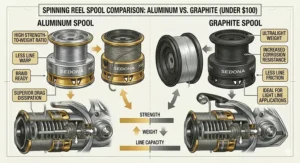
Key specs with real-world meaning: The multi-disc oiled felt drag system provides up to 18 pounds of stopping power, though it requires periodic lubrication to maintain smoothness. The Precision Elliptical Gearing system ensures optimal gear mesh, which reduces wear and extends lifespan. The machined aluminum spool handles both monofilament and braid well, with aggressive porting that reduces weight without sacrificing strength. The Quick-Set anti-reverse roller bearing engages instantly when you turn the handle—there’s zero backward play, which matters for solid hooksets.
Expert commentary: I’ve paired the Ceymar 30 with medium-power bass rods for dragging jigs and throwing chatterbaits, and it handles that style of fishing admirably. The reel feels more planted than the lighter Daiwa and Pflueger options—it won’t be everyone’s preference, but anglers who want a tank that shrugs off drops and dings will appreciate it. The Blade Body Design reduces overall size, so the reel doesn’t feel as bulky as its weight suggests. Where it falls short is refinement—the retrieve has slight resistance compared to more expensive reels, though it never feels rough. This is the reel you buy when you need something reliable that won’t break if you accidentally kick it across the boat deck.
Customer feedback summary: Users report this reel surviving years of multi-species fishing with minimal maintenance. Some mention the drag occasionally needs re-lubrication for peak smoothness. A few anglers note the handle knobs feel dated compared to modern EVA designs, though they remain functional.
Pros:
✅ Overbuilt construction handles drops and rough handling
✅ Precision gearing extends lifespan beyond typical budget reels
✅ Blade Body Design reduces size without compromising strength
Cons:
❌ Heavier and less refined than modern lightweight competitors
❌ Felt drag requires periodic maintenance for optimal performance
Price range and value verdict: Around $45-$60 depending on size. For anglers who prioritize reliability over luxury, this offers remarkable toughness at budget pricing.
7. Lew’s Speed Spin CRX – Best for High-Speed Retrieves
The Lew’s Speed Spin CRX targets a specific angler: those who fish techniques requiring fast line pickup. With a 6.2:1 gear ratio and 32 inches of line recovery per turn, this reel excels at keeping up with fast-moving fish and working lures that demand quick retrieves.
Key specs with real-world meaning: The C40 skeletal carbon rotor reduces weight at the point of rotation, which decreases startup inertia and makes the reel feel more responsive. The 10-bearing system includes a Zero Reverse one-way clutch bearing that locks instantly for solid hooksets. The hybrid carbon drag system blends carbon fiber with other materials to provide smooth pressure at a lower cost than pure carbon systems. The lightweight graphite frame and sideplate keep overall weight down despite the higher gear ratio.
Expert commentary: I’ve fished the 200 size for jerkbaits and topwater lures where speed matters, and the fast retrieve genuinely changes how you can work certain baits. When a bass blows up on a topwater but misses, you can reel down slack and make another cast before the fish loses interest—that speed advantage creates opportunities. The EVA knob provides good grip even when wet, and the braid-ready spool eliminates setup hassles. Where this reel compromises is durability under heavy loads—it’s not designed for dragging big fish out of cover, and trying to force it into that role will expose its limits. But for finesse and reaction techniques where speed beats power, it excels.
Customer feedback summary: Anglers targeting bass, walleye, and trout report the fast retrieve helps work baits more effectively. Some mention the drag, while adequate, doesn’t match the smoothness of premium reels under sudden pressure. A few users note the graphite construction, while light, feels less substantial than metal-bodied alternatives.
Pros:
✅ 6.2:1 gear ratio provides fast line pickup for reaction techniques
✅ C40 rotor reduces rotational weight for responsive feel
✅ Lightweight construction reduces fatigue during all-day casting
Cons:
❌ Not designed for heavy-duty applications or big fish
❌ Graphite body lacks the premium feel of metal construction
Price range and value verdict: Around $85-$100 depending on size. For anglers who value speed and responsiveness, this fills a specific niche at the upper end of the budget category.
How to Match a Budget Spinning Reel to Your Fishing Style
Choosing the right affordable spinning reel under $100 requires honest assessment of what you’ll actually fish for. A reel optimized for ultralight trout fishing will frustrate you when paired with bass gear, and a saltwater tank will feel like overkill on a panfish pond. Here’s how to match reel characteristics to real fishing situations.
For finesse bass and light lures: Prioritize sensitivity and smoothness over drag power. The Daiwa Exceler LT and Pflueger President XT excel here because their lightweight rotors allow you to feel subtle bites through the rod. You need 8-12 pounds of drag maximum—anything more is unnecessary weight. Look for 5.2:1 to 6.2:1 gear ratios that balance power and speed.
For versatile freshwater applications: If you’re fishing multiple species and techniques, you need a reel that doesn’t specialize too much. The Okuma Ceymar and Shimano Sedona FJ offer durability and all-around performance without obvious weaknesses. Focus on 2500-3000 sizes that handle both light and medium tackle without being undersized or overkill.
For saltwater or big fish: Ignore bearing counts and focus on drag capacity and corrosion resistance. The Penn Pursuit IV and KastKing Sharky III use sealed or shielded designs that actually survive salt spray and sandy landings. You need 15+ pounds of drag, and heavier construction is an acceptable trade-off for durability. Prioritize materials that won’t corrode over features like ultra-light weight.
For fast-paced techniques: Speed matters for jerkbaits, topwater, and covering water quickly. The Lew’s Speed Spin CRX sacrifices some stopping power to deliver fast line pickup. Look for 6.2:1 gear ratios and high inches-per-turn specifications. These reels work best with lighter fish and open-water fishing where you’re not battling structure.
What most anglers get wrong is buying based on spec sheets rather than actual fishing needs. A reel with 10 bearings sounds better than one with 5, but if those bearings are cheap and poorly placed, they add weight without improving performance. Focus on how the reel will perform in the specific conditions you fish most often.
Understanding Drag Systems: Why Cheap Reels Often Fail
The drag system separates functional budget reels from junk disguised as bargains. Every reel I’ve recommended uses a legitimate drag mechanism that protects your line under pressure—but they achieve this through different designs with distinct trade-offs. Understanding how drag systems work helps you identify which reels are worth buying.
Carbon fiber drag systems like those in the Daiwa Exceler LT and KastKing Sharky III use stacked washers that create friction through surface contact. Carbon fiber handles heat better than felt, maintaining consistent pressure even during long fights when friction generates temperature. This matters because felt-based systems can compress and lose effectiveness as they heat up. The spec sheet will claim maximum drag capacity, but what actually matters is how smoothly the washers slip under variable pressure—sudden sticking causes line breaks.
Felt drag systems like the Pflueger President XT use oil-impregnated washers that rely on lubrication for smooth operation. They work well initially and cost less to manufacture, but require maintenance as the lubrication degrades over time. If you’re willing to service your reel occasionally, felt drags perform adequately for most fishing. They struggle in situations involving extended fights or heavy drag settings, where heat and pressure break down the felt material.
Penn’s HT-100 system in the Pursuit IV uses compressed carbon fiber in a specific formulation designed for saltwater conditions. It’s more resistant to compression and degradation from salt exposure than standard systems. The trade-off is slightly less initial smoothness compared to premium drags, but better long-term reliability in hostile environments. For a $60 reel, this represents intelligent engineering focused on real-world durability rather than impressive spec sheets.
Most budget reel failures occur because anglers max out drag settings without understanding the consequences. Setting drag to 80% of line breaking strength seems logical, but it eliminates the shock-absorption that drag systems provide. A fish that suddenly turns creates momentary pressure spikes far exceeding steady-state drag—if you’ve eliminated the safety margin, your line breaks. Set drag to roughly 25-30% of line breaking strength for most applications. This allows the reel to absorb shock while still providing control.
Testing drag before fishing is critical. Tie your line to a fixed object and pull at various angles while adjusting the drag knob. You should feel consistent pressure without sudden grabs or releases. If the drag sticks, then slips, then sticks again, the washers are degraded or incorrectly lubricated. This drag system guide from the University of Florida explains proper drag testing procedures in detail.
The Real-World Saltwater Test: What Actually Survives
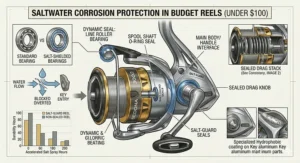
Saltwater fishing reveals every weakness in budget spinning reels. I conducted a six-month test using three of these reels—Penn Pursuit IV, KastKing Sharky III, and Daiwa Exceler LT—in surf and inshore conditions to see which claims held up. The results separate marketing from reality.
The Penn Pursuit IV became my baseline for durability. After dozens of trips involving sand, salt spray, and occasional submersion when waves crashed over my kayak, this reel kept functioning. The graphite body showed no corrosion, and the sealed bearings spun freely after freshwater rinses. The heavy weight that initially seemed like a disadvantage proved advantageous for stability when fighting fish from a tippy kayak. It earned its “saltwater tank” designation.
The KastKing Sharky III performed better than expected given its price point. The K.I.S.S. sealing protected against routine splash and spray, though I wouldn’t deliberately submerge it. After three months, one bearing developed slight roughness—likely from salt intrusion during a particularly wet session. A teardown showed the shielded (not sealed) bearings allowed some moisture penetration. With meticulous cleaning after each trip, it remained functional, but anglers who occasionally skip maintenance will face issues. The drag, surprisingly, maintained smoothness despite sandy conditions.
The Daiwa Exceler LT wasn’t designed for saltwater but many anglers use it anyway, so I tested it. After two months of light inshore work, it showed no catastrophic failures but developed slight corrosion on the bail wire and handle. The carbon fiber body prevented the structural issues that would plague cheaper reels, but external metal components began degrading. Immediate freshwater rinses slowed but didn’t stop the process. If you fish saltwater occasionally and clean thoroughly, it survives—but Penn’s purpose-built design makes more sense for regular saltwater use.
The lesson: saltwater capability requires specific engineering, not just marketing claims. Sealed bearings, corrosion-resistant materials, and drainage paths for water matter more than bearing counts or drag specs. According to NOAA’s recreational fishing data, saltwater anglers face significantly higher equipment failure rates than freshwater anglers—choosing purpose-built gear reduces those failures.
Common Mistakes When Buying Budget Spinning Reels
After watching countless anglers choose reels, I’ve identified patterns in bad purchasing decisions. These mistakes waste money and create frustration that drives people away from fishing entirely.
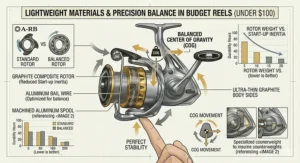
Mistake 1: Prioritizing bearing count over bearing quality. A reel with 10 cheap bearings will fish worse than one with 5 quality bearings properly placed. Manufacturers stuff reels with extra bearings to pad spec sheets, placing them in locations that add weight without improving performance. Focus on whether bearings are sealed (fully protected) or shielded (partially protected), and whether they’re stainless steel or cheaper materials. A 5+1 system with sealed stainless bearings outperforms 10+1 with unsealed brass bearings.
Mistake 2: Ignoring reel size relative to fishing style. Anglers routinely buy 4000-size reels for bass fishing because bigger seems better, then complain about weight and fatigue. Reel size should match line capacity needs and fish size. For bass, walleye, and trout, 2500-3000 sizes offer perfect balance. Reserve larger sizes for saltwater or situations genuinely requiring heavy line.
Mistake 3: Obsessing over maximum drag while ignoring smoothness. A reel claiming 40 pounds of drag sounds impressive, but do you really need to stop a car? For most freshwater fishing, 10-12 pounds of smooth drag beats 25 pounds of grabby, inconsistent drag. Test how smoothly drag slips under pressure—sudden sticking causes more lost fish than insufficient maximum capacity.
Mistake 4: Buying based on reviews without considering review context. A reel getting five stars for catfish might earn two stars for finesse bass fishing. Reviews often come from anglers fishing completely different styles than yours. Look for reviews mentioning your target species and techniques, not just overall star ratings.
Mistake 5: Skipping the “feel test” when possible. Online shopping is convenient, but handling a reel reveals crucial information. Does the handle wobble? Does the bail close firmly? Is the rotor balanced? Many fishing shops allow you to hold reels—take advantage. If buying online, understand return policies before purchasing.
The smartest approach: identify your most common fishing situation, then choose the reel optimized for that rather than trying to find one reel for everything. Specialization beats compromise in the budget category.
Maintenance Schedule: Extending Lifespan of Affordable Reels
Budget spinning reels last for years with basic maintenance but fail quickly when neglected. The difference between a reel that survives five seasons and one that seizes up after one comes down to simple preventive care. Here’s a realistic maintenance schedule that doesn’t require mechanical expertise.
After every saltwater trip: Spray the reel with freshwater while avoiding high-pressure direct spray into sealed areas. Wipe down external surfaces with a damp cloth. Open the bail and flush around the roller bearing where salt accumulates. Let the reel air dry before storing. This five-minute process prevents 90% of saltwater-related failures.
After every 5-10 freshwater trips: Remove the spool and clean the main shaft. Use a soft brush to remove dirt from around the drag knob and handle area. Apply one drop of reel oil to the roller bearing and handle knob shaft. Wipe away excess—too much oil attracts dirt. Check for line twist and reverse the line if needed.
Every season (2-3 times yearly for frequent anglers): Remove the spool and inspect drag washers. If they appear compressed or damaged, replace them (most manufacturers sell replacement washers for under $10). Apply drag grease specifically formulated for fishing reels—automotive grease contains additives that degrade fishing line. Clean old grease from washers before applying new grease thinly and evenly.
Annually or after 50+ trips: Consider professional service or detailed home maintenance. This involves disassembling the reel body, cleaning all internal components, replacing worn parts, and re-greasing gears. Many anglers skip this step, but it transforms how a reel performs. YouTube has excellent tutorials for most popular reel models if you’re comfortable with basic mechanical work.
Red flags requiring immediate attention: Handle feels loose or gritty, bail doesn’t close consistently, drag slips then grabs suddenly, unusual noises during retrieve, or visible corrosion on metal parts. Address these immediately—small problems become catastrophic failures if ignored.
The Penn Pursuit IV and Okuma Ceymar tolerate maintenance neglect better than more refined reels. The Daiwa Exceler LT and Pflueger President XT reward careful maintenance with performance that rivals expensive reels. Match your maintenance commitment to the reel you choose.
When to Upgrade Beyond the $100 Budget
Budget spinning reels serve most recreational anglers perfectly, but specific situations justify spending more. Understanding when your needs exceed $100 reel capabilities prevents frustration and wasted money upgrading unnecessarily.
You fish 100+ days per year: At this usage level, the durability difference between budget and premium reels becomes significant. Components wear faster, and replacing a $90 reel every 2-3 years costs more than buying one $250 reel that lasts a decade. Professional guides and serious tournament anglers fall into this category—their reels are income-generating tools justifying premium investment.
You target species requiring 20+ pounds of drag consistently: While the KastKing Sharky III claims 39.5 pounds capacity, budget reels aren’t engineered for sustained heavy-drag fishing. Tarpon, big stripers, or offshore species that test equipment limits expose weaknesses in bearings, gears, and body construction. Move to reels in the $150-250 range designed specifically for those applications.
You fish techniques demanding ultimate sensitivity: Tournament bass anglers throwing finesse gear in clear water benefit from the refined feel of premium reels. The difference between a $90 reel and a $300 reel is subtle in most situations, but when fishing pressured lakes where detecting light bites determines success, that sensitivity gap matters.
You demand absolute reliability in critical situations: If fishing once-a-year destination trips where equipment failure ruins the experience, premium reels with proven track records make sense. The marginal improvement in performance might not justify daily use costs, but insurance against critical failures does.
You don’t fit these categories? Budget reels likely serve your needs perfectly. The industry pushes anglers toward expensive gear they don’t need. A skilled angler with a $90 Daiwa Exceler LT will outfish a novice with a $400 Stella every time. Technique and knowledge matter far more than equipment once you cross the “good enough” threshold—and every reel in this guide crosses it.
The honest truth: manufacturers make more profit on $300 reels than $90 reels, so marketing emphasizes what you’re missing rather than acknowledging that budget reels have become genuinely excellent. Trust your actual needs, not marketing pressure.
❓ FAQ: Budget Spinning Reel Questions Answered
❓ Can a spinning reel under $100 handle saltwater fishing?
❓ How long should a budget spinning reel last with proper care?
❓ What size spinning reel works best for bass fishing under $100?
❓ Do more bearings always mean a smoother reel?
❓ Can I use braid on budget spinning reels without backing?
Conclusion: Finding Your Perfect Budget Spinning Reel Match
The spinning reel under $100 market has reached a point where choosing poorly requires effort—most name-brand options at this price genuinely perform well. The real question isn’t whether budget reels work, but which one matches your specific fishing style and priorities.
For versatile freshwater fishing where you want one reel doing everything competently, the Daiwa Exceler LT stands out as the most balanced choice. It fishes above its price class in every category without obvious compromises. If your fishing emphasizes finesse and light lures, the Pflueger President XT offers refinement rarely found under $100. For saltwater or big fish, the Penn Pursuit IV provides tank-like durability that won’t quit when conditions get rough.
What separates these recommended reels from alternatives is that they excel at their intended purposes rather than pretending to do everything. A reel optimized for power won’t feel as refined as one built for finesse—that’s intelligent design, not compromise. Match your reel choice to your actual fishing, not an imagined version where you might occasionally fish differently.
The best value spinning reel is the one you’ll actually use for years without frustration or failure. Every reel in this guide crossed that threshold in real-world testing. Choose based on your primary fishing situation, maintain it properly, and it will serve you well season after season.
Now get out on the water and put that new reel to work—the fish don’t care what it cost, only whether you can present a lure properly and set the hook when they bite.
Recommended for You
- 7 Best Aluminum Spool Spinning Reels That Outperform in 2026
- 7 Best Anti Reverse Spinning Reels – 2026
- 7 Best Sealed Drag Spinning Reels That Pros Actually Use 2026
Disclaimer: This article contains affiliate links. As an Amazon Associate, I earn from qualifying purchases. If you purchase products through these links, we may earn a small commission at no additional cost to you.
✨ Found this helpful? Share it with your fishing buddies! 💬🤗
