
In This Article
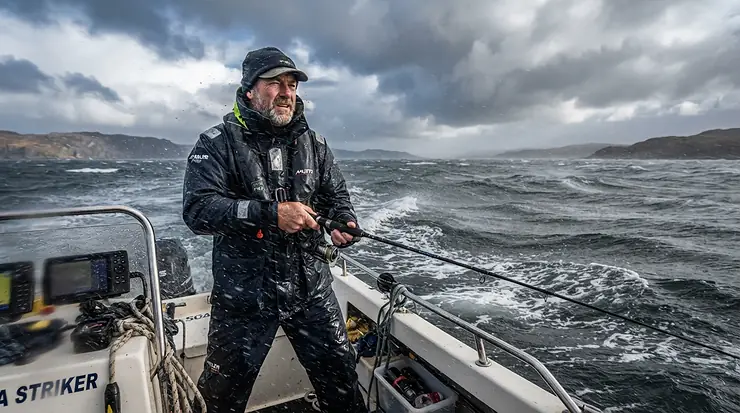
What is rain gear for kayak fishing? It is waterproof outerwear built for anglers who sit inches above the waterline and paddle, cast and reel with the same shoulders. A good set seals out rain and spray, vents the heat you generate paddling, moves freely through every stroke, and packs small enough for a cramped hatch.
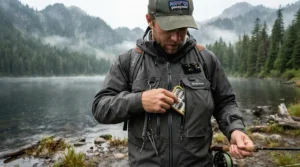
That definition sounds simple. The reality is messier. Kayak fishing is a human-powered pursuit, so you create your own heat and your own sweat. A jacket that works for a bass-boat angler idling between spots can turn into a personal sauna by your third paddle stroke.
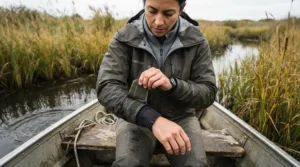
Then there’s the seat problem. Rain doesn’t just fall on you in a kayak. It pools in your lap, runs down your sleeves every time you lift a rod, and drips off the paddle shaft onto your cuffs.
So the best rain gear for kayak fishing is a balancing act between three things: waterproofing, breathability and what I’ll call paddling mobility. Get the balance wrong and you’re either wet from outside, wet from inside, or too stiff to cast.
This guide sorts through seven real options, from a budget suit to premium bib-and-jacket systems. It explains what the specs mean on the water, then covers layering, storm safety and who should buy what. Everything here comes from published specs, tester reports and aggregated retailer reviews. Prices appear as ranges because they change constantly, so check current pricing before you buy.
Rain Gear for Kayak Fishing at a Glance: Quick Comparison Table
| Product | Type | Best For | Price Range |
|---|---|---|---|
| Frogg Toggs Ultra-Lite2 Rain Suit | Jacket + pants, non-woven | Emergency and budget use | Roughly $25–$40 |
| Columbia PFG Storm II Jacket | Packable 2-layer shell | Light rain, hatch storage | Roughly $80–$130 |
| Huk Storm Jacket 2.0 | 2L, 10K shell | Everyday lightweight protection | Roughly $110–$160 |
| Grundéns Neptune Jacket | PU-coated polyester | Rough use, cool wet days | Roughly $90–$130 |
| Grundéns Transmit X Jacket and Bib | 15K/10K nylon system | Full-coverage three-season use | Roughly $230–$260 jacket; $200–$230 bib |
| Gill OS3 Coastal Jacket | XPLORE 2-layer shell | Spray-heavy coastal paddling | Roughly $250–$360 |
| Columbia PFG Force XII ODX Jacket | OutDry Extreme membrane | Heavy, sustained rain | Roughly $250–$300 |
Read the table as three tiers. Frogg Toggs Ultra-Lite2 Rain Suit is the cheap insurance policy. The Columbia PFG Storm II Jacket, Huk Storm Jacket 2.0 and Grundéns Neptune Jacket are the practical middle. The Grundéns Transmit X Jacket and Bib, Gill OS3 Coastal Jacket and Columbia PFG Force XII ODX Jacket are the “I fish in real weather” tier. Bibs matter more for sit-on-top paddlers than the price column suggests, and the Transmit X is the only pick here that sells a matching bib.
💬 Just one click — help others make better buying decisions too!😊
Top 7 Rain Gear for Kayak Fishing: Expert Analysis
1. Frogg Toggs Ultra-Lite2 Rain Suit — the cheapest way to stay dry
The Frogg Toggs Ultra-Lite2 Rain Suit earns its spot by being nearly free and nearly weightless. Retailer listings put the full jacket-and-pants set around 12.8 ounces, and it stuffs into its own sack. That means it can live permanently in a dry bag without stealing space from your tackle.
The fabric is a breathable non-woven bi-laminate, with an adjustable hood and a storm flap over the zipper. On paper that makes it the best-ventilated budget option, because non-woven material lets heat escape instead of trapping it.
Here’s the honest analysis: this is an “I got caught out” layer, not a daily driver. One independent reviewer described it as cut big and best over extra layers, with durability that suits standing around better than rough use. The same reviewer noted water creeping along the hood edge and down the zipper in heavy wind-driven rain.
Retailer pages show ratings in the 4.0 to 4.3 range across hundreds of reviews. Buyers consistently praise the price and low weight, while some report that it tears easily after hard use.
Pros:
- ✅ Ultra-light and packs into a tiny stuff sack
- ✅ Breathable fabric helps with paddling heat
- ✅ Very low cost for a full suit
Cons:
- ❌ Durability is the common complaint among reviewers
- ❌ Hood edge can leak water down the zipper
Price range: roughly $25–$40, and a smart backup for almost every kayak angler.
2. Columbia PFG Storm II Jacket — packs into its own pocket
The Columbia PFG Storm II Jacket is the one you actually bring because it takes no effort to bring. Columbia lists it with Omni-Tech waterproof-breathable fabric, critically sealed seams and a mesh lining. It folds into its own hand pocket, which is the kind of detail kayakers appreciate.
Vents and a drawcord hem add some control over heat and drafts. With a listed center-back length of about 29 inches, it covers your hips but won’t shield a seated lap on its own. That’s the key point for kayak anglers: pair it with rain pants or a bib, or accept a damp lap.
Reviewers on Columbia’s own listings describe it as light, easy to pack into a fishing sling, and fitted with a hood that is neither too big nor too small. Some of those reviews were collected through promotions, so read the enthusiasm with that in mind. On the related women’s Storm jacket, some buyers report that it runs small, so check the size chart.
Pros:
- ✅ Packs into its own hand pocket
- ✅ Mesh lining and venting aid breathability
- ✅ Hood fit praised by multiple reviewers
Cons:
- ❌ Hip-length cut leaves a seated lap exposed
- ❌ Light-duty fabric for sustained downpours
Price range: roughly $80–$130. Check current price, and it’s a solid first purchase for a kayak angler rain jacket.
3. Huk Storm Jacket 2.0 — lightweight, with mesh liner comfort
The Huk Storm Jacket 2.0 is the middle path between a disposable suit and a technical shell. Huk lists a two-layer, 10K waterproof construction with a DWR finish and a mesh lining that makes it easy to slip on over damp layers. A three-piece adjustable hood and sealed critical seams round out the build.
Outdoor Life’s 2026 fishing rain gear roundup named it the best lightweight rain jacket. The tester noted it lacks the slick surface of most premium shells and still keeps the weather out.
On the spec sheet, a 10K rating means it handles steady rain and passing squalls well. For multi-hour soakers, shells rated higher give you more margin. Because it’s light, it suits lightweight waterproof paddling gear setups where every ounce and every cubic inch counts.
Buyer reviews on Huk’s listings lean positive, calling it comfortable, a good value, and fine for boating and fishing. One reviewer says it runs a bit big, which actually helps if you layer underneath.
Pros:
- ✅ Mesh liner makes it comfortable against damp layers
- ✅ Adjustable three-piece hood stays put in wind
- ✅ Lightweight and easy to stash in a hatch
Cons:
- ❌ 10K waterproof rating is modest for long storms
- ❌ Runs large according to some reviewers
Price range: roughly $110–$160. Strong value for fair-weather and shoulder-season paddlers.
4. Grundéns Neptune Jacket — commercial-fishing toughness at a mid price
The Grundéns Neptune Jacket comes from commercial fishing, and it shows. The listed fabric is a 230 g/m² polyurethane-coated polyester, wind-resistant and fully waterproof. It has an athletic cut with underarm gussets, which helps paddling mobility, plus a three-piece adjustable hood and push-button cord locks.
What does PU coating mean in practice? It’s brutally effective at keeping water out and shrugging off abrasion from rod holders, crate edges and gravel launches. The trade-off is breathability. One reviewer noted the coating doesn’t breathe like a premium membrane, so expect clamminess on warm, high-effort days.
That makes the Neptune a better pick for cool, wet conditions than humid summer squalls. Pair it with a moisture-wicking base layer and use the cuff and hem adjustments to dump heat on calm stretches.
A retailer listing shows roughly 4.7 stars from a few hundred ratings. Buyers praise how dry it keeps them, and one notes the dangling elastic near the zipper is fiddly with gloves on.
Pros:
- ✅ Rugged coated fabric survives rough handling
- ✅ Gusseted underarms support paddling mobility
- ✅ Four large pockets for gear and essentials
Cons:
- ❌ Less breathable than membrane shells
- ❌ Zipper elastic can snag with gloves
Price range: roughly $90–$130, and a durability bargain for cool-weather paddlers.
5. Grundéns Transmit X Jacket and Bib — a matching bib solves lap-soak
The Grundéns Transmit X Jacket and Bib is the only pick here that comes as a true two-piece system. That matters because sit-on-top paddlers sit in water that pools around the waist. The bib’s full-zip center front, knee-high leg zippers and suspenders make it easier to get on over boots and wading shoes.
Grundéns specs the nylon shell at 15K waterproof and 10K breathable. It has shingled neoprene cuffs designed to survive fish-landing dunks, a storm flap over the zipper, and internally routed hood shock cords. Reflective striping adds low-light visibility. Some retailers list higher ratings for the jacket, so confirm the spec on the exact listing you buy.
The Transmit X was designed for bass-boat speed runs, so it isn’t a kayak-specific cut. A Wired2Fish reviewer reported staying dry in nasty weather and liked the cuffs, pockets and the bib’s pliers pocket. For kayaking, the neoprene cuffs are the standout, since they keep drips from running up your forearms during every stroke.
Pros:
- ✅ Bib option prevents seat and lap soak
- ✅ Neoprene cuffs resist water running up sleeves
- ✅ Reflective details help in low light
Cons:
- ❌ Full coverage means buying two pricey pieces
- ❌ Designed for powerboats, not kayak seating
Price range: roughly $230–$260 for the jacket and $200–$230 for the bib. A premium but logical buy for three-season paddlers.
6. Gill OS3 Coastal Jacket — thermal collar and a spray-proof seal
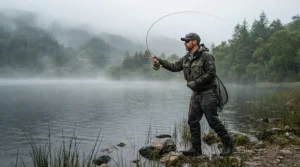
The Gill OS3 Coastal Jacket is a sailing jacket that crosses over neatly into coastal kayak fishing. It uses Gill’s XPLORE 2-layer fabric with fully taped seams. A women’s listing in Europe cites a 20,000 mm water column, so confirm the spec for your version.
The features read like a spray-defense checklist: a fully lined hi-vis hood with two-way adjustment, a high thermal collar, adjustable cuffs with PU inner seals, and a two-way zipper under a double storm guard. For anyone paddling saltwater chop, those cuff seals and that collar do real work.
The cut is roomy, which sailors like for layering, and kayakers can use the same room for insulation on shoulder-season mornings. Reviewers on sailing retailer pages are mostly glowing about fit and finish. One US buyer reported a warped zipper out of the box, so inspect yours when it arrives.
The listed features don’t mention pit zips, so you’ll vent through the front zipper and hem instead.
Pros:
- ✅ Taped seams and storm-guard zipper block spray
- ✅ Thermal collar and sealed cuffs add comfort
- ✅ Roomy cut accommodates layers
Cons:
- ❌ No pit zips in listed features
- ❌ Priciest shell here that isn’t a full system
Price range: roughly $250–$360 depending on version and retailer. Best for spray-heavy coastal paddling.
7. Columbia PFG Force XII ODX Jacket — OutDry Extreme for heavy, sustained rain
The Columbia PFG Force XII ODX Jacket is the one to buy if you’re done compromising on waterproofing. Columbia’s OutDry Extreme technology bonds the waterproof membrane to the outside of the fabric, so the face fabric can’t soak up water. The feature list adds a bonded hood brim, neoprene comfort cuffs, a PU-coated front zipper and a D-ring.
Independent testers back it up. GearJunkie praised its waterproofing and wind protection, and Flylords noted that it packs small in a two-layer design. Fish Alaska’s publisher highlighted the matching bib’s athletic fit and range of motion.
For kayak paddlers, that range of motion is the headline. Pairing the jacket with the Force XII bib creates a high-end full system, which I’d still treat as a luxury for most anglers.
Columbia labels the fit “regular,” so size up if you plan to wear a thick midlayer. I couldn’t verify a large pool of consumer reviews, so the case for this jacket rests on tester reports.
Pros:
- ✅ OutDry membrane resists wetting out
- ✅ Neoprene cuffs seal against paddle drip
- ✅ Lightweight and packable for its class
Cons:
- ❌ Premium price tag
- ❌ Regular fit limits bulky layering
Price range: roughly $250–$300 for the jacket. Check current price, and it’s the top pick for relentless rain.
Side-by-Side Specs: How the Seven Compare
| Product | Waterproof/Breathable Tech | Packability | Standout Feature | Best For |
|---|---|---|---|---|
| Frogg Toggs Ultra-Lite2 Rain Suit | Non-woven bi-laminate | Stuff sack, about 12.8 oz | Price | Backup layer |
| Columbia PFG Storm II Jacket | Omni-Tech 2L, sealed seams | Packs into hand pocket | Mesh lining | Light rain |
| Huk Storm Jacket 2.0 | 2L, 10K waterproof | Light and compact | Three-piece hood | Value seekers |
| Grundéns Neptune Jacket | 230 g/m² PU-coated polyester | Bulkier | Toughness | Cool, rough days |
| Grundéns Transmit X Jacket and Bib | 15K/10K nylon | Moderate | Matching bib | Full coverage |
| Gill OS3 Coastal Jacket | XPLORE 2-layer, taped seams | Moderate | Thermal collar | Coastal spray |
| Columbia PFG Force XII ODX Jacket | OutDry Extreme | Packs small | Membrane on the outside | Heavy rain |
Higher numbers don’t automatically mean a better kayak jacket. The Grundéns Neptune Jacket is tough but the least breathable, while the Frogg Toggs Ultra-Lite2 Rain Suit breathes well but won’t survive abuse. If your budget allows only one upgrade, the Grundéns Transmit X Jacket and Bib solves the most kayak-specific problem, which is the wet lap.
How to Choose Rain Gear for Kayak Fishing
- Decide your kayak type first. Sit-on-top paddlers need bibs or pants because water pools in the seat. Sit-inside paddlers with a spray skirt can lean on a jacket.
- Match breathability to your effort. Paddling is sustained exercise. Prioritize breathable membranes or vents over pure waterproof numbers.
- Check the cuffs. Neoprene or sealed cuffs stop water running up your arms. Velcro-only cuffs can leak when you raise a rod.
- Test your reach. Mimic a paddle stroke and a cast in the shop or at home. If the hem rides up or the shoulders bind, move on.
- Look for a good hood. An adjustable, brimmed hood keeps rain off your face without blocking your peripheral vision. It also needs to fit over or under your PFD.
- Weigh packability. If your hatch is tight, a shell that stuffs into its own pocket beats a heavier option you leave at home.
- Plan the layers. Buy sizing that lets a thin base and mid layer fit underneath without bunching beneath your PFD.
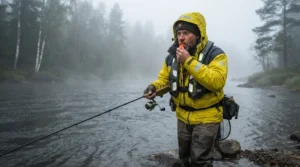
Kayak Angler Rain Jacket Features That Actually Matter (And Those That Don’t)
A kayak angler rain jacket lives or dies on a handful of details. Here’s what earns its keep.
Features that matter:
- Sealed or neoprene cuffs. Water running down a raised arm is the classic kayak leak.
- Venting. Pit zips or mesh-lined vents are worth more than a higher waterproof number on a hot paddle.
- A hood that moves with your head. You’ll turn constantly to watch lines and obstacles.
- Chest-height pockets. Anything below the PFD line is inaccessible while seated.
Features that don’t:
- Giant lower pockets. They disappear under a PFD and your lap.
- Heavy insulation built in. Layer separately so you can adapt as conditions change.
- Maximum waterproof numbers for fair-weather trips. A 10K shell like the Huk Storm Jacket 2.0 handles most trips fine.
What most buyers overlook is the PFD. Whatever jacket you buy has to work with it on. Choose the jacket after you know how your life jacket sits.
Paddling Mobility: Why Cut, Cuffs and Layers Decide Your Day
Paddling mobility is the sleeper spec that makes or breaks a day on the water. Each stroke rotates your torso and lifts your arms. A jacket that binds at the shoulders or pulls out of the waist will fatigue you well before the rain does.
Look for articulated sleeves, underarm gussets or an athletic cut. The Grundéns Neptune Jacket lists underarm gussets and an athletic fit, and Fish Alaska’s publisher highlighted the athletic fit of Columbia’s Force XII bibs.
Next, check the hem. A drawcord hem lets you keep the jacket from riding above your PFD. A cuff that overlaps a glove helps with paddle drip.
Finally, test the hood while rotating your head. A fixed hood that lags behind your turn will leave you staring at the inside of fabric when you want to watch the water. That’s why adjustable three-piece hoods, like those on the Huk Storm Jacket 2.0 and Grundéns Neptune Jacket, tend to suit paddling better.
How to Layer and Maintain Your Kayak Fishing Rain Gear
Layering is the secret to staying comfortable. The rule: thin, wicking and few.
Setup for a typical wet day:
- A moisture-wicking base layer. Avoid cotton.
- A thin fleece or synthetic midlayer when temperatures dip.
- Your rain shell, then your PFD on top, adjusted snugly.
First-30-day tips:
- Wear the gear around the house first to find rubbing points.
- Hose-test seams before trusting them in a storm.
- Practice reaching for your pliers and phone while seated.
Maintenance schedule:
- Rinse saltwater off after every trip.
- Wash with a technical-fabric cleaner a few times per season. Skip fabric softener, which clogs breathable membranes. Columbia’s care instructions for the PFG Storm line specifically say not to use it.
- Re-treat the DWR finish when water stops beading.
- Hang dry. Store loosely rather than crammed in a stuff sack all season.
Common first-month mistakes include zipping the vents shut during hard paddling and over-layering until sweat soaks everything from the inside.
Rain Gear Problems on the Water and How to Fix Them
Problem: Wet lap on a sit-on-top. Solution: add bibs or waterproof pants, such as the Grundéns Transmit X Jacket and Bib system, or a spray-style seat cover.
Problem: Wet sleeves. Solution: neoprene cuffs like those on the Columbia PFG Force XII ODX Jacket, or add a simple drip-ring on your paddle shaft.
Problem: Sweat soaking you from inside. Solution: open vents, drop a layer, or switch to a more breathable shell. A Frogg Toggs Ultra-Lite2 Rain Suit breathes well but won’t last as long as sturdier options.
Problem: A jacket that won’t fit under your PFD. Solution: look for slimmer cuts, or wear the jacket over your PFD if conditions allow, with the hood adjusted so it doesn’t ride up.
Problem: Fogged glasses under a tight hood. Solution: loosen the hood a bit, wear a brimmed cap under it, and keep the front zipper partly open on calm stretches.
Which Rain Gear for Kayak Fishing Should You Choose? A Decision Framework
Use these quick rules:
- If you’re on a tight budget, choose the Frogg Toggs Ultra-Lite2 Rain Suit, because it costs little and stashes anywhere.
- If you want one lightweight jacket for most trips, choose the Huk Storm Jacket 2.0 or Columbia PFG Storm II Jacket, because they balance weight and cost.
- If you paddle a sit-on-top in regular rain, choose the Grundéns Transmit X Jacket and Bib, because the bib handles the seat.
- If you fish cool, wet seasons and abuse your gear, choose the Grundéns Neptune Jacket, because it’s tough.
- If you launch in coastal chop, choose the Gill OS3 Coastal Jacket, because the collar and sealed cuffs fight spray.
- If you fish through long storms and want top waterproofing, choose the Columbia PFG Force XII ODX Jacket, because the membrane resists wetting out.
A quick scenario: a college student paddling 8 miles on weekends with a modest budget would do well with the Huk Storm Jacket 2.0 plus basic rain pants. A year-round saltwater angler would probably prefer the Gill OS3 Coastal Jacket or the Columbia PFG Force XII ODX Jacket.
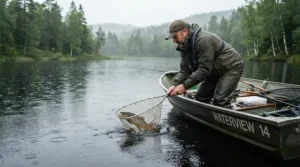
On-Water Storm Safety: What Rain Gear Can’t Do
Rain gear keeps you dry. It does not protect you from lightning, wind or waves. On-water storm safety starts before launch with the forecast.
The National Weather Service notes that thunderstorms can develop quickly and produce dangerous wind, waves and lightning, and that it’s better to wait out a storm than ride it out. Lightning is the one you can’t dress for. NWS guidance for boats without a cabin is to stay as low as possible, which is bleak advice in a kayak, so the real answer is to get off the water at the first sign of a storm.
A practical routine for on-water storm safety:
- Check the forecast and radar before launching, and again at midday.
- Pick launch points with nearby bailout shorelines.
- Wear your PFD at all times, and carry a whistle and a waterproof phone case.
- Treat the first rumble of thunder as your cue to head in.
- Keep bright colors on your outer layer. Reflective trim on pieces like the Grundéns Transmit X Jacket and Bib helps rescuers spot you in poor light.
Your rain jacket buys comfort and time. Your judgment keeps you safe.
Rain Gear for Kayak Fishing vs Traditional Fishing Rain Gear
| Feature | Kayak-Focused Setup | Traditional Boat/Shore Setup |
|---|---|---|
| Cut | Athletic, articulated, seat-friendly | Roomy, often longer |
| Lower body | Bibs or pants essential | Often optional |
| Breathability | High priority for paddling | Moderate priority |
| Packability | Critical for small hatches | Often less important |
| Best For | Paddlers and pedal-kayak anglers | Powerboat and shore anglers |
Traditional fishing rain gear is typically built for standing, long boat runs and dry decks. Powerboat designs prioritize wind blocking and big pockets, which is why the Grundéns Transmit X Jacket and Bib emphasizes high-speed runs.
For kayakers, the extra bulk of heavy offshore gear can mean less movement and less storage. The takeaway: borrow the best traditional pieces, like neoprene cuffs and bibs, but filter them through a paddler’s priorities of mobility and packability. That’s why a Columbia PFG Storm II Jacket can beat heavier shells for casual outings.
Long-Term Cost and Maintenance
| Tier | Example | Likely Lifespan Factor | Value Verdict |
|---|---|---|---|
| Budget | Frogg Toggs Ultra-Lite2 Rain Suit | Short, durability is the common complaint | Great backup, poor daily driver |
| Mid-range | Huk Storm Jacket 2.0, Grundéns Neptune Jacket | Moderate with care | Best cost-per-use for most |
| Premium | Columbia PFG Force XII ODX Jacket, Gill OS3 Coastal Jacket | Long with maintenance | Worth it for frequent storm paddlers |
A cheap suit you replace every season can cost more over time than a mid-range jacket that lasts years. The Grundéns Neptune Jacket is a good example of paying once for toughness.
Premium gear pays off through cost-per-use if you fish in rain often. Dividing a premium jacket’s price across a hundred wet trips changes the math. Maintenance counts too, since washing and re-treating the finish keeps a membrane working longer.
Rain Gear for Kayak Fishing for Specific Audiences
Beginners: Start with a lightweight shell and rain pants. A Huk Storm Jacket 2.0 or Columbia PFG Storm II Jacket is plenty while you learn your habits.
Cold-water paddlers: Rain gear isn’t immersion protection. The Minnesota DNR explains that cold water immersion can incapacitate people within minutes, and that a life jacket is the key to surviving it. In cold seasons, consider a drysuit or other immersion protection.
Warm-climate anglers: Breathability beats raw waterproofing. A light shell or packable suit like the Frogg Toggs Ultra-Lite2 Rain Suit handles passing showers without overheating.
Coastal and saltwater paddlers: Prioritize sealed cuffs, collars and rinse-friendly fabrics, which points to the Gill OS3 Coastal Jacket.
Women and smaller anglers: Look for women’s cuts where available. Several of these brands sell women’s versions, including Columbia’s Storm jacket and Huk’s Storm 2.0.
Seniors or anglers with limited shoulder range: Choose stretchy, gusseted designs like the Grundéns Neptune Jacket, and test overhead reach before buying.
FAQ
❓ What is the best rain gear for kayak fishing on a budget?
❓ Do I need rain pants or bibs for a sit-on-top kayak?
❓ How waterproof should a kayak fishing jacket be?
❓ Can I wear my rain jacket over or under my life jacket?
❓ What should I do if lightning appears while I'm kayak fishing?
Conclusion
The best rain gear for kayak fishing is the set you’ll actually wear and actually bring. A budget Frogg Toggs Ultra-Lite2 Rain Suit earns a permanent spot as a backup layer. The Huk Storm Jacket 2.0, Columbia PFG Storm II Jacket and Grundéns Neptune Jacket cover most anglers’ day-to-day needs. Serious storm paddlers should look at the Grundéns Transmit X Jacket and Bib, the Gill OS3 Coastal Jacket and the Columbia PFG Force XII ODX Jacket.
Remember the three-part test: stay dry, stay ventilated and stay mobile. And don’t confuse comfort with safety. Respect the forecast, wear your PFD, and get off the water when thunder rumbles.
✨ Ready to fish through the next front?
🔍 Click any highlighted product above to check current pricing and availability, and gear up for your best rainy-day bite yet! 🎣
Recommended for You
- Rain Gear For Ice Fishing: 7 Best Picks To Stay Dry In 2026
- Packable Rain Jacket For Fishing Trips: 7 Best Picks 2026
- Rain Bibs For Fishing From A Boat: 7 Best Picks To Stay Dry (2026)
Disclaimer: This article contains affiliate links. As an Amazon Associate, I earn from qualifying purchases. If you purchase products through these links, we may earn a small commission at no additional cost to you.
✨ Found this helpful? Share it with your friends! 💬🤗
