
In This Article
Budget waders for beginner anglers are waterproof waders that reach from the waist or chest down to the feet and usually cost less than about $200. They skip premium fabrics and gadgetry for the essentials: reliable seams, a forgiving fit, and enough toughness to survive your first season or two.

Here’s what nobody mentions at the fly shop counter. The river is cold. Not “brisk.” Cold, in a way that reaches your kneecaps inside ninety seconds. Waders fix that, and you don’t need a four-figure kit to get started. You need the right kind of cheap.
That’s the point of this guide. We compared seven real models and sorted budget waders for beginner anglers by material, fit, and value. The sources are spec sheets, retailer listings, and published owner reviews, not invented test stories. You won’t find a made-up “I wore these for forty days” anecdote here.
Along the way you’ll get a first-time wader buying guide and a straight comparison of affordable beginner waders against pricier options. You’ll also see the entry level wading gear that keeps you safe, and the fit mistakes that quietly ruin a first season. Prices below are ranges only and shift often, so check current pricing before you buy.
Budget Waders for Beginner Anglers at a Glance: Quick Comparison
Here are all seven contenders side by side. “Review sentiment” summarizes what published owner reviews and roundups say. It is not a rating we measured ourselves.
| Product | Style & Material | Price Range* | Review Sentiment | Best For |
|---|---|---|---|---|
| Frogg Toggs Canyon II | Stockingfoot, 4-ply nylon, 4mm neoprene booties | ~$70–$140 | Mostly positive; some early-leak reports | First-timers wanting breathable on a tight budget |
| Frogg Toggs Hellbender II | Stockingfoot, 4-ply nylon, X-back suspenders | ~$100–$160 | Mixed; sizing and leak complaints | Anglers who want extra pockets |
| Simms Tributary | Stockingfoot, multi-layer breathable | ~$180–$220 | Comfortable; thin-fabric complaints | Brand-and-warranty shoppers, families |
| Redington Palix River | Stockingfoot, 3-layer DWR fabric, convertible | ~$130–$180 | Split: durable for some, leaky for others | Anglers who fish chest-deep and waist-deep |
| Frogg Toggs Pilot II | Stockingfoot, 4-ply nylon with reinforced seat/knees | ~$165–$220 | Thin review pool | Frequent weekend wading |
| Foxelli 4mm Neoprene Chest Waders | Bootfoot, 4mm neoprene | Under ~$100 | Large review pool, strong averages in roundups | Cold water, short walk-ins |
| TIDEWE Chest Waders | Bootfoot, nylon/PVC or neoprene | Under ~$100 | Very large review pool | Casual pond and stream days |
*Ranges reflect what multiple retailers showed during research. Prices may vary.
Looking at the table, Canyon II delivers the best breathable-per-dollar value, while Simms Tributary costs roughly double for brand backing and a family-friendly size run. Buyers who fish mostly cold water near the truck should note that Foxelli and TIDEWE are the cheapest ways to stay warm, but their bootfoot design trades away flexibility.
💬 Just one click — help others make better buying decisions too!😊
Top 7 Budget Waders for Beginner Anglers: Expert Analysis
Each entry below translates specs into real-world meaning, gives an honest take, summarizes published review themes, and ends with a price verdict. None of this is hands-on testing. It is analysis built on real specs and real owner feedback.
1. Frogg Toggs Canyon II Stockingfoot Chest Waders — the lightweight budget benchmark
The Canyon II earns the top slot by getting the unglamorous things right.
It uses a 4-ply nylon upper in Frogg Toggs’ DriPore Gen 2 fabric. It also has 4mm double-taped neoprene booties, attached gravel guards with lace hooks, Y-back suspenders, a quick-release wading belt, and a splash-proof chest pocket. In practice, the breathable upper keeps you from stewing on a long walk-in. The booties add a little insulation, and the gravel guards keep pebbles out of your boots. One reviewer notes minimal extra reinforcement at the knees, so kneeling on gravel is where wear will show first.
Based on the spec comparison, this is the cleanest entry point for affordable beginner waders. The stockingfoot design means you can upgrade your boots later without replacing the waders.
Review themes are broadly positive. One retailer page showed roughly 4.1 stars across 15 reviews. Buyers praise light weight and comfort, and one used them as a backup next to pricier Simms waders. A minority report leaks early, including one on a first trip.
Pros:
- ✅ Lightweight, breathable 4-ply nylon upper
- ✅ Stockingfoot design allows boot upgrades
- ✅ Two chest pockets, including a splash-proof one
Cons:
- ❌ Little extra knee reinforcement
- ❌ Scattered early-leak complaints
Price range: roughly $70–$140 depending on retailer, so check current price. Treat it as a two-to-three-season wader and it’s a strong value.
2. Frogg Toggs Hellbender II Stockingfoot Chest Waders — the pocket-packed step up
Where the Hellbender II separates itself is storage and comfort touches.
Specs include a 4-ply nylon upper, adjustable X-back suspenders with quick-release locking buckles, an oversized multifunction chest pocket, a flip-out security pocket, dual-zip handwarmer pockets, and double-taped 4mm neoprene booties. X-back suspenders spread load across your shoulders instead of pulling on one side. Handwarmer pockets earn their keep on frosty spring mornings. More built-in storage means a lighter pack.
This is a fair pick for beginners who hate fumbling for tippet. Here’s what the spec sheet won’t tell you, but reviewers do: the booties can run snug. One buyer with a size 12 foot said it felt like a size 10.
Sentiment is mixed. A major retailer page showed about 3.5 stars from 11 reviews, with 60% recommending. One owner argued that all waders eventually leak, so a lower price makes sense. Another said these beat far pricier brands. One aggregator’s summary flagged leak reports as its main concern.
Pros:
- ✅ Generous multi-pocket layout
- ✅ X-back suspenders spread weight evenly
- ✅ Quick-release buckles simplify on and off
Cons:
- ❌ Booties run snug for some wearers
- ❌ Leak complaints appear in several reviews
Price range: around $100 to the mid-$100s. Good value if you size carefully and keep the return window in mind.
3. Simms Tributary Stockingfoot Waders — brand backing at the low end of a premium line
The Simms Tributary is the entry rung on Simms’ ladder, and it is the most affordable chest wader in that lineup. It comes in men’s, women’s, and kids’ sizes, which makes it a rare one-brand solution for a family heading to the river together.
Specs include a multi-layer breathable fabric, X-back suspenders, a wading belt, a chest zip pocket, and neoprene booties. One older review describes a 3-layer upper and a tougher 4-layer lower section, so verify the current fabric spec on the listing. Simms also advertises a repair-or-replace guarantee for workmanship and material defects, according to a retailer blog quoting the policy. Terms change, so read them before buying.
Owners praise comfort. The recurring gripes are thin material and the lack of a relief zipper. One reviewer argued that frequent waders should skip it, and another called it among the most comfortable they’d worn.
Our analysis: it makes sense if you want the brand’s fit and warranty path, and you’ll fish occasionally. Light users are its natural audience.
Pros:
- ✅ Men’s, women’s, and kids’ sizes
- ✅ Comfortable fit praised by owners
- ✅ Warranty path through a major brand
Cons:
- ❌ Thin material draws repeated complaints
- ❌ No relief zipper
Price range: around $180–$220. A fair value for light-use anglers, but not the cheapest route.
4. Redington Palix River Chest Waders — convertible between chest-high and waist-high
The standout trick of the Palix River is its opposing buckles, which let you drop the bib and wear it waist-high.
Its fabric is a 3-layer waterproof/breathable DWR-coated polyester with reinforced lower legs, a double-layer knee, high-density neoprene booties, fleece-lined handwarmer pockets, a flip-out zippered pocket, a wading belt, and gravel guards. Redington backs it with a one-year warranty. The waist-high option matters in July, when chest-high is overkill and sweaty.
Reviews are genuinely split. One forum owner got about two years of moderate use before replacing them. A buyer on another page reported seam tape peeling and leaks after two days. A reviewer of the matching pant version called it the most comfortable wader pant they’d owned.
Our read: it’s a solid choice for anglers who want one wader to cover warm days and cool mornings. Inspect the seams the day it arrives and test it before a long drive.
Pros:
- ✅ Converts from chest-high to waist-high
- ✅ Double-layer knees for extra wear
- ✅ Fleece-lined handwarmer pockets
Cons:
- ❌ Mixed durability reports
- ❌ Booties can run tight with thick socks
Price range: roughly $130–$180. Fair value if you use the convertible feature and hold onto the warranty paperwork.
5. Frogg Toggs Pilot II Stockingfoot Chest Waders — durability upgrades where waders usually die
Pilot II is the pick if you’ve read horror stories about blown crotch seams.
The specs cover the usual failure points. It has 4-ply nylon with 4-ply leg and knee protection, a reinforced butt pad, and a single-seam crotch and swing-leg design that avoids a crossed crotch seam. You also get a quad chest pocket, Dura-Span gravel guards, and an elastic belt with daisy-chain loops for clipping gear. Seats, knees, and crotches take the abuse when you scramble banks and kneel to net a fish, so reinforcing them is smart engineering rather than marketing.
The honest caveat: the review pool is thin. The few reviews we found were positive, which is too small a sample to call its long-term durability proven.
Best for: anglers who expect to fish most weekends and want to delay the next upgrade.
Pros:
- ✅ Reinforced seat and knee protection
- ✅ Single-seam crotch design
- ✅ Daisy-chain loops for nippers and tools
Cons:
- ❌ Highest price of the Frogg Toggs trio
- ❌ Small review pool leaves durability unconfirmed
Price range: roughly mid-$100s to low-$200s, depending on promotions. Worth it for frequent use, but check current price first.
6. Foxelli 4mm Neoprene Chest Waders — the most warmth per dollar
Foxelli is a bootfoot neoprene design. The boots are attached, so you step in and go.
The 4mm neoprene is the headline. One roundup rates it comfortable down to roughly 50°F, and workable into the 40s with base layers. The seams are glued and taped, and some listings describe extra bonding. What that means: cold early-season water won’t clamp your legs the way thin breathable fabric can. The flip side is weight and heat. Neoprene doesn’t breathe, so above roughly 80°F it gets uncomfortable.
For fly fishing specifically, bootfoot has drawbacks. You can’t choose your own boots, and ankle support is limited on long hikes. Stockingfoot is generally the stronger choice for most fly anglers. For ponds, lakes, and short walk-ins in cold water, though, Foxelli is hard to beat on cost.
Roundups cite a 4.5-star average across roughly 4,700 reviews, with recurring notes about a weak chest pocket and a large fit.
Pros:
- ✅ Thick 4mm neoprene for cold water
- ✅ Attached boots: no separate purchase
- ✅ Very large review pool
Cons:
- ❌ Too warm for summer
- ❌ Sizing runs large; chest pocket feels weak
Price range: under roughly $100. Strong value for cold-water use, weak for hot-weather hiking.
7. TIDEWE Chest Waders — the crowd favorite on volume
TIDEWE is the budget floor of this list, and one of the most-reviewed wader brands online.
It’s offered as a nylon/PVC bootfoot with a boot hanger and as a neoprene chest wader. One roundup credits welded-seam construction and a build roughly 35% lighter than traditional rubber, and cites more than 13,000 reviews. A boot hanger sounds trivial until you try drying wet bootfoots without one.
This is the model for anglers who aren’t sure fishing will stick. It’s less breathable than stockingfoot options and basic in materials, but the barrier to entry is low. We couldn’t verify individual star ratings beyond roundup summaries, so check recent buyer feedback before ordering.
Pros:
- ✅ Rock-bottom entry price
- ✅ Lighter than traditional rubber waders
- ✅ Boot hanger included on bootfoot versions
Cons:
- ❌ Bootfoot design limits fit and boot options
- ❌ Basic materials with limited breathability
Price range: under roughly $100. Excellent for casual use, but expect to replace it sooner.
How to Choose Budget Waders for Beginner Anglers
Here is the fastest path through the choices, in order of importance:
- Match material to water temperature. Breathable fabric suits warm-to-cool seasons, while neoprene suits consistently cold water. Neoprene is heavy, bulky, and doesn’t breathe at all, which is why it suits cold-water-only users.
- Pick stockingfoot for fly fishing. Separate boots give better fit, support, and upgrade options. Bootfoot is quicker to put on and works well for mucky bottoms.
- Choose chest-high unless you wade shallow. Convertible designs like Palix River let you drop to waist-high on warm days.
- Budget for boots. Stockingfoot waders need wading boots on top, which is an added cost many first-time buyers forget.
- Size to your body, not just your shoes. Check inseam, chest, and bootie fit, and size up if you’re between sizes.
- Check the warranty and return window. A one-year warranty and easy returns are worth real money on affordable beginner waders.
For most readers, step one points to a breathable stockingfoot like Canyon II or Hellbender II. Cold-water-only anglers lean toward Foxelli or TIDEWE.
Affordable Beginner Waders vs Traditional Alternatives
Waders aren’t your only option. Here’s how they stack up against the usual alternatives:
| Option | Cost Range | Comfort | Protection | Best For |
|---|---|---|---|---|
| Wet wading (shorts + wading shoes) | Lowest | Great in heat | None from cold | Warm-water days |
| Rubber/PVC hip boots | Low | Stiff, heavy | Shallow only | Creek crossings |
| Budget breathable stockingfoot | Low–mid | Good | Chest-deep | Canyon II, Hellbender II |
| Budget neoprene bootfoot | Low | Warm, heavy | Cold-water focus | Foxelli, TIDEWE |
| Premium breathable | High (roughly $400+) | Excellent | Excellent | Heavy-use anglers |
Wet wading is unbeatable in August and a bad idea in April. Hip boots limit how deep you can go, and neoprene runs hot in summer. Premium waders reward frequent users with better fabrics and longer lifespans. A beginner who fishes 10 to 15 times a year rarely recoups that cost.
Our read: stockingfoot waders in the affordable beginner range sit at the sweet spot. Pay premium prices only after you’ve learned your own wear patterns.
Entry Level Wading Gear: What Else You Need Beyond the Waders
Waders alone don’t make you safe. Entry level wading gear includes a few supporting pieces, and each one pulls its weight:
- Wading boots. Required with stockingfoot waders. Entry-level models like Orvis Encounter’s boots run around $130 for the felt-sole version at one retailer. Felt grips well but faces bans in some places (see the regulations section below). Rubber soles with studs are the safer all-purpose choice.
- Wading belt. The most important safety item. A snug belt slows water entering your waders if you fall. Belts range from the $20s to around $100.
- Wading staff. Adds a third point of contact in current, especially in murky water.
- Base layers and socks. Merino or synthetic layers under breathable waders add warmth without bulk.
- Repair kit. A small seam-sealer or patch kit takes minutes to use and saves trips.
The smartest entry level wading gear spend is boots first, belt second, staff third. A cheap wader paired with good boots beats the reverse every time.
Beginner Fly Fishing Gear: Where Waders Fit in Your Starter Kit
Waders are only one piece of the puzzle, so here is how they rank among the full list of beginner fly fishing gear:
- License and regulations. Non-negotiable, and cheap.
- Rod, reel, and line combo. The core of your beginner fly fishing gear.
- Waders and boots. The second-biggest item for most starter budgets.
- Leaders, tippet, and flies. Small but constant expenses.
- Nippers, hemostats, and a fly box. Inexpensive tools that make fishing less frustrating.
- Polarized sunglasses and a hat. They protect your eyes and help you see fish.
A reasonable rule of thumb, not a hard law: put roughly equal money into waders-plus-boots and into your rod outfit. Skimping on either side wrecks the other. A great rod doesn’t help if you’re too cold to cast, and top waders don’t help if your outfit fights you.
For anglers building beginner fly fishing gear on a shoestring, start with the rod combo and a budget stockingfoot like Canyon II, then upgrade boots first when money allows.
Value Wading Equipment: Price, Cost Per Trip, and Long-Term Cost
Value wading equipment is about cost per outing, not sticker price. The table below uses illustrative assumptions (25 outings a year, estimated lifespans) rather than measured data:
| Tier | Upfront Range | Assumed Lifespan | Approx. Cost per Outing | Best For |
|---|---|---|---|---|
| Budget bootfoot | Under ~$100 | 1–2 seasons | ~$1–$2 | Foxelli, TIDEWE |
| Budget breathable | ~$70–$160 | 2–3 seasons | ~$2 | Canyon II, Hellbender II |
| Entry brand | ~$180–$220 | 3 seasons | ~$3 | Simms Tributary |
| Premium | $400+ | 5 seasons | ~$3–$4 | Heavy users |
Costs per outing end up in the same ballpark, which is the surprise. A cheap wader that lasts two seasons can match a pricey one that lasts five. One roundup claims budget options deliver roughly 80% of the performance at about 25% of the price for low-use scenarios. Anecdotally, owners report about two years from Canyon II and Palix River under moderate use.
Long-term cost drivers beyond the sticker price:
- Repairs. A small kit and seam sealer extend life.
- Warranty. A manufacturer guarantee can make an entry brand cheaper over time.
- Replacement boots. Often the bigger recurring cost.
Looking at the table, the real value winners are the budget breathable waders. Treat them as consumables and replace them without guilt.
First-Time Wader Buying Guide: Sizing, Fit, and Mistakes to Avoid
This first-time wader buying guide covers the mistakes that cost beginners the most.
- Buying by shoe size alone. Stockingfoot waders fit by body measurements. One Canyon II review lists a size large as fitting shoe sizes 10–12, a 38-inch inseam, and a 51-inch chest, so verify against the maker’s chart.
- Ignoring bootie size. Reviewers report Hellbender II booties running snug. A thick sock inside a neoprene bootie inside a boot needs room, which is why wading boots usually run one to two sizes up from street shoes.
- Skipping the boots. Stockingfoot waders without wading boots are a half-purchase.
- Buying neoprene for summer. It will cook you.
- Forgetting the belt. It costs little and matters a lot.
- Missing the return window. Try waders on at home, with the layers you’ll actually wear, before you take the tags off.
If you’re between sizes, go up. Cramped waders restrict movement and fail faster at the seams.
✨ Don’t Miss These Exclusive Deals!
🔍 Take your first season on the water to the next level with these carefully selected waders. Click on any highlighted item to check current pricing and availability. These picks will help you build a reliable, comfortable wading setup!
Your First 30 Days in Budget Waders: A Practical Usage Guide
Think of the first month as a break-in period for both you and the gear.
Before your first trip:
- Try everything on at home with your planned base layers.
- Check seams and booties for flaws while you can still return them.
- Run a safety drill: fill your waders with water in a safe, shallow spot so you know what a fall feels like. Take Me Fishing recommends this kind of practice, along with always wearing a wading belt.
On the water:
- Cinch the belt snugly over the waders, not over a jacket.
- Move your feet slowly, and use a staff in current.
- Avoid kneeling on sharp gravel, especially in models without knee reinforcement.
After each trip:
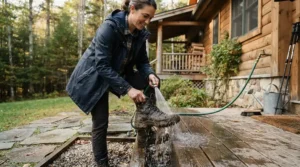
- Rinse with fresh water.
- Hang the waders inside out to dry, away from direct sun.
- Store them loosely, not tightly folded.
Common first-30-day mistakes:
- Storing waders wet.
- Dragging through barbed wire or thorns.
- Skipping the post-trip inspection, so small leaks grow.
These habits matter more than whichever model you choose.
Real-World Scenarios: Which Budget Waders Fit Which Angler?
The college student. Budget is tight, fishing is weekends on a small stream in warm months, and the walk-in is short. A Canyon II with a modest pair of boots keeps the total low and the pack light.
The cold-water early-season angler. Water is in the 40s, hikes are short, and this angler fishes ponds and slow stretches. Foxelli gives the most warmth per dollar. Layer up and accept the weight.
The family outing. A parent and two kids want to fish a river together. Simms Tributary offers men’s, women’s, and kids’ sizes in one line. That convenience, plus the warranty path, can justify the extra cost if outings are occasional.
The weekend regular. This angler fishes 40 or more days a year, kneels often, and scrambles banks. Pilot II and its reinforced seat and knees were built for that wear pattern. Palix River is another candidate, particularly for anglers who switch between chest-high and waist-high.
Match your frequency and environment to the wader. That beats chasing a single “best” pick.
Common Wader Problems and How to Solve Them
Problem: Leaks. Reviews across nearly every budget model mention them eventually. Find the source by checking seams and booties in good light. Use seam sealer or a patch kit, and consider a warranty claim if the leak shows up early.
Problem: Sweat and clamminess. Neoprene doesn’t breathe, so sweat builds up. Switch to breathable fabric like Canyon II for warm days, and wear wicking layers underneath.
Problem: Cold legs. Add base layers under breathable waders, or step up to thicker neoprene like Foxelli‘s 4mm.
Problem: Snug booties. Buyers report this on Hellbender II. Size up, wear thinner socks, and confirm the bootie fit range on the listing before ordering.
Problem: Bathroom breaks. Simms Tributary owners wish it had a zipper. Plan ahead, and use convertible suspenders like Palix River‘s, which let you roll the bib down quickly.
Safety, Felt Soles, and Regulations Guide
Wading safety comes down to a few non-negotiables. Wear a snug belt. Use a staff in current. Never wade deeper than you can handle, since even a summer trout stream can trigger hypothermia. Water that fills your waders adds weight, so practice staying calm and floating on your back, feet downstream.
Felt soles deserve special attention. They grip slippery rocks well, but they also trap sediment and moisture that can carry invasive organisms between waterways. Alaska’s wildlife agency has a felt-sole FAQ explaining why it banned felt, and it also advises separating and drying all wading gear between trips. Reporting has noted bans in places like Alaska, Missouri, Nebraska, Rhode Island, and South Dakota, plus a fine of up to $5,000 in Yellowstone National Park. Vermont repealed its ban in 2016. Rules change, so check your state and destination before you pack.
Rubber soles with studs avoid most of this headache. Whatever you wear, clean, drain, and dry your gear between waters.

FAQ
❓ Are cheap waders worth it for a beginner?
❓ Should a beginner buy stockingfoot or bootfoot waders?
❓ How long do budget waders last?
❓ Can I use hiking boots with stockingfoot waders?
❓ What size waders should a first-time buyer order?
Conclusion
The best budget waders for beginner anglers aren’t the cheapest or the fanciest. They’re the ones matched to your water, your season, and your habits.
For most newcomers, a breathable stockingfoot like Canyon II is the smart default. Hellbender II adds pockets and comfort touches. Simms Tributary buys brand backing and family sizes, and Palix River flexes between chest-high and waist-high. Pilot II reinforces the places waders tend to fail. For cold water and tight budgets, Foxelli and TIDEWE deliver warmth and savings in a bootfoot package.
Whatever you choose, treat the belt, boots, and safety habits as part of the purchase. A $100 wader with a $30 belt and the right boots beats an expensive wader worn recklessly.
Check current prices and return policies, size carefully, and get on the water.
Recommended for You
- Waders For Women: 7 Best Picks For 2026
- Neoprene Waders For Cold Water Fishing: 7 Warmest Picks (2026)
- Breathable Waders For Warm Weather Fishing: 7 Best Cool Picks (2026)
Disclaimer: This article contains affiliate links. As an Amazon Associate, I earn from qualifying purchases. If you purchase products through these links, we may earn a small commission at no additional cost to you.
✨ Found this helpful? Share it with your friends! 💬🤗
