
In This Article
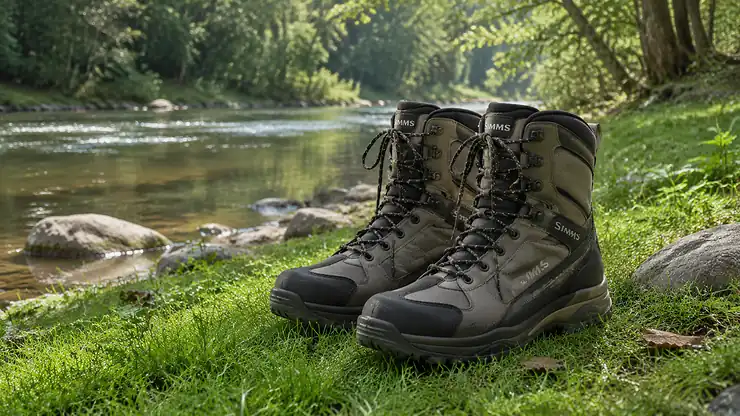
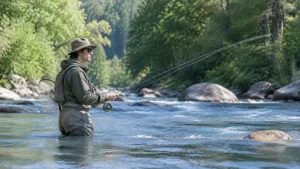
Rubber sole wading boots for river fishing are drain-friendly, ankle-supporting boots worn over stockingfoot waders (or with guard socks for wet wading). Their outsoles use sticky rubber instead of felt to grip slick river rocks. They dry faster, last longer, and stay legal in waters that restrict felt.
For decades, felt was gospel. Then the invasive-species hammer fell, and the conversation changed. Alaska’s Department of Fish and Game lays out its reasoning in a felt-soled waders FAQ, while also admitting that felt alone isn’t the silver bullet for stopping hitchhiking organisms. Boots, laces, and waders all carry stowaways. Today the real question isn’t whether to wear rubber. It’s which rubber, on which boot, for which river.
That’s what this guide sorts out. You’ll get seven real boots, compared honestly across budget, mid-range, and premium tiers. You’ll also get a plain-English tour of sticky rubber wading boots, the felt-free wading footwear landscape, and what felt sole bans mean for your next trip. Vibram-style soles get a proper explainer, and river wading safety gets the space it deserves.
One transparency note before we wade in: I haven’t worn these boots, and I won’t pretend otherwise. Everything here is built from published specs, retailer and brand data, and genuinely reported reviewer sentiment. Where I couldn’t verify something, I’ll say so. Prices are ranges as of this 2026 research, so check current pricing before you buy.
Quick Comparison: 7 Rubber Sole Wading Boots for River Fishing at a Glance
Think of this table as the trailhead map. It shows where each boot sits on weight, sole technology, and price before we dig into the details.
| Boot | Sole Setup | Weight (pair)* | Price Range | Best For |
|---|---|---|---|---|
| Simms Freestone | Rubber lug outsole, stud and cleat compatible | About 54 oz (men’s 11) | $200–$250 | One boot for everything |
| Orvis Clearwater | Rubber lug outsole with stud zones | Not verified | Around $200 | Budget-minded beginners |
| Korkers Chrome Lite | Fixed Kling-On Rock rubber | Not verified (sold as very light) | $175–$225 | Speed and sneaker-like feel |
| Korkers Darkhorse | OmniTrax swappable soles | Not verified | $175–$250 | Travelers facing varied rules |
| Simms Flyweight | Vibram Idrogrip rubber | About 40–43 oz | $225–$300 | Long hike-ins, summer rivers |
| Sitka CrossCurrent | Sticky rubber plus replaceable aluminum cleats | About 56 oz (roughly 28 oz each) | $275–$325 | Comfort on long approaches |
| Patagonia Foot Tractor | Vibram Idrogrip with aluminum bars | About 87 oz | $450–$550 | Heavy-duty, resoleable build |
*Weights come from manufacturer and retailer listings. “Not verified” means I found no reliable figure.
Reading the table, the Simms Freestone and Orvis Clearwater deliver the most boot for the least money, and the Simms Freestone is the safer bet if you want proven ankle support. If your river requires a long walk, the Simms Flyweight saves roughly 14 ounces per pair compared with the Simms Freestone. Meanwhile the Patagonia Foot Tractor is the outlier: heavy and expensive, but built to be repaired rather than replaced.
💬 Just one click — help others make better buying decisions too!😊
Top 7 Rubber Sole Wading Boots for River Fishing: Expert Analysis
Each pick below follows the same logic: what the specs mean on the water, who the boot suits, and what reviewers consistently say.
1. Simms Freestone — best all-rounder for mixed river days
The standout quality here is balance. This boot refuses to be brilliant at one thing and bad at everything else.
Simms pairs a waterproof synthetic scratch-leather upper with a partial neoprene lining, a dual-density EVA midsole, and a rubber lug outsole that accepts Hardbite studs and Alumibite star cleats. It weighs about 54 ounces per pair in a men’s 11. On the water, that neoprene makes the boot easy to slip over stockingfoot waders and adds warmth. The EVA midsole is the difference between feet that complain at hour six and feet that don’t.
One retailer’s comparison chart of the Simms line scores its stock rubber traction at 3 out of 5 and ankle support at 4 out of 5. Based on those numbers, I’d treat the Freestone as a great platform that wants cleats on algae-slick rock. It suits first-time buyers and anglers who want one pair for everything.
Reviewers on Simms’s own listings consistently praise all-day comfort and easy tying, though brand-site reviews do skew positive.
Pros:
- ✅ Cushioned comfort across full days
- ✅ Accepts studs and star cleats
- ✅ Partial neoprene lining adds warmth
Cons:
- ❌ Stock grip trails Vibram-style soles
- ❌ Heavier than ultralight hikers
Price range: around $200–$250, which is strong value for a proven, cleat-ready boot.
2. Orvis Clearwater — value-priced and stud-ready
Orvis built this boot around one idea: give anglers a real technical boot without the premium tag.
The upper is full synthetic leather with very few seams, reinforced by scratch rubber at the toe, vamp, and heel. Underfoot you get an EVA footbed, a Phylon midsole with an ESS plate for stability and stud retention, and a rubber outsole with aggressive lugs and designated stud locations. Fewer seams mean fewer blister points and fewer spots to fail. The stud zones mean you can add traction later instead of replacing the boot.
Here’s the honest analytical take. On gravel and cobble the lug pattern should work well. On algae-coated bedrock, the design emphasis on studs suggests you’ll want them installed. It’s a smart pick for beginners, occasional anglers, or anyone wanting a travel backup pair.
On reviews, I couldn’t find a large pool of independent, verifiable owner reviews for the current rubber version. The “best value” label is Orvis’s claim, backed by the spec sheet rather than crowd consensus.
Pros:
- ✅ Strong spec sheet for the money
- ✅ Built-in stud placement zones
- ✅ Few seams means fewer rub points
Cons:
- ❌ Stock rubber likely needs studs on slimy rock
- ❌ Few independent reviews to lean on
Price range: around $200, and a sensible value if you add studs.
3. Korkers Chrome Lite — sneaker-light with Kling-On Rock rubber
This is the boot for anglers who hate feeling like they’re wearing cinder blocks.
Korkers built the Chrome Lite like an athletic sneaker, with a Boa fit system, a proprietary Kling-On Rock sticky rubber outsole, and fast-drying materials. It accepts optional screw-in carbide cleats. Unlike other Korkers models, the sole is fixed rather than swappable. That fixed sole is the trade-off for the weight savings.
A MidCurrent reviewer called it the most impressive Korkers boot they’d seen, noting that it’s light and durable and that its traction held up in demanding conditions even without interchangeable soles. A buyer’s guide at IntoFlyFishing flagged the fixed sole as its only real drawback.
The sneaker-style build likely means less ankle structure than a traditional high-top. If you roll ankles easily, weigh that against the weight savings. For fit-and-forget quick adjustments, the Boa dial is a joy.
Pros:
- ✅ Very light, low-profile feel
- ✅ Boa dial makes adjustments quick
- ✅ Dries fast between trips
Cons:
- ❌ Fixed sole can’t be swapped
- ❌ Less ankle structure than high-tops
Price range: roughly $175–$225, which is fair for a lightweight, cleat-ready boot.
4. Korkers Darkhorse — swappable soles for changing rivers
If your fishing crosses state lines, this boot earns its keep.
The Darkhorse uses Korkers’ OmniTrax interchangeable sole system and a Boa M2 lacing dial. It ships in sole packages that pair Kling-On sticky rubber with either felt or studded Kling-On rubber. A hydrophobic nylon upper with synthetic leather supports sheds water quickly, which helps it dry fast and resist mildew. The studded sole carries 26 carbide-tipped studs per pair.
This matters because swappable soles turn felt sole bans from a headache into a non-issue. Buy the rubber-plus-studded package, skip the felt, and one pair covers everything from a cold-water winter river to a muddy boat ramp.
A GearJunkie reviewer rated the Kling-On sole as their favorite all-around option and called the boot a do-all design. A Gear Institute reviewer praised its ankle support and resistance to wear.
Pros:
- ✅ Swappable soles adapt to conditions
- ✅ Boa dial for fast fit changes
- ✅ Fast-drying hydrophobic upper
Cons:
- ❌ Extra soles to carry and rinse
- ❌ One more mechanical system to maintain
Price range: about $175–$250 depending on package, and strong value for travelers.
5. Simms Flyweight — Vibram traction at feather weight
Here’s the boot for people who plan their fishing around how far they can walk.
Simms lists the Flyweight at roughly 40 ounces per pair in a men’s 11, though some retailers list slightly more. It uses a 4.5 mm Vibram Idrogrip rubber outsole that accepts Simms Hardbite and Alumibite cleats. Welded TPU film guards high-abrasion zones with minimal stitching, and a dual-density EVA midsole cushions the miles. That’s about 14 ounces lighter per pair than the Simms Freestone, which adds up over a few thousand steps.
Based on the spec comparison, this is a summer and hike-in specialist. Sizing note: one retailer says it runs large, while Simms’s size chart maps a size-10 street shoe to a size-11 boot to leave room for neoprene booties.
Simms customers praise the weight, fit, and lack of blisters. A GearJunkie reviewer loved the comfort but raised questions about long-term durability. Resoling is available.
Pros:
- ✅ Remarkably light on the trail
- ✅ Vibram Idrogrip wet-rock grip
- ✅ Resoling extends its life
Cons:
- ❌ Reviewers question long-term durability
- ❌ Less armor than heavy-duty boots
Price range: roughly $225–$300, and worth it if weight is your priority.
6. Sitka CrossCurrent — comfort-first with swappable aluminum cleats
Sitka’s pitch is a boot that feels light on the approach and sure-footed in current.
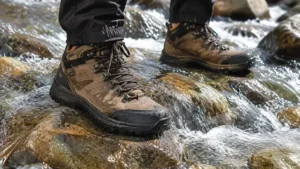
The outsole is sticky rubber paired with Sitka’s replaceable STS aluminum cleat system. Hydrophobic materials and drain notches reduce water pickup. A TPU heel counter and reinforced toe cap handle abuse, and one review puts it at about 28 ounces per boot. Aluminum cleats you can swap out give you traction on demand without committing to studs all season.
Sitka’s own 2026 buyer reviews describe comfort, support, and stability across long wading days, including ice on trails and slippery rocks. Sitka says it fits true to street size, but one reviewer suggests going up a size for stockingfoot waders. Treat brand-site praise as encouraging rather than conclusive, since the boot is relatively new.
It suits anglers who walk far and wade deep.
Pros:
- ✅ Supportive and cushy on long approaches
- ✅ Replaceable aluminum cleats
- ✅ Water-shedding materials and drain notches
Cons:
- ❌ Premium price for a rubber boot
- ❌ Limited long-term durability data
Price range: around $275–$325, a fair value if comfort is the priority.
7. Patagonia Foot Tractor — resoleable, hiking-boot tough
This is the one boot in the roundup that treats wading footwear as a long-term investment.
Co-developed with Danner and handcrafted in Portland, Oregon, the Foot Tractor uses a full-grain leather upper with 1,000-denier nylon paneling and a Vibram Idrogrip sole with multi-directional aluminum bars. The aluminum-bar version weighs about 86.8 ounces per pair, and a sticky-rubber version weighs about 68.8 ounces. It’s heavy because it’s built like a hiking boot, and it can be resoled and repaired.
A Hatch Magazine reviewer found the aluminum bars delivered traction equal to or perhaps better than felt, which is a bold claim. A Deneki review calls it the most expensive wading boot on the market. If you’ve been clinging to felt, this is the boot most likely to talk you out of it.
Pros:
- ✅ Grip that rivals felt
- ✅ Resoleable and repairable
- ✅ True hiking-boot support
Cons:
- ❌ Heaviest boot in this roundup
- ❌ Premium price tag
Price range: about $450–$550, and the long-term value case is strong if you fish often.
Price and Value Snapshot
| Boot | Value Tier | Why It Earns Its Price | Best For |
|---|---|---|---|
| Orvis Clearwater | Budget | Stud-ready spec sheet at an entry price | Beginners |
| Simms Freestone | Budget/Mid | Proven comfort and cleat flexibility | All-around anglers |
| Korkers Chrome Lite | Mid | Light weight with Boa convenience | Quick, nimble wading |
| Korkers Darkhorse | Mid | Swappable soles solve rules headaches | Traveling anglers |
| Simms Flyweight | Mid/Premium | Vibram grip at very low weight | Long hikes |
| Sitka CrossCurrent | Premium | Comfort plus swappable aluminum cleats | Long approaches |
| Patagonia Foot Tractor | Premium | Built to be resoled, not replaced | Heavy yearly use |
The budget tier gets you a capable boot that works well with cleats. Mid-range boots buy you weight savings or flexibility. Premium boots are about longevity and comfort over time. If you fish more than 30 days a year, the Patagonia Foot Tractor and Sitka CrossCurrent make more financial sense than their price tags suggest, while casual anglers will rarely regret the Orvis Clearwater or Simms Freestone.
✨ Don’t Miss These Top Picks!
🔍 Take your river days to the next level with these carefully selected boots. Click on any highlighted name to check current pricing and availability. The right pair will help you wade with confidence all season long!
Your First 30 Days in Sticky Rubber Wading Boots: A Practical Usage Guide
Sticky rubber wading boots reward a little ritual. Here’s how to get the most out of yours, the stuff a product listing never mentions.
Week one: break in on dry land. Wear the boots around the house with the same socks and neoprene booties you’ll fish in. Check heel lift and toe room. If your toes touch the front, go up a size, since most boots are sized to leave room for stockingfoot waders.
Lacing and fit. Snug the ankle but leave the toe box loose. Too tight cuts circulation, and cold feet follow quickly.
Your first wade. Choose an easy riffle with gravel and shallow flow. Test the sole on a few rocks before you commit to a deeper crossing. If the stock rubber feels skittish on algae, that’s your cue to add studs or cleats.
After every trip. Rinse mud and organisms off soles and laces, then dry boots fully before storing. This protects against mildew and helps prevent moving invasive species between waters.
Common first-month mistakes:
- Forgetting gravel guards, which lets debris in
- Storing wet boots in a closed bag
- Ignoring lug wear on lightweight soles
- Over-tightening laces after a cold start
By week four your boots should feel like part of you, and any hot spots will have told you what needs adjusting.

Real-World Scenarios: Matching Rubber Sole Wading Boots to Your River
Specs are abstract. Rivers aren’t. Here are three profiles matched to boots with reasoning.
Scenario 1: The weekend hike-in angler. Picture someone fishing a mountain freestone stream a few days a month, with a two-mile walk each way and a budget near $250. Weight matters more than armor. The Simms Flyweight is the logical fit, with the Korkers Chrome Lite as a cheaper, lighter alternative if ankle support isn’t a worry.
Scenario 2: The traveling angler. Imagine a fly angler planning trips to Yellowstone, Alaska, and a few home waters in different states. Rules vary by water, so a boot with swappable soles is a smart hedge. The Korkers Darkhorse with a rubber-plus-studded package covers this scenario without ever carrying felt. For heavier use, the Sitka CrossCurrent adds replaceable aluminum cleats.
Scenario 3: The high-volume angler or guide. Think of someone on the river 100 days a year. A boot that can be resoled changes the math. The Patagonia Foot Tractor costs the most upfront but is designed to be repaired, making it cheaper per day in the long run.
Scenario 4: The beginner on a budget. The Orvis Clearwater or Simms Freestone get you a real boot with ankle support. Add studs later if your river demands them.
Problem → Solution: Fixing the Five Most Common Rubber Sole Complaints
Problem 1: “I’m slipping on algae-covered rock.” Add studs or cleats, or step up to Vibram-style soles. The Simms Freestone, Orvis Clearwater, and Simms Flyweight all accept studs or cleats. Shuffle your feet instead of lifting them.
Problem 2: “My boots are heavy and tiring.” Weight adds up. Moving from the Simms Freestone to the Simms Flyweight saves roughly 14 ounces per pair. The Korkers Chrome Lite is another light option.
Problem 3: “They smell and take forever to dry.” Choose hydrophobic uppers like those on the Korkers Darkhorse, rinse after trips, and dry them fully before storage.
Problem 4: “My feet get cold.” A partial neoprene lining, like the one in the Simms Freestone, helps. Pair it with a thicker sock, but size up to leave room.
Problem 5: “The sole is wearing smooth.” Inspect lugs every few trips. Resoleable boots like the Simms Flyweight and Patagonia Foot Tractor extend your investment instead of ending it.
How to Choose Rubber Sole Wading Boots for River Fishing
The best rubber sole wading boots for river fishing fit your feet, your river, and your rules. Work through these six steps:
- Decide how far you walk. Long hike-ins favor light boots like the Simms Flyweight. Short walks let you prioritize support.
- Check your river’s bottom. Cobble and gravel need less aggressive traction. Algae-coated bedrock calls for studs or Vibram-style soles.
- Confirm local rules. Some waters restrict felt, so check agency rules before buying.
- Prioritize fit over everything. Order for the neoprene booties you’ll wear, using the brand’s size chart.
- Match ankle support to your terrain. Uneven, rocky banks reward a more structured boot.
- Plan for studs, resoling, and cleats. A boot that accepts add-ons and can be resoled stretches your investment.
Felt Sole Bans: Where Rubber Is Not Optional
Felt sole bans exist because absorbent, fibrous soles can retain sediment and organisms that travel between waters. Targets include didymo algae, New Zealand mud snails, and zebra mussel larvae.
Maryland was the first state to ban felt. Alaska followed, and Missouri later joined the growing list. South Dakota also doesn’t allow external felt-soled footwear. Vermont repealed its ban in 2016, and Missouri applies its restrictions to designated waters. Rules differ and change, so check the current regulations from the managing agency before every trip.
There’s nuance. A Yellowstone official has said a muddy rubber boot can carry more invasive species than a cleaned felt boot. Hatch Magazine notes that New Zealand’s research pointed to the inside of the boot as a bigger risk than the sole. Translation: felt sole bans reduce risk, but cleaning is the real hero.
For anglers, the practical takeaway is simple. Boots with rubber soles keep you legal in the widest range of waters. Combine them with a Clean, Drain, Dry routine after every trip.
Felt-Free Wading Footwear vs. Felt vs. Studded: A Head-to-Head
Felt-free wading footwear has closed the gap with felt, though felt still wins on a few slick surfaces. The grip debate is the part that keeps anglers arguing.
| Sole Type | Wet-Rock Grip | Drying and Cleaning | Legal Flexibility | Best For |
|---|---|---|---|---|
| Sticky rubber (no studs) | Good on cobble | Dries fast | High | Simms Flyweight on easy rivers |
| Rubber plus cleats or studs | Very good on slick rock | Fast, but rinse studs | High | Simms Freestone and Sitka CrossCurrent |
| Aluminum bar | Rivals felt per reviewers | Moderate | High | Patagonia Foot Tractor |
| Felt | Excellent on slick rock | Slow | Restricted in places | Anglers fishing waters that allow felt |
Yellowstone’s felt ban began with the 2018 season, and anyone caught wading in felt faces fines up to $5,000 and up to six months in jail. That alone makes felt-free wading footwear the lower-risk choice for traveling anglers.
Looking at the table, rubber plus cleats gives you felt-like confidence with far fewer restrictions. Aluminum bars are the closest thing to a felt replacement, though at the highest price.
Vibram-Style Soles Explained: Idrogrip, Kling-On and Friends
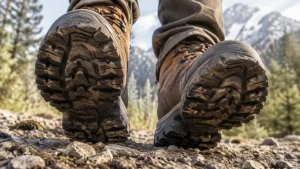
Vibram-style soles are soft, sticky rubber compounds paired with deep lug patterns, designed to cling to wet rock. The best-known example is Vibram Idrogrip, which Patagonia describes as compounded for maximum grip on wet surfaces. You’ll find it on the Simms Flyweight and Patagonia Foot Tractor, and on the heavier Simms G4 Pro, which also ships with two cleat sets.
Korkers uses its own sticky formula, Kling-On, on the Korkers Chrome Lite and Korkers Darkhorse. Sitka’s Sitka CrossCurrent uses a sticky rubber outsole paired with aluminum cleats.
The trade-off is hardness versus wear. Simms notes that its Idrogrip Flex compound on the Flyweight Access gives top grip but wears faster than standard Idrogrip. Softer rubber grips better and wears quicker, a pattern that holds across most Vibram-style soles. A 2018 review of an older Orvis boot noted similar rapid tread wear.
Practical advice: choose softer compounds for slick, technical wading, and harder or resoleable setups if you fish daily on abrasive riverbeds.
Features That Actually Matter (And Those That Don’t)
Features that matter:
- Ankle support. Rolling an ankle mid-river ruins a trip and invites a fall.
- Drainage. Drain ports and hydrophobic uppers cut weight and drying time.
- Cleat compatibility. Studs and cleats let you tune traction for each river.
- Neoprene-friendly fit. Boots sized for booties prevent cramped, cold toes.
- Resoleability. It turns a consumable into a long-term tool.
Features that matter less than marketing suggests:
- Color and styling. Pretty won’t keep you upright.
- “Ultralight” on short walks. Weight savings only pay off if you walk far.
- Extra branded tech names. Look at the actual materials and traction system instead.
- Fancy closures. A Boa dial is convenient, but good laces work fine.
The honest filter is simple: if a feature doesn’t improve grip, fit, support, or longevity, it’s decoration.
Long-Term Cost & Maintenance: What Rubber Sole Wading Boots Really Cost per Season
The price tag is only half the story. Here’s some illustrative arithmetic, not measured lifespans. If a boot in the $200 range lasts about three seasons, you’re paying roughly $65–$70 per season. A premium resoleable boot in the $500 range that survives ten seasons with a resole or two lands near $50 per season before resole costs.
Maintenance extends either number. After each trip:
- Rinse mud and organisms from soles, laces, and uppers.
- Dry boots fully in shade before storing them.
- Inspect lugs and replace worn studs or cleats.
- Check seams and abrasion zones for early damage.
- Resole when lugs flatten rather than waiting for failure.
Brands like Simms and Patagonia offer resoling or repair on certain models, and that changes the economics for frequent anglers. For casual anglers, a budget boot with studs is often the smarter spend.
River Wading Safety: Boots, Belts and Staffs That Keep You Upright
River wading safety starts with a humble truth: your boots are the second line of defense. As Orvis explains in its freshwater wading tips, knowledge and experience come first, and boots come right behind.
Rubber sole wading boots for river fishing give you grip, but they can’t rescue a bad decision. Pair them with these essentials:
- A snug wading belt. After a PFD, a belt is the most important piece of gear for reducing drowning risk, because it limits water flooding your waders.
- A wading staff. Hold it on your downstream side so it offsets the current’s pressure. It also lets you probe depth and bottom softness.
- A whistle and a buddy. Both are cheap insurance.
- A willingness to turn back. If a crossing feels wrong, skip it.
River wading safety is mostly judgment. The right boot, with studs where needed, reduces slips. Good habits prevent the swim.

FAQs About Rubber Sole Wading Boots for River Fishing
❓ Are rubber sole wading boots as grippy as felt on slick rocks?
❓ Do I need studs with rubber sole wading boots for river fishing?
❓ How long do sticky rubber wading boots last?
❓ Can I wet wade in rubber sole wading boots?
❓ What size wading boot should I buy for stockingfoot waders?
Conclusion
The best rubber sole wading boots for river fishing aren’t a single winner. They’re a match between your river, your budget, and your rules. The Simms Freestone is the safest all-rounder, and the Orvis Clearwater offers value for newcomers. The Korkers Chrome Lite is the nimble light pick, while the Korkers Darkhorse solves the travel-and-regulations puzzle with swappable soles. The Simms Flyweight delivers Vibram traction at feather weight, the Sitka CrossCurrent puts comfort first with replaceable aluminum cleats, and the Patagonia Foot Tractor is the long-term investment.
Whatever you choose, remember the bigger picture. Felt sole bans are part of a wider shift toward felt-free wading footwear, and cleaning your gear matters as much as the sole under it. Add studs where your river demands them, keep your boots dry and rinsed, and treat river wading safety as non-negotiable.
If you take one thing away, let it be this: buy for the water you actually fish, not the water you dream about. The right pair, paired with a belt and a staff, makes every crossing a little less scary and every day on the river a little longer.
Recommended for You
- Felt Sole Wading Boots For Slippery Rocks: 7 Best Picks 2026
- Wading Boots For Fly Fishing: 7 Best Grippy Picks For 2026
- Fishing Boots For Women: 7 Best Picks Ranked For 2026
Disclaimer: This article contains affiliate links. As an Amazon Associate, I earn from qualifying purchases. If you purchase products through these links, we may earn a small commission at no additional cost to you.
✨ Found this helpful? Share it with your friends! 💬🤗
