

In This Article
Fishing boots for women are waterproof, slip-resistant boots built for boats, banks, docks and rivers, ideally shaped on a women’s last. That means a narrower heel, a lower-volume interior and a better arch fit than a downsized men’s boot. Choose the right pair and you stay dry, stable and blister-free for hours.
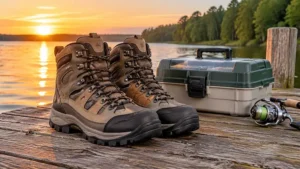
For years, the gear aisle treated women as an afterthought. The standard fix was to buy a men’s boot two sizes down and hope. Sound familiar? Heel lift, pinched toes, wet socks by noon. 🎣 The fix isn’t complicated, but it does take some homework.
The market has changed because the anglers have. According to the Recreational Boating & Fishing Foundation’s 2025 report, women now make up 37 percent of U.S. fishing participants, in a record year of 57.9 million anglers. Brands have noticed, and the choices for fishing boots for women are the best they’ve ever been.
This guide covers seven real boots across budget, mid-range and premium tiers, from deck-ready ankle boots to knee-high rubber and true wading boots. We’ll explain what each spec means on the water, who each pair suits, and where the trade-offs hide. Everything here comes from published specs and aggregated reviews, not hype. Prices appear as ranges because they change constantly. Check current pricing before you buy.
Quick Comparison: The Best Fishing Boots for Women at a Glance
Not sure where to start? This table sorts the field by boot style and best use. Each pick gets a full breakdown further down.
| Boot | Style | Standout Trait | Best For |
|---|---|---|---|
| XTRATUF Women’s 6″ Ankle Deck Boot | Ankle rubber | Chevron non-marking outsole | Boat decks and everyday wear |
| Grundéns Women’s Deck-Boss Ankle Boot | Ankle rubber | Razor-siped grip, roomy comfort | Long days on wet fiberglass |
| XTRATUF Women’s 15″ Salmon Sisters Legacy | Knee-high rubber | Triple-dipped seamless barrier | Heavy spray and cold surf |
| MUCK Women’s Wetland Boot | Mid-calf neoprene | Contoured outsole, EVA midsole | Muddy banks and uneven shores |
| Korkers Women’s Darkhorse | Wading boot | Women’s last, swappable soles | River wading all season |
| Simms Women’s Freestone Boot | Wading boot | Dual-density EVA midsole | Hiking in to remote water |
| Redington Women’s Siren | Wading boot | Easy on and off, fast draining | First-time waders on a budget |
The table shows a clear split. Ankle deck boots like the XTRATUF Women’s 6″ Ankle Deck Boot and the Grundéns Women’s Deck-Boss Ankle Boot are for boats and docks. The Korkers Women’s Darkhorse and Redington Women’s Siren are made for standing in moving water. The MUCK Women’s Wetland Boot and the XTRATUF Women’s 15″ Salmon Sisters Legacy fill the gap for shorelines and cold, wet work. Decide where your feet will spend most of their time, and half your choice is already made.
💬 Just one click — help others make better buying decisions too!😊
Top 7 Fishing Boots for Women: Expert Analysis
Each review below translates specs into on-the-water meaning and summarizes what published reviewers report. No invented quotes, no pretend testing. Where reviews are thin, I say so.
1. XTRATUF Women’s 6″ Ankle Deck Boot — the classic boat-deck standard
The XTRATUF Women’s 6″ Ankle Deck Boot is the pair most people picture when they hear “fishing boot.” It’s a hand-layered, fully waterproof rubber ankle boot with neoprene goring and woven pull tabs, so you can kick them on at the dock without a wrestling match.
The slip-resistant, non-marking chevron outsole is the headline spec. On a wet deck it channels water out from under your foot, and the non-marking compound keeps skippers happy. The pair weighs about 2 lbs 8 oz, light for waterproof rubber. Sizes run from 5 to 11, so smaller feet are covered.
Based on the spec comparison, this is a boat-and-bank boot rather than a hiking boot. It suits charter anglers, kayak launches, and anyone who wants one boot for fishing and rainy weekends. Reviewers consistently suggest ordering a half size up, and GearJunkie’s testing noted some rubbing at the back of the foot. Treat that as a break-in and sock-thickness question.
Pros:
- ✅ Chevron outsole grips wet decks confidently
- ✅ Pull tabs make on and off effortless
- ✅ Light for fully waterproof rubber
Cons:
- ❌ Some rubbing at the heel reported
- ❌ Limited ankle support for long hikes
Pricing sits in the roughly $100-$140 range depending on style and retailer. Value verdict: pricey for a rain boot, fair for a boot that lasts seasons.

2. Grundéns Women’s Deck-Boss Ankle Boot — roomy comfort for all-day deck duty
The Grundéns Women’s Deck-Boss Ankle Boot is built around one idea: you’ll be standing a long time. Its razor-siped outsole slices water away from the contact patch, so wet fiberglass feels less like an ice rink.
GearJunkie named it best overall in its women’s rain boot roundup. Reviewers there liked the wide fit and added support, saying it feels closer to a running shoe than a clunky rubber boot. Fish Alaska’s long-time gear tester also praised the thicker insole for comfort.
What the spec sheet won’t say plainly is this: the extra volume that makes the Grundéns Women’s Deck-Boss Ankle Boot comfortable for wider feet can feel loose if your heel runs narrow. A thicker sock or a heel-lock lacing trick helps. It’s also thinly insulated, so winter anglers will want a warmer option.
For anglers wanting an all-day deck boot that doubles as daily rain footwear, this is a smart pick. For narrow-heeled feet, test the fit before committing.
Pros:
- ✅ Razor-siped sole channels water from underfoot
- ✅ Thick insole cushions long standing days
- ✅ Anti-odor lining keeps boots fresher
Cons:
- ❌ Minimal insulation for cold weather
- ❌ Roomy fit may suit narrow heels poorly
It lands in the low-$100s list range and is frequently discounted. Good value, especially on sale.
3. XTRATUF Women’s 15″ Salmon Sisters Legacy — knee-high armor against spray and surf
Where ankle boots stop, the XTRATUF Women’s 15″ Salmon Sisters Legacy keeps going. This knee-high boot uses XTRATUF’s triple-dipped technique to create a seamless waterproof barrier, which matters because there are fewer seams for water to find.
GearJunkie rated the XTRATUF Women’s 15″ Salmon Sisters Legacy its top tall boot, at 9.0 out of 10. That fits its purpose: heavy spray, cold surf, rinsing fish, standing in shallow water.
Height is the practical advantage. Splashes that sneak over an ankle boot bounce off this one. The trade-off is weight and stiffness, since 15 inches of rubber isn’t a boot you hike all day in. It’s also the least “go anywhere” pair on this list, which makes it a specialist rather than an all-rounder.
Who should buy it? Boat anglers in rough, cold conditions, commercial-style fishing days, and anyone tired of wet socks from ankle-boot splash. Skip it if you want something nimble.
Pros:
- ✅ Seamless triple-dipped construction blocks leaks
- ✅ Knee height handles splash and shallow water
- ✅ Chevron outsole grips slick surfaces
Cons:
- ❌ Heavy and stiff for walking far
- ❌ Priciest rubber option here
Expect a range around $150-$180 at list pricing. Worth it if conditions are truly wet.
4. MUCK Women’s Wetland Boot — grippy mid-calf stability for muddy shorelines
The MUCK Women’s Wetland Boot brings a neoprene-style comfort approach to rough ground. A contoured outsole and EVA midsole give it more support than a flat deck boot, which pays off on riverbanks, marshes and uneven shorelines.
The Wearify ranked it best overall in its women’s fishing boot roundup. Reviewers there flagged two recurring downsides: the outsole grooves trap mud and take scrubbing to clean, and the boot runs large, so a half size down is often needed.
Consider the first complaint as the price of traction. Deep lugs bite into soft ground but hold onto it too. The sizing note is more important: if you order your usual size, expect heel slip. That’s relevant if you need a fit for narrower heel anatomy, because this boot rewards careful sizing and a snug sock.
For anglers who split time between banks, trails and boats, mid-calf height balances protection and mobility nicely.
Pros:
- ✅ Contoured outsole grips uneven ground
- ✅ EVA midsole cushions every step
- ✅ Mid-calf height blocks most splashes
Cons:
- ❌ Mud packs into outsole grooves
- ❌ Runs large, so sizing down helps
Pricing is typically in the $100-$150 range, and you should confirm the current price. Strong value for shoreline anglers.
5. Korkers Women’s Darkhorse — built on a women’s last with swappable soles
The Korkers Women’s Darkhorse is the first true wading boot on this list. Trident Fly Fishing describes it as built on a true women’s last, the shape difference we’ll dig into later. Fly Fisher Pro named it best all-rounder for its top-quality ankle support, fast drying and interchangeable soles.
That last feature matters more than it sounds. Interchangeable soles mean one boot can handle several conditions. Run a rubber sole in regulated waters, switch to a studded option for slick rock, and keep the same upper. It future-proofs your purchase against changing felt rules, which we cover below.
Ankle support is the second advantage. Wading means uneven cobbles, current pushing at your shins and slippery algae, and a supportive collar helps prevent rolled ankles.
Honestly, this is a boot that rewards anglers who fish moving water regularly. If you only stand on a dock, you’re paying for features you won’t use.
Pros:
- ✅ Women’s last improves heel and arch fit
- ✅ Swappable soles adapt to conditions
- ✅ Strong ankle support for river wading
Cons:
- ❌ Overkill for dock or boat fishing
- ❌ Premium pricing versus basic wading boots
Price likely falls in the mid-to-upper $100s range, so check current pricing. Excellent long-term value for committed waders.

6. Simms Women’s Freestone Boot — cushioned and ready for the hike-in
The Simms Women’s Freestone Boot targets anglers who walk before they wade. Its dual-density EVA midsole cushions every step, whether wading in slippery conditions or hiking to a remote fishing spot, according to the retailer’s specification sheet.
It comes with a rubber sole, an important detail for rules-conscious anglers. Fly Fisher Pro also reviewed the felt-sole version for its traction, which is a good reminder to check which sole you’re actually buying. Felt grips slick rock well but faces bans in many places, so rubber is the safer default.
Midsole cushioning is what separates a boot you tolerate from one you forget you’re wearing. After a three-mile hike to a pool, that difference shows up in your arches. Beyond that, public reviews for the women’s version were thin when I looked, so treat claims cautiously and read recent buyer feedback before purchasing.
A reputable brand, a sensible feature set and a clear identity make this a solid mid-range pick.
Pros:
- ✅ Dual-density EVA midsole cushions long hikes
- ✅ Rubber sole avoids felt restrictions
- ✅ Established brand with broad dealer network
Cons:
- ❌ Limited verified public reviews
- ❌ Less ankle structure than premium boots
Expect a mid-range price, around the $100-$200 range class, so verify current pricing. Fair value.
7. Redington Women’s Siren — the easy-on, easy-draining entry point
The Redington Women’s Siren earns its place as the friendliest entry into wading boots. Fly Fisher Pro labeled it best entry level, citing easy slip on and off, great traction and grip, and fast drying and draining.
Fast draining is underrated. A boot that holds water feels heavy and gets cold, while one that sheds it keeps your feet comfortable and dries quicker overnight. Easy entry removes the daily wrestling match, especially with cold hands.
The honest limitation is that entry-level means fewer refinements. Expect less structure and fewer customization options than the Korkers Women’s Darkhorse. For a new angler testing whether wading suits them, that’s a fair deal.
Reviewers across several guides group this as a comfortable, forgiving boot, which is exactly what beginners need. Before ordering, confirm the sole type listed for the exact variant you’re buying.
Pros:
- ✅ Slips on and off without a struggle
- ✅ Drains and dries quickly after wading
- ✅ Friendly price for first-time waders
Cons:
- ❌ Fewer premium support features
- ❌ Sole options vary by variant
Pricing typically sits at the budget end of the wading category, generally under $150, so check current listings. Great starter value.
Here’s how the seven stack up on paper and in published feedback.
| Boot | Price Range | Height | Review Sentiment | Best For |
|---|---|---|---|---|
| XTRATUF Women’s 6″ Ankle Deck Boot | ~$100-$140 | Ankle | Grip praised; sizing up advised | Boats, daily wear |
| Grundéns Women’s Deck-Boss Ankle Boot | Low-$100s | Ankle | Comfort and fit praised | Long deck days |
| XTRATUF Women’s 15″ Salmon Sisters Legacy | ~$150-$180 | Knee | Top tall pick in roundup | Cold, wet conditions |
| MUCK Women’s Wetland Boot | ~$100-$150 | Mid-calf | Grip good; runs large | Muddy shorelines |
| Korkers Women’s Darkhorse | Mid-to-upper $100s | Wading | Best all-rounder label | River wading |
| Simms Women’s Freestone Boot | ~$100-$200 | Wading | Limited reviews | Hike-in fishing |
| Redington Women’s Siren | Under ~$150 | Wading | Best entry-level label | Beginners |
Notice the pattern: price rises with specialization. The Redington Women’s Siren and XTRATUF Women’s 6″ Ankle Deck Boot are friendly starting points. The Korkers Women’s Darkhorse costs more but its swappable soles spread that cost across several seasons. If you’re torn, match the boot to where you stand most often rather than buying the most expensive pair.
What Are Women’s Waterproof Angler Boots, Really?
Women’s waterproof angler boots come in three broad families, and “waterproof” means something different in each.
Rubber and neoprene boots (the XTRATUF Women’s 6″ Ankle Deck Boot, Grundéns Women’s Deck-Boss Ankle Boot, XTRATUF Women’s 15″ Salmon Sisters Legacy) have a solid, seamless shell. Water can only enter over the top. That’s why height matters: an ankle boot is waterproof until the water level passes the collar.
Wading boots like the Korkers Women’s Darkhorse aren’t waterproof at all. They’re designed to be worn over waterproof waders or stockingfoot neoprene, getting wet inside and draining fast. Pairing them with waders is what keeps you dry.
Hybrid boots such as the MUCK Women’s Wetland Boot use neoprene uppers with rubber lower shells, trading some stiffness for comfort and a bit of warmth.
A practical test works for any pair. Fill a bucket to just below the collar, stand in it for ten minutes and check your socks. Cheap, quick and far better than trusting a product page.
Pay attention to insulation as well. The Grundéns Women’s Deck-Boss Ankle Boot is reported to have limited insulation, so winter anglers need warmer options, while neoprene-lined models hold heat better. Waterproofing keeps water out, but only insulation keeps cold out.

Female Fit Fishing Footwear: Why the Last Matters
Female fit fishing footwear isn’t marketing fluff. A last is the foot-shaped mold a boot is built around, and women’s lasts differ from men’s in measurable ways.
Trident Fly Fishing explains that a women’s-specific last narrows the heel and adjusts arch placement compared with a men’s boot, reducing blistering and heel slip. Gear Institute’s review noted that most boots historically didn’t mimic the V-shaped foot, narrow at the heel and broader across the toes, that many women share. Three of the five boots in its women’s test were designed expressly for women.
Here’s the practical impact. A downsized men’s boot gets the length right but the shape wrong. Your heel floats, your toes crowd, and the arch support lands in the wrong place. Over a day of wading, that’s a recipe for blisters and fatigue.
When you shop, look for phrases like “women’s-specific last” or “women’s fit” in the product details. The Korkers Women’s Darkhorse is described as built on a true women’s last, which is why it suits anglers with narrower feet.
Be aware of the caveat: “women’s” on a label doesn’t guarantee a better fit. Foot shapes vary widely. Treat the label as a good starting point, not a promise.
Fit for Narrower Heel: How to Stop Heel Slip
A fit for narrower heel is the single most common unmet need in this category, and it’s fixable. Heel slip happens when the boot’s heel pocket is wider than your heel, letting it lift with each step.
Start with the right boot shape
Look for lower-volume interiors and women’s lasts. Gear Institute’s review of the Patagonia Women’s Ultralight Wading Boot reported zero heel slippage and best-in-test fit for narrow feet, though that review dates from 2017, so verify that model’s current availability. It shows what a well-designed heel pocket can do.
Size carefully
Some boots run large. The MUCK Women’s Wetland Boot is reported to run large, so a half size down often helps. Conversely, XTRATUF ankle boots are commonly advised half a size up. Always read size notes for the specific model.
Use lacing and sock tricks
For lace-up wading boots, a heel-lock (runner’s) lacing pattern pins the heel down. For pull-on rubber boots, a thicker wool or neoprene sock takes up spare volume. Aftermarket insoles with a deeper heel cup also help.
Know when to walk away
If a boot slips after these fixes, try a different brand. Persistent slip means the last doesn’t match your foot, and no trick overcomes that.
Women in Fishing: Why Gear Is Finally Catching Up
Women in fishing aren’t a niche anymore. The RBFF’s 2025 Special Report shows women at 37 percent of participants, the same record-high share as the previous year, according to coverage of the report. That’s millions of anglers who previously settled for ill-fitting gear.
Earlier research from the foundation found that a 10 percent increase in women’s participation could add roughly $1.9 billion in industry revenue. Money talks, and brands have responded with dedicated lasts, women’s sizing charts down to size 5 and collaborations like the Salmon Sisters line.
Gear Institute’s review points out the old economics: women were a minority among anglers, which made it hard for brands to commit to women’s boots. As the numbers shift, so do the product lines.
What does that mean for you? Choice and leverage. You no longer need to compromise on fit, and you can expect more options each season. Vote with your purchases, leave honest reviews and support brands that build for women. The better the data on female buyers, the better the next generation of boots.
How to Choose Fishing Boots for Women: 6 Steps
Here’s a quick framework for choosing fishing boots for women without second-guessing yourself.
- Decide where you’ll stand. Boats and docks favor ankle deck boots; rivers demand wading boots; muddy shores suit mid-calf boots.
- Match height to splash risk. Ankle boots handle spray, but knee-high boots handle surf and shallow standing water.
- Check the outsole. Chevron or siped rubber works on decks; lugs and studs work on rock and mud. Non-marking soles keep boat owners happy.
- Prioritize women’s-specific fit. Look for a women’s last, especially if you need a fit for narrower heel anatomy.
- Think about weather. Cold-weather angling needs insulation; summer wading needs fast drainage.
- Check local rules. Felt soles are banned in some places, so a rubber or swappable sole saves headaches.
Each step trims your options. By step four, most anglers have two or three finalists. Use sizing notes and return policies to settle the tie.
Wading Boots vs Rubber Deck Boots: A Detailed Comparison
These two categories solve different problems, so comparing them directly saves money.
| Feature | Rubber Deck/Mid Boots | Wading Boots |
|---|---|---|
| Waterproof alone? | Yes, up to collar | No, worn with waders |
| Ankle support | Moderate | High |
| Best surface | Decks, docks, mud | Rocks, riverbeds |
| Drying time | Quick to wipe, slow to dry inside | Designed to drain fast |
| Best For | Boats, bank fishing | River wading |
Rubber boots like the XTRATUF Women’s 6″ Ankle Deck Boot are simple: slip them on, fish, rinse them off. They shine in mixed conditions and double as rain boots. Their weakness is support on uneven rivers.
Wading boots like the Korkers Women’s Darkhorse and Redington Women’s Siren provide structure and traction in current, but they need waders and more care.
The analysis is straightforward. If your fishing happens above the ankle-deep line, rubber boots are cheaper and easier. If current is pushing at your shins, wading boots are safer, and wearing the wrong type is how ankles get rolled.
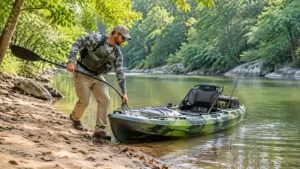
Soles, Studs and Regulations: What Every Angler Should Know
Sole choice isn’t just about grip. It’s also about the law and the ecosystem.
Felt grips slick rock well but stays damp for a long time, which lets organisms travel between waterways. The Alaska Department of Fish and Game explains that its regulation prohibits footwear with felt or fibrous material on the soles, and notes that New Zealand’s 2008 ban over didymo was the first of its kind. Its felt-sole FAQ is a good primer.
Rules vary. Yellowstone banned felt-soled boots and waders in 2018. Rhode Island and South Dakota restrict them, and Maryland has its own rules. Vermont repealed its ban in 2016 after concluding it was ineffective, which shows the debate isn’t settled. Local and federal land managers can add their own rules, so always check before you travel.
The safe approach? Choose rubber soles and clean your boots thoroughly between waters. Experts quoted in coverage of the Yellowstone ban stressed that cleaning matters more than sole material. A Korkers Women’s Darkhorse with a swappable sole gives you flexibility if rules change.
Practical Usage Guide: Your First 30 Days With New Boots
A new pair performs best when you treat the first month as a break-in period. Here’s a simple schedule.
Days 1-7: Short wears
Wear your boots around the house and on short errands. Rubber boots soften slightly with body heat, and the heel pocket settles. If you feel hot spots, adjust socks before blaming the boot.
Days 8-14: First outing
Take a short fishing trip near the car. Check for heel lift and pinch points. Carry a spare pair of socks and moleskin.
Days 15-30: Settle in
Move to full days. Rinse boots with fresh water after every trip, especially in salt. Dry them upside down in shade, never near a heater, which can crack rubber.
Maintenance habits that pay off
- Scrub mud from deep lugs, particularly on the MUCK Women’s Wetland Boot, where grooves trap debris.
- Remove insoles to dry them separately.
- Inspect seams and soles monthly.
- Store them out of direct sunlight.
Common first-month mistakes
Skipping the rinse, drying with heat, and wearing cotton socks all shorten boot life. Wool or synthetic socks wick moisture and keep feet warmer. Small habits, big payoff.
Problem → Solution Guide: Fixing Common Boot Frustrations
Even good boots cause problems. Here are five common ones and what to do about each.
Problem 1: Sweaty, clammy feet. Rubber doesn’t breathe. Choose moisture-wicking socks and boots with breathable liners, such as the XPRESSCOOL liner on the XTRATUF Women’s 6″ Ankle Deck Boot, and air boots out after each trip.
Problem 2: Heel rubbing. Check size first. Try a thicker sock, a heel-lock lacing pattern or a heel grip pad. GearJunkie noted some rubbing on the XTRATUF ankle boot, so a break-in period matters.
Problem 3: Cold feet. Add insulation. Swap thin socks for merino wool, or step up to a neoprene-lined boot. The Grundéns Women’s Deck-Boss Ankle Boot has limited insulation, so it’s better for mild weather.
Problem 4: Slippery docks. Check that the outsole is designed for wet surfaces, like the chevron pattern on the XTRATUF Women’s 15″ Salmon Sisters Legacy. Clean worn soles regularly.
Problem 5: Stinky boots. Remove insoles, let boots dry fully and consider anti-odor lining, which the Grundéns Women’s Deck-Boss Ankle Boot includes.
Notice that most problems trace back to fit, socks or drying habits, not the boot itself. Fix those basics before blaming the brand.
✨ Don’t Miss These Exclusive Deals!
🔍 Take your fishing boots for women search to the next level with these carefully selected products. Click on any highlighted item to check current pricing and availability. The right pair will keep your feet dry, steady and comfortable for every cast!
Long-Term Cost and Value: Cheap Boots vs Smart Boots
The sticker price tells half the story. What matters is cost per season of comfortable use.
| Tier | Example | Price Range | Value Logic | Best For |
|---|---|---|---|---|
| Budget | Redington Women’s Siren | Under ~$150 | Low entry cost, easy start | Beginners |
| Mid-range | MUCK Women’s Wetland Boot | ~$100-$150 | Solid grip, shoreline versatility | Bank anglers |
| Premium | Korkers Women’s Darkhorse | Mid-to-upper $100s | Swappable soles extend life | Regular waders |
A boot that lasts four seasons at the premium end can cost less per outing than a budget pair replaced every year. Swappable soles on the Korkers Women’s Darkhorse add value, since a worn sole can be replaced instead of the whole boot.
Total ownership cost also includes socks, insoles and cleaning supplies. Those are small, but a quality insole can transform a mediocre boot. Meanwhile, rubber boots like the XTRATUF Women’s 6″ Ankle Deck Boot often double as everyday rain footwear, spreading cost across more days of use.
If your budget is tight, buy the best fit you can afford rather than the most features. A well-fitting mid-range boot beats an ill-fitting premium one every time.
Common Mistakes When Buying Fishing Boots for Women
Learn from other people’s wet socks. These are the usual pitfalls.
Buying by size alone. Brands run differently. The MUCK Women’s Wetland Boot runs large, while XTRATUF ankle boots are often advised half a size up. Read the size notes.
Ignoring heel fit. Length is only half the equation. A boot that fits long but slips at the heel will blister you quickly.
Choosing the wrong height. An ankle boot is lovely until you wade past the collar. Match height to water depth.
Forgetting the rules. Felt soles are banned in various places, and you won’t learn that until you’re standing at a river with the wrong boots.
Skipping the sock test. Try boots with the socks you’ll fish in. Thin dress socks tell you nothing.
Chasing the cheapest option. A low price means little if the boot leaks or rubs. Value comes from fit and durability.
Avoid those six and you’re ahead of most buyers. Everything else is detail.

FAQ: Fishing Boots for Women
❓ Are rubber boots or wading boots better for kayak fishing?
❓ Can I use fishing boots for women as everyday rain boots?
❓ How should women's fishing boots fit around the toes?
❓ How do I get fishing boots for women with wide calves?
❓ How long do women's rubber fishing boots last?
Conclusion: Pick the Boot That Matches Where You Stand
The best fishing boots for women aren’t a single product; they’re the right match between your fishing style and your foot. Stand on boat decks? The XTRATUF Women’s 6″ Ankle Deck Boot or Grundéns Women’s Deck-Boss Ankle Boot is your pair. Facing cold spray? The XTRATUF Women’s 15″ Salmon Sisters Legacy earns its height. Working muddy shorelines? Try the MUCK Women’s Wetland Boot. Wading rivers regularly? The Korkers Women’s Darkhorse offers fit and flexibility, the Simms Women’s Freestone Boot adds cushioned comfort for long hikes, and the Redington Women’s Siren keeps entry costs low.
Whatever you choose, prioritize fit first: a women’s last, a heel that holds and sizing that matches the specific model. Then check local sole rules and build a simple care routine. If you want to dig deeper into boot tests, Gear Institute’s women’s wading boot roundup and GearJunkie’s rain boot guide offer further independent perspectives.
Women are a growing force on the water, and your gear should reflect that. Stop settling for shrunken men’s boots, choose a pair built for your foot and get back to the part that matters: the fishing. 🎣
✨ Ready to gear up?
Click on any highlighted boot above to check current pricing and availability, and give your feet the support they’ve earned!
Recommended for You
- Fishing Boots For Wide Feet: 7 Best Roomy Picks For 2026
- Fishing Boots For Pier Fishing: 7 Best Grippy Picks (2026)
- Fishing Boots For Ice Fishing: 7 Warmest Picks Ranked (2026)
Disclaimer: This article contains affiliate links. As an Amazon Associate, I earn from qualifying purchases. If you purchase products through these links, we may earn a small commission at no additional cost to you.
✨ Found this helpful? Share it with your friends! 💬🤗
