
In This Article
Here’s the cruel joke of angling: you can spend four figures on a rod, then lose the whole day to a pinky toe being strangled by a boot. Standard boots are built for the average foot. Yours isn’t average, and the river doesn’t care.
What are fishing boots for wide feet? They are wading boots, rubber knee boots, or deck boots built on a roomier last, meaning a broader forefoot, a taller toe box and a fuller instep. Toes can splay naturally, and your feet have space for neoprene stockings, thick socks or orthotics without pinching or numbness.
This matters more than it sounds. Wet feet swell, cold feet cramp, and a boot that’s merely “snug” at the shop becomes a vise after six hours of wading. Boot makers also size up to fit wader booties, which leaves many wide-footed anglers with boots that are long enough but still too narrow.
So this guide is built on research, not wishful thinking. I compared manufacturer width listings, retailer fit notes and aggregated buyer feedback. Editorial testers did the same in Field & Stream’s tested wading boot roundup, which singles out one boot as best for wide feet. Below you’ll find seven real contenders, honest width verdicts, and the fit tricks the product pages leave out.
Quick Comparison: Best Fishing Boots for Wide Feet at a Glance
| Boot | Type | Width Signal | Price Range | Best For |
|---|---|---|---|---|
| Simms Freestone | Wading boot | Brand lists an EEE last | Roughly $150-$220 | Simms Freestone suits value-hunting wide-footed waders |
| Simms G3 Guide | Wading boot | Brand lists an EEE last | Roughly $250-$350 | Simms G3 Guide suits long guide days |
| Patagonia x Danner Foot Tractor | Wading boot | Named best for wide feet by Field & Stream | Premium, often $300-$400 | Patagonia x Danner Foot Tractor suits hike-in anglers |
| Frogg Toggs Hellbender | Wading boot | Marketed “wide wading last” | Roughly $60-$130 | Frogg Toggs Hellbender suits tight budgets |
| Korkers Darkhorse | BOA wading boot | Athletic fit; owner reports vary | Roughly $180-$230 | Korkers Darkhorse suits mixed terrain |
| XTRATUF Legacy 15″ | Rubber boat boot | Standard last; roomier NXT variant exists | Roughly $165-$185 | XTRATUF Legacy 15″ suits deck and dock work |
| Muck Arctic Sport | Insulated rubber boot | Regular width; stretchy neoprene | Roughly $150-$200 | Muck Arctic Sport suits cold-weather and ice fishing |
Prices are ranges at the time of research and change often. Check current price before buying.
Looking at the table, the Simms Freestone is the cleanest answer for most wading anglers because its width is documented by the manufacturer, not just implied by a marketing phrase. The Frogg Toggs Hellbender wins on price, but you’ll trade away some refinement. The two rubber boots, the XTRATUF Legacy 15″ and Muck Arctic Sport, sit in a different category entirely: they’re for boats, docks and cold, not for rock-hopping a trout stream.
💬 Just one click — help others make better buying decisions too!😊
Top 7 Fishing Boots for Wide Feet: Expert Analysis
1. Simms Freestone — the documented-width value pick
The standout here is simple: Simms publishes an EEE width for this boot, so you aren’t guessing. Plenty of brands whisper “roomy fit” and leave you to find out the hard way.
The Simms Freestone pairs a synthetic leather upper with a dual-density EVA midsole and a Hardbite-compatible outsole. Translation: it drains and dries faster than old-school leather, cushions your arches over long gravel bars, and accepts studs for slick rock. A partial neoprene lining also helps you pull it on over stockingfoot waders.
Based on the spec comparison, this is the boot I’d steer a first-time wide-footed buyer toward. One retailer review comes from an angler with an EE-EEE foot who called Simms and was pointed to the widest-last models, then bought a full size above his street size and called the fit perfect. Other reviewers warn that Simms sizing runs small, so follow the brand’s chart.
Pros:
- ✅ Brand-listed EEE width removes guesswork
- ✅ Light when wet and quick to dry
- ✅ Strong value for the build quality
Cons:
- ❌ Sizing runs small; the chart is mandatory
- ❌ Materials feel average versus premium boots
Expect roughly $150-$220. Verdict: the best all-round value among wide width fishing boots.
2. Simms G3 Guide — all-day support on an EEE last
If the Simms Freestone is the sensible choice, the Simms G3 Guide is its more serious sibling, built for people who live in their boots.
It shares the EEE width listing, and its higher-end construction is aimed at guides who log seasons of long days. The practical meaning: more structure around the ankle and heel, which matters because a wide foot with poor lockdown slides forward and jams the toes, even in a roomy box.
My honest read is that this is for anglers wading more than a few days a month. Editors at Field & Stream and others put it near the top of their lists for overall performance, which tells you the engineering holds up beyond the width story. The trade-off is cost, and the stiffer platform needs a day or two to settle in.
Aggregated feedback on Simms boots in general centers on durability and support, with sizing the most common complaint. I couldn’t verify a large pool of reviews specific to the G3 Guide’s width, so lean on the brand’s listing and its size chart.
Pros:
- ✅ EEE width listed by the maker
- ✅ Supportive structure for long wading days
- ✅ Durable construction suited to heavy use
Cons:
- ❌ Premium price climbs fast
- ❌ Heavier and stiffer than hike-in boots
Expect roughly $250-$350. Verdict: worth it if you wade often; overkill for weekend casuals.
3. Patagonia x Danner Foot Tractor — editor-chosen for wide feet
The hook is credibility. Field & Stream’s testers named the Patagonia x Danner Foot Tractor the best wading boot for wide feet, a rare case of a publication saying so outright.
It’s listed in sizes 5-14 with a choice of Vibram or felt soles and traditional laces. Traditional laces matter more than they sound: they let you loosen the forefoot and tighten the ankle independently, which is exactly the trick wide feet need. A boa dial can’t do that quite as flexibly.
From the spec sheet, I’d position this as the boot for anglers who hike in. Danner’s heritage is hiking and work boots, so the platform reads more like trail footwear than a floppy wader boot. The caveat is that the sizing range tops out at 14, so very large feet may run out of options.
I found strong editorial support but few large-sample owner reviews, so treat the width claim as an editor’s verdict, not a mass-market consensus.
Pros:
- ✅ Named best for wide feet by testers
- ✅ Vibram sole option for stud-friendly grip
- ✅ Hiking-boot DNA suits long approaches
Cons:
- ❌ Premium price tier
- ❌ Sizes stop at 14
Expect a premium range, often $300-$400. Verdict: the splurge for hike-and-wade anglers.
4. Frogg Toggs Hellbender — the cheapest ticket to wide-last comfort
The standout: Frogg Toggs literally markets a “wide wading last,” and you can find it at a price that makes boot shopping painless.
The Frogg Toggs Hellbender uses a lightweight mesh-and-PVC upper, a padded ankle collar, enhanced toe and heel caps, and speed laces with a locking clip. In practice, mesh drains quickly, the collar reduces rub over bare neoprene, and the locking clip keeps your laces from creeping loose mid-stream. The wide last gives swollen feet and thick socks some breathing room.
Here’s the honest framing: it’s a budget boot, and you feel that in refinement, not in room. One roundup cites over two thousand reviews averaging around 4.5 stars on a major retail listing, and a common theme is that it punches above its price. A few buyers also report leaks after limited use, so inspect yours early and use the return window.
Pros:
- ✅ Wide wading last at a budget price
- ✅ Padded collar and locking speed laces
- ✅ Felt or cleated sole options
Cons:
- ❌ Fewer long-term durability signals
- ❌ A minority of buyers report early leaks
Expect roughly $60-$130 depending on sole and retailer. Verdict: outstanding entry point.
5. Korkers Darkhorse — interchangeable soles, firm support
Korkers built its name on swappable soles, and the Korkers Darkhorse is the do-it-all expression of that idea.
You get BOA M2 lacing, a hydrophobic upper, internal drainage, and Achilles support above the heel where wading boots tend to wear first. Retail listings describe a firm, rigid fit that protects your feet on rough rivers. The practical upside is that one boot adapts to felt, rubber or studded soles, where other boots need a second pair.
Now the width reality: reviewers describe an athletic last, noticeably snugger than the roomier Korkers Greenback. One wide-footed forum angler (4E) praised Korkers fit and logged years of use, while another buyer sized up a full size purely for width. So it can work, but it demands careful sizing and ideally an in-person try-on.
Pros:
- ✅ Swappable OmniTrax soles for any riverbed
- ✅ Dial lacing adjusts instantly mid-stream
- ✅ Achilles support where boots fail first
Cons:
- ❌ Athletic last may pinch the widest feet
- ❌ BOA pressure can create a hot spot on high insteps
Expect roughly $180-$230. Verdict: great for slightly wide feet, risky for very wide ones.

6. XTRATUF Legacy 15″ — the classic boat boot, with a width caveat
This is the Alaska fishing-fleet icon, and the standout is brutal simplicity: a triple-dipped, fully waterproof 15-inch pull-on.
The XTRATUF Legacy 15″ has a 15-inch shaft, slip-resistant outsole, and chemical-resistant rubber. Sizing is whole sizes only, and a buyer comment on a retail listing flags that wide feet should seek the model specific to wide feet. One reviewer of the roomier Legacy NXT says it fit his “excessively wide” feet comfortably, while another calls its wide sizes not wide enough. Feedback conflicts, which is itself useful information.
My take: this is the right call for deck, dock and tide-flat days, not for hiking. Buyers frequently describe heavy, rugged rubber and long service lives. Some women’s-version reviewers report narrow toes with a wide heel, so try before you commit.
Pros:
- ✅ Completely waterproof rubber construction
- ✅ Slip-resistant sole for wet decks
- ✅ Long service life reported by owners
Cons:
- ❌ Width feedback is inconsistent
- ❌ Heavy and unsupportive for long hikes
Expect roughly $165-$185. Verdict: a deck-boot legend that needs a careful try-on.
7. Muck Arctic Sport — warmth and forgiving neoprene for cold-water days
The standout is stretch. The Muck Arctic Sport uses a 5mm neoprene inner with fleece lining and a comfort range listed from roughly -40°F to 40°F.
Neoprene isn’t rigid like PVC or leather, so it flexes around a broader forefoot better than a stiff boot of the same nominal width. The tall version’s shaft measures about 17.6 inches in one lab review, and elastic at the top reduces splash-ins. A retailer Q&A answer states the boot comes in regular width and not wide, so verify current width options on the brand’s page, since lineups change.
Buyers often describe it as warm, comfortable and tough. A Canadian listing shows roughly 89 percent five-star ratings, and a Walmart listing shows 4.6 stars over 482 ratings. One reviewer notes the 5mm version fit better than the 8mm, which is a useful sizing clue.
Pros:
- ✅ Warm for ice fishing and cold shoulder seasons
- ✅ Neoprene flexes around wider forefeet
- ✅ Strong outsole traction in mud and snow
Cons:
- ❌ Regular width only, per retailer feedback
- ❌ Too warm for mild-weather fishing
Expect roughly $150-$200. Verdict: a cold-weather workhorse for slightly wide feet.
How to Choose Fishing Boots for Wide Feet: 7 Steps
- Measure at the end of the day. Feet swell, and wet feet swell more. Trace your foot on paper and measure across the ball.
- Fit your larger foot. Most people have one foot bigger than the other, and podiatry guidance says to fit the larger one. NHS Borders’ footwear buying guide is a solid primer.
- Look for a published width code. EEE on a spec page beats the vague phrase “roomy fit.”
- Try boots over your actual wading layer. Stockingfoot booties and thick socks eat volume.
- Check sizing rules. Simms, for example, says wading boots go over wader booties and recommends one full size up from your street shoe, with half sizes rounding up.
- Match the sole to your water and state laws. Studs and felt behave differently, and rules vary.
- Test the lacing. Traditional laces let you loosen the forefoot while locking the ankle, and dial systems trade that flexibility for speed.
One more point: never buy a boot hoping it will “break in” later. Podiatry sources are blunt that boots should fit properly from day one.
Wide Width Fishing Boots: Decoding E, EE and EEE
Shopping for wide width fishing boots gets confusing because wading brands don’t use the same width system as running shoes. Many wading boots ship in a single, often generous width, and only some brands publish a code at all.
A useful rule of thumb: D is typically considered standard for men, while E, EE and EEE step upward. A retailer note on the Simms Flyweight family warns that the width is D, not the EEE of the G3 Guide, Freestone and Tributary, and that wide feet will notice. Same brand, very different result. That’s why a brand label alone never settles the question.
When a boot doesn’t list a width, read the clues. Phrases like “wide wading last,” a taller toe box, and non-structured uppers all hint at volume. Reviewer sentiment is your cross-check: if multiple owners mention sizing up for width, assume the last is narrow.
A podiatrist quoted in trade press advises choosing wide, extra-wide or extra-extra-wide based on your measurement, with a fit that’s “snug, but not tight.” For wading, I’d read snug as no heel lift and no toe pinch, with room to wiggle.
Extra Room Angler Footwear: Volume Beats Length
Extra room angler footwear is about three-dimensional space, not just width. Your foot has length, width and height, and fishing adds a fourth variable: what you wear over it.
Consider the stack. A foot sits in a sock, then a neoprene or fabric wader bootie, then the boot. Each layer takes volume. That’s why wading boot makers recommend sizing up, and why a boot that seems roomy in the store can feel tight once stockingfoot waders go on.
Practical ways to create extra room:
- Size up by length to accommodate stockings, but watch heel slip.
- Pick a boot with a padded, flexible collar so the ankle isn’t compressed.
- Use thinner socks with stockingfoot waders, since layering thick wool inside a tight boot cuts circulation and makes feet colder, not warmer.
- Loosen the forefoot lacing and cinch only the ankle.
Wet-wading adds another twist. A 2.5-3.5mm neoprene sock with an integrated gravel guard takes less volume than layered setups, so you might fit a roomier boot snugly. A guide to wet-wading setups explains why low-cut boots sized for a bare foot work well.
Foot Comfort on the River: What Actually Matters
Foot comfort is cumulative. Nobody feels a 10mm pinch at 9 a.m.; they feel it at 3 p.m. while wading upstream.
The factors that drive foot comfort are well established. A good-fitting shoe should be long, deep and wide enough for your feet, and too-tight, too-short or too-shallow footwear rubs and causes problems. Podiatry leaflets also emphasize supportive soles with shock absorption that aren’t overly flexible.
In fishing terms:
- Midsole cushioning: dual-density EVA, as in the Simms Freestone, absorbs impact on cobble.
- Torsional stiffness: you want support, not a sloppy sole that lets your arch collapse.
- Heel lockdown: if your heel lifts, your toes slam into the front.
- Drainage and drying: damp boots get heavier and rub more.
- Warmth: cold restricts circulation, so insulated options like the Muck Arctic Sport help in winter.
If you wrestle with foot pain after fishing, treat the boot as a suspect before blaming age or fitness.
Orthotic-Friendly Boots: Making Room for Your Support
Orthotic-friendly boots need three things: removable factory insoles, enough interior depth for your insert, and enough width that the orthotic doesn’t squeeze your foot sideways.
The first step is simple: take out existing arch supports or insoles before dropping in your orthotics, a tip podiatry clinics repeat. The Foot and Ankle Clinic’s footwear-for-orthotics advice notes that a poorly matched shoe can compromise an orthotic’s benefit, and that small changes like adjusting your lacing can help.
Wide feet add a wrinkle. A podiatry practice in Michigan points out that a custom orthotic fitting a standard-width shoe may not suit a wide shoe without modification. Orthotics are shaped for one foot posture in one shoe geometry, so test yours in the boot before committing, ideally by wearing it around the house.
Which boots tend to work? Lace-up wading boots like the Simms Freestone, Simms G3 Guide and Patagonia x Danner Foot Tractor give you the most adjustability, because you can tune volume over the orthotic. Pull-on rubber boots like the XTRATUF Legacy 15″ are more challenging, since you can’t snug the instep. I couldn’t verify insole removability for every model, so confirm that before buying, and ask your podiatrist about fit.
Wide-Last Boots vs Standard Boots: Is the Upgrade Worth It?
| Factor | Wide-Last Boots | Standard-Width Boots |
|---|---|---|
| Toe splay | Room to spread and swell | Cramping risk by midday |
| Orthotic fit | Easier to accommodate | Often squeezes the insert |
| Layering space | Handles thick socks and stockings | Forces you to size up in length |
| Heel lockdown | Needs careful lacing | Often tighter heel |
| Price | Sometimes premium | Wide range |
| Best for | Wide feet, long days | Narrow to medium feet |
The table shows that wide-last boots solve the width problem directly instead of forcing the “size up and hope” compromise. That compromise creates a longer boot with heel slide, which causes blisters and toe-jamming on descents. If your forefoot measures wide, a proper wide last usually beats a longer standard boot.
The honest exception is a very narrow heel. A wide last can feel sloppy in the heel, so pay attention to lacing.
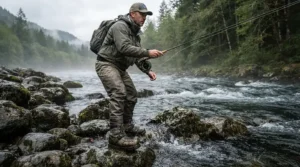
Common Mistakes When Buying Fishing Boots for Wide Feet
Mistake 1: Sizing up only for length. It cures toe-crush but creates heel lift. Choose width first.
Mistake 2: Trusting “roomy” marketing. Look for a published width or multiple owner reports.
Mistake 3: Assuming one brand has one width. The Simms Flyweight family is a D width, while other Simms models list EEE.
Mistake 4: Skipping the layering test. Try boots with your real stockings or socks.
Mistake 5: Ignoring return policies. Fit claims are hypotheses until your foot tests them, and that’s doubly true for online orders.
Mistake 6: Forgetting orthotics. Bring them to every fitting.
Practical Usage Guide: Setup, Break-In and Care for Wide Boots
Think of your first 30 days as a fitting period, not a honeymoon.
Day one, at home. Wear the boots indoors with your wading socks for an hour. Hot spots show up before you’re standing in a river. Podiatrists warn against buying footwear expecting it to loosen later, so return anything that hurts now.
Lacing for wide feet. Skip the usual snug-all-the-way lacing. Leave the forefoot looser, lock the ankle, and use a surgeon’s knot or locking clip at the instep. With dial systems like the Korkers Darkhorse, tighten gradually and watch for pressure on a high instep.
Sock strategy. One medium sock is often better than two thin ones. Moisture-wicking beats cotton, always.
Studs and soles. Install studs on a dry, warm boot so they seat properly. Felt works well but isn’t universal; it’s banned in Alaska, Maryland, Missouri, Nebraska, Rhode Island, South Dakota and Yellowstone National Park, per MidCurrent’s wet-wading setup guide. Check your state’s rules before you buy.
After every trip. Rinse off mud and sand, pull the insoles, and dry in the shade. Never leave boots in a hot car, because heat warps the glue and the foam.
Common first-month errors. Over-tightening the ankle cuff, forgetting to clean gravel out of the instep, and skipping insole removal after a wet trip.
Real-World Scenarios: Which Boot Matches Which Angler?
Scenario 1: The weekend trout angler on a budget. You fish two or three days a month, keep costs under control, and have a 2E-ish foot. The Frogg Toggs Hellbender gives you wide-last room at the lowest price, while the Simms Freestone is the upgrade if you plan to keep fishing for years.
Scenario 2: The hike-in backcountry wader. You hike two or three miles, then wade all day. The Patagonia x Danner Foot Tractor has hiking-boot DNA and an editor’s nod for wide feet. If budget matters more, the Simms Freestone handles moderate hikes.
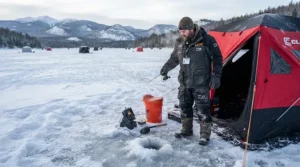
Scenario 3: The boat and dock angler in cold, wet weather. You never wade deeper than your ankles. The XTRATUF Legacy 15″ or Muck Arctic Sport keeps you dry, and stretchy neoprene makes the Muck friendlier to a broad forefoot.
Scenario 4: The orthotic wearer who fishes year-round. Choose a lace-up like the Simms G3 Guide, bring your orthotics to the fitting, and loosen the forefoot to preserve circulation.
Each profile reflects budget, environment and frequency, because the “best” boot is always the best one for a specific situation.
Problem → Solution: Fixing Common Wide-Foot Fishing Boot Issues
Problem: Numb toes after an hour. Likely forefoot compression. Loosen the forefoot lacing, swap to a thinner sock, or move to a boot with a published EEE width.
Problem: Heel slides up and down. You sized up too much. Use a heel-lock lacing technique, try a thicker insole, or choose a boot with Achilles support, as on the Korkers Darkhorse.
Problem: Blisters on the outer pinky toe. Classic wide-foot pinch. Try a wider last or a stretchier upper like neoprene on the Muck Arctic Sport.
Problem: Orthotic lifts you out of the boot. The insert takes too much volume. Remove the factory insole, check the boot’s depth, and consult a podiatrist.
Problem: Cold feet in a roomy boot. Too much dead air plus thick socks cutting circulation. Use one quality sock, and consider insulated rubber boots in winter.
Long-Term Cost and Value: Spending Smart on Fishing Boots for Wide Feet
| Boot | Price Range | Best Value Case |
|---|---|---|
| Frogg Toggs Hellbender | Roughly $60-$130 | Occasional anglers testing wide-last comfort |
| Simms Freestone | Roughly $150-$220 | Wide feet, regular use, documented EEE |
| XTRATUF Legacy 15″ | Roughly $165-$185 | Boat anglers who value long-lasting rubber |
| Muck Arctic Sport | Roughly $150-$200 | Cold-weather anglers |
| Korkers Darkhorse | Roughly $180-$230 | Interchangeable soles replace extra pairs |
| Simms G3 Guide | Roughly $250-$350 | Heavy wading seasons |
| Patagonia x Danner Foot Tractor | Premium, often $300-$400 | Hike-and-wade specialists |
If a boot lasts three seasons at 20 days a year, a mid-priced pair costs only a few dollars per outing. The cheapest boot becomes expensive if it hurts and you stop fishing. Korkers’ removable soles also reduce long-term cost, because you can replace a worn sole rather than the whole boot.
Prices are ranges and will vary by retailer and sale cycle, so check current price before buying.
FAQ: Fishing Boots for Wide Feet
❓ Do wading boots run narrow or wide?
❓ Should I size up in fishing boots for wide feet?
❓ Can I wear orthotics in wading boots?
❓ Are rubber boots comfortable for wide feet?
❓ How do I stop numb toes in tight fishing boots?
Conclusion: Stop Squeezing Your Feet Into the Wrong Boots
Fishing boots for wide feet aren’t a luxury; they’re the difference between fishing until dark and limping to the truck by noon. The pattern across the research is consistent: published width beats marketing language, lace-up designs give wide feet the most control, and your fitting setup matters as much as the model name.
If you want the safest bet, the Simms Freestone is hard to beat for documented EEE width and value. The Simms G3 Guide and Patagonia x Danner Foot Tractor are the quality-first picks, the Frogg Toggs Hellbender is the budget door-opener, and the Korkers Darkhorse rewards slightly-wide feet that value interchangeable soles. For decks and deep cold, the XTRATUF Legacy 15″ and Muck Arctic Sport have earned their reputations, with the width caveats noted above.
Whatever you choose, measure late in the day, test with your real layers, and test your orthotics before the river does it for you. Your feet carry you through every cast, so give them the room they’ve earned.
Recommended for You
- Fishing Boots For Pier Fishing: 7 Best Grippy Picks (2026)
- Fishing Boots For Ice Fishing: 7 Warmest Picks Ranked (2026)
- Waterproof Fishing Boots: 7 Best Picks That Stay Dry (2026)
Disclaimer: This article contains affiliate links. As an Amazon Associate, I earn from qualifying purchases. If you purchase products through these links, we may earn a small commission at no additional cost to you.
✨ Found this helpful? Share it with your friends! 💬🤗
