
In This Article
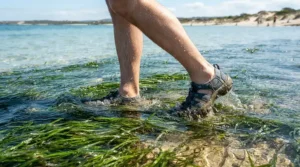
Everyone obsesses over the rod, the reel and the fly box. Meanwhile, the most abused piece of gear on a flats trip is the one strapped to your feet. Sand grinds. Salt eats. Coral slices. A single pair of wading boots for saltwater flats fishing has to survive all of it, then still feel decent at hour six, when the tide is dropping and a tailing fish finally shows itself.

What Are Wading Boots for Saltwater Flats Fishing?
Wading boots for saltwater flats fishing are low-profile boots or shoes built for walking sand, mud, grass and coral in shallow saltwater. They combine puncture-resistant soles, abrasion-resistant uppers, corrosion resistant hardware and non-marking outsoles for skiff decks. They also use materials that drain and dry fast instead of holding brine.
Why bother with all that engineering? Because the flats bite back. The National Capital Poison Center notes that roughly 1,500 to 2,000 stingray injuries are reported across the US every year. Sharp shell and coral add a steady background hum of cuts and bruises. Good foot protection on flats is not a luxury. It is the thing that keeps a long-planned trip from ending on day two.
This guide is built from spec sheets, independent tester write-ups and aggregated retailer-review sentiment, not from staged personal anecdotes. Where a product has little verifiable review data, I say so. All prices are ranges, so check current price before you buy.
Quick Comparison: Saltwater Flats Wading Footwear at a Glance
| Product | Style | Closure | Price Range | Best For |
|---|---|---|---|---|
| Simms Flats Sneaker | Mid-cut lace-up | Laces | $180-$230 | Rocky flats with all-day support |
| Patagonia River Salt Wading Boots II | Wader-compatible boot | Laces and toggle | Mid-$300s | Anglers who fish salt and fresh |
| Korkers Salt Sneaker | Low-cut sneaker | Laces | Around $150 | Wade-heavy trips on a budget |
| Simms FreeSalt Boot | Traditional boot | Laces | Around $230 | Waders, jetties and surf |
| Orvis PRO Approach Saltwater Hiker | Mid-height wet-wading boot | Laces and gravel guard | Around $230 | Muddy, rocky wet wading |
| Simms ZipIt II Flats Booties | Zip-up bootie | Zipper | $90-$150 | Travelers who want quick on and off |
| Paramount Outdoors Salt Flats Surf Wading Boot | Zip-and-lace boot | Zipper and laces | Around $125 | Surf and sand without metal parts |
Read the table by priorities, not price. The Simms Flats Sneaker and Orvis PRO Approach Saltwater Hiker buy you the most structure for barefoot or thin-sock wading. The Simms ZipIt II Flats Booties and Paramount Outdoors Salt Flats Surf Wading Boot trade some support for convenience and a gentler price. If waders are part of your plans, only the Patagonia River Salt Wading Boots II, the Simms FreeSalt Boot and the Paramount are designed to cooperate with them.
💬 Just one click — help others make better buying decisions too!😊
Top 7 Wading Boots for Saltwater Flats Fishing: Expert Analysis
Every entry below follows the same logic: what the specs mean in practice, who the boot suits and what the available review data actually says.
1. Simms Flats Sneaker — best all-round support on rocky flats
The Simms Flats Sneaker is the benchmark most flats-boot conversations circle back to, because it splits the difference between a floppy bootie and a full wading boot. A mid-cut synthetic upper, neoprene liner and molded rubber toe and heel caps are built to shrug off shell and coral. The non-marking gum rubber outsole keeps skiff decks clean. Independent testing lists the pair at roughly 45 ounces, with non-corrosive hardware and reinforced eyelets on the updated version. In practice, that is real ankle support without a pound of leather, but also a stiffer shoe that needs a break-in session before a big trip.
Based on the spec comparison, this is the pick for anglers who log miles of hard-bottom flats. Retailer-side expert notes and shopper reviews praise the sneaker-style fit and wet-deck traction, though one shopper described a narrow feel. One independent tester also saw delamination on the previous generation before the redesign addressed it. Note that there is no stud compatibility and no gravel guard, so fine sand can sneak in.
Pros:
- ✅ Strong ankle support and puncture resistance
- ✅ Non-marking gum rubber is skiff-friendly
- ✅ Non-corrosive hardware with reinforced eyelets
Cons:
- ❌ Stiff, with a real break-in period
- ❌ No gravel guard; sand can enter
Expect to pay around $180-$230 depending on retailer. For rocky flats and skiff days, that is strong value if the fit suits your foot.
2. Patagonia River Salt Wading Boots II — most versatile salt-and-fresh platform
The Patagonia River Salt Wading Boots II is the rare flats-capable boot that also behaves on a trout river. The abrasion-resistant Cordura nylon mesh upper drains and dries quickly. A rubber rand covers the toe and heel, and the Vibram Megagrip sole is non-marking yet accepts studs. A high collar with an adjustable ankle strap helps keep sand out, while low-profile lace protection reduces fly-line snags. The laces and toggles use anticorrosive hardware, and the boots are Italian-made. One retailer lists the pair at about 39 ounces.
The analysis is simple. If you own one boot and fish both salt and fresh, this design makes sense. Sizing depends on your socks: Patagonia-linked guidance says true to street size over a 4mm bootie, and one size down with thin liner socks. Because this is the second generation, the review pool is still small. The strongest endorsements come from retailers and a travel program that logged dozens of days on the water, which is useful but not the same as a broad buyer consensus.
Pros:
- ✅ Megagrip traction on rock, deck and sand
- ✅ Lace protection reduces line snags
- ✅ Works wet or over stockingfoot waders
Cons:
- ❌ Premium price for mostly warm-water use
- ❌ Limited review history for the redesign
Plan on the mid-$300s. It is expensive, but the value case rests on one boot replacing two.
3. Korkers Salt Sneaker — puncture plate at a friendly price
The Korkers Salt Sneaker is Korkers’ purpose-built warm-water boot. It is aimed at long wading days and frequent skiff transitions. A puncture-resistant internal plate sits inside the boot, which is protection a standard sneaker or water shoe simply does not offer. The upper is abrasion-resistant and hydrophobic, with salt-specific drainage so it sheds water between sessions. Closure is traditional laces with reinforced non-corrosive eyelets, and the Cush-Tech midsole adds underfoot cushion. Fixed Kling-On Deck rubber soles round out a low-profile build.
What does that mean for you? It is a lightweight, wade-heavy design that the retailer positions for demanding destinations like Christmas Island and the Seychelles. Two cautions apply. First, it is not intended to be worn with waders, and its fit differs from other Korkers boots, so consult the size guide. Second, it is new, and I could not verify a meaningful pool of buyer reviews at the time of research. Treat it as a spec-driven bet, not a proven favorite.
Pros:
- ✅ Internal plate guards against sharp coral and shell
- ✅ Hydrophobic upper dries quickly
- ✅ Corrosion-conscious laces and eyelets
Cons:
- ❌ Not designed for use with waders
- ❌ Limited track record and review data
At around $150, it is among the more attractive values for committed flats walkers.
4. Simms FreeSalt Boot — best when waders are on the menu
The Simms FreeSalt Boot is the traditional-boot answer to saltwater. A neoprene lining and dual-density EVA midsole sit inside non-corrosive, saltwater-friendly materials. The non-marking gum rubber outsole accepts studs, though a studded boot is not deck-friendly. Tall, sturdy sides add ankle support, and one independent tester measured it at about 54 ounces per pair. That heft is the price of stability on rock jetties and in surf.
Here is what the spec sheet will not tell you, but testers do: this boot was shaped by cold, slick northeast conditions where waders are standard. It can be wet-waded with a neoprene sock, but a 54-ounce boot is a lot to drag across a tropical flat all day. One retailer review, notably, says it feels better than flats sneakers on rocky coastline where those can get slippery. Review volume was still modest at the time of research.
Pros:
- ✅ Excellent ankle support on jetties and surf
- ✅ Compatible with studs and waders
- ✅ Neoprene lining makes entry easy
Cons:
- ❌ Heavy for warm-water wet wading
- ❌ Studded soles are not skiff-friendly
Around $230 is fair for a tough, wader-ready saltwater boot. It is overkill if you only walk sand flats in shorts.
5. Orvis PRO Approach Saltwater Hiker — most ankle support for wet wading
The Orvis PRO Approach Saltwater Hiker is a barefoot wet-wading boot with serious structure. It has a mid-height cut, an abrasion-resistant PU-cast exterior and a rubber toe. The Michelin outsole is non-marking, and a zippered gravel guard seals the opening. The laces, heel loops and foam footbed mean no wading socks are required. A tester in the Bahamas found it snugger and sportier than standard booties, with a sturdier sole on uneven ground.
In plain terms, this suits muck, jetties, mangrove edges and rocky flats where a floppy bootie is not enough. The catch, per that same tester, is that the gravel guard can trap shell fragments in deep mud. It also will not fit over waders. I could not find a meaningful buyer-rating pool when researching, so the case rests on construction details and one independent tester.
Pros:
- ✅ More ankle support than neoprene booties
- ✅ Zippered gravel guard blocks sand
- ✅ Non-marking Michelin outsole grips on decks
Cons:
- ❌ Gravel guard can collect shell in deep mud
- ❌ Not designed to go over waders
Budget around $230. It is a good value if your flats involve genuine terrain, not just sand.
6. Simms ZipIt II Flats Booties — fastest on and off for skiff days
The Simms ZipIt II Flats Booties win on simplicity. A perforated neoprene upper drains water, vulcanized rubber overlays add durability, and a full-length Bi-Fit lasting board gives a puncture-resistant base. A YKK locking corrosion-resistant zipper means no laces to tie, and the non-marking outsole is deck-friendly. Pair weight runs around 37 ounces. Retailers recommend wearing them barefoot or with a light liner, ordering your normal size or the nearest whole size up.
On a spec basis, they are ideal for travelers who need to jump on and off a boat. A retail page shows roughly four stars across 53 ratings. Reviewers consistently report comfort on Bahamas flats, with no blisters and no coral felt underfoot. Common complaints: sizing quirks, little support over long stretches and a slow dry. One reviewer also advises rinsing the zipper before unzipping to prevent jamming.
Pros:
- ✅ Zip entry beats lacing on a rocking skiff
- ✅ Puncture-resistant base protects feet
- ✅ Packs light for travel
Cons:
- ❌ Limited ankle support for long wades
- ❌ Slow to dry; zipper needs rinsing
Expect $90-$150 depending on retailer and timing. It is a strong value for occasional flats trips.
7. Paramount Outdoors Salt Flats Surf Wading Boot — zero-metal construction for surf and sand
The Paramount Outdoors Salt Flats Surf Wading Boot takes the most literal approach to corrosion: there is no metal in it. A tough neoprene upper zips and laces for a secure fit, paired with an athletic-style outsole. A removable 10mm insole lets you wet wade in summer or keep it in with waders, and it is compatible with wader booties without sizing up. Men’s sizes run 8 through 13.
The analytical take: this design is aimed at surf and sand rather than coral reefs, and an athletic outsole is not the same as a thick, puncture-plated flats sole. A retailer expert flags the zero-metal build as the key selling point for dedicated salt anglers. I could not verify a deep buyer-review pool, so view it as a spec-led value pick. It makes sense if rust is your worst enemy and the bottom is mostly sand.
Pros:
- ✅ Zero metal means no hardware rust
- ✅ Removable insole adds wet-or-dry versatility
- ✅ Zip-and-lace combo is easy to adjust
Cons:
- ❌ Surf-focused, less proven on sharp coral
- ❌ Limited reviews; men’s sizes only 8-13
At around $125, it is one of the lowest-risk ways to try dedicated saltwater footwear.
✨ Don’t Miss These Top Picks!
🔍 Take your next flats trip to the next level with these carefully selected boots. Click on any highlighted item to check current pricing and availability. The right pair will help you wade farther, fish longer and head home with your feet intact! 🎣
How to Break In, Rinse and Maintain Flats Boots
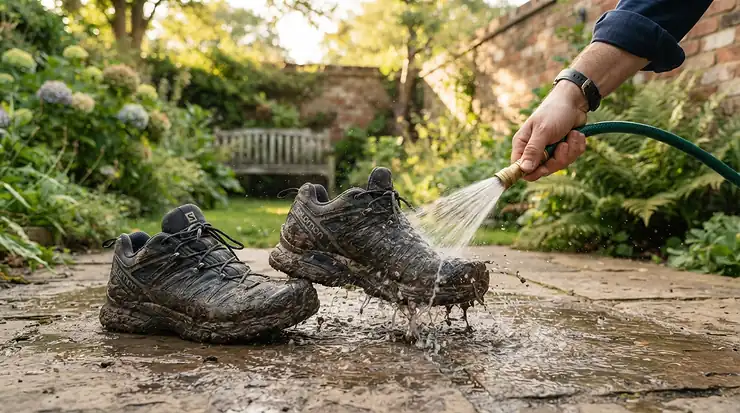
Even the best boots punish neglect. This is the routine that keeps wading boots for saltwater flats fishing performing season after season.
Before the trip (first 30 days):
- Wear stiff designs like the Simms Flats Sneaker for a few short, wet sessions before a destination trip.
- Test your sock combination at home. Patagonia-linked guidance shows how much sizing shifts with sock thickness.
- Pack a thin synthetic sock; avoid thick cotton.
After every saltwater day:
- Rinse in fresh water, including laces, eyelets and zippers.
- Pull insoles where possible and loosen the laces.
- Dry in shade, not in a hot car.
- Rinse a zipper before unzipping the Simms ZipIt II Flats Booties, as one reviewer advised.
If you travel between waters, borrow the U.S. Fish & Wildlife Service’s Clean, Drain, Dry routine: remove mud and plants, drain water and let gear dry completely before the next waterbody. It protects ecosystems, and as a bonus, rinsing and drying extend the life of corrosion resistant hardware.
The 30-day mistakes are predictable: skipping a rinse, storing wet boots in a bag and wearing a brand-new stiff boot for a ten-mile first day. Avoid all three and most boots will outlast their warranty-minded reputations.
Real-World Scenarios: Matching Boots to Your Flats Trip
The once-a-year Bahamas traveler (budget $100-$150, warm sand and coral, ten wading days a year). You need foot protection on flats that packs small and goes on fast. The Simms ZipIt II Flats Booties fit this brief, and the Korkers Salt Sneaker is the step-up option if you want laces and a puncture plate.
The Gulf Coast skiff angler (budget around $200, hard-bottom flats and boat decks, weekly use). You hop off the boat, wade, hop back on. Non-marking soles and real ankle support matter most, so the Simms Flats Sneaker is the natural match. If your wading skews to mud and mangrove edges, the Orvis PRO Approach Saltwater Hiker deserves a look.
The Northeast striper angler who occasionally chases flats (budget mid-$300s, jetties plus waders, weekly salt and monthly fresh). You need one boot for waders, rocks and the odd tropical trip. The Patagonia River Salt Wading Boots II or Simms FreeSalt Boot fit, depending on whether you value weight or armor.
The takeaway: the best flats fishing wading boots are the ones that match how often, where and over what you actually wade.
Problem → Solution: Fixing the Most Common Flats Boot Headaches
Sand and gravel inside the boot. Choose designs with built-in protection, like the Orvis PRO Approach Saltwater Hiker‘s zippered guard or the Patagonia River Salt Wading Boots II‘s ankle strap. Otherwise, a thin synthetic sock and gaiters help, per angler commentary.
Blisters and hot spots. Break in stiff boots at home and avoid cotton socks. A boot that fits perfectly with a bootie may swim with a liner sock, so size for what you will wear.
A jammed zipper. Rinse it before you unzip, especially on the Simms ZipIt II Flats Booties.
Slipping on rock or deck. Gum rubber suits skiffs, while studs help on slick jetties. Remember that the Simms Flats Sneaker does not accept studs, and a studded Simms FreeSalt Boot should not touch a deck.
Slow drying and odor. Remove insoles, open the boot and dry in shade between sessions.
Rusty laces. Inspect eyelets and hooks. If metal shows corrosion, replace the part or choose a design like the Paramount Outdoors Salt Flats Surf Wading Boot, which avoids metal altogether.
How to Choose Wading Boots for Saltwater Flats Fishing
Orvis makes the point that flats boots are designed for mobility and protection, and fit matters enough to try before you commit. Here is the process I would follow.
- Match the boot to the bottom. Soft sand tolerates a low-cut shoe. Coral, oyster and rock call for puncture plates or rigid overlays.
- Decide wet wading or waders. Barefoot designs like the Orvis PRO Approach Saltwater Hiker will not fit over stockingfoot waders.
- Audit the hardware. Look for corrosion resistant hardware on eyelets, hooks and zippers, or no metal at all.
- Test ankle support. If you roll ankles on uneven flats, choose mid-cut or higher.
- Check the sole. Non-marking rubber keeps skiff owners and guides happy. Decide up front whether you need studs.
- Size for your socks. Try boots with the exact socks you will wear on the water.
- Weigh packability. Heavy boots eat luggage allowance and legs.
Boots vs Booties vs Sneakers: Choosing Saltwater Flats Wading Footwear
| Type | Examples | Ankle Support | Foot Protection | Best For |
|---|---|---|---|---|
| Traditional boot | Simms FreeSalt Boot | High | High | Waders, jetties, surf |
| Wet-wading boot | Orvis PRO Approach Saltwater Hiker | Medium-high | High | Mud, rock, mangroves |
| Sneaker-style | Simms Flats Sneaker, Korkers Salt Sneaker | Medium | Medium-high | Long flats walks |
| Bootie | Simms ZipIt II Flats Booties | Low | Medium | Travel and quick access |
This table shows that saltwater flats wading footwear is a spectrum, not a single category. Support rises as weight rises, so decide how much structure your ankles genuinely need. For most warm-water walkers, a sneaker-style boot is the sweet spot. Heavier boots earn their place only when waders, jetties or rough rock are in the plan.
What about wearing old trail runners or beach sandals? Open sandals let sand in and offer little protection, and ordinary sneakers lack saltwater-ready hardware and puncture-resistant bases. They work in a pinch, but dedicated footwear is the safer long-term choice.
Foot Protection on Flats: What Boots Can and Can’t Do
Boots add a layer of armor against shell, coral and spines, but they do not make you invincible. University of Florida extension educators recommend the stingray shuffle, which means sliding your feet along the bottom so rays have time to move off. Boots are your second line of defense, and smart wading is the first.
Here is what protection really looks like:
- Puncture resistance: internal plates and lasting boards, like those in the Korkers Salt Sneaker and Simms ZipIt II Flats Booties, resist sharp debris.
- Abrasion resistance: rubber toe and heel caps, like on the Simms Flats Sneaker, protect against scraping.
- Ankle coverage: higher cuts help against shell, oysters and the occasional sting near the ankle.
No boot is guaranteed sting-proof, and I would not claim otherwise. Treat foot protection on flats as risk reduction, then practice the shuffle anyway.

Corrosion Resistant Hardware: What to Look For
Saltwater quietly destroys cheap hardware. Lace hooks seize, eyelets bleed rust and zippers jam. When shopping, check each metal part individually.
- Eyelets: the Korkers Salt Sneaker and Simms Flats Sneaker both feature reinforced eyelets, and Korkers specifies non-corrosive ones.
- Zippers: the Simms ZipIt II Flats Booties use a locking YKK corrosion-resistant zipper.
- Laces and toggles: Patagonia says the Patagonia River Salt Wading Boots II use anticorrosive hardware throughout.
- No metal at all: the Paramount Outdoors Salt Flats Surf Wading Boot sidesteps the issue.
One honest caveat: corrosion resistant is not corrosion proof. Even boots with anticorrosive hardware need a fresh-water rinse after saltwater use, a point one retailer stresses for the Patagonia boots. Hardware lasts longer when you rinse the salt before it crystallizes.
Features That Actually Matter (And Those That Don’t)
Matters: puncture protection, quick drainage, non-marking soles, honest fit and corrosion resistant hardware. These decide whether you finish the day comfortable.
Matters only sometimes: stud compatibility. It helps on slippery jetties, but it hurts on boat decks and does nothing on soft sand.
Mostly marketing: “waterproof” claims. Flats boots are built to drain and dry, not to stay sealed. Thick insulation is also irrelevant in warm water, and aggressive lugs can pick up mud and add weight without improving traction on sand.
The honest filter is simple. Ask whether a feature solves a real problem on your flat. If it does not, it is decoration.
Long-Term Cost & Maintenance: Price and Value
| Product | Price Range | Value Tier | Best For |
|---|---|---|---|
| Simms ZipIt II Flats Booties | $90-$150 | Budget | Occasional trips |
| Paramount Outdoors Salt Flats Surf Wading Boot | Around $125 | Budget | Surf and sand |
| Korkers Salt Sneaker | Around $150 | Mid-range | Wade-heavy travel |
| Simms Flats Sneaker | $180-$230 | Mid-range | Rocky flats |
| Orvis PRO Approach Saltwater Hiker | Around $230 | Mid-range | Mud and rock |
| Simms FreeSalt Boot | Around $230 | Mid-range | Waders and jetties |
| Patagonia River Salt Wading Boots II | Mid-$300s | Premium | Salt and fresh |
Total cost of ownership is price divided by wading days. A pair around $230 used on twenty wading days works out to roughly $11-$12 per day, while a pair around $125 over the same twenty days lands near $6 per day. The cheaper pair only wins if it lasts as long and protects as well, so factor in how aggressive your terrain is. Prices change often, so check current price at your retailer before deciding.
Common Mistakes When Buying Flats Boots
- Buying freshwater boots with rust-prone hardware. They may look fine for one season, then fail.
- Sizing by street shoe alone. Sock thickness changes everything, as the Patagonia sizing guidance shows.
- Ignoring deck rules. Studded or marking soles can make guides and boat owners unhappy.
- Over-armoring. A 54-ounce boot like the Simms FreeSalt Boot is great on jetties and tiring on a long tropical wade.
- Skipping the rinse. It shortens the life of any boot.
- Trusting hype over specs. Look for puncture plates, drainage and hardware details, not adjectives.
FAQ: Wading Boots for Saltwater Flats Fishing
❓ What size wading boots for saltwater flats fishing should I order?
❓ Do I need socks with flats fishing wading boots?
❓ Can I use studded soles on a skiff?
❓ How long do saltwater wading boots last?
❓ Are neoprene booties enough for foot protection on flats?
Conclusion: Choose the Boot Your Flats Actually Demand
The best wading boots for saltwater flats fishing are not the most expensive or the most heavily marketed. They are the ones whose strengths match your water. If you walk rocky flats and hop on and off a skiff, the Simms Flats Sneaker is the safe all-rounder. If you split time between salt and fresh, the Patagonia River Salt Wading Boots II earns its premium. Budget travelers should look at the Korkers Salt Sneaker, the Simms ZipIt II Flats Booties or the Paramount Outdoors Salt Flats Surf Wading Boot. Waders or jetties point to the Simms FreeSalt Boot, and muddy wet wading to the Orvis PRO Approach Saltwater Hiker.
Whatever you pick, insist on corrosion resistant hardware, rinse after every trip and respect the stingray shuffle. Your boots are the quietest piece of fishing gear you own, and the one you will notice most when they fail.
Recommended for You
- Studded Wading Boots For Icy Terrain: 7 Proven Picks (2026)
- Wading Boots Under $100: 7 Proven Picks That Last (2026)
- Rubber Sole Wading Boots For River Fishing: 7 Proven Picks For 2026
Disclaimer: This article contains affiliate links. As an Amazon Associate, I earn from qualifying purchases. If you purchase products through these links, we may earn a small commission at no additional cost to you.
✨ Found this helpful? Share it with your friends! 💬🤗
