
In This Article
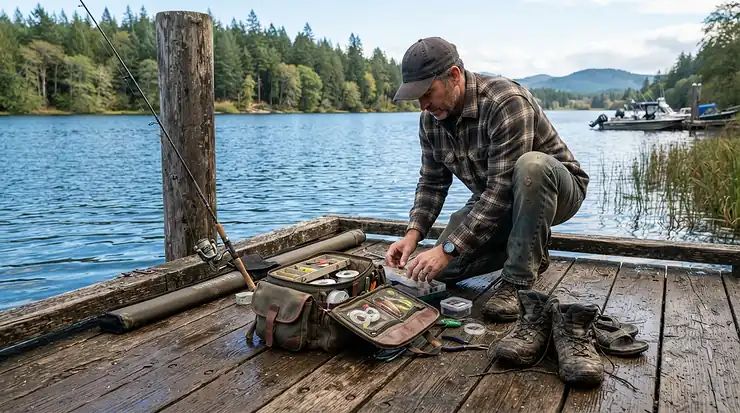
Wading boots under $100 are lace-up, quick-draining river boots priced at the entry tier of the market. They give beginners and occasional anglers grip, ankle support and toe protection on slick riverbeds. You skip the premium-brand bill and accept a shorter lifespan in return.
Here’s what nobody says at the fly shop counter: the river doesn’t care what your boots cost. It cares whether your soles bite into algae-slick rock and whether your ankle survives the next wobble. Affordable wading boots can handle both jobs, at least for a while. And “a while” is exactly what a new angler needs to figure out whether fly fishing is a lifelong obsession or a three-weekend phase.
That’s the lens for this guide. I chose the seven boots below from current 2026 roundups, retailer listings and long-term reviewer notes, then sorted them by price tier and by how honestly they handle boot durability. Three sit clearly under the line. Four hover around it and dip below during sales, so check current price before you click anything. Prices move constantly, and nothing here is a quote.
A note on sourcing: none of this is hands-on testing. It’s spec-by-spec analysis, aggregated reviewer sentiment and reasoning about who each boot fits. Even Field & Stream’s gear testers land on the trade-off every budget buyer faces: a lighter wallet and a shorter service life.
Keep reading for a quick comparison, the full breakdown and a practical entry level wading setup you can assemble this season.
Quick Comparison: 7 Wading Boots Under $100 at a Glance
| Boot | Sole | Approx. Price Range | Best For |
|---|---|---|---|
| Compass 360 Tailwater Cleated | Cleated rubber | Under about $60 | Tightest budgets |
| Foxelli Wading Boots | Rubber | Roughly sub-$75 | Hike-in streams |
| 8Fans Wading Boots | Rubber, stud-ready | Under $100 | Toe and heel protection |
| Frogg Toggs Hellbender | Felt or cleated rubber | Near $100; sales go lower | First-time anglers |
| Redington Prowler Pro | Rubber or felt | Right around $100 | Wet wading comfort |
| Paramount Outdoors Deep Eddy | Felt or cleated rubber | Around $100–$120 list | Wader-bootie fit |
| Korkers Greenback | Swappable soles | Often $120–$150 list; sales near $100 | Changing conditions |
Looking at the table, the Compass 360 Tailwater Cleated is the clear floor price, while the Frogg Toggs Hellbender is the default “I just need boots” choice. If you want one boot that adapts to different rivers, the Korkers Greenback is the stretch purchase. It only counts as wading boots under $100 when a sale lines up.
💬 Just one click — help others make better buying decisions too!😊
Top 7 Wading Boots Under $100: Expert Analysis
1. Compass 360 Tailwater Cleated — cheapest rubber-and-studs entry ticket
The standout is the price floor. One roundup places this boot comfortably under $60, which makes it one of the lowest-cost ways onto the water with a sole that accepts steel studs.
The upper is non-shrinking nylon over a polyurethane and neoprene build. In practice, that means the boot you lace up in July still fits in September, a quiet win in a category where uppers sometimes warp after repeated soak-and-dry cycles. The cleated rubber sole takes studs, which matters on algae-covered cobble. An internal heel pull and padded collar make the boot easier to get on and off over neoprene booties.
Based on the spec comparison, this is the boot for someone fishing a handful of days a year who wants rubber and no felt-ban headaches. The catch is fit and heft. Reviewers describe an oversized cut and a boot that feels heavy on longer walks. Its sibling, the Compass 360 Stillwater II, draws praise for a soft lining and double-cushioned collar. Some owners report that model falling apart after a few months, so treat both as light-duty gear.
Pros:
- ✅ Rubber cleated sole accepts steel studs
- ✅ Non-shrinking nylon upper holds its fit
- ✅ Padded collar and internal heel pull
Cons:
- ❌ Oversized fit; sizing takes care
- ❌ Heavy on long approach hikes
The price is the lowest in this lineup, and the value is solid if you treat it as a one- or two-season boot.
2. Foxelli Wading Boots — lightest feet on the list
Weight is the hook. At roughly 1.3 pounds per boot, the Foxelli Wading Boots were the lightest pair in one multi-boot comparison. That’s a real advantage when you’re hiking three miles to a run of water and trying not to feel like you’re dragging cinder blocks.
The sole is slip-resistant rubber, the upper is mesh-heavy with drain ports, and an OrthoLite insole sits on an EVA midsole. A reinforced rubber toe and heel rand handles rock scrapes. The mesh sheds water fast but also lets in grit, so a gravel guard is worth adding. The removable insole is a small perk: you can swap in a custom footbed or dry it separately.
Here’s what to weigh: the boots run large, and most buyers order a full size up, especially over thick neoprene socks. Reviewers report owners getting multiple years of use, and one budget roundup author says theirs lasted over three years across fishing, hiking and hunting. The same sources warn that the lightweight build wears faster under heavy service. Some users report leaks, and long dry times are a recurring complaint.
Pros:
- ✅ Very light at about 1.3 pounds each
- ✅ Comfortable insole and cushioned midsole
- ✅ Doubles as a hiking shoe
Cons:
- ❌ Runs large; sizing confuses buyers
- ❌ Slow drying after soaking
Budget roundups place it in the sub-$75 tier, and it’s good value for hike-in anglers.
3. 8Fans Wading Boots — most protection per dollar
The standout is armor. Reinforced toe and heel zones plus padded ankle support make the 8Fans Wading Boots a good fit for anglers who stub toes on submerged boulders for sport.
The rubber sole has grooves that accept studs, and the PVC, EVA and rubber construction weighs about 43 ounces a pair, around 2.7 pounds. Side drain holes dump water quickly. Those drain holes matter because water weight is what turns “light” boots into ankle anchors by midafternoon. The quick-lace system speeds up cold-morning boot-ups.
On paper, these boots punch above their price on protection. One tester who has worn a pair for more than two years reports visible seam wear, less sole tread and one stitched sole repair, yet still calls them amazing value under $100. Common complaints are slow drying and lace eyelets that aren’t rust-proof, so rinse them after saltwater or muddy trips. Reviewers suggest ordering a size up if you wear neoprene booties. Note that a rotating-buckle version of this brand costs a little over the line, so confirm you’re looking at the lace-up.
Pros:
- ✅ Reinforced toe and heel guard
- ✅ Stud-ready rubber outsole
- ✅ Side drainage sheds water fast
Cons:
- ❌ Eyelets can rust without rinsing
- ❌ Takes longer to dry than expected
The price lands under $100, and it’s a smart pick for rough, rocky streams.
4. Frogg Toggs Hellbender — the default beginner boot
The standout is familiarity. The Frogg Toggs Hellbender is the boot reviewers keep recommending to people who aren’t sure fly fishing will stick.
It comes with a felt or cleated rubber sole and a mesh-and-PVC upper that drains quickly. The polyurethane midsole, padded ankle collar and wide wading last leave room for thick socks, and speed laces with a locking clip speed up lacing. Toe and heel caps absorb knocks. Weight runs about 1.5 pounds per boot in some listings and a bit more in others. The wide last is forgiving, but the boot runs larger than normal, so order with sock room in mind.
The felt version isn’t stud-compatible, and felt is restricted in some places, so the cleated rubber option is the safer order if you travel. Field & Stream’s tester called it a bit below higher-end boots and wouldn’t recommend it for 100-plus days a year. Another reviewer saw felt peeling at the toe around 18 months and laces fraying. That roughly fits a 10-to-20-days-a-year angler.
Pros:
- ✅ Padded collar and wide last
- ✅ Choice of felt or cleated rubber
- ✅ Mesh upper drains fast
Cons:
- ❌ Felt may peel; laces wear out
- ❌ Not built for heavy-use seasons
List prices sit above $100 at some stores, but sale pricing often lands in the $80–$100 range. Check current price.
5. Redington Prowler Pro — hiker-style comfort at the ceiling
The standout is the hiking-boot feel. The Redington Prowler Pro pairs a low-cut build with an EVA midsole, and Mid Current calls it the value pick in a wet wading boot lineup. It’s available in rubber or felt and weighs roughly 46 ounces per pair.
Think about what that low cut means: your ankle gets more freedom, and your calves carry less weight. Reviews of the earlier Prowler line describe a flexible boot with a slightly heel-heavy balance that helps in moderate current. Other reviewers cite a neoprene lining and front and rear pull loops, plus molded rubber overlays for scuff protection. If your trout stream is a warm-weather affair, this boot also doubles as a trail shoe on the walk in.
My read of the spec comparison: this is the boot for wet waders and light-gear minimalists. The trade-off is less ankle structure than a high-cut boot, so if you carry heavy gear through technical water, look at higher-cut options. Reviewers on the broader Prowler line generally praise comfort. Treat that as line-level sentiment rather than a verdict on this exact model.
Pros:
- ✅ Light 46-ounce pair weight
- ✅ Flexible, hiker-style comfort
- ✅ Rubber or felt sole choice
Cons:
- ❌ Less ankle support than high-cut boots
- ❌ Sits right at the price ceiling
It’s right around the $100 mark, and it’s good value for wet wading.

6. Paramount Outdoors Deep Eddy — stud-ready and bootie-friendly
The standout is the thoughtful fit. The Paramount Outdoors Deep Eddy is sized to accommodate wader booties, so manufacturer guidance says you don’t need to size up. That alone saves many first-timers an expensive return shipment.
Both felt and cleated rubber versions have recessed stud insert points, and removable studs come in the box. A reinforced rubber heel pull, padded collar and tongue, and a gravel-guard D-ring round out the build. A reinforced toe cap handles the rock-kicking. A one-year warranty is also a rare comfort in this price class.
An established guide-review site rated the Deep Eddy a standout value and praised its low wet weight. Another reviewer, after a couple of months of use, said it held up admirably, though that’s short-term feedback. One retailer reviewer called the felt version slippery off the river, which is normal for felt on dry surfaces. If you’re comparing it against the Frogg Toggs Hellbender, the Deep Eddy trades a bit more money for a more thought-out fit and studs in the box.
Pros:
- ✅ Sized for wader booties, no upsizing
- ✅ Removable studs included
- ✅ One-year warranty
Cons:
- ❌ List price often a touch above $100
- ❌ Felt version is slick off the rocks
It’s around the $100 mark, sometimes $110–$120 at list, so wait for a sale if you can.
7. Korkers Greenback — swappable soles for changing rivers
The standout is the OmniTrax interchangeable sole system. The Korkers Greenback ships with felt and Kling-On rubber soles, so one boot covers different river bottoms and different state rules.
The hydrophobic upper dries quickly, and internal channels route water out through midsole ports. At about 16 ounces per boot, this is among the lowest-cut, lightest boots in the Korkers lineup. The trade-off is less ankle structure than higher-end siblings, and sizing runs small, so order at least a half size up.
On paper, the swap system is brilliant for travelers who fish both a felt-legal home river and a felt-banned destination. The real-world catch is wear. A few users report the rubber rand separating after a couple of seasons, soles can be fiddly to change, and one roundup says the interchangeable soles wear quickly. List prices at many retailers run $120–$150, but sales have pushed it near $100. That’s why it’s the stretch pick here.
Pros:
- ✅ Felt and rubber soles in one boot
- ✅ Fast-drying, hydrophobic upper
- ✅ Lightweight, low-cut build
Cons:
- ❌ Rubber rand can separate over time
- ❌ Sizing runs small
It’s only one of the wading boots under $100 when discounted. Otherwise, think of it as a step-up purchase.
Side-by-Side Specs and What They Mean
| Boot | Approx. Weight | Stud-Ready | Notable Feature | Best For |
|---|---|---|---|---|
| Compass 360 Tailwater Cleated | Heavier; not listed | Yes | Non-shrinking nylon | Lowest-cost start |
| Foxelli Wading Boots | ~1.3 lb per boot | Not stated | OrthoLite insole | Hike-in trips |
| 8Fans Wading Boots | ~43 oz per pair | Yes | Reinforced toe and heel | Rocky streams |
| Frogg Toggs Hellbender | ~1.5 lb per boot | Cleated only | Wide last | Beginners |
| Redington Prowler Pro | ~46 oz per pair | Prowler line yes | Low-cut hiker build | Wet wading |
| Paramount Outdoors Deep Eddy | Not listed | Yes | Bootie-sized fit | Wader users |
| Korkers Greenback | ~16 oz per boot | Via studded sole | Swappable soles | Travelers |
The pattern is clear: lighter boots (Foxelli Wading Boots, Korkers Greenback) trade ankle structure for comfort. Heavier boots (8Fans Wading Boots, Compass 360 Tailwater Cleated) trade carry weight for protection. If your stream is a short walk from the car, pick protection. If your fishing involves a hike, pick weight savings.
✨ Don’t Miss These Exclusive Deals!
🔍 Take your budget fly fishing footwear to the next level with these carefully selected products. Click on any highlighted item to check current pricing and availability. These boots will help you build a river-ready setup you’ll actually enjoy using!
How to Choose Wading Boots Under $100
Choosing well matters more at this price. Here’s the process, in the order that saves the most regret:
- Pick your sole before your brand. Felt grips slick rock best, rubber lasts longer and works on mixed terrain, and cleated rubber accepts studs for extra bite. Your rivers decide this, not the logo.
- Check your state’s rules. Several states ban felt, so a boot you can’t legally use is a very expensive paperweight. Verify with your state fish and wildlife agency before you buy.
- Match the boot to your waders. Stockingfoot waders with neoprene booties need extra volume. Some boots, like the Paramount Outdoors Deep Eddy, are sized to avoid upsizing, while others run large or small.
- Prioritize drainage and wet weight. Dry weight is a marketing number. Wet weight is what your legs carry at 4 p.m.
- Inspect the stress points. Toe cap, heel counter, laces and eyelets are where cheap boots fail first.
- Read the warranty. A one-year guarantee won’t cover wear, but it will cover defects, and that’s a meaningful safety net.
- Be honest about your days on the water. Ten to twenty days a year? Budget boots fit. One hundred days? Plan to spend more.

Felt, Rubber or Cleated? Choosing Soles for Budget Fly Fishing Footwear
Sole choice drives traction and legality, so it deserves its own section.
Felt swells when wet and clings to slick, algae-coated rock better than rubber does. It wears faster, though, and it’s slippery on dry ground and boat decks. Rubber has closed much of the traction gap, lasts longer and handles trails and gravel bars better. Cleated rubber adds studs for extra bite on slick boulders, though studs can scratch boat floors and feel clumsy on dry rock.
Here’s where policy enters the story. Felt is banned in Alaska, Maryland, Missouri, Nebraska, Rhode Island, South Dakota and Yellowstone National Park, according to Mid Current’s 2026 roundup. Vermont rescinded its ban in 2016. The Alaska Department of Fish and Game’s felt-sole FAQ explains the logic. Felt and fibrous materials trap and transfer pathogens and invasive species more efficiently than other common sole materials. A 2007 Montana State University study, as reported by the Spokesman-Review, found felt trapped every whirling disease spore it was exposed to.
Rubber isn’t a magic fix, since it still has tread that can carry invaders. For budget fly fishing footwear, the pragmatic answer is simple. Choose rubber or cleated rubber if you travel, and felt only if you fish rocky freestone streams in felt-legal states. When in doubt, the Frogg Toggs Hellbender cleated version or the Korkers Greenback with its swappable soles gives you flexibility.
Boot Durability on a Budget: What Actually Fails First
Boot durability is the honest price of wading boots under $100, so let’s be specific about where cheap boots give out.
Soles. Adhesive failure is the classic. One reviewer rated the Cabela’s Ultralight felt boot just one out of five for durability, citing interior deterioration and sole delamination. Another budget roundup reported a felt-soled boot’s sole coming off after about three months. Felt peeling at the toe appeared around the 18-month mark on a Frogg Toggs Hellbender.
Stitching. A reviewer’s relative reported stitching loosening near the ankle cap on the Allen Company Granite River after a single summer. On the Frogg Toggs Amphib II, stitching loosened after a few uses.
Hardware. Laces fray, and metal lace hooks corrode, particularly in saltwater. The 8Fans Wading Boots and Allen Company Granite River both draw eyelet-corrosion complaints.
For context, one reviewer wore a pair of Simms Freestone boots, a step up from this price tier, for five years as fishing and work boots and still needed a couple of resoles. That’s a useful ceiling for what “durable” looks like.
Here’s what to do about it. Rinse after every trip, dry fully, replace laces early and inspect the sole edge every month. Good boot durability isn’t just what you buy. It’s what you do afterward.
Entry Level Wading Setup: Building the Whole Kit
Boots are one-third of the story. A sensible entry level wading setup includes boots, waders (or a wet-wading plan), and a few small items that prevent big headaches.
Stockingfoot vs. bootfoot. Bootfoot waders have a built-in boot, while stockingfoot waders have neoprene booties that slip into separate wading boots. For anyone buying standalone boots, stockingfoot is the path. It also gives better ankle support than bootfoot designs in most cases.
Waders on a budget. Field & Stream names the Frogg Toggs Canyon II stockingfoot wader its best budget pick, with an adjustable belt and suspenders, but notes sizes run large and durability trails more expensive options. Pair that with one of the boots above, and you’re ready for cool water.
The wet-wading alternative. Mid Current’s wet wading setup guide argues for a dedicated low-cut boot sized for a bare foot, plus a neoprene sock with an integrated gravel guard. It pegs budget kits in the low-$100s to $160 range, and pairs the Redington Prowler Pro with a guard sock for a complete kit under $170.
Don’t forget: a wading belt (cheap and potentially lifesaving), gravel guards, and eventually a wading staff. A beginner guide from a fly shop suggests an entry kit can come together for around $400, boots included.
Affordable Wading Boots vs Premium Boots: Where the Extra Money Goes
| Feature | Under-$100 Boots | Premium Boots | Best For |
|---|---|---|---|
| Sole life | One to two seasons of regular use | Several seasons; resoling possible | Casual vs. frequent anglers |
| Ankle support | Moderate | Higher-cut, stiffer | Technical wading |
| Repairs | Replace the boot | Resole or repair | Long-term owners |
| Weight and drainage | Varies; often decent | Engineered drainage | Hikers |
| Warranty | Often one year | Often longer, with service | Heavy users |
Looking at the comparison, the extra money in premium boots mostly buys longevity and repairability, not necessarily a different feeling on day one. A Simms Freestone reviewer logged five years and a couple of resoles, which is the kind of lifespan wading boots under $100 rarely match. But if you fish ten to twenty days a year, a boot like the Frogg Toggs Hellbender can cover your needs for two seasons at a fraction of the cost. The right question isn’t “which is better?” It’s “how many days will I wear them?”
Budget Fly Fishing Footwear for Your Situation: Three Angler Profiles
Specs mean little until they meet a real river. Here are three profiles to match your situation.
The weekend trout beginner. You fish ten days a year on rocky freestone streams in a state with no felt ban, and your total gear budget is around $450. The Frogg Toggs Hellbender in felt, or the Paramount Outdoors Deep Eddy, gives you grip on slick rock and room for wader booties. Save the money you’d spend on premium boots for waders and a decent rod.
The destination traveler. You live in a felt-legal state but fish Alaska or Yellowstone once a year. Rubber is non-negotiable. The 8Fans Wading Boots and Compass 360 Tailwater Cleated offer stud-ready rubber at the lowest cost, and the Korkers Greenback lets you swap soles if you can catch a sale.
The summer wet wader who hikes. You’re in shorts, hiking two miles to a warm creek, and weight matters. The Redington Prowler Pro or Foxelli Wading Boots feel like trail shoes with drain holes. Size to your bare foot or a thin sock, not winter neoprene.
Practical Usage Guide: Your First 30 Days With New Wading Boots
Good habits stretch cheap boots. Here’s a first-month plan.
Days 1–3: Break them in on dry land. Walk around the block with your wading socks. Hot spots on a sidewalk are better than blisters on a river.
Days 4–10: Dial in the lacing. Snug the ankle, loosen the toe box slightly, and use the locking clip if you have one. Check that your heel doesn’t lift.
Every trip: Clean, drain, dry. Rinse mud and debris off the sole, drain the water, and let the boots dry fully before the next river. This isn’t just boot care. It’s also the right thing for streams, since Maryland’s felt-sole FAQ notes that felt stays damp for days and helps organisms survive. Maryland also bans felt within five feet of state waters, with a $125 fine.
Monthly: Inspect. Look at the sole edge, stitching and lace hooks. Replace frayed laces before they snap mid-stream.
Common first-month mistakes: skipping the sizing check with neoprene booties, forgetting to remove old studs before storage, and stashing wet boots in a closed bag. Fix those three and you’ll gain months of life.
Problem → Solution: Fixing Common Budget Boot Headaches
Problem: Boots take forever to dry. Remove the insoles, open the laces fully and stand them upside down in a ventilated spot. Mesh-heavy models like the Foxelli Wading Boots drain fast but still need airflow.
Problem: The sole is peeling. Catch it early. A reviewer with a Frogg Toggs Amphib II reglued a loosening sole after stitching failed. If felt starts lifting at the toe, a flexible waterproof adhesive can buy another season. Don’t wait for it to snap.
Problem: Slipping on slick rock. Switch from rubber to felt where legal, or add studs. The Paramount Outdoors Deep Eddy and 8Fans Wading Boots both ship stud-ready designs.
Problem: Sizing confusion. Order with your intended socks in mind. The Foxelli Wading Boots run large, the Korkers Greenback runs small, and the Paramount Outdoors Deep Eddy is sized for booties.
Problem: Rusted eyelets. Rinse after every trip and wipe the lace hooks dry. This is where Allen Company Granite River reviewers have struggled.
Common Mistakes When Buying Wading Boots Under $100
- Buying felt without checking regulations. If your travel includes Alaska, Maryland or Yellowstone, felt is off the table.
- Ignoring sizing guidance. Between runs-large and runs-small boots, “your normal size” is a gamble.
- Chasing the lowest price at all costs. The cheapest boot isn’t cheaper if it fails in a season. Compare cost per outing, not sticker price.
- Skipping the warranty fine print. A one-year guarantee covers defects, not wear and tear, and salt corrosion is often excluded.
- Forgetting the rest of the kit. Boots without a belt, gravel guards or a plan for waders leave you under-equipped on day one.
- Treating durability as an afterthought. Reviews that mention peeling soles or frayed laces after one season are telling you something.
Long-Term Cost & Maintenance: Is Cheap Really Cheaper?
Let’s do the math with ranges, not price tags. A boot in the $80–$100 range used twenty days a year for two seasons works out to roughly $2–$2.50 per outing. A premium boot costing several times more but lasting five seasons of heavy use can come out similar or lower per day for a frequent angler. The break-even depends entirely on how often you fish.
| Boot | Price Range | Realistic Use Profile | Value Verdict |
|---|---|---|---|
| Compass 360 Tailwater Cleated | Under about $60 | Light, 1–2 seasons | Best floor price |
| Foxelli Wading Boots | Roughly sub-$75 | Hike-in, occasional | Strong value |
| 8Fans Wading Boots | Under $100 | Rocky streams, moderate | Great protection |
| Frogg Toggs Hellbender | $80–$100 on sale | 10–20 days a year | Safe beginner pick |
| Redington Prowler Pro | Around $100 | Wet wading, moderate | Good comfort value |
| Paramount Outdoors Deep Eddy | $100–$120 list | Occasional to regular | Solid for waders |
| Korkers Greenback | $120–$150 list; sales near $100 | Travelers | Worth it on sale |
The takeaway: the cheapest boots win for light use, while Redington Prowler Pro, Paramount Outdoors Deep Eddy and Korkers Greenback earn their price if you fish regularly. Maintenance costs almost nothing but time. Rinsing, drying and replacing laces is the cheapest boot durability upgrade there is.

FAQ: Wading Boots Under $100
❓ Can I wet wade in wading boots under $100?
❓ Are studs worth adding to affordable wading boots?
❓ Can I resole wading boots under $100?
❓ Do wading boots under $100 come in women's sizes?
❓ Can I use hiking boots as budget fly fishing footwear?
Conclusion
Wading boots under $100 won’t last forever, and they aren’t supposed to. They’re the on-ramp: a way to get your feet wet, learn what you like and decide whether to invest in premium gear later. Used within their limits, ten to twenty days a year, with good rinsing habits, affordable wading boots do the job.
Here’s the short version. If you want the lowest cost, start with the Compass 360 Tailwater Cleated. If weight matters, look at the Foxelli Wading Boots. For protection, the 8Fans Wading Boots earn their keep. The Frogg Toggs Hellbender is the safe beginner default, the Redington Prowler Pro suits wet waders, and the Paramount Outdoors Deep Eddy is a thoughtful fit for wader users. The Korkers Greenback is the stretch pick when a sale brings it near the line.
Budget fly fishing footwear is a trade-off, and the smartest buyers pick the compromise they can live with. Choose your sole based on where you fish, respect state rules, size carefully and take care of boot durability from day one.
Recommended for You
- Rubber Sole Wading Boots For River Fishing: 7 Proven Picks For 2026
- Felt Sole Wading Boots For Slippery Rocks: 7 Best Picks 2026
- Wading Boots For Fly Fishing: 7 Best Grippy Picks For 2026
Disclaimer: This article contains affiliate links. As an Amazon Associate, I earn from qualifying purchases. If you purchase products through these links, we may earn a small commission at no additional cost to you.
✨ Found this helpful? Share it with your friends! 💬🤗
