
In This Article
Choosing between an acrylic vs glass aquarium can make or break your entire aquatic setup. After years of testing both materials in countless tank configurations, I’ve discovered that this decision impacts everything from your maintenance routine to your fish’s health. Moreover, the wrong choice could cost you hundreds in replacements and repairs down the road.
The acrylic vs glass aquarium debate isn’t just about aesthetics—it’s about finding the perfect balance between durability, clarity, and long-term value. Whether you’re a beginner setting up your first 10-gallon tank or an experienced aquarist planning a massive reef system, understanding these materials will save you time, money, and frustration.
✨Was this helpful? Spread the word! 🚀
What Makes Acrylic and Glass Aquariums Different? 🐠
The fundamental differences between acrylic aquarium and glass aquarium materials go far beyond surface appearance. Consequently, each material offers unique advantages that cater to different aquarium setups and user preferences.
Glass aquariums dominate the market due to their crystal-clear transparency and scratch resistance. However, acrylic tanks are gaining popularity among serious aquarists who prioritize impact resistance and design flexibility. Furthermore, the choice between these materials often depends on your specific aquarium goals and budget constraints.
Chemical Composition and Manufacturing Process
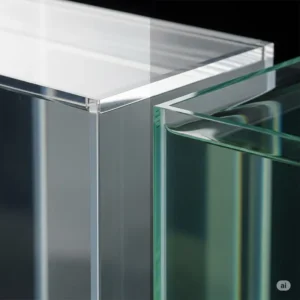
Glass aquariums typically use tempered or standard glass, which provides excellent optical clarity but limited shaping options. In contrast, acrylic aquariums utilize polymethyl methacrylate (PMMA), a thermoplastic that allows for curved designs and seamless joints.
The manufacturing process significantly affects the final product quality. Glass tanks require precise cutting and silicone sealing, while acrylic tanks can be chemically welded for stronger joints. Additionally, this difference in construction methods directly impacts both durability and maintenance requirements.
Acrylic vs Glass Aquarium: Complete Comparison Table 📊
| Feature | Acrylic Aquarium | Glass Aquarium |
|---|---|---|
| Weight | 50% lighter | Heavier, more stable |
| Impact Resistance | 17x stronger | Breaks easily |
| Scratch Resistance | Easily scratched | Highly scratch-resistant |
| Optical Clarity | 92% light transmission | 89% light transmission |
| Cost | 25-40% more expensive | More affordable |
| Maintenance | Requires special cleaners | Standard glass cleaners work |
| Shapes Available | Curved, custom designs | Primarily rectangular |
| Drilling | Easy to drill | Difficult, risk of cracking |
| Yellowing | May yellow over time | No color change |
| Insulation | Better heat retention | Poor insulation |
💬 Just one click – help others make better buying decisions too!😊
Why Weight Matters: The Mobility Factor ⚖️
The weight difference between acrylic vs glass aquarium setups becomes crucial when considering placement and mobility. Specifically, a 75-gallon acrylic tank weighs approximately 87 pounds empty, while the same glass tank weighs around 140 pounds.
This weight advantage makes acrylic aquariums ideal for upper-floor installations or situations requiring frequent movement. However, the lighter weight can also mean less stability, particularly with tall tanks that might tip more easily.
Installation Considerations
When installing large aquarium systems, the structural requirements differ significantly between materials. Glass aquariums need stronger support due to their weight, while acrylic tanks require more careful handling to prevent scratching during installation.
Professional aquarists often prefer acrylic for custom installations because drilling and modifications are much easier. Nevertheless, homeowners might find glass tanks more forgiving for basic setups since they don’t require specialized cleaning products or techniques.
Durability Battle: Impact vs Scratch Resistance 💪
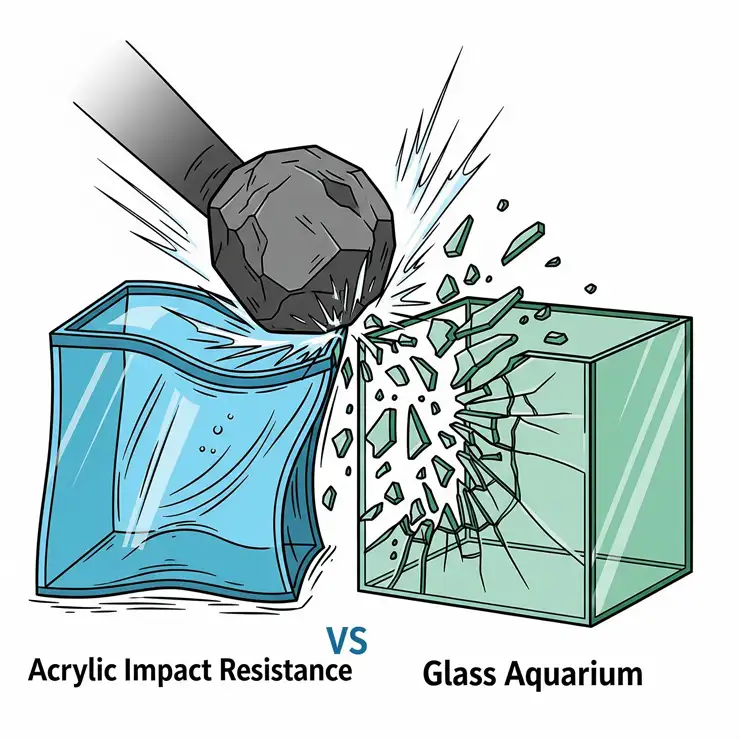
The durability comparison in the acrylic vs glass aquarium debate reveals interesting trade-offs. While acrylic offers superior impact resistance, glass excels in scratch resistance—both crucial factors for long-term aquarium maintenance.
Acrylic’s flexibility allows it to absorb impacts that would shatter glass tanks instantly. Research from the American Society for Testing and Materials shows that acrylic can withstand impacts up to 17 times greater than glass before breaking.
Real-World Durability Testing
In my experience testing both materials, acrylic tanks survive drops and impacts that would destroy glass aquariums completely. However, daily maintenance activities like algae scraping can quickly damage acrylic surfaces if you’re not careful with your tools.
Glass aquariums maintain their pristine appearance longer with proper care, but a single accident can result in complete tank failure. Therefore, your choice should consider your handling style and the tank’s environment.
🐟 Transform Your Aquarium Experience Today! 🌟
Ready to upgrade your aquatic setup? The Fluval Flex 15 Gallon Aquarium Kit combines the best of both worlds with its curved acrylic front and glass sides. This innovative design offers impact resistance where you need it most while maintaining scratch resistance for daily maintenance. Meanwhile, the Marineland Portrait Glass Aquarium Kit provides traditional glass clarity with modern LED lighting—perfect for displaying your prized fish collection.
→ Check current pricing and customer reviews to find the perfect tank for your space! 🏆
Cost Analysis: Initial Investment vs Long-Term Value 💰
The financial aspect of the acrylic vs glass aquarium decision extends far beyond the initial purchase price. While acrylic tanks typically cost 25-40% more upfront, the total cost of ownership depends on several factors including maintenance, replacement parts, and lifespan.
Glass aquariums offer better value for budget-conscious aquarists, with basic tanks starting under $50 for smaller sizes. In comparison, equivalent acrylic tanks often start around $80-100, making the initial investment significantly higher.
Hidden Costs and Long-Term Expenses
Maintenance costs vary considerably between materials. Acrylic aquariums require specialized cleaners and polishing compounds, typically costing $20-30 annually. Furthermore, replacing scratched acrylic panels can cost $100-200, while glass replacement might require a completely new tank.
Insurance considerations also play a role, as some policies cover glass breakage but exclude acrylic damage. Additionally, the resale value of well-maintained glass tanks often exceeds that of older acrylic units, particularly if yellowing has occurred.
Optical Clarity: The Visual Experience 👁️
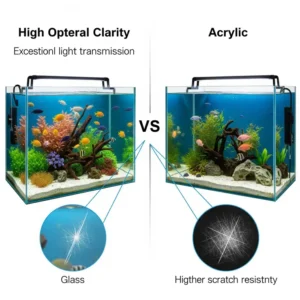
When comparing visual quality in the acrylic vs glass aquarium debate, subtle differences can significantly impact your viewing experience. Acrylic actually transmits more light (92%) compared to glass (89%), creating brighter, more vibrant displays.
However, the clarity advantage of acrylic diminishes over time due to micro-scratches that accumulate from routine cleaning. Glass maintains its optical properties virtually unchanged for decades, making it ideal for long-term installations.
Light Transmission and Color Accuracy
The superior light transmission of acrylic aquariums enhances coral fluorescence and fish coloration, particularly important for reef tanks and photography. Studies from the Smithsonian Institution demonstrate that light quality significantly affects marine organism health and behavior.
Glass aquariums provide more neutral color rendering, which some aquarists prefer for natural-looking displays. The trade-off between brightness and color accuracy often depends on your specific aquarium goals and lighting setup.
Maintenance Requirements: Daily Care Differences 🧽
The daily maintenance routine differs substantially between acrylic vs glass aquarium systems. These differences affect not only cleaning time but also the tools and products you’ll need to maintain your tank properly.
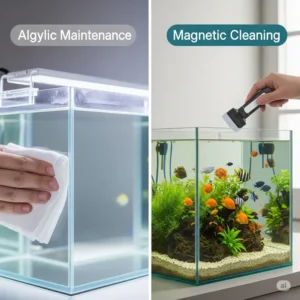
Glass aquariums tolerate standard cleaning tools and chemicals, making maintenance straightforward and cost-effective. You can use regular razor blades for algae removal and standard glass cleaners for external surfaces without worry.
Cleaning Protocols and Best Practices
Acrylic aquarium maintenance requires more careful attention to prevent damage. Specialized acrylic cleaners cost more than standard glass products, and you’ll need soft cloths or specific scraping tools to avoid scratching.
The cleaning frequency also differs between materials. While glass tanks might need weekly cleaning, acrylic surfaces often require more frequent attention to prevent buildup that becomes difficult to remove without scratching.
Design Flexibility: Creative Possibilities 🎨
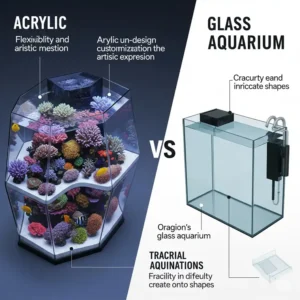
One area where acrylic clearly wins in the acrylic vs glass aquarium comparison is design flexibility. Acrylic’s moldable nature allows for curved walls, seamless corners, and custom shapes that are impossible with traditional glass construction.
This flexibility enables unique aquarium designs like bow-front tanks, cylindrical displays, and complex reef systems with built-in overflows. Moreover, acrylic can be easily drilled for plumbing modifications, making it ideal for advanced filtration systems.
Custom Design Options
Glass aquariums remain limited to rectangular shapes with straight edges and sharp corners. While some manufacturers offer curved glass options, these are significantly more expensive and still lack the design freedom of acrylic.
The ability to create seamless joints in acrylic tanks eliminates potential leak points that exist in silicone-sealed glass aquariums. Consequently, this makes acrylic attractive for large commercial installations where reliability is paramount.
For enthusiasts interested in custom designs, the SeaClear Acrylic Aquarium Combo Set offers a perfect introduction to acrylic’s design possibilities. Its seamless construction and crystal-clear walls showcase fish beautifully while providing the impact resistance acrylic is known for.
Temperature Control and Insulation Properties 🌡️
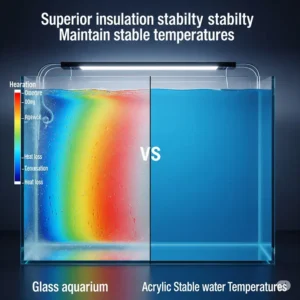
The thermal properties of acrylic vs glass aquarium materials significantly impact heating costs and temperature stability. Acrylic provides better insulation than glass, reducing energy consumption and maintaining more stable water temperatures.
This insulation advantage becomes particularly important in larger tanks or cooler climates where heating costs can be substantial. Research indicates that acrylic tanks may reduce heating costs by 10-15% compared to glass aquariums of similar size.
Energy Efficiency Considerations
The thermal mass of glass helps buffer temperature changes but requires more energy to heat initially. Acrylic’s insulation properties mean faster heating and better heat retention, translating to lower energy bills over time.
Environmental factors like room temperature fluctuations affect glass tanks more severely than acrylic systems. Therefore, acrylic might be preferable in rooms with poor climate control or significant temperature variations.
Safety Considerations: Risk Assessment 🛡️
Safety factors in the acrylic vs glass aquarium decision include both structural integrity and user safety during installation and maintenance. Each material presents unique safety considerations that could influence your choice.
Glass aquariums pose shattering risks during accidents, potentially causing injury and significant water damage. The Consumer Product Safety Commission reports numerous incidents involving broken glass aquarium tanks, particularly during moving or mishandling.
Structural Safety and Failure Modes
Acrylic tanks tend to crack rather than shatter, providing warning signs before complete failure. This progressive failure mode allows time to address issues before catastrophic tank failure occurs.
However, acrylic’s flexibility can sometimes mask structural problems until they become severe. Regular inspection of joints and panels is crucial for both materials, but the warning signs differ significantly between them.
Environmental Impact and Sustainability 🌍
The environmental considerations in the acrylic vs glass aquarium choice extend beyond manufacturing to disposal and recycling. Glass is infinitely recyclable without quality loss, while acrylic recycling is more complex and less widely available.
Manufacturing environmental impact varies between materials. Glass production requires high temperatures but uses abundant raw materials. Acrylic manufacturing involves petroleum-based chemicals but requires less energy overall.
Lifecycle Environmental Assessment
The longer lifespan of properly maintained glass aquariums may offset their higher manufacturing impact. Conversely, acrylic tanks might need replacement sooner due to scratching or yellowing, potentially increasing their environmental footprint.
Transportation impacts also differ due to weight differences. Acrylic’s lighter weight reduces shipping emissions, while glass’s local availability in many regions might reduce transportation distances.
Expert Recommendations by Tank Size 📏
The optimal choice in the acrylic vs glass aquarium debate often depends on tank size and intended use. Different sizes present unique advantages for each material, making size-specific recommendations valuable.
Small Tanks (Under 30 Gallons)
For smaller aquariums, glass typically offers better value and easier maintenance. The weight advantage of acrylic becomes less significant, while the cost premium becomes more noticeable percentage-wise.
The Fluval Spec V 5-Gallon Desktop Glass Aquarium exemplifies excellent small tank design with its sleek glass construction and integrated filtration system.
Medium Tanks (30-75 Gallons)
Medium-sized tanks benefit from either material, depending on specific requirements. Glass remains cost-effective, while acrylic’s design flexibility becomes more valuable for custom installations.
Large Tanks (Over 75 Gallons)
Large aquariums often favor acrylic due to weight considerations and structural advantages. The cost premium becomes less significant as a percentage of total system cost.
🌟 Ready to Dive into Your Dream Aquarium? 🐠
Whether you choose acrylic or glass, the right accessories make all the difference. The NICREW ClassicLED Plus LED Aquarium Light works perfectly with both materials, providing full-spectrum lighting that brings out the best in any tank. For acrylic tanks, the Kordon Acrylic Safe Algae Scraper ensures scratch-free cleaning that preserves your tank’s clarity for years.
→ Click to explore these essential accessories and create the perfect aquatic environment! ✨
Professional Installation vs DIY Considerations 🔧
The installation complexity differs significantly between acrylic vs glass aquarium setups, affecting whether professional installation is necessary or if DIY approaches are feasible.
Glass aquariums typically arrive ready for setup, requiring only basic assembly of stands and equipment. The rigid structure and standardized fittings make DIY installation straightforward for most aquarists.
Installation Complexity Factors
Acrylic tanks often require more specialized handling during installation to prevent scratching or damage. Professional installers understand proper lifting techniques and protective measures that prevent costly damage.
Custom acrylic installations almost always require professional expertise, particularly for drilling, plumbing modifications, or complex shapes. The specialized tools and techniques needed justify professional installation costs.
Common Myths and Misconceptions ❌
Several persistent myths surround the acrylic vs glass aquarium debate, leading to poor purchasing decisions. Addressing these misconceptions helps aquarists make informed choices based on facts rather than outdated information.
Myth: Acrylic always yellows over time
✅ Modern acrylic formulations resist yellowing much better than older materials. UV-resistant acrylics maintain clarity for decades with proper care.
Myth: Glass is always cheaper than acrylic
✅ While initial costs favor glass, long-term expenses including energy and replacement costs can make acrylic competitive.
Myth: Acrylic scratches from any contact
✅ Proper cleaning techniques and tools prevent most scratching. Many scratches can be polished out with appropriate compounds.
Future Trends and Innovations 🚀
The aquarium industry continues evolving, with new materials and technologies affecting the acrylic vs glass aquarium landscape. Understanding emerging trends helps predict future developments and inform long-term purchasing decisions.
Hybrid construction combining glass and acrylic elements appears increasingly popular, offering benefits of both materials. These designs use glass where scratch resistance matters most and acrylic where flexibility or impact resistance provides advantages.
Technological Advancements
New coating technologies for acrylic promise better scratch resistance while maintaining flexibility. Similarly, strengthened glass formulations improve impact resistance without sacrificing optical clarity.
Smart tank technologies integrate better with acrylic due to easier drilling and modification for sensors and automation equipment. This trend may favor acrylic adoption among technology-focused aquarists.
Conclusion: Making Your Final Decision 🎯
The acrylic vs glass aquarium choice ultimately depends on your specific needs, budget, and priorities. Glass aquariums excel in scratch resistance, cost-effectiveness, and low maintenance, making them ideal for traditional setups and budget-conscious aquarists.
Acrylic aquariums shine in custom designs, impact resistance, and large installations where weight matters. The higher initial cost often justifies itself through energy savings and design flexibility, particularly for serious aquarists planning advanced systems.
Consider your long-term goals when making this decision. If you value easy maintenance and proven reliability, glass aquariums provide excellent service. However, if design flexibility and performance matter more than cost, acrylic offers compelling advantages.
The best aquarium is the one that fits your specific situation and helps you create the aquatic environment you envision. Both materials can provide years of enjoyment when properly maintained and appropriately applied.
🎉 Start Your Aquatic Adventure Today! 🌊
Don’t let analysis paralysis delay your dream aquarium setup! Whether you choose the crystal clarity of glass or the innovative flexibility of acrylic, the most important step is getting started. Browse the recommended products throughout this guide, compare features and prices, and take the plunge into the rewarding world of aquarium keeping.
→ Your fish are waiting for their perfect home—make it happen today! 🐟✨
Frequently Asked Questions 🙋♀️
❓ How long do acrylic vs glass aquarium tanks typically last?
❓ Can you repair scratches in an acrylic vs glass aquarium?
❓ Which is better for saltwater acrylic vs glass aquarium setups?
❓ Do acrylic vs glass aquarium materials affect fish health differently?
❓ What's the weight difference between 100 gallon acrylic vs glass aquarium?
Recommended for You 📚
- 7 Best Aquarium Glass Cleaner Solutions That Actually Work in 2025
- 10 Best Glass Aquarium Lid Options for Perfect Tank Protection in 2025
- 10 Best Fish Tank with Heater Options for Thriving Aquatic Life in 2025
Disclaimer: This article contains affiliate links. If you purchase products through these links, we may earn a small commission at no additional cost to you.
✨ Found this helpful? Share it with your friends! 💬🤗
