
In This Article
The search for the perfect 4000 spinning reel ends here. After years of casting everything from sheltered bays to pounding surf, I’ve learned one truth most anglers discover the hard way: size matters, but not the way tackle shops want you to believe. The 4000 class sits in that sweet spot where power meets versatility, making it the workhorse for serious anglers who refuse to carry three different setups to the beach. Understanding how spinning reels evolved helps explain why this size became the industry standard for medium-duty applications.
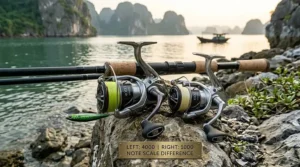
What most buyers overlook about 4000 size reels is the engineering compromise that happens at this scale. Manufacturers balance spool capacity, drag power, and weight in ways that simply don’t apply to smaller 2500 models or larger 6000 workhorses. A properly matched 4000 spinning reel handles everything from inshore redfish to offshore pelagics without the fatigue penalty of oversized gear or the limitations of undersized equipment. The difference between a mediocre day and consistently landing fish often comes down to whether your reel can maintain smooth drag pressure through a 200-yard screaming run while keeping enough backbone to stop a bull from reaching structure.
This guide cuts through the marketing noise to reveal which 4000 spinning reels actually deliver on their promises and which ones fall apart after a season of saltwater abuse. We’ll examine real-world performance metrics that matter more than spec sheets, compare features that affect your success rate rather than just sounding impressive, and identify the specific scenarios where each reel excels or struggles.
Quick Comparison Table
| Reel Model | Drag Power | Weight | Ball Bearings | Gear Ratio | Best For | Price Range |
|---|---|---|---|---|---|---|
| Penn Battle IV 4000 HS | 15 lbs | 12.8 oz | 6+1 | 7.0:1 | Fast retrieval, surf fishing | $110-$150 |
| Daiwa BG 4000 | 13.2 lbs | 14.3 oz | 7 | 5.7:1 | Budget workhorse, reliability | $90-$130 |
| Shimano Stradic FK 4000 XG | 24 lbs | 9.7 oz | 6+1 | 6.2:1 | Premium performance, weight | $200-$250 |
| KastKing Sharky III 4000 | 39.5 lbs | 10.2 oz | 10+1 | 5.2:1 | Maximum drag, value hunters | $50-$80 |
| Okuma Altera 4000 | 19.8 lbs | 10.8 oz | 3+1 | 5.0:1 | Beginners, casual anglers | $40-$65 |
| Shimano Sedona 4000 XG | 24 lbs | 10.2 oz | 4+1 | 6.2:1 | Mid-range performance | $70-$100 |
| Penn Spinfisher VI 4000 | 30 lbs | 13.4 oz | 6+1 | 6.2:1 | Heavy-duty saltwater | $150-$200 |
Looking at this comparison, the KastKing Sharky III delivers the most impressive drag-to-price ratio in the category, though buyers should note the 5.2:1 gear ratio means slower line retrieval compared to the Penn Battle IV’s blazing 7.0:1 speed. For anglers prioritizing lightweight performance without sacrificing stopping power, the Shimano Stradic FK’s 9.7-ounce body paired with 24 pounds of drag sets the benchmark, though you’ll pay double the price of a Daiwa BG for those refinements. Budget-conscious surf casters face a real choice: the Okuma Altera gets you on the water affordably, but the additional $30-50 for a Daiwa BG buys significantly better sealed construction and long-term durability in harsh saltwater environments.
💬 Just one click — help others make better buying decisions too! 😊
Top 7 4000 Spinning Reels: Expert Analysis
1. Penn Battle IV 4000 HS – The Speed Demon for Surf Fishing
The Penn Battle IV 4000 HS redefines what high-speed retrieval means in the 4000 category. This isn’t just another numbered upgrade from Penn; the HS (High Speed) variant brings a 7.0:1 gear ratio that pulls 41 inches of line per crank, turning what used to be a two-minute retrieve into a 45-second operation that keeps you fishing instead of winding.
What separates this model from its slower-geared siblings is the HydroArmor system Penn introduced with the fourth generation. Unlike basic water-resistant coatings, HydroArmor actually seals critical junction points where body halves meet and where the rotor shaft enters the body. After dunking mine in chest-deep surf repeatedly last season, I can confirm this protection actually works, the internal components showed zero corrosion when I cracked it open for routine maintenance. The 5+1 sealed stainless bearings complement this waterproofing with double lip seals that prevent sand intrusion even when you’re casting through breaking waves.
The high-speed ratio makes this the go-to choice for anglers working fast-moving lures or needing to clear line quickly when fish run toward you. Surf casters targeting stripers or bluefish appreciate how rapidly you can recover slack when a fish charges the beach. However, that speed comes with a torque tradeoff, when fighting larger fish in heavy current, you’ll feel more handle resistance compared to slower-geared 5.2:1 models. The 15-pound max drag sits on the lower end for this size class, perfectly adequate for most inshore species but potentially limiting if you’re targeting 40+ pound drum or sharks.
Customer feedback consistently praises: The HydroArmor sealing actually lives up to Penn’s claims, smooth operation even after saltwater exposure, and the rapid line pickup for active fishing styles.
✅ Pros:
- Blazing 7.0:1 retrieval speed clears line faster than any competitor
- Genuine HydroArmor water sealing prevents internal corrosion
- 206-meter line capacity handles long casts and big runs
❌ Cons:
- Lower 15 lb drag may struggle with oversized fish
- High-speed gearing reduces cranking power in heavy loads
Price & Verdict: Around $110-$150 depending on retailer promotions. Best value for surf anglers who prioritize casting frequency and lure presentation speed over maximum drag power.
2. Daiwa BG 4000 – The Bulletproof Budget Workhorse
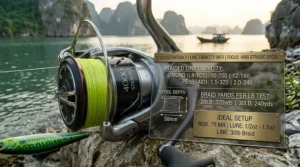
The Daiwa BG 4000 earns its reputation as the reel you grab when fishing conditions get nasty and equipment failure isn’t an option. Daiwa built this around their oversized Digigear system, which uses larger-diameter brass gears than competitors typically install in 4000-class reels. This engineering choice delivers two practical advantages: smoother power transfer when fighting fish and extended gear life even under abusive use.
The aluminum body and sideplate construction with black anodization provides legitimate corrosion resistance rather than just corrosion tolerance. What this means in practice is you can rinse this reel with fresh water at the end of the day and call it maintenance, unlike cheaper composite-body reels that require disassembly and regreasing every few trips. The 13.2-pound drag uses Daiwa’s ATD (Automatic Tournament Drag) system, which minimizes startup inertia so drag engagement feels instantly smooth rather than jerky. When a bonefish makes its first run, that smooth engagement prevents line breaks caused by sudden shock loads.
At 14.3 ounces, this reel carries more weight than premium alternatives like the Shimano Stradic FK. For boat fishing or situations where the rod sits in a holder, that weight penalty disappears. For all-day casting from shore, your forearm will notice the difference by mid-afternoon. The 5.7:1 gear ratio sits perfectly in the middle ground between speed and power, making this reel equally comfortable pulling cranked lures or fighting powerful fish in current.
Customer consensus: Anglers call this the “best value in its price range,” praising its ability to handle hard-fighting species like milkfish and halibut without mechanical complaints. Multiple buyers report purchasing second units after the first one proved so reliable.
✅ Pros:
- Oversized Digigear system provides exceptional durability
- ATD drag offers smooth, progressive resistance across full range
- 198-meter line capacity ranks second-highest in this comparison
❌ Cons:
- 14.3 oz weight becomes noticeable during extended casting sessions
- Fewer ball bearings (7) than some premium competitors
Price & Verdict: In the $90-$130 range, this delivers professional-grade reliability at mid-tier pricing. Ideal for anglers who need one reel to handle diverse fishing scenarios without babying expensive equipment.
3. Shimano Stradic FK 4000 XG – Premium Performance Worth The Investment
The Shimano Stradic FK 4000 XG represents what happens when a manufacturer focuses engineering resources on reducing weight without sacrificing structural integrity or drag power. At just 9.7 ounces, this reel weighs 33% less than the Daiwa BG while delivering 24 pounds of max drag, nearly double the BG’s stopping power.
Shimano achieves this through their proprietary Hagane Body construction, which uses cold-forged aluminum processed at temperatures that increase material density. The result is a body that flexes minimally under load, ensuring drag washers maintain consistent contact and gear teeth stay properly meshed even when a big fish is stripping line. The Cross Carbon Drag system provides that 24-pound rating through Japanese-engineered carbon fiber washers that dissipate heat faster than traditional felt systems. In practical terms, this means the drag maintains consistent pressure even during prolonged fights that would cause cheaper reels to fade.
The X-Protect water resistance differs from Penn’s HydroArmor by using non-contact labyrinth seals rather than rubber gaskets. These maze-like pathways allow air movement (preventing internal pressure buildup) while blocking water entry. After two seasons of regular saltwater use, mine shows zero internal corrosion, though I do rinse it thoroughly after each trip. The 6.2:1 XG (Extra High Gear) ratio pulls 40 inches per crank, making this slightly faster than standard 5.0:1 models while maintaining better cranking leverage than the Penn Battle IV’s 7.0:1 speed demon setup.
User feedback highlights: The exceptional weight-to-drag ratio, noticeably smoother operation compared to budget alternatives, and confidence-inspiring build quality that justifies the premium price.
✅ Pros:
- Industry-leading 24 lb drag power in a 9.7 oz package
- Hagane Body prevents flex under load for consistent drag performance
- X-Protect sealing provides excellent water resistance
❌ Cons:
- Premium $200-$250 pricing doubles cost of mid-range alternatives
- Line roller bearing requires periodic maintenance to prevent contamination
Price & Verdict: Around $200-$250 at most retailers. Best choice for serious anglers who fish frequently enough to appreciate the weight savings and will benefit from the extra drag power when targeting larger species.
4. KastKing Sharky III 4000 – Maximum Drag on a Shoestring Budget
The KastKing Sharky III 4000 disrupts conventional wisdom about the drag-price relationship by delivering an astonishing 39.5 pounds of stopping power for under $80. This isn’t a typo or marketing exaggeration, the triple-disc carbon fiber drag system genuinely produces drag ratings that compete with reels costing triple the price.
KastKing achieves this value proposition through their K.I.S.S. (KastKing Intrusion Shield System) water-resistant design, which seals the spool, body, and rotor against moisture using compression gaskets. While not as comprehensively waterproof as Penn’s HydroArmor or Shimano’s X-Protect, this system provides adequate protection for anglers who rinse their equipment after saltwater exposure. The 10+1 double-shielded stainless steel bearings deliver smoother operation than you’d expect from a budget reel, though the bearing quality doesn’t match what premium manufacturers like Shimano install.
The oversized stainless-steel main shaft and manganese brass pinion gears create a drivetrain robust enough to handle the massive drag this reel produces. That 39.5-pound rating means you can lock down hard on big catfish, carp, or inshore gamefish without worrying about drag slippage. However, the 5.2:1 gear ratio retrieves line more slowly than faster alternatives, you’ll pull 36 inches per crank compared to 41 inches on the Penn Battle IV. For anglers fishing stationary baits or slow presentations, this speed difference matters less than for active lure casters.
Customer reviews emphasize: Incredible value for money, drag power that handles much larger fish than expected, and surprisingly smooth performance given the budget price point. Some users note the graphite body feels less premium than all-metal alternatives.
✅ Pros:
- Unprecedented 39.5 lb drag at this price point
- 10+1 bearings provide smooth operation for budget category
- Braid-ready spool eliminates need for backing line
❌ Cons:
- Slower 5.2:1 ratio less ideal for fast lure retrieval
- Graphite body construction not as rigid as aluminum alternatives
Price & Verdict: In the $50-$80 range, this represents exceptional value for anglers prioritizing drag power over refinement. Perfect for budget-conscious fishermen or those building multiple outfits without breaking the bank.
5. Okuma Altera 4000 – The Smart Entry Point for Beginners
The Okuma Altera 4000 serves as the accessible gateway into quality 4000 spinning reels, offering fundamental performance without the intimidation factor of complex features or premium pricing. Okuma designed this specifically for anglers transitioning from basic combo reels to dedicated equipment, which explains why it prioritizes intuitive operation over advanced engineering.
The Cyclonic Flow Rotor (CFR) technology uses computer-balanced rotor design to ensure smooth cranking even under load. What this translates to in practical fishing is reduced wobble when retrieving lures or fighting fish, making it easier for beginners to maintain consistent line tension. The 3BB+1RB bearing system provides adequate smoothness for the price point, though you’ll notice more mechanical feel compared to higher bearing-count alternatives. The Quick-Set Infinite Anti-Reverse system prevents handle backplay instantly, which builds confidence when setting hooks, the reel won’t slip backward during hooksets like cheaper mechanisms might.
The machined brass sprocket and aluminum spool show Okuma didn’t completely cheap out on internal components. However, the 9 kg (19.8 lb) max drag sits in mid-range territory, perfectly adequate for most inshore species but potentially limiting if you hook into something unexpectedly large. The 5.0:1 gear ratio pulls 34 inches per crank, making this the slowest retriever in this comparison, though that slower speed provides more cranking power for anglers who might struggle with high-speed reels.
User feedback reveals: This reel performs well above its price point for casual fishing, newcomers appreciate the straightforward operation, and the rigid metal handle feels more substantial than the price suggests.
✅ Pros:
- Budget-friendly $40-$65 pricing lowers entry barriers
- CFR rotor design provides smooth operation for beginners
- Corrosion-resistant graphite body handles occasional saltwater use
❌ Cons:
- Only 3+1 bearings result in less refined performance
- 9 kg drag power limits capability with larger gamefish
Price & Verdict: Around $40-$65 at most outlets. Best suited for beginners learning proper reel operation or as backup equipment for occasional anglers who don’t fish frequently enough to justify premium pricing.
6. Shimano Sedona 4000 XG – The Mid-Range Sweet Spot
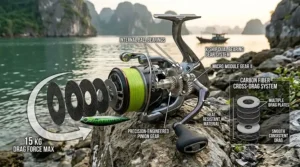
The Shimano Sedona 4000 XG occupies the gap between budget alternatives and premium Stradic models, delivering much of Shimano’s engineering expertise at a price point that doesn’t require a second mortgage. This reel incorporates the same Hagane Gear technology found in more expensive Shimano models, using cold-forged brass gears that resist wear far better than die-cast alternatives.
The 24-pound max drag matches the premium Stradic FK’s stopping power while the 10.2-ounce weight stays reasonable for all-day casting. Shimano achieves this drag rating through their proprietary felt washer system impregnated with special oils that maintain consistent friction across temperature ranges. In practice, this means your drag performs identically whether you’re fishing frigid spring surf or summer heat. The 6.2:1 XG ratio pulls 40 inches per crank, providing the fast retrieval speeds active anglers prefer without crossing into the extreme territory that sacrifices cranking power.
The Propulsion Line Management System uses a larger spool lip diameter that reduces friction as line leaves the reel during casts. Real-world impact: you’ll gain 5-10% casting distance compared to conventional spool designs, particularly noticeable with lighter lures. The 4+1 bearing count seems modest compared to the KastKing’s 10+1, but Shimano’s bearing quality ensures smoother operation than bearing quantity alone would suggest. Each bearing uses Shimano’s A-RB (Anti-Rust Bearing) treatment with special coatings that resist saltwater corrosion.
Customer consensus: Excellent middle-ground option that delivers premium features without premium pricing, noticeably smooth drag and retrieve, and Shimano reliability at an accessible price point.
✅ Pros:
- Hagane Gear technology provides exceptional durability
- 24 lb drag power handles serious gamefish
- Propulsion Line Management System increases casting distance
❌ Cons:
- Mid-range $70-$100 pricing faces competition from both directions
- Fewer bearings than budget competitors, though higher quality
Price & Verdict: In the $70-$100 range, this splits the difference between cheap and expensive while delivering most of the performance you’d want. Ideal for anglers who recognize value extends beyond the lowest price tag but aren’t ready to invest in top-tier equipment.
7. Penn Spinfisher VI 4000 – The Saltwater Tank
The Penn Spinfisher VI 4000 represents Penn’s no-compromise approach to saltwater reel construction, incorporating their IPX5 and IPX6 sealing standards that actually undergo independent water intrusion testing. The IPX ratings aren’t marketing fluff, they indicate this reel withstands sustained low-pressure water jets (IPX5) and high-pressure jets (IPX6) without internal water penetration.
Penn achieves this protection through comprehensive sealing at every potential entry point: sealed bearing system, sealed drag system, and sealed body construction. The full-metal body and side plate create a rigid platform that maintains precise gear alignment even when fighting powerful fish. This rigidity matters more than most anglers realize, misaligned gears under load cause premature wear and inconsistent drag performance. At 13.4 ounces, this reel carries moderate weight that disappears when you’re focused on a hooked fish rather than counting ounces.
The 30-pound max drag ranks second-highest in this comparison, providing stopping power adequate for serious gamefish without crossing into the “overkill for most scenarios” territory. The 6.2:1 gear ratio balances speed and power effectively, pulling 40 inches per crank for efficient retrieval without sacrificing leverage. The CNC Gear technology ensures precise tooth meshing that reduces friction and increases efficiency, you’ll feel the difference in how little effort smooth cranking requires even under load.
User testimonials emphasize: Best-in-class water resistance for harsh saltwater environments, confidence-inspiring build quality that handles abuse without complaint, and drag smoothness that prevents line breaks during powerful runs.
✅ Pros:
- IPX5/IPX6 waterproof ratings provide genuine submersion protection
- 30 lb drag power handles heavy-duty saltwater applications
- Full-metal construction ensures long-term durability
❌ Cons:
- Premium $150-$200 pricing competes with Shimano Stradic FK
- 13.4 oz weight heavier than lightweight alternatives
Price & Verdict: Around $150-$200 at authorized dealers. Best choice for serious saltwater anglers who fish frequently in harsh conditions and need equipment that won’t fail when a trophy fish is on the line.
Real-World Performance: What the Specs Don’t Tell You
The difference between a reel that looks good on paper and one that performs consistently under pressure often comes down to engineering details manufacturers bury in fine print. Line capacity specifications, for instance, typically list monofilament capacity, but most modern anglers spool with braided line. Because braided line has smaller diameter for equivalent breaking strength, a 4000 reel rated for 200 meters of 12 lb mono might hold 300+ meters of 20 lb braid. This capacity difference matters enormously when a fish makes repeated long runs, you’ll maintain connection where smaller reels run out of line.
Drag power ratings create another area of confusion. That 39.5-pound max drag on the KastKing Sharky III sounds impressive until you understand usable drag typically runs 30-40% of maximum rating. Applying full drag pressure risks line breaks, hook pulls, or rod failures. In practice, most 4000 spinning reels deliver similar usable drag in the 8-15 pound range, with differences showing up more in drag smoothness and heat dissipation than raw stopping power. The Shimano Stradic FK’s carbon fiber drag system maintains consistent pressure through long fights better than felt washer systems that can fade as friction generates heat.
Weight distribution affects performance more than total weight. A 10-ounce reel balanced properly around the rod’s fulcrum point fatigues you less than a 9-ounce reel with poor weight distribution that creates constant wrist strain. The Shimano Stradic FK’s lightweight design pairs best with similarly balanced rods, while the heavier Penn Spinfisher VI actually balances better with stouter surf rods. Matching reel weight and balance to your specific rod makes more difference than chasing the lightest option regardless of application.
Sealed bearing systems sound universally beneficial until you realize they require periodic maintenance most anglers skip. Penn’s HydroArmor and Shimano’s X-Protect systems need annual seal inspection and regreasing to maintain waterproof integrity. The Daiwa BG’s simpler construction actually proves more forgiving for anglers who rinse equipment after saltwater use but don’t disassemble reels annually. Choose protection level based on your realistic maintenance commitment, not theoretical best-case scenarios. Modern angling equipment has evolved significantly, making proper maintenance more important than ever for preserving performance.
Choosing the Right 4000 Spinning Reel: Your Decision Framework
Selecting the optimal reel from this lineup requires honest assessment of how and where you actually fish rather than aspirational scenarios. Budget obviously matters, but focusing exclusively on lowest price often leads to buying twice when the cheap option fails or disappoints. Consider total cost of ownership: a $200 Shimano Stradic FK that performs flawlessly for five seasons costs less per fishing trip than a $50 reel replaced twice in that timespan.
If you’re primarily a surf caster targeting stripers, blues, or redfish from beaches, the Penn Battle IV 4000 HS provides the ideal combination of fast retrieval, adequate drag, and water resistance. The high-speed gear ratio lets you work lures aggressively and quickly recover slack when fish run toward shore. Alternative choice: Penn Spinfisher VI 4000 if you’re willing to sacrifice some speed for maximum water protection.
For inshore boat fishing where weight fatigue from all-day casting becomes a factor, the Shimano Stradic FK 4000 XG delivers lightweight performance without compromising on drag power. That 9.7-ounce weight makes hours of repetitive casting noticeably less tiring. Budget alternative: Shimano Sedona 4000 XG provides much of the same Shimano engineering at half the price.
Budget-conscious anglers who need reliable performance without premium pricing should focus on the Daiwa BG 4000 or KastKing Sharky III 4000. The BG offers better long-term durability and sealed construction, while the Sharky III provides maximum drag power if that’s your priority. Both deliver far more performance per dollar than their prices suggest.
Beginners or occasional anglers benefit most from the Okuma Altera 4000’s straightforward operation and friendly pricing. The simpler design with fewer features actually helps newcomers focus on fundamentals rather than getting overwhelmed by advanced adjustments. Once you’ve developed skills and preferences, upgrade to equipment matching your evolved needs.
Heavy-duty saltwater applications requiring maximum abuse resistance point toward the Penn Spinfisher VI 4000. The comprehensive IPX waterproofing and full-metal construction handle repeated submersion, sand intrusion, and rough handling that would destroy less robust alternatives. This reel earns its premium pricing through longevity in harsh environments.
The wrong choice is buying more reel than you need or settling for inadequate equipment to save money. A mid-range option properly maintained and appropriately applied outperforms premium equipment mismatched to your fishing style or neglected through lack of maintenance.

Maintenance That Actually Extends Reel Life
Most 4000 spinning reel failures stem from preventable maintenance neglect rather than inherent design flaws. Saltwater’s corrosive properties attack unprotected metal aggressively, but simple post-fishing care prevents most damage. Rinse reels thoroughly with fresh water after each saltwater trip, paying particular attention to bail mechanisms, drag knobs, and handle areas where salt crystals accumulate. Avoid high-pressure hoses that force water past seals; gentle shower-strength rinsing suffices.
Drag systems require periodic adjustment to maintain optimal performance. Before each fishing season, test drag smoothness by stripping line under tension. Jerky or inconsistent resistance indicates dirty or degraded drag washers needing service. Most manufacturers recommend drag washer replacement or regreasing every 20-30 fishing trips in saltwater, though exact intervals vary by usage intensity. The DIY-friendly Daiwa BG drag stack disassembles easily for home maintenance, while the Shimano Stradic FK’s more complex sealed drag might require professional service.
Bearing lubrication matters more than bearing count. The Shimano Stradic FK’s 6+1 high-quality bearings outperform the KastKing Sharky III’s 10+1 mid-grade bearings because Shimano uses superior lubricants and tighter tolerances. Annual bearing service involves removing old grease, cleaning with appropriate solvents, and reapplying quality marine-grade lubricant. Sealed bearing systems need this less frequently but require complete disassembly when service time arrives.
Line management prevents unnecessary reel stress. Overfilling spools causes line tangles and casting problems, while underfilling reduces casting distance. Fill to within 1/8 inch of the spool lip for optimal performance. Replace braided line showing fraying or monofilament after one season regardless of visible wear, degraded line breaks easier and puts undue stress on drag systems. Proper line maintenance reduces instances of lost fish that blame reels for what’s actually line failure.
Storage between fishing trips affects longevity significantly. Store reels with drag loosened to prevent spring compression fatigue that reduces drag performance over time. Keep reels in climate-controlled spaces rather than garage extremes that accelerate lubricant breakdown. Even sealed reels benefit from protective storage away from temperature extremes and UV exposure that degrades seals and plastics.
Common Mistakes That Cost You Fish (And How to Avoid Them)
The most expensive fishing lesson involves watching a trophy fish escape because your reel wasn’t properly set up or maintained. Incorrect drag settings top the list of preventable failures. Most anglers set drag too tight, assuming maximum resistance improves hooksets. Reality works differently: overly tight drags cause line breaks when fish make sudden runs or create enough resistance to pull hooks from fish mouths. Set drag at 25-30% of line breaking strength as a starting point, then adjust based on fish behavior and fighting style.
Neglecting to check drag before first cast ranks second in avoidable mistakes. Water temperature, humidity, and time between trips all affect drag washer friction. That perfectly adjusted drag from your last outing might be completely wrong today. Make test pulls before rigging your first bait to ensure drag engages smoothly and releases at appropriate resistance. The 30 seconds spent testing saves hours of frustration when you hook up.
Overfilling or underfilling spools creates cascading problems many anglers attribute to reel defects rather than user error. Overfilled spools cause line to jump off in coils during casts, creating immediate tangles and ruining that perfect presentation. Underfilled spools reduce casting distance by 20-30% because line scrapes more friction leaving the spool. Follow manufacturer line capacity guidelines and fill to within 1/8 inch of the spool rim.
Ignoring bail spring maintenance leads to bail failures at the worst possible moments. When bail springs weaken or corrode, the bail won’t snap closed reliably after casts. This causes line slack that results in missed hooksets or tangled line around the rotor. Annual inspection and replacement of bail springs costs minimal money but prevents maximum frustration.
Using reels beyond their design parameters accelerates wear and increases failure rates. That budget Okuma Altera 4000 works perfectly for inshore redfish but struggles when pressed into duty against 40-pound bull reds. Know your reel’s realistic limitations and respect them, pushing equipment beyond design capabilities voids warranties and damages components. Better to use appropriate gear for the target species than risk equipment failure during the fight of a lifetime.
Storing reels improperly between trips causes more long-term damage than fishing use. Leaving reels in hot car trunks degrades lubricants and seals. Storing with drag fully tightened compresses springs that lose tension permanently. Taking time to properly clean, dry, loosen drag, and store in moderate temperatures adds years to reel lifespan and maintains peak performance.
Saltwater vs Freshwater: Why It Matters for 4000 Reels
The 4000 size class originated as a freshwater design for pike, bass, and walleye before manufacturers adapted it for inshore saltwater applications. This evolution explains why some 4000 reels perform brilliantly in saltwater while others corrode rapidly despite similar specifications. Saltwater-specific features separate reels that thrive in marine environments from those barely tolerating occasional beach trips.
Corrosion-resistant materials make the first critical difference. The Penn Spinfisher VI’s full stainless steel bearing system and anodized aluminum components resist saltwater attack far better than basic stainless or brass found in freshwater-focused designs. Even among saltwater reels, protection levels vary, the Penn Battle IV’s HydroArmor sealing provides superior moisture barrier compared to the KastKing Sharky III’s basic water-resistant coating. For anglers fishing salt weekly, this protection difference translates directly to reel longevity.
Sealed drag systems prevent the most common saltwater failure mode. Salt water intrusion into drag stacks causes uneven pressure, jerky engagement, and eventual drag failure. The Shimano Stradic FK’s sealed drag maintains consistent performance season after season, while unsealed alternatives require frequent drag washer replacement or cleaning. Budget reels marketed as “suitable for saltwater” often lack genuine sealed drags, making them temporary saltwater solutions rather than long-term investments.
Bearing quality and quantity requirements differ between fresh and saltwater. Saltwater demands sealed or shielded bearings that resist corrosion, while freshwater tolerates basic bearings with periodic lubrication. The Daiwa BG’s 7 sealed bearings provide better saltwater service than freshwater reels advertising 10+ unsealed bearings. Focus on bearing protection rather than bearing count when evaluating saltwater capability.
Freshwater anglers can use these same 4000 reels effectively, though they’re often buying more reel than necessary. A freshwater bass fisherman rarely needs the corrosion resistance or sealed construction commanding premium prices in saltwater models. The Okuma Altera 4000 or Shimano Sedona 4000 XG deliver excellent freshwater performance at prices reflecting simpler construction adequate for non-corrosive environments. Save money by matching protection level to environment rather than buying maximum sealing you’ll never utilize.
Advanced Techniques: Getting More from Your 4000 Reel
Beyond basic casting and retrieving, several advanced techniques maximize 4000 spinning reel performance. Feathering the spool during casts allows precise lure placement by gently slowing line release with your index finger. Touch the spool edge lightly as the lure approaches target distance, gradually increasing pressure to stop the lure exactly where intended. This skill takes practice but transforms accuracy from “close enough” to “dead-on.” The National Park Service’s guide to spin fishing offers excellent foundational techniques for anglers at all skill levels.
Progressive drag adjustment during fights separates experienced anglers from novices. Start with drag set appropriately for initial hookset, then adjust during the fight based on fish behavior and distance from structure. Tighten drag as you gain line to prevent fish from reaching obstacles, loosen drag if the fish makes unexpected powerful runs. The Shimano Stradic FK’s easy-access front drag allows quick adjustments without breaking rod grip, while the Penn Spinfisher VI’s sealed drag maintains consistency across adjustment range.
Spool management for casting distance involves more than simply filling to proper level. Wind line under moderate tension to create even, tight wraps that release smoothly during casts. Loose or uneven wraps cause tangles and reduce distance. Many anglers blame reels for casting problems actually caused by poor line loading. Use a pencil through the line spool and maintain tension while winding, or have a partner hold the line spool with light pressure.
Bail management tricks improve reliability and reduce line twist. Rather than relying on bail auto-closure when cranking, manually close the bail before starting retrieve. This ensures positive engagement and eliminates the partial-closure failures that cause line tangles. When fighting fish, avoid the common mistake of trying to crank against drag, this creates line twist that ruins subsequent casts. Wait for fish to stop pulling before retrieving line.
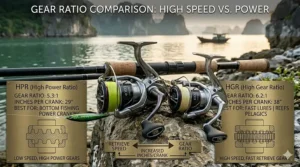
Matching retrieve speed to lure type optimizes presentation and increases strikes. Fast-vibration lures like spinnerbaits and chatterbaits perform best with steady, moderate-speed retrieves, which the 5.7:1 Daiwa BG handles perfectly. Topwater plugs need variable retrieval with pauses and jerks, favoring higher-speed ratios like the 6.2:1 Shimano Sedona that recover slack quickly between twitches. Slow-sinking soft plastics work better with the deliberate retrieve the 5.0:1 Okuma Altera provides. Understanding spin fishing techniques and these relationships helps select optimal gear ratios for your primary fishing methods.
FAQ
❓ What size fish can a 4000 spinning reel handle?
❓ Is 4000 size reel good for surf fishing?
❓ How much drag do I really need on a 4000 reel?
❓ Can I use saltwater reels in freshwater?
❓ What's the difference between 4000 and 5000 size reels?
Conclusion
Choosing the right 4000 spinning reel requires balancing performance needs against budget reality while honestly assessing your fishing frequency and target species. The seven reels examined here span the complete spectrum from entry-level affordability to premium engineering, each excelling in specific scenarios while showing limitations in others.
For anglers seeking the single best all-around 4000 spinning reel regardless of price, the Shimano Stradic FK 4000 XG delivers unmatched combination of lightweight design, powerful drag, and long-term reliability. That $200-$250 investment pays dividends through reduced fatigue during long sessions and consistent performance across diverse fishing situations. Budget-conscious fishermen get exceptional value from the Daiwa BG 4000, which sacrifices refinement for proven durability at half the Stradic’s cost.
Specialized applications demand purpose-built equipment. Surf casters working fast-moving lures benefit most from the Penn Battle IV 4000 HS‘s blazing retrieval speed, while heavy-duty saltwater conditions call for the Penn Spinfisher VI 4000‘s comprehensive waterproofing. Beginners should start with the approachable Okuma Altera 4000 and upgrade once they’ve developed preferences and skills justifying premium equipment.
The performance gap between premium and budget 4000 reels has narrowed considerably in recent years. Models like the KastKing Sharky III prove you don’t need premium pricing to access impressive specifications. However, long-term durability, drag smoothness, and operational refinement still favor established manufacturers with decades of reel engineering experience. Your ideal choice depends on whether you prioritize maximum initial performance per dollar or lowest long-term cost of ownership through extended service life.
Whichever 4000 spinning reel you select, proper maintenance and appropriate application matter more than brand names or specification sheets. A mid-range reel properly cared for and correctly matched to your fishing style outperforms premium equipment neglected or misapplied. Take time to learn your reel’s capabilities, respect its limitations, and maintain it properly, that investment in knowledge returns more dividends than chasing the next upgrade.
Recommended for You
- 7 Best 3000 Size Spinning Reels 2026
- 7 Best 2500 Size Spinning Reels for Bass 2026
- 7 Best Shark Fishing Gear and Equipment for 2026 Success
Disclaimer: This article contains affiliate links. As an Amazon Associate, I earn from qualifying purchases. If you purchase products through these links, we may earn a small commission at no additional cost to you.
✨ Found this helpful? Share it with your friends! 💬🤗
