

In This Article
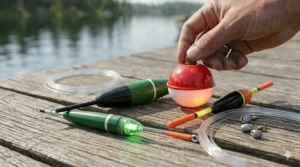
Remember that magical moment when your bobber suddenly disappeared beneath the surface, and you knew—just knew—you had a fish on the line? That childhood thrill never really fades, does it? Whether you’re a seasoned angler or just getting started, choosing the right fishing floats and bobbers can literally make or break your fishing trip.
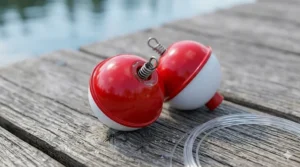
Here’s the thing most people don’t realize: not all fishing floats are created equal. The red-and-white plastic bobber from your youth might work for bluegill in a farm pond, but what about when you’re targeting suspended crappie in 15 feet of timber? Or trying to present live bait to trophy catfish without spooking them? That’s where the right float makes all the difference.
In this comprehensive guide, I’ll walk you through the best fishing floats and bobbers available in 2026, covering everything from ultra-sensitive balsa slip bobbers to specialized catfish peg floats. You’ll discover which floats work best for specific situations, how to choose the right size and style, and—most importantly—how to dramatically increase your catch rate by matching your float to your fishing conditions. Let’s dive in and find your perfect fishing companion!
Quick Comparison Table
| Product | Type | Best For | Price Range | Rating |
|---|---|---|---|---|
| Thill Premium Weighted Float | Slip/Spring Balsa | Crappie, Panfish | $6-$9 | 4.5/5 ⭐ |
| Trout Magnet E-Z Float | Slotted Plastic | Trout, Small Jigs | $10-$12 | 4.7/5 ⭐ |
| Eagle Claw Snap-On Floats | Fixed Round | All Species | $4-$6 | 4.3/5 ⭐ |
| THKFISH Balsa Slip Bobbers | Slip Float | Multi-Species | $8-$11 | 4.4/5 ⭐ |
| Weighted Foam Snap-On Bobbers | Fixed Weighted | Bass, Catfish | $8-$10 | 4.2/5 ⭐ |
| YOTO Peg Floats | Cigar Slip | Catfish, Santee Rig | $15-$17 | 4.6/5 ⭐ |
| Shappy Night Fishing Float Set | Lighted LED | Night Fishing | $16-$20 | 4.5/5 ⭐ |
💬 Just one click – help others make better buying decisions too!😊
Top 7 Best Fishing Floats and Bobbers: Expert Analysis
1. Thill Premium Weighted Float – The Crappie Hunter’s Choice
When I first tried the Thill Premium Weighted Float, I immediately understood why it’s dominated the market for decades. This isn’t just another bobber—it’s a precision fishing tool that’s been refined through countless hours of real-world testing.
Key Specifications:
- Material: Premium balsa wood body with bright orange top
- Available sizes: 3/4″ to 1″ oval
- Weight: Pre-weighted for casting distance
- Attachment: Spring or slip configuration
The built-in weighting system eliminates the need for additional split shot in many situations, which means fewer tangles and a more natural presentation. Anglers consistently praise how these floats cast exceptionally well even in windy conditions, while the balsa wood construction provides unmatched sensitivity to light bites.
Customer Feedback Summary: Users love the easy-to-see orange paint and superior sensitivity compared to plastic alternatives. Some note the spring mechanism can be finicky, requiring practice to get the tension just right.
✅ Pros:
- Excellent casting weight without added split shot
- Ultra-sensitive balsa construction detects lightest bites
- Stays upright better than unweighted models
❌ Cons:
- Higher price point than plastic alternatives
- Spring tension requires adjustment for optimal performance
Price Range: $6-$9 per pack
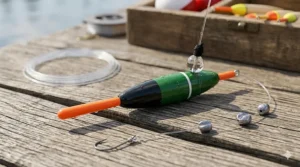
2. Trout Magnet E-Z Trout Float – Slotted Simplicity for Micro Lures
The Trout Magnet E-Z Trout Float revolutionized how anglers present tiny jigs and baits to finicky fish. As the original slotted float designed specifically for trout and panfish, this American-made product solves one of fishing’s most frustrating problems: adjusting depth without cutting your line.
Key Specifications:
- Package: 36-pack with assorted colors (yellow, green, red)
- Design: Unique slotted system for tool-free adjustment
- Best for: 1/16 oz jigs or lighter
- Made in USA by Leland’s Lures
What makes these floats special is their incredible versatility. The simple slot design lets you change depth in seconds—just slide the float up or down your line and lock it in place with the included peg. No retying, no cutting, no frustration. They work equally well in freshwater streams and saltwater flats.
Customer Feedback Summary: Anglers appreciate the fast depth adjustment and high-visibility colors. The floats work perfectly for drifting small offerings in current or still water.
✅ Pros:
- No-cut depth adjustment saves time on the water
- High-grade plastic won’t crack like cheaper alternatives
- Perfect size for ultra-light presentations
❌ Cons:
- Not ideal for heavier baits over 1/16 oz
- Bright colors may be visible to fish in ultra-clear water
Price Range: $10-$12 for 36-pack
3. Eagle Claw Snap-On Round Floats – The Classic Everyone Remembers
Sometimes the classics are classic for a reason. The Eagle Claw Snap-On Round Floats are those iconic red-and-white bobbers that introduced millions of people to fishing—but don’t let their simplicity fool you. These remain incredibly effective for a wide range of fishing applications.
Key Specifications:
- Pack size: 12 assorted floats (1″ to 1-3/4″)
- Material: Durable hard plastic
- Colors: Traditional red/white pattern
- Attachment: Easy snap-on mechanism
These floats represent 90+ years of Eagle Claw’s American fishing heritage. They’re virtually indestructible, highly visible from distance, and work for everything from teaching kids to catch their first fish to targeting bass and catfish with live bait.
Customer Feedback Summary: Reviewers love the nostalgic design that actually performs. The variety pack provides options for different bait sizes and fishing conditions.
✅ Pros:
- Extremely durable hard plastic construction
- Highly visible at long distances
- Perfect for beginners and kids
❌ Cons:
- Less sensitive than balsa or foam alternatives
- Fixed attachment limits depth adjustment flexibility
Price Range: $4-$6 for 12-pack
4. THKFISH Balsa Slip Bobbers – Premium Performance for Serious Anglers
For anglers who demand maximum sensitivity and adjustability, the THKFISH Balsa Slip Bobbers deliver professional-grade performance at a reasonable price. With over 20 years of tackle manufacturing experience, THKFISH has refined these floats to near perfection.
Key Specifications:
- Sizes: Multiple options from 1/7 oz to 1/2 oz
- Colors: Six vibrant color patterns
- Design: Slender pencil style for minimal resistance
The slender profile creates minimal splash on entry and gives fish almost no resistance when they take your bait. The line-friendly internal hole allows smooth sliding action, while the balsa wood construction makes these floats incredibly responsive to even the gentlest nibbles.
Customer Feedback Summary: Users report excellent sensitivity and bright, easy-to-see colors. Some mention paint can chip during shipping, though this doesn’t affect performance.
✅ Pros:
- Superior sensitivity for detecting light bites
- Multiple size options for various depths and species
- Smooth sliding action through guides
❌ Cons:
- Paint durability could be better
- Requires bobber stops (not always included)
Price Range: $8-$11 for 5-pack
5. Weighted Foam Snap-On Bobbers – Long-Distance Casting Champions
When you need to reach distant structure or cast into a stiff wind, weighted foam bobbers become your best friend. Brands like Bombite and Sumind offer excellent Weighted Foam Snap-On Bobbers that combine easy attachment with the casting distance of a small sinker.
Key Specifications:
- Material: EVA rigid foam with internal weights
- Pack size: 10-20 pieces
- Design: Ball or oval shape with spring attachment
- Colors: High-visibility red or yellow
The internal weighting keeps these floats upright in choppy water while adding significant casting distance. The EVA foam construction won’t absorb water or crack like cheaper alternatives, ensuring years of reliable performance. Perfect for bass, trout, bluegill, and light catfishing applications.
Customer Feedback Summary: Anglers appreciate the long casting ability and durability. The one-handed spring attachment makes quick changes easy on the water.
✅ Pros:
- Excellent for distance casting
- Durable EVA foam won’t waterlog
- Easy one-handed attachment system
❌ Cons:
- Less sensitive than lighter unweighted options
- Spring can occasionally slip on very light line
Price Range: $8-$10 for 10-20 pack
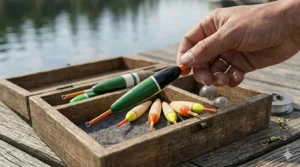
6. YOTO Peg Floats for Catfish – Santee Rig Specialists
Catfish anglers know that peg floats are essential for the famous Santee rig, and the YOTO Peg Floats are among the best available. These cigar-shaped foam floats have been specifically designed for suspending catfish baits off the bottom where big cats cruise.
Key Specifications:
- Sizes: 1.5″, 2″, 2.5″, and 3″ options
- Material: High-density textured foam
- Design: Slotted for no-cut attachment
- Colors: Multiple fluorescent options
The cigar shape provides excellent visibility standing vertically in the water, while the slotted design means you can add or remove floats without cutting your line—a huge advantage when fishing the Santee rig. The high-density foam resists damage from rocks and provides precise buoyancy control.
Customer Feedback Summary: Catfish specialists love the durability and bright colors that remain visible at distance. The slotted design is praised for convenience.
✅ Pros:
- Purpose-built for Santee rig catfishing
- Extremely durable high-density foam
- No-cut slotted attachment system
❌ Cons:
- Limited usefulness outside catfish applications
- Larger sizes needed for very heavy baits
Price Range: $15-$17 for multi-size pack
7. Shappy Night Fishing Float Set – Light Up the Night
When the sun goes down, the Shappy Night Fishing Float Set keeps you connected to your bait with bright glow-stick illumination. This 26-piece kit transforms night fishing from guesswork into precision angling.
Key Specifications:
- Set includes: 6 floats (10g, 20g, 30g) + 20 glow sticks
- Material: Waterproof EVA foam
- Features: 360° rotating swivel to reduce line twist
- Day/night dual-use design
Each float features a luminous slot that securely holds the included 4.5×37.5mm glow sticks, providing hours of visibility after dark. The multi-buoyancy configuration lets you match different water depths and target species from crappie to bass to catfish. Even better, the bright coating ensures clear visibility during daylight hours too.
Customer Feedback Summary: Night anglers report excellent visibility and the swivel design effectively reduces line tangles. The variety of weights covers most fishing scenarios.
✅ Pros:
- Complete kit includes floats and glow sticks
- Multiple buoyancy options for versatility
- 360° swivel reduces line twist
❌ Cons:
- Glow sticks are consumable and need replacement
- Slightly heavier than similar daylight-only floats
Price Range: $16-$20 for complete set
✨ Don’t Miss These Exclusive Deals!
🔍 Take your fishing game to the next level with these carefully selected products. Click on any highlighted item to check current pricing and availability. These tools will help you create authentic fishing memories your family will treasure!
Understanding Different Types of Fishing Floats
The world of fishing floats might seem simple at first glance, but understanding the different types and their specific applications can transform your fishing success. According to Wikipedia’s comprehensive history of fishing floats, floats have been used since at least 1496, when they were first mentioned in written text. Let me break down the main categories you’ll encounter.
Fixed Floats vs. Slip Floats
Fixed floats attach to your line at a specific point and stay there. They’re perfect for shallow water fishing—typically depths under 6 feet—where you’re casting toward visible structure. Think classic bobber fishing for bluegill around a dock. The advantage? Simple rigging and instant visual feedback. The disadvantage? Limited depth capability and difficulty casting through rod guides when set deep.
Slip floats revolutionized deeper water presentations. These slide freely along your line until stopped by a bobber stop knot placed at your desired depth. You can fish 20, 30, even 40 feet deep while still being able to reel your line all the way up for casting. This design lets you present baits at precise depths where fish are suspended, making them invaluable for crappie, walleye, and deep-water trout fishing.
Spring Bobbers vs. Snap-On Styles
The attachment mechanism matters more than most anglers realize. Spring-loaded bobbers grip your line with a small wire spring—great for quick attachment but sometimes prone to slipping on very light line. Snap-on styles use a button mechanism that’s ultra-secure but can be harder to adjust quickly. Your choice often comes down to the fishing situation and how frequently you need to move your float.
Material Matters: Balsa, Foam, and Plastic
Balsa wood floats offer unmatched sensitivity. Because balsa is so buoyant relative to its weight, fish feel virtually no resistance when they take your bait. This translates to more hookups, especially with wary fish. However, balsa can be fragile and requires careful handling.
Foam floats provide the perfect middle ground—durable yet reasonably sensitive, with the added benefit of never waterlogging like some plastics. EVA foam has become the material of choice for modern foam floats due to its resistance to cracking and compression.
Plastic floats are the workhorses of the fishing world. Nearly indestructible and affordable, they’re ideal for beginners, kids, or situations where your float might take abuse. They’re less sensitive than balsa but perfectly adequate for most fishing situations, especially when targeting aggressive species.
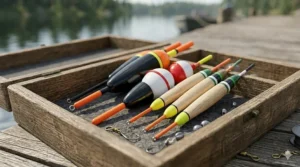
How to Choose the Best Fishing Floats and Bobbers
Selecting the perfect float isn’t about finding the “best” product—it’s about matching the float to your specific fishing situation. Here’s how to make that decision with confidence.
Step 1: Consider Your Target Depth
Fishing in 3 feet of water versus 15 feet requires completely different approaches. For shallow water (under 6 feet), fixed floats work perfectly and offer simplicity. Once you move beyond 6 feet, slip floats become necessary for effective casting and presentation. Very deep fishing (20+ feet) demands slip floats with bobber stops that can slide through your rod guides smoothly.
Step 2: Match Float Size to Bait Weight
This is where many anglers go wrong. Your float should have just enough buoyancy to support your bait and sinker while remaining responsive to bites. A tiny 1/64 oz jig under a massive 2-inch bobber? You’ll miss every subtle bite. Conversely, a heavy live minnow under a micro-float will sink it completely. The float should sit vertical in the water with just the top portion visible—that’s your sweet spot.
Step 3: Evaluate Water Conditions
Calm pond or windswept reservoir? The water conditions drastically affect float choice. In choppy water, you need a larger, weighted float that won’t bob around from wave action alone. In dead calm conditions, the smallest, lightest float possible gives fish minimum resistance and maximum sensitivity. Current adds another dimension—slender, streamlined floats perform better in moving water than round, bulky designs.
Step 4: Think About Visibility
You can’t react to what you can’t see! Bright, contrasting colors like fluorescent red, orange, or chartreuse make floats visible at long distances. However, in ultra-clear water targeting spooky fish, consider more subtle colors with just a bright tip for visibility. Night fishing obviously requires lighted floats or glow-stick compatible designs.
Step 5: Consider Species-Specific Needs
Different fish require different approaches. Crappie in timber? You need a sensitive slip float you can adjust for different depths as you work through structure. Catfish on the bottom? Peg floats on a Santee rig keep your bait visible to cruising fish. Trout in current? Small, highly visible floats that drift naturally with the flow. Bass in heavy cover? Weighted floats you can cast accurately to precise targets.
Slip Bobber Fishing Rigs: Setup and Techniques
Slip bobber rigs deserve special attention because they’re incredibly effective yet often overlooked by casual anglers. Let me walk you through the complete setup and techniques that’ll have you fishing like a pro.
The Complete Slip Bobber Setup
Start with your main line and thread on a bobber stop—these small, adjustable knots slide easily along your line. Next, add a small bead (6mm works great). The bead prevents your bobber stop from pulling through the float’s hole. Now slide on your slip float, bottom-end first so the line runs through freely. Below the float, add your split shot weights based on the float’s capacity, typically 12-18 inches above your hook. Finally, tie on your hook and you’re ready to fish.
The beauty of this system? You can set your bobber stop at any depth—5 feet, 15 feet, 30 feet—and still reel everything up to within a few feet of your rod tip for casting. The float slides down to the split shot when you cast, then slides back up to the bobber stop when your rig sinks. Pure genius!
Adjusting for Suspended Fish
Here’s where slip bobbers truly shine. Fish often suspend at specific depths based on temperature, oxygen levels, and forage. With sonar or trial-and-error, you can pinpoint exactly where fish are holding and adjust your bobber stop to place your bait right in front of them. I’ve caught crappie suspended 12 feet down over 30 feet of water—impossible with a fixed bobber, easy with a slip float.
Advanced Slip Float Techniques
Try the “lift bite” technique popular in European float fishing. Instead of waiting for the float to go under, watch for it to suddenly stand more upright or even lay flat—this indicates a fish has picked up your bait and is swimming toward you. Set the hook immediately! This technique catches fish that would otherwise drop the bait when they feel standard resistance.
Weighted Float Fishing: When and Why
Weighted floats solve specific problems that unweighted versions can’t handle. Understanding when to reach for a weighted float will put more fish in your boat.
Long-Distance Casting
The number one advantage of weighted floats? Casting distance. Try throwing a tiny unweighted float into a 20 mph wind—it’ll land about 10 feet away. A weighted float of the same size? It’ll cut through that wind and reach your target spot 50+ feet out. This becomes critical when fish are holding away from shore or when bank fishing requires maximum casting distance.
Windy Conditions Performance
According to experts at Baitshop.com, weighted floats anchor better in choppy water conditions. The weight keeps them stable so you can distinguish between wave action and actual bites. This matters enormously on large lakes and reservoirs where afternoon winds are common.
Quick Depth Achievement
Weighted floats help your rig sink faster to the target depth. When fishing deep water for suspended fish, an unweighted float might take minutes to reach depth as the line slowly pays out. A weighted float gets you fishing faster, which means more time in the strike zone.
Catfish Fishing Floats: Santee Rig Mastery
Catfish anglers discovered long ago that suspending bait off the bottom produces more and bigger fish. The Santee rig, featuring specialized peg floats, has become the go-to presentation for trophy catfish across America.
The Santee Rig Explained
Named after South Carolina’s Santee Cooper lakes where it originated, this rig keeps your bait suspended 1-3 feet off the bottom where cruising catfish can easily spot it. The standard setup uses a slip sinker on the main line above a swivel, then a leader (usually 18-36 inches) with one or more peg floats attached via the slotted design. Your baited hook goes at the leader’s end.
Choosing the Right Peg Float Size
Size matters tremendously with peg floats. Use 1.5-2 inch floats for lighter baits like cut bait or smaller live baitfish. Move up to 2.5-3 inch floats when fishing large live baits or multiple chicken liver chunks. Multiple smaller floats often work better than one large float, giving you fine-tune buoyancy control.
Advanced Catfishing Float Strategies
Try the “stinger rig” variation—add a second, smaller hook 6-8 inches above your main hook. The peg floats will suspend both hooks off bottom, and catfish will often hit the stinger when they approach your bait from above. This simple modification has doubled my hookup rate on pressured lakes where cats have seen every standard presentation.
Glass Fishing Floats and Japanese Fishing Floats: Collectibles and Functionality
While modern plastic and foam floats dominate today’s market, glass and traditional Japanese fishing floats hold a special place in fishing history and continue to attract collectors and traditional anglers alike.
Historical Significance
Glass fishing floats originated in Norway in the 1840s and were widely used by commercial fishermen until the 1970s. Japanese glass floats, often found on Pacific beaches after breaking free from nets, became highly collectible. These beautiful, hollow glass spheres served as net floats for commercial fishing operations across Asia.
Modern Applications
Today, glass floats are primarily collectibles rather than functional fishing gear, though some traditional anglers still use them. Their main disadvantage? Fragility makes them impractical for most recreational fishing. However, their beauty and connection to fishing heritage make them wonderful display pieces for serious anglers.

Night Fishing with Lighted Bobbers
Night fishing opens up entirely new opportunities, especially during hot summer months when fish feed actively after dark. Lighted bobbers make this productive technique actually workable.
Glow Stick vs. LED Technology
Traditional glow stick floats use chemical light sticks inserted into slots. They’re bright, inexpensive, but single-use—lasting 6-8 hours before requiring replacement. LED lighted floats use small batteries and can last multiple seasons. The initial cost is higher, but they’re more economical long-term and typically brighter.
Night Fishing Tactics
During moonless nights, use brighter floats for maximum visibility. When there’s moonlight, scale back to dimmer lights that don’t spook fish. Position yourself so you’re looking toward darker water or shoreline rather than toward ambient light sources, which improves float visibility dramatically.
Target Species at Night
Crappie become more active at night, especially in summer. Walleye feed heavily after dark year-round. Catfish are famous nighttime hunters. Even bass and bluegill can be caught effectively under the cover of darkness when they feel more comfortable feeding in shallower water.
Bobber Stop Knots: Essential Rigging Skills
The humble bobber stop might be the most underrated piece of fishing tackle ever invented. This tiny knot literally makes slip float fishing possible, yet many anglers struggle to tie and use them effectively.
Tying the Perfect Bobber Stop
Commercial bobber stops come pre-tied on small pieces of plastic—just slide them onto your line, remove the plastic, and adjust as needed. For DIY versions, use strong, thin thread like dental floss. Create a small loop, wrap it around your main line 4-5 times, then pass the tag ends through the loop and tighten firmly. Trim the tags to about 1/8 inch—long enough to see and adjust, short enough to pass through rod guides smoothly.
Positioning and Adjustment
Here’s a pro tip: wet your bobber stop before sliding it along your line. This prevents damage to your main line from friction. Adjust your stop based on water depth and fish location, moving it frequently as you search for the depth fish are holding. Don’t be afraid to experiment—sometimes fish will be a foot or two shallower or deeper than expected.
Troubleshooting Common Issues
If your bobber stop slides under pressure from casting or fighting fish, either the knot isn’t tight enough or you’re using thread that’s too slippery. Switch to rougher thread material. If the stop won’t slide through your rod guides, trim the tag ends shorter or use thinner thread. Getting this right makes all the difference in slip float fishing success.
Fishing Weights and Sinkers: Balancing Your Float Rig
The relationship between your float and the weights below it determines how well your presentation works. Too much weight and your float sits too low in the water, making bites hard to detect. Too little and your bait won’t reach the desired depth.
Calculating the Right Amount of Weight
Most quality floats list their weight capacity—usually in grams or ounces. Start with about 70-80% of that maximum capacity. This leaves enough buoyancy that fish pulling down creates obvious movement, while providing enough weight that wind and current don’t constantly move your rig. Fine-tune based on conditions and bite sensitivity needs.
Split Shot Placement Strategies
Concentrate weight higher on your leader (closer to the float) for live bait presentations where you want the bait to sink naturally. Spread split shot along the leader for a slower, more natural fall with artificial baits. For suspended fish in clear water, keep weights minimal and far from the bait to reduce spooking.
Alternative Weighting Methods
Weighted hooks like jig heads eliminate the need for separate split shot on some presentations. Bullet weights work better than split shot for fishing in heavy cover where round shot tends to snag. Bell sinkers provide a different action, making your bait plane outward from the float as it sinks—perfect for covering more water.
Frequently Asked Questions
❓ What is the best bobber for trout fishing?
❓ How deep can you fish with a slip bobber?
❓ Do weighted bobbers scare fish?
❓ What size bobber for catfish?
❓ Are lighted bobbers worth it for night fishing?
Conclusion: Finding Your Perfect Float
After exploring the world of fishing floats and bobbers, from traditional red-and-white classics to high-tech lighted models, one truth stands out: the right float for you depends entirely on your fishing situation, target species, and personal preferences.
For most anglers, I recommend starting with a versatile selection—grab some Eagle Claw snap-on floats for casual fishing and teaching kids, add Thill Premium Weighted Floats for serious panfish and crappie presentations, and keep a few YOTO peg floats on hand if you chase catfish. This combination covers 90% of freshwater fishing scenarios without breaking the bank.
Remember that even the best fishing floats and bobbers won’t catch fish for you—they’re tools that make your presentations more effective when used correctly. Match your float to your bait size, adjust for water conditions, and pay attention to what the fish are telling you through your float’s movements. Sometimes a subtle twitch means you should set the hook immediately; other times, waiting for the float to completely submerge produces better hookup ratios.
Don’t be afraid to experiment with different float styles, sizes, and rigging methods. Some of my best fishing days came after trying a technique or float style I’d previously dismissed. The waters you fish, the species you target, and the conditions you encounter will ultimately guide you to your favorite floats. Get out there, try these recommendations, and discover which combinations work best for your home waters. Tight lines!
Recommended for You
- 7 Best Night Fishing Lights for 2026
- 7 Best Topwater Fishing Lures That Trigger Explosive Strikes 2026
- 7 Best Ultralight Fishing Rods for Epic Stream Trout 2026
Disclaimer: This article contains affiliate links. If you purchase products through these links, we may earn a small commission at no additional cost to you.
✨ Found this helpful? Share it with your fishing buddies! 💬🤗
