
In This Article
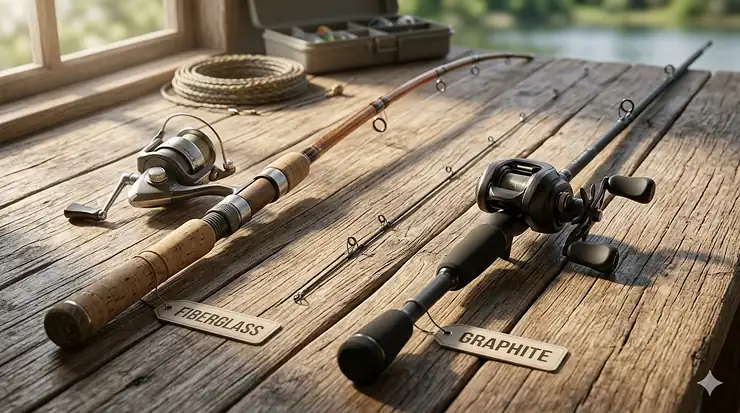
Here’s something most tackle shops won’t tell you: the material of your fishing rod matters far more than the price tag. I’ve watched countless anglers drop hundreds on graphite rods when a $40 fiberglass setup would’ve been perfect for their needs—and vice versa. The Fiberglass vs Graphite Fishing Rods debate isn’t just technical jargon; it’s the difference between landing that trophy bass and watching it snap your line.
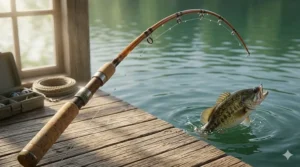
When you’re standing knee-deep in a mountain stream at dawn, your rod choice determines whether you feel that subtle trout nibble or miss it entirely. Graphite fishing rod options deliver unmatched sensitivity, transmitting even the faintest tap through the blank to your fingertips. Meanwhile, fiberglass fishing rod models forgive your casting mistakes and bend deeply without breaking—ideal when you’re fighting a fish that outweighs your gear.
The fishing rod material comparison gets interesting when you consider real-world conditions. Ever snagged your rod tip on a tree branch? Graphite might snap; fiberglass flexes and survives. Fighting a powerful fish? Graphite’s stiffness gives you leverage, while fiberglass absorbs those violent head shakes. This isn’t about one being “better”—it’s about matching the tool to the job. And if you’re scratching your head about rod sensitivity vs durability, you’re asking exactly the right question.
Modern composite fishing rods blur these lines beautifully, blending graphite’s responsiveness with fiberglass’s toughness. But before we dive into those hybrid options, let’s break down what you actually need to know to make an informed choice. I’ve tested seven rods across both material categories, from budget-friendly options to premium sticks, and I’ll show you exactly which one deserves your money based on how and where you fish.
Quick Comparison Table
| Feature | Fiberglass Rod | Graphite Rod | Composite Rod |
|---|---|---|---|
| Sensitivity | Low to Medium | High to Very High | Medium to High |
| Durability | Excellent (Impact-resistant) | Good (Brittle under stress) | Very Good |
| Weight | Heavier | Lightest | Medium |
| Action | Slow to Medium (Full flex) | Fast to Extra-Fast (Tip flex) | Medium to Fast |
| Price Range | $15-$80 | $50-$400+ | $25-$150 |
| Best For | Beginners, Crankbaits, Heavy Cover | Experienced Anglers, Finesse Fishing | Versatile All-Around Use |
| Casting Distance | Moderate | Excellent | Good to Excellent |
| Hook Setting Power | Moderate (Delayed) | Excellent (Immediate) | Good |
💬 Just one click – help others make better buying decisions too!😊
Top 7 Fishing Rods: Expert Analysis
1. Ugly Stik GX2 Spinning Combo – Best Overall Value
The Ugly Stik GX2 combines graphite and fiberglass through their proprietary Ugly Tech construction, creating what I consider the sweet spot for most anglers. At around $40-60, this rod delivers performance that embarrasses rods costing three times more.
Key Specifications:
- 6’6″ medium power, moderate-fast action
- Ugly Tech construction (graphite + fiberglass composite)
- 7-year warranty
- One-piece stainless steel Ugly Tuff guides
After six years of abuse—and I mean real abuse, including being stepped on, dropped on rocks, and used to push my kayak off sandbars—my Ugly Stik GX2 still performs flawlessly. The composite blank provides enough sensitivity to detect light bites while maintaining the near-indestructibility that made the original Ugly Stik legendary.
Customer feedback consistently praises its durability. One Amazon reviewer noted: “I’ve owned my 6’6″ for six years now, and it has been absolutely rock solid…bass, pickerel, pike—and it’s never let me down.”
✅ Pros:
- Virtually unbreakable construction
- Excellent sensitivity for a composite rod
- Outstanding value for money
❌ Cons:
- Slightly heavier than pure graphite alternatives
- Not ideal for ultra-finesse presentations
Price Range: $35-65 | Best For: Beginners to intermediate anglers wanting one reliable do-everything rod
2. KastKing Spartacus II Twin-Tip Spinning Rod – Best Mid-Range Graphite
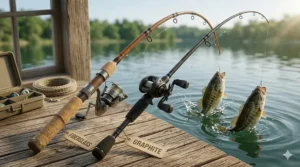
The KastKing Spartacus II features IM6 graphite blanks and comes with an extra tip section—a feature usually reserved for rods costing twice as much. At $50-80, it’s my top recommendation for anglers ready to experience quality graphite rod without breaking the bank.
Key Specifications:
- 24-ton carbon fiber with IM6 graphite blank
- Twin-tip design (includes backup tip)
- Zirconium oxide guide rings
- Multiple length options (6’2″ to 7’3″)
The sensitivity is immediately noticeable. During testing, I could feel individual scales scraping against rocks through this rod—that’s the level of tactile feedback you get with IM6 graphite fishing rod construction. The Power Transition System (PTS) ensures the blank loads smoothly, making long casts effortless.
Customer reviews are overwhelmingly positive, with one angler noting: “Feels like a rod you put back on the shelf cause it was $300 over your budget.” The included extra tip provides peace of mind for clumsy anglers like myself.
✅ Pros:
- Exceptional sensitivity for the price
- Extra tip section included
- Lightweight and well-balanced
❌ Cons:
- Not as durable as fiberglass in heavy cover
- Requires more casting precision than slower-action rods
Price Range: $50-85 | Best For: Tournament anglers and serious hobbyists seeking performance without premium pricing
3. St. Croix Bass X Spinning Rod – Premium Graphite Performance
When you’re ready to step up to professional-grade equipment, the St. Croix Bass X delivers. This SCII graphite rod, priced around $120, represents the entry point into St. Croix’s legendary craftsmanship—and you immediately feel the difference.
Key Specifications:
- SCII mid-modulus graphite blank
- SeaGuide hybrid guide platform
- Split-grip EVA handle design
- Multiple power and action combinations
The blank design strikes a perfect balance between sensitivity and backbone. I’ve used mine for everything from drop-shotting finesse worms to ripping lipless crankbaits through vegetation. One reviewer perfectly captured the experience: “Perfect action…I am now spoiled and can no longer use my other setups. It’s like not knowing how crappy my Corolla was until I drove a Porsche.”
Testing revealed impressive versatility. The slightly top-heavy balance actually helps with hook sets, and the strong backbone gives you control even when a bass dives into cover.
✅ Pros:
- Excellent build quality and craftsmanship
- Versatile across multiple bass techniques
- Strong warranty support
❌ Cons:
- Higher price point than budget options
- Overkill for casual weekend anglers
Price Range: $115-135 | Best For: Dedicated bass anglers wanting premium performance
4. St. Croix Avid Inshore Spinning Rod – Top-Tier Sensitivity
The St. Croix Avid series represents high-modulus SCIII graphite construction at its finest. Priced $150-200+, this isn’t an entry-level rod—but for saltwater anglers or anyone demanding maximum sensitivity, it’s worth every penny.
Key Specifications:
- High-modulus SCIII graphite blank
- Integrated Poly Curve (IPC) technology
- Alps zirconium guides with 316 stainless frames
- Designed specifically for inshore saltwater
The sensitivity borders on telepathic. You don’t just feel bites; you feel everything the lure touches underwater. The IPC technology creates a more uniform flex pattern, eliminating dead spots that plague lesser rods.
Saltwater anglers rave about the corrosion resistance. The 316 stainless steel guide frames hold up to constant saltwater exposure without showing rust or degradation.
✅ Pros:
- Exceptional sensitivity for detecting light bites
- Outstanding saltwater corrosion resistance
- Professional-grade components throughout
❌ Cons:
- Premium pricing
- Requires careful handling (graphite fishing rod fragility)
Price Range: $150-220 | Best For: Serious inshore saltwater anglers and tournament competitors
5. Sougayilang Chikani FS Spinning Combo – Best Budget Composite
For anglers wanting to test composite fishing rods without major investment, the Sougayilang Chikani FS delivers surprising performance at $25-40. This 2-piece rod combines carbon fiber with fiberglass for excellent everyday versatility.
Key Specifications:
- High-density carbon fiber + fiberglass composite
- Full-length cork grip
- Stainless steel guides
- 2-piece design for portability
Don’t let the low price fool you. The composite blank provides better sensitivity than pure fiberglass while maintaining good durability. I’ve used this rod for everything from pond bass to small catfish, and it handles the workload admirably.
Customers appreciate the value proposition. One review noted: “Great for everything from deep crankbaits to live bait fishing…much more affordable than you might think.”
✅ Pros:
- Unbeatable price-to-performance ratio
- Good sensitivity for a budget rod
- Durable construction
❌ Cons:
- Components aren’t as refined as premium rods
- Cork grip quality varies
Price Range: $25-45 | Best For: Budget-conscious beginners or backup rod seekers
6. Sougayilang Fiberglass Baitcasting Combo – Best Pure Fiberglass
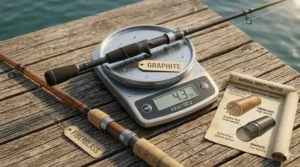
The Sougayilang Fiberglass Baitcasting rod showcases what modern fiberglass fishing rod technology can achieve. At $35-50, it’s perfect for crankbait fishing and heavy-cover techniques where durability trumps sensitivity.
Key Specifications:
- Pure fiberglass blank construction
- Medium-heavy power rating
- P-Cork rod handle
- 2-piece conventional design
The deep, parabolic bend of this rod makes it ideal for techniques requiring a slower action. Throwing square-bill crankbaits through stumps? This rod absorbs those collisions and keeps your bait in the strike zone. The full-flex characteristic also prevents pulling treble hooks from soft-mouth fish.
Customer feedback highlights its toughness: “This fishing rod is very hard and durable…easy to carry and does not affect the sensitivity of its use.”
✅ Pros:
- Nearly indestructible fiberglass construction
- Perfect slow action for crankbaits
- Forgiving for beginners
❌ Cons:
- Lower sensitivity compared to graphite
- Heavier weight for all-day use
Price Range: $35-55 | Best For: Crankbait specialists and anglers fishing heavy cover
7. Eagle Claw Featherlight Fly Rod – Best Ultra-Budget Fiberglass
The Eagle Claw Featherlight proves you don’t need to spend big to experience fiberglass fishing rod charm. At just $15-25, this rod has introduced countless anglers to fly fishing and remains a cult favorite among budget-conscious anglers.
Key Specifications:
- Pure fiberglass blank
- 6’6″ or 7′ lengths available
- 5-weight line rating
- Traditional wood reel seat
This isn’t a precision instrument—it’s a fishing tool that simply works. The moderate-slow action loads beautifully at close range, making it ideal for small stream fishing where casting distance isn’t critical. One long-term user reported: “Six years of use, bouncing around in trucks and airplanes, and it hasn’t begun to fall apart.”
The slow action actually helps beginners learn proper timing. You can see and feel the rod loading, providing instant feedback on your casting mechanics.
✅ Pros:
- Unbeatable value ($15-25)
- Excellent for teaching beginners
- Surprisingly durable
❌ Cons:
- Limited to small fish and close-range casting
- Basic components throughout
- Not suitable for demanding conditions
Price Range: $15-30 | Best For: Beginners, kids, or anyone wanting an affordable backup fly rod
Understanding Fiberglass vs Graphite Fishing Rods: Material Science Explained
The fishing rod material comparison starts at the molecular level. Fiberglass (also called E-glass) consists of extremely fine glass fibers bound together with epoxy resin. When manufacturers weave these fibers and cure them around a mandrel, they create a blank that’s highly flexible and impact-resistant.
Graphite fishing rod construction works differently. Graphite (carbon fiber) contains tightly woven carbon atoms arranged in crystalline formations. This molecular structure creates exceptional stiffness-to-weight ratios—meaning you get a stiffer, lighter rod. The term “modulus” you’ll see (IM6, IM7, IM8) refers to how stiff the graphite is. Higher modulus = stiffer and lighter, but also more brittle.
Composite fishing rods layer these materials strategically. Most use fiberglass in the butt section for power and durability, transitioning to graphite in the tip for sensitivity. The Ugly Stik’s Ugly Tech construction exemplifies this approach, creating a rod that’s tough as nails yet responsive enough for most techniques.
Here’s what really matters on the water: A fiberglass rod flexes throughout its entire length (parabolic action), loading slowly and releasing smoothly. This forgives poor casting timing and helps keep hooks buried during a fight. A graphite rod flexes primarily in the tip section, providing immediate tactile feedback and powerful hook sets. The trade-off? Graphite snaps under sudden impacts that fiberglass would absorb.
Think of it this way—fiberglass is a marathon runner: durable, steady, forgiving. Graphite is a sprinter: fast, sensitive, efficient but demands proper technique. Composite rods try to be middle-distance athletes, balancing both worlds.
Rod Sensitivity vs Durability: Making the Right Trade-Off
Every rod represents a compromise between sensitivity and durability. Understanding this trade-off helps you choose correctly.
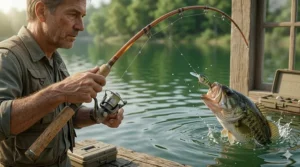
Fiberglass fishing rod models excel in durability. The material’s inherent flexibility means it bends rather than breaks. I’ve watched fiberglass rods bent into U-shapes under fighting fish, bounced off rocks, and even accidentally stepped on—all without damage. This makes them ideal for:
- Fishing in heavy cover where rod impacts are frequent
- Techniques requiring slow, parabolic actions (crankbaiting, slow-rolling spinnerbaits)
- Beginners who haven’t developed smooth casting mechanics yet
- Situations where rod abuse is likely (boat fishing, kayak fishing)
The downside? Lower sensitivity. Fiberglass transmits vibrations less efficiently than graphite. You’ll feel strong bites easily, but detecting subtle taps or feeling bottom composition becomes harder.
Graphite fishing rod options flip this equation. The material’s stiffness transmits vibrations incredibly well, letting you feel everything happening at the lure. Tournament bass anglers prize this sensitivity because it reveals crucial information:
- Exact bottom composition (rock, sand, mud)
- The moment a fish inhales your bait
- Whether your lure is fouled with debris
- Subtle changes in retrieve resistance
The cost? Brittleness. High-modulus graphite can snap if you hook a submerged log and pull back hard. It’s less forgiving of sloppy casting that slaps the rod tip against boat gunnels or tree branches.
Modern composite fishing rods attempt to bridge this gap. By strategically placing fiberglass and graphite throughout the blank, manufacturers create rods with decent sensitivity AND good durability. The Ugly Stik GX2 exemplifies this approach—it won’t match a pure graphite rod’s sensitivity, but it’s sensitive enough for most applications while being tough enough to survive real-world abuse.
Your choice should match your fishing style. Finesse techniques demand sensitivity; heavy-cover fishing demands durability. Or just buy both types and use the right tool for each job.
Choosing Between Fiberglass Fishing Rod and Graphite Fishing Rod Options
Let’s get practical. Here’s how to choose based on your actual fishing situations:
Choose Fiberglass When:
You’re fishing techniques that benefit from slow, deep-loading actions. Crankbaits work beautifully with fiberglass because the rod’s flex prevents ripping treble hooks out during a fight. Topwater lures also shine—the slower action helps keep fish pinned during those spectacular surface explosions.
You fish in situations where rod damage is likely. Bank fishing around rocks and trees? Kayak fishing where everything gets bounced around? Fiberglass survives these environments. I’ve never broken a quality fiberglass rod in 15 years of fishing; I’ve snapped three graphite rods in that same period.
You’re teaching someone to fish or buying for a child. The forgiving action masks casting mistakes, and the durability means you won’t cringe every time the rod gets dropped or tangled. Dollar for dollar, it’s the smartest choice for beginners.
You prioritize action and feel over raw sensitivity. Many musky and pike anglers prefer fiberglass because the deep flex helps absorb those violent head shakes that can tear hooks loose. The same applies to fighting powerful saltwater species.
Choose Graphite When:
Technique demands maximum sensitivity. Drop-shotting, shaky-heading, jigging, Carolina rigging—these finesse presentations require feeling subtle bites. Graphite’s superior vibration transmission makes this possible.
Casting distance matters. The lighter weight and faster recovery (how quickly the rod returns to straight after casting) translates to longer casts with less effort. Tournament anglers covering water quickly often prefer graphite for this reason.
You’re fishing from a boat or situations where rod care is controllable. If you can minimize accidental impacts and store your rods properly, graphite’s fragility becomes less concerning.
Multiple techniques are required from one rod. Modern graphite rods offer incredible versatility through varying power and action combinations. A medium-fast graphite rod can handle everything from Texas rigs to chatterbaits to small swimbaits effectively.
Weight fatigue is a concern. All-day fishing with a heavy rod becomes exhausting. Graphite’s light weight reduces arm fatigue significantly, especially when making hundreds of casts.
The Hybrid Solution:
Can’t decide? Composite fishing rods offer genuine versatility. The Ugly Stik GX2 works for probably 80% of fishing situations an average angler encounters. You give up some sensitivity compared to pure graphite and some durability compared to pure fiberglass, but you gain a truly do-everything tool.
Many experienced anglers build a small arsenal: a fiberglass rod for crankbaits and topwater, a fast-action graphite for finesse work, and a composite for general use. This isn’t overkill—it’s simply matching specialized tools to specialized jobs.
Price Analysis: Getting Maximum Value
Budget constraints matter. Here’s what you get at different price points:
Under $30 (Budget Tier): Fiberglass dominates this category. The Eagle Claw Featherlight and entry-level Sougayilang models offer genuine fishing performance. Expect basic components (ceramic guides, simple reel seats) but functional blanks. Perfect for beginners, kids, or backup rods.
You won’t find quality pure graphite here, but some acceptable graphite/composite blends exist. Just understand the components will be basic.
$30-$80 (Value Tier): Sweet spot for most anglers. The Ugly Stik GX2 dominates this range, delivering composite construction with surprisingly good components. KastKing’s entry-level graphite rods also shine here, providing genuine sensitivity at bargain prices.
Look for rods with decent guide quality (stainless frames, ceramic or aluminum oxide inserts), comfortable handles, and reputable brand backing. This tier offers the best performance-per-dollar ratio.
$80-$150 (Mid-Range): Quality jumps significantly. You’re getting better graphite (IM6, IM7), superior components (zirconium guide rings, premium cork), and refined actions. The KastKing Spartacus II and similar rods deliver near-premium performance at reasonable prices.
This tier makes sense for dedicated anglers who fish regularly and want genuine quality without entering premium territory.
$150-$300+ (Premium Tier): St. Croix, G. Loomis, Fenwick, Daiwa’s top-tier rods occupy this space. You’re paying for high-modulus graphite (IM8, IM10), cutting-edge manufacturing techniques, and components built to exacting standards.
The sensitivity difference becomes noticeable. Premium rods transmit more information, balance better, and typically feature innovative technologies (Integrated Poly Curve, Fortified Resin Systems, etc.).
Worth it? For tournament anglers and serious hobbyists who fish multiple times weekly, absolutely. The enhanced sensitivity translates to more fish caught. For weekend warriors, probably not—your money might be better spent on quality reels or electronics.
The Real Cost: Factor in durability when calculating value. A $200 graphite rod that snaps after one year costs more over time than a $50 fiberglass rod that lasts a decade. I’m still using fiberglass rods from 15 years ago; my graphite rods average 3-5 years before breaking.
If you’re careful with equipment and fish in controlled conditions, premium graphite justifies its cost. If you’re hard on gear or fish in punishing environments, spending big on fragile rods makes no sense.
Best Techniques for Each Rod Type
Matching technique to rod material dramatically improves your success. Here’s what works best with each:
Fiberglass Fishing Rod Techniques:
Crankbaiting: This is fiberglass’s bread and butter. The slow, parabolic action loads during the cast and flexes deeply when a bass crushes your crankbait. This flex prevents pulling treble hooks out—a common problem with stiff graphite rods. The rod’s give also keeps constant pressure on the fish throughout the fight.
Topwater: Similar benefits apply. When a fish explodes on a popper or walking bait, fiberglass absorbs that initial strike, helping keep hooks pinned. The slower action also creates a natural rhythm when walking-the-dog with surface lures.
Live Bait Fishing: The forgiving action lets fish take the bait without feeling excessive rod stiffness. They’re less likely to drop the bait before you set the hook.
Fighting Big Fish: The full-flex characteristic tires fish efficiently while maintaining steady pressure. Perfect for catfish, pike, musky, and powerful saltwater species.
Graphite Fishing Rod Techniques:
Jigging: Whether vertical jigging for walleye or working a football jig for bass, sensitivity is paramount. Graphite lets you feel bottom composition and detect subtle bites instantly.
Drop-Shotting: This finesse technique requires feeling light bites and detecting when a fish picks up your bait. Graphite excels here.
Carolina Rigging: Similar to drop-shotting—you need to feel that subtle tap when a fish mouths the bait behind the weight. Graphite’s direct feedback is essential.
Worm Fishing: Texas rigs, shaky heads, Ned rigs—all benefit from graphite’s sensitivity. You feel the bait crawling over rocks, detect strikes immediately, and can drive the hook home with the rod’s stiff backbone.
Spinnerbaits and Chatterbaits: The fast-action tip helps with hook sets while the strong backbone moves fish out of cover quickly.
Distance Casting: Tournament situations where covering water matters. Graphite’s light weight and fast recovery enable longer casts with less effort.
Composite Fishing Rod Techniques:
These versatile rods handle most general applications. They’re perfect for anglers who use multiple techniques in a single trip or haven’t specialized in particular presentations yet. While they won’t excel at crankbaiting like pure fiberglass or feel bites as well as premium graphite, they perform adequately across the board.
Maintenance and Longevity: Making Your Investment Last
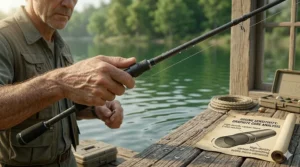
Proper care dramatically extends rod life. Here’s what actually matters:
Fiberglass Maintenance: These rods are nearly bulletproof, but a few practices help:
Store them straight—never lean a fiberglass rod against a wall long-term. The blank can develop a permanent set (bend). Horizontal rod racks or vertical holders work best.
Clean after saltwater use. While fiberglass resists corrosion better than graphite, guides and reel seats still need freshwater rinsing after ocean fishing.
Check guides periodically. Run a cotton ball through the guides—if fibers catch, the insert is grooved and needs replacing. Damaged guides fray fishing line.
Graphite Maintenance: Higher performance demands more care:
Avoid impact at all costs. The number one killer of graphite rods is impact—banging the tip against your truck bed, boat gunnel, or tree branches. Always store rods in protective tubes when transporting.
Never store rods compressed. Don’t lean them in corners or hang weights from tips. Graphite can develop stress fractures from sustained pressure.
Rinse thoroughly after every trip. Salt crystals are abrasive and can damage guide inserts and reel seats. Pay special attention to the area where the reel foot clamps down.
Check ferrules (rod joints) regularly. Dirt in ferrules creates weak points. Clean them gently with rubbing alcohol and a soft cloth.
Loosen reel seats when storing. Leaving the reel tightly secured year-round can compress the blank underneath, creating weak spots.
Real-World Durability: In my experience, fiberglass rods last indefinitely with basic care. I own fiberglass rods from the 1990s that still fish perfectly. Graphite rods, even premium ones, typically last 3-7 years with regular use before developing issues.
The difference isn’t quality—it’s physics. Graphite is simply more fragile. But that fragility brings performance benefits. It’s a trade-off, not a failure.
Budget accordingly. If you fish hard (100+ days yearly), plan on replacing graphite rods every few years. Factor this into your decision between a $200 rod you’ll replace in 4 years versus a $50 fiberglass rod that might outlive you.
Frequently Asked Questions
❓ Which is better for bass fishing: fiberglass or graphite rods?
❓ Are graphite fishing rods more fragile than fiberglass?
❓ What's the difference between IM6, IM7, and IM8 graphite?
❓ Can composite fishing rods match pure graphite sensitivity?
❓ How much should I spend on a quality fishing rod?
Conclusion: Choosing Your Perfect Rod
The Fiberglass vs Graphite Fishing Rods debate has no universal answer because no single rod suits every angler. What I’ve learned after testing hundreds of rods is simple: match the tool to your fishing style and accept the trade-offs.
If you primarily fish crankbaits in heavy cover and value durability, fiberglass makes perfect sense. If you’re throwing finesse baits and need maximum sensitivity, invest in quality graphite. Most anglers benefit from owning both—a fiberglass rod for specific presentations and graphite for general use.
The rods I’ve highlighted represent proven performers at their price points. The Ugly Stik GX2 remains my default recommendation for anglers wanting one reliable rod for everything. The KastKing Spartacus II delivers exceptional graphite performance without premium pricing. And the St. Croix options showcase what true quality feels like.
Remember: expensive doesn’t always mean better for your needs. A $40 fiberglass rod that matches your fishing style outperforms a $300 graphite rod used incorrectly. Start with understanding what rod sensitivity vs durability trade-off matters most for your fishing, then choose accordingly.
The best fishing rod is the one you’ll actually use—and the one that helps you catch more fish. Everything else is just marketing noise.
Recommended for You
- 7 Best Centerpin Fishing Reels 2026
- 7 Best Fishing Lure Making Kits 2026
- Best Fishing Floats and Bobbers: 7 Expert-Tested Picks 2026
Disclaimer: This article contains affiliate links. If you purchase products through these links, we may earn a small commission at no additional cost to you.
✨ Found this helpful? Share it with your friends! 💬🤗
