
In This Article
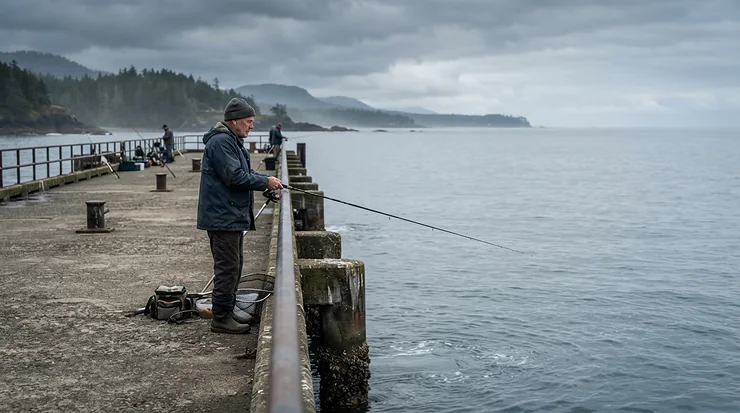
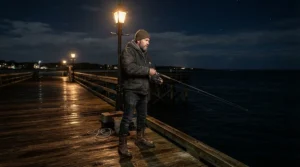
Piers are beautiful liars. The planks look solid, the view is postcard-perfect, and then a film of sea spray, bait slime and morning dew turns the whole deck into a skating rink. Every season someone goes down hard with a rod in one hand and a bucket in the other. The right fishing boots for pier fishing are what separate a great day from a very long limp back to the car.
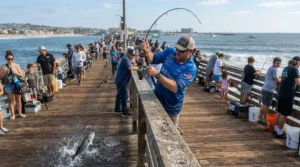
So what exactly are we shopping for? Fishing boots for pier fishing are waterproof, slip-resistant boots built for standing, casting and walking on wet, uneven pier surfaces. They combine a grippy non-marking outsole, a sealed rubber or neoprene upper, and enough cushioning to survive hours on your feet. Think of them as a seatbelt for your ankles that also keeps your socks dry.
The stakes are real. Researchers at the CDC’s workplace-safety institute have found that slip-resistant shoes can meaningfully reduce slipping risk, but the label “slip-resistant” varies wildly from shoe to shoe. That gap is where marketing hides, and where this guide earns its keep.
I researched seven real models across budget, mid-range and premium tiers. I’ve read through reviewer sentiment, compared outsole designs and weighed comfort claims against how pier days actually unfold. Prices below are ranges only, because they move constantly, so check current pricing before you buy.
Quick Comparison Table: Fishing Boots for Pier Fishing at a Glance
| Product | Style | Standout Trait | Best For |
|---|---|---|---|
| Xtratuf Legacy 15-Inch | Tall neoprene | Chevron outsole traction | Wet, splashy piers |
| Xtratuf 6-Inch Ankle Deck Boot | Ankle neoprene | Easy on/off, low profile | Dry-weather pier regulars |
| Grundéns Deck-Boss | Tall deck boot | Reinforced toe, strong grip rating | Rugged, all-weather use |
| Muck Mudder Tall | Tall rubber | Memory-foam footbed | Long standing sessions |
| Muck Muckmaster Tall | Tall neoprene | Roomy fit for thick socks | Cold-weather piers |
| Huk Rogue Wave | Fishing boot | Value-oriented build | Budget-conscious anglers |
| Columbia PFG Bahama Vent | Slip-on shoe | Drainage and light weight | Warm-weather piers |
Read the table as a sorting hat, not a verdict. The tall Xtratuf Legacy 15-Inch, Grundéns Deck-Boss, Muck Mudder Tall and Muck Muckmaster Tall suit splashy, cold or wet days, while the Columbia PFG Bahama Vent is the odd one out, a breathable shoe that earns its place on warm, dry-ish piers. Budget buyers should eye the Huk Rogue Wave, but only after reading its section below.
💬 Just one click — help others make better buying decisions too!😊
Top 7 Fishing Boots for Pier Fishing: Expert Analysis
1. Xtratuf Legacy 15-Inch — the gold standard for wet planks
Walk any Alaskan harbor and you’ll spot these tall neoprene boots, which is the best advertisement a boot can get. The standout is the Chevron outsole, a non-marking, slip-resistant tread that fisheries crews trust on pitching, slimy decks.
The triple-dipped latex-neoprene upper is fully waterproof, and the 15-inch shaft keeps rogue waves and bucket splashes out. One reviewer at Advnture put the personality neatly: light on support, heavy on slip resistance. At roughly 3 pounds per boot, you feel them in the hips by evening. OutdoorGearLab’s testers, in their Xtratuf Legacy 15-inch review, argue you’re paying for the acid-resistant rubber, thicker footbed and Chevron grip, a fair trade if you use them hard.
On paper that deep tread means confident footing on algae-slick boards, but CleverHiker reports it can trap small pebbles. For serious pier regulars, that’s a nuisance, not a dealbreaker. Reviewers across retailer sites repeatedly praise the grip and long-haul comfort, with one angler describing eight straight days on their feet during a fishing trip. Sentiment is largely positive, though comfort is a fit-dependent gamble.
Pros:
- ✅ Chevron outsole grips wet, slimy surfaces
- ✅ Fully waterproof, easy-to-hose-off construction
- ✅ Tall shaft blocks splash and spray
Cons:
- ❌ Heavy for long walks
- ❌ Light arch support for flat-footed anglers
Expect to pay in the $140-$190 range, depending on color and insulation. For hardcore pier anglers, the value verdict is a confident yes.

2. Xtratuf 6-Inch Ankle Deck Boot — the low-profile grip specialist
Not every pier day needs knee-high armor. The ankle version trades shaft height for freedom, and Fish Alaska’s editors call the brand’s ankle boots the gold standard for keeping anglers safe on slippery decks.
Here, the standout is the same slip-resistant, non-marking sole that made its taller sibling famous, packed into a lighter, easier-to-wear shape. A 6-inch shaft means better ankle flexibility when you’re stepping over rail bases and tackle bags. On paper, you gain agility and lose splash protection, so this boot is for dry-ish piers and anglers who stay out of the surf zone.
Who’s it for? Regulars who hop between the pier, the parking lot and the bait shop, and who hate pulling on tall boots every time. Based on the spec comparison, it’s a sensible pick if you fish in mild weather and prefer a shoe-like feel with boot-like grip. Reviewer sentiment on neoprene deck boots in this class runs consistently positive on traction and ease of cleaning, though I couldn’t verify a deep pool of reviews for this specific model, so treat the pattern as a trend rather than a promise.
Pros:
- ✅ Same grippy sole family as taller models
- ✅ Lighter and easier to pull on
- ✅ Flexible ankle for casting and stepping
Cons:
- ❌ Splash can come in over the top
- ❌ Minimal warmth in cold fall wind
Expect the $110-$145 range. It’s a smart value for fair-weather fishing boots for pier fishing.
3. Grundéns Deck-Boss — rugged grip built like a work boot
If fishing boots for pier fishing had a “do not underestimate me” category, this would headline it. The Grundéns Deck-Boss is a commercial-grade deck boot, and National Fisherman’s roundup singled out the 15-inch version as more robust than the brand’s ankle model, with reinforced toes, top-tier non-slip certification and durable insoles.
What does that mean for you? The reinforced toe shrugs off dropped tackle boxes and a stray cooler kicked in a crowded pier rush. The slip-resistance claim is the headline, but remember the CDC’s caution that labels vary, so I’d call it a strong manufacturer rating rather than a laboratory guarantee. Marlin Magazine also lists the Deck-Boss among its best fishing boots, which reinforces the pattern.
Who benefits most? Anglers who fish the same pier year-round, in wind, rain and spray, and want a boot that disappears into routine. Reviewer commentary I found centers on durability, comfort and grip, though I couldn’t verify a large body of consumer reviews for this exact model, so check recent ratings.
Pros:
- ✅ Reinforced toe protects against drops
- ✅ Highly rated non-slip outsole
- ✅ Durable insoles for long wear
Cons:
- ❌ Stiff and heavy until broken in
- ❌ Overkill for casual fair-weather trips
Expect roughly $100-$160, so check current pricing. If you fish most weekends, it’s good value.
4. Muck Mudder Tall — the cushion king for long standing sessions
This is the boot you buy when your feet, not the planks, are the problem. The standout is a dual-density footbed with memory foam, marketed for all-day support, and that matters when pier fishing means standing in one spot for hours.
At 15 inches tall and 100% waterproof, it blocks splashes comfortably. The T3 reviewer noted a generous fit with a roomy calf and toe box, a heel wedge for easy removal, and no waterproofing issues in testing. The flip side: roomy can mean sloppy if you have narrow feet, and the rubber isn’t insulated, so cold really does cut through, as multiple buyers confirm.
Who’s it for? Comfort-first anglers who plan marathon sessions and prefer cushion over armor. The tread is described as capable on wet and dry surfaces, but the grip story is less pier-specific than on the Xtratuf Legacy 15-Inch. Reviewers on retailer sites give it solid marks (around 4.2 to 4.3 out of 5 at the stores I checked), praising comfort and snug-but-tall fit, while some mention stiffness.
Pros:
- ✅ Memory-foam footbed cushions long standing
- ✅ Roomy fit welcomes thick socks
- ✅ Tall waterproof shaft
Cons:
- ❌ Not insulated for cold mornings
- ❌ Can feel stiff, like a ski boot
Expect the $80-$130 range depending on sales cycles. Great value for comfort-hungry anglers.
5. Muck Muckmaster Tall — the cold-weather workhorse
Fall piers are gorgeous and brutal: wind off the water, damp boards and a thermometer that doesn’t care about your feelings. The Muck Muckmaster Tall addresses that with classic Muck neoprene that’s flexible, waterproof and warm.
Reviewers on Walmart’s product pages (about 4.5 to 4.6 out of 5 across several hundred ratings) repeatedly point to a fit that matches shoe size with room for thick socks, plus long-lasting comfort for all-day wear. One buyer warns the boot is temperature-rated and you’ll sweat in warmer weather, so this is a cold-water-season choice, not a July boot.
What does the warmth mean in practice? On a 40°F dawn, insulation and thick socks keep circulation going so your toes don’t go numb while you wait on a bite. But on warm afternoons, the same neoprene works against you. That’s the real “expert reasoning”: match the boot to the season.
Compared with the Muck Mudder Tall, you’re paying for warmth rather than cushioning. Grip is serviceable, but I couldn’t verify pier-specific slip data for this tread.
Pros:
- ✅ Warm neoprene for cold-weather piers
- ✅ Room for thick socks
- ✅ Strong all-day comfort reputation
Cons:
- ❌ Runs hot in mild weather
- ❌ Tread less proven on slimy planks
Expect around $110-$160. It’s a smart investment if you fish October through March.
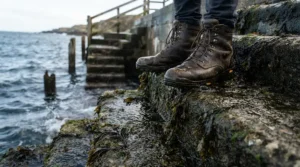
6. Huk Rogue Wave — the value-focused fishing boot
Every guide needs a wallet-friendly pick, and this is it. Outdoor Life’s best fishing boots roundup tagged the Huk Rogue Wave as its best-value choice, which is a meaningful nod from a reputable outdoor publication.
Here’s the honest part: I couldn’t verify extensive spec sheets or large review pools for this specific model, so I’ll keep the claims modest. The brand’s boots generally advertise non-slip, non-marking outsoles with tread designed for slick surfaces, and a flyfisherpro buyer’s guide notes the brand’s boots feel firm underfoot even on slippery, rocking surfaces. Whether the Rogue Wave matches that standard on algae-coated boards is the question you should answer by reading current reviews.
Who’s it for? Budget-conscious beginners who want proper footwear without paying premium-brand money. The value case is simple: any purpose-built fishing boot beats sneakers on wet planks, and you can upgrade later once you know how much you fish.
Before buying, confirm the outsole details, height and waterproofing in the current listing. Compared with the tall Xtratuf Legacy 15-Inch, expect less proven pier reputation but a gentler price tag.
Pros:
- ✅ Positioned as a value pick by Outdoor Life
- ✅ Fishing-specific design, not repurposed rain gear
- ✅ Approachable price for beginners
Cons:
- ❌ Limited verifiable long-term durability data
- ❌ Less pier-specific review evidence
Expect roughly $100-$150, so check current pricing. Decent value if you confirm the specs.
7. Columbia PFG Bahama Vent — the warm-weather hybrid
Yes, it’s a shoe, and yes, it belongs here. On a 90°F July pier, neoprene boots are saunas for your feet, and the Columbia PFG Bahama Vent solves that with a ventilated, slip-on design and an Omni-Grip outsole made for wet decks and docks.
The standout is drainage plus lightness: midsole ports move water out, and the upper wipes clean. Testers note that the footbed has enough cushion for all-day wear, and reviewers say the sole holds on wet surfaces. One recurring tip: sizes run wide, so several buyers recommend sizing down.
Who’s it for? Summer anglers who walk a lot, hop between pier and beach, and don’t need splash protection. A fair caveat: many reviews on retailer pages were collected through promotions, so I weigh them with extra skepticism, but the pattern of repeat buyers is hard to ignore.
Keep this in your trunk next to your boots, not instead of them. It’s the right tool for warm weather, and the wrong one when waves start slapping the planks.
Pros:
- ✅ Ventilated and quick-draining
- ✅ Light enough for long walks
- ✅ Omni-Grip outsole made for wet docks
Cons:
- ❌ No splash or cold protection
- ❌ Runs wide for narrow feet
Expect roughly $70-$90, so check current price. Great value for hot-weather days.
Top 7 Specs and Value Comparison
| Product | Height/Style | Grip Design | Price Range | Best For |
|---|---|---|---|---|
| Xtratuf Legacy 15-Inch | 15″ neoprene | Chevron non-marking | $140-$190 | Wet piers |
| Xtratuf 6-Inch Ankle Deck Boot | 6″ neoprene | Slip-resistant sole | $110-$145 | Mild weather |
| Grundéns Deck-Boss | 15″ deck boot | Top-tier non-slip rating | $100-$160 | Rugged use |
| Muck Mudder Tall | 15″ rubber | Wet/dry tread | $80-$130 | Comfort-first |
| Muck Muckmaster Tall | Tall neoprene | Standard Muck tread | $110-$160 | Cold seasons |
| Huk Rogue Wave | Fishing boot | Non-slip design | $100-$150 | Budget buyers |
| Columbia PFG Bahama Vent | Slip-on shoe | Omni-Grip | $70-$90 | Hot weather |
Looking at the table, the Xtratuf Legacy 15-Inch earns its premium through grip and splash coverage, while the Muck Mudder Tall undercuts it on price and wins on cushioning. Cold-weather anglers should weigh the Muck Muckmaster Tall against the Grundéns Deck-Boss, and warm-weather anglers get the best return from the Columbia PFG Bahama Vent.
How to Choose Fishing Boots for Pier Fishing
Choosing fishing boots for pier fishing comes down to seven decisions, and getting them in the right order saves money.
- Start with the outsole. Look for a non-marking, siped or lugged rubber tread built for wet marine surfaces. It matters more than any other spec because planks, not mud, are your enemy.
- Match height to your splash zone. Tall 15-inch shafts shrug off waves and bucket spills, while ankle boots suit dry piers.
- Pick the season. Neoprene warms but overheats, and unlined rubber stays cool but chills.
- Check the fit with real socks. Try thick fishing socks, because swollen feet and bulky layers change everything.
- Weigh the weight. A boot that feels fine in the store can feel like cinder blocks by hour six.
- Inspect the footbed. Memory foam or molded cushioning pays off for long standing, as discussed below.
- Respect your budget. A mid-range boot with proven grip beats a cheap boot with a pretty photo.
Slip Resistance Explained: What the Label Really Means
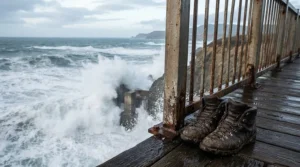
Here’s the uncomfortable truth: “slip resistance” has no single legal definition for footwear in the United States. An industry safety publication notes that no U.S. regulatory body defines or quantifies footwear slip resistance, and that testing typically follows ASTM F2913, a whole-shoe test measuring dynamic coefficient of friction. In plain English, a lab drags a shoe across a surface and measures how hard it resists.
Why should a pier angler care? Because conditions change the result. CDC researchers found that friction performance across slip-resistant shoes was largely predicted by tread surface area, beveling and hardness. In other words, a soft, well-patterned, beveled sole generally outperforms a hard, flat one, even if both carry the same label.
So how do you apply this? Flip the boot over. Deep channels that evacuate water, a softer rubber compound, and a beveled heel edge are all good signs. Avoid flat, smooth, hard soles no matter what the tag says.
One more nuance: slip resistance degrades. Worn tread, packed-in grit and dried salt all reduce grip, which is why maintenance, covered later, belongs in any serious plan.
Comfortable Angler Boots for Standing: What Your Feet Actually Need
Standing still is deceptively hard. Walking moves blood and shifts load, but standing on a pier locks your weight onto the same pressure points for hours. Comfortable angler boots for standing need three things: cushioning that doesn’t bottom out, an arch that supports without jabbing, and enough room for toes to splay.
Here’s where model differences show up. The Muck Mudder Tall leans on a memory-foam footbed, and reviewers praise the cushion, while the Xtratuf Legacy 15-Inch is described as lighter on support, which is why some anglers add aftermarket insoles. The Grundéns Deck-Boss emphasizes long-lasting insoles, a clue that it’s engineered for hours on deck.
Practical tips matter too. Shift your weight every few minutes, stand on a folded foam pad if the pier allows, and wear moisture-wicking socks. Sweat-soaked feet blister faster, and cold wet feet ache faster.
If you’ve ever finished a pier day thinking your boots betrayed you, the culprit is usually fit, socks or insoles, not just the boot. Treat the footbed as upgradeable.
All-Day Comfort Footwear: Features That Actually Matter (And Those That Don’t)
Marketing loves a feature list. Your feet love only a few of them.
Features that matter:
- A footbed that cushions without collapsing, because comfort that disappears by noon isn’t comfort.
- A secure heel lock, which prevents blisters and keeps you stable when you plant to cast.
- Reasonable weight, since every extra ounce multiplies across thousands of steps.
- Breathability suited to your season, either ventilation in summer or insulation in winter.
Features that rarely matter on a pier:
- Aggressive hiking lugs designed for mud, which can trap grit on planks.
- Camouflage patterns, because fish don’t judge your footwear.
- Extreme insulation ratings for mild climates.
- Steel toes, unless you work the pier commercially.
The best all-day comfort footwear is the pair you forget you’re wearing. That usually means a proper fit with real socks, a footbed you can swap, and weight you can live with. In this guide, the Muck Mudder Tall and Columbia PFG Bahama Vent are the comfort-first options, while the Xtratuf Legacy 15-Inch trades some cushioning for grip.
Non Slip Pier Fishing Footwear: Boots vs Shoes vs Alternatives
Not all non slip pier fishing footwear takes the form of a boot. Some pier walking-shoe guides argue that dry-foot pier anglers can do well in a grippy, stable, quick-drying walking shoe, reserving boots for days you actually get wet. That’s reasonable, and it explains why the Columbia PFG Bahama Vent exists.
| Footwear Type | Grip on Wet Planks | Splash Protection | Warmth | Best For |
|---|---|---|---|---|
| Tall boots like the Xtratuf Legacy 15-Inch | Excellent | Excellent | Good | Wet, windy piers |
| Ankle boots like the Xtratuf 6-Inch Ankle Deck Boot | Excellent | Fair | Fair | Mild weather |
| Vented shoes like the Columbia PFG Bahama Vent | Good | Poor | Poor | Hot, dry days |
| Crocs-style clogs | Variable | Poor | Poor | Quick errands only |
| Everyday sneakers | Often poor | Poor | Variable | Not recommended |
Reviewers at Tackle Village are blunt about clogs: at a pinch they’ll work, but better fishing-specific options offer more grip and better protection, and sand gets in very easily. That matches the table’s logic. If you fish from a pier through spray and rain, boots win; if you fish dry, hot piers, a quality shoe wins. Everything else is a compromise.
Pier Fishing Gear: Building a Kit Around Your Boots
Your boots anchor the rest of your pier fishing gear, and the right companions make them work harder. Start with a personal flotation device, which safety guides consistently recommend for pier angling. Add a tackle bag with a shoulder strap so you can keep both hands free, advice echoed by NOAA Fisheries in its vessel-boarding safety guidance, which stresses staying balanced with free hands.
Next, build the sock system. Merino or synthetic socks wick moisture, and a thin liner under a thicker sock helps in cold. A foldable pad or anti-fatigue mat turns long sessions from endurance trials into pleasant afternoons.
Then handle the small stuff:
- A bucket with a lid so bait doesn’t slime the planks.
- A rag at your belt to wipe fish slime off soles and hands.
- A headlamp for dawn or dusk walks over unfamiliar boards.
- A rod holder to free your hands when you step away.
The logic is simple: every item that reduces carrying, bending or reaching also reduces the chance you’ll lose your footing. Good pier fishing gear doesn’t just catch fish, it keeps you upright.
✨ Don’t Miss These Exclusive Deals!
🔍 Take your pier days to the next level with these carefully selected boots. Click on any highlighted item to check current pricing and availability. The right pair will help you fish longer, safer and more comfortably!
Long-Term Cost & Maintenance: What Fishing Boots for Pier Fishing Really Cost
A $150 boot that lasts five seasons beats a $60 boot that dies in one. That’s the whole philosophy of total cost of ownership, and it applies directly to fishing boots for pier fishing.
| Product | Price Range | Durability Signal | Cost-Per-Season (5-Year Use) |
|---|---|---|---|
| Xtratuf Legacy 15-Inch | $140-$190 | Reputation for longevity | Low |
| Grundéns Deck-Boss | $100-$160 | Work-boot construction | Low |
| Muck Mudder Tall | $80-$130 | Solid, comfort-oriented | Low to moderate |
| Huk Rogue Wave | $100-$150 | Limited verified data | Unknown |
| Columbia PFG Bahama Vent | $70-$90 | Repeat buyers report durability | Moderate |
Reading the table, premium boots tend to win on cost-per-use if you fish often, and the Xtratuf Legacy 15-Inch and Grundéns Deck-Boss both carry durability reputations. The Columbia PFG Bahama Vent looks cheap per pair but may need replacing sooner on rough use. Treat the Huk Rogue Wave as a calculated gamble until you verify long-term feedback.
Maintenance is cheap insurance. Rinse salt off after every trip, dry boots away from direct heat, and store them upright with newspaper inside. Neoprene cracks when it bakes, so avoid hot cars.
Pier Safety, Regulations and Compliance Guide
Boots reduce risk, but they don’t erase it. Texas A&M’s extension safety guidance recommends wearing appropriate protective gear when fishing, staying conscious of slippery wet surfaces on docks and piers, and keeping behind guard rails.
Start with conditions. Algae, fish slime, rain and spray make planks treacherous, and lifeguard advice notes that rocks and jetty surfaces grow slippery with algae too. Waves can also reach a pier unexpectedly: a Sheboygan official described how waves coming over the pier, combined with slipperiness, create real danger.
Then check local rules. Many piers require permits or restrict hours, and Long Beach Pier, for instance, limits fishing to daylight hours. Always read posted signs, and verify state license requirements before you go.
Finally, build habits:
- Walk, never run.
- Keep one hand free on stairs and ladders.
- Wear a flotation device on windy, wavy or crowded days.
- Never fish alone in rough conditions.
Good boots plus good habits is the combo that turns slippery risk into manageable routine.
Practical Usage Guide: Breaking In and Caring for Your Boots
New boots deserve a gentle introduction. Wear them around the house for a few hours with fishing socks, then take them on a short walk, and only then commit to a full pier day. Stiff neoprene and rubber soften with use, and blisters hate surprises.
First-30-day checklist:
- Test the fit with the exact sock you’ll fish in.
- Check the heel lock by walking up a ramp or stairs.
- Inspect the outsole after your first wet outing for debris trapped in the tread.
- Rinse with fresh water after every salt exposure.
- Dry upright in shade, never on a heater.
Optimization tricks listings don’t mention:
- Add a cushioned aftermarket insole if the stock footbed feels thin, especially in the Xtratuf Legacy 15-Inch.
- Roll or fold down the shaft in warm weather for ventilation, a trick Advnture’s reviewer mentions with the Xtratuf Legacy 15-Inch.
- Pick pebbles from deep treads with a stick, as CleverHiker suggests.
Common first-month mistakes: wearing cotton socks, skipping the rinse, and leaving boots in a hot car. Do those three things right, and your boots will outlast your tackle.
Real-World Scenarios: Matching Boots to Your Pier Life
Scenario 1: The weekend regular. You fish a local pier every Saturday at dawn in cool, damp conditions. The Xtratuf Legacy 15-Inch fits, because the Chevron outsole grips wet planks and the tall shaft handles splash. Budget around $140-$190, and add an aftermarket insole if arches complain.
Scenario 2: The all-day camper. You arrive at sunrise, fish through the tide, and leave at dusk. The Muck Mudder Tall suits you, thanks to its memory-foam footbed and roomy fit for thick socks. Pair it with an anti-fatigue pad, and expect to spend $80-$130.
Scenario 3: The summer tourist angler. You’re visiting a coastal town in July and want something you can also wear to dinner. The Columbia PFG Bahama Vent fits perfectly, with ventilation and a wet-deck-friendly outsole for roughly $70-$90.
Scenario 4: The cold-season stalwart. You chase fall and winter runs when winds bite. The Muck Muckmaster Tall brings the warmth, and you’ll appreciate the sock-friendly fit.
The pattern: season, splash exposure and session length decide the boot, not brand loyalty.
Problem → Solution Guide: Fixing Common Pier Footwear Headaches
Problem 1: My feet ache after two hours. Likely culprits are thin cushioning or poor arch support. Add a quality insole, use a standing pad, and consider the Muck Mudder Tall if cushion is your priority.
Problem 2: I still slip on wet boards. Inspect the tread for wear or packed-in debris, and clean it. If the sole is hard, flat or worn, replace the boots, and look for softer rubber and deeper channels like the Xtratuf Legacy 15-Inch offers.
Problem 3: My feet sweat inside rubber boots. Switch to moisture-wicking socks, fold down the shaft, or choose a ventilated option like the Columbia PFG Bahama Vent in hot weather.
Problem 4: My toes freeze. Move to insulated or neoprene boots such as the Muck Muckmaster Tall, and layer thicker socks, with room to avoid compressing them.
Problem 5: My boots smell awful. Rinse, dry thoroughly, and rotate pairs. Salt and bait odor linger if you stash damp boots in a bag.
Each problem has a cheap fix before an expensive one, and most come down to socks, drying and fit.
FAQ
❓ What are the best fishing boots for pier fishing in cold weather?
❓ Are rubber boots safe on wet pier planks?
❓ How tall should my boots be for pier fishing?
❓ Should I buy insulated or uninsulated fishing boots?
❓ How often should I replace pier fishing boots?
Conclusion
Pier fishing rewards patience, and patience requires comfortable, stable feet. The best fishing boots for pier fishing are the ones that grip wet planks, keep spray out and let you stand for hours without regret. For wet, windy piers, the Xtratuf Legacy 15-Inch and Grundéns Deck-Boss are the grip-first choices, while the Muck Mudder Tall wins for cushion and the Muck Muckmaster Tall for cold. The Xtratuf 6-Inch Ankle Deck Boot suits mild days, the Huk Rogue Wave deserves a verification check before you buy, and the Columbia PFG Bahama Vent handles hot weather.
Remember the bigger picture: slip resistance is a spectrum, comfort is personal, and maintenance matters as much as the purchase. Build your kit with good pier fishing gear, wear the right socks, respect the conditions, and your boots will do their job quietly, which is the highest compliment footwear can earn.
Prices change often, so check current pricing before you commit. Pick the pair that fits your season and your feet, then go enjoy the tide.
Recommended for You
- Fishing Boots For Ice Fishing: 7 Warmest Picks Ranked (2026)
- Waterproof Fishing Boots: 7 Best Picks That Stay Dry (2026)
- Fishing Boots For Cold Weather: 7 Proven Warm Picks (2026)
Disclaimer: This article contains affiliate links. As an Amazon Associate, I earn from qualifying purchases. If you purchase products through these links, we may earn a small commission at no additional cost to you.
✨ Found this helpful? Share it with your friends! 💬🤗
