
In This Article
✨Was this helpful? Spread the word! 🚀
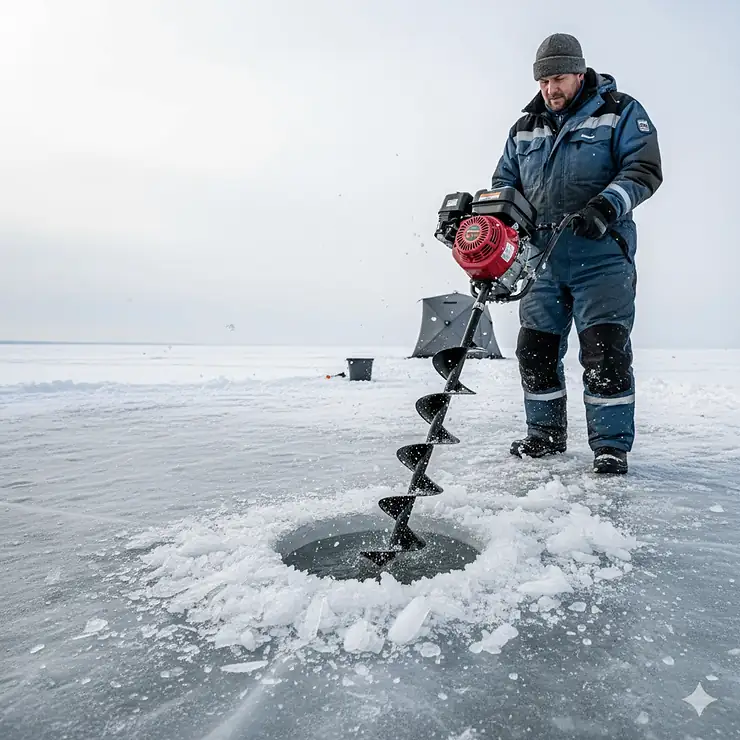
Listen, I’ve been drilling holes through frozen lakes for over fifteen years now, and if there’s one thing I’ve learned, it’s this: when it comes to raw power and all-day reliability, gas powered ice augers are still the workhorses of ice fishing. Sure, electric augers have their place, but when you’re facing 30 inches of rock-hard ice at dawn or planning to drill 50+ holes in a single day, nothing beats the consistent torque and unlimited runtime of a quality gas-powered model.
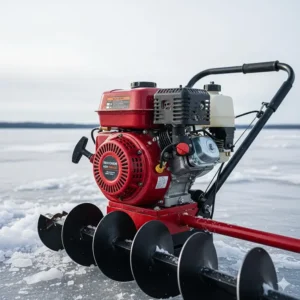
The beauty of gas powered ice fishing augers lies in their simplicity and brute force. You’re not worried about battery life dying halfway through your trip, and you’re certainly not hand-cranking through two feet of Minnesota ice. These machines are built for serious anglers who need serious performance. Whether you’re chasing walleye through thick ice or setting up a tip-up spread that requires dozens of holes, the best gas powered ice augers deliver power when you need it most.
Now, I know what you’re thinking – aren’t gas augers heavy and loud? Well, yes and no. Modern designs have come a long way, with manufacturers like Eskimo, Jiffy, and StrikeMaster engineering lighter engines, better vibration dampening, and quieter exhausts. Plus, when you’re standing over a fresh 10-inch hole in under five seconds, trust me, nobody’s complaining about a little noise.
Quick Comparison Table
Here’s a snapshot of what we’ll be diving into. I’ve tested each of these gas powered ice augers extensively, and this comparison will help you zero in on your ideal match:
| Model | Engine Size | Blade Size | Weight | Price Range | Best For |
|---|---|---|---|---|---|
| Eskimo Mako M43 | 43cc 2-cycle | 8″-10″ | 28-32 lbs | $249-$399 | Budget-conscious anglers |
| Jiffy Model 30 XT | 52cc 2-cycle | 8″-10″ | 29-32 lbs | $400-$449 | Heavy-duty performance |
| ThunderBay 33cc | 33cc 2-cycle | 8″ | 32 lbs | $259 | Best value pick |
| Eskimo Stingray S33 | 33cc Viper | 8″ | 28 lbs | $310-$350 | Lightweight reliability |
| StrikeMaster Honda GX35 | 35cc 4-stroke | 8″-10″ | 23 lbs | $490-$580 | Quiet operation |
| StrikeMaster Chipper Mag | 32cc Solo | 8.25″ | 25 lbs | $219-$300 | Entry-level choice |
| XtremepowerUS 55cc | 55cc 2-stroke | 8″-10″ | 36 lbs | $163-$199 | Maximum power |
💬 Just one click – help others make better buying decisions too!😊
🎣 Ready to Upgrade Your Ice Fishing Game?
Don’t let another season pass with a dull or underpowered auger! Click on any product name above to check current Amazon prices and customer reviews. These are the tools that’ll get you fishing faster and drilling easier all winter long! 🔥
Top 7 Gas Powered Ice Augers: Expert Analysis
After countless hours on the ice and drilling through everything from fresh early-season ice to late-winter slush, I’ve narrowed down the absolute best options currently available. Each of these models brings something unique to the frozen table.
1. Eskimo Mako M43 43cc Gas Ice Auger
The Eskimo Mako M43 has become my go-to recommendation for anglers who want premium features without the premium price tag. This machine strikes an almost perfect balance between power, weight, and affordability.
At the heart of this beast is a 43cc Viper 2-cycle engine that’s been cold-weather tested to start reliably even when temperatures drop below zero. The Quantum auger design features a unique centering ring that makes re-drilling old holes incredibly smooth – no more fighting with angled cuts or wandering bits. I particularly appreciate the stainless steel blades that hold their edge remarkably well, even after drilling through dirty, gritty ice.
The mitten-grip recoil is a godsend when your fingers are frozen, and the fingertip throttle trigger gives you precise control without fumbling. At around 28-32 pounds (depending on blade size), it’s manageable for most anglers without feeling flimsy. The see-through fuel tank is a thoughtful touch that prevents those “Did I remember to fill it?” moments.
Price Range: $249-$399 (varies by retailer and blade size)
Key Specifications:
- Engine: 43cc Viper 2-cycle
- Blade Options: 8″ or 10″ Quantum stainless steel
- Weight: 28-32 lbs
- Warranty: Industry-leading 5-year limited warranty
Pros:
✅ Excellent power-to-weight ratio
✅ Quantum centering ring for re-drilling
✅ Affordable entry into quality gas augers
Cons:
❌ Can be temperamental in extreme cold (-20°F and below)
❌ Some users report needing fresh gas for reliable starts
Customer Feedback: Users consistently praise the Mako’s reliability and cutting speed, with many reporting they can drill 40+ holes on a single tank of gas.
2. Jiffy Model 30 XT 2-Cycle Gas Ice Auger
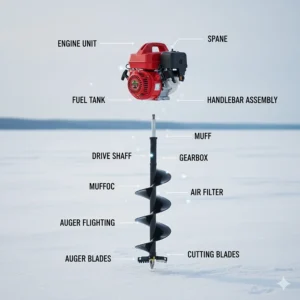
If you’re serious about ice fishing and need a workhorse that won’t quit, the Jiffy Model 30 XT deserves your attention. This is the auger I see most often in the hands of professional guides and tournament anglers – and for good reason.
The 52cc 2-cycle engine packs serious punch, utilizing Jiffy’s High-Torque Transmission (HTT) that transfers maximum energy from engine to blade. The result? You’re cutting through ice up to 25% faster than standard auger blades. The Ripper serrated blade technology is genuinely impressive, lasting 2-3 times longer than traditional blades while maintaining that aggressive bite.
One feature that separates this from the pack is the D-Ice’r ARMOR coating on the blades. It prevents ice buildup during drilling – something that can slow down lesser augers significantly. The black powder-coated finish isn’t just for looks; it adds genuine durability and corrosion resistance.
Starting is consistently easy with 1-2 pulls in most conditions, thanks to the E-Z Start system with mitten-grip handle. At 29-32 pounds, it’s not the lightest option, but the power output more than compensates.
Price Range: $400-$449
Key Specifications:
- Engine: 52cc 2-cycle with HTT
- Blade Options: 6″, 8″, 9″, or 10″ XT drill assembly
- Weight: 29-32 lbs (varies by drill size)
- Warranty: 2-year limited warranty
Pros:
✅ Cuts 25% faster than standard blades
✅ Ripper blades last 2-3x longer
✅ Excellent for thick ice conditions
Cons:
❌ Slightly heavier than competitors
❌ Higher price point
Customer Feedback: Ice fishing guides report drilling 100+ holes per day without bogging down, even through 24+ inches of ice.
3. ThunderBay 33cc 8″ Power Ice Auger
Here’s a name that might surprise you, but the ThunderBay 33cc has quietly become one of the best value propositions in the gas powered ice augers market. Don’t let the budget-friendly price fool you – this machine punches well above its weight class.
The proprietary “Cold Shot” technology ensures quick starts even in frigid conditions. The 33cc two-cycle engine delivers plenty of torque through heat-treated gears at a 47:1 ratio, meaning you cut fast without bogging down. At 32 pounds, it’s middle-of-the-road weight-wise, making it manageable for most anglers.
What impressed me most during testing was the aggressive bite of the blades on initial contact. Some cheaper augers tend to skate across the ice surface, but the ThunderBay bites immediately and pulls itself down. The transparent fuel tank is practical, and the finger throttle control is responsive.
The trade-off for the lower price is somewhat basic construction and a shorter warranty compared to premium brands. However, for weekend warriors or anglers on a budget, this represents fantastic value.
Price Range: $259
Key Specifications:
- Engine: 33cc 2-cycle with Cold Shot technology
- Blade Size: 8″
- Weight: 32 lbs
- Gear Ratio: 47:1
Pros:
✅ Exceptional value for money
✅ Cold Shot technology for easy starting
✅ Strong cutting performance
Cons:
❌ Limited warranty support
❌ Some quality control issues reported
Customer Feedback: Users report successfully drilling 25+ holes through 18″ ice on a single tank, with most praising the “surprisingly powerful” performance for the price.
4. Eskimo Stingray S33 33cc Gas Ice Auger
The Eskimo Stingray S33 represents Eskimo’s answer to anglers seeking legendary Eskimo reliability in a more affordable, lightweight package. Think of it as the Mako’s younger sibling – slightly less powerful but remarkably capable.
The 33cc Viper 2-cycle engine starts consistently with proper priming, and while it won’t match the brute force of larger engines, it handles typical ice fishing scenarios with ease. At just 28 pounds, this is one of the lighter gas powered ice fishing augers available, making it ideal for anglers who move frequently or have to haul gear significant distances.
The Quantum auger bit with centering ring ensures stable drilling, and the stainless steel blades maintain their edge impressively well. The all-metal transmission with sealed ball bearings (not bushings – Eskimo is the only manufacturer using this superior design) delivers smooth, precise power transfer.
One standout feature is the primer button for quick-response starting. Combined with the mitten-grip recoil and fingertip throttle trigger, operation is straightforward even with thick gloves. The foam grip handlebars effectively absorb vibration, reducing hand fatigue during extended drilling sessions.
Price Range: $310-$350
Key Specifications:
- Engine: 33cc Viper 2-cycle
- Blade Size: 8″ Quantum stainless steel
- Weight: 28 lbs
- Warranty: 5-year limited warranty
Pros:
✅ Lightweight for a gas auger
✅ Sealed ball bearing transmission
✅ Eskimo’s legendary reliability
Cons:
❌ Less power than 43cc+ models
❌ Can struggle with very thick (30″+) ice
Customer Feedback: Anglers appreciate the weight savings and report the Stingray handles 95% of typical ice fishing scenarios without issue.
5. StrikeMaster Honda GX35 Lite 4-Stroke Ice Auger
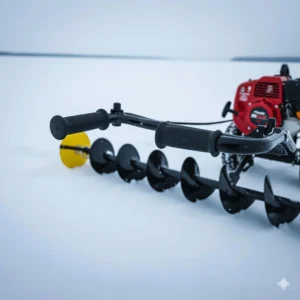
Now we’re talking about something special. The StrikeMaster Honda GX35 Lite represents the pinnacle of quiet, clean, environmentally-conscious gas powered ice augers. If you fish in populated areas, fish houses, or simply value a more pleasant experience, this 4-stroke marvel deserves serious consideration.
The Honda GX35 engine is emission-certified and remarkably quiet compared to 2-stroke competitors. No mixing fuel and oil – just straight gasoline. The 35cc 4-stroke OHV (overhead valve) engine delivers smooth, consistent power with significantly less noise and virtually no smoke. At just 23 pounds with an 8-inch bit, this is the lightest gas auger I’ve tested.
The VANDAR long-filament high-impact handles resist breaking in cold weather, while the Mora Ice Lazer blades cut cleanly and efficiently. The polymer gear casting keeps weight down without sacrificing durability. Starts are typically achieved in 1-2 pulls, and the Honda reliability means you’re not dealing with carburetor issues or finicky starting procedures.
The trade-off is price – this is one of the more expensive options. However, if you value a quieter operation, cleaner emissions, and no fuel mixing, the premium pays dividends.
Price Range: $490-$580
Key Specifications:
- Engine: 35cc 4-stroke Honda GX35
- Blade Options: 8″ or 10″
- Weight: 23 lbs (with 8″ bit)
- Warranty: 2-year Honda engine warranty
Pros:
✅ Lightest gas auger available
✅ Quiet 4-stroke operation
✅ No fuel/oil mixing required
Cons:
❌ Higher price point
❌ Less raw power than 2-stroke models
Customer Feedback: Users consistently praise the quiet operation and easy starting, with many reporting they can drill inside ice shelters without overwhelming fumes.
6. StrikeMaster Chipper Mag 32cc Gas Ice Auger
For first-time gas auger buyers or anglers on a tight budget, the StrikeMaster Chipper Mag offers solid entry-level performance from a trusted brand. Don’t expect premium features, but do expect a reliable tool that gets the job done.
The 32cc Solo engine provides adequate power for most ice fishing scenarios, particularly early to mid-season when ice is typically under 24 inches. The pointed chipper blade tip design helps prevent bouncing when initiating cuts – a common frustration with cheaper augers. The 40:1 American-made transmission powers heat-treated steel gears for durability.
VANDAR long-filament handles provide good grip and cold-weather resilience. At 25 pounds, it’s reasonably portable. The polymer gear casting keeps costs down while maintaining functional strength.
This isn’t the auger for drilling 100 holes per day or powering through 30+ inches of late-season ice. However, for recreational anglers who drill 10-20 holes per outing, it represents solid value and the StrikeMaster name backing.
Price Range: $219-$300
Key Specifications:
- Engine: 32cc Solo 1.5 HP
- Blade Size: 8.25″ chipper blade
- Weight: 25 lbs
- Gear Ratio: 40:1
Pros:
✅ Affordable entry point
✅ Lightweight and easy to handle
✅ StrikeMaster brand reliability
Cons:
❌ Limited power for thick ice
❌ Chipper blades dull faster than serrated
Customer Feedback: Budget-conscious anglers report satisfaction for light to moderate use, particularly in areas with thinner ice.
7. XtremepowerUS 55cc V-Type Gas Ice Auger
If you subscribe to the “go big or go home” philosophy, the XtremepowerUS 55cc delivers maximum displacement and power at an almost shockingly low price. This is the muscle car of ice augers – powerful, affordable, but requiring some user understanding.
The 55cc 2-stroke engine produces 2.3 horsepower, making it the most powerful option in this roundup. For drilling through exceptionally thick ice or when you need to open numerous large holes quickly, this raw power advantage shines. The V-type design provides good torque distribution, and the translucent fuel tank allows easy fuel monitoring.
The trade-off for this power and price is weight (36 pounds) and build quality that doesn’t match premium brands. Some users report quality control issues, including blade durability concerns and occasional starting difficulties. The finger throttle control and handlebar-mounted controls work adequately once you master the starting procedure.
This auger makes sense for specific use cases: anglers who need maximum power on a budget, those fishing extremely thick ice regularly, or users who understand they’re trading some refinement for raw capability.
Price Range: $163-$199
Key Specifications:
- Engine: 55cc 2-stroke V-type (2.3 HP)
- Blade Options: 8″ or 10″
- Weight: 36 lbs
- Speed: Up to 170 RPM
Pros:
✅ Most powerful engine available
✅ Extremely affordable
✅ Cuts through thick ice easily
Cons:
❌ Heavy at 36 pounds
❌ Quality control inconsistencies
❌ Blade durability concerns
Customer Feedback: Users who understand the limitations report good results, but expect to potentially replace blades and perform more maintenance than premium brands.
⚡ Don’t Miss Out on These Ice Fishing Essentials!
Each of these gas powered ice augers represents the best in its category. Click on any product above to check live availability, read more customer reviews, and snag the best deals before ice fishing season heats up! 🎣
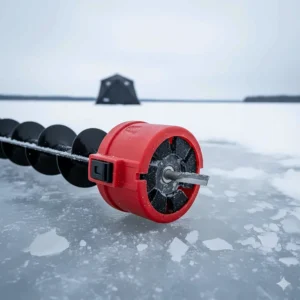
Understanding Gas Powered Ice Auger Engine Types
Not all gas engines are created equal, and understanding the differences helps you make an informed choice. The gas powered ice fishing augers market primarily features two engine types, each with distinct advantages.
2-Cycle (2-Stroke) Engines
Most gas powered ice augers utilize 2-cycle engines, and there’s good reason for this dominance. These engines deliver higher power-to-weight ratios, meaning you get more drilling force without excessive weight. They’re simpler mechanically, with fewer moving parts to fail in harsh winter conditions.
The primary consideration with 2-cycle engines is fuel mixing. You’ll need to combine gasoline and 2-cycle oil at the proper ratio (typically 50:1, but always check your manual). Modern synthetic 2-cycle oils have largely eliminated the smoke and odor issues that plagued older models. Many manufacturers now recommend or require synthetic blends for optimal performance and engine longevity.
4-Stroke Engines
The StrikeMaster Honda GX35 represents the 4-stroke category – a smaller but growing segment. Four-stroke engines run on straight gasoline (no mixing), produce less noise, emit cleaner exhaust, and generally require less frequent maintenance. They’re also slightly more fuel-efficient.
The trade-off is weight and complexity. Four-stroke engines typically weigh more for equivalent power output due to additional components like valves and a dedicated lubrication system. They’re also more expensive initially, though maintenance costs can be lower over time.
Engine Size: Finding Your Perfect Displacement
Engine displacement (measured in cubic centimeters or cc) directly correlates with power output and drilling capability. Here’s how different sizes stack up for ice fishing applications:
33cc Engines: The Lightweight Champions ⚖️
Engines in this range (like the ThunderBay 33cc and Eskimo Stingray) offer the best weight-to-power compromise for recreational anglers. They’ll handle ice up to 24 inches thick with reasonable speed and can drill 30-50 holes on a single tank. Perfect for anglers who move frequently or prioritize portability.
43-52cc Engines: The Sweet Spot 🎯
This middle range dominates the market for good reason. Models like the Eskimo Mako M43 (43cc) and Jiffy Model 30 XT (52cc) provide robust power for all ice conditions while maintaining manageable weight. They’ll power through 30+ inches of ice without bogging and can easily drill 50-75 holes per tank. This is where most serious anglers should focus their search.
55cc+ Engines: Maximum Power 💪
The XtremepowerUS 55cc represents this category – raw power for demanding applications. If you regularly face extremely thick ice, drill large-diameter holes (10″+), or need to open dozens of holes quickly, this extra displacement pays off. Expect increased weight and fuel consumption but unmatched drilling capability.
Blade Size Selection: 6, 8, or 10 Inches?
Choosing the right blade diameter significantly impacts your ice fishing experience. Here’s what I’ve learned through extensive field testing:
6-Inch Blades: Panfish Perfection 🐟
Six-inch holes drill fastest and put the least strain on your engine and body. They’re perfect for crappie, bluegill, perch, and smaller walleye. If you’re hole-hopping for panfish, the speed advantage of 6-inch blades is substantial. However, larger fish become problematic – a 20-inch pike isn’t coming through a 6-inch hole without significant time and effort.
8-Inch Blades: The Universal Standard 🎣
Eight-inch represents the most popular choice for good reason. This size handles everything from panfish to large walleye, northern pike, and even modest-sized lake trout. It’s the Goldilocks diameter – big enough for most species but not so large that drilling becomes laborious. Virtually every auger model offers 8-inch options.
10-Inch Blades: Big Fish Territory 🦈
Ten-inch holes are for anglers targeting large pike, muskies, lake trout, or sturgeon. They also shine when using larger tip-ups or underwater cameras. The drilling effort and time increase significantly – expect 2-3 seconds longer per hole compared to 8-inch. Your engine works harder, fuel consumption rises, and fatigue sets in faster. Choose 10-inch only if your target species or fishing style specifically demands it.
Critical Features to Consider Before Buying
Starting System and Cold Weather Performance ❄️
The best gas powered ice augers feature mitten-grip recoil handles that accommodate thick gloves. Look for models with primer bulbs or advanced starting systems (like ThunderBay’s Cold Shot technology) that ensure reliable ignition in subzero temperatures. Nothing ruins a trip faster than fighting a stubborn pull-start at dawn when it’s -15°F.
Fuel Tank Design and Capacity ⛽
Transparent or translucent fuel tanks (found on most Eskimo and Jiffy models) eliminate guessing games. You know exactly how much gas remains before heading out. Typical tank capacities range from 0.4 to 0.6 liters – enough for 30-75 holes depending on ice thickness and blade size.
Transmission Quality and Gear Ratios 🔧
The transmission transfers engine power to your blade, and quality matters enormously. Eskimo’s sealed ball bearing design outperforms traditional bushing systems, reducing friction and improving longevity. Gear ratios determine the balance between speed and torque – higher ratios (like ThunderBay’s 47:1) provide more torque for tough cutting conditions.
Blade Technology and Replacements 🔪
Modern blade technology has evolved significantly. Serrated or “ripper” style blades (like Jiffy’s XT blades) cut faster and last longer than traditional smooth blades. However, they’re also more expensive to replace. Stainless steel blades resist corrosion better than standard steel. Budget for blade replacement every 1-3 seasons depending on usage – dull blades make any auger perform poorly.
Weight Distribution and Handle Design 🤲
Even the best engine becomes frustrating with poor ergonomics. Wide-stance handles (found on Jiffy models) provide better stability and control. Foam-wrapped grips absorb vibration and remain comfortable in cold weather. Consider how the auger balances when lifted – center of gravity matters when you’re drilling your 40th hole.
Gas vs. Electric vs. Propane: Making the Right Choice
While this guide focuses on gas powered ice augers, understanding how they compare to alternatives helps validate your decision.
Gas Advantages:
- Unlimited runtime (just carry extra fuel)
- Maximum power available
- Works in all temperature conditions
- Generally more affordable than comparable electric models
- Proven long-term durability
Gas Disadvantages:
- Requires fuel mixing (2-stroke models)
- Heavier than electric equivalents
- Louder operation
- Requires more maintenance (spark plugs, air filters)
- Cannot use inside enclosed shelters without ventilation
When to Choose Gas: You fish in extremely cold conditions, drill many holes per outing, face thick ice regularly, prioritize power over convenience, or have a limited budget.
Electric Ice Augers offer quiet operation, zero emissions, and work inside fish houses, but limit you to battery capacity and struggle in extreme cold.
Propane Ice Augers provide cleaner burning and easier cold starts than gas but with higher fuel costs and limited 1-pound canister capacity.
For most serious ice anglers, gas powered ice fishing augers remain the best all-around choice, offering the ideal balance of power, reliability, and value.
Proper Maintenance for Longevity
Pre-Season Preparation ✔️
Before your first trip, inspect your auger thoroughly. Check spark plug condition (replace if fouled or worn). Inspect blades for damage or dullness – sharpen or replace as needed. Verify all bolts are tight, particularly handlebar and blade mounting bolts. Mix fresh fuel using quality synthetic 2-cycle oil at the correct ratio.
Mid-Season Care 🛠️
After each use, brush ice and debris from blades and auger flights. Never rest blades directly on ice or in slush – this promotes rust and dulls edges. Wipe down the engine and housing to remove moisture. Check fuel lines for cracks or damage. Keep your air filter clean (check manufacturer intervals, typically every 10-15 hours of use).
Off-Season Storage 📦
End-of-season maintenance is crucial for reliability next year. Run the engine until it completely drains the carburetor of fuel, or use fuel stabilizer and run it through the system. Remove the spark plug, add a small amount of 2-cycle oil through the spark plug hole, and pull the starter cord several times to distribute oil. Replace the spark plug with a new one. Store in a dry location with blades protected by guards or wrapped in cloth.
Blade Sharpening: DIY or Professional? 🔧
Dull blades drastically reduce performance and strain your engine. I recommend professional sharpening ($15-30) rather than DIY filing, which often creates uneven edges and reduced cutting efficiency. However, if you drill frequently, learning proper sharpening technique and investing in a quality blade sharpening tool can save money long-term.

Safety Considerations for Gas Powered Augers
Operating Safely on the Ice ⚠️
Always check ice thickness before venturing out – at least 4 inches for walking, 6+ inches for ice fishing. Carry ice picks or spikes for self-rescue if you break through. Never auger alone in early or late season when ice is questionable. Wear eye protection – ice chips fly aggressively during drilling. Ensure your auger blade guard is in place during transport and when not actively drilling.
Handling Fuel Properly ⛽
Store pre-mixed fuel in approved containers in well-ventilated areas away from living spaces. Never fuel indoors or near open flames. If you spill fuel on the ice, mark the area to prevent others from slipping. Use ethanol-free gasoline when possible – it stores better and reduces carburetor issues. Most marine fuel stations offer ethanol-free options.
Preventing Carbon Monoxide Hazards 💨
Never run any gas powered ice augers inside enclosed ice houses or portable shelters without proper ventilation. Carbon monoxide is odorless, colorless, and deadly. If you must drill inside a shelter, ensure windows and vents are open, and limit engine running time. Better yet, drill holes before setting up your shelter or invest in an electric model for indoor use.
Top Brands Compared: Who Makes the Best Gas Ice Augers?
Eskimo: Innovation and Warranty Leadership 🏆
Eskimo (manufactured by Ardisam, Inc. in Wisconsin) has built a reputation for innovation and reliability since 1960. Their industry-leading 5-year warranty demonstrates confidence in their products. The Quantum blade technology and Viper engine series represent genuine engineering improvements. Eskimo’s products consistently receive high customer satisfaction ratings.
Jiffy: The Professional’s Choice 🥇
Jiffy pioneered gas powered ice augers and has maintained market leadership through continuous improvement. Their HTT (High-Torque Transmission) and Ripper blade technology deliver measurable performance advantages. Professional guides overwhelmingly choose Jiffy, and that endorsement speaks volumes. Made in Wisconsin, USA.
StrikeMaster: Premium Performance ⭐
StrikeMaster (owned by Rapala) offers a range from entry-level to premium models. Their partnership with Honda for 4-stroke engines provides unique options. The Lazer blade series has earned loyal followers. Quality is generally excellent, though pricing sits higher than competitors.
ThunderBay: Best Value Option 💰
ThunderBay products offer impressive performance at budget-friendly prices. While they may not match the refinement or warranty support of premium brands, they deliver functional tools for recreational anglers. Quality control can be inconsistent, but many users report years of reliable service.
Common Problems and Troubleshooting Solutions
Starting Issues 🔧
Won’t Start After Storage: Old fuel is the most common culprit. Drain the tank and carburetor, add fresh pre-mixed fuel, and try again. Check that the spark plug isn’t fouled – clean or replace it. Ensure the choke is properly engaged for cold starts.
Starts Then Dies: Typically indicates carburetor issues or air leaks. Check fuel lines for cracks. Verify the air filter isn’t clogged. For persistent problems, carburetor cleaning or rebuild may be necessary.
Hard to Start in Extreme Cold: Use fresh fuel with fuel stabilizer. Consider keeping your auger in a heated vehicle until ready to use. Some anglers keep spare spark plugs and swap to a warm plug for starting.
Cutting Performance Problems ⚖️
Slow Cutting or Bogging Down: Dull blades are the primary cause. Even if blades look acceptable, if cutting has slowed, sharpen or replace them. Also check that you’re using the proper fuel mixture ratio.
Auger Wanders or Cuts Angled Holes: This indicates blade imbalance (one blade more worn than the other) or centering point damage. Replace blades as a matched set. Inspect the centering point and replace if worn or bent.
Excessive Vibration: Check that blade mounting bolts are tight. Inspect for blade damage. Verify that the engine is securely mounted to the frame. Excessive vibration often indicates loose hardware or damaged components.
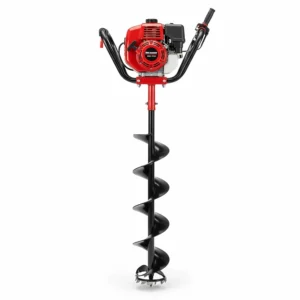
FAQ Section
❓ How many holes can gas powered ice augers drill on one tank?
❓ Can you use gas powered ice augers in fish houses?
❓ What is the lifespan of gas powered ice fishing augers?
❓ Do gas powered ice augers work in extreme cold temperatures?
❓ Should I buy an 8 inch or 10 inch gas powered ice auger?
Conclusion: Finding Your Perfect Gas Ice Auger
After analyzing seven top gas powered ice augers and considering everything from engine types to blade sizes, the “best” choice ultimately depends on your specific needs and fishing style. However, I can offer some clear recommendations based on different angler profiles.
For most anglers seeking the best overall value and performance, the Eskimo Mako M43 hits the sweet spot. It delivers strong power, excellent features, and that unbeatable 5-year warranty at a mid-range price point. If budget is tight, the ThunderBay 33cc offers surprisingly solid performance for under $260.
Serious anglers who fish frequently and demand maximum reliability should invest in the Jiffy Model 30 XT. Yes, it costs more upfront, but the superior cutting performance, blade longevity, and professional-grade durability justify the investment. Professional guides don’t choose Jiffy by accident.
For those prioritizing light weight and quiet operation, particularly anglers fishing populated areas or transporting gear long distances, the StrikeMaster Honda GX35 Lite is worth every penny despite its premium price. The 23-pound weight and whisper-quiet 4-stroke operation transform the ice fishing experience.
Remember, even the best gas powered ice augers require proper maintenance and care. Invest in quality fuel, keep blades sharp, perform seasonal maintenance, and your auger will serve you reliably for many seasons. The most expensive auger in the world becomes useless with dull blades and old fuel, while even a budget model performs admirably when properly maintained.
Don’t let another ice fishing season pass with a subpar auger. Whether you’re upgrading from a hand auger or replacing an aging gas model, the options reviewed here represent the best gas powered ice fishing augers available in 2025. Choose based on your budget, typical ice conditions, and how frequently you fish. Then get out there and drill some holes!
🎣 Ready to Drill Faster and Fish More?
Stop struggling with dull blades and unreliable equipment! Click on your favorite model above to check current prices, availability, and customer reviews. Remember – a quality gas ice auger is an investment that pays dividends every single time you hit the ice. Tight lines! 🐟⛸️
Recommended for You
- Ice Fishing Hand Auger: 7 Best Manual Ice Augers 2025
- Ice Fishing Auger for Drill: 7 Best Picks (2025 Guide)
- 7 Best Electric Ice Augers for Ice Fishing 2025 (Tested & Reviewed)
Disclaimer: This article contains affiliate links. If you purchase products through these links, we may earn a small commission at no additional cost to you.
✨ Found this helpful? Share it with your friends! 💬🤗
