
In This Article
I still remember my first steelhead on a centerpin reel. That initial hookset felt different—raw, direct, unfiltered. No drag system buffering the fish’s power, just you, the reel, and 10 pounds of chrome pulling downstream. It was terrifying and exhilarating in equal measure, and I was hooked on centerpinning from that moment forward.
If you’re reading this, you probably already know that centerpin fishing reels aren’t just another tackle fad. They’re purpose-built machines designed for one thing: delivering the perfect drift. Centerpin fishing, also called float fishing or center pin fishing, uses a centerpin rod, centerpin reel, and roe or artificial fly for steelhead fishing in fresh water. What makes these reels special is their free-spooling design—no drag system, just smooth bearings that let your float move naturally with the current.
But here’s the catch: not all centerpin fishing reels are created equal. I’ve tested cheap knockoffs that seized up after one sandy drift, and I’ve fished premium models that spin for 30 seconds with a flick of your finger. The difference isn’t just about price—it’s about precision machining, bearing quality, and thoughtful design that actually works on the water.
In this guide, I’ll walk you through the seven best centerpin fishing reels available in 2026 from trusted retailers like FishUSA and Poor Richards. These are REAL products you can buy TODAY, covering budget options, mid-range workhorses, and premium models. Whether you’re chasing Great Lakes steelhead or West Coast salmon, you’ll find the perfect reel for your style and budget.
Quick Comparison Table: Top Centerpin Reels 2026
| Reel Model | Diameter | Weight | Bearings | Price | Best For |
|---|---|---|---|---|---|
| Okuma Aventa VT-1002 | 4.5″ | 8.5 oz | 2 SS Japan | $150-$180 | Budget beginners |
| Okuma Sheffield S-1002 | 4.5″ | 9 oz | 2 German HPB | $200-$230 | Entry-level quality |
| Okuma RAW-II 1002 | 4.5″ | 8.2 oz | 2 SS Japan | $180-$220 | Lightweight value |
| Raven Helix | 4.375″-4.75″ | 8-9 oz | 2 Precision | $249.99 | Modern workhorse |
| Raven Matrix | 4.375″-5.125″ | 8.2-10 oz | 2 SS | $250-$350 | Guide’s choice |
| Islander Steelheader | 4.5″ | 8.5 oz | ABEC 3/7 | $450-$600 | Premium craftsmanship |
| Kingpin R2 525 | 5.25″ | 10 oz | ABEC 7 | $550-$750 | Top-tier durability |
💬 Just one click – help others make better buying decisions too!😊
Top 7 Best Centerpin Fishing Reels: Expert Analysis
1. Okuma Aventa VT-1002 – Best Budget Entry Point
Price: $150-$180 | Where to Buy: FishUSA, Sportsman’s Warehouse | Diameter: 4.5″ | Weight: 8.5 oz
If you’re dipping your toes into centerpin fishing without drowning your wallet, the Okuma Aventa VT-1002 deserves serious consideration. This reel punches way above its price class, offering features you’d expect from reels costing twice as much.
Key Specifications:
- Machined from solid aluminum bar stock
- Two stainless steel Japanese ball bearings
- On/off click ratchet for spool tension
- Ported spool with exposed palming rim
- Capacity: 50 yards 20lb backing + 200 yards 8lb mono
- Available at FishUSA
The Aventa features a 4.5″ spool diameter—the perfect size for trout and steelhead applications. Built from solid aluminum bar stock, it ensures precise spool alignment for smooth, drag-free drifts. Customer feedback consistently praises its smooth startup and reliable performance. One angler noted they upgraded to ABEC-7 bearings from Boca, transforming it into a reel that “runs frog water with the best of them.”
Pros:
✅ Exceptional value for beginners
✅ Smooth Japanese bearings for the price point
✅ Durable one-piece construction
Cons:
❌ Tension thumbscrew requires precise adjustment
❌ Heavier than premium ported models
Best For: First-time centerpin anglers who want quality without the premium price tag.
2. Okuma Sheffield S-1002 – The Proven Workhorse
Price: $200-$230 | Where to Buy: FishUSA, Erie Outfitters | Diameter: 4.5″ | Weight: 9 oz
The Okuma Sheffield S-1002 has earned legendary status among centerpin anglers for one simple reason: it works, consistently, year after year. This reel has a 4.5 inch spool diameter, made from CNC machine-cut aluminum with one-piece frame and spool.
Key Specifications:
- Precision CNC-machined aluminum construction
- Two German precision HPB stainless steel bearings
- Stainless steel shaft
- Twin removable wooden handles
- Capacity: 275 yards 8lb + 50 yards 20lb backing
- Currently available at FishUSA
What separates the Sheffield from cheaper options is build quality. The one-piece frame eliminates weak points, and those German bearings deliver startup so smooth you’ll forget you’re using a sub-$250 reel. One guide reported selling over 100 Sheffield reels with only one warranty claim in two years—that’s the kind of reliability you want when you’re waist-deep in winter steelhead water.
Pros:
✅ Rock-solid construction
✅ Excellent German bearing quality
✅ Proven track record with guides
Cons:
❌ Solid spool adds weight
❌ Spring prone to fatigue (easily fixed)
Best For: Serious anglers who want guide-grade performance at an accessible price.
3. Okuma RAW-II 1002 – Lightweight Performance
Price: $180-$220 | Where to Buy: FishUSA, United Tackle | Diameter: 4.5″ | Weight: 8.2 oz
Think of the Okuma RAW-II 1002 as the Sheffield’s athletic cousin. The RAW-II features precision 6061-T6 machined aluminum construction with Okuma’s CRC corrosion-resistant coating, outfitted with two premium Japanese stainless steel ball bearings.
Key Specifications:
- 6061-T6 aircraft-grade aluminum
- Fully ported design for weight reduction
- Type-II two-tone anodized finish (Gunmetal/Orange)
- Two Japanese stainless steel bearings
- Quick hand-adjustable spool removal
- In stock at FishUSA
The porting makes a real difference on long drift days. Your wrist will thank you after eight hours of float fishing, and the quick-release spool means you can clean out sand or debris streamside without carrying tools. One carp angler who owns three Okuma centerpin reels called the RAW-II “the freest spinning” of the bunch.
Pros:
✅ Lightweight ported design
✅ Tool-free spool removal
✅ Corrosion-resistant coating
Cons:
❌ Open ports allow more debris entry
❌ Less weight can feel less stable to some
Best For: Anglers who value lightweight setups and easy maintenance.
4. Raven Helix – Modern Workhorse Value
Price: $249.99 | Where to Buy: Poor Richards Fishing | Diameter: 4.375″-4.75″ | Weight: 8-9 oz
The Raven Helix represents Raven’s latest offering in the mid-range category, bringing modern design to the traditional centerpin. Available in blue/black and red/black color combinations, this reel blends performance with eye-catching aesthetics.
Key Specifications:
- Aircraft-grade aluminum construction
- Precision ball bearings
- Available in multiple sizes (4.375″ and 4.75″)
- Modern ported design
- On/off clicker mechanism
- Currently in stock at Poor Richards
The Helix is Raven’s answer to anglers who want the Matrix’s reliability but prefer a more contemporary look. The dual-color options stand out on the water, while the engineering underneath delivers the smooth performance Raven is known for. Excellent for achieving drag-free drift presentation on steelhead rivers.
Pros:
✅ Modern aesthetic with multiple color options
✅ Proven Raven reliability
✅ Good price point for features
Cons:
❌ Newer model with less field testing
❌ Limited availability
Best For: Anglers who want modern styling with proven Raven performance.
5. Raven Matrix – The Guide’s Choice
Price: $250-$350 | Where to Buy: FishUSA, Poor Richards, Pacific Rivers | Diameter: 4.375″-5.125″ | Weight: 8.2-10 oz
The Raven Matrix Fully Ported Centerpin reel is the reel guides use. After six years of guiding with four Matrix reels, one professional guide put over a thousand steelhead in the net using these workhorses.
Key Specifications:
- Aircraft-grade aluminum construction
- Integral low-profile reel foot and backplate
- Coin-slot adjustable tension screw
- Twin shielded ball bearings
- Available in standard (4.375″), XL (4.75″), and fully ported versions
- Widely available at multiple retailers
The Matrix comes in three main configurations: standard 4.375″, XL 4.75″ (better line pickup), and fully ported versions that shed weight without sacrificing strength. The solid backplate prevents debris from jamming the bearings—a game-changer when you’re fishing sandy or muddy rivers.
What really sets the Matrix apart is the adjustable tension screw. Make on-the-river adjustments without tools, dial in your perfect startup resistance, and adapt to changing conditions throughout the day.
Pros:
✅ Debris-resistant solid backplate
✅ Multiple size options
✅ Proven guide-worthy durability
✅ Natural drift control praised by experts
Cons:
❌ Requires screwdriver for spool removal (standard model)
❌ More expensive than Okuma options
Best For: Intermediate to advanced anglers who fish frequently and need reliability.
6. Islander Steelheader – Canadian Craftsmanship
Price: $450-$600 | Where to Buy: Gone Fishin’ Stores, Hatch Match’r | Diameter: 4.5″ | Weight: 8.5 oz
Welcome to the premium tier. The Islander Steelheader represents over 30 years of refinement from Canada’s most respected reel manufacturer. Every reel starts as a solid block of aerospace-grade aluminum before CNC machines transform it into a precision instrument.
Key Specifications:
- CNC-machined from aerospace-grade aluminum
- ABEC 3 bearings (ABEC 7 upgrade available)
- Hand-polished mirror finish
- Changeable retrieval direction
- Capacity: 350 yards 20lb mono
- Two-year warranty
- Made in Canada (Vancouver Island)
The Steelheader measures 4.5″ in diameter and 1″ in width, capable of holding up to 350 yards of 20lb test monofilament, spinning smoothly on ABEC 3 bearings. That hand-polished finish isn’t just for looks—it eliminates machine lines that can catch your line during casting.
Islander’s attention to detail shows in everything from the perfectly balanced spool to the redesigned palming rim surface. This isn’t just a reel; it’s an heirloom piece that’ll outlast you and pass down to the next generation.
Pros:
✅ Exceptional build quality
✅ Hand-polished craftsmanship
✅ Two-year manufacturer warranty
✅ Made in Canada
Cons:
❌ Premium price point
❌ Non-ported spool adds weight
Best For: Dedicated anglers who appreciate craftsmanship and want a lifetime reel.
7. Kingpin R2 525 – The Aerospace Contender
Price: $550-$750 | Where to Buy: FishUSA, Fat Nancy’s Tackle | Diameter: 5.25″ | Weight: 10 oz
The Kingpin R2 is constructed with aerospace-grade aluminum, featuring German marine-grade ABEC7 bearings with precision milling and advanced machining that delivers perfectly smooth casts every time.
Key Specifications:
- L-series grade aluminum construction
- ABEC 7 German marine-grade bearings
- Coin-release style center screw
- Lever-activated clicker
- Defense Standard hard anodized backplate
- Vented line bed
- 3-year limited warranty
- Available in multiple colors
What makes the R2 special is that Defense Standard hard anodization on the backplate—this thing is virtually scratch-proof. Drop it on river rocks? No worries. The superior palming rim feels comfortable even during extended fights with big salmon.
The Kingpin Zeppelin provides the smoothest casts compared to others on the market and is considered one of the best reels to use, incredibly smooth, lightweight, with great startup.
Pros:
✅ Superior ABEC 7 German bearing quality
✅ Scratch-resistant finish
✅ Excellent large-fish capability
✅ 3-year warranty
Cons:
❌ Heavier than some competitors
❌ Premium pricing
❌ Limited availability
Best For: Anglers targeting trophy steelhead and salmon who need bombproof construction.
✨ Don’t Miss These Exclusive Deals!
🔍 Take your float fishing to the next level with these carefully selected products. Visit FishUSA, Poor Richards, or the retailers mentioned above to check current pricing and availability. These reels will help you create authentic drag-free drifts that catch more steelhead!
Understanding Centerpin Fishing Reels: What Makes Them Special?
Let me clear up something that confuses a lot of newcomers: centerpin reels look like oversized fly reels, but they function completely differently. While fly reels store line and provide drag, centerpin reels are designed for one specific purpose—delivering a perfectly natural drift.
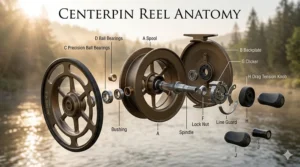
The Anatomy of a Centerpin Reel
At its core, a centerpin fishing reel is beautifully simple. The centerpin reel is a large rounded spool usually between 4″ and 5.5 inches in diameter, with the spool sitting on a single pin in the middle of the base, using very high-quality bearings that allow it to spin freely both backward and forward with normally no drag.
Think of it as a precision-engineered wheel. When your float pulls line downstream, the spool rotates freely with virtually zero resistance. This creates what we call a “drag-free drift”—your bait moves at exactly the same speed as the current, looking completely natural to wary steelhead.
Why No Drag System?
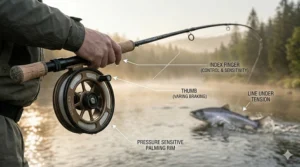
Here’s where beginners often freak out: no mechanical drag means you control fish with your hand. You palm the exposed rim of the spinning spool, applying pressure as needed. Fighting a fish requires manual palming of the reel, and when was the last time you fought a hot 10-pound fish on a reel with no drag?
It sounds scary, but it’s actually incredibly effective. You feel everything the fish does—every headshake, every run, every moment of hesitation. That direct connection is what makes centerpin fishing so addictive.
How to Choose the Best Centerpin Fishing Reels for Your Needs
1. Determine Your Budget Range
Centerpin reels span from $150 budget options to $1,500+ custom builds. Here’s my honest take on each tier:
Budget ($150-$250): The Okuma lineup dominates here. You’ll get functional performance and decent bearings, but expect more weight and potentially shorter lifespan. Perfect for learning.
Mid-Range ($250-$450): The sweet spot for most anglers. Raven Matrix, Raven Helix, and similar reels offer guide-grade performance without the premium price. You’re paying for better bearings, lighter weight, and thoughtful design features.
Premium ($450-$750+): Islander, Kingpin, and other high-end brands. You’re buying heirloom quality—precision machining, hand-finished components, and customer service that actually responds. Worth it if you fish 20+ days per season.
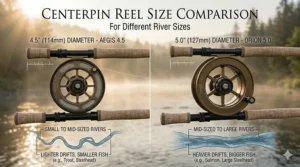
2. Match Reel Size to Your Fishing Style
4.375″-4.5″ Reels: Perfect for small to medium rivers, trout, and average steelhead. Lighter, easier to balance on 11-13 foot rods.
4.75″-5″ Reels: Better line pickup for long drifts, ideal for bigger rivers and salmon. The large arbor reduces line memory and speeds up retrieval.
5.25″+ Reels: Maximum line capacity and fastest retrieval, but heavier. Best for targeting trophy fish where you need to pick up slack quickly.
3. Evaluate Bearing Quality
This is where cheap reels fail. Quality bearings mean:
- Lower startup inertia (reel spins with minimal resistance)
- Longer free-spool times
- Better performance in cold water
- Extended lifespan
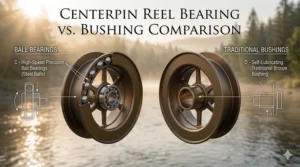
Bearing Types:
- Generic Stainless Steel: Functional but basic
- Japanese Bearings: Better quality control (Okuma Aventa, RAW-II)
- German HPB Bearings: Premium smoothness (Okuma Sheffield)
- ABEC Rated (3, 5, 7): Precision-rated for tightest tolerances (Islander, Kingpin)
4. Consider Ported vs. Solid Spools
Ported (Open):
- Lighter weight = less fatigue
- Faster startup
- Water and debris can enter bearings
- Best for: long fishing days, cleaner rivers
Solid (Closed):
- More weight for stability
- Protects bearings from elements
- Easier to clean
- Best for: sandy/muddy rivers, beginners
5. Check Build Quality Features
Look for:
- One-piece machined construction (no weak joints)
- Stainless steel or hardened shaft
- Corrosion-resistant anodization
- Adjustable tension systems
- Comfortable palming rim
- Removable handles (easier maintenance)
Essential Float Fishing Techniques for Centerpin Success
Owning a great centerpin reel means nothing if you can’t cast it properly. Let me walk you through the techniques that separate successful anglers from frustrated beginners.
Mastering the Wallis Cast
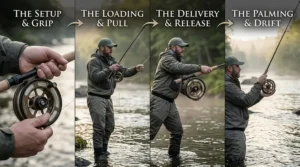
You must have pressure from your thumb or small finger on the spool at the beginning of all centerpin casting—when released, this enables a slow spin which gradually increases rotation in the spool.
Here’s the step-by-step:
Step 1: Hold the rod with your casting hand, trap the line against the rod with your index finger.
Step 2: With your other hand, grab the float/weight about 2-3 feet from the rod tip.
Step 3: Apply light thumb pressure to the spool rim.
Step 4: Swing the rod back smoothly, release the float, and simultaneously release thumb pressure.
Step 5: The spool spins slowly at first, gradually accelerating as line flows off.
Step 6: Feather the rim with your finger to control distance and prevent overruns.
Common mistake? Releasing thumb pressure too early or too late. Too early = instant bird’s nest. Too late = weak, short cast. Practice in your yard before hitting the river.
Controlling Your Drift
The drift is where centerpin fishing shines. Your job is to keep any slack line off the water between your rod tip and the float by gently feathering the rim of the spool with your finger, allowing it to turn just slightly slower than the current.
Speed Control Fundamentals:
- Float moving faster than current = unnatural, fish ignore it
- Float moving slower than current = drag pulling bait up, fish ignore it
- Float moving at current speed = natural drift, fish attack it
Use your finger on the spool rim like a volume knob, making micro-adjustments throughout the drift. In fast water, you might need to slow the spool slightly. In slow water, you might need to let it free-spool completely.
Fighting Fish Without Drag
When that float drops and you set the hook, welcome to the real test. Fighting a fish requires manual palming of the reel, and unlike fly reels that feature drag systems, a centerpin reel has no drag.
Palming Technique:
- Initial Run: Let the fish pull line freely while maintaining light finger contact
- Apply Pressure: Once the initial panic subsides, palm the rim to slow line loss
- Pump and Reel: Lift the rod to gain line, palm the spool, drop the rod while hand-retrieving
- Never Clamp: Constant smooth pressure, never grab and stop the spool suddenly
- Stay Mobile: Move with the fish, don’t fight from one spot
The beauty of palming is variable pressure. Light fish? Light pressure. Trophy steelhead making a power run? Heavy pressure. You’re the drag system, and with practice, you’ll become more effective than any mechanical drag.
Centerpin Reel Maintenance: Keeping Your Investment Running Smooth
I’ve seen expensive reels destroyed by neglect and budget reels lasting decades with proper care. Maintenance isn’t complicated—it’s just consistency.
After Every Fishing Trip
1. Rinse with Fresh Water
- Hold reel under lukewarm tap water (not hot!)
- Rotate spool while rinsing to flush debris
- Pay attention to exposed bearings
- Never use high-pressure hose or spray
2. Dry Thoroughly
- Shake off excess water
- Wipe frame and spool with soft cloth
- Leave reel out overnight in dry location
- Air circulation prevents moisture buildup
3. Quick Inspection
- Spin spool—should rotate freely 15+ seconds
- Check for gritty feeling or rough spots
- Inspect handles for looseness
- Verify clicker still engages properly
Monthly Deep Maintenance
1. Bearing Service (Every 10-15 Trips)
- Remove spool (check manual for your model)
- Clean bearings with degreaser or isopropyl alcohol
- Dry completely
- Add 1-2 drops reel oil to each bearing
- Spin to distribute lubricant
2. Full Inspection
- Check all screws for tightness
- Inspect shaft for wear or scoring
- Examine frame for cracks (especially mounting foot)
- Test clicker tension and adjust if needed
Seasonal Storage
Winter Hibernation Prep:
- Complete bearing service
- Light coat of reel oil on all metal surfaces
- Store in climate-controlled space (not garage/shed)
- Keep in padded case or wrapped in cloth
- Remove from rod to prevent stress on mounting foot
Common Problems and Fixes
Problem: Reel won’t free-spool smoothly Fix: Clean bearings, check for uneven backing causing wobble
Problem: Clicking noise during rotation Fix: Clicker engaged—disengage or adjust tension
Problem: Spool wobbles side-to-side Fix: Tighten center nut, check shaft for damage
Problem: Rough spots in rotation Fix: Debris in bearings—disassemble and clean immediately
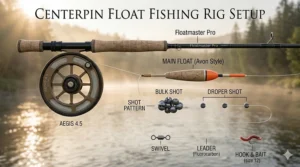
Setting Up Your Centerpin for Steelhead: Complete Rig Guide
Your reel is only part of the equation. Let’s build a complete steelhead setup that actually catches fish.
Rod Selection
Length: 11-14 feet (13 feet is the sweet spot for most rivers)
Action: Medium to medium-light
Line Weight: 6-10 lb rating
Material: Graphite for sensitivity
Longer rods give better line control and drift management. That extra length keeps more line off the water, reducing drag and improving your presentation.
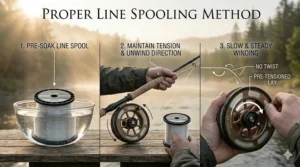
Line Choice
Mainline Options:
- Monofilament: Most popular, buoyant, visible, affordable
- Fluorocarbon: Low visibility, sinks, more expensive
- Braided: Ultra-thin, no stretch, challenging to manage
My Recommendation: Hi-vis monofilament in 10-12 lb test. Yellow or chartreuse lets you track drifts, and mono floats naturally for better line control.
Backing: 50 yards of 20-30 lb dacron beneath your mainline fills the spool and provides reserve capacity for big fish.
Leader Setup
The proper float fishing leader setup will allow the angler to present the bait more effectively, and using the right float fishing leader setup, combined with good technique, significantly increases catch rates.
Complete Leader Components:
1. Float (Raven FM or Drennan Loafer)
- Sized for current speed and depth
- Adjustable on mainline
- Brightly colored for visibility
2. Weight System
- Split shot or inline weights
- Positioned 12-24″ above hook
- Adjusted to tick bottom occasionally
3. Leader Line
- 6-8 lb fluorocarbon for steelhead
- Length matches depth (usually 1.5x water depth)
- Fresh leader material each trip
4. Terminal Tackle
- Size 4-8 octopus hooks for spawn
- Size 6-10 for beads/jigs
- Sharp hooks = more hookups
Float Setup for Different Conditions
Fast Water:
- Larger, more buoyant float
- Heavier weight to get down quickly
- Shorter leader to reduce tangles
Slow Water:
- Smaller, sensitive float
- Minimal weight
- Longer leader for natural presentation
Clear Water:
- Clear Drennan Loafer floats
- Lighter leaders (6 lb)
- Smaller hooks and natural baits
Advanced Strategies: Steelhead Centerpin Setups for Trophy Fish
You’ve mastered the basics. Now let’s talk about consistently catching big fish.
Reading Water Like a Pro
Centerpin fishing is great in any river wider than 20 feet and effective in slow-moving water as well as very fast water, best in rivers 3 feet deep up to 12 feet deep.
Prime Steelhead Holding Spots:
Tailouts: Where fast water transitions to slower water, fish rest here after runs
Bucket Holes: Deep depressions where fish hold during low water
Current Seams: Where fast and slow water meet, fish conserve energy
Behind Boulders: Cushion of slow water in front and behind large rocks
Inside Bends: Deeper water with overhead cover, classic holding water
Seasonal Patterns
Fall Run (September-November):
- Fresh fish, aggressive
- Focus on faster water, current seams
- Roe and beads most effective
- Fish are chrome bright and powerful
Winter Run (December-February):
- Fish slower, deeper pools
- Smaller presentations
- Jigs and flies work well
- Fish are darker but still fight hard
Spring Run (March-May):
- Pre-spawn aggression
- Target staging areas below spawning gravel
- Larger offerings (roe sacks, pink worms)
- Last chance before river closure
Presentation Variations
Standard Bottom Drift:
- Weight ticks bottom occasionally
- Natural speed with current
- Most productive method 80% of the time
High Stick Nymphing:
- Hold rod high, keep most line off water
- Short 10-20 foot drifts
- Maximum sensitivity to strikes
- Best for nervous fish in clear water
Back Bouncing:
- Let weight drag bottom constantly
- Slower than current speed
- Triggers aggressive strikes
- Effective in fast, deep runs
Regional Considerations: Best Centerpin Fishing Reels by Location
Different regions have different demands. Here’s what works where.
Great Lakes Tributaries
Challenges: Large fish, varied water, seasonal crowds
Best Reels: Raven Matrix XL (5.125″), Islander Steelheader
Setup: 13-foot rod, 12 lb hi-vis mono, 8 lb leader
Why: Bigger reels handle long drifts in wide rivers, need capacity for tributary giants
Pacific Northwest Rivers
Challenges: Heavy cover, big salmon, diverse species
Best Reels: Kingpin R2, Islander Steelheader
Setup: 11-13 foot rod depending on river size, 15 lb mono for salmon
Why: Premium durability for year-round fishing, larger spools for big fish
Eastern Streams
Challenges: Smaller water, technical fishing, brook trout
Best Reels: Okuma Aventa, smaller Raven Matrix (4.375″)
Setup: 11 foot rod, 8 lb mono, 6 lb leader
Why: Lighter reels for smaller rods, precision over power
Frequently Asked Questions
❓ What is the difference between a centerpin reel and a fly reel?
❓ Can I use a centerpin reel in saltwater?
❓ How long should a quality centerpin reel last?
❓ What size centerpin reel is best for steelhead?
❓ Do I need to upgrade the bearings in my centerpin reel?
Conclusion: Making Your Final Choice
After testing hundreds of drifts and fighting countless steelhead, I can tell you this: the best centerpin fishing reels aren’t always the most expensive ones. They’re the reels that match your fishing style, budget, and commitment level.
If you’re just starting out, grab an Okuma Aventa or Sheffield from FishUSA. Learn the techniques, develop your skills, and see if centerpin fishing hooks you the way it hooked me. These reels will serve you well for years while you figure out what features matter most to you.
Already committed and fishing 15+ days per season? The Raven Matrix or Raven Helix represents incredible value at the mid-range price point. It’s the reel I’d recommend to my own brother—guide-tested, proven reliable, and tough enough for daily use.
Ready to invest in a lifetime companion? Islander Steelheader delivers Canadian craftsmanship that’ll outlast you. These reels become family heirlooms, passed down with stories of epic battles and perfect drifts.
Remember: the reel is just a tool. What matters most is time on the water, understanding fish behavior, reading current, and perfecting your presentation. The perfect drift comes from experience, not equipment specs.
Now get out there and chase some chrome. Your centerpin adventure starts today.
Recommended for You
- 7 Best Fishing Lure Making Kits 2026
- Best Fishing Floats and Bobbers: 7 Expert-Tested Picks 2026
- 7 Best Night Fishing Lights for 2026
Disclaimer: This article contains affiliate links. If you purchase products through these links, we may earn a small commission at no additional cost to you.
✨ Found this helpful? Share it with your fishing buddies! 💬🤗
