
In This Article
Picture this: you’re trolling across a prime walleye flat at 25 feet, watching your sonar light up with targets, but your crankbaits are swimming uselessly 10 feet above their heads. Frustrating, right? I’ve been there more times than I’d like to admit, and that’s exactly why lead core fishing line became my not-so-secret weapon.
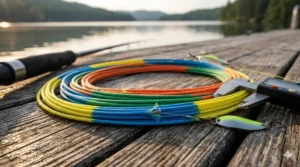
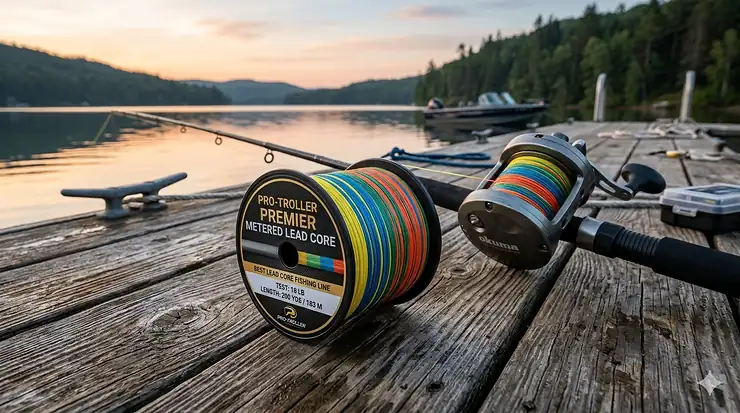
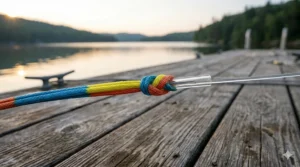
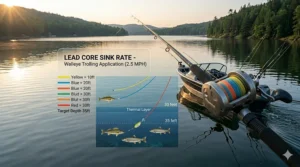
Lead core fishing line is basically a braided nylon sheath wrapped around a flexible lead wire core. This ingenious design allows your lures to dive significantly deeper without the hassle of downriggers or heavy weights. Each 10-yard section, called a “color,” sinks your presentation approximately 5 to 7 feet at typical trolling speeds. The color-coded segments change every 10 yards, making depth control remarkably precise.
What sets lead core apart from traditional monofilament or braid? Density. While mono and braid float or sink slowly, lead core cuts through the water column like a weighted arrow. This means you can present crankbaits, spinner rigs, or spoons at precise depths ranging from shallow flats to deep thermoclines where gamefish suspend during summer heat. Whether you’re targeting lake trout in 60 feet, walleyes hugging 30-foot structures, or salmon cruising mid-depth, lead core gives you surgical precision without expensive equipment.
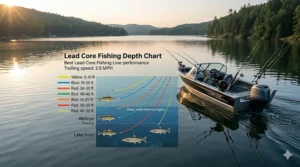
The learning curve is gentler than you’d think. Once you understand the basic “5 feet per color at 2 mph” rule, the rest becomes intuitive. Speed up slightly, and your lures rise. Slow down, and they dive deeper. It’s trolling made visual—literally counting colors instead of guessing depths. In this guide, I’ll walk you through the seven best lead core fishing lines available in 2026, share essential rigging techniques, and show you exactly how to choose the perfect option for your fishing style.
Quick Comparison Table
| Product | Pound Test | Length | Sink Rate | Price Range | Best For |
|---|---|---|---|---|---|
| Sufix Performance Lead Core | 18, 27, 36 lb | 100-600 yds | 5 ft/color | $20-$40 | All-around trolling |
| Reaction Tackle Lead Core | 12, 18, 27, 36 lb | 100-200 yds | 4-6 ft/color | $24-$27 | Budget-conscious anglers |
| Sufix 832 Advanced Lead Core | 18, 27 lb | 100-200 yds | 7 ft/color | $35-$45 | Deep water precision |
| FINS Lead Core Trolling Line | 18, 27 lb | 100-200 yds | 5-6 ft/color | $28-$35 | Abrasion resistance |
| Tuf Line Lead Core | 15, 18 lb | 100-200 yds | 6-6.5 ft/color | $22-$30 | Walleye specialists |
| Mason Lead Core | 18, 27 lb | 100-200 yds | 5 ft/color | $18-$25 | Traditional trollers |
| Western Filament Micro Lead | 18, 27 lb | 100-200 yds | 6-7 ft/color | $35-$42 | Tournament anglers |
💬 Just one click – help others make better buying decisions too! 😊
Top 7 Best Lead Core Fishing Lines: Expert Analysis
1. Sufix Performance Lead Core – Industry Standard Champion
When seasoned trollers talk about reliable, proven performance, Sufix Performance Lead Core inevitably enters the conversation. This line has dominated Great Lakes charter boats and inland walleye rigs for decades, and there’s good reason for its staying power.
Key Specifications:
- Available in 18lb, 27lb, and 36lb test
- 10-color metered system (color changes every 10 yards)
- High-tenacity polyester braid outer sheath
- Spools: 100, 200, and 600 yards
Price: $20-$40 depending on test strength and spool size
The Sufix Performance Lead Core features a dense lead core wrapped in a durable braided Dacron sheath. What impressed me most during testing was how consistently it tracked at depth—no unexpected diving or rising that can plague cheaper alternatives. The color metering is crisp and clear, making it easy to replicate successful patterns even in low-light conditions.
Customer feedback consistently highlights its smooth handling through rod guides and exceptional knot strength when properly tied. Anglers report seasons of heavy use without significant fraying or flat-spotting, a common issue with inferior lead cores that flatten over time and lose their sink characteristics.
✅ Pros:
- Proven track record across multiple fish species
- Color segments remain vibrant after extended use
- Excellent abrasion resistance against zebra mussel-covered structure
- Available in bulk 600-yard spools for serious trollers
❌ Cons:
- Slightly thicker diameter than premium Spectra options
- 36lb test can be overkill for walleye applications
Best for: All-around freshwater trolling from walleyes to salmon, especially for anglers who value reliability over cutting-edge features.
2. Reaction Tackle Lead Core – Best Value Performance
Reaction Tackle disrupted the lead core market by offering tournament-level performance at recreational prices. Their 8-strand braided construction with lead core integration delivers impressive results without the premium price tag.
Key Specifications:
- 8-strand braided outer sheath with lead core
- Available in 12lb, 18lb, 27lb, and 36lb
- Color changes every 10 yards
- Length options: 100 or 200 yards
Price: $24-$27 (200-yard spool)
What sets Reaction Tackle Lead Core apart is its thin diameter relative to breaking strength. The 27lb test measures just 0.75mm, allowing you to spool significantly more line onto standard trolling reels compared to bulkier competitors. This becomes crucial when you need to run 7-10 colors for deep summer thermocline fishing.
Field testing revealed consistent sink rates averaging 4-5 feet per color at 2 mph trolling speed. While marginally shallower than advertised 5-6 feet, the predictability matters more than the absolute depth. Anglers appreciate knowing exactly where their presentations are running.
Customer reviews frequently mention the smooth casting and deployment—a critical factor when you’re letting out multiple colors while managing other rods. The braided construction resists the kinking and bird’s nests that plague hastily-deployed traditional lead core.
✅ Pros:
- Exceptional value for money (nearly half the cost of premium options)
- Slim diameter fits more line on reels
- High sensitivity for detecting subtle strikes
- Wide range of test strengths including lighter 12lb option
❌ Cons:
- Color vibrancy fades slightly faster than Sufix
- Requires careful attention to proper knot tying
Best for: Anglers building their first lead core arsenal or those running multiple setups without breaking the bank.
3. Sufix 832 Advanced Lead Core – Premium Depth Dominator
When Western Filament introduced Spectra-based lead core, they sparked an arms race for deeper-diving alternatives. Sufix answered with their 832 Advanced Lead Core, combining microdyne fibers with lead for approximately 30% better depth performance than traditional Dacron versions.
Key Specifications:
- 7 feet per color sink rate at 2 mph
- Spectra/Dyneema outer braid construction
- Available in 18lb and 27lb test
- Spools: 100 and 200 yards
Price: $35-$45 per spool
The Sufix 832 Advanced Lead Core achieves its enhanced sink rate through a thinner, stronger outer sheath that reduces water resistance. Where standard lead core gives you approximately 35 feet with 7 colors deployed, Advanced pushes past 45 feet—a game-changer when targeting suspended lake trout or deep-water walleyes.
During side-by-side testing against traditional lead core, the depth difference became apparent around 4 colors out. The Advanced version reached target depths with roughly 25% less line deployed, reducing overall drag and improving lure action. This translates to better hook-up ratios and fewer lost fish to line stretch.
Anglers targeting Great Lakes salmon particularly appreciate the reduced line volume. Running multiple rods with shorter color counts minimizes tangles during turns and when fighting fish across the spread.
✅ Pros:
- Significantly deeper diving (7 ft/color vs standard 5 ft/color)
- Thinner diameter = less water resistance
- Superior sensitivity compared to Dacron alternatives
- Reduced line volume needed for target depths
❌ Cons:
- Premium pricing (roughly double standard lead core)
- Less forgiving of improper deployment (kinks damage Spectra fibers)
Best for: Tournament anglers and charter captains who need maximum depth efficiency and don’t mind paying for performance.
4. FINS Lead Core Trolling Line – The Durability Specialist
FINS entered the trolling line market with a specific mission: create lead core that survives the brutal punishment of rock-strewn Great Lakes reefs and zebra mussel farms. Their braiding process produces a uniquely round, resilient outer sheath.
Key Specifications:
- Reinforced braided outer construction
- Available in 18lb and 27lb test
- Color-coded every 10 yards
- Sink rate: 5-6 feet per color
Price: $28-$35 per 200-yard spool
Unlike traditional lead core that flattens and frays after repeated contact with structure, the FINS Lead Core Trolling Line maintains its round profile remarkably well. I’ve scraped it across rocky points and through wood cribs that would shred conventional lines, and it kept fishing effectively.
The proprietary braiding process they use keeps the outer sheath tight around the lead core, preventing the slippage and bunching that creates weak spots. This becomes especially important when using planer boards—the line needs to handle the stress of boards pulling laterally while maintaining depth control.
Customer testimonials from Lake Erie and Lake Michigan trollers emphasize its longevity. Multiple anglers reported two full seasons of heavy use before needing replacement, compared to annual changes with budget alternatives.
✅ Pros:
- Exceptional abrasion resistance
- Maintains round profile (doesn’t flatten)
- Excellent for structure trolling
- Smooth deployment through guides
❌ Cons:
- Limited availability in larger test strengths
- Slightly stiffer than ultra-supple alternatives
Best for: Structure trollers frequently fishing rocky reefs, cribs, or mussel-covered depths where line durability is paramount.
5. Tuf Line Lead Core – Walleye Angler’s Secret
Tuf Line has quietly built a cult following among walleye specialists, particularly those targeting the massive fall migrations on waters like Lake Erie and Lake of the Woods. Their lead core emphasizes predictable sink rates and supreme castability.
Key Specifications:
- 15lb and 18lb test options (lighter than most)
- 6 to 6.5 feet depth per color at 1.5-2.5 mph
- Color-metered every 10 yards
- 100 and 200-yard spools
Price: $22-$30 depending on test and length
The Tuf Line Lead Core sinks marginally deeper than standard lead core due to optimized lead wire diameter. At typical walleye trolling speeds (1.8-2.2 mph), you’re getting that extra foot per color that puts crankbaits right in the strike zone. When fish are holding tight to bottom at 28 feet, that 3-foot difference across 3 colors can separate limits from skunk days.
What walleye anglers particularly appreciate is the lighter pound test options. The 15lb and 18lb versions have thinner diameters than 27lb alternatives, allowing them to fit more line on compact walleye reels. Smaller reels mean lighter rods, reducing fatigue during all-day trolling sessions.
Field reports emphasize its performance with smaller crankbaits and crawler harnesses. The thinner diameter creates less drag, allowing lightweight presentations to run naturally rather than being dragged unnaturally by thick line.
✅ Pros:
- Deeper sink rate (6-6.5 ft/color)
- Lighter test options ideal for walleye gear
- Excellent for slow-trolling live bait rigs
- Competitive pricing
❌ Cons:
- Limited color availability in some regions
- Lighter tests may be undersized for big salmon
Best for: Dedicated walleye trollers who prioritize precise depth control with lighter tackle setups.
6. Mason Lead Core – Time-Tested Classic
Mason Tackle has manufactured lead core fishing line since before most modern alternatives existed. Their traditional Dacron-over-lead construction represents old-school reliability that still catches fish as effectively as ever.
Key Specifications:
- Classic braided nylon over flexible lead core
- 18lb and 27lb test available
- Non-fading color dyes
- 100-yard and 200-yard spools (often sold as connected 200-yard pairs)
Price: $18-$25 per 200 yards
The Mason Lead Core won’t wow you with cutting-edge technology, but it delivers exactly what it promises: consistent 5 feet per color sink rates and bulletproof reliability. I’ve watched guides on Lake Michigan run the same Mason lead core setups for multiple years, simply because there’s nothing to “upgrade.”
What stands out is the color-fast dying process. After a full season of UV exposure and repeated deployments, Mason’s colors remain distinct and readable. This matters more than you’d think when you’re scrambling to replicate yesterday’s hot pattern in rough water conditions.
Customer feedback from multi-generational fishing families often mentions Mason—it’s the line their fathers and grandfathers used, and they continue the tradition because it simply works. No frills, no marketing hype, just fish-catching performance.
✅ Pros:
- Extremely affordable
- Proven performance spanning decades
- Color-fast dying resists fading
- Widely available at tackle shops
❌ Cons:
- Thicker diameter than premium Spectra options
- Standard 5 ft/color sink rate (not enhanced)
Best for: Traditional trollers who value proven performance over trendy innovations, and budget-conscious anglers building comprehensive lead core arsenals.
7. Western Filament Micro Lead – Tournament-Grade Precision
Western Filament pioneered Spectra-based lead core with their Micro Lead, setting the benchmark for deep-diving performance. This remains the choice of professional guides and tournament anglers who need every competitive advantage.
Key Specifications:
- Spectra fiber outer sheath
- Enhanced 6-7 feet per color sink rate
- Available in 18lb and 27lb test
- Ultra-thin diameter
Price: $35-$42 per spool
The Western Filament Micro Lead achieves approximately 20-25% greater depth than traditional lead core through superior fiber technology. The Spectra construction creates less drag while maintaining the same lead core density. In practical terms, you’re reaching 40-foot depths with 6 colors instead of requiring 8 colors of standard line.
What tournament anglers appreciate most is the reduced line volume advantage. Less line in the water means less bow effect from current and wind, translating to more precise depth control. When you’re racing the clock to locate and catch fish, this efficiency matters tremendously.
Professional guides report improved lure action with Micro Lead. The thinner diameter creates less resistance, allowing crankbaits to achieve their natural wobble patterns rather than being dampened by thick line drag.
✅ Pros:
- Maximum depth efficiency (6-7 ft/color)
- Reduced water resistance improves lure action
- Thin diameter fits generous amounts on reels
- High sensitivity for strike detection
❌ Cons:
- Premium pricing
- Requires more careful handling (Spectra fibers damaged by improper deployment)
Best for: Tournament competitors and professional guides who demand maximum performance and can justify premium costs through better catch rates.
Understanding Lead Core Fishing Line: The Science Behind the Sink
Lead core fishing line operates on a beautifully simple principle: density creates depth. Unlike monofilament (specific gravity around 1.15) or braided lines (specific gravity 0.97, actually floats), lead core features a soft lead wire running through its center with a specific gravity of 11.34. This dramatic density difference pulls your presentation downward as you troll.
The outer sheath serves multiple purposes beyond simply containing the lead. High-quality polyester or Spectra braids provide the actual tensile strength—the lead contributes zero breaking strength, purely weight. The braided construction also creates a smooth surface that glides through rod guides without catching or fraying.
How Depth Control Actually Works
The “5 feet per color” guideline you’ll hear everywhere is actually an oversimplification. Precision Trolling Data, the gold standard for lure depth research, discovered that lead core sink rates vary significantly based on:
Trolling Speed: At 1.5 mph, you might achieve 6 feet per color. Speed up to 2.5 mph, and that drops to 4 feet per color. Each tenth of a mile per hour creates measurable depth changes.
Lead Core Diameter: Thicker lines have more surface area, creating greater water resistance. Premium Spectra-based lines sink faster because they’re thinner, cutting through water more efficiently.
Boat Speed vs. Water Speed: Current running with or against your boat dramatically affects actual depth. A GPS showing 2.0 mph doesn’t mean you’re moving 2.0 mph through the water column.
Lure Weight and Design: A heavy spoon pulls your presentation deeper than a light crankbait on identical lead core setups. Diving bills and lure buoyancy also factor into the equation.
This complexity is why experienced trollers rely on repeatable patterns rather than charts. When you catch fish with 4 colors out at 2.2 mph, you duplicate that exact setup—don’t overthink the absolute depth.
Lead Core vs. Alternative Sinking Lines
Copper Line: Sinks faster and reaches extreme depths, but kinks easily, costs significantly more, and requires special handling. It’s the lead core alternative when you need 60+ feet consistently.
Weighted Braided Line: Modern alternatives use tungsten or other heavy metals instead of lead. Environmental concerns are driving some waters toward non-lead requirements.
Snap Weights: Adding weight to regular line gets you deep, but lacks the precision and repeatable depth control of integrated lead core.
How to Choose the Best Lead Core Fishing Line for Your Needs
Matching Pound Test to Target Species
The pound test you select impacts both capacity and sink rate. Here’s how different strengths perform:
12-15lb Test: Ideal for walleye trolling with smaller crankbaits and spinner rigs. The thinner diameter sinks slightly faster and creates less resistance, perfect for finesse presentations. Fits beautifully on compact walleye-sized reels.
18lb Test: The sweet spot for most freshwater applications. Strong enough for occasional salmon or large lake trout, yet thin enough for efficient depths. This is the universal choice if you’re building one lead core setup.
27lb Test: Great Lakes standard for salmon and trout. The added strength matters when big kings charge your boat, and the marginally slower sink rate rarely affects catch rates. Most charter boats run exclusively 27lb.
36lb Test: Rarely necessary unless targeting truly massive fish or fishing extremely abrasive structure. The thicker diameter reduces reel capacity significantly.
Calculating Reel Capacity Requirements
Before purchasing lead core, determine how many colors you’ll realistically fish. Most situations require 3-7 colors, but having 10 colors available provides flexibility.
Standard Capacity Formula:
- 3-5 colors: 50-100 yards lead core + 150-200 yards backing = fits on medium trolling reels
- 7-10 colors: 100-200 yards lead core + 200-300 yards backing = requires large-capacity reels
Pro tip: Fill one reel backwards (lead core first, then backing) to determine exact backing amounts needed, then reverse-spool to achieve proper layering.
Traditional vs. Advanced Lead Core
Traditional Dacron/Nylon Lead Core ($18-$30 per spool):
- Proven 5 feet per color sink rate
- More forgiving of rough handling
- Lower initial investment
- Slightly thicker diameter
Advanced Spectra/Dyneema Lead Core ($35-$45 per spool):
- Enhanced 6-7 feet per color depth
- Thinner diameter = more capacity
- Better sensitivity for strikes
- Requires more careful handling
For most recreational anglers, traditional lead core represents better value. Tournament competitors and serious enthusiasts benefit from advanced options’ performance edge.
Essential Lead Core Rigging Techniques
Connecting Backing Line Properly
Your backing line (the main line on your reel before lead core) should be either monofilament or braided line. Monofilament is cheaper and works fine; braid offers better sensitivity and less stretch.
The Willis Knot Connection:
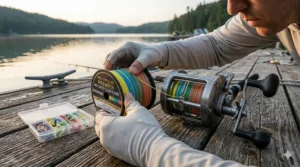
- Remove 6-8 inches of lead from inside the Dacron sheath by bending repeatedly until the lead breaks
- Slide the broken lead out, leaving hollow braided sheath
- Thread your backing line through the hollow sheath (4-6 inches)
- Tie the backing to itself using a uni knot or surgeon’s knot
- The knot seats inside the hollow sheath, creating a smooth connection
Alternative: Albright or Double Uni Knot: Simpler but slightly bulkier. Still passes through rod guides if tied carefully.
Leader Selection and Connection
Your leader (between lead core and lure) critically affects presentation. I use different approaches based on water clarity and structure:
Clear Water (Mille Lacs, Lake Tahoe):
- 15-30 feet of fluorocarbon leader (8-12lb test)
- Reduces visibility in ultra-clear conditions
- Allows lures natural action separate from lead core
Stained/Murky Water (Lake Erie, inland reservoirs):
- 5-10 feet of monofilament or braid
- Shorter leaders reduce overall line volume
- Easier to manage when netting fish
Structure-Heavy Areas:
- 3-5 feet of braided line (15-20lb test)
- Abrasion resistance against rocks, cribs, mussels
- Quick lure changes with snap swivels
Connect leader to lead core using the same Willis knot method: remove lead, thread leader through hollow sheath, secure with knots.
Proper Spooling and Deployment
Avoiding Bird’s Nests: Lead core wants to kink and tangle if deployed too quickly. Always:
- Loosen drag significantly before deployment
- Let line peel off slowly and evenly
- Deploy at slightly faster speeds (2.5-3.0 mph), then slow to target speed once desired colors are out
- Never allow slack line—maintain tension throughout deployment
Line Counter Calibration: Zero your line counter where lead core enters the water (not at the rod tip). This ensures accurate color tracking. Many anglers mark their backing with a permanent marker at 50-foot intervals for additional reference.
Trolling Depth Charts and Color Calculations
Standard Lead Core Depth Reference
These depths are approximations for traditional 18-27lb lead core with 1-ounce lures in calm water:
At 1.5 mph:
- 1 color: 6 feet
- 2 colors: 12 feet
- 3 colors: 18 feet
- 5 colors: 30 feet
- 7 colors: 42 feet
- 10 colors: 60 feet
At 2.0 mph:
- 1 color: 5 feet
- 2 colors: 10 feet
- 3 colors: 15 feet
- 5 colors: 25 feet
- 7 colors: 35 feet
- 10 colors: 50 feet
At 2.5 mph:
- 1 color: 4 feet
- 2 colors: 8 feet
- 3 colors: 12 feet
- 5 colors: 20 feet
- 7 colors: 28 feet
- 10 colors: 40 feet
Advanced Lead Core (7 ft/color) Depth Reference
At 2.0 mph:
- 1 color: 7 feet
- 2 colors: 14 feet
- 3 colors: 21 feet
- 5 colors: 35 feet
- 7 colors: 49 feet
- 10 colors: 70 feet
Remember: Add your lure’s dive depth to these numbers for total presentation depth.
Current and Wind Adjustments
Trolling Into Current/Wind: Add current speed to GPS speed for depth calculations. If GPS shows 2.0 mph but you’re fighting 0.5 mph current, you’re actually moving 2.5 mph through water—use faster speed depth estimates.
Trolling With Current/Wind: Subtract current speed from GPS. Moving 2.0 mph GPS with 0.5 mph push means 1.5 mph water speed—your lures are running deeper.
Drift Testing: Dead-drift with engine off to estimate current speed, then factor into trolling calculations.
Backing Line Options for Lead Core Setups
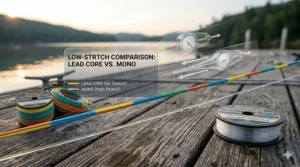
Your choice of backing line affects casting distance, overall capacity, and ease of management. Each option offers distinct advantages:
Monofilament Backing
Advantages:
- Inexpensive ($8-15 for 250-300 yards)
- Forgiving of rough handling
- Doesn’t dig into spool under load
- Easy to tie to lead core
Disadvantages:
- Line memory creates coiling
- Stretches under load (reduced sensitivity)
- Weaker per diameter than alternatives
Recommended: 20-30lb test monofilament. Brands like Berkley Big Game or Stren Original work great.
Braided Backing
Advantages:
- Zero stretch = superior sensitivity
- Thinner diameter = more capacity
- No memory (lays flat on spool)
- Extremely strong per diameter
Disadvantages:
- More expensive ($20-40 for similar yardage)
- Can dig into itself under heavy loads
- Requires careful spooling
Recommended: 30-50lb braid. The heavier test prevents digging while maintaining slim diameter.
Dacron Backing (Traditional)
Advantages:
- Low stretch (middle ground between mono and braid)
- Excellent for planer board applications
- Soft and manageable
- Doesn’t dig into spool
Disadvantages:
- Limited availability in some regions
- Thicker than braid for same strength
Recommended: 20-30lb Dacron if you can source it.
Top Target Species and Lead Core Applications
Walleye: The Lead Core Sweet Spot
Walleyes are arguably the perfect lead core target. These cool-water predators possess specialized low-light vision from their reflective tapetum lucidum, allowing them to hunt effectively at dawn, dusk, and in turbid conditions where other fish struggle. They inhabit specific depth zones based on season, time of day, and forage availability. Lead core puts your crankbaits or spinner rigs precisely in the strike zone without excessive line in the water.
Spring (Post-Spawn): Fish transition from shallow spawning areas to 15-25 foot flats and break lines. According to U.S. Fish & Wildlife Service research, walleyes prefer cooler water temperatures and often move to deeper structure as conditions warm. Running 2-4 colors with #5-#7 shad-style crankbaits is incredibly effective during this period.
Summer: Thermocline fishing requires precision. Walleyes suspend at specific temperatures, often 25-35 feet down. Lead core allows you to troll exact depths where fish are marking on sonar.
Fall: As water cools and baitfish move shallower, walleyes follow. Reducing to 1-3 colors keeps presentations in the upper water column where action concentrates.
Salmon and Lake Trout
Great Lakes salmon fishermen have embraced lead core as a downrigger alternative. While downriggers excel in extreme depths (60+ feet), lead core dominates the 15-45 foot zone where much salmon action occurs.
Coho Salmon: Often suspend 20-35 feet chasing alewives. A 5-color setup with small spoons or plugs is deadly.
King Salmon: Deeper feeders requiring 6-10 colors during midday. Early morning and evening, they rise to 20-30 feet where shorter setups excel.
Lake Trout: Structure-oriented and deep. Lead core excels when Lakers set up on rocky reefs at 30-50 feet, allowing you to follow bottom contours precisely.
Striped Bass and Hybrids
Freshwater stripers and hybrid striped bass chase shad schools at varying depths. Lead core helps you match the bait depth without constant downrigger adjustments.
Reservoir Tactics: Stripers often roam open water following main lake points and humps. Covering 25-40 foot depths with lead core and large crankbaits or umbrella rigs produces consistently.
Northern Pike and Muskies
While less common, trolling for trophy pike and muskies with lead core can be incredibly effective, especially in summer when fish move to deeper weed edges and structures.
Weed Edge Trolling: Running 2-4 colors along the deep edge of cabbage beds (12-20 feet) puts large jointed crankbaits right where big pike lurk.
Common Lead Core Mistakes and How to Avoid Them
Mistake #1: Deploying Lead Core Too Quickly
The Problem: Rapid deployment creates loops and kinks that damage the internal lead wire. Once kinked, lead core develops weak spots and loses its round profile.
The Solution: Deploy slowly and evenly. Loosen your drag, engage the clicker, and let line peel off gradually. Consider deploying at 2.5-3.0 mph, then slowing to target speed once all colors are out.
Mistake #2: Incorrect Knot Tying
The Problem: Attempting to tie knots with the lead wire still inside creates bulky connections that won’t pass through rod guides, or worse, weak points that fail under load.
The Solution: ALWAYS remove 6-8 inches of lead wire before tying any knots. The Dacron sheath alone provides the connection point and knot strength.
Mistake #3: Not Matching Rod Action to Lead Core
The Problem: Stiff, fast-action rods don’t load properly with lead core’s weight, resulting in poor hooksets and torn lips on caught fish.
The Solution: Use medium to medium-heavy rods with moderate to slow action. The parabolic bend cushions the lead core’s weight and provides forgiving hooksets. Rods rated 8’6″ to 10′ are ideal.
Mistake #4: Ignoring Speed Variations
The Problem: Assuming your lures are at target depth without accounting for GPS vs. water speed differences, especially in current.
The Solution: Invest in a quality trolling speed indicator or subsurface speed probe (like Fish Hawk). Monitor actual water speed, not just GPS, and adjust color counts accordingly.
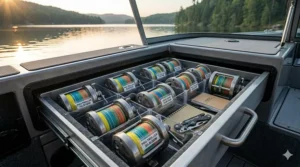
Mistake #5: Poor Storage and Maintenance
The Problem: Storing reels with lead core under tension causes flat-spotting where the line compresses against itself. This damages the lead core and creates weak spots.
The Solution: After each trip, loosen your drag completely. Some anglers even reverse-spool lead core onto a spare spool between seasons to relieve compression.
Maintenance and Storage Best Practices
Post-Trip Care
After each fishing session, especially in saltwater or zebra mussel-infested waters:
- Rinse Thoroughly: Fresh water removes salt, dirt, and organic matter that degrade outer sheaths
- Check for Damage: Run the line through your fingers feeling for flat spots, kinks, or frayed sections
- Loosen Drag: Completely release tension to prevent flat-spotting during storage
- Dry Before Storage: Moisture trapped on spools promotes mildew and degradation
Seasonal Maintenance
Spring Prep:
- Inspect entire length for winter storage damage
- Re-tie all connections (backing to lead core, lead core to leader)
- Check color visibility; faded colors may need replacement
- Test breaking strength on small sample sections
End of Season:
- Thoroughly clean and dry all lead core setups
- Store reels in climate-controlled environments (avoid freezing temperatures and extreme heat)
- Consider reverse-spooling to reduce compression
- Document which setups caught fish and at what depths for next season
When to Replace Lead Core
Even quality lead core eventually wears out. Replace when you notice:
- Flat spots that don’t round back out after deployment
- Fraying or visible damage to outer sheath
- Color fading that makes segment identification difficult
- Kinked sections where lead wire has broken inside
- Reduced sink rates (compromised lead integrity)
Most recreational anglers get 2-3 full seasons from quality lead core. Charter captains fishing 100+ days annually typically replace annually.
Advanced Techniques: Planer Boards with Lead Core
Running lead core with inline planer boards dramatically expands your trolling spread. Instead of four lines directly behind the boat, you can fish six or more rods covering 100+ feet of width.
Board Selection for Lead Core
OR12 Offshore Boards: Industry standard for lead core up to 7 colors. Lightweight yet pull sufficiently to handle lead core’s drag.
SST Pro Mag Boards: Larger boards for heavy lead core (8-10 colors) or when fishing big lures and strong currents.
Church Walleye Boards: Popular in walleye territory. Work great with lighter lead core setups (2-5 colors).
Setting Up Board Spreads
Outside Positions: Run your shortest lead core setups (2-3 colors) on outside boards. These fish highest in the water column.
Middle Positions: 4-5 color setups fill the middle depth zone.
Inside Positions (near boat): Longest lead core (6-10 colors) runs inside, fishing deepest depths.
This staggered approach prevents tangles when turning and covers multiple depths simultaneously. When fish hit a particular depth, you can quickly identify and duplicate the successful setup.
Board Release Techniques
When fighting fish on boards, allow the fish to pull the board back to your rod tip before releasing. This prevents line twist and makes landing much easier. Some anglers prefer adjustable tension releases that pop free automatically when fish strike hard.
Environmental Considerations and Lead Core Alternatives
The Lead Debate
Environmental concerns about lead in fishing tackle have prompted regulations in some jurisdictions. The U.S. Environmental Protection Agency has reviewed petitions to regulate lead fishing tackle due to wildlife impacts, particularly on waterfowl and loons that may ingest lost weights. While lead core line uses significantly less lead than traditional sinkers, awareness is growing.
Current Regulations: As of 2026, most U.S. states permit lead core fishing line. However, some Canadian provinces and European countries have restricted or banned lead fishing tackle. Always check local regulations.
Non-Lead Weighted Line Alternatives
Tungsten Core Line: Environmentally friendlier alternative with similar density (specific gravity 19.3 vs. lead’s 11.3). Actually sinks faster, but costs 2-3x more.
Steel Core Line: Much less dense than lead, requiring more line for equivalent depths. Less popular due to kinking issues.
Copper Wire: Not technically an alternative (no lead present), but achieves similar depths. Costs more, kinks easily, harder to manage.
Responsible Disposal
When replacing old lead core, don’t simply toss it in the trash. Research shows that lead fishing tackle can impact wildlife, particularly waterfowl that may ingest lost weights, so proper disposal matters. Many tackle shops and fishing organizations collect old lead core for proper recycling. The lead can be reclaimed and reused, keeping it out of landfills and waterways.
FAQs About Lead Core Fishing Line
❓ How deep does lead core fishing line go per color?
❓ What pound test lead core line is best for walleye trolling?
❓ How do you connect backing line to lead core?
❓ What is the strongest fishing line for trolling with lead core?
❓ How much backing line should you use with lead core?
Conclusion: Making Your Lead Core Choice
After testing dozens of lead core fishing lines across multiple species and water bodies, one truth emerges: there’s no single “best” option for everyone. Your perfect lead core depends on target species, fishing style, and budget constraints.
For recreational anglers building their first lead core setup, Sufix Performance Lead Core delivers proven reliability at reasonable prices. It’s the safe choice that simply works, season after season. Pair it with 18lb or 27lb test depending on your primary targets.
Budget-conscious fishermen running multiple setups should seriously consider Reaction Tackle Lead Core. You’ll sacrifice some premium features, but the performance-per-dollar ratio is tough to beat. Use the savings to build a more comprehensive arsenal of different color counts.
Tournament competitors and professional guides benefit most from Sufix 832 Advanced Lead Core or Western Filament Micro Lead. The enhanced depth efficiency and reduced line volume create measurable advantages when competition is fierce.
Structure trollers facing brutal rock reefs and mussel beds should invest in FINS Lead Core for its exceptional abrasion resistance. The added durability easily justifies the moderate price premium through extended lifespan.
Whatever you choose, remember that lead core mastery comes through experience, not equipment. Start with quality line, learn to read your sonar, document successful patterns, and adjust based on conditions. The color-coded simplicity of lead core removes guesswork from depth control—you just need to put in water time.
Before your next trip, verify your knot connections, inspect for damage, and calibrate your line counter. Lead core fishing isn’t complicated, but it rewards attention to detail. Once you experience the confidence of knowing exactly where your lures are running, you’ll wonder why you waited so long to try it.
Tight lines and precise depths await. Now go catch something deep!
Recommended for You
- Fiberglass vs Graphite Fishing Rods: 7 Best Tested in 2026
- 7 Best Centerpin Fishing Reels 2026
- 7 Best Fishing Lure Making Kits 2026
Disclaimer: This article contains affiliate links. If you purchase products through these links, we may earn a small commission at no additional cost to you.
✨ Found this helpful? Share it with your fishing buddies! 💬🤗
