
In This Article
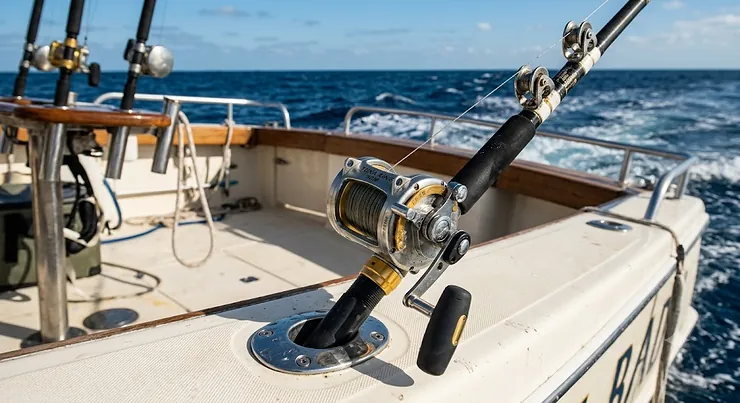
Somewhere off the edge of the continental shelf, a spread of lures is working through blue water, and every rod in the holder is quietly doing a job most anglers never think about until it fails. Choosing an offshore trolling rod isn’t like picking a rod for the neighborhood pond — the wrong blank folds under a marlin’s first run, and the wrong guides chew through 50-pound mono before lunch. This guide breaks down what actually separates a rod that survives a season of tuna and marlin trips from one that ends up as a cautionary tale on a boat ramp forum.
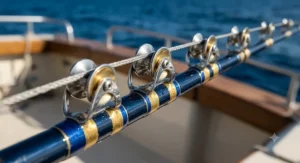
An offshore trolling rod is a heavy-power, moderate-action rod built specifically for pulling lures or bait behind a moving boat to target big pelagic species like tuna, marlin, wahoo, and mahi-mahi, typically featuring roller or ring guides, a reinforced glass or composite blank, and a reel seat rated for heavy drag pressure. Get that definition wrong and you’ll either overbuy for inshore fishing or underbuy for a fish that can strip 400 yards of line in seconds.
Below, we’ve researched seven real offshore trolling rod models spanning entry-level to serious tournament-grade builds, broken down what each one is actually good for, and built out the practical knowledge — rigging, maintenance, regulations — that a spec sheet alone won’t give you. According to the IGFA’s official international angling rules, tackle choice directly affects which catches even qualify for record consideration, so this isn’t just a shopping decision — it’s a fishing decision.
Quick Comparison Table
| Rod | Best For | Line Class | Price Range |
|---|---|---|---|
| Fiblink Bent Butt Offshore Trolling Rod | Budget big-game starter kit | 30-50 lb | Under $110 |
| Ugly Stik Bigwater Conventional Rod | Toughness on a budget | 20-40 lb | $90-150 range |
| Okuma Classic Pro Trolling Rod | Everyday charter workhorse | 20-50 lb | $110-180 range |
| PENN International VI Trolling Rod | USA-built mid-tier reliability | 20-80 lb | $250-350 range |
| Shimano Terez | Sensitivity plus backbone | 30-50 lb | Around $350-450 |
| Okuma Makaira Abalone Series | Premium composite performance | 50-130 lb | $375-600+ range |
| Melton Tackle Kona Stand-Up Rod | Tournament-grade custom build | 50-100 lb | $500-900+ range |
Looking at the spread above, the gap between the Fiblink Bent Butt Offshore Trolling Rod and the Melton Tackle Kona Stand-Up Rod isn’t just price — it’s the difference between a rod built to catch fish and a rod built to win a fighting-chair battle with a 400-pound blue marlin. Budget options cluster around E-glass composite blanks and stainless roller guides, while the premium end brings in custom tapers, aircraft-grade aluminum hardware, and components built to IGFA tournament spec. If you’re targeting school-size tuna a few miles out, the middle of this table covers you; if marlin or giant bluefin are the goal, lean toward the bottom three rows.
💬 Already know which tier fits your trip? Scroll down to check current pricing on the pick that matches your budget.
💬 Just one click — help others make better buying decisions too!😊
Top 7 Offshore Trolling Rods: Expert Analysis
1. Fiblink Bent Butt Offshore Trolling Rod — best true budget entry point
The standout here is simple: this is one of the few rods under $110 built specifically around a bent-butt design for fighting-chair and rod-holder use, not adapted from a general saltwater blank. The solid E-glass and graphite composite construction favors durability over sensitivity, which is the right trade-off for a first offshore rod — you want something that survives mistakes while you’re still learning to set drag and pump-and-reel properly. It’s rated up to 50-pound line, with stainless steel roller guides that keep friction low during long runs, and an aluminum alloy reel seat that locks a conventional reel down securely.
Based on the spec comparison against pricier composite rods, what most first-time buyers overlook is that this rod’s weight — around 20 ounces — actually works in its favor for extended trolling sessions, since a lighter setup means less fatigue pulling it in and out of the holder all day. Aggregated feedback across retail listings consistently points to the roller guide system holding up well against saltwater corrosion when rinsed after each trip, though a few reviewers note the blank flexes more than mid-tier rods under sustained heavy drag. This is the rod for someone testing whether offshore trolling is a hobby worth investing more into before buying a $400 setup.
Pros:
- ✅ Genuinely built for bent-butt, fighting-chair-style use
- ✅ Stainless roller guides resist corrosion well for the price
- ✅ Lightweight build reduces fatigue on long troll sessions
Cons:
- ❌ Blank flexes noticeably under sustained heavy drag
- ❌ Component upgrades (reel seat, guides) aren’t user-serviceable long-term
At a price point that stays comfortably under $110, this is a smart value pick for anglers testing the offshore waters before committing to a premium rod — check current price before you go.
2. Ugly Stik Bigwater Conventional Rod — toughest blank for the money
Ugly Stik built its reputation on the Clear Tip design, and the Bigwater series pushes that durability philosophy into serious offshore territory. The standout feature is the Ugly Tech blend of graphite and fiberglass, which trades a bit of sensitivity for a blank that’s remarkably resistant to snapping under shock loads — a real consideration when a tuna hits hard on the strike. The Ugly Tuff one-piece stainless steel guides are double-footed and welded, eliminating the insert pop-outs that plague cheaper guide systems after a season of saltwater exposure.
What the spec sheet won’t tell you, but reviewers note repeatedly, is that this rod’s ten-year warranty changes the math on buying it — you’re not just paying for the blank, you’re paying for a company that will stand behind a broken tip years down the line. Reviewers consistently report landing everything from sharks to smaller tuna and mahi-mahi on this rod without structural failure, even when paired with mismatched reels. The trade-off is that the Fuji reel seat, while solid, isn’t quite as refined as what you’ll find on the PENN or Shimano options further down this list. For anglers who fish hard and don’t baby their gear, this is arguably the best durability-per-dollar rod in the category.
Pros:
- ✅ Ten-year warranty backs up genuine long-term durability
- ✅ Double-footed stainless guides resist pop-outs and corrosion
- ✅ Handles mismatched or beginner reel setups without failing
Cons:
- ❌ Sensitivity lags behind graphite-forward competitors
- ❌ Fuji reel seat is functional but not premium-grade
Sitting in the $90-150 range depending on length and power, this rod earns its spot through sheer abuse tolerance — check current price and stock before booking your next charter.
3. Okuma Classic Pro Trolling Rod — best everyday charter workhorse
Okuma’s Classic Pro line has quietly become a staple on charter boats, and the standout feature is its chartreuse-tipped E-glass blank, which makes bite detection easier to see from across the cockpit — a small detail that matters when three anglers are watching six rod tips at once. Available in multiple lengths from around 7’6″ to 8’6″, it splits the difference between casting-adjacent versatility and true trolling backbone, making it a genuinely flexible mid-fleet rod rather than a one-trick pony.
Based on the spec comparison with the Fiblink and Ugly Stik options above it in price, the Classic Pro’s E-glass construction offers a noticeably smoother, more forgiving bend curve, which matters when a hard-fighting tuna makes sudden direction changes near the boat. Reviewers on major retailer listings frequently highlight the rod’s reliability across repeated charter use — a demanding environment where gear gets handled by anglers of wildly different skill levels every single day. The main knock, based on aggregated user feedback, is that the stock guides are serviceable rather than standout, and serious anglers often upgrade them after a season or two of heavy rotation.
Pros:
- ✅ Chartreuse tip improves visual bite detection at a glance
- ✅ Smooth, forgiving bend curve absorbs sudden direction changes
- ✅ Proven reliability across repeated commercial charter use
Cons:
- ❌ Stock guides are adequate but not a standout feature
- ❌ Less refined cosmetically than the PENN or Shimano options
Priced in the $110-180 range across most lengths, this is the rod charter captains buy in bulk because it just works — worth checking current availability if you want a proven all-rounder.
4. PENN International VI Trolling Rod — best USA-built mid-tier reliability
PENN’s International VI series has carried the “if in doubt, buy PENN” reputation in offshore circles for decades, and the standout feature is the one-piece tubular glass blank engineered specifically for maximum pressure transfer to the fish — meaning more of your pump-and-reel effort actually moves the fish instead of getting absorbed by blank flex. It’s built with AFTCO roller guides on select models, Fuji Deep Press Silicon Nitride guides on others, and a Stuart aluminum reel seat, with the whole rod assembled domestically using a mix of US and imported components.
Here’s what most buyers overlook about this model: the choice between a straight butt and bent butt configuration isn’t cosmetic — a bent butt provides real leverage advantage when fighting from a chair, while a straight butt suits stand-up harness fishing better. Reviewers and secondhand-market pricing both point to strong resale value, a reasonable proxy for how well these rods hold up structurally over years of use; it’s common to see well-maintained units resell for 60-70% of original price after several seasons. On paper, this rod sits squarely between hobbyist gear and full tournament rigs, which is exactly where most serious weekend offshore anglers actually need to be.
Pros:
- ✅ One-piece glass blank maximizes pressure transfer to the fish
- ✅ Strong secondhand resale value signals long-term durability
- ✅ Bent-butt and straight-butt configurations available for different styles
Cons:
- ❌ Heavier than composite-blank competitors at similar line class
- ❌ Premium AFTCO guide models push toward the top of this price tier
Expect to pay in the $250-350 range depending on line class and guide configuration — a fair mid-tier investment worth comparing before you commit.
5. Shimano Terez — best blend of sensitivity and backbone
Shimano built the Terez around a design philosophy that most heavy offshore rods ignore: that sensitivity and raw pulling power don’t have to be mutually exclusive. The standout feature is its sleek, tapered blank profile, which reduces fatigue during multi-hour fights without sacrificing the backbone needed to turn a big fish’s head. Starting around the $350 mark, it sits at a price point where buyers are comparing it directly against the PENN International VI and expecting a noticeable step up in feel.
What most buyers overlook about this model is that “sensitivity” in a trolling rod isn’t about feeling a nibble — it’s about feeling exactly when a fish changes its angle of pull mid-fight, which lets you adjust your stance and drag pressure before the line comes tight against an awkward load. Reviewers consistently note the comfortable, ergonomic grip design as a standout during long battles, a detail that matters far more on hour-two of a marlin fight than it does in a five-minute product demo. The honest trade-off is that Shimano’s premium components come with premium pricing relative to similarly rated PENN and Okuma rods, so buyers are paying partly for refinement rather than raw strength alone.
Pros:
- ✅ Rare balance of sensitivity and heavy-fish backbone
- ✅ Ergonomic grip reduces fatigue during extended fights
- ✅ Strong reputation for long-term reliability in saltwater use
Cons:
- ❌ Costs more than comparable-power PENN or Okuma rods
- ❌ Some of the price premium reflects refinement, not raw strength
In the $350-450 range depending on retailer and line class, this rod rewards anglers who fish often enough to feel the difference — check current pricing before your next offshore run.
6. Okuma Makaira Abalone Series Offshore Trolling Rod — best premium composite performance
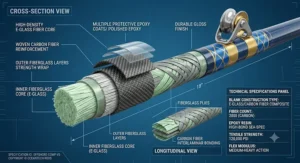
Sitting at the top of Okuma’s saltwater trolling lineup, the Makaira Abalone Series standout feature is its high-modulus composite blank construction, engineered specifically to handle 50-130 pound line classes without the weight penalty you’d expect from a rod built for that kind of pressure. Starting around $375 and climbing depending on configuration, this series targets anglers who troll for genuinely large pelagics — bigeye, bluefin, and blue or black marlin — rather than the more common school-size tuna and mahi that most of this list’s cheaper rods handle fine.
Based on the spec comparison against the PENN International VI, the Makaira’s composite blank offers a noticeably faster recovery after each pump-and-reel cycle, which translates to more usable leverage during a long fight rather than energy lost to blank oscillation. Aggregated reviewer sentiment across tackle shop listings highlights the rod’s premium hardware — machined aluminum components throughout — as a meaningful step up from Okuma’s own mid-tier Classic Pro line covered earlier in this guide. The honest downside is that this rod is genuinely overbuilt for smaller inshore-adjacent species; if you’re mostly targeting mahi and school tuna, you’re paying for capacity you won’t use.
Pros:
- ✅ Composite blank handles 50-130 lb classes without excess weight
- ✅ Faster recovery between pump-and-reel cycles than glass-blank rivals
- ✅ Premium machined aluminum hardware throughout
Cons:
- ❌ Overbuilt and overpriced for smaller pelagic species
- ❌ Higher-end pricing puts it out of casual-angler budget range
Priced from roughly $375 and up into the $500-600 range for heavier line classes, this is the rod for anglers who’ve already caught enough tuna to know they want to target something bigger — worth checking current stock and pricing.
7. Melton Tackle Kona Stand-Up Trolling Rod — best tournament-grade custom build
The Kona series standout feature is that it’s built on custom composite graphite/glass blanks specifically engineered for stiff-tip hook-setting power against big marlin and tuna lures, which generate serious drag resistance even before a fish strikes. Traditionally paired with PENN International reels, these rods come with long Hypalon foregrips for added leverage, a choice of AFTCO Unibutt or Storabutt configurations, and black-and-silver AFTCO guides triple-wrapped for extra durability under repeated heavy loading.
Here’s the honest analytical case for this rod: at $500 and climbing well past $900 for heavier configurations, it’s priced for anglers who fish tournaments or serious offshore trips often enough that gear failure isn’t an inconvenience — it’s a lost entry fee or a lost record fish. What the spec sheet won’t tell you, but the design choices make clear, is that the stiff-tip taper trades a bit of casting-adjacent versatility for hook-setting authority the moment a marlin or wahoo commits to a lure at trolling speed. Reviewers and secondhand tournament-circuit chatter both point to these rods holding their value and performance over many seasons when paired with proper reel maintenance, which matters given the investment involved.
Pros:
- ✅ Stiff-tip taper maximizes hook-setting power on big-game strikes
- ✅ Triple-wrapped AFTCO guides built for repeated heavy loading
- ✅ Holds performance and resale value across many tournament seasons
Cons:
- ❌ Premium custom pricing puts it out of reach for casual anglers
- ❌ Stiffer tip sacrifices some finesse versatility versus lighter rods
Running from around $500 into the $900+ range for heavier custom builds, this is the rod serious tournament anglers graduate into — check current configuration options and pricing before ordering.
Practical Usage Guide: Setting Up Your Offshore Trolling Rod
Getting a new offshore trolling rod ready for its first trip takes more than spooling line and hoping for the best. Start by matching line class to the rod’s rating exactly as printed on the blank — going lighter wastes the rod’s power, and going heavier risks a break during a hard strike. Seat your reel fully in the reel seat and hand-tighten the locking rings, then re-check them after the first hour on the water, since vibration from boat movement and trolling speed loosens hardware faster than most anglers expect.
In the first 30 days, the most common mistake is skipping the freshwater rinse after every single trip, even short ones — salt crystallizes in guide frames and reel seat threads within hours, not days, and that’s where corrosion damage starts on any offshore trolling rod regardless of price. Check guide inserts for hairline cracks weekly during heavy use, since a cracked insert will fray your line long before it visibly fails. For maintenance, a light coat of reel oil on exposed metal fittings every few trips prevents the white corrosion bloom common in humid coastal storage. Anglers who build this rinse-and-inspect habit early consistently report their rods lasting multiple seasons longer than those who store gear wet and dirty after a good day of fishing.
Real-World Scenarios: Matching the Rod to Your Trip
Consider three different anglers planning their next offshore trip. A weekend angler running a 24-foot center console a few miles out for mahi-mahi and school-size tuna, fishing maybe eight trips a year, is well served by the Okuma Classic Pro Trolling Rod or the Ugly Stik Bigwater Conventional Rod — both handle that workload without the angler paying for capacity they’ll never use. A more committed weekend warrior chasing yellowfin tuna and the occasional white marlin on a 30-foot sportfisher, fishing twenty-plus days a season, fits better with the PENN International VI Trolling Rod or the Shimano Terez, where the extra durability and sensitivity earn their keep over a full season of hard use.
Then there’s the tournament-circuit angler targeting blue marlin and giant bluefin tuna specifically, entering three or four major offshore tournaments a year where a single lost fish can mean a lost entry fee and a damaged reputation with the crew. That angler’s budget genuinely supports the Okuma Makaira Abalone Series or the Melton Tackle Kona Stand-Up Rod, since the cost of gear failure at that level far outweighs the price difference between tiers. Matching your actual fishing frequency and target species to the right tier — rather than buying the most expensive rod available — is usually the smarter long-term financial decision.
✨ Not sure which tier fits your trips? Compare current pricing across all seven picks above before you decide.
How to Choose an Offshore Trolling Rod
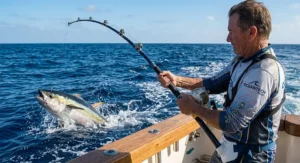
Picking the right offshore trolling rod comes down to matching a handful of specific criteria to your actual fishing style, rather than chasing the highest-rated option on the shelf.
- Match line class to target species. A rod rated 20-30 lb suits school tuna and mahi; 50-80 lb or higher is appropriate for marlin and larger bluefin.
- Choose blank material based on fishing frequency. E-glass composite blanks favor durability for occasional trips; higher-modulus composites reward frequent anglers with better sensitivity and recovery.
- Prioritize roller guides for heavy mono or dacron lines. Ring guides work fine with braid but generate more friction and heat with heavier monofilament under sustained drag.
- Decide between straight and bent butt configurations. Bent butts suit fighting-chair use; straight butts work better with stand-up harnesses.
- Check reel seat material and locking mechanism. Machined aluminum double-locking seats resist loosening far better than basic graphite-composite seats.
- Factor in rod length for your boat size. Shorter 5’6″-6’6″ rods suit smaller boats and tighter cockpits; longer rods need more clearance for fighting fish boat-side.
- Set a realistic budget based on trip frequency, not aspiration. A rod you use twenty days a year justifies more investment than one used four times.
Deep Sea Trolling Rod vs Standard Boat Rod: What’s the Real Difference
The phrase deep sea trolling rod often gets used interchangeably with “offshore trolling rod,” but there’s a meaningful distinction worth understanding before you buy. A standard boat rod is a general-purpose category that includes bottom fishing, jigging, and light trolling rods, typically built with more moderate power ratings and ring guides suited to a wide range of techniques. A true deep sea trolling rod, by contrast, is purpose-built for sustained, high-drag pulling at trolling speed in open water far from shore, which means heavier power ratings, roller or reinforced guides, and hardware rated for extended fights rather than quick hook-sets.
The practical difference shows up the moment a big fish strikes. A standard boat rod pressed into deep sea trolling duty will often flex too much under sustained heavy drag, robbing the angler of leverage during a long fight and putting more strain on guide inserts than they’re rated to handle. Rods like the PENN International VI Trolling Rod and Okuma Makaira Abalone Series are engineered specifically around that sustained-load scenario, with reinforced butt sections and guide frames built to shed heat and friction over a fight that can last well over an hour. If your trips regularly go past the 20-mile mark chasing tuna or marlin, investing in gear built specifically as a deep sea trolling rod — rather than a repurposed general boat rod — pays off the first time a big fish decides to test your tackle.
Tuna Rod Essentials: Matching Power to the Species
Not every tuna rod needs to be built like a marlin setup, and buying more rod than the species requires is one of the most common overspending mistakes in this category. School-size yellowfin and blackfin tuna in the 20-40 pound range are comfortably handled by rods in the 20-30 lb class, like the Ugly Stik Bigwater Conventional Rod or Okuma Classic Pro Trolling Rod, both of which have enough backbone without being needlessly stiff for a fish that fights hard but isn’t enormous.
Once you’re targeting bigger yellowfin, bigeye, or school bluefin in the 80-150 pound range, the calculus changes — a rod rated 50-80 lb, such as the PENN International VI Trolling Rod, gives you the pumping power to move serious weight without the fight dragging on for exhausting hours. Reviewers who fish tuna specifically consistently emphasize that a rod’s recovery speed after each pump-and-reel cycle matters more for tuna than for marlin, since tuna tend to circle and dive repeatedly rather than making the long, blistering runs marlin are known for. A tuna rod under-matched to fish size means longer fights, more angler fatigue, and — worst case — a fish lost to exhaustion-related hook pull before it ever reaches the gaff.
Marlin Fishing: Why Rod Choice Makes or Breaks the Fight
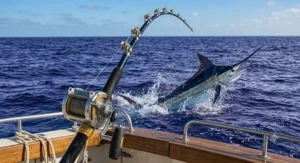
Marlin fishing puts different demands on tackle than almost any other offshore pursuit, because the first 30 seconds after a strike often decide whether the fight is even winnable. A marlin’s initial run can strip 300-400 yards of line in under a minute, and a rod without adequate backbone in the butt section will bend past its effective leverage point rather than transferring pressure to slow the fish. This is precisely the scenario the Okuma Makaira Abalone Series and Melton Tackle Kona Stand-Up Rod are engineered around, with stiffer butt tapers and reinforced guide frames built to survive that initial explosive run without structural stress.
Beyond raw power, marlin fishing rewards rods with roller guides specifically, since braided dacron and heavy mono under high-speed running load generate real friction heat that ring guides handle less gracefully over an extended fight. According to NOAA Fisheries’ Atlantic bluefin tuna program page, similarly massive pelagic species are subject to strict retention regulations, and the same regulatory scrutiny extends to Atlantic marlin species, most of which are catch-and-release only for U.S. recreational anglers — meaning your rod and reel combo needs to handle not just the hookup, but a controlled, healthy release as well. A bent-butt configuration paired with a fighting chair remains the standard setup for serious marlin fishing, giving the angler leverage that a stand-up harness alone often can’t match on genuinely large fish.
Big Game Fishing Rod Features That Actually Matter (And Those That Don’t)
Marketing copy on big game fishing rod listings loves to highlight flashy details that don’t actually affect performance where it counts. Guide count, for instance, matters less than guide quality and spacing — a rod with fewer, well-placed roller guides consistently outperforms one with more numerous but lower-quality ring guides under heavy drag. Similarly, cosmetic details like blank color or handle graphics have zero bearing on fight performance, despite often being the most prominently marketed feature on budget rods.
What actually matters: reel seat locking mechanism strength, guide frame material (stainless steel resists saltwater corrosion far better than chrome-plated alternatives), and butt section reinforcement, since that’s where the majority of fighting leverage gets applied. Blank taper — how gradually or aggressively the rod’s diameter narrows from butt to tip — genuinely affects how power transfers during a fight, with a moderate taper generally favored for offshore trolling because it loads progressively rather than concentrating stress at one point. Reviewers who’ve fished multiple big game fishing rod tiers consistently note that once you’re above the budget category, the performance differences narrow considerably, and comfort features like grip material start mattering more than raw power specs.
Bluewater Trolling: Spread Strategy and Rod Placement
Bluewater trolling success depends as much on how you position and stagger your rods as it does on which offshore trolling rod you’re using. A typical spread runs four to six rods at varying distances behind the boat — short riggers close in, long riggers further back, and a shotgun line well behind the pack — specifically to avoid lure interference while covering a wider column of water where fish might be holding. Rod placement in the holders matters too: outriggers should sit at an angle that keeps line tension consistent even as the boat rolls with the swell, since slack line is a leading cause of missed strikes during active bluewater trolling.
Matching rod power to position in the spread is a detail many newer anglers overlook. Heavier rods, like the PENN International VI Trolling Rod or Shimano Terez, typically go in the corner and long-rigger positions where the biggest fish tend to strike, while lighter rods can run the shotgun or flat lines where smaller mahi and school tuna are more common targets. Successful bluewater trolling also depends on constant lure and speed adjustment based on water conditions — reviewers with charter experience consistently note that a spread fished at the wrong trolling speed underperforms regardless of how good the rods and reels are, since bluewater trolling is ultimately a presentation game as much as a tackle game.
Long-Term Cost & Maintenance
The sticker price of an offshore trolling rod tells only part of the ownership story — total cost of ownership depends heavily on maintenance habits and how the rod holds up across repeated saltwater exposure. A budget rod like the Fiblink Bent Butt Offshore Trolling Rod, priced under $110, might need guide or reel seat replacement within a few seasons of heavy use, while a mid-tier rod like the PENN International VI Trolling Rod typically holds original performance for five-plus seasons with proper rinse-and-inspect habits.
Running the numbers, a $100 budget rod replaced every two seasons costs roughly $50 per season over a decade, while a $300 mid-tier rod lasting seven-plus seasons costs closer to $43 per season — meaning the pricier rod can actually be the better long-term value for anglers who fish regularly. Premium rods like the Okuma Makaira Abalone Series or Melton Tackle Kona Stand-Up Rod flip this math again for occasional anglers, since their higher upfront cost only pays off across the kind of heavy annual use that justifies premium componentry in the first place. The practical takeaway: estimate your annual trip count honestly before deciding which tier actually delivers the best cost-per-use value for your specific fishing habits.
Safety, Regulations & Compliance for Offshore Big-Game Anglers
Offshore trolling for tuna and marlin isn’t just a gear decision — it intersects directly with federal fisheries regulations that every angler is responsible for knowing before heading out. bag limits for bluefin tuna in the Atlantic, Gulf, and Caribbean vary by permit, vessel type, fish size, and region according to NOAA Fisheries’ recreational bluefin tuna bag limit page, and these limits are adjusted throughout the season based on quota tracking, so checking current regulations before every trip — not just once a year — is essential for staying compliant. Most Atlantic marlin species are catch-and-release only for U.S. recreational anglers, which circles back to why roller guides and proper drag settings matter: a fish that must be released needs to be fought efficiently and released healthy, not exhausted past the point of survival.
Beyond regulatory compliance, basic safety practices matter enormously when fighting big fish with heavy tackle. Always clear the cockpit of loose gear before a hookup, since a big-game rod under load stores serious energy that becomes dangerous if a line or leader snaps unexpectedly. Wearing a fighting belt or harness isn’t just for comfort — it distributes load away from the lower back during extended fights, reducing injury risk on rods rated 50 lb and above. Keeping gaffs, tag poles, and release tools within easy reach before the fight begins, rather than searching for them mid-battle, is a habit every experienced offshore crew follows for both safety and compliance with release requirements.
Common Mistakes When Buying an Offshore Trolling Rod
The single most common mistake is buying rod power based on the biggest fish an angler hopes to catch someday, rather than the fish they’ll realistically encounter most often — this leads to overspending on capacity that goes unused trip after trip. A close second is ignoring guide material in favor of blank specs alone; a great blank paired with cheap chrome guides will still corrode and fail well before the blank shows any wear. Buyers also frequently overlook reel seat compatibility, assuming any reel fits any seat comfortably, when in fact a poorly matched reel-to-seat combination can create wobble that stresses the blank unevenly during a fight.
Another frequent error is skipping the freshwater rinse-and-inspect routine covered earlier in this guide, treating it as optional rather than the single highest-impact maintenance habit available. Finally, many first-time buyers underestimate how much rod length affects usability on their specific boat — a 7-foot rod that feels fine in a tackle shop can be genuinely awkward to fight with in a tight center-console cockpit. Avoiding these five mistakes generally matters more to long-term satisfaction than any single spec difference between comparably priced rods.
Frequently Asked Questions
❓ What line class do I need for an offshore trolling rod targeting tuna?
❓ Are roller guides necessary on a deep sea trolling rod?
❓ How much does a good big game fishing rod cost?
❓ Can I use the same rod for both tuna rod duty and marlin fishing?
❓ What's the biggest maintenance mistake with bluewater trolling gear?
Conclusion
Choosing the right offshore trolling rod ultimately comes down to being honest about how often you fish and what you’re actually targeting, rather than chasing the most impressive spec sheet in the tackle shop. For occasional trips after mahi and school tuna, the Ugly Stik Bigwater Conventional Rod or Okuma Classic Pro Trolling Rod deliver real durability without overspending. Anglers fishing more regularly for tuna and the occasional marlin will get more consistent long-term value from the PENN International VI Trolling Rod or Shimano Terez, while serious tournament-circuit anglers chasing marlin and giant tuna have good reason to invest in the Okuma Makaira Abalone Series or Melton Tackle Kona Stand-Up Rod.
Whichever tier fits your trips, remember that gear longevity depends as much on rinse-and-inspect habits as it does on price paid — a $150 rod maintained properly will often outlast a $400 rod stored wet and salty. Pair the right offshore trolling rod with sound rigging, an honest read of current regulations, and realistic expectations about your target species, and you’ll spend a lot more time fighting fish and a lot less time troubleshooting gear failures at the worst possible moment.
✨ Don’t Miss These Exclusive Deals!
🎣 Ready to gear up for your next offshore trip? Click on any of the seven picks above to check current pricing and availability before they head back out of stock. The right offshore trolling rod today means fewer lost fish and a lot more stories worth telling tomorrow!
Recommended for You
- 7 Best Inshore Saltwater Rod Picks for 2026 (Budget to Pro)
- Lake Trout Trolling Rod: 7 Best Picks for 2026
- 7 Best Tenkara Rod Trout Picks for 2026: Honest Buyer’s Guide
Disclaimer: This article contains affiliate links. As an Amazon Associate, I earn from qualifying purchases. If you purchase products through these links, we may earn a small commission at no additional cost to you.
✨ Found this helpful? Share it with your friends! 💬🤗
