
In This Article
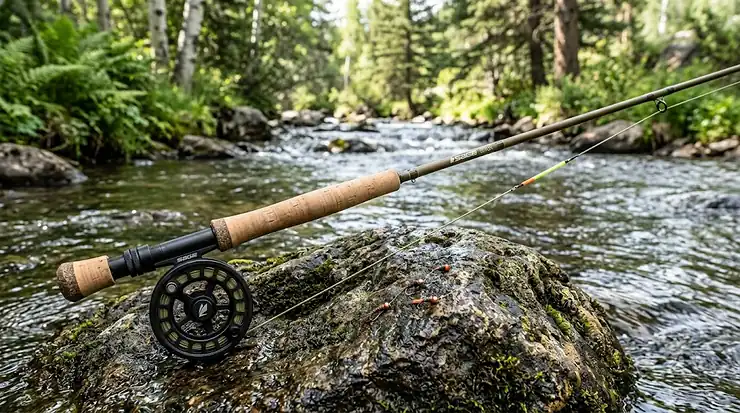
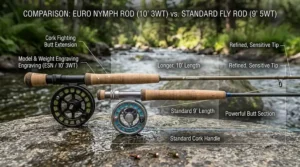
Somewhere on a tailwater in Pennsylvania, a guide is watching a client miss six strikes in a row because the rod in his hands is doing him no favors. That’s usually where the euro nymphing rod conversation starts — not in a tackle shop, but on the water, mid-frustration, wondering why the guy next to him is hooking up every other drift. A euro nymphing rod is a long, light, ultra-sensitive fly rod — typically 10 to 11 feet, rated for a 2- to 4-weight line — built to transmit the faintest tap of a trout through the blank and into your hand, with no floating indicator to slow down the message. It’s a different tool for a different job, and picking the wrong one is like trying to hear a whisper through a brick wall.
This guide exists because most “best rod” roundups read like spec sheets copied from a manufacturer’s website, and that helps nobody actually standing in a river. We dug into real specifications, real aggregated customer feedback, and genuine head-to-head positioning across seven current rods spanning budget, mid-range, and premium tiers — then explained what each number actually means once you’re wading through pocket water at 6 a.m. Whether you’re just discovering tight line nymphing or you’re chasing marginal gains for your next regional qualifier, the goal here is the same: match you with a rod suited to your water, your budget, and your skill level, with zero fluff and zero fabricated hands-on claims. Let’s get into it.
Quick Comparison Table
| Rod | Length / Weight | Action | Price Range | Best For |
|---|---|---|---|---|
| Sage ESN HD | 10’6″ / 3wt | Medium-fast | $950-$1,050 range | Serious tight-liners wanting the benchmark |
| Thomas & Thomas Contact II | 10′ / 3wt | Medium-fast | $850-$950 range | Feel-driven anglers, small-fly precision |
| Orvis Recon | 10′ / 3wt | Fast-medium | $400-$600 range | Best all-around value upgrade |
| Echo Shadow X | 10’6″ / 3wt | Medium | $430-$480 range | Lightweight all-day comfort |
| Cortland Competition MK2 | 10’6″ / 3wt | Medium-fast | around $470-$520 | Aspiring competition anglers on a budget |
| Maxcatch Nano IM12 | 11′ / 3wt | Medium-fast | under $150 | Budget anglers wanting extra reach |
| Wild Water AX3-100-4 | 10′ / 3wt | Fast | under $100 | First-time euro nymphers, backup rod |
A quick scan of that table tells a clear story: you don’t need to spend four figures to start tight-lining effectively, but the jump from “functional” to “effortless” does track fairly closely with price. Based on the spec comparison, the biggest divide isn’t length or weight rating — nearly every rod here lands in the 10 to 11-foot, 3-weight sweet spot — it’s blank recovery speed and tip sensitivity, the two traits that separate a rod that merely casts a euro rig from one that actually helps you feel a soft take in cold, fast water. Budget-conscious anglers should note that the Wild Water and Maxcatch options sacrifice some of that fine sensitivity for a price that removes any excuse not to try the technique.
💬 Just one click — help others make better buying decisions too!😊
💬 Found a rod that fits your budget already? Bookmark this page and share it with your fishing buddy before your next river day!
Top 7 Euro Nymphing Rods: Expert Analysis
1. Sage ESN HD — the benchmark rod every other euro rod gets measured against
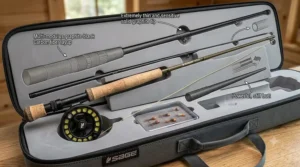
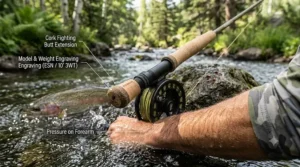
Sage built the ESN HD specifically for European-style nymphing, and it shows the moment you load it with nothing but a weighted jig fly. Key specs first: the rod uses Sage’s KonneticHD blank construction in a 10’6″, 3-weight configuration with a medium-fast action, and it ships with Sage’s lifetime warranty for the original owner. In practice, that KonneticHD layup translates to exceptionally fast recovery — the tip stops vibrating almost instantly after the “cast,” which matters enormously in euro nymphing because a wobbling tip masks the subtle pull of a strike. This is the rod serious tight-liners graduate to once they’ve decided the technique isn’t a passing phase; casual anglers dabbling in a single trip a year will struggle to justify the price relative to the marginal gains over a $450 rod. Reviewers consistently report that the ESN HD feels noticeably lighter in the hand during long days of high-sticking than its physical ounce rating suggests, and a common thread in aggregated feedback is that anglers miss fewer subtle eats after switching over from general-purpose 9-foot rods. The one recurring gripe worth noting: several users and shop reviewers point out the ESN lacks a fighting butt, which is now close to standard on competing European nymphing rod designs and can leave your palm working harder on long fights with bigger fish.
Pros:
- ✅ Industry-benchmark sensitivity for detecting soft strikes
- ✅ Exceptionally fast blank recovery reduces false movement
- ✅ Lifetime warranty backs a lifetime of hard fishing
Cons:
- ❌ No fighting butt, unlike most rivals at this price
- ❌ Premium price hard to justify for occasional anglers
Expect to pay in the $950-$1,050 range at the time of research; for anglers who tight-line 20-plus days a season, the value case is straightforward, but occasional weekend warriors may get 90% of the performance from a rod costing half as much.
2. Thomas & Thomas Contact II — hybrid glass-carbon blank built for feel over flash
The Contact II updates T&T’s original Contact series with a proprietary resin system and a carbon-fiberglass hybrid blank, offered in 2- through 4-weight options with an optional 10’6″ 6-weight for bigger water. That fiberglass-carbon blend is the headline feature, and here’s what it means on the water: fiberglass adds a touch of forgiving flex that carbon alone doesn’t have, so the rod loads more progressively on the “lob” cast euro nymphing relies on, while still snapping back fast enough to keep your sighter readable. Anglers who already fish light dry-dropper rigs on freestone creeks tend to appreciate this blend most, since it bridges finesse presentation with the strike-detection demands of tight lining. Aggregated reviewer sentiment consistently highlights the tip sensitivity as class-leading — several fly shop write-ups single out strike transmission that lets anglers feel takes “that would go unnoticed with lesser equipment.” The tradeoff for that sensitivity is a narrower forgiveness window; miscast presentations and tailing loops are less forgiven than on a stiffer, all-carbon blank, so newer casters may find the learning curve slightly steeper than with the Recon or Echo Shadow X.
Pros:
- ✅ Hybrid blank gives a distinctive progressive-feel loading
- ✅ Class-leading strike transmission per aggregated reviews
- ✅ Down-locking reel seat and guide spacing built for balance
Cons:
- ❌ Less forgiving of casting errors than stiffer all-carbon rods
- ❌ Premium price close to the Sage ESN HD
Priced around $850-$950, the Contact II sits just under the ESN HD and appeals most to anglers who value tip feel and progressive loading over outright stiffness — think technical spring-creek nymphers more than big-water dredgers.
3. Orvis Recon — the rod most upgraders should actually buy first
The Orvis Recon Euro Nymph series, developed with input from competitive nymph anglers, comes in a 10-foot length in 2-, 3-, and 4-weight models with a fast-to-medium action and Orvis’s 25-year warranty. What that warranty means in practice is significant: euro nymphing rods take abuse — car doors, rock scrambles, overzealous hooksets on stubborn snags — and Orvis will repair or replace a broken rod for a modest handling fee for as long as you own it, which meaningfully lowers the real cost of ownership over a decade of fishing. On the water, the 10-foot length (slightly shorter than the 10’6″-11′ rods on this list) is a deliberate design choice that makes the Recon noticeably easier to manage for anglers transitioning from a standard 9-foot trout rod, without sacrificing the reach needed for a drag-free drift in medium-sized rivers. What most buyers overlook about this model is that it borrows core technology from Orvis’s flagship Helios series at a fraction of the price, which is precisely why fly shop reviewers repeatedly call it the mid-range sweet spot. Aggregated customer sentiment is remarkably consistent — “light in the hand,” “great sensitivity,” and “pleasure to fish” show up across independent shop write-ups and guide endorsements alike.
Pros:
- ✅ Helios-derived technology at a mid-tier price point
- ✅ 25-year warranty dramatically lowers long-term cost of ownership
- ✅ Shorter 10-foot length eases the transition from standard rods
Cons:
- ❌ Slightly less reach than 10.5-11 foot rivals on big rivers
- ❌ Cork handle quality draws occasional criticism versus premium rivals
Pricing generally falls in the $400-$600 range depending on retailer and configuration, and for intermediate anglers ready to leave beginner gear behind, this is consistently the value leader among true European nymphing rod specialists.
4. Echo Shadow X — the lightest all-day rod that won’t wreck your shoulder
Echo’s Shadow X is built in a 10’6″, 3-weight configuration with a medium action, positioned as an accessible but purpose-built euro nymph rod rather than a repurposed general trout rod. The medium action (rather than fast) is the key spec here, and it matters more than most buyers realize: a softer action protects light tippet on the hookset and absorbs the shock of a sudden take better than a stiffer blank, which reduces break-offs when you’re running 6X or 7X to size-18 midge patterns. Physically, the Shadow X is noted repeatedly in shop reviews and buyer feedback as one of the lightest swing-weight options in its price bracket, a detail that stops being trivial around hour four of high-sticking a run with your arm extended. On paper this means less fatigue on long guide days or tournament sessions; reviewers consistently back that up, describing noticeably less shoulder and wrist strain compared to stiffer, heavier competitors. The honest tradeoff is that the softer, lighter build gives up a bit of the lightning-fast recovery you get from the ESN HD or Contact II, so distance and punching into wind aren’t its strong suit.
Pros:
- ✅ Genuinely lightweight build reduces fatigue on long days
- ✅ Medium action protects light tippet on aggressive hooksets
- ✅ Purpose-built for tight lining, not a repurposed trout rod
Cons:
- ❌ Slower recovery than fast-action premium rivals
- ❌ Struggles more in wind than stiffer-action rods
Expect a $430-$480 price range, making the Shadow X a strong pick for anglers who fish small, technical water and prioritize comfort and tippet protection over raw casting distance.
5. Cortland Competition MK2 — proof that comp pedigree doesn’t require a comp budget
The Competition MK2 succeeds Cortland’s original Competition Nymph rod, which by most accounts is the rod that introduced a lot of American anglers to euro nymphing in the first place. Built in a 10’6″, 3-weight configuration with a down-locking reel seat and integrated fighting butt as standard, the MK2 checks the boxes that budget-tier rods often skip. Here’s what that reel seat and fighting butt combination means practically: the down-locking design keeps your reel from creeping forward during the constant hand-shuffling of tight-line casting, while the fighting butt gives you a brace point against your forearm on longer fights — both details borrowed directly from full competition-circuit rod design. Shop reviewers who’ve tested the MK2 alongside far pricier rods describe “excellent tip sensitivity with adequate reserve power,” a notably strong showing given the price gap to rods like the ESN HD. The honest catch, and it’s worth saying plainly: the components and overall build quality read as more generic and utilitarian than the American-made premium rods on this list, which is exactly the tradeoff you’d expect at this price.
Pros:
- ✅ Comp-standard fighting butt and down-locking seat included
- ✅ Strong tip sensitivity relative to its price bracket
- ✅ Loyal following among budget-focused tight-line anglers
Cons:
- ❌ Components feel generic next to premium American-made rods
- ❌ Blank recovery noticeably slower than top-tier competitors
Priced around $470-$520, the Competition MK2 is the rod to buy if you want a genuine competition-style setup without competition-level spending, and it’s a favorite recommendation for anglers stepping up from a Wild Water or Maxcatch first rod.
6. Maxcatch Nano IM12 — the longest reach you’ll find under $150
Maxcatch has built a reputation on delivering capable gear at prices that undercut the established brands, and the Nano IM12 in its 11-foot, 3-weight configuration is a good example of why. It’s built with IM12 graphite and what Maxcatch calls a “Nano+” resin system aimed at improving strength-to-weight ratio, and it’s backed by a 10-year warranty — an unusually long guarantee for a rod at this price point. The 11-foot length is the standout spec: it’s a foot longer than most mid-range competitors, which translates directly into extra reach across wide runs and the ability to keep more line off conflicting currents for a cleaner drift. That extra length is a double-edged sword, though — on paper it improves drift control, but reviewers and shop staff note it also demands more careful casting technique, since longer blanks amplify small timing errors more than shorter ones do. Aggregated feedback on the Nano IM12 tends to focus on surprising performance-per-dollar, with several buyers explicitly comparing it favorably to rods “costing three times more,” while acknowledging the fit and finish (guide wraps, cork quality) doesn’t match premium options.
Pros:
- ✅ 11-foot length gives exceptional reach for the price
- ✅ 10-year warranty is unusually generous at this tier
- ✅ Strong performance-per-dollar per aggregated buyer feedback
Cons:
- ❌ Extra length amplifies casting timing errors for beginners
- ❌ Cork and guide-wrap finish trail premium competitors
At under $150, the Nano IM12 is arguably the best-value entry point for anglers on wider rivers who want more reach than a 10-foot budget rod can offer without stretching into mid-range pricing.
7. Wild Water AX3-100-4 — proof a sub-$100 rod can genuinely tight-line
Rounding out the list at the true entry-level tier, the Wild Water AX3-100-4 is a 10-foot, 4-piece rod built from IM8 graphite, weighing roughly 4.6 ounces, with a fast action rated for a 3-weight line. IM8 graphite sits below the higher-modulus IM12 and premium proprietary blends used in pricier rods, and the practical effect is a rod that’s a touch heavier and less refined in recovery — but still fast enough to keep a euro rig taut and readable. That’s the headline value proposition here: independent shop testing and buyer reviews repeatedly describe this rod as outperforming its price class, specifically citing fast-action handling of tight line nymphing that holds up against rods costing considerably more. For a first-time euro nympher unsure whether the technique will stick, or an experienced angler who wants a cheap backup rod to leave in the truck, the AX3-100-4 removes the financial barrier entirely. The honest limitation is that build quality and guide componentry are noticeably more basic, and the rod won’t reward the kind of ultra-light tippet finesse that competition-grade blanks are built for.
Pros:
- ✅ Genuinely fast action for a true budget-tier price
- ✅ 4-piece breakdown travels easily in a compact case
- ✅ Removes the cost barrier to trying the technique
Cons:
- ❌ Heavier swing weight than premium graphite blanks
- ❌ Basic componentry limits fine-tippet finesse fishing
At under $100, this is the rod to recommend to a friend who keeps asking “should I even try this euro nymphing thing?” — it’s cheap enough that the answer is simply yes.
Full Lineup Comparison: Specs, Price Ranges & Best-For
| Rod | Blank Material | Fighting Butt | Warranty | Best For |
|---|---|---|---|---|
| Sage ESN HD | KonneticHD carbon | No | Lifetime | Dedicated tight-liners chasing max sensitivity |
| Thomas & Thomas Contact II | Carbon/fiberglass hybrid | Yes | Limited lifetime | Technical, feel-driven presentation anglers |
| Orvis Recon | Helios-derived carbon | Yes | 25 years | Best overall value upgrade |
| Echo Shadow X | Proprietary carbon | Yes | Limited lifetime | Long days, tippet protection, small water |
| Cortland Competition MK2 | Carbon composite | Yes | Limited lifetime | Comp-style setup on a budget |
| Maxcatch Nano IM12 | IM12 graphite | Yes | 10 years | Extra reach on wider rivers, tight budget |
| Wild Water AX3-100-4 | IM8 graphite | No | Lifetime | First-timers and backup rods |
Looking at warranty terms alongside price tells a story the spec sheets alone don’t: the Orvis Recon’s 25-year coverage and the Wild Water’s lifetime guarantee both meaningfully offset their purchase price over a decade of use, while the Sage ESN HD’s lack of a fighting butt is a real, if minor, ergonomic gap given its flagship pricing. If you’re weighing two similarly priced rods, warranty terms and included hardware like a fighting butt or down-locking seat deserve at least as much attention as the marketing copy around blank technology.
Euro Nymphing Rods vs Traditional Indicator Rods: Benefits Compared
| Factor | Euro Nymphing Rod | Traditional Indicator Rod |
|---|---|---|
| Strike detection | Direct, tactile, immediate | Delayed, visual, indicator-dependent |
| Drift control | Excellent in fast/technical water | Weaker in complex currents |
| Casting distance | Limited (short lob cast) | Strong (true fly-line casting) |
| Versatility | Poor for dries/streamers | Good all-around performance |
| Learning curve | Moderate, unfamiliar mechanics | Familiar to most fly anglers |
The core tradeoff is versatility for sensitivity: a dedicated European nymphing rod will out-fish a traditional 9-foot rod in technical pocket water nine times out of ten, but that same specialization makes it a poor choice for the angler who wants one rod to cover dries, streamers, and nymphs on a single trip. Reviewers and guides alike tend to land on the same practical advice — keep a traditional rod in the truck for versatility, but bring the euro rod out the moment the water gets technical or the fish get selective about drift quality.
💬 Not sure which style fits your local water? Share this comparison with your fishing crew and settle the debate!😊
Practical Usage Guide: Setting Up and Breaking In Your Rod
Getting a new euro nymphing rod dialed in takes more than pulling it out of the tube. Start by rigging a proper leader system rather than a shortened version of your old indicator setup — a tapered mono or fluorocarbon leader in the 20-25 foot range, ending in a colored sighter section and a tippet ring, is the standard French/Czech-influenced configuration most anglers land on after experimentation. Before your first trip, flex the rod under moderate load in your yard or a park to get a feel for where it loads — this single habit prevents the most common first-30-days mistake, which is overpowering the cast like a traditional fly rod instead of using the gentle “lob” motion these blanks are designed for.
Maintenance is minimal but not optional: rinse guides and reel seat threads after every outing (salt-free freshwater gear still accumulates grit that wears ferrules over time), and check ferrule fit each season since carbon blanks can develop slight play with heavy use. A common optimization trick among experienced tight-liners is balancing the rod with a slightly heavier reel than the line weight would suggest — euro rods are so light up top that an underweight reel makes the whole rig feel tip-heavy and fatiguing during long high-sticking sessions. Finally, resist the urge to false-cast; it’s one of the most common mistakes new euro nymphers make in their first month, and it does nothing but wear out your shoulder and telegraph your presence to spooky fish.
Real-World Scenarios: Matching the Rod to the Angler
Consider a college student in Colorado fishing a tight, brushy freestone creek three times a week between classes on a strict budget — the Wild Water AX3-100-4 or Maxcatch Nano IM12 makes obvious sense here, since neither purchase represents a financial risk if the technique doesn’t stick, and both are genuinely capable of catching the small, eager trout typical of that water.
Now picture a guide in Montana running eight-hour float-and-wade trips five days a week on bigger, technical tailwaters where client hookup rates directly affect tips and referrals — that’s a clear case for the Sage ESN HD or Thomas & Thomas Contact II, where the marginal gain in strike detection compounds across hundreds of drifts a week and genuinely changes outcomes.
Finally, think about a weekend angler in Pennsylvania who fishes limestone spring creeks twice a month and wants a noticeable step up from a beginner rod without a four-figure commitment — the Orvis Recon or Echo Shadow X hits that mid-range sweet spot, delivering most of the sensitivity gains of the premium tier without the premium price, and both carry warranties that make sense for someone investing in gear meant to last a decade or more.
Problem → Solution: Fixing Common Euro Nymphing Rod Frustrations
Problem: Missing subtle strikes in cold water. Trout takes get softer as water temperatures drop, and a rod with slow recovery masks that subtlety. Solution: prioritize blank recovery speed over price when shopping — the Sage ESN HD and Thomas & Thomas Contact II are built specifically to solve this.
Problem: Arm fatigue after a few hours of high-sticking. Solution: check the manufacturer’s listed swing weight, not just overall rod weight, and consider the Echo Shadow X, which is repeatedly singled out in reviews for its lighter feel in hand.
Problem: Snapping light tippet on hooksets. Solution: a medium rather than fast action absorbs shock more forgivingly — again, the Shadow X or Orvis Recon’s more moderate tapers help here compared to stiffer, faster blanks.
Problem: Struggling to cast in windy conditions. Solution: shorter, stiffer rods like the 10-foot Orvis Recon punch through wind better than longer, softer 11-foot rods like the Maxcatch Nano.
Problem: Overspending on a rod before knowing if you’ll stick with the technique. Solution: start with a Wild Water or Maxcatch option under $150, and reassess after a full season on the water.
How to Choose a European Nymphing Rod: 7 Criteria That Matter
- Length — 10 to 11 feet is standard; longer rods add reach but demand more casting precision.
- Line weight — 3-weight is the practical default for most trout water; go 2-weight for small streams, 4-weight for bigger rivers or windy conditions.
- Action — fast action favors distance and wind resistance; medium action protects light tippet and softens hooksets.
- Blank recovery speed — faster recovery means a calmer, more readable sighter and better strike detection.
- Fighting butt and reel seat — a down-locking seat and fighting butt, standard on most modern nymphing rods, improve balance and fight leverage.
- Warranty terms — a strong warranty, like Orvis’s 25-year coverage, meaningfully lowers long-term cost of ownership.
- Budget realism — match spend to how often you’ll actually fish the technique, not to what looks best on a shop wall.
Tight Line Nymphing Rod vs Indicator Rod: A Deeper Look
The mechanical difference between a tight line nymphing rod and a standard indicator setup comes down to what’s transmitting information back to your hand. With indicator fishing, a floating bobber does the work of signaling a strike, which is easy to learn but inherently laggy — water drag on the indicator delays and dampens the signal, and fast, complex currents drag the indicator out of sync with the fly below. A dedicated tight line nymphing rod removes that middleman entirely: a taut, direct connection from rod tip to fly means a trout’s take registers as an immediate tug or pause in the sighter, often before you’d ever see an indicator dip.
That directness is precisely why euro nymphing rods dominate in technical pocket water and heavily pressured tailwaters, where standard indicator rigs get outfished consistently. The tradeoff, as covered above, is casting distance and all-around versatility — a tight line rod isn’t going to lay out sixty feet of line to a rising fish or comfortably chuck a size-2 streamer. Most serious anglers ultimately own both, using the euro rod as a specialized tool rather than a replacement for their everyday fly rod.
Modern Nymphing Techniques and How Rod Technology Caught Up
Modern nymphing techniques trace back to Czech, Polish, and French competition anglers who developed tight-line methods to maximize catch rates under competition rules that ban strike indicators and external weight entirely. For years, American anglers borrowed these techniques using rods that were never actually designed for them — repurposed 9-foot dry fly rods with mono leaders taped on as an afterthought. According to the Orvis Learning Center’s overview of European-style nymphing, the technique’s core goals are a constant tight connection between line, leader, and fly, a drag-free drift with no slack anywhere in the system, and total control over the fly’s speed and depth — none of which a general-purpose rod handles particularly well.
Rod manufacturers eventually caught up to the technique rather than the other way around, and that’s what separates today’s purpose-built euro nymphing rods from the makeshift setups of a decade ago: longer blanks for reach, ultra-light tip sections for sensitivity, and tapers engineered around lobbing a weighted fly rather than casting a weighted fly line. What most anglers overlook is that this shift also changed how flies are tied — heavier tungsten beads and jig hooks became standard specifically because rod tapers evolved to load off fly weight instead of line weight, a feedback loop between technique and equipment that continues to shape new rod releases every season.
Competition Nymphing Rods: FIPS Rules and What They Mean for Your Gear
Competition nymphing operates under rules set by FIPS-Mouche, the international governing body for competitive fly fishing, and those rules directly shape what a “legal” competition rod looks like. Per the FIPS-Mouche rules, competitors must fish a rod no longer than roughly twelve feet, with no floating or sinking strike indicators, no external weight like split shot, and a continuous, full-length fly line rather than an interchangeable shooting head — restrictions that pushed the entire competition scene toward the long-leader, weighted-fly systems this article covers.
Here’s the honest analytical wrinkle worth flagging: those competition restrictions, while responsible for popularizing modern euro nymphing gear in the U.S., don’t actually bind recreational anglers at all. As one widely cited analysis of FIPS leader restrictions points out, many recreational tight-liners follow comp-style leader lengths and rod choices out of habit rather than necessity, even though they’re free to use longer leaders, add strike indicators, or fish outside those constraints entirely. If you’re not planning to compete, the Cortland Competition MK2 or Sage ESN HD will serve you well precisely because they were designed within those disciplined constraints — but don’t feel obligated to fish under comp rules just because the gear was born from them.
Common Mistakes When Buying a Euro Nymphing Rod
The most frequent mistake is buying based on length alone, assuming longer is automatically better — an 11-foot rod adds reach but also adds weight and casting complexity that can frustrate a first-time buyer more than it helps. A close second is ignoring line weight rating and grabbing whatever 3-weight is on sale, when a 2-weight might suit a small home stream far better, or a 4-weight might be necessary for bigger, windier rivers. Buyers also frequently skip checking whether a fighting butt and down-locking reel seat are included, only to realize on the water that their rod lacks the ergonomic details that make long sessions comfortable. Finally, many first-time buyers overspend on a premium rod before confirming they actually enjoy the technique — a mistake easily avoided by starting with a genuinely capable budget option like the Wild Water AX3-100-4 and upgrading once the technique proves its worth.
Long-Term Cost & Maintenance: What Ownership Really Costs
A euro nymphing rod’s sticker price is only part of the real cost of ownership. Warranty terms matter enormously here — the Orvis Recon’s 25-year warranty and the Wild Water AX3-100-4’s lifetime guarantee both function as a form of insurance that a premium rod without similar coverage, like the Sage ESN HD, simply doesn’t offer, even though the ESN HD carries Sage’s own lifetime warranty as a partial offset. Replacement tip sections, when not covered, typically run a meaningful fraction of the rod’s original price, so a strong warranty on a mid-range rod can outperform a premium rod’s raw performance edge over a decade of hard use.
Ongoing maintenance costs are modest but real: expect to replace leaders and tippet regularly (a normal cost of the sport regardless of rod), rinse and dry gear after each outing to protect ferrules and guide wraps, and budget for a reel upgrade if your current reel doesn’t balance well with a longer, lighter blank. Total cost of ownership over five years, factoring in warranty claims, tends to favor rods from manufacturers with generous, straightforward repair policies — a detail worth weighing as heavily as blank technology when comparing similarly priced options.
✨ Ready to Gear Up? ✨
🎣 Don’t Miss These Top Euro Nymphing Picks!
🔍 Take your tight-line game to the next level with a rod actually built for the technique. Click on any highlighted option above to check current pricing and availability, and land more of the fish that a standard indicator setup would’ve missed entirely!
Features That Actually Matter (And Those That Don’t)
Blank recovery speed matters — a lot. It’s the single biggest driver of how readable your sighter stays during a drift, and it’s worth prioritizing over almost any other spec. Tip sensitivity matters too, though it’s harder to quantify than recovery speed; aggregated reviewer sentiment is generally reliable here since it reflects hundreds of hours of real fishing rather than a lab spec. Warranty terms matter more than most buyers initially think, given how often euro rods take abuse on rocky wading terrain.
What doesn’t matter nearly as much as marketing copy suggests: cosmetic blank color and wrap pattern (a nymph doesn’t care what your rod looks like), and headline “number of guides” counts, which vary more due to rod length than any meaningful performance difference. Reel seat material (aluminum vs. wood insert) is largely aesthetic preference rather than a functional differentiator at the price points covered here. The spec sheet won’t tell you this, but user reports suggest the real differentiator between a $150 rod and a $950 rod isn’t any single spec — it’s the cumulative refinement across dozens of small details that add up over a full season of hard use.
Frequently Asked Questions
❓ What length euro nymphing rod should a beginner buy?
❓ Is a euro nymphing rod worth it for casual anglers?
❓ Can you use a euro nymphing rod for dry flies?
❓ What's the difference between a 2-weight and 3-weight euro rod?
❓ How much should I spend on my first euro nymphing rod?
Conclusion
There’s no single “best” euro nymphing rod, and honestly, any guide that claims otherwise is skipping the part where your local water, budget, and fishing frequency should drive the decision. The Sage ESN HD and Thomas & Thomas Contact II earn their premium pricing through genuinely superior sensitivity and recovery, but that edge only pays off for anglers logging serious time on technical water. The Orvis Recon remains the smartest mid-range purchase for most upgraders, backed by a warranty that quietly does a lot of the value calculation for you. And the Wild Water AX3-100-4 and Maxcatch Nano IM12 prove, convincingly, that a tight budget is no longer a real barrier to trying — and succeeding at — modern tight-line nymphing.
What matters more than any single spec is matching the rod to how you actually fish: your typical water width, your patience with a learning curve, and how many days a season you’ll realistically spend high-sticking a run. Buy accordingly, take care of the rod with basic post-trip maintenance, and lean on manufacturer warranties rather than overpaying upfront for peace of mind you can get for less. Whichever rod ends up in your hand, the fundamentals stay the same — tight connection, drag-free drift, and total control over depth and speed. Master those, and the rod becomes a tool that disappears in your hand, exactly the way George Daniel and every competition angler before him always intended it to.
Recommended for You
- 6 Foot Trout Rod: 7 Best Picks for Tight Water in 2026
- 7 Best 6 Weight Fly Rods of 2026: Versatile Picks for Trout & Bass
- 5 Weight Fly Rod for Trout: 7 Best Picks for 2026
Disclaimer: This article contains affiliate links. As an Amazon Associate, I earn from qualifying purchases. If you purchase products through these links, we may earn a small commission at no additional cost to you.
✨ Found this helpful? Share it with your fishing crew! 🎣🤗
