
In This Article
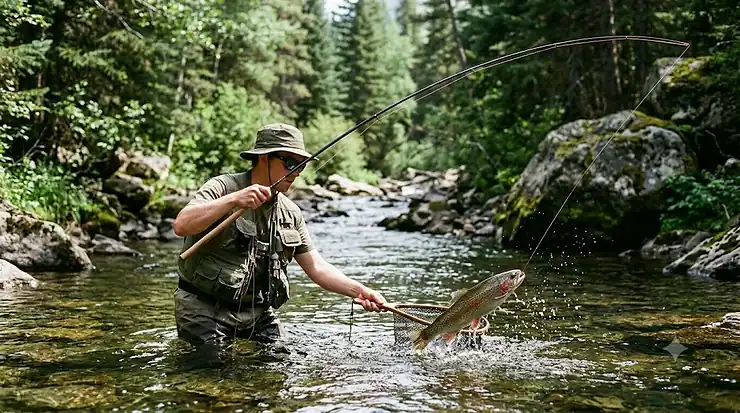
Somewhere in the last decade, a whole generation of anglers got tired of untangling nine feet of fly line from a streamside alder and decided to try something almost absurdly simple: a rod, a line tied straight to the tip, and a fly. No reel. No slack to manage. Just you, gravity, and a hungry trout. That’s tenkara, and if you’re shopping for a tenkara rod trout setup for the first time, you’re stepping into a tradition that predates the modern fly reel by centuries. A tenkara rod trout system is a telescoping, reel-less fixed-line rod paired with a level line and a single fly, designed to present that fly with a precision that heavier Western gear often can’t match on small water.
This guide skips the marketing copy and gets into what actually matters: real specs, real aggregated reviewer sentiment, and honest analysis about who each rod suits. We researched seven genuine products spanning budget, mid-range, and premium territory, from Colorado-made classics to a Japan-built rod that still leans on cypress wood the way it did generations ago. Along the way we’ll dig into the origins and history of tenkara fishing, a discipline that developed independently of Western fly fishing and stayed almost unknown outside Japan until the late 2000s, and we’ll talk through the practical tradeoffs — length, flex, and price — that decide whether a rod feels like an extension of your arm or a stiff, tip-heavy chore.
Whether you’re drawn in by the minimalism, the portability, or just the idea of fishing with dramatically less stuff strapped to your vest, there’s a rod on this list built for you.
Quick Comparison Table: Tenkara Rods for Trout at a Glance
| Rod | Length(s) | Best For | Price Range |
|---|---|---|---|
| Tenkara USA Iwana | 12 ft fixed | All-around small-to-medium trout | Around $150 |
| Tenkara Rod Co. Sawtooth | 12 ft fixed | Beginners wanting a stiffer, forgiving rod | $150-$200 range |
| DRAGONtail Mizuchi zx340 | 7.9/9.6/11.1 ft zoom | Tight, overgrown canopy creeks | Under $175 |
| Zen Tenkara Suzume | 7.7/9.3/10.8 ft zoom | Balanced small-stream versatility | $250-$350 range |
| Tenkara USA Sato | 10.8/11.10/12.9 ft zoom | Anglers who want one rod for everything | $200-$250 range |
| Tenkara USA Amago | 13.5 ft fixed | Big rivers, bigger trout | $250-$300 range |
| Nissin Air Stage Fujiryu 360 | 10.10/10.11 ft (330/360cm) | Traditional Japanese-style presentation | $300-$400 range |
Looking at the spread above, the budget tier clusters around simple 12-foot fixed-length rods, while the zoom rods (Mizuchi, Suzume, Sato) command a premium for the mechanical complexity of multiple locking lengths. Notice that price doesn’t track cleanly with length — the shortest rod here, the Fujiryu, is also the most expensive, because you’re paying for Japanese manufacturing and a specialized traditional action rather than raw reach. If your local water is one consistent size and shape, a fixed-length rod like the Iwana or Amago will save you money without costing you performance.
💬 Already leaning toward one? Scroll down for direct picks on each rod below!
💬 Just one click — help others make better buying decisions too!😊
Top 7 Tenkara Rods for Trout: Expert Analysis
1. Tenkara USA Iwana — the classic all-rounder built to teach you tenkara
The Iwana has been the gateway rod for tenkara in the United States since the discipline’s early days here, and it earns that reputation honestly. At 12 feet extended and just 2.7 ounces, the progressive taper loads smoothly on the forward cast, meaning even six-inch brook trout put a satisfying bend in the tip. Nine segments collapse to a compact 20.5 inches, small enough to ride in a daypack side pocket without you noticing it’s there. Based on the spec sheet, this rod sits in the moderate 6:4 flex range, which in practice means it’s forgiving enough for a first-timer’s casting stroke but has enough backbone in the lower half to control an unexpectedly large fish.
What most buyers overlook about the Iwana is that its “beginner rod” label undersells it — reviewers routinely mention landing trout well past the 16-inch mark, and some report success with smallmouth bass and panfish too. Reviewers consistently note the last segment can be stubborn to collapse fully, a minor annoyance rather than a dealbreaker. This is the rod to buy if you want one dependable tool to learn technique on before specializing into zoom or big-fish rods.
Pros:
- ✅ Ultra-light 2.7 oz build stays comfortable through long days
- ✅ Forgiving 6:4 flex suits new and experienced casters alike
- ✅ Backed by a lifetime warranty and known-good customer support
Cons:
- ❌ Final segment can be stiff to collapse after wet use
- ❌ Single fixed length limits use in very tight canopy water
At around $150, the Iwana remains one of the strongest value propositions in the category — check current price before buying, since tenkara pricing shifts with material costs.
2. Tenkara Rod Co. Sawtooth — most forgiving stiffness for beginners chasing bigger water
The Sawtooth ships as part of a complete starter package — rod, tube, sock, furled line, flies, and a line holder — which matters if you don’t want to research five separate purchases before your first cast. Independent measurements put the Sawtooth’s actual flex closer to a stiff 6:4 than its marketed 5:5 designation, with a Rod Flex Index comparable to some 6:4 benchmarks. In practice, that means less forgiveness on a soft presentation but noticeably more backbone when something larger than expected takes the fly.
Here’s what to weigh: this stiffness is a feature if you fish water that occasionally holds a surprise 15-pound fish (as some owners report from Alaska), but it may feel a touch aggressive for someone chasing six-inch native brookies exclusively. Aggregated owner sentiment is largely positive on ease of setup and the all-in-one package value, though a few flag the cork handle finish as merely adequate rather than premium, and there are scattered reports of the tip section being fragile under careless handling.
Pros:
- ✅ Complete starter kit removes guesswork for first-time buyers
- ✅ Surprising backbone for a rod marketed at beginners
- ✅ Lifetime warranty backs a company known for responsive service
Cons:
- ❌ Cork handle quality is functional but not premium-grade
- ❌ Tip section reported as breakable without careful collapsing habits
Priced in the $150-$200 range as a full package, the Sawtooth competes directly with the Iwana — pick this one if you want everything included on day one.
3. DRAGONtail Mizuchi zx340 Zoom — three lengths for when the canopy won’t cooperate
Designed in collaboration with a small-stream specialist blogger, the Mizuchi solves a specific problem: overgrown, brushy creeks where a standard 12-foot rod simply can’t clear the branches on your backcast. It zooms between 7.88, 9.58, and 11.14 feet using two locking sections, so you can shrink down for tunnel-like brush and extend out the moment the stream opens into a meadow or beaver pond. What the spec sheet won’t tell you, but reviewers note, is that the shortest setting still casts a light line competently — a feat many multi-length rods fumble at their extremes.
Based on the spec comparison with similarly priced fixed rods, the tradeoff for that flexibility is mechanical complexity: two zoom joints mean two more failure points than a simple telescoping rod. Owner reports describe the Mizuchi as robust and able to control fish in fast water even at its shortest length, with enough hook-setting speed to pull a trout from beneath a logjam. This is a specialist’s rod for a specific kind of water, not a generalist pick.
Pros:
- ✅ Genuinely usable at all three zoom lengths, not just the longest
- ✅ Strong hook-setting power even in tight, snag-heavy pockets
- ✅ Grows with a young or new angler as skills develop
Cons:
- ❌ More moving parts than a fixed-length rod means more to maintain
- ❌ Flat matte finish is utilitarian rather than eye-catching
Expect a price under $175 for the standard rod — genuinely one of the better values for dedicated bluelining.
4. Zen Tenkara Suzume Tri-Zoom — balanced performance at every one of its three lengths
Most triple-zoom rods nail the action at one or two lengths and go tip-heavy or clumsy at the third. The Suzume’s claim to fame, according to owners who’ve fished several competitors side by side, is that all three settings — 7.7, 9.3, and 10.8 feet — feel genuinely well-balanced rather than compromised. A double-taper cork handle helps here: it lets you find a natural grip point regardless of which length you’re fishing, which matters more than it sounds on a long day of repositioning for pocket water.
Reviewers consistently highlight the rod’s turnover and accuracy at the shortest length, useful for placing a fly under overhanging rhododendron on Appalachian streams. The 6:4, medium-fast action gives it enough steel to handle a mid-sized fish while remaining light enough — about 2.3 to 3.3 ounces depending on configuration — for all-day comfort. Aggregated sentiment is enthusiastic, including recognition from a consumer choice poll naming it a top tenkara rod for 2026, though the import pricing from its Colorado-founded, globally distributed maker runs higher than most American competitors.
Pros:
- ✅ Consistently balanced action across all three zoom lengths
- ✅ Comfortable double-taper cork handle reduces hand fatigue
- ✅ Strong reputation for customer support and community engagement
Cons:
- ❌ Premium pricing compared to similarly specced competitors
- ❌ Replacement performance tips add extra cost for nymphing setups
At roughly $300-$350 depending on configuration, this is a mid-to-upper-tier investment — worth it if balance across multiple lengths outweighs raw savings.
5. Tenkara USA Sato — the triple-zoom rod built to answer “which one should I buy?”
Named for the historian credited with the first written record of tenkara, the Sato was engineered specifically to end decision paralysis: it zooms between 10’8″, 11’10”, and 12’9″, covering the three most common tenkara lengths in a single 2.6-ounce package. Tenkara USA’s own buying guidance points new anglers toward exactly this rod or the fixed Iwana as the safest choice when in doubt, largely based on budget, and the reasoning holds up: the Sato lets you test which length actually suits your local water before committing to a specialty rod.
On paper this means beginners get to experiment without buying three separate rods; in practice, reviewers note the “keep your plug” system — a small magnetic-style dock for the tip cap — solves the universally annoying problem of losing that cap streamside. What the spec sheet doesn’t fully convey is how the zoom mechanism affects casting feel at each length; expect a slightly different rhythm at 10’8″ versus the full 12’9″, which takes a session or two to internalize.
Pros:
- ✅ Three practical lengths eliminate guesswork on length selection
- ✅ Clever tip-plug retention system solves a common annoyance
- ✅ Tenkara USA’s lifetime guarantee and fast parts replacement
Cons:
- ❌ Casting feel shifts noticeably between the three zoom lengths
- ❌ Costs more than comparable fixed-length rods from the same brand
Typically found in the $200-$250 range, the Sato is arguably the smartest single-rod purchase for someone still deciding what length they prefer long-term.
6. Tenkara USA Amago — built with backbone for big river trout
Named after one of Japan’s prized mountain-stream trout, the Amago is Tenkara USA’s longest non-zoom rod at 13 feet 6 inches, designed explicitly for anglers who’ve outgrown small-stream rods and want reach on bigger water. Independent rod-flex testing classifies it as a fast, tip-flex 7:3 action, meaning the backbone kicks in early enough to punch a heavier nymph through wind or wrestle a fish away from structure, while the tip stays sensitive enough to protect light tippet. At 3.5 ounces with a counterbalanced 11-inch handle, it stays comfortable through a long day of casting the extra length.
Reviewers consistently describe the Amago as the natural step up once you already own an Iwana or Hane, praising its ability to handle sea-run fish, smallmouth bass, and trout well beyond 17 inches with ease. Here’s what to weigh: that extra length and stiffness is wasted on tight, brushy creeks — this rod wants open water, big pools, and the occasional streamer fished on the swing. A minority of reviewers note it feels slightly heavy in hand during extended casting sessions compared to shorter rods in the lineup.
Pros:
- ✅ Fast 7:3 action handles big trout and windy conditions
- ✅ Longest non-zoom reach in the lineup for open rivers
- ✅ Counterbalanced handle keeps long casting sessions comfortable
Cons:
- ❌ Overkill for tight, overgrown small-stream fishing
- ❌ Feels heavier in hand than shorter rods during all-day use
Expect a price in the $250-$300 range — a premium rod for anglers specifically chasing bigger water and bigger fish.
7. Nissin Air Stage Fujiryu 360 — the Japan-made soul of traditional tenkara
If the other six rods on this list represent tenkara’s global evolution, the Fujiryu represents where it came from. Made in Japan and designed around Fujiryu-style technique developed by a recognized tenkara master, this rod is built for casting light kebari flies on a 3.0 level line with the kind of precision that traditional Japanese anglers spent generations refining. Independent flex testing rates it a soft-action rod, ideal for dry-fly and kebari presentation over heavier nymphing work, and it protects tippet down to 6X and 7X — useful for spooky, heavily pressured wild trout.
What most buyers overlook is the cypress wood handle, a deliberate departure from the cork or EVA foam used almost everywhere else on this list. Reviewers describe it as remarkably smooth, almost hand-finished, and it changes the rod’s balance and feel in a way that’s hard to appreciate until you’ve cast it. Based on the spec comparison, this is not the rod for muscling large fish through fast current — it’s the rod for anglers who want the closest available experience to tenkara’s traditional roots on a quiet mountain stream.
Pros:
- ✅ Genuine Japanese manufacturing and traditional Fujiryu design lineage
- ✅ Soft action excels at delicate dry-fly and kebari presentation
- ✅ Distinctive cypress handle offers a traditional, tactile feel
Cons:
- ❌ Premium import pricing well above most American-made rods
- ❌ Soft action limits performance with heavier nymph rigs
Pricing typically lands in the $300-$400 range at the time of research — a specialty purchase for anglers prioritizing tradition and finesse over raw fish-fighting power.
Practical Usage Guide: Setting Up Your First Tenkara Rod
Getting a tenkara rod trout setup working right takes minutes, not hours, but a few early mistakes trip up almost everyone. First, always attach your line to the lillian — that soft braided tip — with the rod fully collapsed, never extended; doing it backward is the single most common way new anglers snap a tip section in the first week. Second, extend the rod section by section starting at the butt, twisting gently until each section seats; forcing sections from the tip end first is a classic rookie error that stresses the thinnest, most fragile part of the rod.
For your first thirty days, inspect the lillian connection before every outing — it wears faster than anything else on the rod — and always carry a spare tip section if your maker sells one separately, since tips are the most commonly replaced part across every brand in this guide. Store the rod collapsed in its sock and tube rather than loose in a pack, where jostling around hard objects causes the small hairline cracks that eventually become breaks. A light wipe-down after fishing in sandy or silty water prevents grit from working into the ferrules, which is the leading cause of a rod that “sticks” when collapsing.
Real-World Scenarios: Matching the Rod to Your Fishing Life
Consider three anglers. The first is a college student with a tight budget and a car full of camping gear, hiking two miles into alpine lakes most weekends — for them, the Tenkara Rod Co. Sawtooth package makes sense because it bundles everything needed into one purchase under $200, with enough backbone for surprise catches in stocked lakes.
The second is a parent introducing two kids to fishing on a brushy suburban creek choked with overhanging brush — the DRAGONtail Mizuchi’s three zoom lengths let the whole family share one rod, dialing it down short for a ten-year-old’s cast and extending it for an adult working a more open pool downstream.
The third is an experienced fly angler who already owns Western gear and wants a dedicated big-water tenkara setup for float-trip access to trout rivers — the Tenkara USA Amago’s length and 7:3 backbone fits that role directly, handling bigger fish without the compromises a small-stream rod would force.
What Is a Tenkara Rod for Trout?
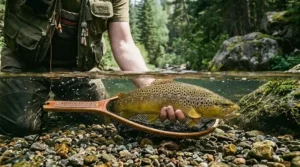
A tenkara rod for trout is a lightweight, telescoping fixed-line fly rod used without a reel, where a level line is tied directly to the rod tip and a single fly presents to the fish. It’s a minimalist alternative to Western fly fishing, built specifically for small-to-medium stream trout.
The technique originated in Japan more than 400 years ago among mountain-stream fishermen and remained largely unknown outside the country until it was introduced to American anglers in 2009. Today it thrives among hikers, backpackers, and anyone drawn to fishing with less gear rather than more — a philosophy that also explains why so many secondary terms cluster around this niche, from japanese tenkara rod imports to broader minimalist fly fishing culture. For a broader look at how testers rank the field each season, Field & Stream’s tenkara rod buyer’s guide is a useful outside reference point.
How to Choose a Tenkara Rod for Trout
- Match length to your water. A 12-foot rod suits most streams; go shorter (10-11 feet) for tight, brushy canopy, and longer (13+ feet) for open rivers where reach matters more than maneuverability.
- Consider flex and action. Softer 5:5 rods protect light tippet and small fish; stiffer 6:4 or 7:3 rods handle bigger water and bigger trout.
- Decide fixed-length versus zoom. Zoom rods add versatility but also add mechanical complexity and weight; fixed-length rods are simpler and often cheaper.
- Weigh domestic support against imported authenticity. American brands typically offer faster warranty service; Japanese-made rods often deliver more traditional actions and materials.
- Set a realistic budget. Entry rods run $150-$200; specialty and imported rods can exceed $300-$400.
- Read aggregated review sentiment, not marketing copy. Look specifically for comments about tip durability and real-world fish sizes landed.
- Buy the line and flies to match. A rod is only half the system — level line weight and fly size should match the rod’s designed action.
Traditional Tenkara vs. Modern Zoom Rods
Traditional tenkara, as practiced for centuries in Japan, uses a single fixed length matched precisely to a specific stream — generally the longest rod an angler can comfortably manage for the water they fish most often. Modern zoom rods like the Sato, Suzume, and Mizuchi break from that simplicity by offering two or three lengths in one telescoping package, trading a bit of purity for flexibility.
The practical difference shows up on the water: a traditional fixed rod like the Fujiryu or Iwana casts with one consistent, predictable rhythm every time, which builds muscle memory faster. A zoom rod forces you to relearn casting feel slightly at each length, but rewards you with the ability to shrink down for a tight overgrown stretch and extend out the moment the canopy opens — genuinely useful on mixed water where hiking to a single “ideal” spot isn’t realistic. Neither approach is objectively better; it depends whether your local water is consistent or wildly variable.
Japanese Tenkara Rod vs. American-Made Tenkara Rod
A genuine japanese tenkara rod like the Nissin Air Stage Fujiryu carries design lineage traceable to specific tenkara masters and specialized regional techniques, built with materials like cypress handles that American manufacturers rarely use. Forum consensus among longtime anglers tends to favor Japanese-made rods on pure casting feel and craftsmanship, though buyers note that ordering parts or replacements can take longer and cost more.
American brands like Tenkara USA and Tenkara Rod Co. counter with faster customer service, English-language support, and often better long-term value thanks to lifetime warranties and readily available spare tips. Based on the spec comparison across this list, there’s no wrong answer — the Fujiryu rewards anglers chasing an authentic, traditional experience, while the Iwana or Sawtooth rewards anglers who want dependable support if something breaks on a Tuesday afternoon three states from the nearest fly shop.
Fixed Line Trout Fishing: What to Expect from Everyday Performance
Fixed line trout fishing feels different from Western fly casting the moment you make your first drift. Because there’s no fly line lying on the water to get caught in a rogue current, keeping only the fly and a thin leader in contact with the surface is a reliable way to fool more wary trout, and that drag-free presentation is arguably the single biggest performance advantage tenkara holds over reel-based systems on small streams. Expect noticeably better line control at close range, and expect to feel every subtle strike transmitted straight up a rod with no reel or heavy line dampening the signal.
The tradeoff shows up on bigger water: fixed line trout fishing loses efficiency once you need real distance or must fight a powerful fish through heavy current, since there’s no reel to manage runs. That’s precisely why rods like the Amago exist — more length and backbone extend the fixed-line system’s reach without asking you to abandon the reel-less philosophy entirely.
Minimalist Fly Fishing: Why Less Gear Means More Fish Time
Minimalist fly fishing isn’t just an aesthetic — it changes how much actual fishing you do per outing. A tenkara setup collapsed to 20 inches fits in a daypack side pocket alongside a small fly box and spool of tippet, meaning the gap between arriving at a trailhead and making your first cast shrinks to under a minute. Compare that to rigging a Western rod, reel, and line, and the time savings compound across a season of short after-work sessions.
Based on the spec comparison across zoom and fixed rods here, minimalism does involve real tradeoffs: no reel means no easy way to add or shed line mid-fight, and no rod guides means you’re limited to roughly the rod’s length plus a bit of line, not a full fly line’s worth of casting distance. For small streams where trout rarely require long casts, that tradeoff barely registers — you gain simplicity without losing catch rate.
Simplicity in Fishing: Long-Term Cost and Maintenance
The simplicity in fishing that tenkara offers extends to your wallet over time. A single tenkara rod, line, and small fly selection can replace a rod, reel, floating line, tapered leaders, and a much larger fly box — often for less than the cost of a mid-range Western reel alone. Maintenance is similarly light: no reel drag to service, no fly line to periodically clean or replace, just occasional lillian inspection and careful ferrule care.
Total cost of ownership does shift toward replacement tips rather than big-ticket repairs — expect to eventually buy a spare tip section for whichever rod you choose, typically a modest cost compared to a full rod replacement. Over a five-year span of regular small-stream fishing, most anglers report spending far less maintaining a tenkara rod than they would maintaining even a single mid-tier Western fly reel.
✨ Ready to simplify your next trip? Compare the full lineup above before you decide! 🎣
Common Mistakes When Buying a Tenkara Rod for Trout
The most frequent mistake is buying based on marketed action alone — several rods on this list measure noticeably stiffer or softer in independent testing than their 5:5 or 6:4 label suggests, so read aggregated reviews rather than trusting the spec sheet in isolation. A second common error is choosing the longest rod available without considering local brush density; a 13-foot rod is a liability on a tight, overgrown creek no matter how appealing the extra reach sounds on paper.
Third, new buyers frequently skip purchasing a spare tip section, then find themselves without a working rod mid-season when the most fragile segment inevitably takes a hit. Finally, don’t underestimate line weight mismatches — pairing a soft, delicate rod with a heavy line kills the natural loading action that makes tenkara casting feel effortless in the first place.
Features That Actually Matter (And Those That Don’t)
Rod length matched to your actual water matters enormously; a marketing claim of “handles fish up to 20 inches” matters far less, since nearly every tenkara rod on the market can already handle the average trout in the 8-18 inch range regardless of price point. Genuine flex/action data — ideally independently measured rather than manufacturer-labeled — matters a great deal, because it predicts real casting feel better than any marketing copy.
Handle material, on the other hand, is mostly personal preference rather than performance: cork, EVA foam, and cypress all work, and the differences come down to feel and aesthetics rather than function. Flashy colorways and unique finishes, likewise, look good in product photos but contribute nothing to how a rod fishes — don’t let them push you toward a rod whose flex and length don’t actually suit your water.
Frequently Asked Questions
❓ Do I need a special line for a tenkara rod?
❓ Can tenkara rods catch fish other than trout?
❓ How long does a tenkara rod last?
❓ Is tenkara harder to learn than fly fishing?
❓ What size fish can a tenkara rod for trout actually land?
Conclusion
There’s no single “best” tenkara rod trout setup — there’s only the rod that fits your water, your budget, and how much traditional purity versus modern flexibility you want out of the experience. Beginners chasing value and forgiveness should look hard at the Iwana or Sawtooth. Anglers battling overgrown, brushy creeks gain real functional advantages from a zoom rod like the Mizuchi or Suzume. Those craving reach on bigger rivers should look to the Amago, while purists chasing the discipline’s original spirit will find that in the Fujiryu’s cypress handle and soft, traditional action.
Whichever you choose, remember that tenkara’s entire appeal rests on doing more with less — a philosophy worth protecting by supporting the coldwater conservation work that keeps trout streams fishable in the first place. Organizations like Trout Unlimited work to restore rivers and streams so wild and native trout populations can keep surviving a changing climate, which is really the whole point of chasing them in the first place.
✨ Found the rod that fits your water? Grab your gear and go make that first cast! 💬🤗
Recommended for You
- Euro nymphing rod: 7 Best Picks That Actually Earn Their Price Tag (2026)
- 6 Foot Trout Rod: 7 Best Picks for Tight Water in 2026
- 7 Best 6 Weight Fly Rods of 2026: Versatile Picks for Trout & Bass
Disclaimer: This article contains affiliate links. As an Amazon Associate, I earn from qualifying purchases. If you purchase products through these links, we may earn a small commission at no additional cost to you.
✨ Found this helpful? Share it with your friends! 💬🤗
