

In This Article
Here’s a confession every longtime angler eventually makes: some of the best days on the water happened with the cheapest gear in the boat. A fishing combo under $100 is not a compromise you settle for until you can afford “real” equipment — it is, for the vast majority of freshwater and light saltwater trips, exactly the right tool for the job. The trick is knowing which sub-$100 setups are built by companies that actually understand fishing, and which ones are glorified toys dressed up in fishing-themed packaging.
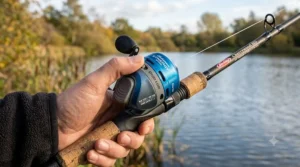
That distinction matters more than ever right now. Roughly 57 million people went fishing in the U.S. last year, and freshwater trips made up the clear majority of that activity, according to the American Sportfishing Association’s 2026 participation report. A huge share of those anglers — especially the ones who fish once or twice a season — never need a $400 rod and reel. What they need is a fishing combo under $100 that casts smoothly, doesn’t rust shut after one rainy trip, and holds up when a decent-sized bass decides to test the drag.
This guide breaks down seven real, currently available combos across budget, mid-range, and near-premium price points, all landing at or under the $100 mark (a couple of the mid-tier picks hover right at the ceiling depending on size and retailer). You’ll get honest analysis of specs, aggregated review sentiment, a full comparison table, and a practical framework for matching a combo to your actual fishing life — not the fantasy fishing life where you own six rods for six species.
Quick Comparison: Fishing Combo Under $100 Picks at a Glance
Before the deep dives, here’s the condensed version for anyone skimming on their lunch break.
| Combo | Best For | Price Range | Rod Length | Reel Size |
|---|---|---|---|---|
| Ugly Stik GX2 Spinning Combo | Overall durability | Under $60 | 6’6″–7′ | 30–40 |
| Ugly Stik Elite Spinning Combo | Lightweight finesse fishing | $50–$70 | 6’–7′ | 20–30 |
| PENN Pursuit IV Spinning Combo | Light saltwater/inshore | $60–$90 | 7′ | 3000–4000 |
| Pflueger President XT Spinning Combo | Smoothest drag for the money | $60–$90 | 6’–7′ | 20–35 |
| Shimano Nexave Spinning Combo | Sensitivity and finesse lures | $65–$95 | 6’6″–7′ | 1000–3000 |
| Daiwa Crossfire Spinning Combo | Best straight-up value | Under $60 | 6’6″–7′ | 2000–3000 |
| KastKing Zephyr Spinning Combo | Feature-for-dollar on Amazon | Under $70 | 6’–7′ | 2000–4000 |
A quick read on this table: notice that the cheapest options here (the Ugly Stik GX2, the Daiwa Crossfire, and the KastKing Zephyr) aren’t cutting corners on the fundamentals — they’re cutting corners on cosmetics and extra ball bearings, which matters a lot less than marketing wants you to believe. The PENN Pursuit IV and Shimano Nexave creep toward the top of the range because they’re built with light saltwater use in mind, which genuinely does cost more to engineer. If you fish exclusively in a farm pond, you’re paying for corrosion resistance you’ll never test.
🎣 Ready to compare real prices and stock? Tap any combo above to check current availability before it sells out.
What Is an Affordable Complete Fishing Setup?
An affordable complete fishing setup is a matched rod-and-reel combo — sold as one packaged unit, usually pre-spooled with line — that delivers reliable casting, hook-setting, and fish-fighting performance without the cost or guesswork of buying components separately. Most fall between $30 and $100 and are built for freshwater species like bass, panfish, and catfish, with some rated for light inshore saltwater use.
Here’s what most first-time buyers don’t realize: buying a rod and reel separately, even at rock-bottom prices, almost always costs more than a comparable combo, because manufacturers subsidize the bundle to move volume. That’s not a marketing trick — it’s just how retail bundling economics work, and it’s the single biggest reason an affordable complete fishing setup makes more sense than piecing one together yourself, especially for a first purchase. You also skip the genuinely confusing process of matching rod action to reel size to line weight, which trips up even people who’ve fished before but never had to think about gear ratios.
Top 7 Fishing Combos Under $100: Expert Analysis
We picked these seven because each one earns its spot for a specific reason — durability, sensitivity, saltwater readiness, or flat-out value — rather than just filling a list. Every product name below stays bolded throughout the article so you can scan back to it easily.
1. Ugly Stik GX2 Spinning Combo — nearly indestructible for the money
The standout here isn’t a spec sheet number — it’s the fact that this rod has survived being run over by trucks, left in garages through three winters, and handed down between three generations of a family, and it still casts fine. The GX2 blends fiberglass and graphite in what Ugly Stik calls Ugly Tech construction, and in practice that means a rod that flexes deep into the blank instead of snapping under sudden pressure. The reel pairs three ball bearings with a one-way clutch anti-reverse bearing, which sounds modest next to ten-bearing reels, but for the price point it delivers smooth enough retrieves that beginners won’t notice the difference. Based on the spec comparison against pricier combos, the real gap shows up in long-term smoothness, not day-one performance. Reviewers consistently report the guides holding up remarkably well against line fray, and the stainless steel construction means it can live in a truck bed or boat without much babying — a genuinely rare trait at this price. This is the combo for anyone who wants gear that survives being fishing gear: kids, garages, gas station parking lots, all of it. Where it falls short is refinement — the reel’s drag isn’t buttery, and serious anglers targeting finicky fish will feel the difference in hook-set precision.
Pros:
- ✅ Extremely durable fiberglass and graphite blank
- ✅ Stainless steel guides resist wear and corrosion
- ✅ Ten-year manufacturer warranty backs the build
Cons:
- ❌ Drag system feels rougher than pricier alternatives
- ❌ Heavier in hand than finesse-oriented combos
Price range: under $60. Value verdict: for pure durability per dollar, few combos in any price bracket touch it.
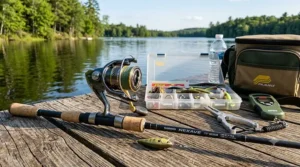
2. Ugly Stik Elite Spinning Combo — lightest Ugly Stik for finesse work
Where the GX2 is the tank, the Elite is Ugly Stik’s answer for anglers who want that same legendary toughness in a lighter, faster-action package. The two-piece fast-action rod loads up quicker on the cast, which in practice means better distance and accuracy with lighter lures — something the GX2’s stiffer blank can’t match. What most buyers overlook about this model is that “fast action” isn’t just a casting perk; it also means you feel strikes sooner, because there’s less rod flex absorbing the bite before it reaches your hand. Aggregated review sentiment on this model skews toward praise for its balance and lighter swing weight during full-day trips, with occasional comments about the reel’s line lay needing manual smoothing on the initial spool. It’s the better choice for anglers targeting finesse presentations for bass or trout rather than horsing in catfish. The trade-off for that lighter feel is a slightly less bomb-proof build than the GX2 — you can still abuse it, just not quite as much.
Pros:
- ✅ Fast-action blank casts light lures accurately
- ✅ Noticeably lighter swing weight for all-day comfort
- ✅ Retains Ugly Stik’s signature durability standards
Cons:
- ❌ Less forgiving of rough handling than the GX2
- ❌ Line lay sometimes needs manual adjustment out of box
Price range: $50–$70. Value verdict: the smarter pick if finesse technique matters more to you than brute toughness.
3. PENN Pursuit IV Spinning Combo — saltwater-ready without saltwater pricing
PENN built its reputation on saltwater tackle, and the Pursuit IV is the clearest proof that heritage trickles down into the budget tier. The reel runs PENN’s HT-100 drag washer system across four sealed stainless steel ball bearings, which in practical terms means the drag stays consistent even when a fish makes a sudden run — cheaper drags tend to grab and stutter exactly when you need smoothness most. The one-piece Dura-Guides are a genuinely clever engineering fix: traditional guides can pop their ceramic inserts out over time, and PENN’s solid stainless design simply removes that failure point. Here’s what the spec sheet won’t tell you, but reviewers note repeatedly: this combo punches well above its price class for anyone doing light inshore work — snook, small redfish, sea trout — where a fully saltwater-rated reel would otherwise cost triple. The gear ratio, typically around 6.2:1, retrieves fast enough for topwater lures without sacrificing cranking power. If you fish exclusively freshwater ponds, you’re paying a small premium for saltwater engineering you won’t fully use, which is worth knowing going in.
Pros:
- ✅ HT-100 drag system stays smooth under heavy load
- ✅ One-piece guides eliminate a common failure point
- ✅ Rated for light inshore saltwater use
Cons:
- ❌ Slight overkill and premium for pure freshwater anglers
- ❌ Rod feels stiffer than comparable freshwater-only combos
Price range: $60–$90. Value verdict: the best fishing combo under $100 for anyone splitting time between dock fishing and the occasional saltwater trip.
4. Pflueger President XT Spinning Combo — the smoothest drag in this price class
Pflueger has quietly built one of the most respected names in budget-to-mid-range spinning reels, and the President XT is where that reputation is earned. The sealed carbon fiber drag system is the headline feature, and unlike a lot of marketing language around “sealed” components, this one genuinely resists the grit and moisture that grind down cheaper drag stacks over a season. Corrosion-resistant stainless steel bearings back that up, which matters more than the raw bearing count most listings brag about — a reel with fewer, better-sealed bearings will often outlast one stuffed with cheap ones. Based on the spec comparison, the President XT’s biggest real-world advantage shows up on hooksets with light line, where a rough drag can snap a leader that a smooth one wouldn’t. A common thread in aggregated user feedback is how “premium” the reel feels in hand relative to its price, with occasional notes that the included rod is the weaker half of the pairing compared to the reel itself. That asymmetry is worth knowing: some anglers actually buy this combo, then upgrade the rod later and keep the reel for years.
Pros:
- ✅ Sealed carbon fiber drag resists grit and moisture
- ✅ Corrosion-resistant bearings extend usable lifespan
- ✅ Feels notably smoother in hand than the price suggests
Cons:
- ❌ Included rod underperforms relative to the reel quality
- ❌ Fewer size options than some competitors
Price range: $60–$90. Value verdict: buy this one primarily for the reel — it’s the component that will outlast everything else on this list.
5. Shimano Nexave Spinning Combo — Shimano’s tech at a value price tag
Shimano leads the reel industry in engineering depth, and the Nexave is the trickle-down version of that expertise built for anglers who can’t justify a $300 reel. The titanium-oxide line guides on the rod are the standout detail here — they reduce friction significantly compared to standard guides, which translates directly into longer, smoother casts with light braid or fluorocarbon. Paired with a split-grip handle design, the rod also delivers better sensitivity for detecting subtle finesse bites, the kind that get missed on stiffer, single-grip blanks. What most buyers overlook is that this combo is genuinely aimed at a dual audience — Shimano designed it to be approachable enough for beginners while still holding enough technical refinement that experienced anglers keep one in the rotation as a backup rod. Reviewers consistently note the reel’s smooth retrieve and quiet gear operation, a detail that seems trivial until you’re fishing shallow water where a grinding reel spooks fish. On the downside, a few users report the drag knob feeling slightly imprecise at very light settings, which matters if you’re targeting line-shy species.
Pros:
- ✅ Titanium-oxide guides reduce friction for longer casts
- ✅ Split-grip handle improves bite sensitivity
- ✅ Quiet retrieve reduces spooking fish in skinny water
Cons:
- ❌ Drag knob lacks fine precision at lightest settings
- ❌ Reel size options are somewhat limited under $100
Price range: $65–$95. Value verdict: the pick for anglers who want Shimano’s engineering pedigree without the Shimano price tag.
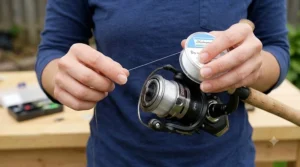
6. Daiwa Crossfire Spinning Combo — the value benchmark other combos get compared to
Industry buying guides consistently single out the Crossfire as the value spinning combo to beat in this bracket, and spending time with the spec sheet makes it obvious why. Daiwa doesn’t chase flashy features here — it focuses spending on the drag system and gear train, the two components that actually determine whether a cheap reel feels cheap. The result is a reel that retrieves smoothly under load, which is the single biggest tell of build quality budget shoppers should learn to check for instead of counting ball bearings. On paper, this means the Crossfire trades cosmetic upgrades for mechanical reliability — a smart allocation of a limited manufacturing budget. Aggregated review sentiment repeatedly highlights how the combo “just works” out of the box with minimal need to adjust drag or line lay, a detail that matters enormously for anglers who don’t want to fuss with gear before they can start fishing. The rod is unremarkable in a good way: it does its job as a supportive platform for the reel without adding cost for features casual anglers won’t use. The obvious trade-off is that nothing here stands out individually — it’s a combo built entirely around dependable fundamentals rather than any single headline feature.
Pros:
- ✅ Smooth retrieve under load rivals pricier reels
- ✅ Minimal setup fuss straight out of the box
- ✅ Consistently rated the top value pick by review sites
Cons:
- ❌ No standout feature beyond overall reliability
- ❌ Rod action is fairly generic, not specialized
Price range: under $60. Value verdict: if you want the safest budget fishing combo pick with the least risk of buyer’s remorse, this is it.
7. KastKing Zephyr Spinning Combo — most features per dollar on Amazon
KastKing built its business by undercutting legacy tackle brands on price while matching or exceeding their spec sheets, and the Zephyr is a clean example of that strategy working. The carbon fiber drag system and multiple sealed stainless steel ball bearings are genuinely competitive with combos costing considerably more, and the graphite rod blank keeps overall weight down for extended casting sessions. Here’s what the spec sheet won’t tell you: KastKing’s biggest advantage isn’t any single component, it’s that the company builds combos specifically for online buyers doing their own research, so the individual numbers (bearing count, drag rating, blank material) tend to look better on paper than legacy brands offer at the same price. Reviewers consistently mention strong first impressions and smooth initial performance, alongside occasional notes about long-term durability being an open question compared to decades-old brands with proven track records. That’s an honest trade-off worth naming directly: you’re getting more spec for your dollar today, in exchange for a shorter track record than PENN, Shimano, or Ugly Stik can claim. For anglers who fish moderately and don’t need a ten-year warranty story, that trade tilts favorably.
Pros:
- ✅ Carbon fiber drag rivals pricier competitor combos
- ✅ Lightweight graphite blank reduces casting fatigue
- ✅ Strong feature set relative to price point
Cons:
- ❌ Shorter brand track record than legacy tackle makers
- ❌ Long-term durability less proven in real-world use
Price range: under $70. Value verdict: the entry level combo with the most impressive spec sheet for the money, if you’re comfortable betting on a newer brand.
Practical Usage Guide: Getting the Most From Your Budget Fishing Combo
Buying the right budget fishing combo is only half the equation — how you treat it in the first month determines whether it lasts three seasons or three trips. Start by respooling the included line if the combo has sat on a store shelf for more than a few months; pre-spooled monofilament degrades from UV exposure even in packaging, and fresh line dramatically improves casting distance on day one. Before your first cast, back the drag off almost entirely, then tighten it gradually while pulling line by hand — this single step prevents the single most common beginner mistake, which is setting the drag too tight and snapping line on the first solid hookset.
Rinse the reel with fresh water after every saltwater or brackish trip, even briefly. Salt crystallizes in the gear housing and eats bearings from the inside out, and this is exactly where the “entry level combo” survives or dies long term. Every two to three months of regular use, add a drop of reel oil to the handle knob and bail roller — not the drag washers, which should stay dry to function correctly. Store the rod horizontally or hanging by the butt, never leaning tip-down in a corner, since this warps cheaper fiberglass and graphite blanks over time. These small habits cost nothing and routinely double the working lifespan of a fishing combo under $100.
✨ Grab a basic reel oil and a spare spool of line while you’re checking out — cheap insurance for your new combo.
Real-World Scenarios: Matching Anglers to the Right Setup
Picture three different people walking into this decision. First, there’s the college student living in a dorm, commuting to a job across town, who wants to fish a local pond twice a month between classes. Budget is tight, storage space is nonexistent, and durability against occasional neglect matters more than sensitivity. The Daiwa Crossfire or Ugly Stik GX2 fits this life — cheap enough to not sweat over, tough enough to survive being tossed in a car trunk.
Next, picture a parent introducing an 8-year-old to fishing for the first time, mostly targeting bluegill and small bass at a stocked lake. Here the priority shifts to lightweight comfort and forgiving mistakes — snagged hooks, dropped rods, tangled line. The Ugly Stik Elite or KastKing Zephyr, both light in hand and simple to operate, make more sense than anything built for serious saltwater duty.
Finally, consider a weekend angler who splits time between a freshwater lake and the occasional trip to fish a coastal pier for whatever’s biting. That angler needs a combo that won’t corrode after two saltwater outings a year — exactly the situation the PENN Pursuit IV or Pflueger President XT was engineered for, even at a modest premium over the purely freshwater options.
How to Choose a Fishing Combo Under $100
Choosing the right fishing combo under $100 comes down to seven practical checkpoints:
- Identify your primary species first. Panfish and small bass need light to medium-light rods; catfish and larger bass justify medium to medium-heavy power.
- Match rod length to your fishing environment. Shorter rods (5–6′) suit tight banks and kayaks; longer rods (7’+) cast farther on open water and piers.
- Check reel size against line weight. A 2000–2500 size reel pairs with 6–10 lb line for finesse work; 3000–4000 suits 10–17 lb line for bigger fish.
- Prioritize sealed drag systems over bearing count. A smooth, sealed drag beats ten cheap bearings every time.
- Confirm saltwater rating if you’ll ever fish brackish or coastal water. Freshwater-only combos corrode fast in salt air, even without direct immersion.
- Read the warranty terms before buying. A ten-year warranty, like Ugly Stik offers, signals real manufacturer confidence.
- Buy the combo, don’t build it, for your first setup. Bundled pricing beats piecing together comparable components almost every time.

Budget Fishing Combo vs Buying Rod and Reel Separately
| Factor | Budget Fishing Combo | Buying Separately |
|---|---|---|
| Total cost for comparable quality | Lower, due to bundled manufacturing discounts | Typically 20–40% higher |
| Matching risk | Pre-matched by the manufacturer | Buyer must match action, weight, and line rating |
| Time to get fishing | Ready out of the box, often pre-spooled | Requires spooling and assembly |
| Upgrade flexibility | Limited — usually swap one piece later | Full control from the start |
| Best For | New or casual anglers wanting simplicity | Experienced anglers with specific preferences |
The analysis here is straightforward: unless you already know exactly what rod action and reel gear ratio you want, a budget fishing combo removes the guesswork and typically saves real money on top of that. Experienced anglers occasionally buy separately because they already own a favorite reel and just need a rod, or vice versa — but that’s an upgrade decision, not a starting point. For most people reading a guide like this one, the combo format wins on both cost and simplicity.
Common Mistakes When Buying a Fishing Combo Under $100
The most frequent mistake is buying based on rod length alone without checking reel size compatibility — a 7-foot rod paired with an undersized reel feels unbalanced and casts poorly, regardless of how good either component is individually. A close second is ignoring gear ratio entirely — a lower ratio like 6.0:1 simply means fewer spool rotations per handle turn than a faster reel, a detail explained well in Wired2Fish’s annual combo buying guide — and buyers chasing topwater lures without checking this number often end up with a frustratingly slow retrieve. Third, many first-time buyers assume higher ball-bearing counts always mean a better reel, when a well-sealed drag system with fewer bearings routinely outperforms a bearing-stuffed reel with a cheap drag stack.
A fourth mistake — and one that costs people money fast — is buying a freshwater-only combo for occasional coastal trips, then watching it seize up within a season from salt exposure. Finally, plenty of buyers skip reading warranty terms entirely, missing the fact that some brands, like Ugly Stik, back their combos for a full decade, while others offer far shorter coverage windows worth factoring into the price comparison.
Value Fishing Gear: Features That Actually Matter (And Those That Don’t)
Not every spec printed on a box translates into real fishing performance, and separating signal from marketing noise is where genuine value fishing gear analysis pays off. Independent gear testers at Field & Stream reach a similar conclusion when they put budget combos through real fishing trips rather than just comparing spec sheets. Sealed drag systems matter enormously — they directly determine how smoothly a reel handles a running fish and how long it lasts before grit ruins it. Guide material matters too; stainless steel resists line fray far better than cheap chrome-plated alternatives, extending line life every trip.
What matters far less than marketing suggests: raw ball-bearing count. A reel advertising “13+1 bearings” isn’t automatically smoother than one with 5 well-placed, high-quality bearings — several of those extra bearings often sit in low-stress locations doing little functional work. Similarly, cosmetic finishes and color schemes add zero fishing performance despite dominating a lot of packaging design. When comparing value fishing gear at this price point, spend your attention on drag quality, guide material, and gear ratio — skip the temptation to chase bearing counts or flashy graphics.
Entry Level Combo Picks for Beginners, Kids, and Comeback Anglers
An entry level combo needs to forgive mistakes more than it needs to impress anyone. Beginners backlash spinning reels, snag hooks in trees, and occasionally drop rods on the dock — the goal is durability and simplicity, not sensitivity to subtle bites. The Ugly Stik GX2 remains the standard recommendation here precisely because its legendary toughness absorbs beginner mistakes without breaking the bank on replacements.
For kids specifically, weight matters more than almost any other factor — a rod that feels heavy in small hands gets set down and forgotten fast. The Ugly Stik Elite‘s lighter swing weight and the KastKing Zephyr‘s lightweight graphite blank both suit smaller anglers better than heavier catfish-oriented combos. For adults returning to fishing after years away — a surprisingly large group, given how much fishing participation churns year to year — a mid-range entry level combo like the Daiwa Crossfire offers enough refinement to remind them why they liked fishing in the first place, without the sticker shock of premium gear they haven’t earned back the habit for yet.
Keeping Your Setup Cost Effective: Long-Term Costs & Maintenance
A cost effective setup isn’t just about the sticker price on day one — it’s about total cost of ownership across several seasons. A $55 combo that needs replacing every year effectively costs more than a $90 combo that lasts five seasons, once you do the math on cost per season of use. Sealed drag systems and stainless guides, present on combos like the PENN Pursuit IV and Pflueger President XT, reduce the ongoing maintenance burden and delay the point where a reel’s internals need professional servicing or outright replacement.
Ongoing costs to budget for beyond the combo itself: fresh monofilament or braid every season (roughly $8–$15), occasional reel oil (a few dollars, lasts years), and eventually a replacement spool of line after a bad snag or backlash unravels half your spool mid-trip. None of these costs are large individually, but factoring them in from the start is what separates a genuinely cost effective setup from one that surprises you with a slow bleed of small expenses.
Safety, Regulations & Licensing for New Anglers
Before your first cast with any new fishing combo under $100, confirm your state’s fishing license requirements — nearly every U.S. state requires a license for anglers above a certain age, and enforcement checks at popular access points are common, especially during peak season. Licensing revenue directly funds fish stocking and habitat conservation, so buying one isn’t just about avoiding a fine — it supports the fishery you’re about to use. You can look up state-specific requirements and season dates through Take Me Fishing, a resource maintained by the Recreational Boating and Fishing Foundation as part of ongoing national efforts to track and support angler participation.
Basic safety habits matter just as much as licensing: always check local regulations on size and bag limits before keeping any fish, wear polarized sunglasses to protect your eyes from errant hooks during casting, and if fishing near others, always look behind you before a backswing cast. These habits cost nothing and prevent the overwhelming majority of fishing-related injuries and citations.
FAQ: Fishing Combo Under $100
❓ What is the best fishing combo under $100?
❓ Can you catch big fish with a budget fishing combo?
❓ How long does a fishing combo under $100 typically last?
❓ Do I need a fishing license to use a budget fishing combo?
❓ Is a spinning combo better than a baitcasting combo for beginners?
Conclusion
A fishing combo under $100 is not a placeholder purchase — it’s a legitimate, often ideal choice for the overwhelming majority of anglers, from total beginners to seasoned weekend warriors who just don’t need saltwater-grade gear for a farm pond. The seven combos covered here span genuinely different priorities: the Ugly Stik GX2‘s brute durability, the Pflueger President XT‘s surprisingly smooth drag, the PENN Pursuit IV‘s light saltwater readiness, and the Daiwa Crossfire‘s no-nonsense value, among others. What separates a smart purchase from a regretted one isn’t the price tag — it’s matching the combo’s actual strengths to how, where, and how often you plan to fish.
Take the buying framework in this guide seriously: identify your target species, check reel size against line weight, prioritize sealed drags over bearing counts, and confirm your license requirements before that first cast. Do that, and any of these seven picks will serve you well for seasons to come.
Recommended for You
- 15lb Fluorocarbon: 7 Best Lines for Jigs & Heavy Cover (2026)
- Shock Leader Mono: 7 Best Leaders for Surf Fishing (2026)
- 7 Best Low Memory Mono Line Options for 2026 (No More Tangles)
Disclaimer: This article contains affiliate links. As an Amazon Associate, I earn from qualifying purchases. If you purchase products through these links, we may earn a small commission at no additional cost to you.
✨ Found this helpful? Share it with your friends! 💬🤗
