
In This Article
Somewhere in a tackle box graveyard, there’s a spool of 12-pound mono that got asked to do a job it was never built for — stopping an 8-ounce pyramid sinker mid-flight, or holding the line while a bluefish tried to redefine the word “toothy.” That’s the gap shock leader mono exists to fill. In plain terms: shock leader mono is a length of heavier monofilament tied between your thinner main line and your terminal rig, designed to absorb the sudden force of a hard cast or a violent strike so your main line doesn’t. It’s not glamorous. It’s not the part of your setup anyone brags about at the dock. But ask any surf angler who’s watched a cheap leader part ways with a rig mid-cast, and you’ll get a very different opinion on how much this “boring” piece of line actually matters.
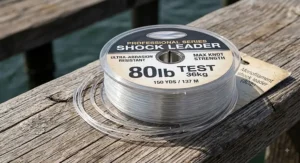
This guide walks through seven real, currently available shock leader mono products, breaks down what the specs actually mean once you’re standing in the wash at 6 a.m., and digs into the five closely related situations anglers ask about most: heavy mono leader setups for big fish, abrasion resistant mono for structure and rocks, dedicated surf fishing leader rigs, structure leader tactics, and toothy fish leader choices for bluefish, mackerel, and their sharp-toothed cousins. As Wikipedia’s overview of monofilament fishing line explains, mono is made from a single fiber of plastic material rather than the multiple braided strands used in braided lines, and nylon monofilament remains the dominant material because it’s inexpensive to produce across a wide range of diameters and tensile strengths. That single-fiber construction is exactly why mono stretches — and that stretch is the whole secret behind why it makes such a good shock absorber.
What Is Shock Leader Mono?
Shock leader mono is a short, heavy section of monofilament line tied between a lighter main line and a hook or rig, engineered to stretch and absorb the sudden force generated by casting a heavy weight or by a powerful fish strike. It’s most associated with surf casting, where anglers regularly fling 4-to-8-ounce sinkers, but it shows up anywhere a thin main line needs backup against abrasion, teeth, or shock loading.
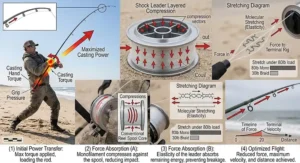
The “shock” in the name isn’t marketing fluff. When you load up a surf rod and let a heavy sinker fly, the peak force at the exact moment the line comes tight can spike well beyond your main line’s rated strength — momentarily, but violently enough to snap it. A heavier, stretchier mono leader absorbs that spike before it ever reaches your reel spool. It’s the same principle as a bungee cord versus a steel cable: give the force somewhere to go, and it stops trying to break things.
Quick Comparison Table
Here’s the fast version, before we get into the full breakdown of each pick below.
| Product | Test Range | Best For | Approx. Price |
|---|---|---|---|
| Berkley Trilene Big Game | 30-400 lb | All-around trusted classic | Under $15 |
| Ande Premium Monofilament | 15-130 lb | Soft, supple surf casting | $10-$20 range |
| Momoi Diamond Monofilament | 20-200 lb | Toothy fish & structure | $15-$30 range |
| Hi-Seas Grand Slam Leader | 20-300 lb | Crimping & versatile rigs | Under $15 |
| Sufix Superior Leader | 15-500 lb | Heavy abrasion resistance | $10-$20 range |
| KastKing DuraBlend Leader | 10-100 lb | Budget bulk value | Under $15 |
| RUNCL PowerMono | 3-35 lb | Budget beginner option | Under $15 |
Looking at the spread, there’s no single “best” line here so much as a best line for a given rod, target species, and bottom composition. The Berkley Trilene Big Game and Hi-Seas Grand Slam Leader dominate the middle ground because they cover the widest practical test range without forcing you into a specialty niche, while the Momoi Diamond Monofilament earns its higher price by surviving abrasion and teeth that would shred a budget line in one cast. Anglers on a tighter budget shouldn’t feel shortchanged, either — the RUNCL PowerMono and KastKing DuraBlend Leader both punch above their price point for casual surf and pier trips.
💬 Bookmark this comparison — you’ll want it handy when you’re standing in the tackle aisle deciding between test weights.
Top 7 Shock Leader Mono Picks: Expert Analysis
Seven real, currently sold options, spanning budget to premium, so there’s a fit for a weekend pier angler and a dedicated surfcaster alike.
1. Berkley Trilene Big Game Monofilament Leader — the trusted all-rounder for every skill level
The standout here is consistency: Berkley Trilene Big Game has been a staple leader material for decades, and that track record shows up in how predictably it performs cast after cast. It’s available in test weights from 30 lb all the way to 400 lb, which is an enormous range covering everything from inshore flounder rigs to serious offshore trolling leaders. That controlled stretch Berkley engineers into the formula means it absorbs shock without turning mushy or losing hookset power — a balance a lot of cheaper monos never quite nail. Based on the spec comparison against the rest of this list, Big Game sits in a sweet spot: strong enough for structure and toothy fish work, but soft enough that most anglers can tie a solid knot without a vice. It’s a smart default pick for beginners who don’t yet know which specialty leader they’ll eventually want, and a reliable backup spool for veterans who’ve tried the fancier stuff and keep coming back. Reviewers consistently report that it holds up across species — from catfish to muskie to inshore game fish — without a single breakage under normal use, and a long-term tackle review from Wired2Fish specifically highlights years of use without a single line breakage among tournament-level anglers. The most common complaint in user reviews is coiliness after extended time on a reel, a known trait of stiffer monofilaments that a quick stretch-and-soak routine mostly resolves. Price sits comfortably under $15 for a standard spool, and given the test-range flexibility, it’s genuinely hard to argue with the value.
Pros:
- ✅ Enormous 30-400 lb test range covers nearly any use case
- ✅ Controlled stretch balances shock absorption and sensitivity
- ✅ Decades of proven reliability across species and conditions
Cons:
- ❌ Can develop noticeable coil memory after long reel storage
- ❌ Stiffer than premium options in heavier test weights
2. Ande Premium Monofilament Leader — softest handling for long surf sessions
The standout feature on Ande Premium Monofilament is how supple it stays even at heavier test weights, which matters more than most anglers realize when you’re tying dozens of rigs on a cold beach. Spec-wise, it’s a medium-soft monofilament built with strong tensile and knot strength alongside solid abrasion resistance, and it’s sold in test weights spanning roughly 15 lb to 130 lb, comfortably covering the standard surf-fishing shock leader range. What most buyers overlook about this line is that “soft” doesn’t mean “weak” — the softness actually makes it easier to seat knots fully, which in practice often means fewer slipped knots than with stiffer competitors. It’s particularly well suited to anglers who tie their own rigs streamside or beachside rather than pre-rigging at home, since cold, stiff fingers get along much better with pliable line. Aggregated review sentiment across tackle forums and retailer sites consistently describes Ande as a longtime favorite among surf and pier veterans, with some longtime users specifically citing its reduced tangling compared to stiffer alternatives. A recurring critique is that the color options can fade or discolor faster than premium fluorocarbon-coated lines, which is a fair trade-off for the price. Expect to pay in the $10-$20 range depending on spool size and test weight — reasonable for a line with this much of a following among dedicated surf anglers.
Pros:
- ✅ Exceptionally supple for easier knot tying in the field
- ✅ Strong tensile-to-diameter ratio for its price class
- ✅ Long-standing reputation among dedicated surf anglers
Cons:
- ❌ Color can degrade with prolonged UV exposure
- ❌ Less abrasion-resistant than harder premium mono options
3. Momoi Diamond Monofilament Leader — the toughest option for structure and toothy fish
Momoi Diamond Monofilament stands out for genuinely low stretch relative to other monos, which anglers who fish heavy structure or big toothy predators tend to prize because it means less give when a fish is trying to bury itself in a rock pile. It’s offered in a wide range of test weights, commonly cited between 20 lb and 200 lb depending on the spool, with a noticeably firmer diameter-to-strength ratio than many competitors. What the spec sheet won’t tell you, but user reports across boating and fishing forums consistently note, is that this firmness translates directly into abrasion resistance — anglers have described pulling snook and other structure-oriented fish through mangroves and rock edges with the line coming out scuffed but intact. That’s precisely the profile you want in a leader built for punishing bottom or heavy cover. On the flip side, that same stiffness means it isn’t the easiest line to tie small, delicate knots with, so it rewards anglers who already have solid rigging technique. Reviewers frequently point to its consistency spool to spool as a major selling point — a trait less common than you’d expect in monofilament, where batch variation is a real and often unspoken issue. Expect a premium price for this reputation, typically landing in the $15-$30 range depending on spool length and test. For anyone regularly fishing rock jetties, oyster bars, or toothy inshore species, that premium buys real peace of mind.
Pros:
- ✅ Outstanding abrasion resistance against rock and structure
- ✅ Low stretch improves hooksets in heavy cover
- ✅ Consistent quality control spool to spool
Cons:
- ❌ Stiffer handling makes fine knot-tying more demanding
- ❌ Priced noticeably higher than budget and mid-range leaders
4. Hi-Seas Grand Slam Monofilament Leader — most versatile for crimped rigs
The standout advantage of Hi-Seas Grand Slam Monofilament Leader is its dual identity: it’s supple enough to hand-tie but engineered specifically to crimp cleanly, which opens up rigging options that pure hand-tied leaders don’t offer. Spec-wise it spans an unusually broad range — commonly available from roughly 20 lb up through 300 lb test, with diameters and matching aluminum sleeve sizes clearly specified by the manufacturer for each test weight. That crimp compatibility matters more than it sounds; a properly crimped mono leader can actually retain more of its rated strength than a knotted one, especially in the heavier test weights where knot slippage becomes a real risk. Based on the spec comparison, this makes Grand Slam a strong pick for anglers building rigs for bottom fishing, deep dropping, or offshore trolling where a compromised knot could mean losing a genuinely expensive outing. Aggregated user feedback highlights its “ideal sensitivity and control” as a recurring theme, alongside praise for reliable knot and crimp strength across freshwater and saltwater applications. Some reviewers note that at the very highest test weights, handling stiffness increases noticeably, which is typical of heavy monofilament generally and not unique to this brand. Pricing typically stays under $15 for standard coil lengths, making it an efficient buy for anglers who rig multiple outfits.
Pros:
- ✅ Crimps cleanly for stronger heavy-test connections
- ✅ Broad 20-300 lb test range for multiple rig types
- ✅ Trusted by offshore, bottom, and inshore anglers alike
Cons:
- ❌ Handling stiffens considerably at the heaviest test weights
- ❌ Crimping requires separate sleeves and a crimping tool
5. Sufix Superior Leader — best heavy mono leader for extreme abrasion
Sufix Superior Leader earns its spot with a genuinely wide strength ceiling, with some listings citing test weights running from roughly 15 lb up toward 500 lb for the heaviest big-game spools. That range alone tells you this is a serious heavy mono leader, built for anglers who need serious backbone rather than finesse. Technically, Sufix markets Superior as a co-polymer formulation rather than pure nylon monofilament, which in practice tends to deliver a firmer, more abrasion-resistant line than standard mono at a comparable diameter — useful information the spec sheet states plainly but rarely explains in terms of what it means at the business end of your rod. Here’s what to weigh: co-polymer blends generally trade a bit of stretch for added toughness, so Superior tends to feel a touch less forgiving on hook-sets than a pure Trilene-style mono, but it more than compensates in raw wear resistance against pilings, rocks, and rough jaws. Reviewers on tackle retailer sites and forums consistently describe it as a dependable bulk-spool option for anglers who go through a lot of leader material season to season, citing minimal breakage even under heavy use. A common critique is that its stiffness on lighter test weights can make small-fish rigging slightly less comfortable than a softer alternative like Ande. Pricing generally lands in the $10-$20 range for bulk spools, which is genuinely competitive given the strength ceiling on offer.
Pros:
- ✅ Extremely high test-weight ceiling for serious big game leaders
- ✅ Co-polymer blend adds notable abrasion toughness
- ✅ Strong value on bulk spools for frequent leader-tying anglers
Cons:
- ❌ Firmer feel than pure nylon mono on lighter tests
- ❌ Less forgiving stretch profile for finesse presentations
6. KastKing DuraBlend Monofilament Leader Line — best bulk value for budget-conscious anglers
The standout with KastKing DuraBlend Monofilament Leader Line is reel capacity per dollar: it’s built with a high tensile strength-to-diameter ratio, meaning you get a thinner, stronger line than older-generation mono at the same test weight, without paying premium pricing. Spec sheets list it across test weights roughly from 10 lb to 100 lb, positioning it squarely as an everyday leader for inshore, pier, and general surf use rather than heavy offshore trolling. On paper this means anglers get low-memory handling, decent abrasion resistance, and solid knot strength in a package clearly aimed at value rather than specialty performance — and honestly, that’s exactly what a lot of casual anglers actually need. Aggregated customer feedback on major retail listings repeatedly praises the low memory characteristics and easy knot-tying, with multiple reviewers specifically noting they switched from thicker competing test weights to DuraBlend because it tied smaller, cleaner knots at equivalent strength. A commercial fisherman’s aggregated review even claimed it held up better than some pricier competing brands in daily rock cod and tuna work, though that’s an outlier data point worth taking with the usual grain of salt that applies to any single review. The main knock is that it isn’t rated for the true extreme-heavy-game test weights the Momoi or Sufix options reach. Pricing generally stays under $15, making it one of the more efficient buys per yard on this list.
Pros:
- ✅ High strength-to-diameter ratio stretches your dollar further
- ✅ Low memory for easier handling and cleaner knots
- ✅ Strong aggregated reviews for everyday inshore and surf use
Cons:
- ❌ Top test weight tops out lower than premium big-game leaders
- ❌ Less proven track record in extreme offshore conditions
7. RUNCL PowerMono Fishing Line — lightest entry point for beginners
RUNCL PowerMono Fishing Line rounds out this list as the most accessible entry point, both in price and in the breadth of light test weights it covers — commonly listed from around 3 lb up to roughly 35 lb, which admittedly sits below true heavy shock-leader territory but makes it a genuinely useful choice for lighter surf, pier, and inshore rigs where a full 50-80 lb leader would be overkill. What most buyers overlook about this line is its neutral buoyancy, meaning it suspends in the water column rather than sinking or floating aggressively — a small but real advantage for topwater presentations and suspending lure setups where a heavier, sink-happy leader would drag the action down. Based on the spec comparison against the rest of this list, PowerMono isn’t positioned to compete with dedicated big-game leader material, but for anglers building lighter finesse rigs or just getting into building their own leaders, it’s an approachable, low-cost way to practice knot tying without burning through expensive premium spools. Aggregated reviews consistently highlight its smooth casting and minimal line vibration through guides as standout traits at this price point, alongside praise for the clear-versus-high-vis color options. The most common critique is that its abrasion resistance, while decent for the price, doesn’t hold up to sustained contact with barnacles or oyster beds the way the premium options on this list do. At well under $15 for a large-yardage spool, it remains one of the most economical ways to build a full box of light-to-medium leader material.
Pros:
- ✅ Genuinely affordable for high-yardage spools
- ✅ Neutral buoyancy suits topwater and suspending presentations
- ✅ Smooth, low-vibration casting through rod guides
Cons:
- ❌ Top test weight too light for serious heavy shock-leader duty
- ❌ Abrasion resistance lags behind premium structure-focused mono
Top 7 Products: Full Comparison
| Product | Test Range | Handling | Best For | Approx. Price |
|---|---|---|---|---|
| Berkley Trilene Big Game | 30-400 lb | Medium-firm | All-purpose leader | Under $15 |
| Ande Premium Monofilament | 15-130 lb | Soft/supple | Surf casting comfort | $10-$20 range |
| Momoi Diamond Monofilament | 20-200 lb | Firm | Structure & toothy fish | $15-$30 range |
| Hi-Seas Grand Slam Leader | 20-300 lb | Medium | Crimped heavy rigs | Under $15 |
| Sufix Superior Leader | 15-500 lb | Firm | Extreme heavy mono leader | $10-$20 range |
| KastKing DuraBlend Leader | 10-100 lb | Soft | Budget everyday use | Under $15 |
| RUNCL PowerMono | 3-35 lb | Soft | Light rigs & beginners | Under $15 |
Reading across this table, the clearest pattern is that test range and handling stiffness move together — the heaviest-rated lines (Sufix Superior Leader, Momoi Diamond Monofilament) trade suppleness for raw strength ceiling, while lines built for surf comfort (Ande Premium Monofilament, KastKing DuraBlend Leader) sacrifice top-end test weight for easier knot-tying. If your fishing genuinely calls for a 200+ lb leader, the extra stiffness is simply the cost of admission; if you’re mostly in the 20-80 lb range for surf or inshore work, softer handling is worth prioritizing.
How to Choose Shock Leader Mono
Picking the right leader comes down to a handful of decisions that matter far more than brand loyalty.
- Match test weight to casting weight, not just fish size. A common surf-fishing guideline is roughly 10 lb of leader strength per ounce of sinker weight being cast, since the shock load from casting often exceeds what the fish itself will ever apply.
- Consider bottom composition before test weight. Rocky, oyster-laden, or reef-adjacent structure calls for a firmer, more abrasion resistant mono like the Momoi Diamond Monofilament, while sandy surf can get by with a softer option.
- Think about target species’ mouths, not just their size. Toothy species like bluefish or mackerel chew through soft leader fast, favoring firmer options even at modest overall test weight.
- Prioritize knot-tying comfort if you rig on location. Cold hands and stiff heavy mono are a frustrating combination; a supple option like Ande Premium Monofilament pays off on long beach sessions.
- Decide between knots and crimps early. If you’re building heavier offshore rigs, a crimp-friendly product like Hi-Seas Grand Slam Monofilament Leader can retain more rated strength than a knotted connection.
- Buy enough leader length for repeated re-tying. Bulk spools of budget-friendly options like KastKing DuraBlend Leader or RUNCL PowerMono let you re-rig generously without rationing line.
- Don’t ignore diameter, only pound test. Two lines rated the same test weight can differ meaningfully in diameter, which affects both castability and how the line resists nicks.
Heavy Mono Leader for Big Game and Hard-Fighting Fish
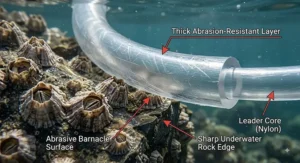
A heavy mono leader earns its keep the moment a fish decides your carefully tied rig is an obstacle to be dragged through pilings, rock, or its own school. For big game — think tarpon, large sharks, tuna, or trophy stripers — a heavy mono leader in the 80-300 lb range acts as both shock absorber and armor, standing between a violent initial run and your comparatively delicate main line. What most buyers overlook here is that “heavy” doesn’t automatically mean “better” across the board; a leader rated well beyond what your rod and reel combo can actually apply meaningful pressure against just adds unnecessary stiffness and reduces castability without a corresponding safety benefit. Based on the spec comparison across this list, the Sufix Superior Leader and Momoi Diamond Monofilament are the strongest fits for genuinely heavy work, since both are engineered specifically around high test-weight ceilings and abrasion durability rather than finesse. The Hi-Seas Grand Slam Monofilament Leader deserves a mention too, since its crimp-friendly design becomes especially valuable once you’re working in the 100+ lb range, where hand-tied knots start losing meaningful strength. Aggregated reports from big-game and offshore forums consistently describe heavier mono leaders surviving abraded, scuffed encounters with structure that would have severed lighter lines outright — which is really the entire point of stepping up in test weight in the first place.
Abrasion Resistant Mono: Features That Actually Matter
Abrasion resistance is the spec everyone claims and few products truly deliver at the level anglers hope for, so it’s worth understanding what’s actually driving it. In practice, abrasion resistance in monofilament comes primarily from the polymer blend and the surface hardness of the extruded line — firmer, denser formulations resist nicks and cuts better than soft, stretchy ones, which is exactly why the stiffer options on this list (Momoi Diamond Monofilament, Sufix Superior Leader) consistently outperform softer picks like RUNCL PowerMono against rock, barnacles, and oyster beds. What most marketing copy won’t tell you is that color additives and UV coatings, while useful for visibility control, have essentially nothing to do with true abrasion resistance — that’s a common point of confusion among newer anglers comparing spec sheets. A feature that genuinely does matter is diameter-to-test ratio: a thinner line carrying the same rated strength has proportionally less material to sacrifice to a nick before it fails, so a well-engineered thin-but-strong line can actually outperform a thicker but lower-quality one against abrasion. Reviewers across forums and retail sites who fish heavy structure regularly gravitate toward firmer mono specifically for this reason, frequently describing lines coming back visibly scuffed but intact after dragging through rock or pilings. If your fishing regularly involves jetties, reefs, mangroves, or oyster bars, prioritizing a firmer, denser mono over a softer, more comfortable one is the single highest-impact decision you can make.
Surf Fishing Leader Setup: Your Practical Usage Guide
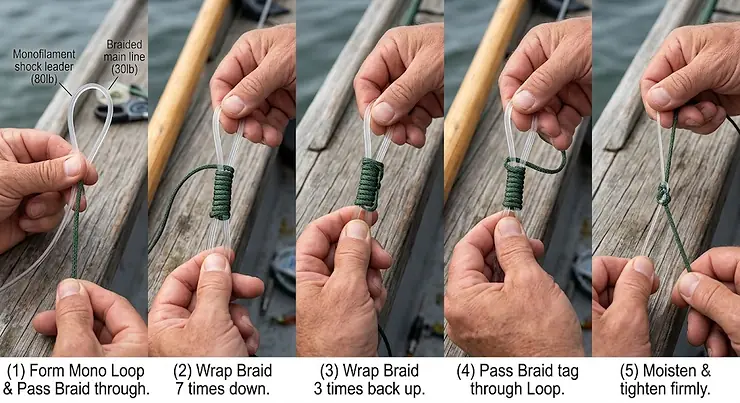
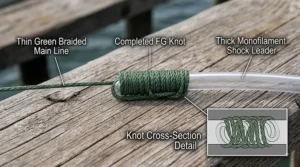
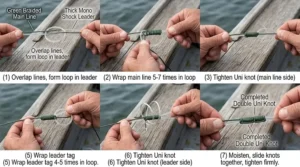
Building a proper surf fishing leader setup is one of those tasks that looks intimidating until you’ve done it a handful of times, at which point it becomes second nature. Start with length: a widely cited surf-fishing guideline is a leader roughly double the length of your rod, plus five or six additional wraps around the reel spool, which for most surf rods lands the finished leader somewhere around 27-30 feet. Tie your main line to the leader using a knot built for connecting two different diameters — a Bristol knot or an Albright knot are the standard choices among surf anglers, since a basic knot designed for same-diameter connections tends to slip or fail at the joint under casting stress. A common mistake in the first 30 days of using a shock leader is winding too many wraps of the thick leader material onto the reel spool before casting, which creates a lumpy, uneven base that throws off your casting rhythm — aim for those five or six wraps and no more. Maintenance matters more than most beginners expect, too: mono degrades from UV exposure and heat, so a leader left tied to a rod and stored in direct sun for a season will lose strength invisibly, without any obvious sign until it fails at the worst moment. A simple habit — retiring and retying your shock leader every few serious outings, or immediately after any encounter with structure — costs almost nothing and prevents the vast majority of preventable break-offs.
✨ Don’t Miss These Exclusive Deals!
🔍 Take your leader game to the next level with these carefully selected picks. Click on any highlighted product above to check current pricing and availability. The right shock leader mono setup turns a frustrating morning of break-offs into a genuinely good day on the water!
Structure Leader Tactics: Real-World Scenarios
Different anglers need genuinely different structure leader approaches, so here are three realistic profiles matched to specific products and reasoning.
The weekend jetty angler: Fishing rock jetties every other Saturday, targeting sheepshead and black drum, on a modest budget. This angler should lean toward Momoi Diamond Monofilament in the 40-60 lb range, since jetty structure is unforgiving and the extra abrasion resistance directly translates into fewer lost rigs, even though it costs more per yard than budget alternatives.
The oyster-bar redfish chaser: Wading skinny water near oyster beds for redfish, prioritizing stealth alongside toughness. Here, a mid-weight Berkley Trilene Big Game leader in the 20-30 lb range strikes a reasonable balance — supple enough for finesse presentations, but with enough backbone to survive incidental oyster contact during a fight.
The bridge-piling striper angler: Fishing heavy current around bridge pilings for large striped bass, where fish routinely try to wrap the leader around structure the instant they’re hooked. This scenario calls for the firmest, most abrasion resistant mono available — Sufix Superior Leader in the 60-80 lb range — paired with a shorter leader length to minimize the amount of line exposed to the pilings during the fight.
Toothy Fish Leader: Problem → Solution Guide
Toothy species create a distinct set of headaches, so here’s a direct rundown of common problems and workable fixes.
Problem: Bluefish or mackerel repeatedly biting through the leader mid-fight. Solution: step up to a firmer, higher-abrasion mono like Momoi Diamond Monofilament, and shorten the leader length so less material is exposed to bite contact during the fight.
Problem: Leader looking visibly frayed after landing just one or two toothy fish. Solution: treat frayed leader as single-use — inspect after every catch and re-tie immediately rather than trying to stretch its life across multiple fish.
Problem: Losing hooksets because a stiffer, tooth-resistant leader is hurting bait presentation. Solution: run a shorter section of heavier, firmer leader material spliced to a longer, softer main leader section, concentrating the toughness only where teeth actually make contact.
Problem: Knots slipping under the sudden headshakes typical of toothy predators. Solution: switch to a crimped connection using a product like Hi-Seas Grand Slam Monofilament Leader, which is specifically engineered to hold strength through a compression crimp rather than a hand-tied knot.
Problem: Uncertainty about which test weight actually stops teeth versus just holding weight. Solution: prioritize diameter and firmness over raw pound test — a firmer 40 lb mono often resists teeth better than a softer 60 lb line, since bite resistance is more about material hardness than sheer strength rating.
Shock Leader Mono vs Fluorocarbon vs Braided Line
It’s worth understanding where shock leader mono fits relative to its two main alternatives, since plenty of anglers default to whichever leader material they learned first without weighing the trade-offs.
| Leader Type | Stretch | Abrasion Resistance | Visibility | Best Use Case |
|---|---|---|---|---|
| Shock leader mono | High | Good-Excellent | Moderate | Casting shock absorption, surf, structure |
| Fluorocarbon | Low | Excellent | Very low | Clear water, finicky fish, finesse presentations |
| Braided line | Very low | Poor (cuts easily) | Low (thin diameter) | Main line, not typically a leader |
The core trade-off is stretch versus stealth. Mono’s high stretch is precisely what makes it the superior choice for shock absorption during a hard surf cast — that same stretch would be a liability in clear-water finesse fishing, where fluorocarbon’s low visibility and minimal give matter more than shock protection. Braided line, meanwhile, essentially never belongs as a shock leader itself since its near-zero stretch and thin diameter make it prone to cutting on contact with structure or teeth; it’s almost always paired with a mono or fluorocarbon leader rather than used as one. Anglers chasing the toughest of both worlds sometimes run a short fluorocarbon “bite leader” spliced onto a longer mono shock leader, capturing stealth near the hook and shock absorption near the rod.
Common Mistakes When Buying Shock Leader Mono
A handful of buying mistakes show up again and again among anglers new to shock leaders, and nearly all of them are avoidable.
The most frequent misstep is buying leader material rated far heavier than the casting weight or fish actually requires, on the theory that “stronger is always safer.” In reality, oversized leader adds unnecessary stiffness, reduces castability, and can actually make your main line the weak point in the system, defeating the purpose of the leader entirely. A second common mistake is ignoring diameter in favor of pound test alone — two products rated identically can differ meaningfully in thickness, which affects both knot compatibility and how the line performs against abrasion. Buyers also frequently underestimate how much leader length they’ll go through in a season, buying a single small spool and then rationing material, tying knots that are shorter and weaker than they should be just to conserve line. Finally, plenty of anglers skip matching leader stiffness to their actual rigging conditions — buying a firm, structure-focused mono for casual pier fishing where a softer, easier-handling option like KastKing DuraBlend Leader would have made every knot-tying session noticeably less frustrating.
Long-Term Cost & Maintenance
Shock leader mono is genuinely inexpensive compared to most other tackle categories, but the long-term cost equation still rewards a bit of planning. Buying in bulk — a large spool of a budget-friendly option like RUNCL PowerMono or KastKing DuraBlend Leader — typically drops the effective cost per rig well below buying small pre-cut leader packs repeatedly, especially for anglers who re-tie frequently after structure encounters or toothy-fish contact.
| Approach | Approx. Cost | Best For |
|---|---|---|
| Small pre-cut leader spools | $10-$15 each | Occasional anglers, light rigging |
| Bulk 100+ yard spools | $10-$30 total | Frequent anglers, high leader turnover |
| Premium structure-focused mono | $15-$30 range | Heavy structure, toothy fish specialists |
Looking at the table, the real long-term savings come from matching purchase strategy to fishing frequency rather than chasing the cheapest per-spool price. An angler fishing rock jetties weekly will burn through leader fast regardless of brand, making a bulk spool of a durable option like Momoi Diamond Monofilament more economical over a season than repeatedly buying small packs, even though the upfront per-spool price is higher. Maintenance-wise, the single biggest cost-saver is simply storing leader material away from direct sunlight and heat, since UV degradation is invisible until the line fails — a $0.99 storage habit that prevents genuinely costly break-offs on a trophy fish. Independent tensile testing compiled by Sport Fishing Magazine has also shown that real-world breaking strength varies meaningfully between brands even at the same labeled pound test, which is one more reason a trusted, consistent leader is worth the modest premium over an unfamiliar off-brand spool.
Safety, Regulations & Knot Compliance Guide
Shock leader mono itself isn’t heavily regulated, but the broader context of surf and saltwater fishing carries real rules worth understanding before you rig up. NOAA Fisheries manages recreational saltwater fisheries in waters from 3 to 200 nautical miles from shore, working alongside regional fishery management councils, individual states, and interstate marine fisheries commissions to develop consistent regulations across state and federal waters. Because rules vary meaningfully by state and even by specific fishery, it’s worth checking your state’s saltwater fishing regulations before a trip, particularly around species-specific gear restrictions that occasionally touch on leader or rig configurations for catch-and-release practices.
Beyond regulatory compliance, there’s a practical safety dimension to shock leaders that’s easy to overlook: a heavy leader under load during a hard cast carries real energy, and a leader-to-mainline knot that fails mid-cast can result in a sinker and rig traveling at genuinely dangerous speed. Always inspect your shock leader knot before every casting session, and never stand near or behind an angler mid-cast with a heavy surf rig. Choosing a well-matched, properly tied shock leader mono setup isn’t just about landing more fish — it’s a meaningful safety practice for everyone sharing the beach or pier with you.
FAQ
❓ What pound test shock leader mono should I use for surf fishing?
❓ How long should a shock leader mono setup be?
❓ Is shock leader mono better than fluorocarbon for surf casting?
❓ How often should I replace my shock leader mono?
❓ What knot works best for connecting shock leader mono to main line?
Conclusion
Shock leader mono doesn’t get much glory, but it’s doing quiet, essential work every time you launch a heavy rig or hook into something with teeth. Across this list, the Berkley Trilene Big Game remains the safest all-around starting point for anglers who aren’t sure exactly what they need yet, while the Momoi Diamond Monofilament and Sufix Superior Leader earn their higher price tags with genuinely tougher abrasion resistance for structure and toothy fish work. Budget-focused anglers shouldn’t feel like they’re settling with the KastKing DuraBlend Leader or RUNCL PowerMono, either — both deliver real performance for casual surf and pier trips without straining a tackle budget. Whatever pick you land on, the underlying principle stays the same: match your leader’s test weight, stiffness, and abrasion resistance to the actual casting weight, target species, and bottom you’re fishing, and a lot of frustrating break-offs simply stop happening. That’s really the whole point of a heavy mono leader in the first place — it’s cheap insurance for the moments that matter most on the water.
Recommended for You
- 7 Best Low Memory Mono Line Options for 2026 (No More Tangles)
- Moss Green Braid: 7 Best Stealthy Picks for 2026 Anglers
- 30lb Braided Line: 7 Powerful Picks for 2026 Fishing
Disclaimer: This article contains affiliate links. As an Amazon Associate, I earn from qualifying purchases. If you purchase products through these links, we may earn a small commission at no additional cost to you.
✨ Found this helpful? Share it with your friends! 💬🤗
