
In This Article
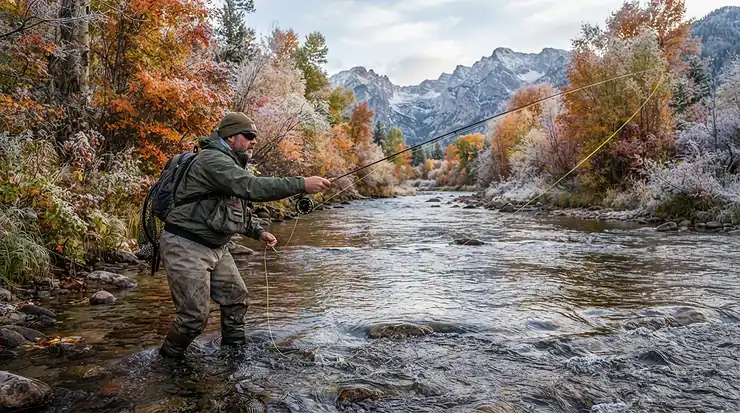
There’s a very specific kind of stupid that happens around hour three of a January float trip: your legs go from “brisk” to “why did I choose this hobby” to something approaching numb, and suddenly the fish you’re casting to matter a lot less than the feeling in your toes. Fishing pants for cold weather fishing exist to solve exactly that problem — they’re purpose-built trousers or bibs that combine insulation, wind resistance, and often waterproofing so an angler can stand in freezing water or wind for hours without their lower half declaring an early retirement. The good ones aren’t just “warm pants.” They’re engineered systems with articulated knees, wader-friendly cuffs, and insulation that still performs when things get damp. Ordinary jeans or gym sweats, by contrast, soak up moisture and turn into a clammy, heat-sucking liability the moment they get wet — and given how quickly the body loses heat once truly cold, according to the Nebraska Game and Parks cold water safety guide, that’s not a small distinction.
This guide breaks down seven real, currently available products spanning budget bibs to flagship GORE-TEX rigs, explains what the specs actually mean once you’re standing in a river, and walks through layering, shoulder-season strategy, and the mistakes that leave anglers cold and cranky. Everything here is grounded in real specs and aggregated review sentiment — no invented field-testing, just honest analysis you can act on before your next trip.
Quick Comparison Table
| Product | Insulation | Best For | Price Range |
|---|---|---|---|
| Simms Guide Insulated Bib | 60–80g PrimaLoft Silver | Extreme cold, boat & ice | $550–$650 |
| Simms Challenger Insulated Bib | PrimaLoft (mid-loft) | Cold-weather boat angling | $300–$400 |
| AFTCO Hydronaut Insulated Bib | 140gsm synthetic fill | Ice fishing, shore fishing | $250–$300 |
| Skwala Fusion 90 Pant | 90g Toray 3DEFX | Under waders, mobility | Around $250 |
| Patagonia Shelled Insulator Pants | Grid-fleece insulation | Versatile layering piece | $180–$240 |
| Orvis Pro LT Under Wader Pant | Lightweight softshell | Shoulder-season wading | Around $120 |
| Frogg Toggs FTX Armor Bib | DriPore Gen2 shell | Budget all-weather backup | $80–$160 |
A quick scan of this table tells the real story: price climbs fast once GORE-TEX and PrimaLoft Silver enter the picture, and that jump buys you waterproofing plus insulation in one garment rather than a layering piece you wear under something else. The Skwala Fusion 90 Pant and Orvis Pro LT Under Wader Pant aren’t trying to compete on waterproofing at all — they’re designed to live under your waders, which is a completely different job than what the Simms Guide Insulated Bib or AFTCO Hydronaut Insulated Bib are built for. If you already own solid waders, that distinction should drive your first buying decision more than price alone.
💬 Just one click — help others make better buying decisions too!😊
Top 7 Fishing Pants for Cold Weather Fishing: Expert Analysis
1. Simms Guide Insulated Bib — flagship warmth for brutal, wet cold
If you fish through genuinely miserable weather — sleet, driving wind, sub-freezing mornings on a drift boat — the Simms Guide Insulated Bib is the pants-based equivalent of buying real insurance instead of hoping for the best. The 2-layer GORE-TEX shell handles full waterproof protection while PrimaLoft Silver High Loft insulation, layered at roughly 60g in the legs and up to 80g around the waist and seat, does the actual warming work.
In practice, that graduated insulation placement matters: your seat and core need more warmth for standing still, while your legs need less bulk so you can still wade and climb into a boat without waddling. Elastic suspenders and a relaxed cut mean these are built to go over a midweight base layer, not replace one — this is an outer shell-and-insulation combo, not a single thin pant.
Reviewers consistently report exceptional warmth on long, wet days and specifically praise the ankle zippers for getting boots on and off without a fight; a recurring niggle is that the suspenders’ belt loops run narrower than expected, making it fiddly to thread a favorite belt through if you skip the suspenders. This is the pick for guides, ice anglers, and anyone who measures a “good day” partly by how cold it was outside.
Pros:
- ✅ GORE-TEX shell delivers genuine waterproof, breathable protection
- ✅ Graduated PrimaLoft placement balances warmth with mobility
- ✅ Ankle zippers make boot changes fast even with cold hands
Cons:
- ❌ Premium price puts it out of reach for casual anglers
- ❌ Suspender belt loops run tight for wider belts
At around $550–$650, the Simms Guide Insulated Bib isn’t a casual purchase, but for anglers who fish hard through winter rather than around it, the cost-per-outing math evens out fast.
2. Skwala Fusion 90 Pant — puffy-pant warmth that never feels clammy
Here’s the pitch that actually holds up under scrutiny: the Skwala Fusion 90 Pant is designed to feel like running gear while performing like a parka. Built from Primeflex stretch-woven nylon with 90g of Toray 3DEFX stretch insulation, it’s meant to live directly under waders rather than stand alone against weather.
What that spec sheet won’t tell you outright is what full-stretch insulation actually solves: traditional puffy under-layers bunch at the knee and ride up inside waders after an hour of wading, forcing constant readjustment. The articulated, tapered leg cut here is engineered specifically to prevent that. Two insulated jean-cut hand pockets stay accessible even with waders on, which sounds minor until you’re trying to warm your fingers between drifts.
Aggregated customer sentiment is unusually strong for a niche product — reviewers repeatedly single out the combination of warmth and freedom of movement, with almost no complaints about clamminess even after long days. The trade-off is that this pant provides zero standalone waterproofing, so it only makes sense paired with waders or worn as an insulating layer under separate rain gear.
Pros:
- ✅ Full-stretch construction eliminates bunching under waders
- ✅ Insulated pockets stay usable even mid-wade
- ✅ Athletic feel avoids the “Michelin Man” bulk of older puffy layers
Cons:
- ❌ Offers no standalone waterproofing on its own
- ❌ Premium price for what is technically a base/mid layer
At around $250, this is a specialist purchase — a fantastic layering piece, but not a substitute for outer protection.
3. AFTCO Hydronaut Insulated Bib — built for ice anglers who need shoulder relief
The AFTCO Hydronaut Insulated Bib was engineered with ice fishing specifically in mind, and it shows in details competitors skip. A 2-layer, 100% nylon shell rated to 30,000mm waterproofing is lined with 100% polyester and padded with 140gsm synthetic fill batting — enough insulation for genuinely brutal cold without the bulk of a full snowsuit.
What most buyers overlook is the ComfortFlex shoulder system: standard suspenders dig into the same two points for hours, and anyone who’s stood on ice all day knows that ache. AFTCO’s wider, load-distributing straps address that directly, and reviewers who fish long ice sessions specifically call out reduced shoulder and back fatigue compared to older bibs.
CORDURA reinforcement at the knees and seat adds durability where anglers kneel or slide gear across ice. Storage is genuinely thoughtful too, with brushed tricot handwarmer pockets, a dedicated pliers pocket, and knee-high zippers with storm flaps for quick on-and-off over boots.
Pros:
- ✅ ComfortFlex shoulder straps reduce fatigue on long sits
- ✅ 30K waterproof rating handles slush and standing water
- ✅ CORDURA reinforcement adds real durability at wear points
Cons:
- ❌ 140gsm fill is warm but not the warmest option here
- ❌ Relaxed ice-fishing cut runs bulky for active wading
Priced in the $250–$300 range, it undercuts the Simms Guide Bib while still delivering serious cold-weather performance for boat and ice anglers.
4. Patagonia Shelled Insulator Fishing Pants — the windproof do-everything layer
The Patagonia Shelled Insulator Fishing Pants split the difference between a standalone pant and a wading layer, and that flexibility is the whole point. A tough, 3-layer stretch-woven shell (86% polyester, 14% spandex) is lined with a windproof membrane and soft grid-fleece insulation, giving it enough wind resistance to work as an outer layer on milder cold days while still functioning as a warm mid-layer under waders when temperatures really drop.
Based on the spec comparison with dedicated bibs, this is a lighter-duty piece — there’s no suspender system and no heavy-loft PrimaLoft, just an elasticized waist and hook-and-loop ankle cuffs to stop ride-up. That’s exactly why it earns a spot here: not every cold-weather trip needs a $600 bib.
Reviewers who own these consistently describe them as their go-to piece for the wide middle ground between “chilly morning” and “genuinely dangerous cold,” including wearing them casually off the water thanks to the clean, non-technical look.
Pros:
- ✅ Windproof membrane adds real protection without bulk
- ✅ Versatile enough for both standalone and layering use
- ✅ Comfortable enough to wear casually off the water
Cons:
- ❌ Not waterproof — resistant only, so heavy rain gets through
- ❌ Insulation is lighter than dedicated ice-fishing bibs
At $180–$240, this is the pick for anglers who want one pair of pants that handles fall, early winter, and layering duty all in one.
5. Simms Challenger Insulated Bib — the value-driven PrimaLoft suit partner
Simms didn’t just shrink the Guide Bib to hit a lower price point — the Simms Challenger Insulated Bib is a genuinely different tool aimed at boat anglers who need thermal regulation more than extreme mobility. A fully-taped, waterproof Toray shell shell keeps snow, wind, and rain out, while integrated PrimaLoft insulation handles the warmth, and the bib is explicitly designed to pair with a matching Challenger jacket for a complete top-to-bottom insulated suit. What that pairing means in practice: anglers idling on a boat, waiting on a bite in freezing temps, benefit more from static warmth than from the athletic stretch a wading-focused pant offers. Aggregated reviews frame this bib as the reliable, slightly-less-technical sibling of the Guide line — plenty warm for boat and ice use, without the premium price tag or the ounce-counting mobility features anglers only need if they’re hiking miles between spots.
Pros:
- ✅ Pairs with matching jacket for a complete insulated system
- ✅ Toray shell handles snow and wind reliably
- ✅ Meaningfully cheaper than the flagship Guide Bib
Cons:
- ❌ Less mobile than stretch-focused wading pants
- ❌ Bulkier fit better suited to boat use than hiking to spots
Running $300–$400, the Simms Challenger Insulated Bib is the practical middle path for anglers who want PrimaLoft warmth without flagship pricing.
6. Orvis Pro LT Under Wader Pant — the frictionless budget base layer
Not every cold-weather trip is genuinely brutal, and the Orvis Pro LT Under Wader Pant is built for the 60-degree-air, cold-water days that make up a huge share of actual fall and spring fishing. Constructed for a frictionless feel inside waders, with strategic pockets and a comfortable, non-bulky fit, it trades heavy insulation for mobility and breathability. Here’s what the spec sheet won’t spell out clearly: this pant is explicitly not the warmest option in this roundup, and Skwala or AFTCO products will out-warm it in genuinely freezing conditions. But for the angler layering underneath breathable waders on a shoulder-season morning, that frictionless, low-bulk fit is a bigger comfort win than raw insulation would be. It shares design DNA with wet-wading pants, adding just enough warmth and durability to bridge the gap between summer wet-wading gear and true winter layering pieces.
Pros:
- ✅ Frictionless fit increases mobility and flexibility in waders
- ✅ Lightweight enough for active, hike-heavy fishing days
- ✅ Most affordable option in this entire roundup
Cons:
- ❌ Not warm enough for true deep-winter conditions
- ❌ Minimal insulation compared to purpose-built cold gear
At around $120, this is the smartest first purchase for anglers who fish more shoulder-season trips than deep-winter ones.
7. Frogg Toggs FTX Armor Bib — budget armor for hard, dirty days
The Frogg Toggs FTX Armor Bib exists for anglers who need real protection without a premium price tag, and honestly, it earns its keep. A Teflon DWR-coated polyester outer layer pairs with a DriPore Gen2 middle layer rated at 15,000 water holdout and 10,000 MVTR breathability, backed by a soft nylon taffeta liner for comfort against skin. Reinforced knees and seat areas are a specific nod to musky and pike anglers who kneel boatside or wade rough banks; the slim, athletic cut with a full-front zip closure keeps it from feeling like a costume. Reviewers treat this less as a technical cold-weather system and more as reliable, no-fuss armor against wind, splash, and abrasion — a fair trade given the price. It won’t out-warm a PrimaLoft bib on a true arctic morning, but layered over a fleece base, it handles a meaningful chunk of cold-weather days just fine.
Pros:
- ✅ Reinforced knees and seat survive rough, snag-prone conditions
- ✅ Full-front zip makes entry and exit genuinely easy
- ✅ Extremely accessible pricing for a dedicated fishing bib
Cons:
- ❌ Insulation is minimal compared to true winter bibs
- ❌ Water holdout rating trails premium GORE-TEX options
At $80–$160 depending on size and colorway, it’s the easiest bib on this list to justify as a backup or first-timer purchase.
Layering for Cold Weather Fishing: Building a System That Works
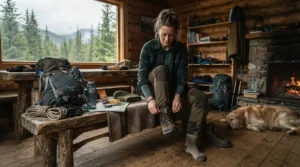
Insulated pants matter, but they’re only one piece of a layering for cold weather system, and treating them as a standalone solution is where a lot of anglers go wrong. The classic three-part structure — a moisture-wicking base layer, an insulating mid layer, and a wind/water-blocking outer shell — comes straight from broader outdoor-industry guidance, and REI’s layering basics guide frames it exactly that way: each layer has one job, and skipping one weakens the whole system. For fishing specifically, that means a synthetic or merino base layer against skin, a piece like the Patagonia Shelled Insulator Fishing Pants or Skwala Fusion 90 Pant doing the insulating work, and either waders or a shell like the Simms Guide Insulated Bib handling wind and water.
The trick most anglers miss during setup: match insulation weight to activity level, not just air temperature. A drift boat angler sitting mostly still needs heavier, static insulation — think the Simms or AFTCO bibs — while an angler hiking between pools generates body heat and often overheats in the same setup, making a lighter, breathable pant like the Orvis LT the smarter call even in similar temperatures. Common first-30-days mistakes include over-layering on active days (leading to sweat-soaked base layers that get cold fast once you stop moving) and under-layering the extremities, since roughly half of perceived body heat loss happens through an uncovered head and hands.
Real-World Scenarios: Which Cold-Weather Angler Are You?
The pre-dawn boat angler, idling on open water waiting for the bite in 25°F air: prioritize static warmth over mobility. The Simms Guide Insulated Bib or Simms Challenger Insulated Bib, paired with a matching insulated jacket, handles hours of stillness without the cold creeping in.
The shoulder-season wade angler, hitting rivers in 45–55°F air with genuinely cold water underneath: mobility and breathability matter more than maximum warmth. The Orvis Pro LT Under Wader Pant or Patagonia Shelled Insulator Fishing Pants fits this budget and activity level without overheating on a hike to the next run.
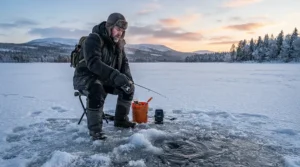
The dedicated ice angler, standing on frozen water for hours with minimal movement: the AFTCO Hydronaut Insulated Bib was built for exactly this, with shoulder-strap comfort designed around long, static sits and enough insulation to handle genuinely brutal wind chill without a jacket-plus-bib combo pushing past budget.
How to Choose Fishing Pants for Cold Weather Fishing
- Match insulation weight to your coldest realistic day, not your average one — buying for the worst morning of the season prevents a mid-trip gear failure.
- Decide standalone versus layering piece first: a bib like the Simms Guide handles weather alone, while the Skwala Fusion 90 only works paired with waders.
- Prioritize mobility if you hike to spots; prioritize static warmth if you fish from a boat or stand still on ice.
- Check the waterproof rating, not just “water-resistant” marketing language — DWR coatings alone won’t hold up to hours of standing water.
- Test pocket placement mentally against your gear: pliers pockets and chest storage matter more than most anglers expect until they’re fumbling with cold hands.
- Buy suspenders or a bib if you layer heavily; a beltless pant with multiple base layers underneath tends to sag and let in drafts.
- Budget for the whole system, not just the pants — a $600 bib without a matching base layer strategy underperforms a $150 pant paired correctly.
Insulated Fabric Explained: What Actually Keeps You Warm
The core science behind insulated fabric is simpler than the marketing suggests: warmth comes from trapped air, not the material itself. Down offers the best warmth-to-weight ratio of any option but collapses and loses insulating power when wet, which makes it a poor fit for an activity centered on standing in or near water. Synthetic insulations like PrimaLoft were originally developed for the U.S. Army specifically to solve that weakness — according to the material’s documented history, researchers wanted something that matched down’s warmth and compressibility while still performing when wet, and that’s precisely why nearly every serious cold-weather fishing pant on this list uses a synthetic fill rather than down.
Gram weight matters more than most shoppers realize. Lighter 60–90g fills, like those in the Skwala Fusion 90 Pant, suit active wading where body heat does some of the work; heavier fills in the 120–140gsm range, as seen in the AFTCO Hydronaut Insulated Bib, suit static, low-activity cold like ice fishing. Buying heavy insulation for an active hike-in trip is a common and avoidable mistake — it leads to overheating, sweating, and paradoxically getting colder once you stop moving and that sweat chills against your skin.
Insulated Fishing Trousers vs Standard Rain Gear
Standard rain gear and true insulated fishing trousers solve different problems, and conflating them is where budget-conscious anglers often go wrong. A basic rain pant, even a well-made one, blocks water and wind but adds zero meaningful warmth — it’s a shell without a mid layer. Insulated fishing trousers, like the Patagonia Shelled Insulator Fishing Pants or any of the PrimaLoft bibs above, combine both jobs into a single garment, or are explicitly designed to pair with a base layer for the same effect. The practical difference shows up fastest in stationary conditions: an angler in plain rain pants standing still on a boat in 30°F wind will get cold in under thirty minutes, while the same angler in the AFTCO Hydronaut Insulated Bib stays comfortable for hours. The trade-off is weight and packability — insulated trousers are bulkier to pack and pricier, so anglers who only fish mild, wet conditions genuinely don’t need to spend up for insulation they won’t use.
Cold Weather Angler Pants for Every Body of Water
Boat anglers on open, windy water face the harshest wind chill and benefit most from a static-warmth bib like the Simms Guide Insulated Bib or Simms Challenger Insulated Bib, since wind exposure on open water compounds cold far faster than air temperature alone suggests. Wading river anglers need mobility and breathability more than raw insulation weight, making the Orvis Pro LT Under Wader Pant or Skwala Fusion 90 Pant a better fit despite lower insulation numbers. Shorebound and pier anglers, who move periodically but also stand still for stretches, land in the middle — the Patagonia Shelled Insulator Fishing Pants or Frogg Toggs FTX Armor Bib split that difference affordably. Ice anglers, dealing with prolonged stillness on exposed, wind-scoured ice, need the heaviest static insulation on this list, which is exactly the AFTCO Hydronaut Insulated Bib‘s specialty.
Shoulder Season Fishing: When to Dial Back the Insulation
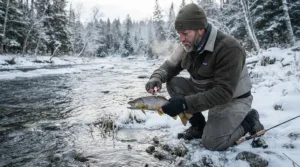
Shoulder season fishing — those fall and early-spring stretches where air temps hover in the 40s and 50s but water stays genuinely cold — is where anglers most often over-buy insulation. A heavy PrimaLoft bib built for 10°F mornings turns into a sweat-soaked liability on a 50°F afternoon with any hiking involved. This is exactly the gap products like the Orvis Pro LT Under Wader Pant and Patagonia Shelled Insulator Fishing Pants are designed to fill: enough wind and water resistance to handle cold water contact, without the bulk that causes overheating on milder air-temperature days. A simple rule of thumb: if you’re hiking more than a quarter mile to your spot, lean lighter; if you’re parking within sight of the water, lean warmer.
Long-Term Cost & Maintenance of Insulated Fishing Pants
| Product | Approx. Price | Expected Lifespan | Maintenance Note |
|---|---|---|---|
| Simms Guide Insulated Bib | $550–$650 | 5+ seasons with care | Reproof DWR annually |
| AFTCO Hydronaut Insulated Bib | $250–$300 | 4–5 seasons | Avoid high-heat drying |
| Patagonia Shelled Insulator Fishing Pants | $180–$240 | 3–5 seasons | Wash cold, low-tumble dry |
| Frogg Toggs FTX Armor Bib | $80–$160 | 1–3 seasons | Inspect seams each fall |
Looking at the table above, the cost-per-season math often favors the pricier options for anglers who fish year-round: a Simms Guide Insulated Bib lasting five-plus seasons can work out cheaper annually than replacing a Frogg Toggs FTX Armor Bib every other year. That said, occasional cold-weather anglers rarely fish enough days to recoup a premium bib’s higher upfront cost, making the budget tier the more rational choice for their usage pattern. Regardless of tier, DWR coatings degrade with wear and UV exposure, so periodic reproofing — not just washing — is what actually extends garment life.
Common Mistakes When Buying Cold Weather Fishing Pants
A frequent and avoidable error is buying based on temperature rating alone while ignoring activity level, which leads active hikers into overheating and static boat anglers into under-insulated misery. Another common mistake is skipping the layering system entirely and expecting one garment to do everything — even the Simms Guide Insulated Bib performs best over a proper base layer, not as a stand-alone solution. Anglers also frequently underestimate wind’s role in perceived cold, buying insulation weight appropriate for still air while fishing consistently windy, open water. Finally, sizing mistakes are common with bibs specifically, since most brands intentionally cut them roomy to accommodate layering — ordering true-to-normal-clothing size often results in a too-tight fit once a base layer and mid layer are added underneath.
Safety Considerations: Wind Chill, Cold Water, and Layering Failures
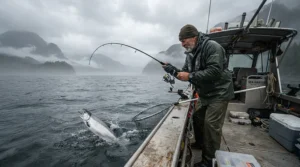
Wind chill isn’t just a comfort issue — it’s a genuine safety variable, and the National Weather Service’s wind chill guidance notes that exposed skin can freeze in as little as thirty minutes once wind chill drops meaningfully below freezing, which is exactly the scenario dedicated bibs like the Simms Guide Insulated Bib and AFTCO Hydronaut Insulated Bib are engineered to counter. Cold water adds a separate and faster-acting danger: falling into cold water triggers an immediate, involuntary gasp response, and the resulting loss of muscle control and dexterity can happen within minutes, long before core-body hypothermia would otherwise set in. That’s a strong argument for choosing insulated trousers that stay functional if they get wet, rather than cotton or down-filled layers that lose their warming properties the moment they’re soaked. Practically, this means always pairing insulated pants with a properly fitted PFD on a boat, telling someone your fishing location and expected return time, and treating any full immersion — even briefly — as a reason to get to shore and re-layer immediately rather than pushing through the rest of the day.
Frequently Asked Questions
❓ What is the best fishing pants for cold weather fishing?
❓ How many grams of insulation do I need for ice fishing pants?
❓ Can I wear insulated fishing pants under my waders?
❓ Are insulated fishing trousers worth it over basic rain gear?
❓ What temperature rating do cold weather fishing pants need?
Conclusion
Cold weather doesn’t have to end a fishing season — it just changes what you need to wear to enjoy it. Whether that’s the flagship warmth of the Simms Guide Insulated Bib, the stretch-focused comfort of the Skwala Fusion 90 Pant, or the budget-friendly reliability of the Frogg Toggs FTX Armor Bib, the right pick comes down to how you fish, not just how cold it gets. Boat anglers and ice fishermen should lean toward heavier, static-warmth bibs; wading anglers covering ground benefit more from lighter, breathable layering pieces paired smartly with a base layer and shell. Whatever you choose, remember that the pants are one part of a system — layering strategy, wind awareness, and basic cold-water safety habits matter just as much as the gear itself. Gear up thoughtfully, dress in layers, and those brutal winter mornings on the water start feeling a lot more manageable.
Recommended for You
- Fishing Pants For Women Plus Size: 7 Best Picks For 2026
- Fishing Pants For Tall Men: 7 Best Long-Inseam Picks (2026)
- 7 Best Fishing Pants For Hot Weather In 2026 (Tested Picks)
Disclaimer: This article contains affiliate links. As an Amazon Associate, I earn from qualifying purchases. If you purchase products through these links, we may earn a small commission at no additional cost to you.
✨ Found this helpful? Share it with your friends! 💬🤗
