
In This Article
Fishing shorts for hot weather are purpose-built shorts made with quick-dry, UPF-rated fabric, ventilated panels, and stretch construction designed to keep anglers cool, dry, and mobile during long, sun-heavy days on the water. They’re a different animal from the cotton cargo shorts sitting in your closet, and once you understand why, you won’t go back.
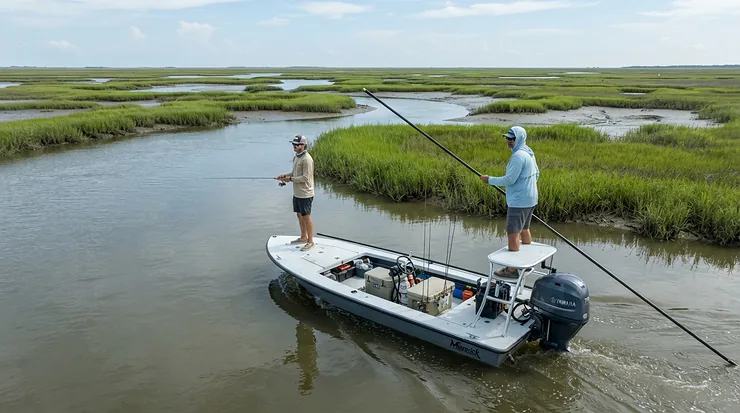
Here’s the thing nobody tells you at the tackle shop: your shirt gets all the sun-protection glory, but your legs are catching UV from two directions at once — straight down from the sky and bounced back up off the water’s surface. On a boat deck or a bright sand flat, that reflected glare can be brutal. Add eight hours of sweat, a soaked seat cushion, and the particular indignity of chafing khaki shorts, and you start to understand why serious anglers treat shorts as gear, not just clothing.
We dug through real product specs, verified pricing patterns, and genuine customer feedback to put together this guide. No invented five-star reviews, no manufactured hands-on stories — just honest analysis of what actually works when the mercury climbs past 90.
What Makes Fishing Shorts for Hot Weather Different?
Before the picks, a quick primer. Standard shorts fight you in the heat: cotton holds sweat, denim chafes, and most casual fabrics offer a UPF rating barely better than a t-shirt — most cotton shirts give you an equivalent of about a UPF of 5 when you’re wearing it, since loose-weave fabrics let visible light peek through to your skin. Purpose-built fishing shorts flip that script with tight synthetic weaves, mesh linings, and treatments that shed water instead of soaking it up.
The science behind the UPF number is worth understanding, because it’s doing real work for you. A UPF rating of 50 means the fabric allows only about 2 percent of ultraviolet radiation to reach your skin — and according to the Cleveland Clinic, anything below 2% UV transmission earns the UPF 50+ label, the highest protection category available. That’s not marketing fluff. That’s your legs staying pain-free after a six-hour tournament day.
Quick Comparison Table: 7 Fishing Shorts for Hot Weather at a Glance
| Product | Price Range | Best For |
|---|---|---|
| Grundéns Gaff Short | $70-$90 range | Premium build quality seekers |
| AFTCO Cloudburst Short | $65-$85 range | Stain resistance + stretch |
| Huk Next Level 10.5″ Short | $50-$70 range | Active casting mobility |
| Simms Baja Wanaka Short | $70-$90 range | Wet wading + boat-to-bar versatility |
| Columbia PFG Rambler Water Short | $35-$45 range | Swim-and-fish hybrid use |
| KastKing Rekon Cargo Short | $25-$32 range (frequently discounted) | Budget-conscious anglers |
| Bassdash Quick-Dry Cargo Short | $28-$35 range | Women’s fit and lake-day versatility |
Looking at the spread, there’s a clear budget-to-premium ladder here rather than one “best” short. The KastKing Rekon Cargo Short and Bassdash Quick-Dry Cargo Short anchor the value end, the Columbia PFG Rambler Water Short sits in a comfortable mid-range sweet spot most casual anglers will love, and the Grundéns Gaff Short, AFTCO Cloudburst Short, and Simms Baja Wanaka Short compete at the top for anglers who fish hard enough to justify the extra cost.
💬 Found a pair that caught your eye already? Bookmark this page and check current pricing before you decide — availability shifts fast on popular colorways.
Top 7 Fishing Shorts for Hot Weather: Expert Analysis
1. Grundéns Gaff Short — toughest build for saltwater abuse
The Grundéns Gaff Short is the short you buy when you’re hard on gear and tired of replacing it every season.
Its quick-drying, water-shedding fabric is paired with a lined tool pocket and a zippered cargo pocket — details clearly designed by people who actually rig leaders and stow pliers mid-fight, not by a generic apparel team bolting “fishing” onto a template. Six colorways, including a distinctive burnt orange, mean it doesn’t scream “tourist” the way some tech-fabric shorts do.
Based on the spec sheet, this is a short built for anglers who fish commercially or semi-commercially — mates, guides, and weekend warriors who need one pair of shorts to survive bait slime, boat deck grit, and repeated washing without the fabric breaking down. At the time of research we couldn’t verify a large public pool of customer reviews specifically for this model, so we’re leaning on construction details rather than manufactured testimonials — which is exactly the honest approach this kind of purchase deserves.
Pros:
- ✅ Lined tool pocket built for pliers and rigging gear
- ✅ Water-shedding fabric resists soaking through
- ✅ Six colorways including a distinctive burnt orange option
Cons:
- ❌ Premium price point compared to mid-tier competitors
- ❌ Limited verified public review data at time of research
In the $70-$90 range, this is a buy-once purchase for anglers who put in serious water time rather than casual weekend trips.
2. AFTCO Cloudburst Short — best stain resistance for bait and blood
The AFTCO Cloudburst Short leans hard into one specific superpower: staying clean when everything around it is trying to stain it.
Four-way stretch fabric handles the twisting, squatting, and lunging that comes with fighting fish boat-side, while AFTCO’s “Afguard” treatment is engineered to release the kind of stubborn stains — chum, blood, sunscreen — that ruin lesser shorts within a season. A Cordura-reinforced utility pocket for pliers adds durability exactly where cheap shorts tend to blow out first.
What most buyers overlook about stain-release fabric is that it’s not just about looking clean in photos — it’s about longevity. Shorts that hold onto oils and grime degrade faster and start smelling regardless of how often you wash them. That reinforced pocket also matters more than it sounds: a standard fabric pocket carrying a pair of pliers for a season typically develops holes, while Cordura is built to resist exactly that kind of abrasion.
Pros:
- ✅ Afguard treatment actively releases stubborn stains
- ✅ Four-way stretch for unrestricted casting motion
- ✅ Cordura-reinforced pocket resists pliers-related wear
Cons:
- ❌ Sits at a premium price point near $80
- ❌ Charcoal and gray heather are the only two colorways
Expect to pay in the $65-$85 range, positioning it as a direct rival to the Grundéns Gaff on price and durability.
3. Huk Next Level 10.5″ Short — most mobile for active casting
If your fishing style involves a lot of standing, pivoting, and stepping over gear on a moving boat deck, the Huk Next Level 10.5″ Short is worth a close look.
The performance fabric brings high stretch alongside quick-dry, anti-microbial, and stain-resistant properties — a combination that keeps the fabric from developing that funky “left in the truck overnight” smell after back-to-back fishing days. The real standout, though, is the construction: a gusseted crotch plus a perforated rear yoke, both aimed squarely at maximizing mobility and airflow exactly where a normal pair of shorts binds and traps heat.
Here’s what the spec sheet doesn’t say outright but the design implies: that perforated rear yoke is a direct answer to the classic “sweaty seat” problem anglers deal with on long boat rides. Most competing shorts vent through the pockets or waistband; putting ventilation on the seat itself is a smarter, more targeted fix for anyone sitting on a warm vinyl boat seat for hours. Six color options give you room to match your gear without settling for whatever’s in stock.
Pros:
- ✅ Perforated rear yoke ventilates the seat area directly
- ✅ Anti-microbial treatment fights odor on multi-day trips
- ✅ Gusseted crotch allows full-range casting movement
Cons:
- ❌ 10.5″ inseam runs longer than some anglers prefer
- ❌ Limited verified aggregated review data available currently
Typically priced in the $50-$70 range, it’s the mid-tier pick built for anglers who move a lot on deck.
4. Simms Baja Wanaka Short — best hybrid for boat-to-bar days
The Simms Baja Wanaka Short is aimed at a very specific problem: not wanting to change clothes twice in one day.
Designed to bridge technical fishing gear and casual loungewear, it’s built for hot weather and active movement, eliminating the need to swap outfits between the skiff and the post-fishing grill session. It delivers essential moisture management and mobility without the overtly “tactical” look that some performance shorts can’t shake.
Based on the product positioning, this short particularly excels in wet-wading scenarios and high-heat boat environments where quick-drying capability isn’t optional — it’s the whole point. What most buyers overlook is the versatility angle: a short that handles salt spray and sweat during fishing hours but still looks presentable at a waterfront restaurant afterward saves you from packing an entirely separate travel wardrobe. That’s a genuine convenience advantage over shorts that only work while you’re actively fishing.
Pros:
- ✅ Doubles as casual wear without a “fishing gear” look
- ✅ Built specifically for wet-wading moisture management
- ✅ Handles both salt spray and everyday sweat well
Cons:
- ❌ Premium pricing similar to Grundéns and AFTCO
- ❌ Best suited to warm climates, less versatile in cooler regions
Pricing generally falls in the $70-$90 range, competitive with other premium technical shorts on this list.
5. Columbia PFG Rambler Water Short — best swim-and-fish hybrid
The Columbia PFG Rambler Water Short is the short for anglers who treat a fishing trip as an excuse to jump in the water too.
Its Omni-Shade broad-spectrum UPF 50 fabric guards against skin damage using tight construction and modified fibers, while Omni-Shield repellency keeps moisture from soaking into the yarns, so you dry fast instead of staying damp all afternoon. A drawcord-adjustable elastic waist, interior mesh brief, and a zippered back security pocket round out a design clearly meant to double as a swim short.
Reviewers consistently note strong comfort and value here — one verified purchaser called it “better than more expensive brands” for fit and quality, and the aggregate rating sits around 4.7 out of 5 across over 100 reviews. That said, honesty matters more than a glowing average: a recurring complaint in the same review set flags that the lightweight fabric becomes somewhat see-through when fully soaked, which matters if you’re planning on genuinely swimming in these rather than just wading.
Pros:
- ✅ Doubles comfortably as a swim short, not just fishing wear
- ✅ Strong 4.7-star aggregate rating across 100+ reviews
- ✅ Interior mesh brief adds built-in support
Cons:
- ❌ Fabric becomes somewhat see-through when fully saturated
- ❌ Zippered pocket security is modest compared to Cordura options
At $35-$45 range, this is arguably the best value-to-feature ratio on the list for casual and semi-serious anglers alike.
6. KastKing Rekon Cargo Short — best budget pick for everyday anglers
The KastKing Rekon Cargo Short proves you don’t need a $70 price tag to get real UPF 50+ protection.
The quick-dry, sweat-wicking fabric includes ventilation holes below the waistband specifically to increase airflow and wicking performance — a small design touch that punches above its price class. Functional storage includes a wear-resistant side pocket, two hand pockets, a flap-closed cargo pocket, and two rear zippered pockets, giving you more organized storage than most shorts twice the price.
On paper, this means KastKing prioritized function over flash: the 50% cotton, 41% polyester, 9% spandex blend trades a bit of the ultra-quick-dry performance of pure synthetic competitors for a softer, more everyday-wearable hand-feel. It’s a reasonable trade for anglers who wear these shorts running errands as often as they wear them on the water. We found this short repeatedly flagged as a strong deal across shopping-community forums, though we didn’t locate a large body of independent long-term durability reviews — worth factoring in if longevity is your top priority.
Pros:
- ✅ UPF 50+ protection at a budget-friendly price point
- ✅ Ventilation holes below waistband boost airflow directly
- ✅ Seven total pockets for serious gear organization
Cons:
- ❌ Cotton blend dries slower than pure synthetic competitors
- ❌ Limited independent long-term durability data currently available
Regularly listed around $25-$32, though it frequently appears discounted into the high teens during sales — worth checking current pricing before buying.
7. Bassdash Quick-Dry Cargo Short — best women’s and youth fit
The Bassdash Quick-Dry Cargo Short fills a gap a lot of “unisex” fishing apparel ignores: shorts actually cut and sized for women and teens, not just scaled-down men’s patterns.
Built with a 5-inch inseam, UPF 50+ fabric, water resistance, and zippered pockets, it’s designed for lake days, casual fishing, and general summer outdoor wear without sacrificing sun protection. The quick-dry material means a splash off the dock or a sudden downpour doesn’t ruin the rest of your outing.
Aggregated Walmart customer review sentiment on this exact style is notably positive around fit and length — one reviewer specifically praised it for being “long enough” and appropriate for a tall pre-teen, while another highlighted the quick-dry fabric as ideal for lake days without feeling “too short.” That’s a meaningfully different feedback pattern than most fishing shorts get, which tend to draw comments about pockets and durability rather than fit and modesty — a signal this line was actually designed with its target wearer in mind rather than adapted from a men’s cut.
Pros:
- ✅ Cut specifically for women’s and teen body types
- ✅ UPF 50+ protection with genuine quick-dry performance
- ✅ Positive reviewer feedback on length and fit specifically
Cons:
- ❌ 5-inch inseam offers less coverage than 7-10″ options
- ❌ Fewer heavy-duty gear pockets than men’s technical shorts
In the $28-$35 range, it’s a smart budget pick for anyone who’s been settling for men’s shorts that don’t actually fit right.
Top 7 Products: Detailed Spec Comparison
| Product | UPF Rating | Fabric Type | Price Range | Best For |
|---|---|---|---|---|
| Grundéns Gaff Short | Not specified | Quick-dry, water-shedding | $70-$90 | Saltwater durability |
| AFTCO Cloudburst Short | Not specified | Four-way stretch, stain-release | $65-$85 | Stain resistance |
| Huk Next Level Short | Not specified | Quick-dry, anti-microbial | $50-$70 | Active mobility |
| Simms Baja Wanaka Short | Not specified | Moisture-management blend | $70-$90 | Wet wading |
| Columbia PFG Rambler | UPF 50 | Omni-Shade polyester | $35-$45 | Swim-and-fish hybrid |
| KastKing Rekon Short | UPF 50+ | Cotton-poly-spandex blend | $25-$32 | Budget everyday use |
| Bassdash Cargo Short | UPF 50+ | Quick-dry, water-resistant | $28-$35 | Women’s/youth fit |
A pattern worth calling out: the budget and mid-range shorts here — Columbia PFG Rambler, KastKing Rekon, and Bassdash — all publish explicit UPF 50+ ratings, while the premium technical brands lean on proprietary fabric names without a headline UPF number in their public spec sheets. That doesn’t necessarily mean worse protection, but it does mean you’re trusting the brand’s fabric engineering rather than a standardized, verifiable number — something worth asking about directly if sun protection is your top priority.

How to Choose Lightweight Summer Fishing Shorts
Picking the right pair comes down to seven honest questions, not marketing copy:
- Check the UPF rating first. A verified UPF 50+ label blocks roughly 98% of UV radiation, which matters more on the water than almost anywhere else, since reflected glare doubles your exposure.
- Match the fabric to your fishing style. Pure synthetic blends dry fastest; cotton-blend hybrids feel softer but hold moisture longer.
- Consider inseam length for your activity. Shorter 5-7″ cuts suit wading and kayak fishing; 10-11″ inseams suit boat and flats fishing where more coverage matters.
- Count the pockets you’ll actually use. More zippered storage is great until it adds bulk that snags your line — match pocket count to your typical gear load.
- Factor in stretch for casting motion. Four-way stretch fabrics move with you through a full cast far better than rigid woven shorts.
6″ Weigh price against frequency of use. Weekend anglers rarely need a $90 short; guides and daily anglers often save money buying premium once instead of budget three times. - Read the fine print on stain treatments. Afguard-style finishes genuinely extend a garment’s usable life if you fish with bait or handle fish regularly.
Practical Usage Guide: Getting the Most From Your Summer Fishing Shorts
Buying the right pair is half the equation — caring for it properly is the other half, and it’s the part Amazon listings never mention.
First 30 days: Wash new technical shorts before first wear to remove manufacturing residue that can slightly reduce UPF effectiveness. Skip fabric softener entirely — it coats synthetic fibers and blocks the wicking properties you paid for. Air-dry when possible; high-heat tumble drying accelerates elastic waistband breakdown.
Ongoing maintenance: Rinse saltwater-exposed shorts in fresh water as soon as possible after each trip. Salt crystals left in the fabric weave act like tiny abrasives that wear down stitching over time. Check pocket zippers monthly for salt corrosion if you fish saltwater regularly — a light silicone lubricant on the zipper teeth prevents most sticking issues before they start.
A common first-month mistake: treating UPF fabric like it’s permanent. UPF ratings do degrade with wear, washing, and UV exposure over years of use — the protection isn’t a one-time purchase, it’s a maintained feature, which is one more reason budget shorts you replace more often aren’t automatically the worse long-term choice.
Real-World Scenarios: Which Angler Are You?
The weekend bass angler on a budget. Fishing 15-20 days a year from a bass boat, mostly under 4 hours per trip. The KastKing Rekon Cargo Short covers the essentials — UPF protection, ventilation, and enough pockets — without overspending on features that won’t get used often enough to matter.
The offshore mate or guide. On the water 200+ days a year, handling bait, fighting fish, and abusing gear daily. The Grundéns Gaff Short or AFTCO Cloudburst Short justify their price through durability alone — replacing a $30 short three times a year costs more than buying one $80 short that lasts three seasons.
The family lake-day angler. Splits time between casual fishing and actual swimming with kids. The Columbia PFG Rambler Water Short or Bassdash Quick-Dry Cargo Short handle both roles without requiring a wardrobe change between activities.
Problem → Solution: Common Hot-Weather Fishing Discomforts
Problem: Chafing after hours of standing and casting. Solution: prioritize four-way stretch fabric like the AFTCO Cloudburst Short, which moves with repetitive motion instead of fighting it.
Problem: Shorts staying wet and clammy all day. Solution: look for genuine quick-dry synthetic blends rather than cotton-heavy fabrics — the Simms Baja Wanaka Short and Huk Next Level Short both prioritize this.
Problem: Sunburned thighs despite reapplying sunscreen. Solution: switch to UPF 50+ fabric as your primary defense rather than your backup. According to the CDC, wearing loose, lightweight, light-colored clothing is one of the core recommended strategies for staying safe during extreme heat, alongside pacing activity and staying hydrated.
Problem: Overheating during peak afternoon sun. Solution: schedule the most exposed fishing windows around early morning or evening when possible, and choose ventilated designs like the Huk’s perforated rear yoke to maximize airflow during the hottest stretch of the day.
Problem: Gear falling out of shallow pockets. Solution: prioritize zippered security pockets — the KastKing Rekon Short‘s dual rear zippered pockets solve this cheaply.
Breathable Angler Shorts vs Traditional Cargo Shorts
The gap between purpose-built breathable angler shorts and a regular pair of cargo shorts from a big-box store is bigger than most anglers assume until they’ve fished a full day in both.
| Factor | Fishing-Specific Shorts | Traditional Cotton Cargo Shorts |
|---|---|---|
| UPF Protection | Typically UPF 50+ | Roughly UPF 5, minimal protection |
| Dry Time | 30-60 minutes | Several hours |
| Fabric Weight | Lightweight, ventilated | Heavier, less breathable |
| Best For | All-day water exposure | Casual, dry-land wear only |
The difference isn’t cosmetic — it’s functional. Traditional cotton cargo shorts soak up sweat and splash and simply stay wet, which drags down body temperature regulation and increases chafing risk over a long day. Fishing-specific shorts are engineered around exactly the conditions anglers actually face: sun, splash, sweat, and repetitive motion, which is why the small price premium tends to pay for itself in comfort alone.
Common Mistakes When Buying Summer Fishing Apparel
Mistake #1: Buying based on looks alone. A short that photographs well but lacks UPF rating or quick-dry fabric will leave you regretting the purchase by hour three on the water.
Mistake #2: Ignoring inseam length for your specific activity. A 10.5″ inseam that’s perfect for boat fishing can feel restrictive and hot for wade fishing or kayak paddling.
Mistake #3: Assuming all “quick-dry” labels perform equally. Cotton-blend quick-dry shorts genuinely dry slower than pure synthetic options — read the fabric composition, not just the marketing label.
Mistake #4: Overlooking fit for body type. Men’s-cut shorts adapted for women’s sizing rarely fit as well as garments actually designed for that body type, which is exactly why options like the Bassdash Quick-Dry Cargo Short exist.
Mistake #5: Skipping the pocket security check. Velcro and open pockets lose gear over water; zippered storage is worth the small extra cost for anything you can’t afford to lose overboard.
Ventilated Fabric and Heat Management Clothing: Features That Actually Matter
Not every feature on a hangtag translates to real comfort on the water. Here’s an honest breakdown.
Actually matters: Genuine mesh ventilation panels (like the Huk Next Level Short‘s perforated rear yoke), verified UPF 50+ ratings, and true synthetic quick-dry fabric blends. These directly affect how your body regulates heat over a multi-hour trip.
Matters less than marketed: “Odor control” claims on shorts without a specific anti-microbial treatment named are often just standard synthetic fiber behavior rebranded as a feature. Similarly, “four-season” branding on summer-focused fishing shorts is frequently more about marketing breadth than genuine functional difference.
The real driver of comfort: According to Healthline, fabric weave tightness and construction — not just the fiber type — plays a major role in how effectively a garment blocks UV radiation and manages heat, which is exactly why two shorts with similar fabric descriptions can perform very differently in practice.
Summer Fishing Apparel for Every Angler: Fit, Sizing, and Variants
Coverage across this list spans more than just price tiers. The Bassdash Quick-Dry Cargo Short addresses women’s and youth sizing specifically, with a shorter 5-inch inseam and a cut that reviewers note fits properly rather than feeling borrowed from a men’s pattern. The KastKing Rekon Cargo Short and Columbia PFG Rambler Water Short both come in extended size ranges and multiple colorways, making them accessible picks regardless of body type. Meanwhile, the premium trio — Grundéns Gaff Short, AFTCO Cloudburst Short, and Simms Baja Wanaka Short — tend to run limited color selections but typically offer a broader size range up through 2XL and beyond, which is worth double-checking on the product page before ordering, since availability varies by colorway.
Long-Term Cost & Maintenance
Sticker price tells you almost nothing about true cost per wear. A $25 KastKing Rekon Short that lasts one season of heavy use costs roughly the same per wear as an $80 Grundéns Gaff Short that survives three seasons of identical abuse — the math simply depends on how hard and how often you fish.
Maintenance costs also differ meaningfully. Premium stain-release fabrics like AFTCO’s Afguard treatment reduce the odds you’ll need pre-treating products or specialty detergent, a small but real recurring savings for anglers who handle bait regularly. According to the Skin Cancer Foundation, UPF-rated fabric protection can diminish over time through repeated washing and UV exposure — meaning even premium shorts eventually need replacing for sun-safety reasons, not just wear and tear, which resets the value calculation every few years regardless of brand.
Frequently Asked Questions
❓ What's the best fabric for fishing shorts in hot weather?
❓ Do fishing shorts really need a UPF rating?
❓ What inseam length works best for wade fishing?
❓ Can I wear fishing shorts for swimming too?
❓ Are budget fishing shorts worth buying over premium brands?
Conclusion
There’s no single “best” pair of fishing shorts for hot weather — there’s a best pair for how you actually fish. Weekend bass anglers get real value from the budget-friendly KastKing Rekon Cargo Short, while daily guides and mates will earn back the higher price of the Grundéns Gaff Short or AFTCO Cloudburst Short through sheer durability. Anyone splitting time between fishing and swimming should look hard at the Columbia PFG Rambler Water Short, and anglers who’ve been stuck wearing men’s-cut shorts should give the Bassdash Quick-Dry Cargo Short a serious look.
What matters most across every price tier is the same: verified UPF protection, genuine quick-dry fabric, and a fit that actually moves with you through a full day of casting. Nail those three things, and the brand name matters a lot less than the marketing departments want you to believe.
Recommended for You
- Fishing Pants For Cold Weather Fishing: 7 Warm Picks (2026)
- Fishing Pants For Women Plus Size: 7 Best Picks For 2026
- Fishing Pants For Tall Men: 7 Best Long-Inseam Picks (2026)
Disclaimer: This article contains affiliate links. As an Amazon Associate, I earn from qualifying purchases. If you purchase products through these links, we may earn a small commission at no additional cost to you.
✨ Found this helpful? Share it with your fishing buddies before your next hot-weather trip! 💬
