
In This Article
Felt sole wading boots for slippery rocks are river boots fitted with a thick, fibrous outsole that molds around algae-slick stones and bites where smooth rubber skates. They trade dry-land grip, fast drying, and legality in some regions for the strongest underwater traction most anglers can buy.
Anyone who has stepped onto a bowling-ball-sized cobble knows the sensation. The rock looks innocent, wears a thin green coat of algae, and your boot leaves it like a hockey puck leaving a stick. Felt was the old guard’s answer, and in 2026 it’s still the material many guides reach for when the riverbed is bedrock-smooth and the current is shoving.
But felt now comes with homework. Fibrous soles hold water for days, and agencies in several places restrict them because microscopic hitchhikers, such as the diatom didymo, nicknamed rock snot, can ride along in damp material. Choosing felt sole wading boots for slippery rocks is therefore two decisions at once: which boot grips best, and where you can legally wear it.
This guide handles both. Below are seven real boots from budget to premium, a plain-language look at felt vs rubber soles, a primer on invasive species regulations, practical rock scramble safety habits, and a decision framework for slip resistant wading footwear. Prices appear as ranges only, so check current price before you buy.
Quick Comparison: 7 Felt Sole Wading Boots at a Glance
| Boot | Felt Setup | Price Range | Best For |
|---|---|---|---|
| Orvis Clearwater Felt | Fixed felt outsole | Around $180–$200 | First felt boot on a budget |
| Redington Prowler-Pro Felt | Fixed felt, studs up to 1/2″ | Around $200 list, often marked down | Light weight and long walks |
| Simms Freestone Felt | Fixed 12mm felt, felt-stud compatible | Around $230 | Dependable all-rounder |
| Korkers Devil’s Canyon | Swappable felt and Kling-On rubber soles | $230–$250 range | Anglers who cross regulatory lines |
| Orvis Pro Hybrid | Felt core ringed by Michelin rubber | Around $280–$300 | Boulder scrambles plus bank walking |
| Simms G3 Guide Felt | Fixed felt, Hardbite stud compatible | Around $300–$400 | Heavy-use, guide-grade days |
| Patagonia Foot Tractor Felt | Fixed felt, studs can be added | Mid-$400s | Buy-it-once leather build |
Looking at the comparison above, the Orvis Clearwater Felt and Redington Prowler-Pro Felt carry the best value near $200. The Korkers Devil’s Canyon is the only boot here whose sole you can swap when the rules change. If your rivers are bedrock-heavy and you fish a lot, the Simms G3 Guide Felt and Patagonia Foot Tractor Felt earn their premium through repairability, not just grip.
💬 Just one click — help others make better buying decisions too!😊
Top 7 Felt Sole Wading Boots for Slippery Rocks: Expert Analysis
These are ordered by price tier, from budget to premium. Each one gets the same treatment: what the specs mean in practice, who it suits, and what aggregated reviews say.
1. Orvis Clearwater Felt — best value-priced felt entry
The Orvis Clearwater Felt is the boot you buy when you want grip without a mortgage-sized receipt. Its synthetic leather upper has very few seams, which matters more than it sounds. Stitching is where sand and gravel do their slow grinding damage, so fewer seams usually means longer life. Scratch-rubber armor on the toe, vamp, and heel, plus a heavy toe bumper, protects the spots that meet boulders first. An integrated EVA footbed takes some sting out of cobble.
Here’s the honest read: this is a sturdy felt platform, not a pillowy hiker. A quarter-mile of flat gravel to the water is fine. Three miles of switchbacks will make you miss the cushioning of pricier boots. Retail reviewers describe comfortable, dependable traction, and one fish-tech reviewer singled out all-day wear. One 2026 buyer’s guide notes that near $200 it’s no longer “beginner money” and reminds readers that some states restrict felt. Review volume varies by retailer, so treat the sentiment as directional.
Pros:
- ✅ Few seams means fewer failure points
- ✅ Reinforced toe, vamp, and heel armor
- ✅ Lowest entry price in this lineup
Cons:
- ❌ Less cushioning on long hike-ins
- ❌ Fixed felt sole, no rubber option
Expect roughly $180–$200, with markdowns common. Verdict: the smartest first felt purchase if your waters allow it.

2. Redington Prowler-Pro Felt — lightweight, wide-platform comfort
Redington rebuilt the original Prowler to be stronger, lighter, and less absorbent, and the Redington Prowler-Pro Felt shows it. A wide sole footprint spreads your weight, which means steadier standing on tilted slabs. A lightweight EVA midsole cushions the walk, while corrosion-resistant hardware with a locking lace hook keeps the fit from loosening mid-wade. Redington says the felt version takes studs up to 1/2 inch, a useful option when algae gets truly nasty.
What the spec sheet won’t tell you is how much a low-absorbency upper matters. A boot that sheds water weighs less at hour eight than one that drinks half the river. A Trout Unlimited reviewer praised the platform’s light weight and quick drainage, though that tester ran the sticky-rubber version. Separately, a Canadian reviewer who wore felt on one foot and rubber on the other on the earlier Prowler found felt clearly better on algae-covered rock. The caution is that these are reviews of related models, not controlled lab tests.
Pros:
- ✅ Wide base adds stability on slabs
- ✅ Light, quick-draining construction
- ✅ Roomy stud allowance for felt
Cons:
- ❌ Fixed felt sole limits travel flexibility
- ❌ Less refined than premium leather boots
List price sits near $200, though retailer markdowns are frequent, so check current price. Verdict: superb value for walkers who want felt without the weight.
3. Simms Freestone Felt — time-tested workhorse on a mid budget
The Simms Freestone Felt is the Honda Accord of wading boots: unglamorous, proven, and everywhere. A 12mm felt outsole sits on a platform designed to keep studs seated, and it accepts Simms felt studs when you need extra bite. The synthetic scratch-leather upper resists soaking, partial neoprene lining makes on-and-off easier, and a dual-density EVA midsole softens rocky walking.
On paper, that means a boot built for everyday freestone rivers rather than expedition mileage. Reviewers consistently describe it as tough and protective. Common caveats are that it runs large and feels stiff early on. One long-term reviewer reported the felt bottoms beginning to separate after roughly four years and two dozen trips, a reminder that felt is a consumable. Reviewers of the women’s version advised sizing up, so try before you commit.
Pros:
- ✅ Rugged, water-resistant upper
- ✅ Stud-ready felt platform
- ✅ Easy on-off neoprene lining
Cons:
- ❌ Stiff feel during break-in
- ❌ Sizing can run large
Pricing sits around $230. Verdict: a reliable middle path if you want brand support and replacement parts behind your boots.
4. Korkers Devil’s Canyon — swap soles when rules change
The Korkers Devil’s Canyon answers a question the other six boots dodge: what if the river you’re driving to bans felt? Its OmniTrax system clips a felt or Kling-On rubber sole to the same boot, no resoling needed. A Boa dial replaces laces for fast, even tension, and the weight lands right around three pounds a pair depending on the sole you clip on.
Practically, that makes it the best traveling felt sole traction boots option here. You wade felt on a legal bedrock tailwater, then click on rubber for a restricted park. It also protects the felt, because you can hike on durable rubber and save the felt for the water. A gear reviewer noted replacement soles run around $30. Reviewer sentiment is positive on comfort and customer service, but one tester disliked a specific studded sole and retailer rating samples are small. Honestly, the boot earns more praise than its soles.
Pros:
- ✅ Interchangeable felt and rubber soles
- ✅ Light weight for backcountry walks
- ✅ Boa dial speeds up on-off
Cons:
- ❌ Sole-swapping adds a small ritual
- ❌ Small review samples on some retailers
Expect the $230–$250 range. Verdict: top pick for anglers who fish multiple jurisdictions.
5. Orvis Pro Hybrid — felt grip with rubber edges
The Orvis Pro Hybrid takes the well-reviewed Orvis Pro platform and gives it a felt inner sole ringed by Michelin Outdoor Extreme rubber on the toes and outer edges. Felt does the underwater work, while the rubber perimeter is meant to improve contact on edges and banks. PU-cast uppers cut seams for durability, and the felt section accepts studs.
Why does that hybrid layout matter? Scrambling means edging, and the outer rim of a boot meets rock first on steep banks. Rubber there should grip dry stone and soil more confidently than pure felt. Reviews of the hybrid itself are thin, so most of the praise I found attaches to the standard PRO: Hatch Magazine’s reviewer liked its comfort and ankle support, and a commenter called its traction awesome. Here’s the caution: because felt remains in the sole, check local agency wording before assuming a hybrid passes a felt ban.
Pros:
- ✅ Rubber rim helps on banks and edges
- ✅ Seam-free cast upper
- ✅ Strong ankle support reported on the PRO platform
Cons:
- ❌ May still violate felt bans
- ❌ Limited reviews of the hybrid itself
List pricing runs around $280–$300. Verdict: ideal for boulder-and-bank anglers working felt-legal water.
6. Simms G3 Guide Felt — guide-grade support, re-solable
The Simms G3 Guide Felt is built with traditional work-boot construction, including a Goodyear welt, rather than a glued sneaker approach. Its felt outsole (10mm or 12mm depending on the model year) takes Simms Hardbite studs, and the boot is a heavyweight, with a claimed 4 pounds 5 ounces per pair on one retailer page. One shop says Simms will re-sole rather than replace, which changes the economics over many seasons.
In practice, the weight buys stability and ankle support that guides rely on across long days. Retailer ratings average around 4.5 out of 5 from roughly fifty reviews, with praise for build and winter use; one buyer sized up two sizes for heavy socks. A caution from a reviewer of an older generation: the tall shaft cut into shins. Try current-generation fit before ordering.
Pros:
- ✅ Work-boot construction built for repair
- ✅ Stud-compatible felt for extra bite
- ✅ Strong support reported by buyers
Cons:
- ❌ Heavy for long hikes
- ❌ Sizing needs care over thick socks
Expect roughly $300–$400 at list. Verdict: the benchmark for heavy-use anglers who want repairable boots.
7. Patagonia Foot Tractor Felt — heirloom leather, built to be recrafted
Built by Danner in Portland, Oregon, the Patagonia Foot Tractor Felt is the boot you pass down. Full-grain leather and stitchdown construction are designed to be recrafted, and the felt outsole can be fitted with studs. Patagonia’s sizing guidance is useful: choose your regular street size for thick wader booties, but size down for thin booties or wet wading.
The practical upshot is a boot that molds to your foot and can be rebuilt, which cuts total cost of ownership if you wade hard for a decade. The loudest raves I found concern the aluminum-bar sibling, where Hatch Magazine’s reviewer called it among the best wading boots they’d worn; it shares the Danner leather platform. For the felt version specifically, review data is sparse, and one retailer reviewer said it was well built but the fit needed work. Honest advice: try a pair on with your usual booties.
Pros:
- ✅ Full-grain leather forms to your foot
- ✅ Recraftable stitchdown build
- ✅ Felt sole accepts studs
Cons:
- ❌ Highest price in this lineup
- ❌ Felt-specific reviews are limited
Pricing falls in the mid-$400s. Verdict: a splurge that pays back for committed anglers.
✨ Ready to Lock In Your Grip?
🔍 Click any highlighted boot name above to check current pricing and availability. Match the boot to your river, your rules, and your walk-in, and you’ll spend more time fishing and less time sitting in the water!
Practical Usage Guide: Setting Up and Caring for Felt Sole Traction Boots
New felt sole traction boots reward a little ritual in the first month. Start with sizing: leave room for thick neoprene booties, since Patagonia advises regular street size for thick booties and sizing down for thin ones. Simms buyers frequently mention sizing up for heavy socks, so try boots on with your actual wading layers.
Next, protect the felt. Gear reviewers note it wears quickly on pavement and dry trail, so carry camp shoes for the hike-in or use a swappable system like the Korkers Devil’s Canyon. If you add studs, use them deliberately. Metal can slip on dry river rocks and can snag a fly line underfoot, so distribute them sparingly rather than carpeting the sole.
A simple schedule works well:
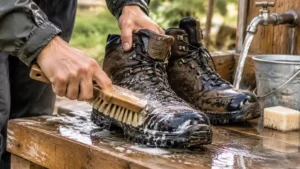
- After every trip: scrub off mud, rinse, and dry the boots thoroughly.
- Weekly during season: check lace hooks, stitching, and felt edges for lifting.
- Monthly: compare felt thickness to your boot’s other sole; thin felt grips less.
Common first-30-day mistakes include drying boots by a campfire, hiking miles on bare felt, and stacking boots wet in a trunk. The last one makes cleaning harder later.
Real-World Scenarios: Matching Felt Sole Wading Boots to Your River
Boots are only good if they suit the water you fish. Here are three profiles with reasoning.
The weekend cobble angler. Twenty or so trips a year, a $200 ceiling, and a short walk to a freestone river. The Orvis Clearwater Felt or Redington Prowler-Pro Felt fits: both are affordable, and the lighter Prowler-Pro helps if your walk is longer. Add studs only if the algae is truly greasy.
The backcountry hiker-angler. Four miles of trail, mixed boulders, and a permit that may change by watershed. The Korkers Devil’s Canyon lets you hike on rubber and wade on felt, then swap fully if a regulation applies. The Orvis Pro Hybrid is the alternative if every trip stays within felt-legal water and you value rubber-rimmed edges.
The guide or serious regular. One hundred-plus days a year on bedrock-smooth tailwaters. The Simms G3 Guide Felt or Patagonia Foot Tractor Felt offers repair paths that spread cost across seasons. Heavy boots tire you, but a fall costs more.
Problem → Solution Guide: Common Felt Boot Headaches
Problem: felt feels sketchy on dry rock and wet grass. Solution: it’s a known weakness. Guides and manufacturers note rubber is better on mud and loose banks, so use a swappable sole or camp shoes.
Problem: snow and ice cake the soles. Felt can accumulate snow, and lug soles resist freezing up, according to several gear reviewers. Solution: knock off buildup with your wading staff, or choose rubber for winter.
Problem: boots stay soggy and smell. Solution: scrub after each trip and dry thoroughly. The Redington Prowler-Pro Felt‘s low-absorbency upper helps shed water, but the felt still needs air.
Problem: felt peeling away from the midsole. Solution: one long-term reviewer saw separation on a Simms Freestone Felt after years of heavy use. Inspect regularly and use a repair or resole service when it starts.
Problem: you’re traveling to a felt ban. Solution: pack rubber, or choose the Korkers Devil’s Canyon for fast swaps.
Felt vs Rubber Soles: What Anglers and Agencies Actually Report
The felt vs rubber soles debate gets loud, so here’s the measured version. Felt remains the grippiest choice on slick, rounded rock, and Orvis’ own wading advice states it grips better than anything on slippery rocks, with studded rubber described as almost as good. Rubber wins on mud, snow, wet grass, and long hikes.
| Feature | Felt | Sticky Rubber | Studded Rubber |
|---|---|---|---|
| Algae-slick rock | Best | Fair | Very good |
| Mud, snow, grass | Weak | Strong | Good |
| Drying and cleaning | Slow, harder | Fast, easier | Fast, easier |
| Wear on dry trails | Fast | Slow | Slow |
| Where allowed | Restricted in places | Generally allowed | Generally allowed |
| Best for | Smooth bedrock | Mixed terrain | Rocky, restricted waters |
Looking at the table, felt wins one category decisively and loses several, which is why many anglers own both. Note that Yellowstone’s regulation bans soles with absorbent felt or other fibrous material, while rubber remains allowed. The park’s reasoning is that rubber traps fewer organisms and cleans more easily. Some officials quoted in press coverage have also acknowledged that a muddy rubber boot can carry plenty, so cleaning habits matter whichever sole you choose.
Invasive Species Regulations: Where Felt Sole Wading Boots Are Restricted
Rules vary by state, park, and individual water, and they change. At the time of research, agency summaries and angling sources listed restrictions in Alaska, Maryland, Nebraska, Rhode Island, South Dakota, parts of Missouri, and Yellowstone National Park. One 2026 angler guide specifically noted Missouri’s rules covering porous soles at trout parks and listed waters. Vermont reversed its earlier ban in 2016, and a 2026 source says Colorado’s statewide brochure lists no felt prohibition. New Zealand also restricts felt.
Alaska’s Department of Fish and Game FAQ is a useful example of how agencies explain these invasive species regulations, including whether felt soles can be replaced. The agency notes commercial boot repair vendors advertise swapping felt soles for non-felt alternatives.
The safe approach: check the specific water, the land manager, and the current year’s rules before every trip. Hybrid soles that retain felt may still fall under wording about fibrous or absorbent material, so ask the agency if unsure. Penalties can be steep; coverage of Yellowstone’s ban cited fines up to $5,000 when it began, though you should confirm current terms.
How to Choose Slip Resistant Wading Footwear
Choosing slip resistant wading footwear is easier with a sequence. Work through these steps:
- Check the rules first. Confirm local invasive species regulations for every water you plan to fish.
- Identify your riverbed. Smooth bedrock and algae-coated cobble favor felt; gravel, mud, and snow favor rubber.
- Measure your walk-in. Long hikes favor lighter boots or swappable soles like the Korkers Devil’s Canyon.
- Match fit to your layers. Try boots with your wader booties and socks, and check each brand’s sizing notes.
- Plan for studs. Confirm stud compatibility if you fish greasy rock regularly.
- Weigh repairability. The Simms G3 Guide Felt and Patagonia Foot Tractor Felt are built to be re-soled or recrafted.
- Set a budget range. Include soles, studs, and a staff in total cost.

Features That Actually Matter (And Those That Don’t)
Matter: felt thickness and quality, because worn felt grips less; a midsole that resists twisting; ankle support; protected toe and heel zones; and drainage that sheds water quickly.
Don’t (much): colorway, brand logos, and marketing names for sole patterns. A boot with a good felt platform and honest fit beats one with exotic lacing. Boa dials, as on the Korkers Devil’s Canyon, are convenient but not essential if you like laces and a locking hook. Weight claims also deserve skepticism: a claimed weight on a product page often varies by size, sole, and retailer, so compare with caution.
Common Mistakes When Buying Felt Sole Traction Boots
- Ignoring regulations. Buying felt for a trip that bans it is the costliest error.
- Sizing without wader booties. Boots that fit sneakers can crush in neoprene.
- Expecting felt to hike well. It wears fast and slips on dry surfaces.
- Over-studding. Too many studs reduce felt contact and can slip on dry rock.
- Skipping cleaning. Rubber doesn’t make you exempt, and felt makes cleaning harder.
- Assuming hybrids are loophole-proof. Ask the agency, because retained felt may still count.
Rock Scramble Safety: Staying Upright on Wet Boulders and Cobble
Grip helps, but rock scramble safety is mostly technique. Orvis’ wading advice suggests sliding your feet into valleys between rocks rather than standing on rounded tops. Shuffle with a toe-ball-heel motion, and don’t step where you can’t see the bottom.
A wading staff is a third leg. Experienced guides advise keeping it close to your body, slightly downstream or even with you, since an upstream staff can pull you off balance. Add a snug wading belt, and avoid water deeper than your knees if possible. Even summer trout streams can cause hypothermia after a dunking.
The scariest slips often happen on the bank: streamside rocks are slick, and a spill there can break a bone. Felt performs poorly on dry surfaces, so slow down when you leave the water. On steep scrambles, test each hold, keep three points of contact, and let a buddy cross with you when currents run strong.
Long-Term Cost and Maintenance
| Boot | Price Range | Upkeep Path | Value Verdict |
|---|---|---|---|
| Orvis Clearwater Felt | Around $180–$200 | Replace when worn | Best entry value |
| Redington Prowler-Pro Felt | Around $200 list | Replace when worn | Value if marked down |
| Simms Freestone Felt | Around $230 | Replace or repair | Solid mid-tier |
| Korkers Devil’s Canyon | $230–$250 range | Swap soles for about $30 | Flexible long-term |
| Orvis Pro Hybrid | Around $280–$300 | Replace when worn | Strong for mixed terrain |
| Simms G3 Guide Felt | Around $300–$400 | Resole available per some retailers | Best for heavy use |
| Patagonia Foot Tractor Felt | Mid-$400s | Recraftable | Best long-haul value |
The table suggests that cheaper boots cost less upfront but are more likely to be replaced outright, while premium boots spread cost over repairs. The Korkers Devil’s Canyon is an interesting middle case because new soles run roughly $30 rather than the cost of a whole boot.
Maintenance is also a cost of time. Pennsylvania’s Fish and Boat Commission recommends drying gear to the touch and then another 48 hours, and notes felt-soled gear holds moisture longer and can be harder to clean. Agencies also commonly suggest freezing gear for several hours. Budget room in your garage, and if you travel often, own two pairs and rotate them.

FAQ
❓ Are felt sole wading boots good for hiking to the river?
❓ Can I add studs to felt soles?
❓ Can felt soles be replaced with rubber?
❓ How do I know when felt soles are worn out?
❓ Are hybrid felt and rubber soles legal where felt is banned?
Conclusion
The best felt sole wading boots for slippery rocks are the ones that match your river, your rules, and your walk. For tight budgets, the Orvis Clearwater Felt and Redington Prowler-Pro Felt deliver felt grip without much fuss. If your trips cross jurisdictions, the Korkers Devil’s Canyon lets you adapt. If you scramble across boulders and banks, the Orvis Pro Hybrid adds rubber where it counts, provided your waters allow felt. For heavy use, the Simms G3 Guide Felt and Patagonia Foot Tractor Felt reward you with repairability, while the Simms Freestone Felt remains a dependable middle path.
Whatever you choose, treat grip as a system: right boots, honest cleaning, the correct local invasive species regulations, a wading staff, and patient rock scramble safety habits. Felt is superb at one job, and knowing where it fails keeps you safe and legal. Prices change, so check current price and availability before buying.
Recommended for You
- Wading Boots For Fly Fishing: 7 Best Grippy Picks For 2026
- Fishing Boots For Women: 7 Best Picks Ranked For 2026
- Fishing Boots For Wide Feet: 7 Best Roomy Picks For 2026
Disclaimer: This article contains affiliate links. As an Amazon Associate, I earn from qualifying purchases. If you purchase products through these links, we may earn a small commission at no additional cost to you.
✨ Found this helpful? Share it with your friends! 💬🤗
