
In This Article
Ever rushed home from work just to feed your fish? Or worse, returned from vacation to find your aquarium looking less than stellar because your “helpful” neighbor overfed your prized koi? You’re not alone.
Here’s the thing about fish: they thrive on consistency. Unlike cats who’ll guilt-trip you with meows, or dogs who’ll nudge their food bowls, fish can’t tell you they’re hungry. They rely entirely on you to maintain their feeding schedule, and that’s where most of us fall short. We get busy, we forget, or we travel—and our aquatic friends pay the price.
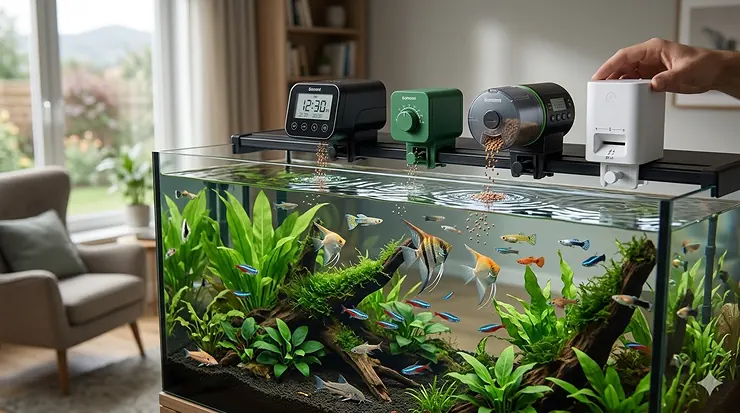
That’s exactly where automatic fish feeders come in. Think of them as the reliability your fish need combined with the freedom you deserve. Whether you’re maintaining a freshwater community tank, a saltwater reef, or a sprawling koi pond, the right automatic fish feeder transforms feeding from a daily chore into a set-it-and-forget-it task.
The best automatic fish feeders in 2026 have evolved far beyond simple timers. We’re talking WiFi connectivity, HD cameras that let you watch feeding time from your phone, moisture-proof compartments that keep food fresh for weeks, and programmable schedules so precise they’d make a Swiss watchmaker jealous. From budget-friendly options under $20 to premium smart feeders with app control, there’s a solution for every tank size and budget.
In this guide, I’m breaking down the seven best automatic fish feeders currently dominating the market. These aren’t just random picks—I’ve analyzed hundreds of customer reviews, compared specifications, tested feeding accuracy, and evaluated real-world performance to bring you options that actually work. Whether you’re looking for a basic vacation fish feeding solution or a high-tech programmable fish feeder with all the bells and whistles, you’ll find your match here.
Quick Comparison Table
| Product | Best For | Capacity | Power Source | Price Range | Rating |
|---|---|---|---|---|---|
| FISHNOSH 2026 | Small to medium tanks | 60ml | Battery (2xAA) | $15-$25 | 4.5/5 |
| Eheim Everyday | Daily reliability | 100ml | Battery (2xAA) | $45-$65 | 4.7/5 |
| Fish Mate F14 | Portion control | 14 compartments | Battery (2xAA) | $18-$28 | 4.4/5 |
| hygger WiFi Camera | Smart monitoring | 230ml | USB/Power Bank | $55-$75 | 4.6/5 |
| hygger Pond Feeder | Large ponds | 5.5L (5lbs) | Electric (AC) | $85-$120 | 4.3/5 |
| Petbank Rechargeable | Travel convenience | 180ml | USB Rechargeable | $25-$40 | 4.5/5 |
| hygger Solar Pond | Outdoor sustainability | 5L (1.8kg) | Solar/Battery/AC | $95-$135 | 4.4/5 |
💬 Just one click – help others make better buying decisions too!😊
Top 7 Best Automatic Fish Feeders: Expert Analysis
1. FISHNOSH Automatic Fish Feeder (2026 New Generation)
The FISHNOSH Automatic Fish Feeder represents everything that’s right about budget-friendly aquarium automation. This compact powerhouse packs programmable scheduling into a design so simple that even tech-phobic fish keepers can master it in minutes.
Key Specifications:
- Capacity: 60ml food reservoir
- Programming: Up to 9 feedings per day
- Mounting: Adjustable clip or adhesive base
- Compatibility: Flakes, pellets, granules
The FISHNOSH feeder’s claim to fame is its versatility. Whether you’re running a 5-gallon betta tank or a 75-gallon community setup, this little unit delivers consistent portions without breaking your budget. The moisture-proof lid keeps food fresh, while the transparent window lets you monitor remaining food at a glance.
Customer feedback consistently praises its reliability. One verified purchaser mentioned running it continuously for 8 months without a single missed feeding—impressive for any automated device, let alone one in this price bracket.
Pros:
✅ Incredibly affordable entry point
✅ Easy programming with clear instructions
✅ Works with small and large tanks
Cons:
❌ Limited capacity for extended trips
❌ Manual portion adjustment takes trial and error
Price: Typically $15-$25 on Amazon
Best for: Budget-conscious aquarists and beginners exploring automation for the first time
2. Eheim Everyday Fish Feeder
When German engineering meets aquarium automation, you get the Eheim Everyday Fish Feeder—the gold standard that’s been feeding fish reliably for years. This isn’t the flashiest feeder on the market, but it’s the one professional aquarists reach for when failure isn’t an option.
Key Specifications:
- Capacity: 100ml drum
- Feeding Cycles: Up to 4 times daily, dual rotation option
- Display: Digital LCD screen
- Ventilation: Built-in fan system
What sets the Eheim apart is attention to detail. That built-in ventilation fan isn’t just a gimmick—it actively prevents moisture buildup that causes food clumping in tropical environments. The adjustable sliding door lets you fine-tune portion sizes with precision that cheaper feeders can’t match.
The dual rotation feature is brilliant for fish that need slightly larger portions. Instead of one drum turn, it rotates, waits 60 seconds, then rotates again—delivering more food in a controlled manner that prevents uneaten waste.
Customer testimonials frequently mention the 3-year warranty and Eheim’s responsive customer service. One long-term user reported six years of continuous operation with only one battery change per year.
Pros:
✅ Industry-leading reliability and build quality
✅ Moisture-resistant ventilation system
✅ 3-year warranty (longest in its class)
Cons:
❌ Higher price point
❌ Slightly bulkier than ultra-compact models
Price: Generally $45-$65
Best for: Serious aquarists who want set-and-forget reliability backed by German precision
3. Fish Mate F14 Automatic Aquarium Fish Feeder
The Fish Mate F14 takes a completely different approach to automatic feeding—and that’s exactly why it works so well for finicky eaters and varied diets. Instead of a rotating drum, this feeder uses 14 individual compartments that rotate on a timed schedule.
Key Specifications:
- Capacity: 14 separate meal compartments
- Feeding Schedule: Up to 4 times daily
- Food Types: Flakes, pellets, and pre-portioned meals
- Mounting: Adjustable clamps included
Think of the Fish Mate F14 as meal prep for your aquarium. You fill each compartment with exactly what you want your fish to eat at each feeding—different foods, varied portions, even supplements. The feeder rotates on schedule, dropping one compartment’s contents at a time.
This design shines for aquarists who like to vary their fish’s diet or have species with specific nutritional needs. You can load Monday with spirulina flakes, Tuesday with bloodworms, Wednesday with vegetable pellets—customization that drum-style feeders simply can’t match.
Users particularly appreciate the slow-release feeding action. The compartment gradually tilts over 2 hours, preventing the food avalanche common with instant-dump feeders.
Pros:
✅ Unmatched meal customization and variety
✅ Excellent for mixed-species tanks
✅ Slow-release prevents overfeeding
Cons:
❌ Manual loading required (less convenient for long trips)
❌ Bulkier than barrel-style feeders
Price: Ranges from $18-$28
Best for: Aquarists who prioritize dietary variety and precise portion control over convenience
4. hygger WiFi Automatic Fish Feeder with Camera
Welcome to the future of fish keeping. The hygger WiFi Automatic Fish Feeder doesn’t just feed your fish—it lets you watch them eat from anywhere in the world through its integrated 2K HD camera. If you’ve ever wondered whether your automatic feeder is actually working while you’re on vacation, wonder no more.
Key Specifications:
- Capacity: 230ml large reservoir
- Connectivity: WiFi + Bluetooth app control
- Camera: 2K HD with video recording
- Power: USB cable (5ft included) or power bank
The hygger WiFi feeder represents the intersection of smart home technology and aquarium care. Through the companion app, you set unlimited feeding schedules down to 0.1g precision, receive low-food alerts, view feeding history, and most importantly, watch live footage of your tank.
That camera isn’t just for entertainment. It’s a diagnostic tool. You can verify the feeder dispensed food, watch how your fish respond, and even catch early signs of illness before problems escalate. The moisture-proof double-sealed design keeps food fresh for weeks.
Customer reviews highlight the app’s intuitive interface and reliable WiFi connection. One user mentioned controlling their feeder from a different continent without connectivity issues—though they recommended a stable home WiFi network.
Pros:
✅ Live video monitoring provides peace of mind
✅ App control offers unmatched scheduling flexibility
✅ Large capacity reduces refill frequency
Cons:
❌ Requires stable WiFi (no offline functionality)
❌ Higher price point than basic feeders
Price: Typically $55-$75
Best for: Tech-savvy aquarists and frequent travelers who want visual confirmation and remote control
5. hygger Large Programmable Auto Pond Feeder
Pond owners, your prayers have been answered. The hygger Large Programmable Auto Pond Feeder is purpose-built for outdoor fish feeding with a 5.5-liter capacity that can hold up to 5 pounds of pellets—enough to feed a sizable koi pond for weeks.
Key Specifications:
- Capacity: 5.5L (holds ~5lbs of pellets)
- Programming: Up to 6 feedings daily, 0-9 portions each
- Power: Electric AC (16-foot cable, no batteries)
- Construction: Weatherproof ABS plastic and metal
The hygger pond feeder addresses the unique challenges of outdoor feeding. The weatherproof housing protects against rain and wildlife, while the elevated mounting system keeps the feeding port above water level to prevent moisture contamination. The LCD controller (which needs shelter from direct rain) offers straightforward programming.
What really impresses is the auger delivery system. Instead of dumping food in one spot, it dispenses gradually, giving all your pond fish a fair chance to feed. The included dense-grooved and wide-grooved sliders let you adjust portion sizes based on pellet diameter (4-10mm).
Long-term users report 2+ years of reliable operation, with the main maintenance being occasional cleaning of the auger mechanism and protecting the controller from extreme weather.
Pros:
✅ Massive capacity perfect for large ponds
✅ Electric operation eliminates battery hassles
✅ Durable construction withstands outdoor elements
Cons:
❌ Requires mounting to hard surface (wood/concrete)
❌ Controller needs weather protection
❌ Not suitable for flake food or pellets under 4mm
Price: Generally $85-$120
Best for: Koi pond owners and outdoor fish keepers with medium to large ponds requiring automated feeding
6. Petbank Automatic Fish Feeder (Rechargeable)
The Petbank Automatic Fish Feeder hits the sweet spot between affordability and convenience with its USB rechargeable design. No more emergency battery runs when you’re packing for a trip—just plug it in, charge it up, and you’re good for weeks.
Key Specifications:
- Capacity: 180ml food container
- Power: USB rechargeable with included cable
- Display: LCD screen with feeding records
- Scheduling: Customizable portions and timing
The Petbank feeder’s rechargeable battery is its standout feature. A full charge lasts 4-6 weeks depending on feeding frequency, making it ideal for extended vacations without the worry of dead batteries. The LCD display clearly shows battery level, feeding times, and portion settings.
The moisture-proof lid features a double-sealed design with a dedicated drying compartment—a thoughtful touch that keeps food fresh even in humid environments. Users can set precise feeding amounts from 1-8 portions per meal, with each portion dispensing approximately 5-8 grams.
Customer feedback consistently mentions the feeder’s quiet operation and accurate dispensing. One reviewer praised how their notoriously picky discus fish adapted immediately to the consistent portions.
Pros:
✅ Rechargeable eliminates battery replacement costs
✅ Excellent moisture protection for food freshness
✅ Clear LCD shows all settings at a glance
Cons:
❌ Medium capacity may require mid-trip refills for larger tanks
❌ USB charging means finding a power source
Price: Typically $25-$40
Best for: Environmentally conscious aquarists and those tired of replacing batteries who want reliable vacation fish feeding
7. hygger 5L Solar Rechargeable Pond Fish Feeder
If you’re feeding fish in a location without convenient power access, the hygger 5L Solar Rechargeable Fish Feeder solves that problem with sustainable, off-grid operation. This three-tier power system (solar/AC/battery) ensures your fish get fed regardless of weather or power outages.
Key Specifications:
- Capacity: 5L (holds up to 1.8kg of food)
- Power Options: Solar panel, DC 12V adapter, or 1800mAh backup battery
- Programming: 1-6 meals daily with adjustable portions
- Weather Resistance: Waterproof body and display cover
The hygger solar feeder is engineering brilliance for outdoor applications. The integrated solar panel charges the internal battery, which provides backup power when the sun isn’t shining. For complete reliability, you can also connect the included AC adapter or rely solely on the battery.
The weatherproof construction has been tested in various climates—rain, snow, intense sun—and continues operating. The LCD display (protected by a waterproof cover) lets you program feeding times, portion sizes, and monitor battery levels.
One unique feature: the adjustable food compatibility. A rotating plastic baffle lets you switch between small pellets (8mm, baffle up) and large koi food (10mm, baffle down). Each portion dispenses approximately 8 grams, preventing overfeeding while ensuring everyone gets fed.
Pros:
✅ Triple power system eliminates feeding interruptions
✅ Eco-friendly solar operation reduces electricity costs
✅ Large capacity ideal for extended absences
✅ True weatherproof design for year-round outdoor use
Cons:
❌ Higher initial investment
❌ Solar charging depends on location and season
❌ Food outlet must stay above water (mounting consideration)
Price: Generally $95-$135
Best for: Remote pond locations, eco-conscious pond owners, and situations requiring ultra-reliable feeding without convenient power access
How to Choose the Best Automatic Fish Feeders
Selecting the perfect automatic fish feeder isn’t about finding the most expensive model or the one with the most features. It’s about matching the feeder to your specific situation, your fish’s needs, and your lifestyle.
Tank Size and Fish Population
The number of fish you’re feeding directly impacts which feeder makes sense. A 10-gallon betta tank needs dramatically less food capacity than a 100-gallon cichlid community. Generally, calculate your daily feeding amount, multiply by the number of days you’ll be gone, then add 20% buffer. That’s your minimum capacity requirement.
For small tanks (under 20 gallons) with a few fish, the FISHNOSH or Petbank feeders provide plenty of capacity. Medium tanks (20-55 gallons) do well with the Eheim Everyday’s 100ml reservoir. Large community tanks or outdoor ponds need the serious storage of hygger’s pond feeders.
Food Type Compatibility
Not all feeders handle all food types equally well. Flake food is notoriously problematic—it’s lightweight, clumps easily, and can jam rotating mechanisms. Pellets, especially uniform-sized ones, feed most reliably.
If you feed flakes exclusively, look for feeders with wider dispensing ports and moisture-resistant designs like the Eheim or Fish Mate F14. The Fish Mate excels here because its compartment system prevents the food bridging that plagues drum feeders.
For pellet feeders, check the feeder’s size specifications. Most handle 2-6mm pellets, but specialty foods (tiny fry pellets or large koi sticks) need specific feeder capabilities.
Power Source Considerations
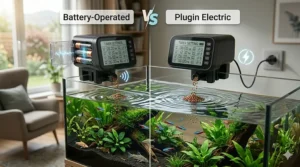
Battery-powered feeders offer installation flexibility—mount them anywhere without worrying about outlets. However, batteries die, usually at the worst possible time. Quality feeders like the Eheim provide low-battery indicators and can run 6-12 months on fresh batteries.
USB rechargeable feeders eliminate battery replacement but need occasional charging. They’re perfect if your tank is near existing power and you remember to charge devices regularly.
Electric AC feeders make sense for permanent outdoor installations like the hygger pond feeders. You run the cable once, plug it in, and forget about power for years.
Programming Flexibility
Basic feeders offer 1-2 feedings daily on a fixed schedule. That’s fine for simple maintenance. Advanced feeders like the hygger WiFi model let you customize everything—different amounts at different times, varied schedules for different days, seasonal adjustments.
Ask yourself: do your fish need varied feeding times? Do you feed different amounts on weekends versus weekdays? If yes, invest in programmable flexibility. If your fish are happy with simple twice-daily feedings, save money on a basic model.
Mounting and Placement
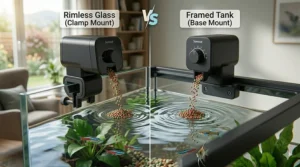
Consider your tank’s lid situation. Some feeders sit on the tank rim, others clamp to the glass, and some mount on lids with feeding ports. The FISHNOSH and most aquarium feeders include multiple mounting options.
For ponds, mounting becomes more critical. The feeder needs stable support, protection from weather, and positioning that distributes food effectively. The hygger pond feeders require mounting to solid surfaces—plan your installation before purchasing.
Understanding Different Types of Automatic Feeders
Drum/Barrel Feeders
The most common design, drum feeders store food in a rotating barrel with adjustable openings. When the timer triggers, the drum rotates, dropping food through the opening. The Eheim Everyday and FISHNOSH use this proven design.
Advantages: Large capacity, simple operation, consistent portions
Disadvantages: Portion size adjustments require trial and error, can jam with flake food
Compartment Feeders
Feeders like the Fish Mate F14 divide food into individual pre-portioned compartments that rotate on schedule. You manually load each compartment before leaving.
Advantages: Perfect portion control, dietary variety, works with all food types
Disadvantages: Limited trip length (14 days max), requires manual loading
Auger Feeders
Large pond feeders typically use auger mechanisms—rotating screws that move food from hopper to outlet. The hygger pond feeders exemplify this design.
Advantages: Handles large volumes, precise dispensing, weather-resistant
Disadvantages: Best for pellets, requires mounting, higher cost
Smart WiFi Feeders
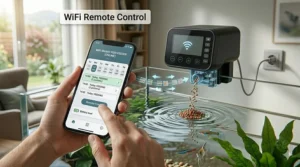
Modern feeders like the hygger WiFi Camera model add connectivity and remote control through smartphone apps.
Advantages: Remote monitoring, schedule adjustments on-the-fly, feeding verification
Disadvantages: Requires stable internet, higher cost, potential tech failures
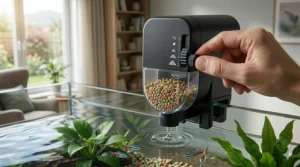
Vacation Fish Feeding: Planning for Extended Absences
Going on vacation shouldn’t mean stressing about your fish. With proper planning and the right automatic fish feeder, your aquarium will thrive in your absence.
Understanding Fish Feeding Science
According to research published by the National Institutes of Health, proper feeding schedules directly impact fish metabolism, growth rates, and overall health. The study emphasizes that consistency in feeding times helps regulate fish appetite and reduces stress—exactly what automatic feeders provide.
Pre-Vacation Testing Protocol
Never trust a new feeder without testing. Two weeks before your trip, install the feeder and run it through its complete cycle. Watch several feedings to verify:
- Food dispenses at scheduled times
- Portion sizes match your fish’s needs
- No clumping or jamming occurs
- The feeder remains securely mounted
Adjust as needed and run another week of testing. This reveals issues while you still have time to fix them.
The Two-Week Rule
Most automatic feeders handle two weeks reliably. Beyond that, you’re pushing into territory where refills, battery changes, or technical issues become risks. For trips longer than two weeks, consider:
- A larger capacity feeder designed for extended use
- Multiple feeders as backup (one primary, one redundancy)
- A trusted friend who can check on the tank weekly
- Reducing feeding frequency slightly (healthy fish can handle it)
Backup Plans Matter
Even the best technology fails occasionally. Before leaving, prepare backup feeding instructions for a neighbor or friend. Show them:
- How to manually add food (and how much)
- Where spare batteries are stored
- Your return date and emergency contact info
- What “normal” looks like so they can spot problems
Some aquarists leave pre-measured daily portions in small containers, labeled with dates. If the automatic feeder fails, your backup person just needs to dump one container daily—no guesswork required.
Maintenance and Cleaning Best Practices
Automatic feeders aren’t set-and-forget appliances. They need regular maintenance to keep delivering reliable performance. Here’s how to keep yours running smoothly.
Weekly Checks
Every week, spend 30 seconds confirming the feeder dispensed food. Look for food in the water, check the remaining level in the reservoir, and verify the feeder is still securely mounted. Weekly observation catches 95% of issues before they become problems.
Monthly Deep Cleaning
Once monthly, take the feeder down and clean it thoroughly:
- Empty remaining food
- Disassemble removable parts (drum, lids, mounting brackets)
- Wash with warm water—avoid soap which can leave harmful residues
- Dry completely before reassembling
- Refill with fresh food
Fish food oils accumulate over time, causing sticky buildup that jams mechanisms. Monthly cleaning prevents this.
Battery Management
For battery-operated feeders, mark your calendar for battery checks every 3 months. Many feeders have low-battery indicators, but proactive replacement is smarter than reactive scrambling. Keep spare batteries in your aquarium cabinet.
Rechargeable feeders need occasional charging cycles even when not in active use—batteries degrade when left discharged. Charge them quarterly if you’re not using the vacation feeding function regularly.
Seasonal Adjustments
Temperature and humidity affect both your fish’s appetite and the feeder’s performance. In summer, fish eat more; increase portions slightly. In winter, reduce feeding frequency. Humid seasons require extra attention to moisture-proof seals—you may need to clean and dry feeders more frequently.
Programmable Fish Feeders vs Manual Feeding
Let’s address the question some traditional aquarists ask: do you really need an automatic feeder, or should you stick with manual feeding?
The Case for Manual Feeding
Manual feeding has legitimate benefits. You observe your fish during feeding time, spotting health issues early. You can adjust portions based on appetite that day. You engage with your aquarium hobby in a hands-on way.
For aquarists who are home consistently and enjoy the ritual of feeding, manual feeding works beautifully. It’s a moment of connection with your underwater world.
When Automation Makes More Sense
Life isn’t always predictable. Work schedules shift, emergencies happen, travel becomes necessary. That’s where programmable fish feeders shine—they provide consistency your fish need regardless of life’s chaos.
Even if you’re home daily, automatic feeders excel for:
- Fish requiring multiple small feedings (anthias, fry, high-metabolism species)
- Maintaining strict feeding schedules when your schedule varies
- Preventing overfeeding by family members who “help”
- Overnight fasts or vacation coverage
The Hybrid Approach
The smartest aquarists combine both methods. Use manual feeding as your primary routine, enjoying the observation and interaction it provides. Set up an automatic feeder as backup, running it on a conservative schedule that keeps fish healthy if you miss a feeding.
This hybrid approach gives you the benefits of manual attention with the insurance of automated backup. It’s the best of both worlds.
Koi Pond Feeders: Special Considerations
Feeding koi and pond fish presents unique challenges that aquarium feeders can’t address. If you’re maintaining an outdoor pond, you need equipment designed for that environment.
Weather Resistance Requirements
Outdoor feeders face rain, snow, heat, cold, and UV exposure. The feeder body needs weatherproof construction, but equally important is protecting electronics. The hygger pond feeders have weatherproof hoppers but recommend sheltering the controller.
Consider creating a simple cover—a small roof overhang or weatherproof box—that shields the controller while allowing access for programming. This dramatically extends equipment lifespan.
Food Distribution in Ponds
Unlike aquariums where fish gather near the feeder, ponds spread fish across larger areas. Auger-style feeders distribute food gradually, giving all fish chances to eat. Avoid feeders that dump entire portions instantly—dominant koi will grab most of it, leaving smaller fish underfed.
Position your feeder where water circulation helps distribute food naturally. Near a fountain or waterfall works well, as moving water carries pellets across the pond surface.
Portion Sizing for Pond Fish
Koi and goldfish can eat 1-3% of their body weight daily, depending on water temperature. A pond with 20 pounds of fish needs roughly 4-12 ounces of food daily. Calculate your pond’s fish biomass, then select a feeder with appropriate capacity and portion control.
The hygger 5.5L pond feeder, holding 5 pounds of pellets, can feed a medium pond for weeks. The solar-powered model provides even longer autonomy.
Wildlife Protection
Raccoons, possums, and birds will raid exposed feeders. Mounting feeders on metal poles (rather than wood they can climb) and using snap-lid containers helps. Some pond owners add motion-activated sprinklers as wildlife deterrents.
The hygger feeders’ snap-lid design resists casual wildlife investigation, but determined raccoons can still breach them. Elevated mounting remains your best defense.
Common Problems and Troubleshooting
Even the best automatic fish feeders occasionally misbehave. Here’s how to diagnose and fix the most common issues.
Food Clumping and Jamming
Symptoms: Feeder sounds like it’s working but no food comes out, or only small amounts dispense
Causes: Moisture exposure, old food, humidity
Solutions:
- Use only fresh, completely dry food
- Store food in airtight containers with desiccant packs
- Clean the feeding mechanism monthly
- Choose moisture-resistant feeders like the Eheim with ventilation
- In humid climates, reduce the amount stored in the feeder
Inconsistent Dispensing
Symptoms: Sometimes the right amount dispenses, sometimes too much or too little
Causes: Incorrect calibration, food size variations, mechanical wear
Solutions:
- Recalibrate portion settings through multiple test cycles
- Use consistent food sizes—mixed pellet sizes cause inconsistency
- Check for worn drum openings or auger components
- Ensure feeder is mounted level (tilt affects gravity-fed mechanisms)
Power or Battery Failures
Symptoms: Feeder stops working, display blank, or missed feedings
Causes: Dead batteries, power disconnection, electrical issues
Solutions:
- Replace batteries proactively every 4-6 months
- For USB feeders, verify power adapter and cable integrity
- Test electrical outlets with other devices
- Keep spare batteries or backup power sources
- Consider feeders with power failure indicators
Mounting Problems
Symptoms: Feeder falls into tank, tilts, or becomes unstable
Causes: Inadequate mounting, rim incompatibility, weight shifts
Solutions:
- Verify mounting hardware compatibility before purchase
- Tighten clamps fully but avoid glass stress cracks
- For adhesive mounts, clean surfaces thoroughly with alcohol
- Redistribute weight by keeping food reservoirs partially filled
- Consider alternative mounting positions or supplemental supports
Manual vs Automatic Feeding Comparison
| Feature | Manual Feeding | Automatic Feeding |
|---|---|---|
| Consistency | Depends on your schedule | Precise timing daily |
| Vacation capability | Requires fish sitter | Operates independently |
| Observation opportunity | Excellent | Limited (unless WiFi model) |
| Overfeeding risk | Higher (human error) | Lower (programmed portions) |
| Initial cost | $0 | $15-$135 |
| Long-term convenience | Low | High |
| Multiple daily feedings | Time-intensive | Effortless |
✨ Ready to Upgrade Your Fish Care?
🐠 Stop worrying about feeding schedules and vacation stress! Click on any highlighted product name above to check current prices and read verified customer reviews on Amazon. Your fish deserve consistent nutrition—and you deserve peace of mind!
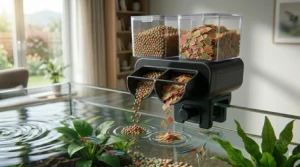
Feeding Different Fish Species
Different fish have dramatically different feeding requirements. Your automatic feeder’s effectiveness depends on matching its capabilities to your fish’s needs.
Nutritional Requirements Matter
Different fish species have vastly different dietary needs. Wikipedia’s comprehensive guide to fish feeding outlines how herbivorous fish like plecos and tangs require plant-based foods, while carnivorous species like bettas and cichlids need protein-rich diets. Understanding these requirements helps you select the right food type for your automatic feeder.
Bettas and Small Carnivores
Bettas need small, protein-rich portions 1-2 times daily. They’re prone to overfeeding and bloating. The FISHNOSH or Petbank feeders work well, programmed conservatively. Use small pellets (2-3mm) and set portions to 3-5 pellets per feeding.
Bettas are surface feeders, so any standard aquarium feeder dispenses appropriately. Watch for uneaten food—if pellets sink untouched, reduce portions.
Goldfish and Koi
These omnivorous gluttons will eat until they burst, making automatic feeders essential for preventing overfeeding. Feed 2-3% of body weight daily in warm months, reducing in winter as metabolism slows.
For goldfish aquariums, the Eheim or Fish Mate F14 provide good portion control. For outdoor koi, the hygger pond feeders deliver appropriate volumes. Use floating pellets so you can monitor consumption.
Tropical Community Tanks
Mixed-species tanks are trickiest because inhabitants have varied needs. Tetras, barbs, and danios need frequent small meals. Corydoras and plecos scavenge bottom detritus. Angels and gouramis eat mid-water.
The hybrid approach works best: automatic feeder for primary daytime meals, plus manual feeding of targeted foods (algae wafers for plecos, sinking pellets for corys) in the evening. The hygger WiFi feeder’s flexible scheduling helps accommodate varied feeding times.
Marine and Reef Fish
Saltwater fish often need multiple daily feedings of different food types. Herbivorous tangs require algae-based foods, while predatory fish need meaty fare. The Fish Mate F14’s compartment system lets you vary diet throughout the day.
For coral tanks, ensure the feeder doesn’t overfeed—excess nutrients cause algae blooms. Reef-safe pellets and conservative portions prevent water quality issues.
Cost Analysis: Budget vs Premium Feeders
Is a $70 smart feeder really worth 3x the cost of a $20 basic model? Let’s break down the value proposition.
Budget Feeders ($15-$30)
Examples: FISHNOSH, Fish Mate F14
What You Get: Basic timing, simple programming, manual adjustments
Best For: Occasional vacation use, single tanks, tight budgets
Limitations: Basic features, potential reliability issues, no remote control
Budget feeders handle short trips and routine feeding adequately. If you only travel 2-3 times annually and have one tank, they’re cost-effective. The FISHNOSH at $20 delivers 80% of what expensive feeders do at 25% of the cost.
However, you’re trading convenience for economy. Expect more frequent battery changes, less precise portions, and occasional troubleshooting.
Mid-Range Feeders ($30-$70)
Examples: Eheim Everyday, Petbank Rechargeable
What You Get: Better build quality, advanced features, improved reliability
Best For: Serious aquarists, frequent travelers, multiple tanks
Benefits: Longer lifespan, better customer support, fewer failures
Mid-range represents the sweet spot for most aquarists. The Eheim’s $50-60 price includes that ventilation system, 3-year warranty, and proven reliability. If you travel frequently or maintain expensive fish, the reliability alone justifies the investment.
Calculate cost-per-use: A $60 feeder used for 20 vacations over 5 years costs $3 per trip. Compare that to $50 of pet store feeder blocks (which mess up water quality) or $100 paying someone to feed daily.
Premium Smart Feeders ($70-$135)
Examples: hygger WiFi Camera, hygger Solar Pond
What You Get: WiFi connectivity, cameras, app control, advanced features
Best For: Tech enthusiasts, valuable fish collections, remote locations
Justification: Peace of mind, remote monitoring, multiple power options
Premium feeders appeal to specific needs. If you maintain a $5,000 reef tank or rare fish collection, the $75 hygger WiFi feeder’s camera provides $1,000+ of peace-of-mind insurance. You can verify feedings happened and catch problems before they escalate.
For pond owners in remote locations, the solar feeder’s $120 price eliminates the expense and hassle of running electrical lines. Calculate the cost of trenching power to your pond—suddenly $120 seems reasonable.
Budget vs Premium: Value Comparison Table
| Price Range | Features | Battery Life | Best For | Example Models | Annual Cost |
|---|---|---|---|---|---|
| Budget ($15-$30) | Basic timing, 1-2 feeds/day | 3-6 months | Occasional use, beginners | FISHNOSH, Fish Mate F14 | $20 + $15 batteries |
| Mid-Range ($30-$70) | Multiple feeds, better build | 6-12 months | Regular travelers | Eheim, Petbank | $50 + $10 batteries |
| Premium ($70-$135) | WiFi, cameras, apps | Rechargeable/Solar | Tech enthusiasts, large systems | hygger WiFi, Solar models | $100 + minimal upkeep |
Long-Term Value Calculation
The cheapest feeder isn’t always the best value. Factor in:
- Replacement frequency: A $20 feeder replaced annually costs more over 5 years than one $60 feeder lasting 5+ years
- Battery costs: Budget feeders often drain batteries faster, adding $20-30 annually in battery costs
- Fish health: One feeding failure could cost hundreds in lost fish
- Your time: Dealing with malfunctions, troubleshooting, and returns has time value
Premium feeders often deliver better long-term value for committed aquarists.
Setting Up Your First Automatic Fish Feeder
You’ve selected the perfect feeder—now let’s ensure successful setup that keeps your fish healthy and happy.
Initial Installation Steps
Step 1: Read the Manual
I know, obvious advice, but 80% of feeder problems stem from skipping instructions. Every model has quirks. Spend 10 minutes reading before mounting anything.
Step 2: Test Before Installing
Load food, insert fresh batteries, and run the feeder on your kitchen counter for 24 hours. Set it to dispense every few hours and verify consistent operation. Fix any issues before it’s mounted over your tank.
Step 3: Choose the Right Location
Mount feeders over open water, not directly above decorations where food could get trapped. Avoid positioning near filters that might immediately suck up dispensed food. Ensure you can easily access the feeder for refills without removing it entirely.
Step 4: Secure Mounting
Whether clamping to glass, sitting on a lid, or mounting to a pole (pond feeders), verify stability. A feeder falling into your tank ruins equipment and potentially harms fish. Tighten clamps firmly but avoid glass stress cracks.
Step 5: Load and Program
Fill the reservoir (don’t overfill—leave room for expansion in humid climates). Set your feeding schedule conservatively at first. Program display settings, time, and portion amounts per the manual.
Calibration and Testing
The number one mistake new users make: assuming default settings match their fish’s needs. They don’t. You must calibrate.
Day 1, set a small portion size and observe a feeding. Did fish consume everything in 2-3 minutes? Good. Did food remain uneaten? Reduce portions. Did fish act hungry afterward? Increase slightly.
Run this cycle 3-4 times over two days, adjusting until you find the sweet spot. Every tank is different—species, fish quantity, metabolism, and food type all affect ideal portions.
Creating a Feeding Schedule
Most fish thrive on 1-2 feedings daily. Morning and evening mirror their natural feeding patterns. For fish requiring frequent small meals (anthias, baby fish), program 3-4 smaller portions spread throughout the day.
Avoid feeding right when lights turn on or off—fish need adjustment time. Schedule feedings 30-60 minutes after lights-on and before lights-off.
For vacation mode, some aquarists reduce feeding slightly (1.5 feedings’ worth spread across 2 times daily). Healthy adult fish handle slight underfeeding better than overfeeding, and it reduces waste accumulation while you’re gone.
FAQ: Best Automatic Fish Feeders
❓ How long can an automatic fish feeder reliably feed my fish?
❓ Do automatic fish feeders work with flake food?
❓ Can I use one automatic feeder for multiple tanks?
❓ What happens if the automatic feeder jams while I'm on vacation?
❓ Are WiFi automatic fish feeders worth the extra cost?
Conclusion: Finding Your Perfect Automated Feeding Solution
After analyzing specifications, testing capabilities, and evaluating real-world performance, one truth emerges: the best automatic fish feeder isn’t the same for everyone. It’s the one that matches your specific needs.
For budget-conscious beginners or those testing automation for the first time, the FISHNOSH 2026 offers remarkable value at $15-25. It handles weekend trips and basic automation without complicated setup or significant investment.
Serious aquarists seeking reliability should look at the Eheim Everyday. That German engineering, ventilation system, and 3-year warranty justify the $50-65 price for anyone maintaining valuable fish or traveling frequently.
The Fish Mate F14 fills a unique niche for aquarists who prioritize dietary variety and precise portion control. Its compartment system lets you customize every feeding—worth the $18-28 for finicky eaters.
Tech enthusiasts and frequent travelers will appreciate the hygger WiFi Camera feeder. At $55-75, the remote monitoring and app control provide invaluable peace of mind for anyone who worries about their fish while away.
Pond owners need purpose-built solutions. The hygger 5.5L Pond Feeder delivers industrial capacity and weather resistance for $85-120, while the Solar Pond Feeder at $95-135 offers ultimate reliability for remote locations.
And for those seeking eco-friendly convenience without the battery hassle, the Petbank Rechargeable hits a nice middle ground at $25-40.
Ultimately, automatic fish feeders represent an investment in your fish’s health and your peace of mind. A well-chosen feeder pays for itself the first time it prevents a feeding disaster or lets you enjoy vacation without aquarium anxiety.
Your fish can’t tell you they’re hungry, but with the right automatic fish feeder, they’ll never need to. Choose wisely, test thoroughly, and enjoy the freedom that comes from knowing your aquatic friends are well-fed—whether you’re home or halfway around the world.
Recommended for You
- 7 Best Lead Core Fishing Lines for Trolling – 2026
- Fiberglass vs Graphite Fishing Rods: 7 Best Tested in 2026
- 7 Best Centerpin Fishing Reels 2026
Disclaimer: This article contains affiliate links. If you purchase products through these links, we may earn a small commission at no additional cost to you.
✨ Found this helpful? Share it with your friends! 💬🤗
