
In This Article
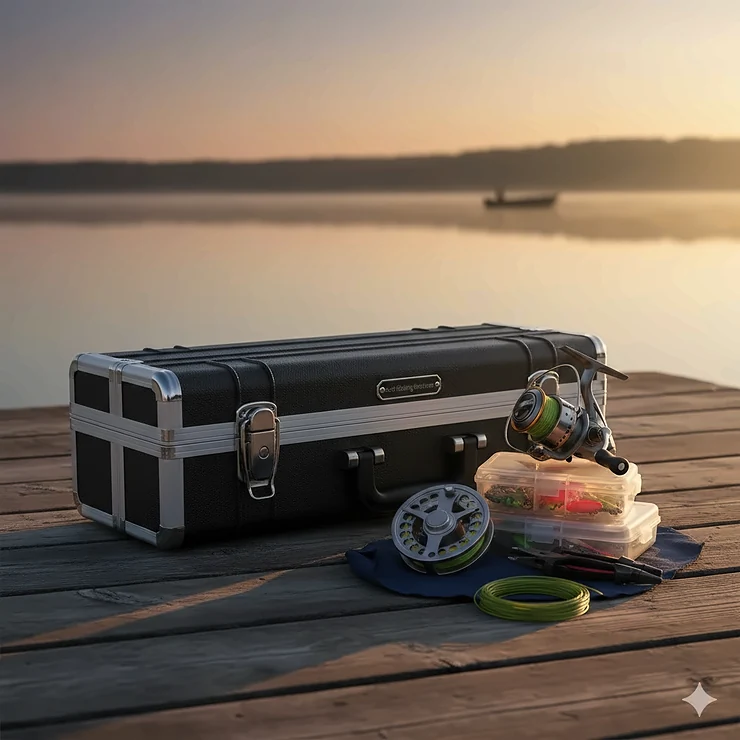
You know that sinking feeling when you open your rod case after a flight and find your favorite bass rod snapped in half? I’ve been there, and trust me, it’s not something you want to experience. After years of traveling to fishing destinations across North America and countless airport horror stories, I’ve learned one crucial lesson: investing in a quality fishing rod hard case isn’t optional—it’s essential.
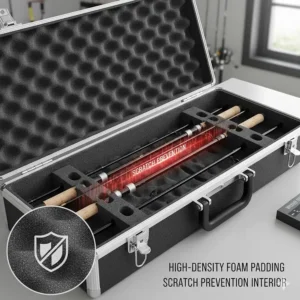
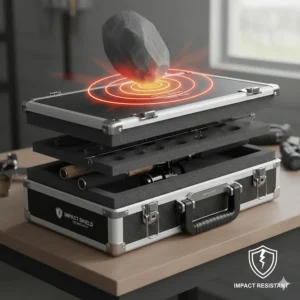
Whether you’re heading to Alaska for salmon season or catching a flight to Florida for some saltwater action, your fishing rods face serious threats during travel. Baggage handlers aren’t exactly gentle with luggage, and a soft case simply won’t cut it when 50-pound suitcases are being stacked on top of your gear. The right hard shell fishing rod case provides impact resistant rod case protection that keeps your expensive equipment safe from crushing, drops, and the general chaos of modern air travel.
In this comprehensive guide, I’ll walk you through the top 7 fishing rod hard case options available in 2026, helping you choose the perfect crush proof rod protection for your specific needs and budget. From budget-friendly options to premium airline approved fishing luggage, we’ve got every angler covered.
Quick Comparison Table: Top Fishing Rod Hard Cases at a Glance
| Product | Capacity | Length Range | Material | Price Range | Best For |
|---|---|---|---|---|---|
| Plano Airliner Telescoping | 8 rods | 47-88 inches | Polypropylene | $40-50 | Budget travelers |
| Sportube Series 2 | 10 rods | 48-83 inches | HDPE | $100-130 | Serious anglers |
| Flambeau Bazuka Pro | 6+ rods | 73-102 inches | Composite HDPE | $50-65 | Long rod storage |
| Plano Guide Series 49″ | 2 rods | 49 inches | 1680D Fabric/Hard-backed | $60-75 | Premium protection |
| MTM IFB-1-30 | 8 rods | 36 inches | Polypropylene | $35-45 | Ice fishing |
| Flambeau 4455BB Bunk Box | 4 rods | 40 inches | Lightweight composite | $35-48 | Home/vehicle storage |
| EVTSCAN Hard EVA Case | Multiple rods | 21 inches | EVA composite | $25-35 | Compact travel |
💬 Just one click – help others make better buying decisions too! 😊
Top 7 Fishing Rod Hard Case: Expert Analysis & Reviews
1. Plano Airliner Telescoping Rod Case (458800) – Best Overall Value
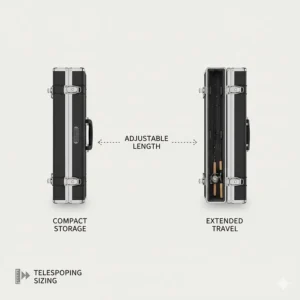
The Plano Airliner Telescoping Rod Case has earned its reputation as the go-to choice for traveling anglers who want reliable protection without breaking the bank. This three-tier telescoping design is genuinely clever—it collapses down to 47 inches for easy storage and transportation, then extends all the way to 88 inches to accommodate your full-length 7-foot rods with ease.
Key Specifications:
- 4.5-inch diameter accommodates most rod configurations
- Secure position locking device prevents accidental opening
- Molded comfort handle for extended carrying
- TSA-approved lockable design
What really impressed me about this case is its durability. The polypropylene construction feels solid without adding excessive weight, and the smaller collapsed size means it actually fits in most vehicle trunks. Customer feedback consistently praises its ability to survive rough airline baggage handling—one reviewer mentioned their case took a beating on six international trips and still looked brand new.
Pros:
✅ Excellent price-to-performance ratio
✅ Holds up to 8 rods comfortably
✅ Telescoping design saves storage space
Cons:
❌ 4.5″ diameter may be tight for some spinning reels
❌ No wheels for easier airport navigation
Price Range: $40-50 | Rating: 4.4/5 stars
2. Sportube Series 2 Travel Case – Premium Choice for Serious Anglers
When you need the absolute best in hard shell fishing rod case protection, the Sportube Series 2 delivers premium performance that justifies its higher price tag. This blow-molded masterpiece from high-density polyethylene creates an incredibly tough shield around your equipment while remaining surprisingly lightweight at just 12 pounds.
Key Specifications:
- Adjustable internal length: 48-83 inches
- Internal width: 11 inches / depth: 6 inches
- Heavy-duty rubber wheels for easy transport
- Easy pull handle attachment point
- 100% recycled HDPE shell
The Sportube really shines for fly fishermen and guide services. It holds up to 10 aluminum fly rod tubes or 10 spin casting rods, plus there’s room for tackle boxes, waders, boots, nets, and gear packs. The padded ends at tips and tails absorb impacts that would snap lesser cases. Several fishing guides I know swear by these cases—they’ve survived hundreds of flights without a single rod casualty.
Pros:
✅ Military-grade durability with 5-year warranty
✅ Wheels make airport navigation effortless
✅ Massive capacity for multiple rods and accessories
Cons:
❌ Higher price point than budget alternatives
❌ Baitcasting reels need to be detached to fit
Price Range: $100-130 | Rating: 4.7/5 stars
3. Flambeau Bazuka Pro Rod Case (6095) – Best for Long Rods
Got some serious surf casting rods or long two-piece rods that won’t fit in standard cases? The Flambeau Bazuka Pro was designed exactly for this challenge. This telescoping beast extends from 73 inches all the way to 102 inches, making it perfect for rods up to 8.5 feet long—something most competitors simply can’t accommodate.
Key Specifications:
- Rugged HDPE construction (Made in USA)
- Holds 6+ rods with reels detached
- Foam padding at base and lid
- Hinged loading door for easy access
- TSA and airline compliant
The blow-molded construction Flambeau calls “One Tough Son of a Gun” isn’t just marketing speak—this case genuinely withstands punishment. The hinged loading door is a thoughtful touch that makes packing and unpacking way easier than top-loading tubes. Customers particularly appreciate how the protective tip padding at both ends keeps rod tips safe even when the case gets dropped.
Pros:
✅ Accommodates extra-long rods up to 8.5 feet
✅ Superior HDPE construction built in America
✅ Perfect for saltwater rods with oversized guides
Cons:
❌ Requires reel removal for most setups
❌ Extended length can be challenging in smaller vehicles
Price Range: $50-65 | Rating: 4.5/5 stars
4. Plano Guide Series 49″ Double Rod Case – Premium Hard-Backed Protection
The Plano Guide Series represents the sweet spot between hard cases and soft bags, offering the best of both worlds. This isn’t your typical fabric bag—the hard-backed construction of rugged 1680 Denier fabric maintains its shape and provides genuine impact protection while staying more packable than solid plastic tubes.
Key Specifications:
- Stores two 2-piece rods up to 8 feet
- Rigid tubes and siding hold shape
- Padded divider with bungee cord security
- Reinforced zippered side pockets
- Padded removable shoulder strap
What sets this case apart is the attention to detail. The padded divider with bungee cords secures and separates reels, preventing that annoying metal-on-metal contact that scratches finishes. The outer reinforced zippered pockets are perfect for storing reel handles, terminal tackle, and small accessories. One fishing guide told me this case survived three seasons of weekly charter trips looking almost new—that’s serious durability.
Pros:
✅ Premium 1680D fabric outlasts cheaper materials
✅ Hard-backed design maintains shape for years
✅ Comfortable carrying options for extended travel
Cons:
❌ Limited to 2 rods maximum
❌ Higher price than basic tube designs
Price Range: $60-75 | Rating: 4.6/5 stars
5. MTM IFB-1-30 Ice Fishing Rod Box – Best for Ice Fishing Specialists
Ice fishermen have unique storage needs, and the MTM IFB-1-30 was purpose-built for exactly this application. Made right here in the USA from rugged polypropylene, this box delivers serious protection for your ice fishing arsenal at a price that won’t break the bank.
Key Specifications:
- Dimensions: 36 x 10.2 x 5.2 inches
- Holds 8 ice fishing rods
- 4 accessory compartments
- Notched foam padding for secure placement
- Large handle and lockable latches
- 10-pound capacity with 5-year warranty
The notched foam padding is brilliant—your rods sit in custom positions and don’t slide around during transport. The four accessory compartments easily handle tip-ups, line, jigs, and all your ice fishing essentials. At 4.0 stars from nearly 900 customers, there’s clearly strong satisfaction with this case. Some reviewers mentioned the foam occasionally shifts, but a bit of extra adhesive solves that issue permanently.
Pros:
✅ Purpose-designed for ice fishing equipment
✅ Excellent organization with multiple compartments
✅ Strong latches and lockable for security
Cons:
❌ Not water-resistant (moisture can enter)
❌ Somewhat bulky for vehicle storage
Price Range: $35-45 | Rating: 4.0/5 stars
6. Flambeau Outdoors 4455BB Rod Bunk Box – Best for Home & Vehicle Storage
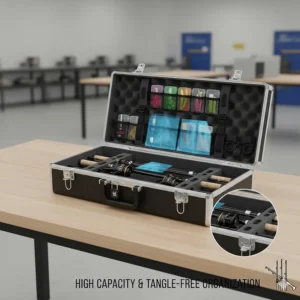
Sometimes you don’t need airport-ready protection—you just want a reliable way to store and transport rods between home and your favorite fishing spots. The Flambeau 4455BB Rod Bunk Box excels at exactly this mission, offering solid protection in a lightweight, budget-friendly package.
Key Specifications:
- Interior dimensions: 40″ L x 9.5″ W x 6″ D
- Accommodates 4 rods with reels attached
- Four foam inserts for customization
- Zerust anti-corrosion tab included
- Sturdy polycarbonate latches
- Weight: 3.6 pounds
The integrated oversized handle makes grabbing this case easy, even with wet hands. But the real standout feature is the Zerust anti-corrosion tab—it releases a corrosion-inhibiting vapor that forms a protective layer on metal surfaces, preventing rust in harsh marine environments. That’s a game-changer for saltwater anglers who know how quickly reels can corrode.
Pros:
✅ Lightweight at under 4 pounds
✅ Zerust protection prevents corrosion
✅ Foam inserts customize fit for different rod types
Cons:
❌ Limited to 4-rod capacity
❌ Not designed for checked airline baggage
Price Range: $35-48 | Rating: 4.6/5 stars
7. EVTSCAN Portable Waterproof Hard EVA Case – Most Compact Option
Need something ultra-portable for short fishing trips or smaller tackle setups? The EVTSCAN Hard EVA Case delivers impressive protection in a remarkably compact 21-inch format. This is perfect for anglers who fish with shorter rods or two-piece rods that break down small.
Key Specifications:
- Length: 21.26 inches / Width: 7.08 inches / Height: 2.36 inches
- EVA composite fabric construction
- Foam interior padding
- Double zipper design
- Waterproof and shockproof
- Weight: approximately 0.9 pounds
The EVA material construction makes this case genuinely waterproof while maintaining flexibility that absorbs impacts. The foam interior cradles your gear, and the double zipper design gives you quick access from either end. At under a pound, you’ll barely notice carrying this case. Customer reviews highlight its durability—one angler mentioned using it for a full year of weekly trips without any wear showing.
Pros:
✅ Ultra-lightweight and highly portable
✅ True waterproof protection
✅ Budget-friendly entry point
Cons:
❌ Limited length restricts rod options
❌ Smaller capacity than full-size cases
Price Range: $25-35 | Rating: 3.8/5 stars
✨ Don’t Miss These Exclusive Deals!
🔍 Take your fishing adventures to the next level with these carefully selected rod cases. Click on any highlighted item above to check current pricing and availability. These protective cases will help you transport your valuable fishing equipment safely, ensuring your rods arrive ready to fish!
What is Fishing Rod Hard Case?
A fishing rod hard case is a protective storage solution specifically engineered to shield fishing rods from impact damage during transportation and storage. Unlike soft rod sleeves or fabric bags, hard cases feature rigid outer shells constructed from materials like polypropylene, high-density polyethylene (HDPE), or EVA composite that resist crushing forces and absorb impacts. These cases typically include foam padding, adjustable interior compartments, and secure latching mechanisms to prevent rods from shifting during travel.
Types of Hard Shell Fishing Rod Cases: Understanding Your Options
🎣 Telescoping Tube Cases
Telescoping tube designs like the Plano Airliner and Flambeau Bazuka represent the most versatile category of durable fishing rod cases. These ingenious cases feature multiple sections that slide together, allowing them to extend for storing full-length rods and collapse for compact storage. The adjustability makes them perfect for anglers with varied rod collections—you can accommodate everything from 6-foot ice fishing rods to 8.5-foot surf casters in the same case.
The primary advantage lies in transportation flexibility. A case that collapses to 47 inches fits easily in car trunks, closets, and overhead storage, yet extends to protect your longest rods. Most telescoping cases secure with locking pins or twist-lock mechanisms that prevent accidental collapse during travel. Look for models with reinforced joints where sections connect, as these stress points need extra durability.
🎣 Rolling Hard Cases
Premium options like the Sportube Series 2 incorporate heavy-duty wheels and pull handles that transform airport navigation from a burden to a breeze. These cases typically feature blow-molded construction that creates a single-piece shell without weak seams or joints. The integrated wheel systems handle weights up to 50 pounds, making them ideal for guides and serious anglers who travel with multiple rod setups plus gear.
Rolling cases shine for airline travel but consider your storage situation. The wheels add bulk compared to standard tubes, and the rigid construction means they don’t compress to fit tight spaces. However, if you’re regularly navigating airports or parking lots with your gear, the convenience absolutely justifies the extra size.
🎣 Hard-Backed Fabric Cases
Hybrid designs like the Plano Guide Series blend hard-shell protection with fabric flexibility. These cases feature rigid internal structures or hard backing panels covered with heavy-duty fabric like 1680 Denier material. The combination provides excellent impact protection while remaining lighter and more packable than solid plastic tubes.
The fabric exterior typically includes extra pockets for accessories, and the cases often feature padded dividers that keep rods and reels separated. These work especially well for anglers who need to protect 2-4 rods but want something less cumbersome than a large tube. The shoulder strap carrying options also make them more comfortable for longer walks.
🎣 Compact EVA Cases
Smaller EVA hard cases serve anglers who fish with ultra-light setups or frequently disassembled two-piece rods. These cases typically measure under 24 inches, making them perfect for backpack attachment or carrying as personal items on flights. The EVA (ethylene-vinyl acetate) foam construction provides genuine impact resistance while weighing just ounces.
These compact options won’t work for full-length rods, but they’re unbeatable for protecting telescopic rods, ice fishing gear, or pack rods. The waterproof construction also means you can set them down anywhere without worrying about moisture damage.
How to Choose the Best Hard Case for Fishing Rods
1. Measure Your Longest Rods First
Grab your tape measure and determine the length of your longest rod when fully assembled. Add 2-3 inches to this measurement—you want clearance for rod tips and to avoid forcing rods into cases. For two-piece rods, measure each section separately. Most airline approved fishing luggage accommodates rods up to 7-8 feet, but verify before purchasing.
2. Assess Your Rod Quantity and Types
Count how many rods you typically travel with. If you’re a bass angler who brings 3-4 casting rods, look for cases that accommodate at least 4-6 rods to allow growth. Fly fishermen need different considerations—cases that hold 10 fly rod tubes provide way more capacity than spinning rod designs. Also consider reel sizes; spinning reels with large bails need extra diameter compared to low-profile baitcasters.
3. Evaluate Construction Materials
Polypropylene offers excellent durability at budget prices but adds weight. High-density polyethylene (HDPE) provides superior impact resistance and lighter weight but costs more. EVA composite delivers waterproof protection and extreme light weight in compact cases. For airline travel, prioritize blow-molded single-piece construction without seams that can split under stress.
4. Consider Transportation Method
Flying anglers need TSA-approved locks and cases that meet airline dimensional restrictions (typically under 115 linear inches). Look for rolling cases with heavy-duty wheels if you’ll be navigating airports frequently. For vehicle transport, ensure collapsed dimensions fit your trunk or truck bed. Some anglers keep a large telescoping case at home and a compact case in their vehicle for convenience.
5. Budget Appropriately for Value
Budget cases ($25-50) work fine for occasional travel and vehicle storage. Mid-range options ($50-100) typically offer better materials, easier operation, and longer warranties. Premium cases ($100+) justify their cost for serious anglers who fly multiple times per season—a single broken $300 rod costs more than the best case. Consider your rod investment when determining case budget.
6. Check Customer Reviews for Real-World Performance
Star ratings matter, but dig into actual customer experiences. Look for reviews from anglers with similar use cases—airline travelers, guides, tournament fishermen. Pay attention to comments about durability after multiple trips, ease of packing, and actual capacity versus advertised specs. Reviews mentioning specific airline experiences provide valuable real-world validation.
7. Verify Airline Compatibility
If you’re flying, confirm your chosen case meets current TSA and airline requirements. Cases must have TSA-approved lock capability and fit dimensional restrictions. Some airlines classify properly cased fishing rods as sporting equipment with reduced or waived fees. Download your airline’s sporting equipment policy before purchasing—it could save you hundreds in unexpected charges over the years.
Essential Features in Impact Resistant Rod Cases
Crush-Proof Shell Construction
The outer shell represents your first line of defense against baggage handler chaos. Quality crush proof rod protection features walls at least 2-3mm thick with reinforced corners and edges. Blow-molded cases maintain consistent thickness throughout, while injection-molded designs may have thinner spots that compromise strength. Test shells by applying moderate pressure—they should flex slightly but immediately return to shape without creaking or showing stress marks.
Interior Foam Padding Systems
Foam serves multiple crucial functions beyond simple cushioning. Quality cases feature closed-cell foam that won’t absorb water or compress permanently over time. Look for foam positioned at both ends to protect rod tips and butts, plus along the interior length to prevent lateral movement. Adjustable foam dividers let you customize interior space for different rod configurations. Some premium cases include notched foam that cradles individual rods in dedicated positions.
Secure Latching Mechanisms
Latches and closures must withstand considerable stress during travel. Polycarbonate latches resist breaking better than plastic alternatives, and metal reinforced designs offer maximum security. Multi-point latching systems (2-4 latches) distribute stress across the case rather than concentrating it at one point. Integrated lock compatibility lets you secure cases with TSA-approved locks—essential for airline travel but also valuable for preventing theft at hotels or fishing lodges.
Waterproof or Water-Resistant Seals
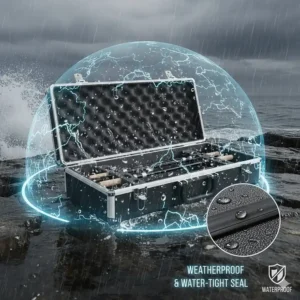
Moisture represents a hidden threat to rod integrity. Water-resistant cases feature tight-fitting lids that prevent rain intrusion during outdoor storage or vehicle transport. True waterproof designs incorporate O-ring seals that create watertight barriers—these cases can literally be submerged without internal moisture. For serious saltwater anglers, waterproof protection prevents corrosive salt spray from reaching reels and rod components.
Comfortable Carrying Options
You’ll appreciate thoughtful carrying designs during long airport walks or marina hikes. Molded handles with comfortable grips reduce hand fatigue compared to basic plastic loops. Padded shoulder straps with adjustment capability let you find optimal balance for your height. Rolling cases need smooth-operating wheels that handle both smooth airport tiles and rough parking lot gravel. Handle placement matters too—end-mounted handles balance better for longer tubes.
Travel Fishing Rod Hard Case: Airline Regulations & Best Practices
Understanding TSA Requirements
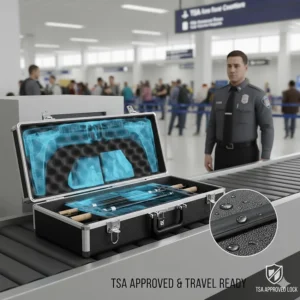
The Transportation Security Administration permits fishing rods in both carry-on and checked luggage, but final decisions rest with TSA officers at checkpoints. Rods must fit airline size restrictions for carry-on items—most airlines limit carry-on items to 22 x 14 x 9 inches, which means only compact cases qualify. Checked rod cases face fewer size restrictions but must not exceed 115 linear inches (length plus width plus height) without incurring oversized baggage fees.
Sharp fishing tackle like large hooks must be sheathed, securely wrapped, and packed in checked luggage only. Small flies and freshwater hooks are technically permitted in carry-on bags, but individual TSA agents may interpret regulations differently. Smart anglers pack expensive reels and fragile tackle in carry-on bags while checking rods and large tackle.
Airline-Specific Policies
Each airline maintains unique sporting equipment policies that significantly impact costs. Delta Airlines counts one rod case containing up to 2 rods plus one equipment bag as a single checked item at standard rates. American Airlines applies standard baggage fees for cases up to 50 pounds and 126 linear inches. Southwest requires rods in sturdy cylindrical containers and charges oversized fees for cases exceeding 91 inches.
United Airlines permits up to 2 fishing rods, one reel, one landing net, one pair of fishing boots, and one tackle box as carry-on or checked items. JetBlue allows fishing poles as carry-on if they fit overhead bins. International carriers often have stricter regulations—research thoroughly before booking international fishing trips.
Packing Strategies for Maximum Protection
Start by wrapping each rod in protective sleeves or foam padding before placing them in your hard case. Position rods with guides facing inward to minimize snagging risk. Use pool noodles or pipe insulation as additional cushioning along case interiors—these inexpensive materials absorb considerable impact. Place heavier items like reels near the case center for better weight distribution.
Fill empty spaces with soft items like fishing clothing, hats, or towels to prevent internal shifting. Remove loose items from exterior pockets before checking bags—airport conveyor systems catch and tear external pouches. Apply “Fragile” stickers liberally on cases containing expensive equipment. While handlers don’t always respect these labels, they do increase awareness.
Insurance and Documentation
Photograph your equipment before trips, including serial numbers on expensive reels and rods. These photos prove ownership and condition if you need to file damage claims with airlines. Consider purchasing travel insurance that covers sporting equipment—standard airline liability maxes out around $3,400, far below the value of premium rod collections. Keep receipts in cloud storage for easy access during claims processes.
Label cases with contact information both inside and outside. Use durable tags that won’t tear off during baggage handling. Some anglers include business cards inside cases with phone numbers and email addresses—if your case accidentally opens, kind souls can reunite you with your gear.
Maintenance & Care for Durable Fishing Rod Cases
Regular Cleaning Protocols
After each trip, wipe down case exteriors with damp cloths to remove dirt, salt spray, and grime that degrade materials over time. Pay special attention to hinges, latches, and seals where debris accumulates. For stubborn saltwater residue on cases used in marine environments, mix mild soap with warm water and scrub gently with soft brushes. Rinse thoroughly and dry completely before storage to prevent mildew growth.
Interior foam requires periodic deep cleaning. Remove foam padding quarterly and hand wash with mild detergent. Squeeze—don’t wring—excess water out and air dry completely before reinstalling. Closed-cell foam resists moisture absorption, but thorough drying prevents odor development. Replace foam that shows permanent compression or tearing, as compromised padding no longer protects rods effectively.
Inspection and Component Replacement
Examine latches, hinges, and handles before each trip. Tighten loose screws immediately—vibration during transport slowly loosens fasteners. Apply silicone lubricant to moving parts like telescoping sections and hinges to ensure smooth operation. Check wheels on rolling cases for wear; replace worn wheels before they fail during airport navigation.
Inspect seals and gaskets on waterproof cases annually. O-rings naturally degrade from UV exposure and temperature cycling. Replace compromised seals to maintain waterproof integrity. Most manufacturers sell replacement seal kits for $5-15—far cheaper than replacing water-damaged equipment.
Proper Storage Techniques
Store cases in climate-controlled environments when possible. Extreme temperatures cause plastic materials to become brittle and prone to cracking. Avoid leaving cases in vehicle trunks during summer or winter for extended periods. If garage storage is your only option, place cases on elevated shelving rather than concrete floors where temperature extremes are most severe.
Store telescoping cases in slightly extended positions rather than fully collapsed. This reduces stress on locking mechanisms and prevents internal components from binding. Place cases horizontally rather than standing upright—horizontal storage distributes weight more evenly and prevents warping.
Comparison: Hard Case vs Soft Case vs Rod Tubes
| Feature | Hard Cases | Soft Cases | Rod Tubes |
|---|---|---|---|
| Impact Protection | Excellent – crushproof | Fair – padding only | Good – rigid but limited |
| Weight | Heavy (8-15 lbs) | Light (2-5 lbs) | Medium (3-8 lbs) |
| Storage Space | Minimal when collapsed | Folds flat | Moderate |
| Airline Security | TSA lockable | Zipper lockable | Some lockable |
| Capacity | High (4-10 rods) | Low (1-3 rods) | Medium (2-6 rods) |
| Price Range | $35-130 | $20-60 | $15-45 |
| Best Use Case | Airline travel, guides | Day trips, car transport | Budget protection |
Budget vs Premium: Finding Your Sweet Spot
Budget Options ($25-50)
Entry-level cases from brands like Plano, Flambeau, and generic manufacturers provide solid protection for occasional travelers and anglers who primarily transport gear in personal vehicles. These cases typically feature basic polypropylene construction, simple foam padding, and standard latches. They’ll survive normal handling but may show wear faster with frequent airline travel.
The Plano Airliner at $40-50 represents the best value in this category—you get telescoping functionality, lockable design, and capacity for 8 rods. The EVTSCAN EVA case at $25-35 works brilliantly for anglers needing compact protection. Budget cases make perfect sense if you fish locally, rarely fly, or are just starting to build your rod collection. You can always upgrade later as your needs evolve.
Mid-Range Options ($50-100)
This sweet spot delivers significantly better materials, construction quality, and features without premium pricing. The Flambeau Bazuka Pro ($50-65) and Plano Guide Series ($60-75) both offer enhanced durability that justifies the moderate price increase. Construction quality jumps noticeably—thicker walls, better latches, superior foam systems.
Mid-range cases handle frequent use gracefully. Guides, tournament anglers, and those who fly several times per season find these cases provide the best return on investment. The improved materials resist wear that quickly degrades budget options, and better features like reinforced corners and quality padding actually protect expensive rods rather than just containing them.
Premium Options ($100+)
The Sportube Series 2 ($100-130) represents the top tier where you’re paying for maximum durability, convenience features, and peace of mind. Premium cases feature blow-molded single-piece construction that eliminates weak seams, heavy-duty wheels that roll smoothly under heavy loads, and thoughtful details like adjustable length and massive capacity.
These cases make sense for professional anglers, guides who travel weekly, and serious enthusiasts with expensive rod collections. When you’re protecting multiple $400-600 rods, spending $120 on a case that prevents a single rod break pays for itself immediately. Premium cases also typically include better warranties—5-year coverage versus 1-year on budget options.
Common Mistakes When Buying Fishing Rod Cases (And How to Avoid Them)
Underestimating Required Length
One of the most frustrating mistakes is purchasing a case that’s technically long enough for your rods but leaves no safety margin. Rods crammed into cases with tips pressed against ends suffer guide damage and eventual breaks. Always add 2-3 inches to your longest rod measurement. Two-piece rods need measurement of the longest section, not the assembled length. Telescopic rods require measurement when fully extended.
Ignoring Diameter Requirements
Case diameter matters enormously, especially for spinning reels and oversized guides. A 3-inch diameter tube won’t accommodate a 5000-series spinning reel or the large guides on many saltwater rods. Measure your largest reel’s maximum dimension (including bail arms) and ensure your case provides at least 1 inch of clearance. Forcing oversized reels into undersized cases damages components and stresses case construction.
Focusing Only on Price
The cheapest case rarely delivers the best value. A $20 tube that cracks on its third flight costs more in the long run than a $60 case that survives 50 trips. Factor in your rod value—protecting a $500 setup with a $15 case represents poor risk management. Calculate cost per trip rather than just upfront price. A $100 case used 40 times costs $2.50 per trip; a $30 case lasting 8 trips costs $3.75 per trip.
Neglecting Capacity Planning
Buying a case that barely holds your current rod collection leaves no room for growth. Most anglers add rods regularly—that new technique requires a specialized rod, a fishing buddy recommends a different action, you discover a new fishing style. Purchase cases with 20-30% extra capacity beyond current needs. The marginal cost difference is minimal, but the flexibility proves invaluable.
Skipping Airline Policy Research
Discovering your carefully selected case violates airline size restrictions at the check-in counter ruins trips. Different airlines enforce dramatically different policies and fees. International carriers often maintain stricter regulations than domestic airlines. Research before purchasing—download airline sporting equipment policies and verify your chosen case complies. Factor potential baggage fees into your case budget calculation.
Advanced Protection Strategies for Valuable Rod Collections
Layered Protection Systems
The most effective protection combines multiple defensive layers. Start with individual rod sleeves that prevent guide-to-guide contact and reduce friction. Place sleeved rods in your hard case with additional foam padding between rods. For extremely valuable rods, consider placing the entire hard case inside a padded soft bag for double protection. This layered approach provides redundant safety—even if one layer fails, others maintain protection.
Custom Foam Modifications
Off-the-shelf foam rarely fits perfectly. Custom modifications dramatically improve protection. Purchase additional closed-cell foam sheets from craft stores and cut them to exact case dimensions. Create notched channels that cradle individual rods in fixed positions, preventing the shifting that causes damage. Use contact adhesive to secure foam modifications permanently. The $10-15 investment in custom foam potentially saves thousands in rod repairs.
Specialized Packing for Two-Piece Rods
Two-piece rod tips face unique vulnerability—thin blanks without the support of continuous construction. Pack tip sections with extra foam or bubble wrap padding. Some anglers cut PVC pipes to exact tip section lengths and use these rigid tubes inside hard cases for ultimate tip protection. The PVC tube creates a crushproof cavity that protects delicate graphite tips even under extreme pressure.
Reel Removal Considerations
Removing reels before travel reduces case diameter requirements and eliminates reel damage risk but creates new challenges. Pack detached reels in dedicated reel cases or padded bags with individual compartments. Never pack multiple reels loose together—metal-on-metal contact scratches finishes and damages drag systems. For spinning reels, close bail arms fully and secure with small zip ties to prevent bending during transport.
❓ Frequently Asked Questions About Fishing Rod Hard Cases
❓ Can you bring a fishing rod hard case on a plane as carry on luggage?
❓ How much do airlines charge for checking fishing rod hard case?
❓ What size fishing rod hard case do I need for airline travel?
❓ Are fishing rod hard cases better than soft cases for protection?
❓ How many fishing rods can fit in a typical hard case?
Conclusion: Protecting Your Investment for Years of Fishing Adventures
Choosing the right fishing rod hard case comes down to matching your specific needs with appropriate protection levels. Budget-conscious anglers who travel occasionally will find excellent value in the Plano Airliner Telescoping Rod Case at $40-50—it provides solid protection without unnecessary premium features. Serious anglers who fly multiple times per season should seriously consider the Sportube Series 2 despite its $100+ price tag; the superior construction and convenience features justify the investment when protecting expensive rod collections.
Remember that your fishing rods represent hundreds or thousands of dollars of investment in performance and memories. A quality hard shell fishing rod case isn’t an expense—it’s insurance that ensures your favorite rods survive travel and arrive ready to catch fish. Don’t wait until you’ve experienced the heartbreak of a broken rod to upgrade your protection.
The seven options reviewed here all offer legitimate benefits for different fishing styles and travel patterns. Assess your longest rods, typical rod quantity, travel frequency, and budget constraints. Then select the best hard case for fishing rods that meets your requirements. Your future self will thank you when you’re tying on your first lure at your destination instead of mourning a broken rod in a hotel room.
Recommended for You
- 7 Best Fly Fishing Vests for 2026
- 7 Best Fly Fishing Waders 2026 – Expert Guide & Reviews
- 7 Best Fly Fishing Sling Pack Options in 2026
Disclaimer: This article contains affiliate links. If you purchase products through these links, we may earn a small commission at no additional cost to you.
✨ Found this helpful? Share it with your friends! 💬🤗
