
In This Article
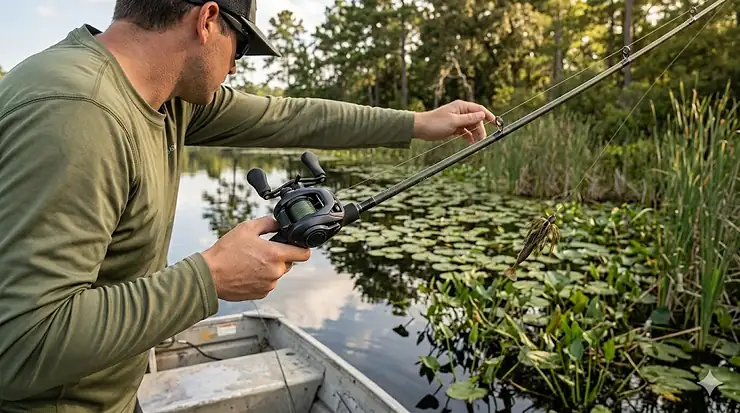
Every serious bass angler knows that moment—you spot a laydown crawling with structure, bass are holding tight in the shade, and you’ve got maybe a 12-inch window to drop your jig without spooking the entire school. This is where a flipping baitcaster separates weekend warriors from tournament winners.
A dedicated flipping baitcaster isn’t just another reel in your arsenal—it’s specialized equipment engineered for close quarters fishing where precision beats distance every single time. According to the Massachusetts Division of Fisheries and Wildlife, baitcasting reels excel when fishing with live bait and offer superior control for techniques requiring accuracy. What most product listings won’t tell you is that the difference between a $100 reel and a $200 flipping-specific model often comes down to three things: instant engagement speed, drag consistency under thumb pressure, and whether the spool can handle the repeated shock loading that comes with yanking 4-pound bass out of matted vegetation 50 times a day.
The flipping baitcaster market in 2026 offers more specialized options than ever before. Some reels feature dedicated flipping switches that eliminate handle turns for instant hooksets. Others rely on ultra-low spool inertia and purpose-tuned braking systems to achieve the silent entry that prevents spooking fish in gin-clear water. Understanding which approach fits your fishing style—and your budget—can mean the difference between loading the livewell or watching your buddy outfish you all season.
Quick Comparison: Top Flipping Baitcasters at a Glance
| Reel Model | Gear Ratio | Weight | Drag Power | Best For | Price Range |
|---|---|---|---|---|---|
| Lew’s SuperDuty LFS | 7.5:1 – 8.3:1 | 7.8 oz | 20 lbs | Heavy cover punching | $170-$200 |
| Daiwa Tatula Elite P/F | 7.1:1 – 8.1:1 | 7.9 oz | 13.2 lbs | Silent entry pitching | $180-$210 |
| Quantum Accurist PT | 6.3:1 | 8.1 oz | 15 lbs | Budget-conscious flippers | $80-$110 |
| Abu Garcia Revo Beast | 5.8:1 | 9.2 oz | 30 lbs | Big bait applications | $180-$220 |
| Shimano Curado MGL 70K | 7.4:1 – 8.1:1 | 6.9 oz | 12 lbs | Compact palmability | $190-$230 |
| KastKing MegaJaws Elite | 7.2:1 – 9.1:1 | 6.4 oz | 17.64 lbs | Value-packed versatility | $90-$130 |
| Pflueger President XT | 6.5:1 – 7.3:1 | 7.6 oz | 17 lbs | All-day comfort | $100-$140 |
Looking at the comparison above, three distinct tiers emerge. If you’re punching mats or dragging bass through timber, the Lew’s SuperDuty LFS and Abu Garcia Revo Beast justify their premium pricing with industrial-strength components that won’t fail mid-tournament. Budget-focused anglers should note that both the Quantum Accurist PT and KastKing MegaJaws Elite deliver flipping switch functionality at nearly half the cost—the tradeoff is typically bearing count and long-term durability under abusive conditions. The Shimano Curado MGL 70K occupies a sweet spot for anglers who flip 30-40% of the time but need versatility for other techniques, sacrificing some line capacity for exceptional castability with lighter presentations.
💬 Just one click — help others make better buying decisions too!😊
Top 7 Flipping Baitcasters: Expert Analysis
1. Lew’s SuperDuty LFS — The Professional’s Workhorse
The Lew’s SuperDuty LFS stands as the industry benchmark for anglers who flip heavy cover day in and day out. What separates this reel from the competition isn’t just the dedicated flipping switch—it’s the P2 Super Pinion bearing system that keeps the pinion gear precisely aligned even when you’re horsing 5-pound bass through matted grass with 65-pound braid.
The reel features an 11-bearing system with double-shielded stainless steel construction, 34mm deep-capacity machined aluminum spool, and externally adjustable Magnetic Control System. The 8.3:1 gear ratio retrieves 28 inches of line per turn. In real-world terms, that means when a bass inhales your jig on the fall and immediately heads for the nearest laydown, you’re taking up slack fast enough to set the hook before they reach sanctuary. The 20-pound carbon fiber drag sounds aggressive on paper, but what matters more is how it performs under your thumb during the pitch—this reel maintains consistent pressure without the stuttering you’ll experience on budget models.
Customer feedback consistently highlights two strengths: the Combat Grip paddle knobs that stay comfortable during 8-hour flipping marathons, and the fact that the flipping switch mechanism hasn’t failed even after seasons of abuse. The most common complaint? The reel’s 7.8-ounce weight feels front-heavy on lighter rods, though most tournament anglers pair it with 7’6″ to 7’11” flipping sticks where the balance point works perfectly.
Pros:
✅ Flipping switch eliminates handle engagement for instant hooksets
✅ 20 lbs drag handles heavy braid and big bass without hesitation
✅ P2 Super Pinion system maintains gear mesh under extreme loads
Cons:
❌ Price point puts it out of reach for casual weekend anglers
❌ Weight may feel unbalanced on rods under 7’6″
This reel typically runs in the $170-$200 range, positioning it as a serious investment that pays dividends for dedicated flippers. If you’re fishing tournaments or guiding clients, the SuperDuty LFS delivers the reliability that justifies the premium.
2. Daiwa Tatula Elite P/F — Engineered for Stealth
The Daiwa Tatula Elite P/F solves a problem that most anglers don’t even realize exists until they fish gin-clear water where bass are ultra-spooky. Daiwa re-engineered their Magforce braking system specifically for pitching and flipping, altering the magnetic pressure curve as the spool decelerates. Standard brake systems cause your bait to take an upward swing at cast’s end, creating a loud splash. The Tatula Elite P/F maintains a low trajectory for silent entry—a game-changer when you’re pitching to visible fish in shallow water.
The reel features a low-mass A7075 aluminum spool, T-Wing System (TWS) for reduced friction, 100mm swept handle, and either 7.1:1 or 8.1:1 gear ratio options. The frame and sideplate are 100-sized aluminum construction. What this engineering translates to in practical terms: you can pitch a 3/8-ounce jig 25 feet and have it enter the water with barely a ripple, keeping fish from fleeing before your bait reaches the strike zone. The TWS line guide system reduces friction by 15-20% compared to traditional designs, which means longer pitches with less effort—your shoulder will thank you after a full day.
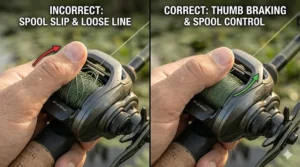
Anglers consistently praise the reel’s smoothness and the fact that it excels with lighter weights (1/4 to 1/2 ounce) where many heavy-cover reels struggle. The downside? The 13.2-pound drag, while adequate for most bass fishing, can feel limiting if you occasionally use the reel for punching with 1-ounce weights in matted vegetation. Some users also note that the spool’s low mass, while great for casting, requires more careful thumb control during the initial acceleration phase.
Pros:
✅ Re-engineered Magforce creates near-silent bait entry
✅ TWS system delivers effortless long pitches
✅ Excels with finesse presentations (1/4 to 1/2 oz range)
Cons:
❌ 13.2 lb drag may feel underpowered for heavy punching applications
❌ Low-mass spool requires refined thumb technique
Priced in the $180-$210 range, the Tatula Elite P/F targets anglers fishing clear water or pressured fisheries where stealth makes the difference. It’s purpose-built perfection for pitching docks and visible cover.
3. Quantum Accurist PT — Budget-Friendly Flipping Switch Performance
The Quantum Accurist PT delivers flipping switch functionality at a price point that won’t trigger buyer’s remorse if you accidentally send it into the lake with a backlash. This reel represents the best value proposition for anglers who want the convenience of instant re-engagement without spending tournament-level money.
The reel features a one-piece aluminum frame, 8+1 PT speed bearings with ceramic-carbon drag system, ACS (Adjustable Centrifugal System) cast control, and Zero-Friction spool design. The 6.3:1 gear ratio recovers 28 inches per turn. Here’s what that 6.3:1 ratio really means: it’s on the slower end for modern flipping reels, which makes it ideal for techniques where you want mechanical advantage over sheer speed—think dragging jigs through laydowns or working heavy Texas rigs in deep brush. The Zero-Friction design uses ball bearings to support the pinion gear without spool shaft contact during casts, eliminating a common source of casting friction that plagues budget reels.
Customer reviews overwhelmingly mention two things: the reel punches well above its weight class in terms of smoothness, and the dual cast control system (internal centrifugal + external magnetic) gives you more tuning options than reels costing twice as much. The common complaint centers on the bearings—while adequate out of the box, they benefit from cleaning and re-lubing after 20-30 hours of hard use. Tournament anglers report the reel lasting 2-3 seasons of regular abuse before showing wear, while weekend warriors get 5+ years of reliable service.
Pros:
✅ Flipping switch at budget-friendly price point
✅ Dual cast control offers excellent tuning flexibility
✅ 6.3:1 ratio provides mechanical advantage for heavy applications
Cons:
❌ Bearings require more frequent maintenance than premium models
❌ Heavier weight (8.1 oz) compared to modern lightweight designs
Available in the $80-$110 range, the Accurist PT represents the entry point for flipping switch reels. If you’re new to the technique or building out a second boat rod, this reel delivers legitimate performance without the premium price tag.
4. Abu Garcia Revo Beast — Maximum Power for Big Baits
The Abu Garcia Revo Beast wasn’t designed for your standard 3/8-ounce jig presentations—this reel exists to throw big swimbaits, punch 1.5-ounce weights through matted grass, and generally handle applications where other reels wave the white flag. The X2-Craftic aluminum frame and sideplates create a platform that simply refuses to flex under load.
The reel features 8 stainless steel HPCR bearings (7 + 1 roller), Duragear brass main gear for extreme strength, Power Stack Carbon Matrix drag delivering 30 pounds of stopping power, and Infini magnetic/centrifugal brake system. The 5.8:1 gear ratio retrieves 27 inches per turn. That 30-pound drag isn’t marketing fluff—it’s engineered for situations where you absolutely must turn a fish’s head immediately or lose them in structure. The Duragear brass construction handles the constant shock loading that comes with heavy flipping and punching better than aluminum gears, which can develop microscopic fractures under repeated stress. The low 5.8:1 ratio provides maximum cranking power when you’re pulling bass through thick cover with heavy line.
Anglers report this reel shines brightest in two scenarios: punching thick matted vegetation where you need brute force to extract fish, and throwing swimbaits in the 3/4 to 2-ounce range where other reels feel overwhelmed. The tradeoff is weight—at 9.2 ounces, this is the heaviest reel in our roundup, and you’ll definitely notice it on lighter rods. Some users also mention the reel feels slightly “rough” compared to ultra-smooth Japanese counterparts, though that’s the sound of brass-on-brass contact that ensures longevity under punishment.
Pros:
✅ 30 lb drag handles the heaviest applications without flinching
✅ Brass Duragear construction built for extreme durability
✅ Excels with big swimbaits and heavy punching weights
Cons:
❌ 9.2 oz weight makes all-day use fatiguing on lighter setups
❌ Not as smooth-feeling as similarly-priced Japanese reels
Typically priced in the $180-$220 range, the Revo Beast targets anglers who need maximum power for specialized heavy-cover applications. If you fish Florida-style punching or throw big baits regularly, this reel delivers the muscle that justifies the premium.
5. Shimano Curado MGL 70K — Compact Precision for Versatile Anglers
The Shimano Curado MGL 70K represents Shimano’s answer to anglers who want a reel that excels at flipping but remains versatile enough for other techniques. The “70” designation refers to the shallow, lightweight MGL II spool that reduces inertia dramatically—this reel casts 1/4-ounce baits with authority that typically requires finesse spinning gear.
The reel features Cross Carbon Drag, X-Ship bearing-supported pinion gear system, S3D (Shimano Stable Spool Design), MicroModule Gear II, and SVS Infinity brake system. Available in 7.4:1 or 8.1:1 ratios with corresponding 30″ or 33″ inches per turn retrieval. The MGL II spool’s reduced mass means less energy required to start rotation, translating to longer casts with lighter lures—critical when you’re pitching 1/4-ounce finesse jigs to pressured fish. The X-Ship system supports the pinion gear on both ends with bearings, maintaining precise alignment that eliminates the gear flex causing poor casting performance and reduced durability in cheaper reels.
Customer feedback consistently mentions the reel’s exceptional palmability—at 6.9 ounces with a compact 70-sized frame, this disappears in your hand during extended fishing sessions. The MicroModule Gear II creates an almost eerie smoothness that some anglers initially mistake for lack of “feel,” though you quickly adapt and appreciate reduced fatigue. The common complaint? Line capacity sits at only 110 yards of 14-pound test, which can feel limiting if you use heavy braid or fish areas where long runs are possible. Tournament anglers also note this reel works best with 1/4 to 5/8-ounce baits; push beyond 3/4-ounce frequently and you’ll want more drag than the 12-pound maximum.
Pros:
✅ Exceptional palmability and all-day comfort at 6.9 oz
✅ MGL II spool excels with lighter presentations (1/4 to 5/8 oz)
✅ Shimano smoothness reduces hand and wrist fatigue
Cons:
❌ Limited line capacity (110 yds / 14 lb test)
❌ 12 lb drag can feel underpowered for heavy punching applications
Priced in the $190-$230 range, the Curado MGL 70K targets anglers who flip 30-40% of the time but need a reel versatile enough for cranking, topwater, and other techniques. It’s the “one-reel” solution for anglers who can’t justify dedicated specialty reels for every technique.
6. KastKing MegaJaws Elite — Feature-Packed Value Champion
The KastKing MegaJaws Elite challenges the conventional wisdom that flipping switch reels require premium pricing. This reel bundles legitimate performance features—including a dedicated flipping switch—into a package that costs half what you’d pay for established Japanese brands.
The reel features KastKing’s patented AMB (Auto-adjustment Magnetic Braking) system that automatically adjusts brake force based on spool speed, CNC machined aluminum frame with carbon fiber swing-wing side cover, 9+2+1 shielded stainless steel ball bearings, and LFTV (Low Friction Tapered Vortex) ceramic line guide system. Available in gear ratios from 7.2:1 to 9.1:1. The AMB system represents KastKing’s attempt to eliminate backlash through intelligent braking—as spool speed increases, magnetic force automatically intensifies. In practice, this means you can cast with less thumb control than traditional systems require, though experienced anglers often still prefer manual brake adjustment for maximum distance.
Anglers consistently praise two aspects: the flipping switch functions identically to Lew’s implementation at a fraction of the cost, and the 6.4-ounce weight makes this one of the lightest reels in our roundup. The carbon fiber side covers contribute to weight reduction while maintaining rigidity. The common complaints center on bearing quality—they’re adequate but not exceptional, requiring more frequent cleaning than premium Japanese bearings. Some users also report the paint finish chips more easily than anodized aluminum, though this remains cosmetic rather than functional.
Pros:
✅ Flipping switch functionality at budget-friendly price
✅ AMB system reduces backlash for learning anglers
✅ Lightest weight (6.4 oz) in the roundup
Cons:
❌ Bearings require more frequent maintenance than premium models
❌ Paint finish durability doesn’t match anodized competition
Available in the $90-$130 range depending on gear ratio and features, the MegaJaws Elite delivers shocking value for anglers building out multiple rods or those hesitant to invest premium dollars before mastering flipping technique. It’s the smart choice for weekend warriors who fish 10-20 days per season.
7. Pflueger President XT — All-Day Comfort Specialist
The Pflueger President XT brings a different philosophy to flipping reels—rather than cramming maximum features into minimum space, Pflueger focused on creating a reel you can fish comfortably for 10 hours without hand fatigue. The premium cork knobs and balanced design reflect lessons learned from over a century of reel manufacturing.
The reel features a graphite frame and sideplate for weight reduction, aluminum spool, 10+1 stainless steel ball bearing system, multi-disc star drag with 17-pound maximum, and externally adjustable magnetic braking. Available in 6.5:1 or 7.3:1 gear ratios. The graphite construction sounds like a downgrade compared to aluminum frames, but Pflueger’s engineering creates a frame that’s both lightweight and rigid enough for serious bass fishing—the reel weighs just 7.6 ounces. The cork knobs aren’t just aesthetic; they provide superior grip when wet and cushion vibration better than EVA foam or hard plastic, reducing hand fatigue during repetitive pitching.
Customer reviews frequently mention the reel’s “old-school reliability”—it lacks cutting-edge features like flipping switches or proprietary brake systems, but the fundamentals are executed so well that it simply works trip after trip. The magnetic brake system is straightforward to adjust, and the 10+1 bearing count creates smooth operation without the occasional “grittiness” found in some budget reels. The common complaint? Tournament anglers report that while the reel handles 90% of flipping applications beautifully, it struggles with heavy punching in matted grass where the graphite frame can flex slightly under extreme loads. This reel truly shines for standard dock flipping, laydown presentations, and moderate-cover pitching.
Pros:
✅ Premium cork knobs reduce hand fatigue during extended sessions
✅ Balanced design feels natural in hand all day
✅ Straightforward operation with minimal learning curve
Cons:
❌ Graphite frame can flex under extreme heavy-cover loads
❌ Lacks modern features like flipping switch or advanced brake systems
Priced in the $100-$140 range, the President XT targets anglers who value comfort and reliability over feature count. It’s the smart choice for bank fishermen or older anglers who prioritize ergonomics and all-day fishability.
How to Choose the Right Flipping Baitcaster for Your Style
Selecting a flipping baitcaster requires matching the tool to your specific fishing situations rather than chasing specifications on paper. Start by honestly assessing your primary cover types. If you’re flipping docks and laydowns in 3-8 feet of water with 1/4 to 1/2-ounce jigs, you need a different reel than someone punching 1-ounce weights through matted hydrilla in 12 feet.
Step 1: Determine Your Weight Range Most flipping occurs in the 3/8 to 3/4-ounce range, where nearly any quality baitcaster performs well. If you regularly throw lighter (1/4 ounce), prioritize low spool inertia like the Shimano Curado MGL 70K. For heavy punching with 1+ ounce weights, focus on drag power and frame rigidity like the Abu Garcia Revo Beast.
Step 2: Evaluate Engagement Speed Priority Flipping switches eliminate the handle turn required for re-engagement, shaving perhaps 0.3 seconds off your reaction time. In heavy cover where bass inhale and immediately head for structure, that split-second matters. If you flip 80%+ of your fishing time, a dedicated flipping switch (Lew’s SuperDuty LFS, Quantum Accurist PT, KastKing MegaJaws Elite) justifies the slightly higher cost or reduced versatility. Anglers who flip occasionally can achieve excellent results with standard thumb-bar engagement.
Step 3: Consider Your Fishing Frequency Weekend warriors (10-20 days/season) can extract tremendous value from budget options like the Quantum Accurist PT or KastKing MegaJaws Elite. These reels deliver 3-5 years of reliable service with basic maintenance. Tournament anglers or guides (50+ days/season) should invest in premium bearings, sealed drags, and corrosion-resistant components found in the Daiwa Tatula Elite P/F or Shimano Curado MGL 70K—the upfront cost spreads across more fishing days.
Step 4: Match Gear Ratio to Technique Faster isn’t always better. Ratios of 6.3:1 to 6.8:1 provide mechanical advantage when dragging heavy weights or working jigs methodically. Ratios of 7.5:1 to 8.5:1 excel for rapid-fire flipping where you’re making 200+ pitches per hour and need quick slack pickup. Super-fast 9:1+ ratios serve niche applications like burning bass out of thick grass mats.
Step 5: Account for Palmability and Weight Specifications list weight in ounces, but real-world comfort depends on balance point and frame design. A 7.5-ounce reel with perfect balance feels lighter than a poorly-balanced 6.5-ounce model. If possible, palm the reel before purchasing—your hand should close naturally around the frame without stretching. For all-day comfort, lighter truly is better; every ounce matters after 8 hours of pitching.
Step 6: Set Realistic Budget Expectations Quality flipping baitcasters start around $80 and extend past $250. The $80-$130 range (Quantum Accurist PT, KastKing MegaJaws Elite) delivers solid performance with some compromises in bearing quality and long-term durability. The $150-$230 premium tier (Lew’s SuperDuty LFS, Daiwa Tatula Elite P/F, Shimano Curado MGL 70K) provides refined components justifying the investment for serious anglers. Avoid the temptation to save $30 on unknown brands—bearing failure mid-tournament ruins more days than backlashes.
Step 7: Future-Proof Your Investment Consider whether your fishing style might evolve. If you’re primarily flipping now but might expand to cranking, swimbaits, or other techniques, versatile platforms like the Shimano Curado MGL 70K or Pflueger President XT make more sense than ultra-specialized reels. Conversely, if flipping dominates your fishing permanently, purpose-built tools like the Lew’s SuperDuty LFS or Daiwa Tatula Elite P/F deliver superior performance in their specific niche.

Real-World Application: Matching Reels to Bass Fishing Scenarios
Every bass lake presents unique challenges that reward different reel characteristics. Understanding how specific features translate to on-water performance helps you select the right tool rather than the most expensive option.
Scenario 1: The Dock Flipper (Clear Water, 30-60 Docks Per Trip) You’re working residential docks in 4-8 feet of gin-clear water where bass flee at the slightest disturbance. Stealth matters more than raw power. The Daiwa Tatula Elite P/F’s re-engineered Magforce system creates near-silent bait entry, while the low-mass spool allows precise thumb control for delicate 1/4 to 3/8-ounce presentations. Alternative choice: The Shimano Curado MGL 70K delivers similar stealth with slightly better versatility if you also fish open-water techniques.
Scenario 2: The Grass Mat Puncher (Heavy Cover, 1+ Ounce Weights) Your fishery features thick matted grass in 6-15 feet of water requiring 1 to 1.5-ounce weights to penetrate. Power trumps finesse. The Abu Garcia Revo Beast’s 30-pound drag and Duragear brass construction handle the repeated shock loading without developing gear slop. The low 5.8:1 ratio provides mechanical advantage for grinding bass through vegetation. Budget alternative: Load the Lew’s SuperDuty LFS with 65-pound braid and accept slightly more careful drag management.
Scenario 3: The All-Day Tournament Grinder (200+ Pitches, 10+ Hours) You’re fishing a tournament where success requires making hundreds of pitches without losing accuracy from hand fatigue. Comfort becomes performance. The Pflueger President XT’s balanced design and premium cork knobs reduce fatigue, while the straightforward operation minimizes mental energy spent on reel management. High-end alternative: The Shimano Curado MGL 70K at 6.9 ounces provides similar comfort with refined components.
Scenario 4: The Budget-Conscious Multi-Rod Builder You’re outfitting 4-5 boat rods and need legitimate performance without premium pricing. Value drives decisions. The KastKing MegaJaws Elite or Quantum Accurist PT both deliver flipping switch convenience and adequate performance for weekend warriors. Spend the savings on quality rods and line, which often matter more than incremental reel refinements.
Scenario 5: The Versatile One-Reel Angler You flip 30-40% of your fishing time but also throw crankbaits, topwater, swimbaits, and other presentations. Specialized tools create gaps in your arsenal. The Shimano Curado MGL 70K or Pflueger President XT provide excellent flipping performance while remaining versatile enough for other techniques. Accept slightly reduced efficiency in specialized applications for broad capability.
Common Mistakes When Buying a Flipping Baitcaster
Even experienced anglers make purchasing errors that undermine on-water performance. Recognizing these pitfalls before opening your wallet saves money and frustration.
Mistake 1: Chasing the Highest Gear Ratio Marketing emphasizes speed, but faster isn’t always better for flipping. A 9.1:1 reel retrieves line quickly but sacrifices torque—when a 5-pound bass wraps your line around a dock post, you need cranking power more than speed. Most flipping applications work best with 6.5:1 to 7.5:1 ratios that balance speed with mechanical advantage. Reserve ultra-fast ratios for specific applications like burning bass out of thick mats, not as your primary flipping tool.
Mistake 2: Overlooking Actual Drag Performance Specifications list maximum drag in pounds, but real-world performance depends on how smoothly drag engages and whether it holds consistent pressure under your thumb during pitches. A reel claiming 20 pounds of drag with stuttering engagement performs worse than a 15-pound drag that applies pressure smoothly. If possible, test drag by pulling line under load before purchasing—you want zero hesitation or sticking as you increase pressure.
Mistake 3: Ignoring Line Capacity for Your Actual Line Choice Manufacturers rate capacity for monofilament, but most serious flippers use 50-65 pound braid. That rating of “150 yards / 12-pound mono” might translate to only 90 yards of 50-pound braid—potentially inadequate if you fish open water or areas where bass make long runs. Verify capacity matches your actual line choice, not the manufacturer’s optimistic monofilament rating.
Mistake 4: Prioritizing Weight Over Balance A 6.5-ounce reel sounds lighter than 7.5 ounces on paper, but poor balance makes the lighter reel feel heavier during actual fishing. The balance point between reel and rod matters more than raw weight. A well-balanced 7.5-ounce setup feels lighter after 8 hours than a poorly balanced 6.5-ounce combination where your wrist fights to maintain rod angle.
Mistake 5: Buying for Bragging Rights Instead of Application The most expensive reel in the shop delivers premium performance, but only if that performance matches your fishing style. A $300 reel optimized for tournament-level grass punching wastes money if you primarily flip docks with 3/8-ounce jigs. Match the tool to your most common fishing situation rather than the most extreme scenario you might encounter twice per season.
Mistake 6: Skipping Maintenance Considerations Some reels require cleaning and relubing every 15-20 hours of use to maintain performance. Others deliver 100+ hours between services. If you lack mechanical skills or patience for maintenance, budget-friendly reels requiring frequent attention will frustrate you. Factor maintenance requirements into your purchasing decision—paying extra for sealed bearings and better corrosion resistance often proves cheaper long-term than repeatedly servicing budget models.
Mistake 7: Forgetting About Future Parts Availability Obscure brands offering shocking value today may disappear tomorrow, leaving you unable to source replacement parts. Major manufacturers like Shimano, Daiwa, Abu Garcia, and Lew’s maintain parts availability for 5-10 years post-production. If you plan to use a reel for multiple seasons, stick with established brands where replacement pawls, drag washers, and bearings remain readily available.
Flipping vs. Pitching: Technique Differences That Affect Reel Choice
The terms “flipping” and “pitching” often get used interchangeably, but these are distinct techniques requiring different approaches. According to Field & Stream’s comprehensive guide, understanding the differences helps you select appropriate equipment.
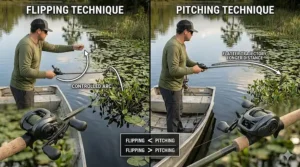
Flipping Technique Fundamentals Flipping involves stripping line from the reel manually, then using a pendulum motion to swing the bait to very close targets (typically 5-15 feet). The reel spool remains locked—you never actually cast. This technique excels when working multiple pieces of cover in rapid succession close to the boat, such as lily pads, grass clumps, or brush piles. Bass fishing has evolved significantly over the decades, with flipping becoming one of the most effective close-quarters presentations. Flipping prioritizes speed over distance, allowing anglers to work 50-100 targets per hour efficiently.
For pure flipping, a dedicated flipping switch provides genuine advantage. The ability to drop your bait, get bit, and set the hook without fumbling for handle engagement can mean the difference between landing and losing fish. Reels like the Lew’s SuperDuty LFS, Quantum Accurist PT, and KastKing MegaJaws Elite with flipping switches shine here. The technique’s short-range nature means casting performance matters less than instant engagement and strong drag.
Pitching Technique Fundamentals Pitching uses an underhand pendulum cast to present baits to targets 15-40 feet away. Unlike flipping, you actually release the thumb bar and allow the spool to rotate during the cast. This technique works better for maintaining distance from spooky fish in clear water or working isolated cover where the boat can’t position close without spooking fish.
For pitching, casting smoothness and brake adjustment become critical. The Daiwa Tatula Elite P/F’s re-engineered Magforce system excels by creating silent bait entry at longer distances. The Shimano Curado MGL 70K’s low-inertia spool allows accurate pitches with lighter weights. A flipping switch provides less advantage since you’re making actual casts rather than simply dropping baits—though instant engagement still helps with on-the-fall bites.
Punching: The Heavy Cover Hybrid Punching represents flipping or pitching with significantly heavier weights (1 to 2 ounces) to penetrate matted vegetation. This technique requires beefier gear to punch through dense overhead cover. The primary reel requirement shifts to maximum drag power and frame rigidity. The Abu Garcia Revo Beast’s 30-pound drag and brass Duragear construction handle punching punishment that would destroy lighter reels. The Lew’s SuperDuty LFS provides adequate performance if you punch occasionally but not as a primary technique.
How Technique Influences Reel Selection If you flip 80%+ of your time and rarely pitch beyond 20 feet, prioritize instant engagement (flipping switch), strong drag, and durability over casting refinement. If you pitch frequently to targets 25-40 feet away, prioritize casting smoothness, brake adjustability, and silent entry over flipping switches. If you employ all three techniques regularly, a versatile platform like the Shimano Curado MGL 70K or Pflueger President XT makes more sense than ultra-specialized tools.
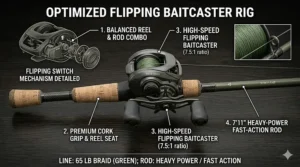
Maintenance and Longevity: Getting Maximum Life from Your Investment
A quality flipping baitcaster represents significant investment, but proper maintenance extends usable life from 2-3 seasons to 7-10 years. Most mechanical failures stem from neglect rather than manufacturing defects.
Essential Weekly Maintenance (If Fishing 3+ Days/Week) After each trip, wipe the reel exterior with a damp cloth to remove dirt, fish slime, and dried lake scum. Pay special attention to the levelwind mechanism and around the spool shaft—debris accumulation here causes the majority of casting problems. Spray exposed metal parts with corrosion inhibitor if you fish saltwater or brackish environments. This 2-minute routine prevents 80% of common failures.
Monthly Deep Cleaning (Tournament Anglers and Guides) Once monthly during heavy use, remove the spool and clean the spool shaft and bearings with denatured alcohol or bearing cleaner. Apply a single drop of reel oil to each bearing—more isn’t better and causes dirt accumulation. Check drag washers for debris and wipe clean if necessary. Inspect the levelwind pawl for wear or debris causing rough operation. This 15-minute service maintains performance at factory levels.
Seasonal Overhaul (All Anglers) Once per year—typically in the off-season—completely disassemble the reel, clean all components, replace any worn parts (drag washers, pawl springs, bearing shields), and re-lubricate with appropriate grease and oil. If you lack mechanical aptitude, professional service typically costs $40-60 and returns your reel to like-new condition. Budget reels benefit disproportionately from professional service since factory lubrication often proves inadequate.
Line Management Heavy braid used for flipping (50-65 pound test) creates tremendous pressure on the spool and levelwind. Change line every 30-40 hours of fishing or annually, whichever comes first. Inspect the levelwind guide for grooves caused by braid abrasion—a grooved guide will damage fresh line immediately. Budget $10-15 for a replacement guide rather than risk line failure during a trophy fish fight. When spooling, use backing or electrical tape to prevent braid slippage on the spool.
Storage Best Practices Store reels with drag nearly loose (1-2 clicks of tension) to prevent drag washer compression set. Back off the spool tension knob completely to remove spring pressure from the centrifugal brake system. Store in a climate-controlled environment if possible—temperature extremes and humidity cause corrosion and grease deterioration. A basic rod sock costs $3 and prevents hook punctures that damage graphite frames.
When to Replace vs. Repair If repair costs exceed 40-50% of current replacement cost, replacement makes better financial sense. However, premium reels like the Shimano Curado MGL 70K or Daiwa Tatula Elite P/F justify repair even when costs approach 60-70% of replacement because their refined components will outlast budget alternatives. Budget reels like the Quantum Accurist PT make excellent candidates for learning reel maintenance since mistakes cost less.
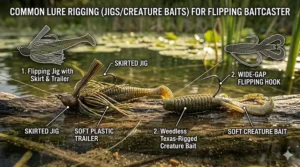
❓ FAQ: Your Flipping Baitcaster Questions Answered
❓ What gear ratio is best for flipping baitcaster bass fishing?
❓ Do I really need a flipping switch on my pitching reel bass fishing setup?
❓ How much drag power do I need for short cast accuracy reel applications?
❓ Can I use my precision casting reel for techniques besides flipping?
❓ What's the difference between close quarters fishing and regular baitcasting?
Conclusion: Selecting Your Perfect Flipping Baitcaster
The difference between landing trophy bass and watching them escape into structure often comes down to equipment that matches your fishing style. Each reel in this guide serves distinct applications—the Lew’s SuperDuty LFS dominates tournament-level heavy cover, the Daiwa Tatula Elite P/F excels in clear water requiring stealth, the Quantum Accurist PT delivers budget-friendly flipping switch performance, the Abu Garcia Revo Beast handles maximum-power applications, the Shimano Curado MGL 70K provides versatile refinement, the KastKing MegaJaws Elite offers shocking value, and the Pflueger President XT prioritizes all-day comfort.
Rather than chasing the most expensive option or the highest gear ratio, focus on honest assessment of your primary fishing situations. Weekend anglers flipping docks with 3/8-ounce jigs extract tremendous value from the Quantum Accurist PT or KastKing MegaJaws Elite. Tournament anglers punching thick grass justify the Lew’s SuperDuty LFS or Abu Garcia Revo Beast premium pricing. Versatile anglers seeking one quality setup should examine the Shimano Curado MGL 70K or Pflueger President XT.
The 2026 flipping baitcaster market offers more specialized performance than ever before, but selection requires matching capabilities to actual fishing rather than theoretical scenarios. Visit your local tackle shop to palm various models before purchasing—balance point and comfort matter more than specifications suggest. Invest in quality line, maintain your reel properly, and practice your technique as diligently as you research equipment. The right flipping baitcaster becomes an extension of your hand, allowing you to focus on reading water and presenting baits rather than fighting equipment. Make the smart choice for your fishing style, and you’ll spend more time landing bass and less time wondering if different gear would have made the difference.
Recommended for You
- 7 Best Round Baitcasting Reels for Big Fish Power in 2026
- 7 Best Low Profile Baitcasters 2026
- Shimano vs Daiwa Spinning Reels: 7 Best Options You Can’t Miss in 2026
Disclaimer: This article contains affiliate links. As an Amazon Associate, I earn from qualifying purchases. If you purchase products through these links, we may earn a small commission at no additional cost to you.
✨ Found this helpful? Share it with your friends! 💬🤗
