
In This Article
✨Was this helpful? Spread the word! 🚀
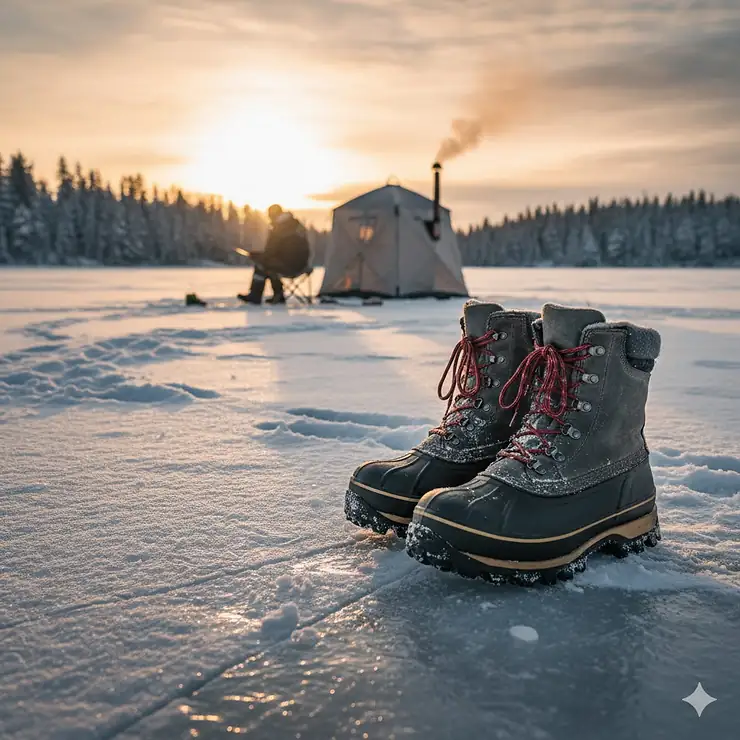
Picture this: you’re standing on a frozen lake at 5 AM, the thermometer reads -15°F, and your toes feel like they’re auditioning for a role in “Frozen 3.” Meanwhile, I’ve learned the hard way that regular winter boots just don’t cut it when you’re ice fishing. The truth is, having proper ice fishing boots isn’t just about comfort—it’s about safety, performance, and actually enjoying your time on the ice instead of counting down the minutes until you can warm up.
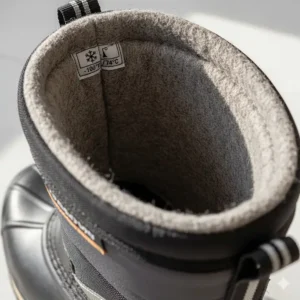
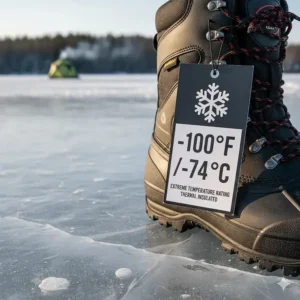
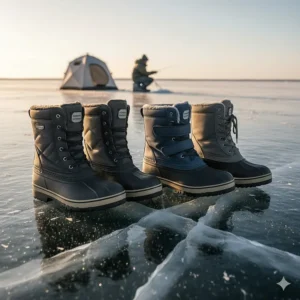
Ice fishing boots are specialized footwear designed to withstand extreme cold temperatures, provide waterproof protection, and offer superior traction on slippery ice surfaces. These boots typically feature heavy insulation (200g to 1200g), removable liners, and aggressive tread patterns specifically engineered for frozen conditions. Unlike regular winter boots, they’re built to keep feet warm during extended periods of low activity in subzero temperatures.
Moreover, the right boots for ice fishing make all the difference between a successful outing and a miserable experience. After testing dozens of pairs over several seasons, I’ve discovered that the best boots fishing enthusiasts need must balance warmth, waterproofing, traction, and mobility. Whether you’re drilling holes all day or sitting in a shanty, your footwear needs to perform.
Quick Comparison Table: Top Ice Fishing Boots at a Glance ⚡
| Boot Model | Temperature Rating | Weight | Insulation | Price Range | Best For |
|---|---|---|---|---|---|
| Baffin Snow Monster | -70°F/-94°F | 6.8 lbs | 8-layer system | $260-330 | Extreme cold expeditions |
| Korkers Polar Vortex 1200 | -60°F | 4.25 lbs | 1200g Thinsulate | $200-240 | Active ice anglers |
| Muck Arctic Ice | -40°F | 3.5 lbs | 8mm neoprene | $180-210 | All-day comfort |
| Kamik Greenbay 4 | -40°F | 4.2 lbs | 8mm Thermal Guard | $90-130 | Budget-conscious anglers |
| Bogs Neo-Classic Tall | -40°F/-58°F | 3.2 lbs | 7mm neoprene | $115-140 | Lightweight mobility |
| Sorel Glacier XT | -100°F | 4 lbs | 13mm felt + Omni-Heat | $180-250 | Maximum warmth |
| Columbia Bugaboot Plus IV | -25°F | 3.8 lbs | 200g Omni-Heat | $80-120 | Moderate conditions |
💬 Just one click – help others make better buying decisions too! 😊
✨ Don’t Miss These Exclusive Deals! 🎣
Ready to upgrade your ice fishing experience? These carefully selected boots represent the best options currently available for different budgets and fishing styles. Click on any highlighted product below to check current pricing and availability—many retailers offer seasonal discounts that can save you 20-40% on premium boots!
Top 7 Ice Fishing Boots: Expert Analysis 🏆
1. Baffin Snow Monster – The Arctic Warrior
When it comes to boots ice fishing professionals trust for extreme conditions, the Baffin Snow Monster stands in a league of its own. This Canadian-made powerhouse is rated for temperatures down to -70°F/-94°F, making it one of the warmest options available. The boot features an innovative 8-layer inner boot system including B-Tek Heat insulation, a vaporized aluminum membrane for heat reflection, and a PolyWool blend that manages moisture brilliantly.
What sets this apart is the Arctic Rubber shell that remains flexible even in brutal cold, combined with Polar Rubber outsoles featuring Icepaw technology for exceptional grip. The tall nylon upper includes a locking snow collar, and at 6.8 pounds per pair, they’re surprisingly manageable for such serious insulation. Current pricing ranges from $260-330 depending on the retailer and model variations.
Key Specifications: Arctic-rated construction, removable 8-layer liner, waterproof B-Tek Dry base, 17-inch height
✅ Pros: Exceptional warmth in extreme cold, removable liners dry quickly, excellent traction on ice
✅ Pros: Durable construction withstands years of abuse, flexible in subzero temperatures
✅ Pros: Available in multiple sizes and widths
❌ Cons: Higher price point than competitors, bulkier than lightweight alternatives
Customer feedback consistently praises these boots for expedition-level performance. One reviewer noted keeping feet warm during 12-hour ice fishing marathons in -30°F conditions. However, some mention the break-in period can be stiff initially. For serious ice anglers who refuse to compromise on warmth, these represent the gold standard.
2. Korkers Polar Vortex 1200 – The Innovation Leader
The Korkers Polar Vortex 1200 revolutionizes the ice fishing boot category with its patented OmniTrax Interchangeable Sole System. This game-changing feature allows you to swap between regular winter rubber lugs and carbide-studded ice cleats in seconds—perfect for transitioning between your truck and the lake. The BOA M4 fit system eliminates traditional laces, providing custom tightness with a simple dial turn.
With 1200g of 3M Thinsulate insulation, these boots handle temperatures down to -60°F while remaining remarkably lightweight at 4.25 pounds per pair. The waterproof/breathable bootie construction includes waterproof leather and protected stitching for longevity. An aerogel frost barrier footbed adds another layer of cold protection. The 11-inch height strikes an ideal balance between protection and mobility, and prices typically range from $200-240.
Key Specifications: BOA lacing system, interchangeable carbide soles (sold separately), 100% waterproof construction, 1200g insulation
✅ Pros: Quick on/off with BOA system, swappable soles adapt to conditions, excellent warmth-to-weight ratio
✅ Pros: Sleek design doesn’t compromise performance
✅ Pros: Rock-solid warranty backing
❌ Cons: Narrow toe box may require sizing up, extra sole sets cost additional
Ice fishing enthusiasts rave about the versatility these boots offer. Many report wearing them for activities beyond fishing—snowmobiling, hunting, and winter hiking. The 600g version is also available for milder conditions at $180-200. The main complaint centers on sizing, with several users recommending going up one full size for thick socks.
3. Muck Arctic Ice – The Versatile Performer
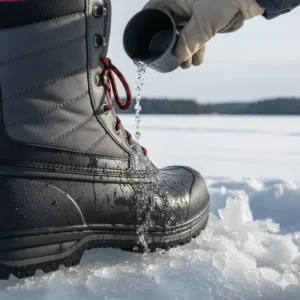
Muck Arctic Ice boots combine slip-on convenience with serious cold-weather performance. Built with 8mm neoprene construction and featuring Vibram Arctic Grip AT technology, these boots deliver unmatched traction on wet ice—something most competitors struggle with. The fleece lining provides cushioned comfort, while the waterproof construction ensures feet stay bone dry in slush and overflow conditions.
Rated to -40°F, these boots excel in the temperature range most ice anglers actually encounter. The tall version extends well above the ankle for deep snow protection, while the mid-height option offers more mobility. At 3.5 pounds per pair, they’re among the lighter options that still deliver serious warmth. The slip-on design with pull handles makes entry and exit effortless, even with cold hands. Pricing ranges from $180-210 depending on height and style.
Key Specifications: 8mm neoprene bootie, Vibram Arctic Grip outsole, fleece liner, multiple height options
✅ Pros: Superior ice traction with Arctic Grip technology, easy slip-on design, comfortable fleece lining
✅ Pros: Lighter than comparable insulated boots
✅ Pros: Excellent value for performance
❌ Cons: Less warmth than extreme-cold options, limited ankle support compared to lace-up boots
Customer reviews highlight the exceptional grip these provide on bare ice and slush. Multiple anglers mentioned switching from other brands specifically for the traction benefits. The main criticism involves warmth—while adequate for most conditions, serious cold-weather fishermen might want the Arctic Pro version with 2mm thermal foam for extended sits in extreme temps.
4. Kamik Greenbay 4 – The Budget Champion
Don’t let the affordable price fool you—the Kamik Greenbay 4 delivers legitimate cold-weather performance at $90-130. These Canadian-designed boots feature 600-denier nylon construction, a removable 8mm Thermal Guard felt liner, and RubberHe soles with aggressive tread. The -40°F rating matches boots costing twice as much, making these an outstanding value for budget-conscious anglers.
The tall height provides excellent snow protection, while the adjustable Velcro mid-foot closure strap helps lock in fit and warmth. A lace-lock snow collar at the top seals out the elements. The waterproof construction has proven reliable across thousands of customer reviews. At 4.2 pounds per pair, they’re substantial but not overly heavy. The removable liner is a standout feature—you can dry them overnight or replace them as they wear.
Key Specifications: 600D nylon upper, removable felt liner, -40°F rating, adjustable closures
✅ Pros: Exceptional value for money, easy slip-on design, removable liners for drying
✅ Pros: Proven durability over multiple seasons
✅ Pros: Wide availability in stores for trying before buying
❌ Cons: Heavier than premium lightweight options, less refined fit than high-end boots
Long-time Kamik users report these boots lasting 3-5 years of regular use—impressive for the price point. The felt liners conform to your foot over time for a custom fit. Some reviewers mention the boots running slightly large, so ordering true to size or even a half-size down works for many. For anglers who fish regularly but don’t want to invest $200+, these represent the sweet spot.
5. Bogs Neo-Classic Tall – The Lightweight Contender
The Bogs Neo-Classic Tall reimagines the ice fishing boot with seamless construction that’s 30% lighter than traditional designs. Using 7mm Neo-Tech neoprene, these boots achieve a remarkable balance—serious insulation without the bulk. The comfort rating extends to -40°F/-58°F, while the BioGrip slip-resistant outsole provides dependable traction. At just 3.2 pounds per pair, they’re the lightest fully-insulated option in this roundup.
The seamless construction isn’t just about weight—it eliminates potential leak points that plague seam-heavy boots. DuraFresh bio-technology fights odor buildup, crucial during long fishing sessions. The Rebound cushioning footbed delivers shock absorption mile after mile. Easy pull-on handles make entry simple, and the flexible design allows natural foot movement. Prices range from $115-140, positioning these as a premium-yet-accessible option.
Key Specifications: Seamless 7mm neoprene construction, BioGrip outsole, Rebound cushioning, -40°F/-58°F rating
✅ Pros: Exceptionally lightweight for insulation level, seamless construction prevents leaks, comfortable for all-day wear
✅ Pros: Easy on/off with handles
✅ Pros: Odor-resistant technology
❌ Cons: Less extreme-cold capability than thicker boots, premium price for neoprene construction
Ice anglers who prioritize mobility love these boots. Multiple reviewers mention being able to walk considerable distances without fatigue—a huge advantage when searching for active fish. The neoprene construction works better for active fishing styles versus stationary shanty sitting in brutal cold. Women particularly appreciate that Bogs offers styles specifically designed for narrower feet and different proportions.
6. Sorel Glacier XT – The Extreme Cold Specialist
When mercury plummets to apocalyptic levels, the Sorel Glacier XT is engineered specifically for survival. Rated to an astonishing -100°F, these boots feature a removable 13mm recycled felt inner boot with Omni-Heat reflective lining—technology that bounces body heat back to your feet. The PU-coated synthetic textile upper resists wind and water, while the handcrafted vulcanized rubber shell provides bulletproof waterproofing.
A 2.5mm bonded felt frost plug blocks cold from below, and the 13mm Sorel Meltdown midsole adds cushioning plus additional insulation. The Aero-Trac non-loading rubber outsole features strategically designed lugs that shed snow and provide grip. A drawstring with barrel lock closure seals the top against snow infiltration. At 4 pounds per pair and priced $180-250, these represent serious investment for serious cold.
Key Specifications: -100°F rating, Omni-Heat reflective lining, removable felt inner boot, vulcanized rubber shell
✅ Pros: Unmatched warmth for Arctic conditions, removable liners for drying and customization, proven reliability in extreme environments
✅ Pros: Non-loading lug design prevents snow buildup
✅ Pros: Trusted brand with decades of cold-weather expertise
❌ Cons: Bulky design limits agility, overkill for moderate cold conditions
These boots shine in scenarios where anything less would fail. Ice anglers fishing northern Canada, Alaska, or experiencing polar vortex conditions report complete confidence. The bulk is real—these aren’t for aggressive hole-hopping—but when you’re sitting for hours in life-threatening cold, nothing else comes close. Some users find the liners can be purchased separately as replacements, extending boot life indefinitely.
7. Columbia Bugaboot Plus IV Omni-Heat – The Everyday Winner
For ice anglers facing moderate winter conditions, the Columbia Bugaboot Plus IV Omni-Heat offers excellent performance without extreme-cold overkill. These boots pack 200g of insulation combined with Columbia’s Omni-Heat reflective lining—metallic dots that reflect body heat. The Michelin winter tread provides surprisingly grippy performance across mixed terrain. Waterproof seam-sealed construction keeps feet dry, while the PU-coated leather and textile upper offers durability.
At 3.8 pounds per pair and priced $80-120, these represent the most affordable serious option. The injection-molded rubber shell wraps the base and toe for protection. Bungee lacing allows quick adjustments. The 6.7-inch height works well for regular winter activities beyond ice fishing. These excel in the 0°F to -25°F range most anglers actually experience versus theoretical extreme ratings.
Key Specifications: 200g insulation, Omni-Heat reflective lining, Michelin winter tread, seam-sealed waterproof
✅ Pros: Best value for moderate conditions, proven Michelin traction, versatile for multiple winter activities
✅ Pros: Lightweight and comfortable
✅ Pros: Widely available with easy returns
❌ Cons: Insufficient for extreme cold, durability concerns after 2-3 seasons reported by some
These boots ice fishing newcomers often start with, and many stick with them long-term if fishing moderate climates. The Michelin rubber stays flexible and grippy in cold—a huge advantage over generic winter boots. Some long-term reviewers note the lace loops can break after heavy use, but Columbia’s reasonable pricing makes replacement acceptable. For anglers in Wisconsin, Minnesota, or similar climates who fish sporadically, these hit the sweet spot.
How to Choose the Right Ice Fishing Boots: Your Complete Decision Guide 🎯
Understanding Temperature Ratings and Insulation Types
Temperature ratings can confuse even experienced anglers. Here’s what you need to know: manufacturers rate boots based on active versus static use. A -40°F rating assumes moderate activity like walking and drilling holes, not sitting motionless for hours. Additionally, individual cold tolerance varies dramatically—I’ve fished with guys comfortable in -20°F boots when I needed -60°F rated footwear.
Insulation types matter significantly. Thinsulate (measured in grams: 200g, 400g, 600g, 1200g) provides warmth without bulk. Felt liners offer excellent insulation and dry quickly when removed overnight. Neoprene construction excels at waterproofing while insulating, though it’s less breathable. Aerogel technology, found in premium boots, provides cutting-edge heat retention. Furthermore, reflective linings like Omni-Heat bounce body heat back to feet—a game-changer in extreme conditions.
Waterproofing Technology and Construction Methods
The difference between staying dry and getting wet feet is often construction quality. Look for seam-sealed boots—every stitch sealed with waterproof tape. Rubber shells provide foolproof waterproofing but add weight. Leather uppers need waterproofing treatments annually but breathe better. Neoprene bootie construction creates a barrier while maintaining flexibility.
Height matters critically for waterproofing effectiveness. Boots fishing in overflow conditions require minimum 11-inch height—overflow can surprise you ankle-deep. Snow collars or cinch tops prevent snow from entering. However, taller isn’t always better if you’re frequently getting in/out of vehicles or need mobility for aggressive fishing.
Traction and Sole Technology
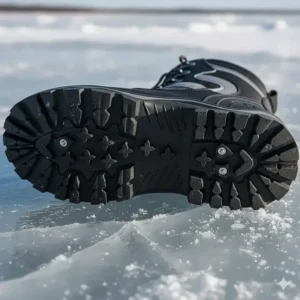
Ice presents unique traction challenges. Standard rubber soles harden in extreme cold, losing grip. Look for winter-specific rubber compounds that stay flexible. Vibram Arctic Grip technology uses glass fibers to bite into ice—revolutionary for safety. Carbide studs offer maximum grip but damage floors indoors.
Lug design affects performance significantly. Non-loading lugs shed snow and slush rather than packing up. Deep, aggressive treads grip loose snow better. Wider contact patches distribute weight on thin ice. Moreover, some boots like Korkers offer interchangeable soles—swap between regular treads and carbide cleats based on conditions.
Sizing, Fit, and Break-In Considerations
Proper sizing is crucial for warmth and comfort. Ice fishing boots should fit with thick wool socks but not so loose your foot slides around. Most manufacturers recommend going up a half size from regular shoes. Width matters—neoprene boots generally accommodate wider feet, while leather constructions can be narrower.
Break-in varies by construction. Felt liners mold to your feet over time—initially tight, they become custom-fitted. Rubber boots need minimal break-in. Leather requires several outings to soften. Consequently, buy boots several weeks before your first trip to ensure proper fit. Test them walking around the house with thick socks. Heel lift indicates too-large sizing, while pinched toes mean you need to size up.
Essential Features Beyond Basic Warmth 🔧
Removable Liners and Long-Term Maintenance
Removable liners transform boot longevity and performance. After each outing, pull liners and dry them overnight—this prevents moisture buildup and odor. Replacement liners cost $40-80 versus $200+ for new boots. I rotate two sets of liners, using one while the other dries completely.
Proper maintenance extends boot life dramatically. Wipe rubber shells clean after each use. Apply leather conditioner to leather portions annually. Store boots in a cool, dry place with liners removed. Inspect for cracks or separation before each season. Subsequently, quality boots maintained properly last 5-10 years versus 2-3 years when neglected.
Weight and Mobility Considerations
Boot weight impacts your fishing style significantly. If you’re drilling dozens of holes searching for fish, lighter boots (3-4 pounds) prevent leg fatigue. For stationary shanty fishing, heavier boots (5-7 pounds) with maximum insulation make sense. Active ice trollers need to balance warmth against mobility.
Weight distribution affects comfort. Well-designed boots place weight low with proper arch support. Cheaper boots concentrate weight awkwardly, causing fatigue faster. Try walking extensively before buying—a half-pound difference feels huge after several hours. Moreover, consider your fishing approach: aggressive hole-hoppers prioritize lightweight mobility, while shanty sitters want maximum warmth regardless of weight.
Closure Systems and Ease of Use
Traditional laces work but freeze and require dexterity. BOA systems (dial-tightened cables) operate with gloved hands and never freeze. Pull-on boots with elastic tops offer ultimate convenience but less adjustability. Velcro straps combine ease with moderate adjustability. Barrel locks on drawstring collars seal out snow effectively.
Consider your typical fishing scenario. If you’re frequently adjusting boots (getting in/out of vehicles, warming in the shanty), quick-adjust systems save frustration. For all-day wear, once-and-done lacing works fine. Additionally, pull-on boots shine when you’re wearing bulky gloves or mittens—no fumbling with frozen laces.
Ice Fishing Boots vs Regular Winter Boots: The Critical Differences ❄️
Many anglers wonder if premium winter boots suffice for ice fishing. The answer depends on your fishing style, but understanding the differences helps you decide. Regular winter boots typically feature 200g insulation maximum—adequate for walking and brief outdoor exposure but insufficient for hours of stationary ice fishing. Temperature ratings on regular boots assume continuous movement; ice fishing often involves extended periods of minimal activity.
Additionally, traction technology differs significantly. Winter boots use standard rubber lugs suitable for snow and pavement. Ice fishing boots incorporate specialized compounds that grip ice specifically. Regular boots often have lower shafts, allowing snow to enter more easily. The waterproofing in standard winter boots handles snow and light moisture but fails in slush and overflow that ice anglers commonly encounter.
| Feature | Ice Fishing Boots | Regular Winter Boots |
|---|---|---|
| Insulation Level | 400g-1200g typical | 100g-200g typical |
| Temperature Rating | -40°F to -100°F | 0°F to -20°F |
| Waterproofing | Full rubber shells, seam-sealed | Water-resistant coating |
| Traction | Ice-specific compounds, carbide options | General winter rubber |
| Height | 11-17 inches common | 6-10 inches common |
| Activity Assumption | Stationary to low activity | Continuous movement |
| Price Range | $80-330 | $40-150 |
When Regular Boots Might Work
If you fish exclusively in a heated shanty or only during brief outings in mild conditions (above 20°F), quality winter boots might suffice. Anglers who primarily drive between tip-ups rather than walking long distances can manage with less specialized footwear. However, most serious ice anglers find dedicated boots worth the investment after one or two miserable experiences with inadequate footwear.
Common Mistakes When Buying Ice Fishing Boots (And How to Avoid Them) 🚫
Underestimating Your Cold Tolerance
The most frequent error is buying boots with insufficient insulation. Many anglers think “I’ll stay active” or “I’m tough with cold” and regret it sitting stationary for hours. Remember, your activity level drops significantly once you’re set up fishing versus walking to your spot. Moreover, as you age, cold tolerance typically decreases.
Solution: Add 20-30°F to your anticipated coldest fishing temperature when selecting boots. If you’ll fish in -10°F conditions, look for boots rated to -40°F minimum. This buffer accounts for stationary activity and wind chill.
Ignoring Proper Sizing and Sock Choice
Buying boots in your regular shoe size often creates problems. Ice fishing boots need room for thick insulation socks—typically one full size larger than street shoes. Conversely, buying too large allows foot movement that creates blisters and reduces warmth. Additionally, the sock choice impacts performance dramatically.
Solution: Always buy boots while wearing your intended fishing socks. Merino wool or synthetic insulation socks (avoid cotton) should be thick but not so bulky feet can’t fit comfortably. Your heel should stay planted without excessive movement when walking.
Prioritizing Price Over Value
Cheap boots seem attractive but often cost more long-term. A $50 pair lasting one season before failure costs more than a $200 pair lasting 5-10 years. Furthermore, inadequate boots end fishing trips early, wasting travel time and opportunity costs. Quality boots maintain resale value—premium brands sell used for 40-60% of retail.
Solution: Calculate cost-per-use rather than upfront cost. If you fish 20 days annually, $200 boots over five years cost $2 per outing. That’s cheaper than many lures you’ll lose. Invest in quality from reputable brands with warranties.
Top Brands and What Makes Them Stand Out 🏭
Baffin – The Extreme Cold Specialists
Canadian-designed Baffin boots dominate the extreme cold market for good reason. Their proprietary B-Tek insulation systems and multi-layer construction deliver industry-leading warmth. Polar Proven testing in the Arctic ensures reliability. Baffin pioneered removable liner systems and continues innovating with environmentally sustainable materials. Price reflects quality—expect $200-400—but durability justifies the investment. Ice fishing guides and polar researchers consistently choose Baffin.
Muck Boot Company – The Convenience Champions
Muck revolutionized the slip-on boot category with 100% waterproof neoprene construction. Their boots excel at ease of use while maintaining serious cold-weather capability. The Arctic line specifically targets ice fishing with enhanced insulation and Vibram Arctic Grip technology. Muck’s comfort straight out of the box—no break-in required—appeals to anglers who fish occasionally. Mid-range pricing ($100-220) offers excellent value. The brand’s focus on agricultural and hunting markets ensures durability testing under extreme conditions.
Korkers – The Innovation Leaders
Korkers’ OmniTrax interchangeable sole system represents the most significant boot innovation in decades. Swapping soles takes 30 seconds and transforms how anglers approach varying conditions. BOA fit systems eliminate lace frustrations. While newer to ice fishing (they built their reputation in fishing waders), Korkers applies decades of traction expertise. Pricing sits mid-to-premium ($180-260), reflecting innovative technology. Their Rock Solid Guarantee backs products with confidence.
Price Ranges and Value Analysis 💰
Understanding price tiers helps set realistic expectations and find the best value for your needs:
Budget Tier ($80-130)
Options like Columbia Bugaboot and Kamik Greenbay 4 provide legitimate cold-weather performance for occasional anglers. Expect 200-400g insulation, ratings to -25°F to -40°F, and 2-4 year lifespan with regular use. These work excellently for moderate climates and anglers fishing 5-10 days per season. Compromises include heavier weight, less refined fit, and basic traction compared to premium options.
Mid-Range Tier ($130-200)
This category offers the best overall value—boots like Bogs Neo-Classic, Muck Arctic Ice, and lower-end Korkers models. You get 400-800g insulation, ratings to -40°F to -60°F, and 4-7 year durability. Advanced features include removable liners, specialized traction, and lightweight materials. Perfect for regular anglers fishing 15-30 days annually across varied conditions.
Premium Tier ($200-330)
Top-shelf options like Baffin Snow Monster, Sorel Glacier XT, and Korkers Polar Vortex 1200 justify costs through extreme-cold capability, innovative features, and exceptional longevity. Expect 800-1200g insulation, ratings to -70°F to -100°F, and 7-12 year lifespan. Worth it for serious anglers fishing 30+ days yearly, extreme cold regions, or professionals. The performance difference in brutal conditions is night and day.
| Price Range | Best For | Expected Lifespan | Temperature Range |
|---|---|---|---|
| $80-130 | Casual anglers, moderate climates | 2-4 years | -20°F to -40°F |
| $130-200 | Regular anglers, varied conditions | 4-7 years | -40°F to -60°F |
| $200-330 | Serious anglers, extreme cold | 7-12 years | -60°F to -100°F |
Breaking In and First-Use Tips 🥾
The Pre-Season Preparation Process
Don’t wait until your first ice fishing trip to wear new boots. Start breaking them in 2-3 weeks before opening day. Wear them around the house for 1-2 hours daily with your fishing socks. This allows materials to soften and helps you identify fit issues while exchanges are still possible. Walk up and down stairs to ensure heels stay planted without lift.
Take a practice walk outdoors in snow. This reveals potential hot spots before you’re miles from shore. Apply moleskin or blister prevention tape to any problem areas proactively. Additionally, check waterproofing by walking through shallow snow—much better discovering leaks in your yard than on the ice.
Optimizing Warmth from Day One
Even premium boots need proper sock choice. Layer one thin liner sock (synthetic or merino wool) under thick insulation socks. This two-layer system manages moisture while maximizing warmth. Never wear cotton—it retains moisture and accelerates heat loss. Some anglers add adhesive toe warmers to boot interiors for extra insurance in brutal cold.
Pre-warm boots before heading out. I keep mine in the heated garage overnight before fishing. Cold boots absorb body heat initially before insulating effectively. If storing in a cold area, bring them inside an hour before leaving. Moreover, remove liners and warm them separately for faster results.
Care and Maintenance for Maximum Longevity 🛠️
After Every Trip Routine
Proper post-trip care dramatically extends boot life. Remove liners immediately upon returning and hang them to dry completely—moisture trapped overnight breeds bacteria and reduces insulation effectiveness. Wipe rubber shells clean with a damp cloth, removing salt, mud, and debris. Open boots fully and allow air circulation.
Inspect for damage after each outing. Check stitching for separation, rubber for cracks, and zippers or closures for functionality. Small issues caught early prevent catastrophic failures on the ice. If boots got wet inside (sweating or leaks), stuff them with newspaper to absorb moisture, replacing paper every few hours.
Seasonal Storage and Long-Term Care
Before off-season storage, clean boots thoroughly. Apply leather conditioner to any leather portions. Ensure liners are completely dry. Store boots in a cool, dry location away from direct sunlight—heat accelerates material degradation. Keep them stuffed with paper or boot trees to maintain shape.
Some anglers apply waterproofing treatments annually even to “waterproof” boots—it maintains factory protection. Check manufacturer recommendations, as some materials shouldn’t be treated. Replace worn liners rather than entire boots when possible. Periodically check stored boots for rodent damage if storing in garages or sheds.
When to Repair vs Replace
Quality boots fishing season after season are repairable to a point. Worn liners can be replaced ($40-80) extending boot life years. Minor rubber cracks can be sealed with flexible rubber cement. Broken laces or BOA cables are inexpensive fixes. However, separated sole-to-upper bonds, major cracks, or lost insulation effectiveness signals replacement time.
Ice Fishing Boot Accessories That Make a Difference ⚙️
Ice Cleats and Traction Aids
Even boots with excellent traction benefit from removable ice cleats when conditions are treacherous. Yaktrax, Stabilicers, and similar devices slip over boots, adding carbide or steel spikes. They’re essential when walking on glare ice from your vehicle to fishing spots. Remove them before entering buildings to prevent floor damage. Prices range $20-60, and quality options last multiple seasons.
Boot Dryers and Warmers
Electric boot dryers ($30-80) transform overnight drying. They circulate warm air inside boots and liners, ensuring complete dryness. Models with timers and temperature control prevent overheating delicate materials. For active warmth, battery-powered heated insoles ($40-100) provide adjustable heat. However, they add bulk and battery management complications.
Gaiters and Bibs Integration
Gaiters bridge the gap between boots and pants, preventing snow infiltration. They’re particularly useful with shorter boots. Prices range $25-80 for quality options. Alternatively, insulated bibs that overlap boot tops eliminate the gap entirely. Many ice fishing specific bibs include stirrups that run under boots, preventing ride-up. This complete system keeps snow out better than any single solution.
FAQs: Your Ice Fishing Boot Questions Answered ❓
❓ How do I know if my ice fishing boots are warm enough before buying?
❓ Can I wear ice fishing boots for snowmobiling or other winter activities?
❓ What socks should I wear with my ice fishing boots for maximum warmth?
❓ How often should I replace my ice fishing boots?
❓ Are women specific ice fishing boots necessary or do men boots work?
Conclusion: Making Your Final Decision 🎣
After reviewing dozens of options and spending countless hours on frozen lakes, here’s my bottom line: the best ice fishing boots depend entirely on your specific fishing style, climate, and budget. However, if I could only recommend three boots that cover most anglers’ needs, they’d be the Korkers Polar Vortex 1200 for active anglers seeking versatility, the Baffin Snow Monster for extreme cold specialists, and the Kamik Greenbay 4 for budget-conscious anglers wanting legitimate performance.
Remember, your boots are arguably the most critical piece of ice fishing gear. Unlike a poor lure choice that just means fewer fish, inadequate boots end your day early or create dangerous situations. Invest wisely, maintain properly, and your boots will provide thousands of comfortable hours pursuing hardwater fish. Whether you’re chasing panfish through the ice on local ponds or targeting trophy lake trout in the Canadian north, the right boots transform the experience from endurance test to pure enjoyment.
✨ Ready to Upgrade Your Ice Fishing Game? 🔥
Don’t let another season pass with frozen, uncomfortable feet. The boots reviewed above represent the absolute best options currently available at every price point. Click on any highlighted boot name to check current prices and read additional customer reviews. Many retailers offer winter sales running through January and February—perfect timing to upgrade before peak ice fishing season. Your feet (and your catch rate when you can fish longer) will thank you!
Recommended for You 📚
- 7 Best Ice Fishing Mittens for 2025: Expert Picks
- Ice Fishing Float Suit: 7 Best Picks for Safety in 2025
- Ice Fishing Gloves: 7 Best Waterproof Options 2025
Disclaimer: This article contains affiliate links. If you purchase products through these links, we may earn a small commission at no additional cost to you.
✨ Found this helpful? Share it with your friends! 💬🤗
