
In This Article
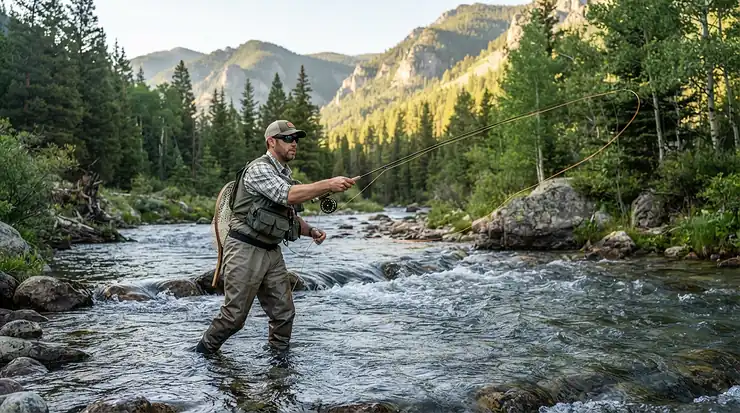
Here’s a scene every angler-slash-traveler knows too well: you land in a humid airport, the AC is fighting a losing battle, and the cotton button-down you packed is already sticking to your back like it owes you money. That’s the whole argument for quick dry fishing shirts for travel in one soggy sentence. A quick dry fishing shirt for travel is a lightweight, synthetic-or-bamboo-blend shirt engineered to wick sweat, resist wrinkles, and dry in minutes instead of hours — built for anglers who also need one shirt that survives a flight, a boat, and dinner afterward.

The category exploded for a reason. Anglers used to pack one shirt for fishing and a separate one for everything else, which meant lugging twice the fabric for half the versatility. Now the good stuff pulls double duty: it shrugs off a squall on the flats in the morning, then looks presentable enough for a cantina table by sunset. That shift matters more than it sounds, because overhead bin space hasn’t gotten any bigger and neither has anyone’s patience for laundromats on vacation.
This guide breaks down seven real, currently available shirts — from budget-friendly workhorses to premium technical builds — with honest analysis of who each one actually suits. We’ll dig into fabric science, sun and bug protection, packing strategy, and the mistakes that quietly ruin a good trip. No invented reviews, no fluff — just spec-backed reasoning and aggregated feedback from real buyers, so you can pick with confidence instead of guessing.
Quick Comparison Table
Short on time? Here’s the condensed version before we get into the weeds.
| Shirt | Fabric Type | UPF Rating | Price Range | Best For |
|---|---|---|---|---|
| Columbia PFG Tamiami II | 100% polyester ripstop | UPF 40 | $65-$80 | All-around travel value |
| Huk Icon X | 100% polyester with I.C.E. tech | UPF 50+ | $45-$60 | Hot, humid climates |
| Simms SolarFlex Crew | Polyester/spandex knit | UPF 50+ | $70-$90 | Multi-day premium trips |
| Free Fly Bamboo Flex | Bamboo viscose/poly/spandex | UPF 50+ | $80-$100 | Style-conscious travelers |
| ExOfficio BugsAway Halo | Insect Shield nylon | UPF 45-50 | $70-$85 | Bug-heavy destinations |
| WindRider Helios | Lightweight polyester (4.2 oz) | UPF 50+ | $45-$55 | Budget-first buyers |
| Orvis DriCast Crew | Recycled poly/rayon/spandex | UPF 50+ | $60-$75 | Cotton-feel comfort |
A quick scan of that table tells you most of what you need: nearly every serious contender in 2026 has landed on UPF 50+ as table stakes, and the real differences show up in fabric feel, drying speed, and price. The WindRider Helios and Huk Icon X sit at the affordable end without skimping on core performance, while the Simms SolarFlex Crew and Free Fly Bamboo Flex trade a higher price tag for noticeably softer hand-feel and added odor control. If bugs are your bigger enemy than the sun, the ExOfficio BugsAway Halo is the only shirt on this list built specifically to fight both at once.
💬 Just one click — help others make better buying decisions too!😊
Top 7 Quick Dry Fishing Shirts for Travel: Expert Analysis
Below are seven real, currently sold shirts spanning budget, mid-range, and premium tiers. Each one is broken down by what the spec sheet says, what that actually means for a traveling angler, and where honest reviewer sentiment lines up (or doesn’t) with the marketing copy.
1. Columbia PFG Tamiami II — the everyman travel workhorse
The Tamiami II has been Columbia’s flagship fishing shirt for years, and it earns that spot by refusing to overcomplicate things. Built from 2.4 oz/yd 100% polyester ripstop, it’s light enough to disappear in a packing cube yet tough enough to survive being crammed against a rod tube. The Omni-Shade UPF 40 rating won’t chase the highest number on this list, but combined with Omni-Wick moisture management, it dries fast enough that a sudden downpour on the dock becomes a non-event rather than a wardrobe crisis.
Based on the spec comparison, this is the shirt for someone who wants one dependable travel piece without chasing the latest fabric tech — beginners and casual weekend anglers especially. Reviewers consistently report that the mesh-lined back vent noticeably reduces that clammy, stuck-to-your-skin feeling during humid afternoons, and the hook-and-loop rod holder tab gets more use than people expect.
What the spec sheet won’t tell you is that the roll-up sleeve tabs occasionally loosen after heavy use, a minor gripe reviewers mention but rarely treat as a dealbreaker.
Pros:
- ✅ Lightweight ripstop fabric resists tearing on gear and hooks
- ✅ Mesh-lined back vent genuinely cuts down on humid-day stickiness
- ✅ Widely available in tall and big sizing for better fit range
Cons:
- ❌ UPF 40 trails behind most UPF 50+ competitors here
- ❌ Roll-up sleeve tabs can loosen with repeated use
Expect this one in the $65-$80 range at the time of research, and check current price before buying since retailers rotate sales often. Given its versatility and low failure rate reported by owners, it’s a strong value pick for anyone who wants a single shirt that does 80% of everything well.

2. Huk Icon X — coolest tech for hot, humid climates
Huk built the Icon X around a genuinely clever idea: Internal Cooling Element (I.C.E.) technology that creates an endothermic reaction on the inside of the fabric, physically pulling heat away from skin rather than just wicking sweat passively. Paired with 100% polyester construction and a UPF 50+ rating, this is a shirt engineered specifically for people fishing — or traveling — somewhere the humidity index reads like a sauna setting. The raglan sleeve cut isn’t just a style choice; it gives a genuinely wider range of motion during a hard cast, which matters if you’re actually fishing rather than posing for photos.
Here’s what most buyers overlook about this model: the full back-panel mesh does more for dry time than the I.C.E. tech gets credit for, since airflow evaporates sweat faster than any chemical treatment alone. Aggregated review sentiment on major retail sites skews strongly positive, with buyers repeatedly citing the shirt’s breathability in 90-degree-plus conditions as the standout feature, though a handful of reviewers note the fit runs slightly small in the shoulders.
Pros:
- ✅ I.C.E. cooling tech delivers a noticeable on-skin cooling effect
- ✅ Full mesh back panel dramatically improves airflow and dry time
- ✅ Raglan sleeves allow genuinely unrestricted casting motion
Cons:
- ❌ Shoulder fit runs snug according to several buyer reports
- ❌ UPF 30 on some older colorways versus UPF 50+ on newer ones
At around $45-$60 depending on colorway, the Huk Icon X is arguably the best value-per-degree-of-comfort on this entire list for genuinely hot climates.
3. Simms SolarFlex Crew — premium odor control for multi-day trips
Simms has spent three decades building a reputation among serious anglers, and the SolarFlex Crew reflects that pedigree in ways a spec sheet alone doesn’t fully capture. The 92% polyester/8% spandex COR3 fabric blend delivers UPF 50+ protection with real four-way stretch, but the standout addition here is HeiQ Fresh, a bio-based odor-control technology baked into the fibers rather than sprayed on as an afterthought.
On paper this means the shirt resists that “day three of the trip” smell far longer than a standard polyester blend — a genuinely useful feature for travelers who can’t do laundry every night in a rented cabin. The extended sleeve length with built-in thumbholes is a small design touch that solves a real problem: back-of-hand sun exposure, which most shirts simply ignore.
Reviewers consistently praise the fit and sun coverage, though a recurring theme in aggregated feedback is that Simms pricing has crept upward in recent years, prompting some long-time buyers to grumble even while still buying it.
Pros:
- ✅ HeiQ Fresh odor control genuinely extends wearability between washes
- ✅ Thumbhole cuffs add rare back-of-hand sun protection
- ✅ Flat-seam construction reduces chafing under backpack straps
Cons:
- ❌ Premium pricing puts it above most competitors on this list
- ❌ Some buyers report sizing runs small, recommend ordering up
Budget around $70-$90 for this one, and treat it as the pick for anglers who travel often enough that odor control and durability actually pay for themselves.
4. Free Fly Bamboo Flex — softest feel for stylish travel days
Free Fly built its brand on a genuinely different fabric philosophy: instead of pure synthetic performance fabric, the Bamboo Flex line blends roughly 46% viscose from bamboo with polyester and spandex for a knit that feels closer to a premium T-shirt than a technical sun shirt. That matters for travel specifically, because this is the shirt in our lineup most likely to pass as everyday streetwear rather than obvious “fishing gear” — useful if your itinerary bounces between a boat and a nice dinner.
The UPF 50+ rating and four-way stretch keep the performance credentials intact, and the anti-odor treatment helps bridge the gap between technical wear and casual comfort. What reviewers overlook until they own one: the fabric weight (roughly 270 GSM) means it dries a touch slower than the thinnest polyester options here, so it’s better suited to warm, dry climates than tropical downpours.
Aggregated customer sentiment leans heavily positive on softness and drape, with the most common critique being the higher price point relative to more purely technical competitors.
Pros:
- ✅ Bamboo-blend knit feels noticeably softer than standard polyester
- ✅ Doubles convincingly as casual streetwear off the water
- ✅ Reinforced collar and buttons hold up well over repeated wear
Cons:
- ❌ Heavier knit means slower dry time than thinner rivals
- ❌ Among the pricier options in this roundup
Expect to pay in the $80-$100 range, and treat this as the splurge pick for travelers who want one shirt that photographs as well at a rooftop bar as it does on a skiff.
5. ExOfficio BugsAway Halo — built-in bug armor for jungle trips
If your travel plans involve anything more tropical than a local reservoir, the calculus changes, and the ExOfficio BugsAway Halo is the only shirt on this list designed around that reality. Built from abrasion-resistant, quick-drying nylon and factory-treated with Insect Shield permethrin technology, it repels mosquitoes, ticks, chiggers, and midges through roughly 70 washes without needing a single spray of DEET on the fabric itself.
UPF 45-50 sun protection comes standard, and the back armhole vents with mesh-lined yoke keep it from feeling like a plastic bag in the heat. Here’s what the spec sheet won’t tell you but frequent travelers will: the hidden zippered security pocket is genuinely useful for a passport or phone when you don’t want a bag on your body while wading.
Reviewers on major retail platforms rate this shirt highly — REI lists it around 4.6 out of 5 stars from dozens of verified buyers — with the insect protection cited as the reason people buy it a second time, even though a few note the built-in treatment doesn’t eliminate the need for repellent on exposed skin.
Pros:
- ✅ Permethrin treatment repels mosquitoes and ticks for 70 washes
- ✅ Hidden zippered pocket adds real security for travel documents
- ✅ Offset shoulder seams stay comfortable under a daypack strap
Cons:
- ❌ Nylon feel is less soft than bamboo or cotton-blend rivals
- ❌ Doesn’t fully replace skin-applied repellent in high-bug zones
Priced roughly $70-$85, this is the clear pick for anyone flying somewhere mosquitoes outnumber people, and it earns that recommendation on function rather than marketing.

6. WindRider Helios — fastest dry time on a budget
Budget doesn’t have to mean compromised, and the WindRider Helios makes a legitimate case for that at a price point roughly half of several premium competitors here. At 4.2 oz per square yard, it’s among the lightest fabrics in this entire roundup, and that thinness translates directly into one of the fastest reported dry times on the list — commonly cited in the 10-to-15-minute range under normal conditions, versus 25 to 35 minutes for heavier budget alternatives.
UPF 50+ sun protection blocks the vast majority of UV exposure, which is a genuinely strong spec for the price tier. Based on the spec comparison, the tradeoff for that featherweight build is a less substantial hand-feel than the Simms or Free Fly options — this shirt won’t fool anyone into thinking it’s a $90 garment.
What most buyers overlook is the extended money-back trial period some retailers offer on this brand, which meaningfully de-risks buying sight-unseen for travelers who can’t try a shirt on in person before a trip.
Pros:
- ✅ Among the fastest dry times of any shirt in this roundup
- ✅ UPF 50+ protection at a genuinely budget-friendly price
- ✅ Extended trial period reduces risk of buying online
Cons:
- ❌ Thinner fabric feels less premium than pricier competitors
- ❌ Smaller brand means fewer in-person try-on opportunities
At around $45-$55, this is the smart pick for anglers who fish often enough to want backups without breaking a travel budget.
7. Orvis DriCast Crew Long Sleeve — cotton-soft feel, quick-dry core
Orvis has quietly refined its drirelease-based fabrics for years, and the newer DriCast line is the result: a recycled polyester/rayon/spandex blend that keeps the brand’s signature cotton-like softness while shaving weight and boosting dry speed compared to the older drirelease crew shirts. UPF 50+ protection holds up even when wet, according to Orvis’s own testing claims, which matters more than it sounds since wet fabric typically loses UV-blocking ability.
The OutSmart Fresh odor treatment is a nice value-add for multi-day trips, and the active fit sits closer to the body than some competitors without feeling restrictive. Here’s what the spec comparison reveals: DriCast trades a little bit of the extreme quick-dry speed you’d get from the thinnest pure-polyester shirts (like the Helios) in exchange for a noticeably softer, more “wearable all day” feel — a fair trade for travelers who plan to wear the shirt well beyond the boat.
Reviewers consistently describe the fabric as comfortable enough for all-day wear, with Orvis’s long-standing customer satisfaction guarantee cited as a meaningful trust signal by repeat buyers.
Pros:
- ✅ Cotton-like softness rare among true quick-dry technical shirts
- ✅ UPF 50+ protection maintained even when the fabric is wet
- ✅ Backed by Orvis’s long-running satisfaction guarantee
Cons:
- ❌ Dries slightly slower than the thinnest pure-polyester options
- ❌ Fewer bold color/pattern choices than Huk or Simms
Expect a price range around $60-$75, making this a strong middle-ground pick between the Helios’s speed and the Free Fly’s softness.
✨ Don’t Miss These Exclusive Deals!
🔍 Take your travel wardrobe to the next level with these carefully selected shirts. Click on any highlighted item to check current pricing and availability. These picks help you build a genuinely lighter, faster-drying carry-on your future self will thank you for!
Practical Usage Guide: Packing, Washing, and Making These Shirts Last
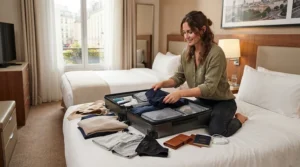
Buying the right shirt only solves half the problem — how you pack and care for it determines whether it actually performs on your trip. Roll, don’t fold, technical fabrics like polyester and nylon blends; folding creates hard crease lines that trap moisture and slow drying, while rolling keeps fibers looser and reduces wrinkle-set during transit. For sink washes between destinations, a small squeeze of biodegradable soap and a thorough rinse is usually enough, since most of these fabrics (aside from bamboo blends like the Free Fly Bamboo Flex) release dirt easily without agitation. Hang-dry over a shower rod or balcony rail rather than draping flat on a towel, since airflow on both sides of the fabric cuts dry time roughly in half.
A common first-30-days mistake: washing a permethrin-treated shirt like the ExOfficio BugsAway Halo with fabric softener, which coats fibers and can reduce the treatment’s effectiveness over time — stick to a mild detergent instead. Another frequent slip-up is machine-drying UPF-rated synthetics on high heat, which can degrade elastane fibers in stretch blends like the Simms SolarFlex Crew faster than the label suggests. For maintenance rhythm, a light rinse after every wear on multi-day trips, paired with one real wash every three to four days, keeps odor-control technologies like HeiQ Fresh working as intended without over-washing fabric that doesn’t need it.
Real-World Scenarios: Which Shirt Fits Your Trip
Picture three different travelers packing for three different trips, because “best” always depends on context. First, the budget-conscious weekend angler heading to a regional lake for three days with a carry-on-only mindset: the WindRider Helios or Huk Icon X covers this trip completely, since both dry fast enough for a single-shirt rotation and neither demands a big budget commitment. Second, the two-week international angling trip through humid, mosquito-heavy terrain — think a jungle river system or a coastal mangrove — where the ExOfficio BugsAway Halo earns its keep through built-in insect protection that a standard sun shirt simply can’t match, paired with the Simms SolarFlex Crew as a backup for cooler evenings. Third, the traveler who wants one do-everything shirt for a mixed business-and-fishing trip, bouncing between client dinners and a half-day charter: the Free Fly Bamboo Flex or Orvis DriCast Crew both pass as smart-casual streetwear while still handling a sudden downpour on the dock without complaint.
How to Choose Quick Dry Fishing Shirts for Travel
Picking the right shirt comes down to weighing a handful of factors against your specific trip, not chasing the highest number on any single spec.
- Match UPF rating to sun exposure. UPF 50+ blocks about 98% of UV rays, according to the Skin Cancer Foundation’s guidance on sun-protective clothing, so prioritize it for open-water destinations over shaded river trips.
- Weigh fabric weight against dry-time needs. Lighter fabrics like the WindRider Helios dry faster but feel less substantial; heavier knits like the Free Fly Bamboo Flex trade some speed for comfort and style.
- Consider bug exposure at your destination. If mosquitoes or ticks are a real concern, a permethrin-treated option like the ExOfficio BugsAway Halo adds a layer of protection sunscreen alone can’t provide.
- Check for odor-control treatments on multi-day trips. Features like HeiQ Fresh on the Simms SolarFlex Crew matter far more when you can’t do laundry every night.
- Confirm the collar and pocket style fit your itinerary. A button-down collar and secure zip pocket, like on the Columbia PFG Tamiami II or ExOfficio BugsAway Halo, reads more “smart travel” than a plain crew neck.
- Test packability before you commit. A shirt that resists deep creasing when rolled tightly will always beat one that looks great on a hanger but wrinkles the moment it’s compressed.
- Read aggregated review sentiment, not just the marketing page. Recurring complaints about sizing or fit across dozens of reviews are far more reliable than a single five-star post.
Fast Drying Fishing Apparel vs Traditional Cotton and Flannel
The instinct to pack a cotton button-down for a fishing trip is understandable — it’s what most closets are full of — but the comparison against fast drying fishing apparel isn’t close once you factor in real-world conditions. Cotton absorbs roughly its own weight in water and can take several hours to air-dry fully, which means a single rain shower or a wave over the gunwale can ruin the rest of your day. Fast drying fishing apparel, built from polyester, nylon, or bamboo-viscose blends like those used across this entire lineup, typically dries in 15 to 45 minutes depending on fabric weight, because synthetic and semi-synthetic fibers don’t absorb moisture the way natural cotton fibers do — they move it to the surface for evaporation instead.
| Factor | Cotton/Flannel | Fast Drying Fishing Apparel | Best For |
|---|---|---|---|
| Average dry time | 3-6 hours | 15-45 minutes | WindRider Helios, Huk Icon X |
| Sun protection | UPF 5-15 untreated | UPF 40-50+ | Any of the 7 picks above |
| Weight when packed | Heavy, bulky | Lightweight, compressible | Free Fly Bamboo Flex, Orvis DriCast Crew |
| Odor resistance | Poor after one wear | Fair to excellent | Simms SolarFlex Crew |
Looking at the table above, the gap in dry time alone justifies the switch for most travelers, since a soaked cotton shirt can chafe, chill you in wind, and simply stay uncomfortable for the rest of a travel day. Sun protection is the bigger hidden cost, though — an untreated white cotton tee offers roughly UPF 7, dropping to UPF 3 when wet, according to the Skin Cancer Foundation, which is a meaningful gap compared to the UPF 40-50+ ratings standard across this entire roundup.
What Makes a Packable Travel Fishing Shirt Actually Packable
Not every shirt marketed as travel-friendly earns that label once you actually try to cram it into a carry-on next to boots, a rain shell, and a dopp kit. A genuinely packable travel fishing shirt needs three things working together: low fabric weight, wrinkle-resistant fiber structure, and a weave or knit tight enough to resist deep creasing under compression. The WindRider Helios, at 4.2 oz per square yard, compresses down to roughly the size of a rolled pair of socks, while heavier knits like the Free Fly Bamboo Flex take up noticeably more volume for the same coverage. Ripstop weaves, like the one used in the Columbia PFG Tamiami II, resist the kind of hard crease lines that plain-weave cotton develops, which matters because a wrinkled quick-dry shirt still looks better than a wrinkled cotton one, but a non-wrinkled shirt is always the better outcome. A simple test before you buy: scrunch a corner of the fabric tightly in your fist for ten seconds, then release it — if it springs back close to flat, it’ll survive a packing cube; if it holds a hard crease, it won’t.
Carry-On Gear: Building a Minimalist Fishing Kit That Fits in One Bag
Building smart carry-on gear around a quick-dry shirt rotation starts with math most people skip: two to three shirts in a rotation, washed every few days, cover a trip of almost any length without checking a bag. Pair that rotation with a compact, sink-washable travel soap sheet or a 3.4-ounce bottle of liquid detergent, since anything larger has to go in checked luggage under TSA’s liquids rule, which caps carry-on liquids at 3.4 ounces per container inside a single quart-sized bag. A lightweight packing cube dedicated purely to shirts keeps rolled garments compressed and separated from damp gear like waders or a rain jacket, which matters because trapped moisture against dry fabric can reintroduce the wrinkles you worked to avoid. For anglers who also carry small tackle, a shirt with a secure zip pocket — like the ExOfficio BugsAway Halo — doubles as an extra layer of carry-on organization without adding bulk.

Minimalist Travel Apparel: The Capsule Wardrobe Approach for Anglers
Minimalist travel apparel isn’t about owning less gear for its own sake — it’s about every piece earning its spot in the bag through genuine versatility. The core idea, borrowed from capsule wardrobe planning, is picking two to three shirts that share a compatible color palette and can each transition from the water to a casual dinner without a second thought. A neutral like the Orvis DriCast Crew in a solid heather color pairs with almost anything, while a patterned option like the Huk Icon X in a camo or print colorway works better as the “fishing-specific” piece in a smaller rotation. What most buyers overlook when building this kind of kit is that fabric consistency matters as much as color: mixing a bamboo-blend shirt with a pure polyester one means managing two different wash and dry routines instead of one, which adds friction exactly when you’re trying to simplify. The payoff for getting this right is real — fewer shirts, less laundry anxiety, and a bag that closes on the first zip instead of the third attempt.
Common Mistakes When Buying Quick Dry Fishing Shirts for Travel
Even experienced travelers make a few predictable errors here. The first is buying based purely on UPF number without checking fit, since a UPF 50+ shirt that’s too tight loses effectiveness once the fabric stretches across the shoulders and thins out. The second is ignoring color in hot climates — dark colors absorb more heat even with identical UPF ratings, according to the Skin Cancer Foundation, which matters more on a scorching midday charter than most buyers realize. The third is skipping the wrinkle-test before buying online, leading to a shirt that looks fine on a model but creases hard the moment it’s compressed in a packing cube. The fourth is assuming all “quick dry” claims are equal, when dry-time differences between the fastest (WindRider Helios) and slowest (Free Fly Bamboo Flex) options on this list can be a factor of two or three. The fifth, and most avoidable, is buying only one shirt for a trip longer than four or five days, which forces reliance on hotel laundry or hand-washing every single night instead of a comfortable rotation.
Long-Term Cost and Maintenance: What These Shirts Really Cost Per Trip
Sticker price tells an incomplete story, because a $45 shirt that needs replacing after one season isn’t actually cheaper than a $90 shirt that lasts five years of regular travel. Spread across roughly 100 wear-days, a $50 shirt costs about $0.50 per use, while a $90 shirt with genuinely better fabric durability and odor control — like the Simms SolarFlex Crew — can land in a similar or lower per-use cost if it lasts twice as long. Maintenance costs matter too: shirts with built-in treatments like the ExOfficio BugsAway Halo‘s permethrin finish avoid the recurring cost of separate spray-on repellents, while odor-control fabrics reduce how often you need full washes, extending garment life and cutting water and detergent use over a season. The honest takeaway is that value isn’t the lowest price tag — it’s the lowest cost divided by the number of good travel days a shirt survives, and that number depends more on how you treat the fabric than the number on the receipt.
Safety, Sun, and Bug Protection: What the Ratings Actually Mean
UPF and permethrin treatments both sound like marketing jargon until you understand what they’re actually protecting against. A UPF 50+ rating means a fabric allows only about 2% of UV radiation through to skin, a benchmark the Skin Cancer Foundation requires for its official Seal of Recommendation on sun-protective clothing. That’s a meaningful step up from an average white cotton tee, which offers only moderate protection that drops further once it’s wet from sweat or spray. On the insect side, permethrin — the active ingredient behind the ExOfficio BugsAway Halo‘s bug-repelling claims — is registered by the EPA as an insect repellent for factory-treated clothing, and it’s been used by the U.S. military since the 1990s specifically because it binds tightly to fabric fibers rather than absorbing significantly into skin. Neither treatment replaces common-sense precautions — sunscreen on exposed skin and a topical repellent in high-risk zones still matter — but both meaningfully reduce the burden on travelers who’d rather not reapply lotion every two hours on a boat.

FAQ
❓ What's the best quick dry fishing shirt for travel?
❓ How long do quick-dry fishing shirts take to dry?
❓ Are UPF 50+ fishing shirts worth the extra cost?
❓ Can you wear a fishing shirt through airport security without issues?
❓ Do bug-repellent fishing shirts actually work?
Conclusion
Choosing among quick dry fishing shirts for travel really comes down to matching fabric science to your actual itinerary rather than chasing whichever shirt has the flashiest marketing page. The Columbia PFG Tamiami II remains the safest all-rounder for travelers who want one dependable shirt without overthinking it, while the Huk Icon X and WindRider Helios deliver serious performance-per-dollar for budget-conscious anglers. If your trip skews toward humid, bug-heavy destinations, the ExOfficio BugsAway Halo‘s built-in permethrin protection genuinely earns its higher price tag, and if you want a shirt soft and stylish enough to wear well beyond the water, the Free Fly Bamboo Flex and Orvis DriCast Crew both deliver on that front. The Simms SolarFlex Crew rounds things out as the premium pick for frequent travelers who value odor control and durability over the long haul. Whichever you choose, the underlying logic stays the same: prioritize real UPF protection, genuine dry-time speed, and packability that survives more than one photo on a hanger — because the best travel shirt is the one you forget you’re wearing until you need it most.
Recommended for You
- Women’s Fishing Shirts for Kayak Fishing: 7 Honest UPF Picks (2026)
- Fishing Pants With Knee Pads for Kayak Fishing: 7 Top Picks 2026
- Water Resistant Fishing Pants: 7 Best Picks for Anglers in 2026
Disclaimer: This article contains affiliate links. As an Amazon Associate, I earn from qualifying purchases. If you purchase products through these links, we may earn a small commission at no additional cost to you.
✨ Found this helpful? Share it with your friends! 💬🤗
