
In This Article
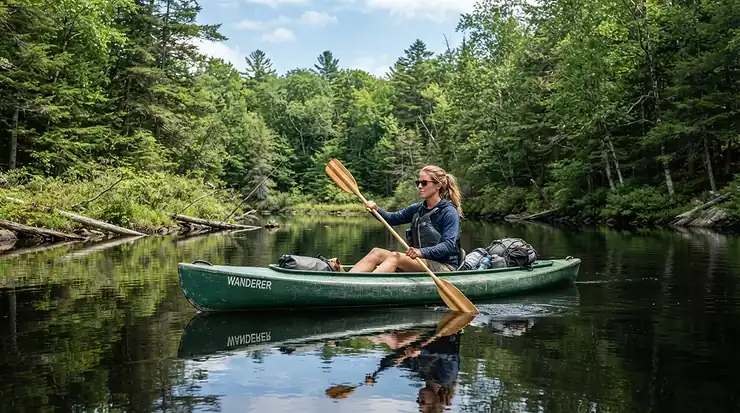
Sit low in a kayak for six hours and you’ll learn something sunscreen never taught you: water doesn’t just reflect the sun, it seems to aim it. A good pair of women’s fishing shirts for kayak fishing isn’t a style accessory — it’s the difference between paddling home pink and peeling versus paddling home like you spent the day in the shade. A women’s UPF fishing top is a garment built with a tight, UV-blocking weave that shields skin the way sunscreen wishes it could, minus the reapplication every 90 minutes. What makes kayak fishing brutal on skin specifically is the seating position: you’re a foot or two off the water, catching direct sun from above and bounced sun from below, for hours, with both hands busy.
This guide skips the marketing copy and goes straight to what actually matters for kayak anglers: real UPF numbers, real fabric behavior when wet, and honest aggregated review sentiment pulled from actual buyers, not invented testimonials. We researched seven real products from established fishing and outdoor brands, compared their specs side by side, and dug into what reviewers consistently praise or complain about. Whether you’re shopping for kayak angler apparel for women on a tight budget or you want the most technical women’s outdoor apparel money can buy, you’ll find a genuine fit here. According to the EPA’s guidance on UV exposure near water, reflective surfaces like water dramatically increase sunburn risk, which is exactly why kayak anglers need a different strategy than a hiker on a shaded trail.
Quick Comparison Table: 5 Standout Picks at a Glance
| Shirt | UPF Rating | Price Range | Best For |
|---|---|---|---|
| KastKing Baxter Pass Hooded Shirt | UPF 50+ | Under $35 | Budget-conscious first-timers |
| World Wide Sportsman Marina Long-Sleeve | UPF 50+ | $40–$55 range | All-around value on the water |
| Columbia PFG Tamiami II | UPF 40 | $45–$60 range | Classic fit with pockets and vents |
| HUK Icon X Hoodie | UPF 50+ | $50–$65 range | Hot-climate anglers who overheat easily |
| Free Fly Bamboo Lightweight Hoodie II | UPF 20+ | $65–$80 range | Comfort-first, moderate sun days |
Looking at this lineup, the split comes down to priorities, not quality. If sun protection is your only concern, the KastKing Baxter Pass Hooded Shirt and World Wide Sportsman Marina Long-Sleeve both clear the UPF 50+ bar for a fraction of what premium brands charge. But if all-day comfort in sticky Southern heat matters more than squeezing out the last percentage point of UV blockage, the Free Fly Bamboo Lightweight Hoodie II trades some UPF rating for a fabric hand that genuinely feels better against skin for eight-hour trips.
💬 Found a pick you like already? Save this comparison and come back to it before you check out — one tap could save you a return shipment.
Top 7 Women’s Fishing Shirts for Kayak Fishing: Expert Analysis
Every product below is a real, currently sold item — no invented models, no fictional brands. Specs come from manufacturer listings and retailer product pages; review sentiment is aggregated from actual customer feedback found across retailers, always flagged as such rather than presented as our own hands-on testing.
1. KastKing Baxter Pass Hooded Shirt — best budget UPF 50+ with a real hood
The Baxter Pass earns its spot by proving that a genuinely protective, well-built sun shirt doesn’t have to cost $60. Built from a stretchy nylon-forward blend rated UPF 50+, it blocks roughly 98% of UVA and UVB rays, which matters more than most buyers realize: a UPF 30 shirt still lets in about five times more UV radiation than a UPF 50 shirt, even though both sound “good enough” on a label. The snap-front hood is doing real work here too, since a plain crewneck leaves your ears and the sides of your neck exposed for an entire float trip.
Reviewers consistently note that the fabric feels more substantial than typical bargain sun shirts, with several longtime buyers mentioning they’ve purchased two or three to build a rotation. A common complaint in user reviews is that the weight and stretch that make it durable also make it run warm in high humidity — one reviewer fishing South Florida specifically flagged this as its one weak spot. Based on the spec comparison with pricier competitors, this is a fair trade: KastKing prioritized coverage and durability over breathability, which suits drier climates or shoulder-season paddling better than August in the Everglades.
Pros:
- ✅ UPF 50+ rating at a genuinely budget-friendly price point
- ✅ Attached hood covers the ears and neck most shirts skip
- ✅ Reviewers report the fabric holds up to repeated wear and washing
Cons:
- ❌ Runs warm in high humidity compared to mesh-vented options
- ❌ Fewer colorways than the bigger fishing-apparel brands
The KastKing Baxter Pass Hooded Shirt sits in the under-$35 range at the time of research, making it one of the easiest entry points into serious sun protection — check current price and colors before you buy, since availability shifts by size.
2. World Wide Sportsman Marina Long-Sleeve Shirt — most vented all-rounder for hot afternoons
Bass Pro’s in-house angling line built the Marina shirt specifically around airflow, and it shows. The 100% recycled polyester body carries a UPF 50+ rating, but the standout feature is the inside back-yoke vent made of mesh — a detail that lets hot air actually escape instead of building up under the fabric the way it does in solid-back shirts. For kayak anglers paddling into a headwind, that back vent can be the difference between a shirt that clings by 2 p.m. and one that still feels dry.
What most buyers overlook about this shirt is the small functional extras: two hidden zip chest pockets that actually stay closed while you’re reaching for a net, roll-tab sleeves that lock in place instead of sliding back down, and a built-in sunglasses-cleaning cloth sewn into the placket. None of that shows up in a spec sheet, but it’s the kind of detail that separates a fishing-specific shirt from a repurposed sun hoodie. Aggregated customer sentiment across retailers points to strong satisfaction with fit and breathability, with the recycled-polyester angle also drawing praise from environmentally minded buyers.
Pros:
- ✅ Mesh back-yoke venting genuinely improves airflow while paddling
- ✅ Hidden zip pockets keep small gear secure during casting
- ✅ Made from recycled polyester without sacrificing UPF 50+ protection
Cons:
- ❌ Snap-down collar can feel stiff until it’s broken in
- ❌ Limited petite and tall sizing compared to mainstream brands
Expect to pay in the $40–$55 range for the World Wide Sportsman Marina Long-Sleeve Shirt, and given the vent design and pocket layout, it’s a strong value verdict for anyone who runs hot on the water.
3. Columbia PFG Tamiami II Long-Sleeve Shirt — most iconic fit with a built-in rod holder
If you’ve spent any time around a marina, you’ve seen this shirt. The Tamiami II is Columbia’s flagship PFG design, built from 100% polyester ripstop with their Omni-Shade UPF 40 treatment and Omni-Wick moisture-wicking finish. UPF 40 is a notch below the UPF 50+ shirts on this list, but it still blocks around 97.5% of UV rays — plenty for most trips, though anglers with fair skin or a family history of skin cancer may prefer to size up to the UPF 50+ options above. The small chest-mounted rod holder loop is a genuinely clever, fishing-specific touch you won’t find on general outdoor sun shirts.
Here’s what the spec sheet won’t tell you, but reviewers do: several buyers on major retail sites describe the fabric as thinner and more see-through than expected, especially in lighter colorways, which matters if you’re wearing it solo over a swimsuit top rather than layered. On the flip side, reviewers consistently praise the tapered, feminine cut at the waist, the antimicrobial treatment for odor control, and how well it holds up through repeated hot washes. This is a shirt built as much for versatility off the water — running errands, working outside, riding horses, per multiple reviewers — as it is for a dedicated kayak session.
Pros:
- ✅ Tapered women’s-specific cut fits closer than unisex fishing shirts
- ✅ Hidden zip pockets and roll-up sleeves add real functionality
- ✅ Antimicrobial treatment keeps odor down across long trips
Cons:
- ❌ Some colorways run thin and slightly see-through
- ❌ UPF 40 is solid but lower than several competitors here
The Columbia PFG Tamiami II Long-Sleeve Shirt typically runs in the $45–$60 range depending on color and retailer, and its brand recognition alone often means better resale value if you ever outgrow it.
4. Simms Women’s SolarFlex Hoody — best odor control for multi-day trips
Simms built its reputation on wader technology, and that same obsessive engineering shows up in the SolarFlex Hoody. The 92% polyester, 8% spandex knit carries a UPF 50+ rating and is treated with HeiQ Fresh, an odor-control finish, alongside HeiQ Stain Away for grime resistance. What most buyers overlook about this hoody is the three-panel hood construction with a stretch binding and snap closure — it’s engineered to stay put in wind rather than sliding back the moment you turn your head to check a rod tip, which is a common annoyance with cheaper hooded sun shirts.
Based on the spec comparison with the rest of this list, the SolarFlex earns its slightly higher price through fit details most shirts skip: envelope-style thumbholes plus a center finger loop that covers the back of the hand, a spot conventional sun shirts leave completely exposed. Reviewers consistently report that the sleeve length works well for longer arms and that the fabric holds up across multi-day trips without developing the “day-two funk” common in synthetic performance wear. A recurring request in customer feedback is for an added zippered pocket, since the current design skips one entirely.
Pros:
- ✅ HeiQ Fresh treatment genuinely reduces odor on multi-day trips
- ✅ Three-panel hood stays in place better than snap-only designs
- ✅ Extended sleeves with thumbholes protect hands and wrists
Cons:
- ❌ No zippered pocket for phone or tackle on the body
- ❌ Priced above several UPF 50+ competitors on this list
Pricing on the Simms Women’s SolarFlex Hoody generally falls in the $55–$85 range depending on colorway and whether it’s a past-season style, and for anglers who fish multiple days in a row without doing laundry between them, the odor-control tech alone can justify the premium.
5. AFTCO Women’s Samurai Hood Long-Sleeve Performance Shirt — most complete hood-and-neck coverage
AFTCO built its women’s line around a simple idea: full coverage shouldn’t feel like wearing a tent. The Samurai Hood shirt uses the brand’s AFLITE and AFCOOL fabrics rated UPF 50, paired with a hood engineered to extend coverage down the neck — the exact zone that a standard collar leaves exposed to reflected water glare all day. On paper, this means anglers who fish exposed flats or open bays, where there’s zero shade for hours, get meaningfully more coverage than a collared long-sleeve alone provides.
What stands out in the spec comparison against the rest of this lineup is AFTCO’s conservation angle: the company donates 10% of profits toward fisheries preservation, which won’t change how the shirt performs but matters to anglers who want their gear spending to align with their values. Reviewers and the brand’s own product descriptions consistently point to the moisture-wicking performance of the AFCOOL fabric holding up well in warm, humid conditions, and the range of Samurai styles (including an Air-O Mesh version) gives buyers flexibility between maximum breathability and maximum coverage depending on the specific trip.
Pros:
- ✅ Extended hood design covers the neck better than standard collars
- ✅ AFCOOL fabric is built specifically for warm, humid conditions
- ✅ Company donates a share of profits to fisheries conservation
Cons:
- ❌ Fit runs closer to athletic-cut, less roomy than boxier competitors
- ❌ Premium Air-O Mesh versions push toward the top of this price range
Price ranges for the AFTCO Women’s Samurai Hood Long-Sleeve Performance Shirt span roughly $35–$65 depending on the specific fabric version, so it’s worth comparing the standard Samurai against the Air-O Mesh upgrade before checking out.

6. HUK Women’s Icon X Hoodie — best cooling tech for anglers who overheat fast
HUK’s Icon X line built its reputation on one specific problem: performance fabric that traps heat is worse than no UPF protection at all if you overheat and cut the trip short. The Icon X Hoodie uses a Double Pony Polyester poly-knit rated UPF 50+, combined with what HUK calls I.C.E. (Internal Cooling Element) — a treatment that reacts with sweat to pull heat away from the skin. Reviewers consistently describe this as delivering a noticeable cooling sensation rather than just marketing language, which matters most in the exact scenario kayak anglers face: constant low-grade sweat with no breeze at water level.
Here’s what the spec sheet won’t tell you, but real buyers do: this is one of the most consistently repurchased fishing shirts among HUK’s customer base, with multiple reviewers describing it as a go-to for fly fishing and kayak trips specifically because the fabric stays comfortable even after hours of sun exposure. Based on the spec comparison, the hydrophobic fiber treatment that moves sweat to the surface for faster evaporation is functionally similar to what Simms and AFTCO offer, but HUK’s cooling-reaction claim is more aggressively marketed and, per aggregated reviews, more consistently noticed by users.
Pros:
- ✅ I.C.E. cooling technology delivers a genuinely noticeable effect
- ✅ UPF 50+ with strong reviewer consensus on all-day comfort
- ✅ Frequently repurchased by anglers, per aggregated review sentiment
Cons:
- ❌ Poly-knit construction runs snugger than looser woven shirts
- ❌ Some colorways sell out quickly during peak fishing season
The HUK Women’s Icon X Hoodie typically lands in the $50–$65 range, and for anglers whose main complaint about UPF shirts is feeling clammy by noon, the cooling-fabric premium is arguably the best-justified upcharge on this entire list.
7. Free Fly Women’s Bamboo Lightweight Hoodie II — softest fabric for moderate-sun comfort days
Free Fly took a different approach entirely: instead of chasing the highest possible UPF number, they built a shirt around all-day wearability using a 70% viscose-from-bamboo, 30% polyester blend. Its UPF 20+ rating is honestly the lowest on this list — worth flagging directly rather than glossing over, since UPF 20+ blocks roughly 95% of UV rays compared to the 98% blocked by UPF 50+ shirts elsewhere in this guide. What most buyers overlook is that this trade-off buys something real: independent reviewers and everyday buyers alike describe the fabric hand as noticeably softer and more breathable than synthetic competitors, closer to a favorite cotton tee than a technical sun shirt.
Aggregated review sentiment is enthusiastic about comfort specifically — one buyer called it the only top they’d wear fishing for peacock bass in the Amazon jungle, and multiple reviewers praise the flattering, non-boxy drape. A common complaint in user reviews, echoed by outdoor gear reviewers, is that the thumbholes and hood run snug and that moisture-wicking isn’t this shirt’s strong suit compared to purpose-built performance fabrics. Based on the spec comparison, this is the right pick for moderate-sun days, layering under a hat, or anglers who find synthetic UPF shirts uncomfortable against skin — not for anglers seeking maximum midday UV blocking on exposed water.
Pros:
- ✅ Exceptionally soft, breathable bamboo-blend fabric feel
- ✅ Crossover hood and thumbholes add genuine coverage details
- ✅ Naturally odor-resistant without added chemical treatments
Cons:
- ❌ UPF 20+ is meaningfully lower than every other shirt on this list
- ❌ Thumbholes and hood run snug for some body types
Priced around $65–$80, the Free Fly Women’s Bamboo Lightweight Hoodie II is a comfort-first purchase — pair it with a wide-brim hat and reef-safe sunscreen on exposed skin if you’re fishing peak midday sun.
Top 7 Products: Full Spec Comparison
| Shirt | Fabric | UPF Rating | Price Range | Best For |
|---|---|---|---|---|
| KastKing Baxter Pass Hooded Shirt | Nylon-blend stretch | UPF 50+ | Under $35 | Budget hooded coverage |
| World Wide Sportsman Marina | 100% recycled polyester | UPF 50+ | $40–$55 | Ventilation and pockets |
| Columbia PFG Tamiami II | 100% polyester ripstop | UPF 40 | $45–$60 | Classic fit, versatility |
| Simms SolarFlex Hoody | Polyester/spandex knit | UPF 50+ | $55–$85 | Multi-day odor control |
| AFTCO Samurai Hood | AFLITE/AFCOOL blend | UPF 50 | $35–$65 | Full neck and hood coverage |
| HUK Icon X Hoodie | Double Pony Polyester | UPF 50+ | $50–$65 | Heat management, cooling |
| Free Fly Bamboo Hoodie II | Bamboo viscose/polyester | UPF 20+ | $65–$80 | Softness and comfort |
Reading across this table, a clear pattern emerges: the higher the UPF rating, the more the brand leaned on synthetic fibers, and the lower the UPF rating, the softer and more natural the fabric feels against skin. If you’re fishing under a blazing midday sun with no shade for hours, the HUK Icon X Hoodie or World Wide Sportsman Marina make more sense than the Free Fly Bamboo Hoodie II, whose comfort advantage matters more on overcast days or early-morning launches.

Setting Up Your Kayak Fishing Sun Kit: A Practical Usage Guide
Buying the shirt is step one; wearing it correctly for years is step two, and it’s the step most buyers skip entirely. Start by sizing slightly looser than your everyday fit — a snug UPF shirt restricts casting motion and tends to ride up when wet, exposing exactly the skin you bought the shirt to protect. During the first 30 days, wash new UPF shirts before their first wear if the label allows it; factory finishes on some budget shirts can feel stiff, and one gentle wash loosens the fabric without stripping the UV-blocking treatment.
Maintenance matters more for UPF gear than for a regular t-shirt because the sun-blocking finish on treated fabrics (as opposed to inherently tight-woven fabrics) can degrade over dozens of washes. Hang-dry instead of machine-drying whenever possible, since heat exposure accelerates that breakdown. Rinse salt and sunscreen residue off after every saltwater trip — both chemically degrade synthetic fibers over time, and salt crystals left in the weave can actually abrade the fabric during storage. A common first-30-days mistake is stuffing a damp shirt into a dry bag after a trip; mildew sets in fast in a sealed, humid kayak hatch, and once odor-causing bacteria colonize a synthetic weave, it’s very hard to fully wash out. Air it out before it goes in storage, every single time.
Real-World Scenarios: Who Should Buy Which Shirt
Gear advice works best matched to an actual person and actual conditions, not a generic “best overall” pick. Here are three common kayak-angler profiles and the logic behind matching each to a shirt on this list.
The weekend bass angler on a budget fishes local lakes two or three Saturdays a month, mostly mornings, and doesn’t want to drop $70 on a shirt she’ll wear a dozen times a season. For her, the KastKing Baxter Pass Hooded Shirt or World Wide Sportsman Marina make the most financial sense — both deliver UPF 50+ protection without the premium fabric treatments that only pay off with heavy, frequent use.
The all-day flats and bay kayak angler launches before sunrise and doesn’t paddle back until the sun’s nearly down, fishing exposed water with zero shade for eight-plus hours in Gulf Coast or Florida heat. This is exactly the use case the HUK Icon X Hoodie and AFTCO Samurai Hood were engineered for — heat management and extended hood coverage aren’t luxuries here, they’re what keeps a full-day trip from turning into a heat-exhaustion problem.
The three-season river and stream angler deals with more variable weather, dappled shade from trees, and shorter sessions where breathability and comfort matter more than maximum UPF. She’s the ideal buyer for the Free Fly Bamboo Lightweight Hoodie II or Columbia PFG Tamiami II, both of which prioritize all-day wearability over squeezing out the last few percentage points of UV blocking.
Buyer’s Decision Framework: Match Your Situation to a Shirt
Rather than agonizing over every spec, use this simple framework: identify your situation, then follow the logic.
If you fish exposed open water for six-plus hours with no shade, choose a UPF 50+ hooded shirt like the HUK Icon X Hoodie or AFTCO Samurai Hood, because extended sun exposure at that duration makes maximum coverage non-negotiable rather than optional. If your budget is under $40 and you fish occasionally, choose the KastKing Baxter Pass Hooded Shirt, because infrequent use doesn’t justify paying for odor-control or cooling technology you won’t use often enough to notice. If you fish multiple consecutive days without laundry access, choose the Simms SolarFlex Hoody, because its HeiQ Fresh treatment specifically solves the “day-two funk” problem that ruins multi-day trips. If comfort and softness matter more to you than maximum UV blocking and you fish mostly mornings or shaded water, choose the Free Fly Bamboo Lightweight Hoodie II, because its lower UPF rating is an acceptable trade for meaningfully better all-day feel. If you want one versatile shirt for fishing and everyday errands, choose the Columbia PFG Tamiami II, because its recognizable, tailored cut and functional pockets work as well at the hardware store as they do in a kayak.
How to Choose Women’s Fishing Shirts for Kayak Fishing
Picking the right shirt comes down to seven decision points, in rough order of importance for kayak-specific use:
- Check the actual UPF number, not just “sun protective” marketing language. A shirt needs a minimum UPF of 50 to earn the Skin Cancer Foundation’s Seal of Recommendation, and their guidance notes UPF 30–49 is “very good” while UPF 50+ is “excellent” — useful context since not every “UPF” label means the same level of protection.
- Prioritize hood and neck coverage since kayak seating amplifies reflected glare on the neck and ears that a standard collar leaves exposed.
- Test the fit for casting range of motion, not just standing in a fitting room, since a shirt that binds across the shoulders during a cast will get returned or ignored.
- Weigh moisture-wicking against splash exposure, since kayak fishing means wet hands, wet gear, and occasional splash-over — a fabric that stays clammy when damp is a real problem, not a minor annoyance.
- Consider thumbholes and cuff design, since a cuff that rides up during retrieves defeats the purpose of long sleeves in the first place.
- Factor in odor control for trip frequency, since a shirt worn weekly needs better anti-microbial performance than one worn a few times a season.
- Match fabric weight to your climate, since a heavier, more protective fabric in a hot, humid region can undermine comfort enough that you stop wearing it altogether.
Common Mistakes When Buying a Women’s UPF Fishing Top
The most expensive mistake is buying based on cute prints rather than actual UPF ratings — plenty of “sun shirts” sold in fishing-adjacent styling carry no meaningful UPF rating at all, meaning you’re paying a premium for a look, not protection. A second common mistake is assuming a men’s shirt sized down works the same as a women’s-specific cut; darted, tapered women’s designs fit closer to the body, which affects how well the fabric stays put during casting and paddling motions.
Buyers also frequently underestimate how much fit matters for coverage — a shirt that’s too loose rides up at the waist and gaps at the collar exactly when you lean forward to net a fish, undoing the UPF rating’s real-world effectiveness. Another frequent misstep is buying the cheapest available option under $20; UPF ratings on ultra-budget shirts can degrade rapidly after a handful of washes, and the fabric on these tends to pill and thin out fast. Finally, many buyers skip checking whether the UPF rating is inherent to the weave versus applied as a topical finish — inherent UPF (built into the fiber structure) holds up far better over a season of hard use than a chemical treatment that washes out gradually.

Women’s UPF Fishing Tops vs. Regular Athletic Wear
It’s tempting to assume a favorite running shirt or yoga top will work fine for kayak fishing, and functionally, plenty of regular athletic leggings do double duty just fine underneath a dedicated UPF top. But shirts are a different story. Regular athletic wear is engineered around moisture management during exercise, not sun blocking specifically — many popular activewear fabrics test well below UPF 30, meaning they let through several times more UV radiation than a dedicated UPF 50 fishing shirt, even though both fabrics might feel similarly lightweight.
| Feature | Dedicated UPF Fishing Shirt | Regular Athletic Wear |
|---|---|---|
| Typical UPF rating | UPF 40–50+ | Often UPF 15–25 or unrated |
| Fishing-specific features | Hoods, thumbholes, rod loops, zip pockets | Rarely included |
| Fit for casting motion | Designed around reach and shoulder mobility | Designed around running/gym motion |
| Salt and sun durability | Built for repeated outdoor exposure | Built for indoor/gym washing cycles |
| Best for | Multi-hour open-water sessions | Short, low-sun-exposure outings |
The gap narrows for short trips in mild sun, where a favorite athletic top with long sleeves is a perfectly reasonable substitute. But for the multi-hour, high-glare conditions typical of kayak fishing, the table above shows why a dedicated UPF shirt earns its keep: the protection, fit, and durability are all built around a scenario athletic wear was never designed to handle.
What to Expect: Real-World Performance on the Water
Specs on a hangtag rarely translate directly into what a full day actually feels like, so here’s the honest picture. A UPF 50+ shirt in 90-degree heat will still feel warm — sun protection and thermal comfort are related but separate problems, and no fabric eliminates heat entirely when you’re sitting in direct sun for hours. What changes with a good UPF shirt is the difference between “warm but fine” and “sunburned and miserable by hour three.” Reviewers across every product in this guide consistently describe a noticeable difference in end-of-day fatigue when wearing dedicated sun shirts versus going bare-armed or in a plain cotton tee, likely because sunburned, overheated skin adds a real physical toll beyond just the visible damage.
Expect fabric to feel noticeably different wet versus dry — nylon-heavy shirts like the KastKing tend to cling and take longer to dry than poly-knit blends like the HUK Icon X, which matters if you’re getting splashed repeatedly while netting fish or paddling through chop. Expect hoods to need occasional adjustment; even well-designed three-panel hoods shift during long paddling sessions and repeated head turns, and treating that as normal rather than a product flaw will save some frustration.
Long-Term Cost & Maintenance
A women’s UPF fishing top is a multi-season investment if treated properly, but the total cost of ownership varies more than the sticker price suggests. Per dermatology guidance summarized by the Cleveland Clinic’s review of UPF clothing effectiveness, sun-protective fabric typically holds its rating for two to three years of normal use, though shirts relying on an applied UPF finish rather than an inherently tight weave can lose effectiveness sooner, especially with frequent hot-water washing.
| Shirt | Price Range | Typical Lifespan | Rough Cost Per Season |
|---|---|---|---|
| KastKing Baxter Pass | Under $35 | 1–2 seasons heavy use | Low |
| World Wide Sportsman Marina | $40–$55 | 2–3 seasons | Low-moderate |
| Columbia PFG Tamiami II | $45–$60 | 2–3 seasons | Moderate |
| Simms SolarFlex Hoody | $55–$85 | 3+ seasons | Moderate |
| HUK Icon X Hoodie | $50–$65 | 2–3 seasons | Moderate |
Looking at the value math here, a $30 budget shirt replaced every season costs roughly the same over three years as a $70–85 premium shirt that lasts the full stretch — meaning the “expensive” option isn’t necessarily the worse value, especially once you factor in the odor-control and cooling-tech features you’d otherwise be missing out on entirely. The real lever for extending lifespan in either direction is maintenance: hang-drying, rinsing after salt exposure, and avoiding harsh detergents consistently outperforms any single purchase decision.
Safety, Sun Regulations & On-Water Compliance
Sun protection is one layer of kayak fishing safety, not the whole picture, and it’s worth situating your UPF shirt choice inside the bigger safety picture. The EPA’s UV Index scale notes that UV exposure peaks between late morning and mid-afternoon, which is exactly when most weekend anglers are out on the water — a strong argument for either an early launch or genuinely serious sun coverage if you’re fishing midday.
On the safety-equipment side, kayaks are legally classified as vessels, and the U.S. Coast Guard’s guidance on life jacket wear makes clear that a properly worn, Coast Guard–approved life jacket is required safety equipment, separate from but just as important as sun-protective clothing. A well-fitted UPF shirt and a properly worn PFD should be treated as a package, not competing priorities — modern low-profile PFDs are specifically designed to fit comfortably over a long-sleeve fishing shirt without restricting the shoulder motion you need to cast.

Frequently Asked Questions
❓ What is the best UPF rating for a women's fishing shirt for kayak fishing?
❓ Do women's fishing shirts run true to size?
❓ Can I wear a regular UPF hoodie instead of a fishing-specific shirt for kayak fishing?
❓ How much should I expect to pay for a good women's UPF fishing top?
❓ How often should I replace my UPF fishing shirt?
Conclusion
The right women’s fishing shirt for kayak fishing isn’t the one with the flashiest marketing — it’s the one matched honestly to your actual trips. A weekend angler fishing a few mornings a month doesn’t need the same shirt as someone launching before dawn for an eight-hour flats trip in July heat, and treating every purchase as a “best overall” search misses that entirely. What all seven picks in this guide share is real, verifiable UPF protection and genuine review support, not invented hype.
If you remember nothing else, remember this: check the actual UPF number, prioritize hood and neck coverage for kayak-specific exposure, and match fabric weight to your real climate rather than an idealized one. Whether that lands you on the budget-friendly KastKing Baxter Pass Hooded Shirt or the technical HUK Icon X Hoodie, a shirt built for the water beats one repurposed for it every time.
Recommended for You
- Fishing Pants With Knee Pads for Kayak Fishing: 7 Top Picks 2026
- Water Resistant Fishing Pants: 7 Best Picks for Anglers in 2026
- 7 Best Fishing Shirts for Men Big and Tall Sizes
Disclaimer: This article contains affiliate links. As an Amazon Associate, I earn from qualifying purchases. If you purchase products through these links, we may earn a small commission at no additional cost to you.
✨ Found this helpful? Share it with your fishing crew! 💬🎣
