
In This Article
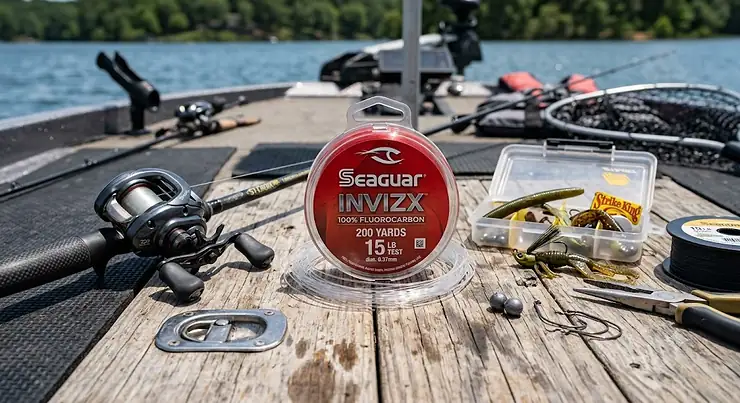
There’s a specific kind of heartbreak in fishing: you watch your bait get eaten, you set the hook, and… nothing. The fish just vanished, spooked by a line it saw glinting three feet away. That’s the problem 100% fluorocarbon line was built to solve. In short, 100% fluorocarbon line is fishing line made entirely from polyvinylidene fluoride (PVDF) resin, a material with a refractive index so close to water’s that it becomes nearly invisible once submerged, while also sinking faster and stretching less than nylon monofilament.
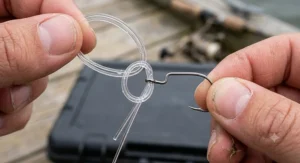
You’ve probably noticed the confusing part of the aisle at the tackle shop: some spools scream “100% fluorocarbon” while others quietly say “fluorocarbon coated” in smaller print, and the price tags swing wildly for what looks like the same clear line. That gap is not marketing fluff. It’s the difference between a line built from pure fluorocarbon and a copolymer core with a thin fluorocarbon shell — and it changes how the line casts, sinks, and holds up against a stubborn smallmouth digging for a rock pile.
This guide walks through seven real, current products spanning budget spools to tournament-grade leader material, breaks down when you actually want mainline fluorocarbon versus leader-only fluoro, and clears up the sinking-line, invisible-line, low-stretch-fluoro claims that get thrown around without context. We’ve grounded every recommendation in verifiable specs and aggregated review sentiment — not invented testing — so you can walk away knowing exactly what you’re buying and why.
Quick Comparison Table
Before the deep dive, here’s the fast version for anyone standing in a boat right now trying to decide.
| Line | Type | Price Range | Best For |
|---|---|---|---|
| Reaction Tackle 100% Pure Fluorocarbon | Leader/Mainline | around $10-$15 | Budget-conscious anglers wanting true fluoro |
| Seaguar Red Label | Mainline | around $10-$20 | Beginners moving off monofilament |
| Berkley Trilene 100% Fluorocarbon | Mainline | around $12-$18 | All-around knot strength |
| Seaguar InvizX | Mainline | around $15-$25 | Finesse casting on spinning gear |
| Sunline Super FC Sniper | Mainline | around $20-$30 | Low-memory premium casting |
| Seaguar Blue Label | Leader | around $15-$25 | Saltwater and toothy-fish leaders |
| Seaguar Tatsu (DSF) | Leader/Mainline | around $30-$60+ | Tournament-grade invisibility and strength |
Looking at the spread, the pattern is pretty clear: price climbs with resin refinement, not just marketing. Budget-tier lines like Reaction Tackle 100% Pure Fluorocarbon and Seaguar Red Label get you genuine 100% fluoro chemistry without the softer handling or double-resin construction of the premium tier. If you’re deciding between Berkley Trilene 100% Fluorocarbon and Seaguar InvizX, the real question isn’t price — it’s whether you value knot strength (Trilene) or supple castability (InvizX) more for your technique.
💬 Bookmark this table now — you’ll want to reference it once you see what each line actually does on the water below!😊
Top 7 100% Fluorocarbon Fishing Lines: Expert Analysis
Here’s the full spec-and-sentiment breakdown for every product, ranked to cover budget, mid-range, and premium buyers along with mainline and leader use cases.
| # | Product | Diameter Range | Type | Notable Trait |
|---|---|---|---|---|
| 1 | Reaction Tackle 100% Pure Fluorocarbon | .18mm-.34mm+ | Leader/Mainline | Value pure-fluoro construction |
| 2 | Seaguar Red Label | thin-to-mid | Mainline | Soft, budget-friendly entry point |
| 3 | Berkley Trilene 100% Fluorocarbon | mid | Mainline | Exceptional knot/impact strength |
| 4 | Seaguar InvizX | thin-to-mid | Mainline | Low memory, castable |
| 5 | Sunline Super FC Sniper | mid | Mainline | Resin-coated smoothness |
| 6 | Seaguar Blue Label | mid-to-heavy | Leader | Double-structure toughness |
| 7 | Seaguar Tatsu (DSF) | thin-to-heavy | Leader/Mainline | Dual-resin premium flagship |
This table earns its keep once you match it to your rod setup: mainline picks (Seaguar Red Label, Berkley Trilene 100% Fluorocarbon, Seaguar InvizX, Sunline Super FC Sniper) are soft enough to fill a spinning or casting reel, while leader-focused picks (Reaction Tackle 100% Pure Fluorocarbon, Seaguar Blue Label, Seaguar Tatsu) trade some suppleness for abrasion resistance you want a few feet from the hook. Notice, too, that price doesn’t track diameter — it tracks resin refinement and manufacturing process, which is exactly why a thin Seaguar Tatsu leader can cost more per yard than a thicker budget spool.
1. Reaction Tackle 100% Pure Fluorocarbon — best budget pure-fluoro option
Reaction Tackle built this line to answer a simple complaint: why does true 100% fluorocarbon have to cost premium-brand money? The line is extruded entirely from fluorocarbon resin — no copolymer core, no coating shortcut — and it’s offered across a wide range from 4 lb up through heavier saltwater tests. What that means in practice is you’re not paying for a name, just for the material itself, which keeps the per-yard cost down without faking the chemistry.
Based on the spec sheet and how it’s marketed for both spinning main line and saltwater leader duty, this is a genuinely flexible spool for anglers who fish multiple species and don’t want five different line types in the tackle box. Reviewers consistently note strong performance on toothy species like king salmon trolling leaders, with several long-time users calling it their go-to after switching from pricier alternatives. The tradeoff, as with most value-tier fluoro, is a touch more stiffness than the ultra-refined premium lines.
Pros:
- ✅ Genuinely 100% fluorocarbon at a budget price point
- ✅ Versatile enough for mainline or leader use
- ✅ Strong abrasion resistance for the price tier
Cons:
- ❌ Stiffer handling than premium double-structure resins
- ❌ Long-term smoothness feedback is more mixed than top brands
Price sits around $10-$15 depending on test and spool length, which makes it one of the most accessible entries into true fluorocarbon. For anglers testing whether fluoro is worth the switch from mono, this is a low-risk way to find out.
2. Seaguar Red Label — best value mainline for beginners
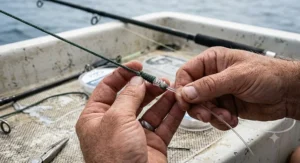
Seaguar is the originator of consumer fluorocarbon line, and Red Label is the brand’s intentional entry-level mainline. It’s explicitly marketed as an introduction to mainline fluorocarbon for anglers stepping away from monofilament, softer than you’d expect from a budget spool. That softness matters more than it sounds: stiff fluoro fights your reel, causes line twist, and kills casting distance, so a beginner-friendly resin blend is doing real work here.
What most buyers overlook about Red Label is that “entry-level” doesn’t mean weak — it still carries Seaguar’s proprietary resin formulation, just without the secondary refinement steps of Blue Label or Tatsu. Aggregated review sentiment across major retailers consistently praises its price-to-performance ratio, particularly for anglers spooling multiple rods for jigs, Carolina rigs, and shaky heads without wanting to spend premium money on each reel.
Pros:
- ✅ Soft enough to cast comfortably on spinning reels
- ✅ Genuine Seaguar fluorocarbon resin at entry pricing
- ✅ Reliable for everyday freshwater techniques
Cons:
- ❌ Less abrasion resistance than Seaguar’s higher tiers
- ❌ Not ideal for heavy saltwater or toothy-fish leader duty
At around $10-$20 for a standard spool, Red Label delivers legitimate value — reviewers who compare it side by side with pricier fluoro consistently call it the best fluorocarbon for the money in freshwater applications.
3. Berkley Trilene 100% Fluorocarbon — strongest knot and impact strength
Trilene’s fluorocarbon formula leans on Berkley’s proprietary PVDF blend, and its standout trait is knot strength that rivals top nylon monofilaments — a real weak point for a lot of fluoro competitors. In practice that means a well-tied Palomar knot holds close to the line’s full rated strength instead of failing early, which is the single most common way anglers actually lose fish to line failure.
Here’s what to weigh: sensitivity is only fair compared to P-Line or Seaguar InvizX, meaning you’ll feel slightly less of the subtle taps through the rod blank. But abrasion resistance is excellent, and it holds its clarity and slight green tint well over repeated use, so you’re trading a touch of feel for a line that survives rocky structure and holds knots under real pressure. Reviewers who fish heavy cover consistently mention this as the line they trust when a big fish is bulldogging toward a stump.
Pros:
- ✅ Knot strength on par with premium nylon monofilament
- ✅ Excellent abrasion resistance around structure
- ✅ Holds color and clarity through extended use
Cons:
- ❌ Sensitivity trails more refined premium fluoro
- ❌ Not the softest option for finesse spinning setups
Priced around $12-$18, Trilene earns its reputation as a genuine all-rounder — the line to reach for when landing the fish matters more than feeling every nibble.
4. Seaguar InvizX — softest casting mainline for finesse presentations
InvizX is Seaguar’s dedicated mainline fluorocarbon, engineered specifically for low memory so it lies flat off the spool instead of coiling into frustrating loops. That single trait — low memory — is what makes fluorocarbon usable as an everyday mainline rather than just a stiff leader tacked onto braid. Soft, castable resin means it loads onto spinning reels without fighting you on every cast.
Based on the spec comparison against stiffer leader-grade fluoros, InvizX trades some raw abrasion resistance for dramatically better handling, which is exactly the right tradeoff for finesse techniques like drop-shotting or fishing light jigs for pressured, line-shy bass. Aggregated feedback from multi-species anglers consistently highlights its virtual invisibility in clear lakes as the deciding factor over cheaper alternatives, especially when targeting smallmouth in gin-clear conditions where every flash of line costs you bites.
Pros:
- ✅ Exceptionally low line memory for smooth casting
- ✅ Soft enough for all-day spinning reel use
- ✅ Strong reputation for near-total underwater invisibility
Cons:
- ❌ Softer resin means somewhat lower abrasion resistance
- ❌ Not the pick for heavy cover or toothy species
Expect to pay in the $15-$25 range, and know you’re paying specifically for handling quality — this is the fluoro to spool when castability matters as much as invisibility.
5. Sunline Super FC Sniper — smoothest premium casting line
Sunline applies three separate resin coatings to Super FC Sniper, and that process is the whole story here — it’s noticeably smoother off the spool than competitors in a similar price bracket, which anglers notice the moment they first feel it running through guides. It’s marketed and used as a premium mainline rather than pure leader material, occupying a price tier just above Seaguar Red Label.
What reviewers repeatedly call out isn’t a single spec, it’s the low-memory behavior after storage: several long-time users mention that after weeks sitting unused in a rod locker, a quick spray of line conditioner restores it to like-new castability, a trait that separates it from lines that go stiff and unusable in the off-season. On paper this means less line replaced out of frustration rather than actual wear, which is a real cost saver over a season of regular use.
Pros:
- ✅ Noticeably smoother feel than similarly priced fluoro
- ✅ Very low line memory even after storage
- ✅ Reliable performance for crankbaits and finesse rigs alike
Cons:
- ❌ Priced above true entry-level mainline options
- ❌ 200-yard spools may run short for larger reels
At around $20-$30, Super FC Sniper sits comfortably in “premium but not flagship” territory — the choice for anglers who’ve outgrown budget spools but aren’t ready for Tatsu pricing.
6. Seaguar Blue Label — toughest leader for saltwater and structure
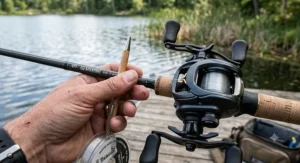
Blue Label uses Seaguar’s double-structure fluorocarbon process, fusing two distinct resins into one strand to combine toughness with tie-ability — a combination that’s genuinely hard to engineer, since stiffer resins usually knot poorly. It’s leader material, not mainline, meaning you’ll pair it with braid or mono rather than filling a spool with it directly.
Reviewers across saltwater forums and guide reports consistently describe it as trustworthy leader material for snook, redfish, and striped bass, citing its knot reliability under sudden strikes as the standout trait — a fish that inhales a bait and bolts puts sudden shock-load on the leader, and that’s precisely the scenario Blue Label’s double-resin construction is built to survive. The tradeoff is straightforward: it costs more per yard than mainline-focused fluoro, and because it’s sold in leader-length spools, you’re buying it to complement your main line rather than replace it.
Pros:
- ✅ Double-structure resin resists abrasion from structure
- ✅ Excellent knot reliability under sudden shock loads
- ✅ Trusted by saltwater guides for line-shy species
Cons:
- ❌ Leader-only — not designed for spooling as mainline
- ❌ Premium pricing relative to freshwater mainline options
Priced around $15-$25 for standard leader spools, Blue Label is the leader material to reach for the moment you’re targeting fish that test knots hard.
7. Seaguar Tatsu (DSF) — the flagship for tournament-grade invisibility
Tatsu is Seaguar’s top-tier line, built using their Double Structure Fluorocarbon (DSF) technology, which fuses a hard interior resin for tensile strength with a soft exterior resin for flexibility and knot performance. It’s the line competitive anglers reach for when both invisibility and raw strength need to be maximized simultaneously, and it’s sold in both leader lengths and longer mainline-capable spools.
Here’s what stands out in aggregated feedback: anglers consistently describe it as the softest-handling fluorocarbon they’ve used relative to its strength class, with several noting it doesn’t kink or develop memory the way standard single-resin fluoro does over a full day of fishing. The spec sheet won’t tell you this, but user reports suggest the thinner diameter at a given pound test genuinely does translate to more bites in pressured, ultra-clear water — exactly the scenario where every other line on this list starts to lose its edge.
Pros:
- ✅ Dual-resin DSF construction maximizes strength and softness
- ✅ Thinner diameter per pound test aids true invisibility
- ✅ Extremely low memory even during long fishing days
Cons:
- ❌ Premium pricing, often $30-$60+ depending on length and test
- ❌ Overkill for casual, low-pressure fishing situations
If budget isn’t the constraint and you’re chasing pressured fish in clear water or fishing a tournament, Seaguar Tatsu is the line the rest of this list gets compared against.
Practical Usage Guide: Spooling, Knots & Maintenance
Buying good line is half the equation — how you spool and maintain it determines whether you actually get the performance you paid for. Start by filling reels to about 1/8 inch from the spool lip; underfilling costs casting distance, overfilling causes wind knots. Because fluorocarbon has more memory than braid, run new line through a wet cloth or a squeeze of line conditioner as you spool it, which helps it lay down flatter and reduces the coiling that plagues first-time fluoro users.
For knots, avoid the standard clinch knot that works fine on mono — fluorocarbon’s harder surface needs more wraps and more moisture before cinching to prevent the friction heat that weakens the strand. A Palomar knot wetted thoroughly before pulling tight is the most forgiving option across nearly every product on this list, including stiffer leader material like Seaguar Blue Label. In the first 30 days, check your line every few trips for micro-abrasions near the last three feet, since that section absorbs the most contact with structure and hook points. A common rookie mistake is leaving fluorocarbon spooled on a reel for an entire off-season without inspection — the material doesn’t degrade from UV the way mono does, but sitting compressed on a spool for months can still leave it with memory that needs working out before your first cast of the new season.
Real-World Scenarios: Matching Line to Angler
Consider three anglers who all technically need “fluorocarbon” but need completely different spools. The weekend bass angler fishing clear reservoirs for pressured largemouth wants soft, low-memory mainline — Seaguar InvizX or Seaguar Red Label on a spinning reel handles finesse jigs and drop-shot rigs without fighting the caster all day, and the budget difference barely matters at typical usage volumes.
Then there’s the inshore saltwater angler chasing snook and redfish around dock pilings and oyster bars, where abrasion resistance and knot reliability under a sudden run matter far more than casting softness — this is exactly the situation Seaguar Blue Label or Reaction Tackle 100% Pure Fluorocarbon as leader material, paired with a braided mainline, was designed for. Finally, picture the tournament or highly pressured freshwater angler fishing gin-clear lakes for line-shy smallmouth, where every fraction of a millimeter of diameter and every bit of invisibility is worth paying for — that’s the scenario where Seaguar Tatsu or Sunline Super FC Sniper justifies its premium price, because the cost of a missed bite in competition dwarfs the cost difference in line.
How to Choose 100% Fluorocarbon Line
Choosing the right spool comes down to matching a handful of criteria to your actual fishing, not just grabbing whatever’s cheapest or most expensive on the shelf.
- Decide mainline vs. leader first. Mainline fluoro needs to be soft enough to cast all day; leader fluoro can be stiffer since you’re only tying a few feet of it.
- Match pound test to target species, not to what “feels strong” — oversized line reduces action on lures and costs you casting distance for no real benefit.
- Prioritize invisibility for pressured, clear water and prioritize abrasion resistance for cover-heavy or saltwater structure fishing.
- Check memory and handling reviews before buying a stiff leader-grade line for mainline use — this is the single most common buyer’s-remorse mistake.
- Budget for line as a consumable, not a one-time purchase — fluorocarbon should be replaced more often than braid, so factor ongoing cost into your decision.
- Read aggregated review sentiment for your specific technique, since a line that excels at cranking may underperform at finesse drop-shotting.
- Buy the shortest spool that covers a season rather than bulk spools you won’t use before the line ages on the reel.
Pure Fluorocarbon vs. Coated Lines: What “100%” Actually Means
“Pure fluorocarbon” is a phrase worth taking literally: a true 100% fluorocarbon line is extruded entirely from PVDF resin from core to surface, while a “fluorocarbon coated” line — like several budget copolymer products on the market — has a nylon or copolymer core with only a thin fluorocarbon layer bonded around it. Both will say “fluorocarbon” somewhere on the packaging, which is exactly how casual buyers get confused at the register.
The practical difference shows up in two places: sinking rate and invisibility depth. A coated line sinks and hides light refraction only as well as its thin outer layer allows, while pure fluorocarbon carries those properties through its entire cross-section, so as the outer layer inevitably abrades from rocks or teeth, a pure fluoro line’s remaining material still performs the same way a coated line’s exposed core no longer will. Coated lines aren’t bad — they’re often softer and cheaper, which is genuinely useful for casual anglers — but if invisibility and sink rate are the entire reason you’re buying fluorocarbon, checking for “100%” or “pure” on the label isn’t optional, it’s the whole point of the purchase.
Mainline Fluorocarbon vs. Leader Fluorocarbon: Which Do You Need?
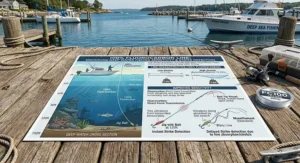
This is the distinction that trips up more first-time fluoro buyers than any other on this list. Mainline fluorocarbon, like Seaguar Red Label or Seaguar InvizX, is engineered soft enough to spool an entire reel and cast repeatedly without the stiffness fighting your rod action. Leader-only fluoro, like Seaguar Blue Label, is deliberately stiffer and more abrasion-resistant, designed to be tied onto the business end of braid or mono in short sections rather than spooled directly.
Spooling an entire reel with leader-grade fluoro is a common and expensive mistake — it casts poorly, fights the reel, and wastes the premium abrasion resistance you paid for on sections of line that never touch a fish or structure. As one industry buyer’s guide on fluorocarbon lines explains, manufacturers offer both mainline fluorocarbon for spooling and leader material for short sections in braid-to-fluoro setups, with mainline versions built softer and more manageable while leader-only fluoro stays stiffer and better suited to dropshotting, shaky heads, or saltwater applications. If you’re building a braid-to-fluorocarbon leader system, this is genuinely the highest-leverage decision in your whole setup — get it backwards and you’ll blame the wrong product for a bad day on the water.
Invisible Line: How Refractive Index Actually Works Underwater
The “invisible” claim behind fluorocarbon isn’t marketing poetry — it’s straightforward physics. Every clear material bends light differently, described by its refractive index, and PVDF’s refractive index sits remarkably close to that of water itself. Nylon monofilament’s index is further from water’s, meaning it bends and reflects more light as it passes through the line, creating a faint visual signature fish can key in on, especially in clear water and bright sun.
That said, “invisible” is relative, not absolute — diameter still matters enormously, since a thicker strand refracts more total light regardless of material. That’s exactly why premium lines like Seaguar Tatsu invest heavily in achieving thinner diameters at a given pound test: a thin, true fluorocarbon strand beats a thick one at the same test every time for stealth. If you’re fishing heavily pressured water where fish have clearly learned to avoid line, dropping down in diameter often does more for your bite count than switching brands within the same tier.
Sinking Line Behavior: Why Fluorocarbon Gets Baits Deeper Faster
Fluorocarbon is denser than nylon monofilament, and unlike braid, it doesn’t float or hover — it sinks steadily, pulling your bait down with it rather than letting wind and surface tension hold your presentation up in the water column. That’s a genuine functional advantage for techniques like cranking, where getting a lipless bait or deep-diving crankbait down into the strike zone faster means more effective casts per hour of fishing.
This is precisely why lines marketed for cranking, like Trilene’s dense formula, lean into their sink rate as a selling point rather than an afterthought — a fast-sinking mainline complements a bait’s own diving action instead of fighting it. The flip side worth knowing: that same sink rate works against you with topwater presentations, where a floating or neutral line keeps your lure riding high. Matching sink rate to technique is a simple decision that a surprising number of anglers skip entirely, then wonder why their topwater walk-the-dog action looks sluggish.
Low Stretch Fluoro and Hookset Sensitivity
Fluorocarbon stretches noticeably less than nylon monofilament under load, which translates directly into feel — you sense the subtle tick of a bass mouthing a jig, or the tap of a walleye testing bait, more clearly than you would through stretchier mono. That low-stretch property is also why hooksets transmit more directly through fluoro, requiring less exaggerated rod movement to drive a hook home on a solid hit.
The tradeoff worth understanding is that low stretch also means less forgiveness on a hard-fighting fish making sudden runs, since there’s less built-in shock absorption in the line itself. That’s why anglers targeting powerful fish on light tackle often pair low-stretch fluorocarbon leader with a rod that has a softer, more forgiving tip, letting the rod do the stretching that the line no longer will. If you’re moving from mono to fluoro for the first time, expect a genuine adjustment period — many anglers report over-setting hooks initially simply because the line telegraphs strikes so much more directly than what they’re used to.
Common Mistakes When Buying 100% Fluorocarbon Line
Even experienced anglers make avoidable errors shopping for fluoro, and most of them are more expensive than the line itself. The first is assuming any spool labeled “fluorocarbon” is 100% pure — coated copolymer lines use the word too, and only checking for “100%” or “pure” on the packaging avoids the mix-up. The second is buying leader-grade stiff fluoro to spool an entire reel, which produces poor casting and unnecessary frustration for what should be a simple mainline job.
A third common mistake is ignoring pound-test-to-diameter ratios across brands — a 12 lb test from one manufacturer can be noticeably thicker than a 12 lb test from a brand using more refined resin, so two “identical” spools can behave very differently on the water. Fourth, anglers frequently buy bulk 1000-yard spools of premium fluoro assuming it’s always cheaper per yard, without accounting for the fact that fluorocarbon should be replaced more often than braid — buying more than you’ll use before it ages defeats the savings. Finally, skipping line conditioner or a proper wet-knot technique on a first-time fluoro purchase leads to weak knots and premature failure that gets unfairly blamed on the line itself rather than the technique.
Long-Term Cost & Maintenance: The Real ROI
Fluorocarbon isn’t a “buy once” purchase the way a rod or reel can be — it’s a consumable that should be replaced more often than braid due to gradual UV and abrasion effects on its outer surface, even though it doesn’t degrade nearly as fast as monofilament. Budgeting for that replacement cycle up front avoids the sticker shock of realizing your “premium” line purchase needs refreshing every season or two of regular use.
| Line Tier | Approx. Price Range | Typical Replacement Cycle | Best Value Scenario |
|---|---|---|---|
| Budget (Reaction Tackle, Seaguar Red Label) | around $10-$20 | Seasonal for regular anglers | High-frequency casual fishing |
| Mid-range (Berkley Trilene, Seaguar InvizX, Sunline Super FC Sniper) | around $12-$30 | 1-2 seasons with care | Serious weekend anglers |
| Premium (Seaguar Blue Label, Seaguar Tatsu) | around $15-$60+ | Leader replaced per trip; mainline lasts longer | Tournament and pressured-water fishing |
The value calculation here isn’t just sticker price — it’s cost-per-fishing-day. A budget spool replaced every season and a premium spool replaced every two seasons can land at a similar effective cost, which means the real decision driver should be performance fit for your technique, not just the number on the price tag. Anglers fishing heavy cover burn through leader material fastest regardless of brand, making a mid-tier leader like Seaguar Blue Label often the more economical premium choice than reserving top-shelf Seaguar Tatsu for sections of line that get replaced weekly anyway.
100% Fluorocarbon vs. Monofilament vs. Braid
Every line type trades off the same handful of properties, and understanding the tradeoffs matters more than chasing whichever material is trendiest.
| Property | 100% Fluorocarbon | Monofilament | Braid |
|---|---|---|---|
| Visibility | Nearly invisible underwater | More visible, refracts light | Highly visible, opaque |
| Stretch | Very low | Moderate to high | Almost none |
| Sink Rate | Sinks steadily | Neutral to slightly floats | Floats |
| Abrasion Resistance | Good to excellent | Fair | Excellent (cut resistance varies) |
| Best For | Leaders, clear-water mainline | All-purpose, topwater | Long casts, heavy cover, braid-to-fluoro leaders |
The takeaway from this comparison is that most serious anglers don’t pick one line type for everything — they combine them, running braid as mainline for casting distance and sensitivity, then tying on a fluorocarbon leader like Seaguar Blue Label for the final stealthy, abrasion-resistant connection to the hook. Monofilament still earns its place for topwater techniques where fluorocarbon’s sink rate actively works against the presentation, proving there’s no single “best” line, only the best match for a specific technique.
✨ Ready to build your own braid-to-fluoro leader system? Check current pricing on the picks above before your next trip!🎣
Safety, Regulations & Responsible Disposal
Fluorocarbon shares an environmental problem with monofilament: it’s non-biodegradable and can persist in the environment for decades if discarded carelessly, posing entanglement risks to birds, fish, and other wildlife. The good news is that both monofilament and fluorocarbon are recyclable, unlike braided line, which generally isn’t accepted at recycling bins. Multiple state wildlife agencies run dedicated collection programs specifically because of this persistence issue.
According to the Wisconsin DNR’s fishing line recycling guidance, recyclers that specialize in fishing line melt it down into plastic pellets used to make products like tackle boxes and fish habitat structures, and anglers should look for collection bins designed for fishing line at boat launches rather than putting it in household recycling or loose in the trash. Practically speaking, that means clipping used leader material into a dedicated container in your tackle box rather than leaving cutoffs on the ground or dropping them loose in a boat, then dropping the collected line at a marked bin at your next trip to a ramp or pier. For more on refractive index and material science behind why fluorocarbon behaves the way it does, Wikipedia’s overview of polyvinylidene fluoride covers the underlying polymer chemistry in accessible detail.
Frequently Asked Questions
❓ What's the difference between 100% fluorocarbon and fluorocarbon-coated line?
❓ Can 100% fluorocarbon line be used as mainline on a spinning reel?
❓ Does fluorocarbon line float or sink?
❓ How often should I replace 100% fluorocarbon line?
❓ Is fluorocarbon more sensitive than monofilament?
Conclusion
Choosing 100% fluorocarbon line ultimately comes down to matching the material’s real properties — near-invisibility, steady sink rate, low stretch — to what you’re actually fishing for, rather than grabbing whatever spool looks clearest on the shelf. Budget options like Reaction Tackle 100% Pure Fluorocarbon and Seaguar Red Label prove that genuine 100% fluoro chemistry doesn’t require premium pricing, while Seaguar Tatsu and Seaguar Blue Label justify their cost specifically for pressured water and demanding saltwater structure fishing.
The mainline-versus-leader distinction is probably the single most consequential decision covered in this guide — get that wrong, and even the best line on this list will feel disappointing. Get it right, paired with a properly wetted knot and a maintenance routine that checks for abrasion near the terminal end, and any of these seven lines will do exactly what fluorocarbon is supposed to do: disappear.
Recommended for You
- 15lb Fluorocarbon: 7 Best Lines for Jigs & Heavy Cover (2026)
- Shock Leader Mono: 7 Best Leaders for Surf Fishing (2026)
- 7 Best Low Memory Mono Line Options for 2026 (No More Tangles)
Disclaimer: This article contains affiliate links. As an Amazon Associate, I earn from qualifying purchases. If you purchase products through these links, we may earn a small commission at no additional cost to you.
✨ Found this helpful? Share it with your friends! 💬🤗
