
In This Article
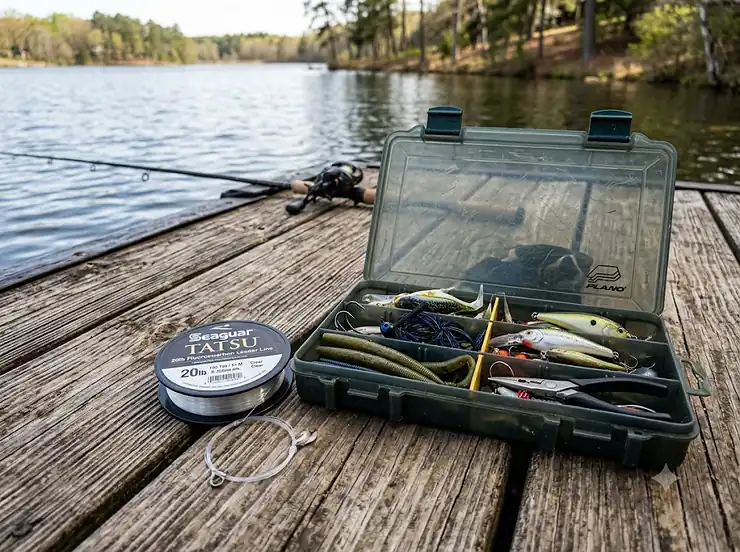
Somewhere between a snapped line and a boated redfish sits about eighteen inches of clear, unassuming material — and most anglers give it less thought than they give their coffee order. That’s a mistake. The 20lb fluorocarbon leader is the quiet workhorse of inshore tackle boxes from Texas to the Carolinas, the thing standing between your $40 topwater plug and a pair of speckled trout teeth. It’s not flashy. It doesn’t need to be. What it needs to do is disappear underwater, shrug off oyster shells and dock pilings, and hold a knot when a fish decides your leader is the enemy.
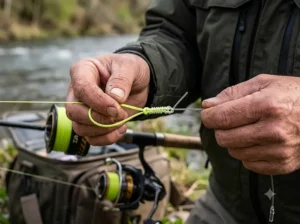
So, what is a 20lb fluorocarbon leader? In short, it’s a length of 100% fluorocarbon line, rated to break at roughly 20 pounds of pressure, tied between your braided or monofilament main line and your hook or lure — chosen specifically for its low visibility, fast sink rate, and abrasion resistance in clear or lightly stained water.
This guide digs into seven genuinely available leader materials — from budget-friendly spools to the fluorocarbon equivalent of a tailored suit — and breaks down which one actually earns its spot on your rod. We researched real specs, real aggregated review sentiment, and pulled in outside sources so you’re not just taking a stranger’s word for it. By the end, you’ll know exactly which 20 pound fluoro leader fits your boat, your budget, and the fish you’re chasing this season.
Quick Comparison Table: 20lb Fluorocarbon Leader at a Glance
| Product | Type | Diameter (20lb) | Price Range | Best For |
|---|---|---|---|---|
| Seaguar Inshore | Single-structure | ~0.016 in | Under $20 | Budget redfish leader |
| Berkley Vanish | Standard fluoro | ~0.018 in | Under $15 | Entry-level anglers |
| KastKing Kovert Elite | PVDF resin | ~0.017 in | Under $20 | Value-conscious upgrade |
| Yo-Zuri H.D. Carbon | Tinted (Disappearing Pink) | ~0.017 in | $20-$30 range | Stained saltwater |
| Seaguar Blue Label | Double-structure | ~0.016 in | $20-$30 range | All-around inshore |
| Sunline Super FC Sniper | Premium fluoro | ~0.017 in | $25-$35 range | Durability under pressure |
| Seaguar Gold Label | Dual-resin premium | ~0.015 in | $35-$50 range | Line-shy, technical fish |
Looking at the spread above, the gap between the cheapest and priciest options isn’t really about whether the line “works” — every product here is genuine fluorocarbon that will fool fish and sink a bait. The real differentiator is diameter-to-strength ratio and knot performance under stress, which is why Seaguar Gold Label commands a premium despite testing at nearly identical breaking strength to Seaguar Inshore. Anglers fishing pressured, gin-clear flats should lean toward the thinner, pricier end; anglers bouncing jigs around stained bay water can save real money without sacrificing catches.
💬 Just one click — help others make better buying decisions too!😊
Top 7 20lb Fluorocarbon Leader Picks: Expert Analysis
1. Seaguar Inshore — best budget redfish leader
Seaguar built Inshore specifically to answer a common complaint: quality fluorocarbon shouldn’t cost as much as bait for the whole trip. This line uses a single-resin structure rather than the double-layer process found in Seaguar’s pricier lines, which is exactly why it’s cheaper to produce and buy.
On paper, that single structure means slightly less tensile strength per diameter than Blue Label, but in practice it delivers the abrasion resistance anglers actually need around oyster bars, dock pilings, and grass. It sinks faster than mono and stays close to invisible in typical bay water clarity. Based on the spec comparison with Seaguar’s other lines, Inshore essentially trades a bit of raw knot strength for a dramatically friendlier price tag — a fair trade for most everyday trips.
Reviewers consistently report that Inshore ties knots a touch stiffer than Blue Label, and some note occasional knot slippage if the tag end isn’t wetted properly before cinching down. Aggregated feedback otherwise skews strongly positive, with anglers praising the 100-yard spool length as genuinely practical rather than a marketing gimmick.
Pros:
- ✅ Noticeably cheaper than Seaguar’s double-structure lines
- ✅ Strong abrasion resistance around rocks and oysters
- ✅ Generous 100-yard spool avoids frequent re-spooling
Cons:
- ❌ Slightly stiffer knots than premium Seaguar lines
- ❌ A touch less tensile strength per diameter than Blue Label
Priced in the under-$20 range for a 100-yard spool, Seaguar Inshore is arguably the best value-per-yard fluorocarbon on this list — a smart default for anyone who burns through leader material on a regular basis.
2. Berkley Vanish — most wallet-friendly entry point
Berkley Vanish has been a tackle-shop staple for so long that it’s easy to overlook, but that longevity says something. It’s a straightforward 100% fluorocarbon line without the tiered “label” branding some competitors use, and it’s usually the cheapest genuine fluorocarbon leader on the shelf.
The 20lb Vanish runs a touch thicker in diameter than premium lines like Gold Label, meaning it’s marginally more visible in ultra-clear water but also a bit more forgiving on knots for anglers who haven’t logged thousands of hours tying line-to-line connections. What most buyers overlook about Vanish is that its slightly larger diameter actually works in its favor for casting stiffer leaders directly to lures, since there’s more material for a Palomar or improved clinch knot to bite into.
Aggregated review sentiment across retailers is consistently favorable for the price point, with many anglers using it as a “gateway” fluorocarbon before upgrading to pricier options — and plenty simply never bothering to switch, since it gets the job done for typical trout and redfish outings.
Pros:
- ✅ Lowest price point among genuine fluorocarbon options
- ✅ Forgiving, easy-to-tie knots for less experienced anglers
- ✅ Widely available at big-box and tackle retailers
Cons:
- ❌ Slightly thicker diameter than premium competitors
- ❌ Less abrasion-resistant than Seaguar or Sunline’s top lines
At under $15 for a 250-yard spool in most sizes, Berkley Vanish is the leader material to keep in the truck for the days you don’t want to think twice about cost.
3. KastKing Kovert Elite — best value upgrade pick
KastKing has spent the last several years chipping away at the idea that Japanese-engineered fluorocarbon has to come from a Japanese-headquartered brand. Kovert Elite is extruded from PVDF resin sourced and engineered in Japan, then finished under KastKing’s own process — a detail that matters because PVDF resin quality is the single biggest factor in how a fluorocarbon line performs.
The headline spec here is knot strength: KastKing states this line achieves meaningfully higher breaking and knot strength than standard fluorocarbon at the same diameter. What that means in practice is you can typically drop down a size and keep the same effective strength, which helps presentation in clear water without giving up confidence in the hookset. Its lower stretch than monofilament also translates into sharper bite detection — useful when a speckled trout is mouthing a soft plastic rather than crushing it.
Reviewers frequently mention the line’s suppleness relative to its strength class, along with strong marks for abrasion resistance around structure. A smaller number of aggregated comments note that, like most budget-adjacent fluorocarbon, it can develop minor memory if left on a reel unused for long stretches.
Pros:
- ✅ Higher knot and breaking strength than standard fluoro at this price
- ✅ Supple enough for comfortable everyday casting
- ✅ Strong abrasion resistance for the cost
Cons:
- ❌ Can develop mild line memory if stored unused
- ❌ Less brand recognition than Seaguar or Yo-Zuri among old-school anglers
Typically found in the under-$20 range for a standard spool, KastKing Kovert Elite punches well above its price class for anglers willing to try a newer name.
4. Yo-Zuri H.D. Carbon (Disappearing Pink) — best for stained saltwater
Yo-Zuri’s approach to invisibility is refreshingly counterintuitive: instead of chasing pure clarity, the company tints its HD Carbon line pink, on the theory that red wavelengths vanish first in the water column. The pitch is that once a clear fluorocarbon leader gets nicked or scuffed, that damaged spot actually catches light and becomes more visible — while a pink-tinted line stays camouflaged even after abrasion.
Here’s what to weigh: in gin-clear, skinny water, some anglers still prefer true clear fluorocarbon, but in the stained, tannin-tinted bays and marsh creeks common along much of the Gulf and South Atlantic coast, the pink tint blends in just as well and holds up better once it’s taken a beating from oyster rock. Reviewers consistently note excellent abrasion resistance and cite it as a favorite among tarpon and snook anglers who fish around structure, which speaks to its durability under real fighting pressure.
A recurring theme in aggregated feedback is that Yo-Zuri HD ties slightly firmer knots than ultra-supple premium lines, so anglers are advised to wet knots thoroughly and seat them slowly rather than yanking them tight in one motion.
Pros:
- ✅ Tint stays camouflaged even after abrasion damage
- ✅ Excellent reputation for big-fish durability
- ✅ Made with a well-documented Japanese extrusion process
Cons:
- ❌ Firmer material makes knot-tying slightly less forgiving
- ❌ Priced above true budget fluorocarbon options
Sitting in the $20-$30 range depending on spool length, Yo-Zuri H.D. Carbon is the pick for anglers who fish stained water more often than they fish glass-clear flats.
5. Seaguar Blue Label — best all-around inshore leader
If there’s a “default” answer to “what fluorocarbon leader should I buy,” it’s probably this one. Blue Label uses Seaguar’s double-structure process, fusing a harder inner resin for tensile strength with a softer outer resin that lets knots cinch down cleanly — a combination that’s kept it on tackle shop shelves for decades without much need for a redesign.
What most buyers overlook about the double-structure approach is that it’s solving two conflicting goals at once: raw strength usually makes a line stiffer and harder to knot, while suppleness usually costs you strength. Blue Label’s layered resin construction lets it claim meaningfully higher knot strength than many single-resin competitors, which is a big reason charter captains keep spools of it on the console.
Aggregated reviewer sentiment is remarkably consistent across independent sources: anglers cite its abrasion resistance around docks, pilings, and rocky structure as a standout trait, and multiple long-term users report going through the same brand for five-plus years without switching. The recurring critique is cost relative to Seaguar’s own cheaper Inshore line, which performs similarly for casual use.
Pros:
- ✅ Double-structure design balances strength with suppleness
- ✅ Long-standing reputation among charter captains and guides
- ✅ Excellent abrasion resistance around structure
Cons:
- ❌ Costs more than Seaguar’s own Inshore line
- ❌ Overkill for anglers who rarely fish heavy structure
Priced in the $20-$30 range for a 100-yard spool, Seaguar Blue Label remains the leader most anglers reach for when they want one spool that handles almost everything inshore.
6. Sunline Super FC Sniper — toughest under sustained pressure
Sunline built its reputation on one core idea: a fluorocarbon line should feel almost identical whether you’re flipping heavy cover or finessing a jighead across a grass flat. Super FC Sniper is stiff by design, which sounds like a downside until you realize that stiffness is precisely what gives it class-leading knot strength and abrasion resistance among fluorocarbon leaders.
Based on the spec comparison with softer competitors, the trade-off is straightforward: Sniper won’t feel as forgiving in your hands while tying knots, but it holds up exceptionally well once a big fish starts grinding it against structure. This makes it a favorite for anglers targeting bull redfish around pilings or working topwaters through oyster-lined shorelines where lesser leaders fray within a single trip.
Reviewers repeatedly single out its knot strength as best-in-class, with a common theme being that anglers who “lose fish on every other fluoro” report fewer break-offs after switching. The trade-off reviewers mention most often is limited stretch, meaning hooksets need a slightly softer touch to avoid pulling hooks on light-mouthed fish like speckled trout.
Pros:
- ✅ Outstanding knot and abrasion resistance under load
- ✅ Trusted by tournament-level bass and inshore anglers alike
- ✅ Fair pricing relative to its performance tier
Cons:
- ❌ Stiffer handling makes knot-tying less beginner-friendly
- ❌ Low stretch demands a gentler hookset technique
Generally found in the $25-$35 range per spool, Sunline Super FC Sniper earns its keep any time structure and big fish are both part of the plan.
7. Seaguar Gold Label — premium pick for line-shy fish
Gold Label sits at the top of Seaguar’s lineup for a reason: independent measurements have found its 15lb diameter runs noticeably thinner than standard fluorocarbon rated at the same strength — a difference of just a few hundredths of a millimeter that matters far more than it sounds like it should when a redfish is staring at your leader in six inches of water.
The engineering logic here mirrors Blue Label’s dual-resin approach but refines it further, producing a leader that’s both thinner and, according to reviewers, easier to cinch down tight on technical knots like the FG or double uni. What the spec sheet won’t tell you, but reviewers note, is that the price gap versus Blue Label is real and only pays off if you’re regularly fishing pressured, ultra-clear conditions where a marginally smaller diameter changes strike rates.
Aggregated feedback is close to universally positive, with the recurring caveat being cost — several reviewers openly state it’s “the best” while acknowledging they reserve it for their most technical trips rather than everyday use.
Pros:
- ✅ Thinnest diameter-to-strength ratio in the Seaguar lineup
- ✅ Exceptional knot security on technical knots
- ✅ Ideal for wary fish in gin-clear, pressured water
Cons:
- ❌ Highest price point among products on this list
- ❌ Diminishing returns for casual or stained-water fishing
Expect to pay in the $35-$50 range for a 100-yard spool, making Seaguar Gold Label the leader to reserve for the days when finesse actually decides whether you eat fish tonight.
✨ Don’t Miss These Exclusive Deals!
🔍 Take your leader game to the next level with these carefully selected fluorocarbon picks. Click on any highlighted product to check current pricing and availability. The right leader tonight could mean the difference between a photo and a fish story!
Top 7 20lb Fluorocarbon Leader: Full Specs Comparison
| Product | Structure | Knot Strength | Abrasion Resistance | Price Range | Best For |
|---|---|---|---|---|---|
| Seaguar Inshore | Single-resin | Good | Very Good | Under $20 | Everyday budget use |
| Berkley Vanish | Standard | Good | Fair | Under $15 | Beginners, casual trips |
| KastKing Kovert Elite | PVDF resin | Very Good | Good | Under $20 | Value-focused upgrades |
| Yo-Zuri H.D. Carbon | Tinted standard | Good | Excellent | $20-$30 range | Stained water, big fish |
| Seaguar Blue Label | Double-resin | Excellent | Excellent | $20-$30 range | All-around inshore |
| Sunline Super FC Sniper | Stiff premium | Excellent | Excellent | $25-$35 range | Structure, bull reds |
| Seaguar Gold Label | Dual-resin premium | Best-in-class | Very Good | $35-$50 range | Pressured, clear water |
Reading across this table, a pattern emerges: knot strength and abrasion resistance climb together up until Seaguar Gold Label, where the focus shifts almost entirely to diameter reduction rather than raw toughness. For anglers who fish heavy structure more often than they fish pressured flats, Sunline Super FC Sniper or Seaguar Blue Label likely deliver more practical value than the priciest option on the list.
Practical Usage Guide: Setting Up Your 20lb Fluorocarbon Leader
Getting a fluorocarbon leader onto your rig correctly matters as much as which brand you buy. Start by connecting leader to main line with a double uni knot or an FG knot if you’re running braid — both distribute stress across more wraps than a simple overhand connection, which fluorocarbon’s stiffness demands. Wet every knot before cinching it down; fluorocarbon generates more friction heat than monofilament, and a dry knot can weaken by a meaningful percentage before you ever cast it.
In terms of leader length, 18 to 30 inches covers most inshore situations, with shorter leaders favored for closer, structure-heavy casting and longer leaders preferred in gin-clear water where fish get a longer look at your presentation. Check your leader for nicks after every fish, especially one that pulled you toward structure — a single ding easily halves its remaining strength.
A common first-30-days mistake is leaving fluorocarbon spooled on a reel for months without use; despite fluorocarbon’s reputation for durability, prolonged storage in direct sunlight or heat can degrade it faster than most anglers expect. Store spare spools in a cool, dark tackle bag compartment rather than baking on a boat console all summer.
Real-World Scenarios: Matching Leader to Angler
Consider three common profiles. A weekend angler fishing grass flats for speckled trout with soft plastics, on a modest budget and fishing maybe twice a month, is well served by Berkley Vanish or Seaguar Inshore — both keep costs down for infrequent trips without sacrificing the invisibility trout demand in shallow water.
A dedicated redfish angler who fishes weekly around docks, oyster bars, and grass edges needs something that survives repeated abrasion without breaking the budget on every trip; Seaguar Blue Label or Sunline Super FC Sniper fit that frequency and environment well, trading a bit more cost for meaningfully better structure resistance.
Finally, an angler chasing pressured, technical fish in gin-clear water — think winter flats redfish that spook at a shadow — benefits most from Seaguar Gold Label‘s reduced diameter, where every fraction of a millimeter genuinely changes how many bites you get in a session.
20 Pound Fluoro Leader vs Monofilament: What Actually Changes
The “fluoro versus mono” debate shows up in nearly every tackle shop conversation, and it’s worth settling with substance rather than tribal loyalty. A 20 pound fluoro leader sinks faster than monofilament of the same rating because fluorocarbon has a higher density, which matters when you’re working a subsurface bait or a jig rather than a topwater plug. Fluorocarbon also refracts light closer to water itself, making it genuinely harder for fish to detect at typical inshore visibility ranges — a claim borne out by decades of use among clear-water guides, though the effect narrows considerably in stained or murky water where visibility differences matter less.
Where monofilament still wins outright is stretch and cost. Mono’s forgiving stretch helps absorb sudden headshakes on light tackle, and it’s dramatically cheaper per yard, which is why many anglers still spool mono as a main line while reserving fluorocarbon strictly for the leader. The honest takeaway: fluorocarbon isn’t objectively “better” in every category, it’s a specialized tool that earns its keep specifically in clear-to-moderately-clear saltwater where stealth and abrasion resistance both matter.
How to Choose a Saltwater Fluoro Leader
Picking the right saltwater fluoro leader comes down to a short list of decision points rather than brand loyalty alone.
- Match diameter to water clarity — thinner, premium lines like Gold Label earn their price in clear water; stained water rarely rewards the extra cost.
- Weigh abrasion resistance against your structure — dock and oyster-heavy fisheries demand tougher lines like Blue Label or Super FC Sniper.
- Consider your knot-tying comfort level — stiffer premium lines require more practiced hands; softer budget lines forgive imperfect technique.
- Factor in trip frequency — anglers fishing weekly benefit from investing in durability; occasional anglers rarely need premium-tier pricing.
- Check target species behavior — line-shy species in pressured water justify thinner diameters; aggressive strikers in stained water usually don’t.
- Buy spool length that matches your usage — 100-yard spools reduce cost-per-yard for frequent leader changes; 30-yard spools suit occasional use.
- Don’t ignore storage conditions — heat and UV exposure degrade even premium fluorocarbon faster than most anglers assume.
Inshore Leader Rigging: Small Details That Matter
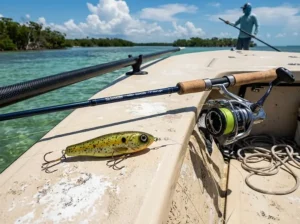
An inshore leader lives a harder life than most anglers give it credit for — dragged across shell bars, ground against pilings, and repeatedly re-tied through a full day of fishing. The small rigging details separate anglers who lose fish from those who don’t. Running a slightly longer leader than the minimum needed reduces how often nicks near the knot force a full re-tie, since you can simply slide the connection point down as damage accumulates. Checking the last six inches before every new cast, particularly after working a bait through structure, catches most abrasion damage before it costs you a fish rather than after.
Pairing leader diameter to lure action also matters more than most anglers realize: a stiffer, thicker leader can dampen the action of a light twitch bait, while a leader that’s too thin for the conditions invites break-offs on the first solid strike. This is where the earlier comparison tables earn their keep — matching the right structure-to-suppleness balance to your specific lure and fishing style prevents both lost fish and wasted presentation.
Redfish Leader Strategy: What Changes Around Structure
Redfish leader selection depends heavily on where you’re finding fish that day. A red drum tailing on a clean grass flat in six inches of water calls for a thinner, less visible leader and a gentler drag setting, since these fish are rarely fighting through structure and more often simply spooked by anything too visible. According to the National Oceanic and Atmospheric Administration, red drum are found along much of the U.S. Atlantic and Gulf coasts and commonly move between open flats and structure-heavy nearshore habitat depending on tide and season, which is exactly why a one-size-fits-all leader rarely performs consistently across a full season of redfish trips.
A bull red hooked near a dock piling or jetty rocks, by contrast, needs every bit of abrasion resistance a leader like Blue Label or Super FC Sniper can offer, since the fight will likely happen entirely within reach of structure capable of grinding through lesser material in seconds. Matching leader choice to the specific water you’re fishing that day, rather than defaulting to whatever’s already on the reel, consistently produces better hookup-to-landed ratios.
Speckled Trout Leader Considerations: Soft Mouths, Sharp Decisions
Speckled trout present a different challenge than redfish: their mouths are notoriously soft, meaning a hookset that would barely bother a redfish can tear free from a trout’s jaw. This makes leader stretch and knot smoothness more important than raw strength for this species — a properly tied, well-seated knot on a supple 20lb fluorocarbon leader outperforms a stiffer premium line if it means fewer pulled hooks during the fight. Florida’s Fish and Wildlife Conservation Commission notes that spotted seatrout regulations, including size and bag limits, vary by region and season, underlining why local knowledge matters as much as tackle choice when targeting this species consistently.
For trout specifically, many guides favor slightly lighter, more supple fluorocarbon leaders like Yo-Zuri H.D. Carbon or Berkley Vanish over stiffer options, since the added give helps cushion those violent, headshake-heavy strikes trout are known for without straightening hooks or tearing free.
Features That Actually Matter (And Those That Don’t)
Marketing copy on fluorocarbon packaging tends to lean hard into vague superlatives — “ultimate invisibility,” “maximum strength” — that don’t tell you much on their own. What actually matters is diameter-to-strength ratio, which you can usually find listed even when it’s not headline copy, and independently verified abrasion resistance, which shows up consistently in aggregated review sentiment rather than manufacturer claims alone.
What matters far less than most packaging suggests is color, at least beyond the clear-versus-tinted decision already covered above; claims about “molecular bonding technology” or similarly opaque phrases rarely translate into a measurable on-the-water difference between comparably priced competitors. Reviewers and long-term users consistently zero in on knot strength and abrasion resistance as the two traits that separate a leader they’ll rebuy from one they won’t, which lines up closely with the chemical properties of polyvinylidene fluoride, the polymer resin most fluorocarbon fishing lines are actually made from.
Long-Term Cost and Maintenance
Sticker price tells an incomplete story with leader material, since cost-per-yard and how often you need to replace damaged sections matter more over a full season. A cheaper leader that needs re-tying every other cast due to nicks can end up costing more over a month of fishing than a pricier, more abrasion-resistant option that survives longer between replacements. Anglers fishing heavy structure weekly typically save money over a season by investing in tougher mid-tier options like Blue Label or Super FC Sniper rather than repeatedly replacing cheaper leader material that frays quickly.
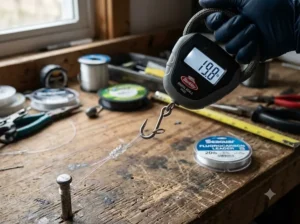
Maintenance is minimal but not nonexistent: keep spools out of direct sun and heat, inspect line regularly for UV-related brittleness if it’s been stored improperly, and replace leader material outright at the start of a new season rather than trusting line that sat unused through a hot summer in a rod locker.
Frequently Asked Questions
❓ What pound test fluorocarbon leader for redfish?
❓ Is fluorocarbon leader better than monofilament for speckled trout?
❓ How long should a 20lb fluorocarbon leader be?
❓ Does 20lb fluorocarbon leader sink?
❓ How often should I replace my saltwater fluoro leader?
Conclusion
Choosing a 20lb fluorocarbon leader isn’t really about finding the “best” one in some universal sense — it’s about matching a specific material to specific water, fish, and fishing style. Seaguar Inshore and Berkley Vanish cover budget-conscious, everyday trips without much compromise. KastKing Kovert Elite and Yo-Zuri H.D. Carbon step up performance for anglers ready to spend a bit more for tangible gains in knot strength or abrasion resistance. Seaguar Blue Label and Sunline Super FC Sniper earn their reputation the hard way, around docks and oyster bars where lesser lines fail. And Seaguar Gold Label exists for the days when a few hundredths of a millimeter genuinely decide whether a pressured redfish eats or spooks.
Whichever you choose, the fundamentals matter as much as the brand: wet your knots, check for nicks after every fish, and match leader length and stiffness to the water in front of you rather than whatever happens to already be on the spool. Do that consistently, and the leader stops being an afterthought and starts being one more edge working in your favor.
Recommended for You
- 100% Fluorocarbon Line: 7 Best Picks & Buying Mistakes (2026)
- 15lb Fluorocarbon: 7 Best Lines for Jigs & Heavy Cover (2026)
- Shock Leader Mono: 7 Best Leaders for Surf Fishing (2026)
Disclaimer: This article contains affiliate links. As an Amazon Associate, I earn from qualifying purchases. If you purchase products through these links, we may earn a small commission at no additional cost to you.
✨ Found this helpful? Share it with your friends! 💬🤗
