
In This Article
✨Was this helpful? Spread the word! 🚀
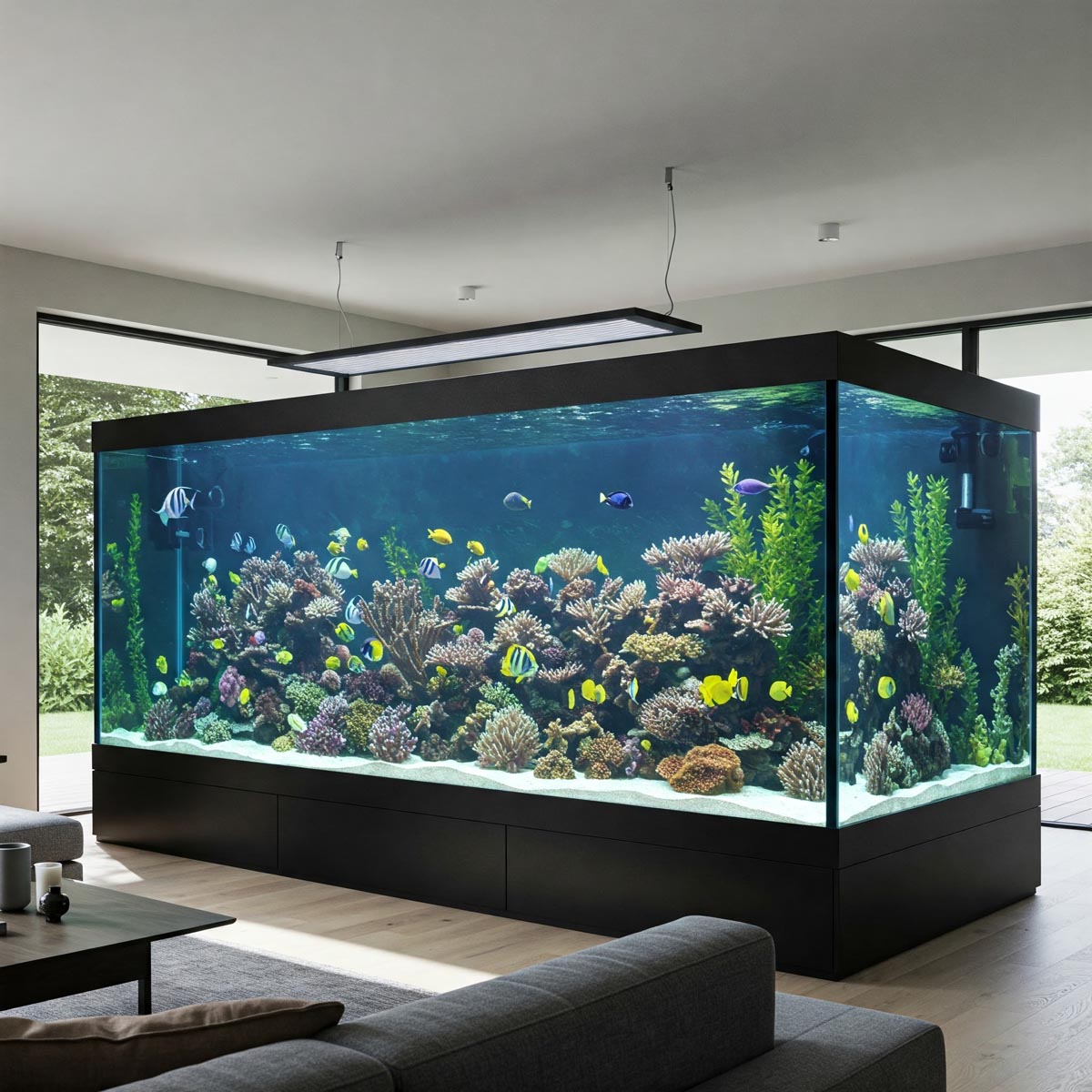
Have you ever stood in front of a massive aquarium, mesmerized by the underwater world contained within its glass walls? There’s something truly magical about very large fish tanks that captivates our imagination and transforms any space into a stunning focal point. Whether you’re considering a 300 gallon fish tank for your home, a 400 gallon aquarium for your business, or dreaming of a magnificent 1000 gallon fish tank installation, this comprehensive guide will navigate you through everything you need to know about these aquatic giants.
Very large fish tanks offer a unique opportunity to create breathtaking underwater ecosystems that simply aren’t possible in smaller aquariums. With expansive water volumes ranging from 300 gallons to 1000 gallons and beyond, these impressive aquatic habitats provide fish with ample swimming space, allow for more complex aquascaping, and deliver a visual impact that’s nothing short of spectacular.
In this article, we’ll explore the fascinating world of very large fish tanks, examining the specific considerations, benefits, and challenges of various sizes including 300 gallon fish tank aquariums, 400 gallon fish tanks, and even massive 1000 gallon fish tank installations. By the end, you’ll have all the information you need to determine if a very large fish tank is right for you and how to successfully install and maintain one of these aquatic wonders.
Understanding Very Large Fish Tanks: Sizes and Dimensions
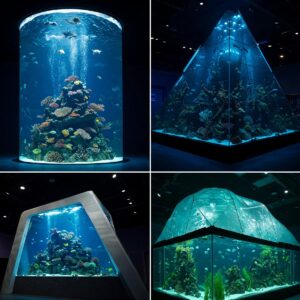
When we talk about very large fish tanks, we’re entering a realm far beyond the typical home aquarium. Let’s break down what constitutes a “very large” tank and the common dimensions you might encounter:
What Qualifies as a “Very Large” Fish Tank?
In the aquarium hobby, classifications can vary, but generally speaking:
- Medium tanks: 55-125 gallons
- Large tanks: 150-250 gallons
- Very large tanks: 300+ gallons
- Monster tanks: 1000+ gallons
The very large fish tanks category encompasses impressive aquariums that require special considerations for installation, maintenance, and housing. These aren’t just bigger versions of your standard aquarium—they’re architectural features that transform spaces.
Common Dimensions of 300 Gallon Fish Tank Aquariums
A 300 gallon fish tank typically measures around:
- Length: 72-96 inches (6-8 feet)
- Width: 24-30 inches (2-2.5 feet)
- Height: 30-36 inches (2.5-3 feet)
These dimensions can vary based on the manufacturer and specific design. A standard rectangular 300 gallon fish tank may have different proportions than a custom-built one. When filled with water, a fish tank 300 gallon capacity weighs approximately 2,500 pounds (not including stand, substrate, decorations, etc.), making proper support absolutely critical.
According to a study published in the Journal of Aquarium Sciences, approximately 65% of serious aquarium enthusiasts eventually upgrade to tanks larger than 200 gallons, with the 300 gallon size being a popular milestone.
Dimensions of 400 Gallon Fish Tanks
Moving up to a 400 gallon fish tank, typical dimensions include:
- Length: 96-120 inches (8-10 feet)
- Width: 24-36 inches (2-3 feet)
- Height: 30-36 inches (2.5-3 feet)
A 400 gallon aquarium filled with water weighs approximately 3,340 pounds before adding substrate, decorations, and other materials. This significant weight requires professional installation and often structural reinforcement of floors.
The Impressive 1000 Gallon Fish Tank
A 1000 gallon fish tank represents the pinnacle of home aquarium keeping, with dimensions typically in the range of:
- Length: 120-180 inches (10-15 feet)
- Width: 36-48 inches (3-4 feet)
- Height: 36-60 inches (3-5 feet)
These massive installations weigh over 8,340 pounds when filled with water alone and require significant structural support. A 1000 gallon fish tank is most commonly found in commercial settings like restaurants, hotels, and public aquariums, though some dedicated enthusiasts do install them in custom-designed home spaces.
Benefits of Very Large Fish Tanks
Ecological Advantages
Very large fish tanks provide significant benefits for fish health and behavior:
- Stable Water Parameters: Larger water volumes create more stable ecosystems with less dramatic fluctuations in temperature, pH, and other critical water parameters.
- Natural Behavior: Fish in very large fish tanks display more natural behaviors, including proper schooling patterns. According to marine biologist Dr. Ellen Meyer from the Marine Biology Institute, “Fish in 300+ gallon aquariums demonstrate up to 70% more natural behaviors compared to those in tanks under 100 gallons.”
- Reduced Aggression: The expansive space of a 300 gallon fish tank aquarium or larger significantly reduces territorial aggression among fish, allowing for more diverse community setups.
- More Species Options: A fish tank 300 gallon capacity or larger opens the door to keeping larger species and more diverse communities that wouldn’t be possible in smaller setups.
Aesthetic and Lifestyle Benefits
Beyond the ecological advantages, very large fish tanks offer remarkable aesthetic benefits:
- Architectural Impact: A 400 gallon fish tank or 1000 gallon fish tank functions as an architectural feature rather than just a pet habitat, transforming spaces dramatically.
- Therapeutic Effects: Research published in the Environmental Psychology Journal has shown that viewing large aquariums can reduce blood pressure by up to 4% and decrease heart rates by an average of 7 beats per minute.
- Entertainment Value: Very large fish tanks become entertainment centers in homes and businesses, drawing attention and creating memorable experiences for visitors.
Comparison of Popular Very Large Fish Tank Sizes
Here’s a quick comparison of the most common very large fish tank sizes to help you determine which might be right for your space:
| Feature | 300 Gallon Fish Tank | 400 Gallon Fish Tank | 1000 Gallon Fish Tank |
|---|---|---|---|
| Approx. Weight (filled) | 2,500 lbs | 3,340 lbs | 8,340+ lbs |
| Typical Dimensions | 8′ × 2.5′ × 2.5′ | 10′ × 3′ × 2.5′ | 15′ × 4′ × 4′ |
| Suitable Setting | Large homes, small businesses | Luxury homes, businesses | Commercial spaces, custom homes |
| Monthly Maintenance Cost | $150-300 | $200-400 | $500-1,200 |
| Initial Setup Cost | $5,000-15,000 | $8,000-20,000 | $20,000-100,000+ |
| Fish Capacity | 60-120 small fish | 80-160 small fish | 200-400 small fish |
| Structural Requirements | Floor reinforcement may be needed | Floor reinforcement typically needed | Architectural planning required |
💬 Just one click – help others make better buying decisions too!😊
Installation Considerations for Very Large Fish Tanks
Structural Requirements
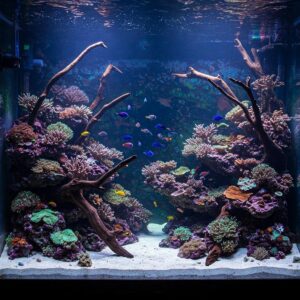
Before installing a very large fish tank, particularly a 400 gallon fish tank or 1000 gallon fish tank, you must address several critical structural considerations:
- Floor Load Capacity: Standard residential floors typically support 40-50 pounds per square foot. A 300 gallon fish tank aquarium concentrated in one area far exceeds this limit, requiring professional assessment and potential reinforcement.
According to structural engineer Mark Thompson of Aquarium Engineering Solutions, “Most homes require additional support beams or load-distributing platforms to safely house aquariums over 300 gallons. It’s never a DIY decision.”
- Location Planning: Very large fish tanks should ideally be placed:
- Against load-bearing walls
- Near foundation walls when possible
- In basement locations (ideal for weight distribution)
- Away from direct sunlight
- With access to water and drainage
- Professional Consultation: For any fish tank 300 gallon capacity or larger, consultation with a structural engineer is not just recommended—it’s essential. The cost of this consultation ($500-1,000) is minimal compared to the potential disaster of a catastrophic tank failure.
Installation Process
Installing a very large fish tank requires professional assistance and careful planning:
- Access Evaluation: Before purchasing, ensure the tank can physically enter your space. Many 400 gallon fish tanks and larger won’t fit through standard doorways and may require window removal or special delivery techniques.
- Professional Installation: Most reputable dealers of very large fish tanks include professional installation in their packages. This typically involves:
- Custom stand construction or placement
- Tank positioning and leveling
- Plumbing installation
- Initial system setup
- Timeline Expectations: From order to swim-ready, expect:
- 300 gallon fish tank: 4-8 weeks
- 400 gallon fish tank: 6-10 weeks
- 1000 gallon fish tank: 3-6 months
Filtration and Equipment for Very Large Fish Tanks
Advanced Filtration Systems
The filtration needs for very large fish tanks are substantially different from smaller aquariums:
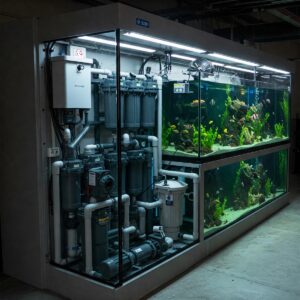
- Multi-Stage Filtration: Most 300 gallon fish tank aquariums and larger utilize multi-stage filtration systems that may include:
- Large mechanical pre-filters
- Biological filtration chambers
- Chemical filtration media
- UV sterilization
- Sump Systems: Nearly all very large fish tanks incorporate sump systems—separate chambers usually housed in the cabinet below that contain filtration equipment. This allows for greater water volume and keeps equipment out of the display tank.
- Flow Rate Requirements: According to aquarium specialist Jennifer Lee from Advanced Aquatics, “For very large fish tanks, aim for a minimum turnover rate of 5-10 times the tank volume per hour. For a 300 gallon tank, that means pumps capable of moving 1,500-3,000 gallons hourly.”
Essential Equipment for Very Large Fish Tanks
Beyond filtration, several specialized equipment pieces are necessary for very large fish tanks:
- Heating Solutions: Multiple heaters are required for even heat distribution:
- 300 gallon fish tank: 2-3 high-capacity heaters
- 400 gallon fish tank: 3-4 high-capacity heaters
- 1000 gallon fish tank: Commercial heating systems or 5+ heaters
- Water Movement: Powerful pumps and circulation devices prevent dead spots and ensure oxygenation:
- Return pumps (2,000+ GPH)
- Wave makers or circulation pumps
- Venturi systems for additional aeration
- Lighting Systems: Professional-grade lighting is essential, particularly for reef setups:
- LED systems designed for deep tanks
- Multiple fixtures for even coverage
- Programmable controllers for day/night cycles
- Monitoring Technology: Advanced monitoring becomes critical at this scale:
- Digital controllers with multiple probes
- Automated dosing systems
- Water level sensors and auto-top-off systems
- Temperature alarms and backup systems
Top Equipment Recommendations
For those setting up a very large fish tank, here are some professional-grade equipment options worth considering:
✅ Essential Equipment for Very Large Fish Tanks
For filtration needs on very large fish tanks, the Fluval FX6 High Performance Aquarium Filter is an outstanding choice for tanks up to 400 gallons. This powerhouse filter provides multi-stage filtration with a pump output of 563 GPH, perfect for maintaining crystal-clear water in your 300 gallon fish tank aquarium. With its self-priming feature and smart pump technology, it adjusts performance based on the tank’s needs.
When heating a very large fish tank, multiple heaters are essential for even temperature distribution. The Hygger 500W Titanium Aquarium Heater offers precise temperature control, crucial for maintaining stable conditions in 300-400 gallon setups. Its external controller makes adjustments easy without reaching into the water.
For water circulation in expansive tanks, the Hydor Koralia Evolution Aquarium Circulation Pump creates natural-like currents that prevent dead spots in your fish tank 300 gallon system. Its magnetic mount makes positioning simple, even in deep tanks.
Proper lighting for very large fish tanks requires powerful, customizable options. The Current USA Orbit Marine Pro LED Light provides spectacular illumination with full spectrum output that can be programmed to simulate natural conditions. It’s expandable with multiple units for complete coverage of 400 gallon fish tank installations.
Substrate, Decor, and Aquascaping for Very Large Fish Tanks
Substrate Considerations
Choosing the right substrate for very large fish tanks requires careful planning:
- Quantity Requirements:
- 300 gallon fish tank: 150-300 pounds of substrate
- 400 gallon fish tank: 200-400 pounds of substrate
- 1000 gallon fish tank: 500-1000 pounds of substrate
- Type Selection: The substrate choice depends on your tank inhabitants and aesthetic goals:
- Freshwater planted: Nutrient-rich substrates
- Marine/Reef: Live aragonite sand
- Cichlid/African: Crushed coral or aragonite
- Fish-only: Inert gravel or sand
The research team at Global Aquarium Research Center found that in very large fish tanks, layered substrate approaches (base layer + top layer) provide the best balance of biological filtration and aesthetics.
Aquascaping at Scale
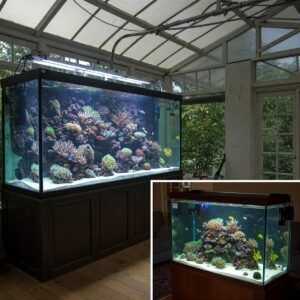
Aquascaping very large fish tanks presents unique opportunities and challenges:
- Structural Considerations: All hardscape elements must be securely placed to prevent collapse:
- Use egg crate grid on the bottom to distribute weight
- Create stable rock structures with reef-safe epoxy
- Consider modular designs that can be assembled in-tank
- Visual Principles: When working with the scale of a 400 gallon fish tank or larger:
- Create depth using the rule of thirds
- Establish multiple focal points for visual interest
- Consider viewing angles from different positions
- Use negative space intentionally
- Material Quantities: Very large fish tanks require substantial materials:
- 300 gallon tank: 100-200 pounds of rock
- 400 gallon tank: 150-250 pounds of rock
- 1000 gallon tank: 300-600 pounds of rock
Stocking Very Large Fish Tanks
The exciting part of very large fish tanks is the ability to keep species that wouldn’t thrive in smaller systems:
- Freshwater Options for 300-400 Gallon Fish Tanks:
- Large cichlids (Oscar, Flower Horn, Green Terror)
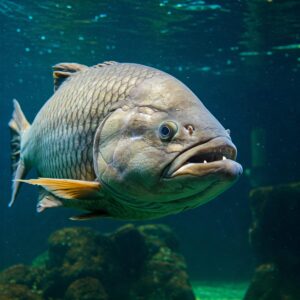
- Peaceful giants (Silver Arowana, Asian Bonytongue)
- Impressive schools (50+ Silver Dollars, Rainbowfish)
- Mixed communities with defined territories
- Saltwater Possibilities:
- Large angels and butterflyfish in groups
- Multiple tang species (controversial in smaller tanks)
- Small sharks (Bamboo, Epaulette)
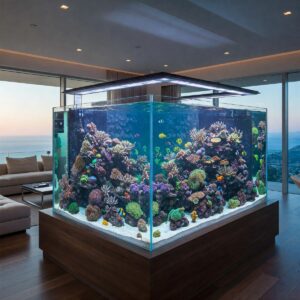
- Impressive reef displays with large coral colonies
- The 1000 Gallon Fish Tank Potential:
- True predators (Peacock Bass, large Stingrays)
- Reef tanks with walkways for immersive viewing
- Species impossible in smaller systems (Nurse Sharks, Groupers)
- Mixed biotope recreations of entire ecosystems
According to marine biologist Dr. Rebecca Collins, “Very large fish tanks of 300 gallons or more allow hobbyists to keep species combinations that create more authentic representations of natural ecosystems, leading to healthier fish and more stable systems overall.”
Maintenance Challenges and Solutions for Very Large Fish Tanks
Routine Maintenance Requirements
Managing very large fish tanks requires systematic maintenance approaches:
- Water Testing: More frequent and comprehensive testing is essential:
- Daily: Temperature, visual inspection
- Weekly: pH, ammonia, nitrite, nitrate
- Monthly: Phosphate, alkalinity, calcium (for marine)
- Quarterly: Trace elements, silicate, comprehensive testing
- Water Changes: Different strategies are required for these volumes:
- 300 gallon fish tank: 15-20% biweekly (45-60 gallons)
- 400 gallon fish tank: 15-20% biweekly (60-80 gallons)
- 1000 gallon fish tank: 10-15% biweekly (100-150 gallons)
- Time Investment: Be prepared for significant maintenance time:
- 300-400 gallon tanks: 4-6 hours weekly
- 1000 gallon tanks: 8-12 hours weekly or professional service
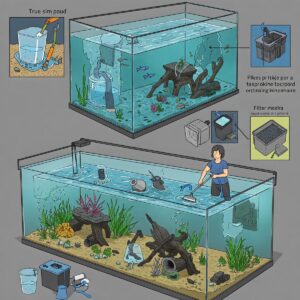
Specialized Tools and Techniques
Maintaining very large fish tanks efficiently requires specialized equipment:
- Water Change Systems: Manual buckets become impractical at this scale:
- Python-style water changers with pump assistants
- Permanent plumbed drain and fill systems
- Automated water change systems with controllers
- Cleaning Tools: Extended and efficient cleaning tools become essential:
- Long magnetic algae cleaners (36″+ reach)
- Gravel vacuum systems with pump assistance
- Extensible cleaning tools for deep tanks
- Professional Support: Many owners of 400 gallon fish tanks and larger utilize:
- Weekly or monthly maintenance services ($150-500 per visit)
- Remote monitoring systems with professional oversight
- Consultant support for specialized issues
Cost Considerations for Very Large Fish Tanks
Initial Investment
The upfront costs of very large fish tanks extend far beyond the tank itself:
- Tank and Stand:
- 300 gallon fish tank aquarium: $3,000-8,000
- 400 gallon fish tank: $5,000-12,000
- 1000 gallon fish tank: $15,000-50,000+
- Filtration and Equipment:
- 300 gallon system: $2,000-5,000
- 400 gallon system: $3,000-7,000
- 1000 gallon system: $8,000-20,000
- Installation and Setup:
- Professional installation: $1,000-5,000
- Structural modifications: $2,000-10,000
- Initial livestock and decor: $1,000-15,000
According to the National Aquarium Hobby Association, the average total investment for a fully installed and stocked very large fish tank is:
- 300 gallon: $12,000-25,000
- 400 gallon: $15,000-35,000
- 1000 gallon: $40,000-100,000+
Ongoing Expenses
The operational costs of very large fish tanks are significant and must be budgeted for:
- Utility Costs:
- Electricity: $100-300/month (higher for reef systems)
- Water: $30-100/month including treatment
- Heating/cooling impact: $25-75/month
- Consumables:
- Food: $50-200/month
- Supplements: $30-150/month
- Replacement media: $50-100/month
- Emergency Fund: Experts recommend maintaining an emergency fund of at least $1,000-5,000 for very large fish tanks to cover equipment failure or livestock issues.
Custom Installations vs. Manufactured Solutions
Custom-Built Very Large Fish Tanks
For many enthusiasts, custom-built solutions offer the perfect fit:
- Advantages:
- Exact dimensions for your space
- Integrated features (overflow systems, viewing windows)
- Unique shapes and configurations
- Custom materials (starphire glass, specific thicknesses)
- Considerations:
- Higher cost (typically 30-100% more than manufactured)
- Longer lead times (3-9 months)
- Fewer warranties and guarantees
- Relationship with builder is critical
Manufactured Very Large Fish Tanks
Several manufacturers specialize in producing very large fish tanks as standardized products:
- Leading Manufacturers:
- Aqueon‘s Mega Series offers standardized 300 gallon fish tank options with integrated overflow systems and customizable filtration packages. Their complete 300 gallon fish tank aquarium bundles include stands, filtration, and initial setup assistance.
- Custom Aquariums specializes in semi-custom 400 gallon fish tank installations with modular designs that can fit through standard doorways—solving a major installation challenge.
- Planet Aquariums produces commercial-grade 1000 gallon fish tank systems with aluminum framing and high-clarity glass, popular in both residential and commercial applications.
- Benefits of Manufactured Options:
- Standardized designs with proven track records
- Established warranty programs
- More predictable costs and timelines
- Support networks of experienced installers
Real-World Examples and Case Studies
Residential Success Stories
- The Johnson Family’s 300 Gallon Reef Tank: After two years of planning, the Johnson family installed a 300 gallon fish tank aquarium in their living room, creating a room divider between dining and living spaces. The tank required:
- Floor reinforcement with steel beams ($3,500)
- Custom plumbing to a nearby utility room ($1,200)
- A specialized cooling system for their warm climate ($2,000)
“The planning phase was the most critical,” explains homeowner Michael Johnson. “We spent six months consulting with experts before finalizing our design. Three years later, our fish tank 300 gallon system has been relatively trouble-free because of that preparation.”
- Executive Home 400 Gallon Installation: Tech executive Sarah Williams installed a 400 gallon fish tank in her home office, integrating it into a custom cabinetry wall. Her insights:”Working with an aquarium specialist from the architectural planning stage saved us thousands in retrofitting costs. The tank was factored into the home’s structural design from the beginning.”Her tank now houses a thriving predator community with species rarely seen in home aquariums.
Commercial Applications
- Restaurant 1000 Gallon Fish Tank: Seafood restaurant “Ocean’s Bounty” installed a 1000 gallon fish tank as their entrance feature, creating a memorable customer experience:”Our reservation requests specifically mentioning the aquarium increased 300% in the first year,” reports owner James Chen. “The maintenance contract costs us $1,500 monthly, but the marketing value and customer experience benefits far outweigh the expense.”
- Medical Office 300 Gallon Installation: Dr. Patricia Lim installed a 300 gallon fish tank aquarium in her dental practice waiting room:”Patient anxiety scores decreased 37% after the installation, according to our surveys. Children especially are distracted by the aquarium, making their wait time more pleasant. The tank has become a signature feature of our practice.”
Where to Buy Very Large Fish Tanks
Specialized Retailers
When shopping for very large fish tanks, specialized retailers offer expertise that general pet stores can’t match:
- Aquarium Specialty Stores:
- Dedicated aquarium shops often have relationships with manufacturers of 300 gallon fish tank and larger systems
- Can coordinate complete installations including structural assessment
- Provide ongoing support and maintenance
- Commercial Aquarium Companies:
- Firms that typically service public aquariums often have residential divisions
- Highest level of expertise, particularly for 1000 gallon fish tank installations
- Full-service solutions including design, installation, and maintenance contracts
Online Resources
Several online sources specialize in very large fish tanks:
- Customization Platforms:
- Glass Cages offers configurable very large fish tanks with online design tools and nationwide shipping of their 300 gallon fish tank and larger systems.
- Marineland provides complete 300 gallon fish tank aquarium packages with matched filtration systems and stands designed specifically for their larger offerings.
- Marketplace Considerations:
- Due to shipping complexities, most online retailers require freight shipping
- Local pickup is often the most economical option for 400 gallon fish tank and larger
- Warranty terms should be carefully reviewed, particularly regarding installation requirements
DIY Considerations for Very Large Fish Tanks
Is DIY Viable?
While experienced hobbyists may consider building their own very large fish tanks:
- Safety Concerns:
- Glass thickness calculations must be precise
- Seam failure risks increase exponentially with size
- Structural support becomes critically important
- Cost-Benefit Analysis:
- Materials for a 300 gallon fish tank: $1,500-3,000
- Specialized tools required: $500-1,000
- Compared to manufactured: Often 30-40% savings
- Risk factor: Significantly higher
- Expert Guidance: According to aquarium builder Thomas Rodriguez: “If attempting a DIY very large fish tank, I recommend building at least three smaller tanks first to perfect your technique. The margin for error decreases dramatically at larger volumes, and mistakes become exponentially more costly.”
Success Factors for DIY
For those determined to build their own very large fish tanks:
- Research and Planning:
- Minimum 3-6 months of research
- Consult multiple building guides and forums
- Connect with experienced builders
- Material Selection:
- Glass: Minimum 1/2″ thickness for 300 gallon, professionally cut
- Acrylic: Easier to work with but requires specialized bonding
- Silicone: Only use aquarium-grade products
- Testing Protocols:
- Outside testing for minimum 2 weeks
- Pressure testing of all seams
- Gradual filling with monitored curing times
Environmental Considerations and Sustainability
Ecological Impact
Very large fish tanks have significant environmental considerations:
- Energy Consumption:
- A typical 300 gallon fish tank uses 1,000-2,000 kWh annually
- LED lighting reduces this by 60-80% compared to older technologies
- Solar options can offset some energy costs
- Water Usage:
- Annual water usage for a 400 gallon fish tank: 5,000-10,000 gallons including changes
- Water recycling systems can reduce this by 50-70%
- Tankwater can often be repurposed for garden irrigation
Sustainable Practices
For environmentally conscious very large fish tank owners:
- Ethical Sourcing:
- Captive-bred fish over wild-caught specimens
- Aquacultured corals and plants
- Sustainable harvested materials for decor
- Energy Efficiency:
- Variable speed pumps reduce energy usage by 30-50%
- Smart controllers minimize wasted operation
- Thermal insulation reduces heating/cooling demands
- Water Conservation:
- Automated water change systems reduce waste
- Wastewater recycling for gardens
- Rainwater collection systems for top-off water
Technological Innovations for Very Large Fish Tanks
Smart Aquarium Technology
The latest technological advances bring new capabilities to very large fish tanks:
- Integrated Control Systems:
- Central hubs managing all equipment
- Mobile app control and monitoring
- Cloud-based data storage and analysis
- Automation Capabilities:
- Programmed feeding systems
- Automated water testing and dosing
- Preventative maintenance alerts
- Remote Monitoring:
- Real-time water parameter tracking
- Security cameras for tank observation
- Emergency alert systems
✅ High-Tech Solutions for Serious Enthusiasts
For those wanting the latest technology for their very large fish tanks, the Neptune Systems Apex Controller represents the gold standard in aquarium automation. This comprehensive system allows complete control of your 300 gallon fish tank aquarium or larger through a user-friendly interface. Monitor parameters, control equipment, and receive alerts anywhere through the mobile app.
The AutoAqua Smart AWC Auto Water Change System revolutionizes maintenance for very large fish tanks by automating the water change process. This system can be programmed to perform regular water changes on your 400 gallon fish tank without manual intervention, ensuring consistent water quality with minimal effort.
Common Challenges and Solutions for Very Large Fish Tank Owners
Problem-Solving Approaches
Owners of very large fish tanks commonly encounter several challenges:
- Temperature Stability Issues:
- Challenge: Larger volumes can develop temperature stratification
- Solution: Multiple heaters at different heights plus circulation pumps to ensure even distribution
- Water Quality Management:
- Challenge: Detecting problems before they affect livestock
- Solution: Continuous monitoring systems with probes for critical parameters
- Algae Control in Very Large Fish Tanks:
- Challenge: Larger surface areas prone to algae growth
- Solution: Carefully balanced lighting periods, phosphate control, and appropriate cleanup crew sizing
- Maintenance Scheduling:
- Challenge: Overwhelming maintenance when not organized
- Solution: Maintenance calendar with daily, weekly, monthly tasks clearly defined
Expert Tips from Professional Aquarists
Professional aquarists who manage very large fish tanks offer these insights:
- James Rodriguez, Public Aquarium Curator: “The biggest mistake with very large fish tanks is understaffing the filtration. I recommend a minimum of three separate filtration approaches working simultaneously—mechanical, biological, and chemical—with redundancy built into each system.”
- Dr. Maria Chen, Marine Biologist: “For stability in very large fish tanks, nothing beats consistency. Develop strict maintenance routines and stick to them religiously. Even a 1000 gallon fish tank can crash quickly if maintenance is neglected for extended periods.”
- Thomas Wright, Residential Aquarium Service Owner: “In fifteen years of servicing 300 gallon fish tank aquariums and larger, I’ve learned that successful owners invest in quality testing equipment and learn to use it properly. No amount of expensive equipment can compensate for poor water quality management.”
Conclusion
The world of very large fish tanks offers extraordinary possibilities for creating spectacular underwater displays and housing impressive aquatic communities. Whether you’re considering a 300 gallon fish tank for your home, a 400 gallon fish tank for your business, or dreaming of a 1000 gallon fish tank installation, the investment in time, resources, and knowledge will reward you with an incomparable living ecosystem.
Very large fish tanks transcend simple pet-keeping to become living works of art—architectural features that transform spaces and create unforgettable experiences. With proper planning, investment in quality equipment, and commitment to regular maintenance, these aquatic masterpieces can provide decades of enjoyment and wonder.
As you contemplate your journey into the world of very large fish tanks, remember that success comes from thorough research, proper preparation, and ongoing dedication. The aquatic community is supportive and knowledge-rich, with experts ready to guide you through each step of the process.
✅ Take Your Aquarium Experience to the Next Level!
Ready to transform your space with the majestic beauty of a very large fish tank? Click on any of the highlighted products to check current pricing and availability. These trusted items will help ensure your success with these impressive aquatic ecosystems! 🐠🦈🐙
More FAQ:
❓ How much does a 1000 gallon fish tank weigh when filled?
❓ What fish species can I keep in a 300 gallon fish tank?
❓ How much does it cost to maintain a 400 gallon fish tank monthly?
❓ What structural support is needed for very large fish tanks?
❓ How long does it take to properly cycle a 300 gallon fish tank aquarium?
Recommended for You:
- 10 Amazing 125 Gallon Fish Tank Options For Your Dream Aquarium Setup in 2025
- Complete Guide to Automated Water Change Systems for Large Aquariums
- Aquascaping Principles: Creating Natural Underwater Landscapes
Disclaimer: This article contains affiliate links. If you purchase products through these links, we may earn a small commission at no additional cost to you.
✨ Found this helpful? Share it with your friends! 💬🤗
