
In This Article
Nobody ever posted a photo of the boots that saved them from a swim. They post the fish. But every angler who has felt a rounded river cobble roll underfoot knows the truth: wading boots for fly fishing are the quiet foundation under everything else you do. A $900 rod is useless when you’re sitting waist-deep in 48-degree water, wondering how you got there.
Here’s the good news for 2026. The category has matured. Sticky rubber has largely caught up with felt, and interchangeable systems let you adapt to a new river in under a minute. Premium leather boots can be rebuilt instead of replaced.
This guide cuts through the marketing. I’ve compared seven real boots across budget, mid-range and premium tiers, and I explain what each spec means once you’re standing in current. We’ll cover stocking foot wading boots, wading boot soles, and river bottom traction in depth, along with the rules around felt that can wreck a trip if you ignore them.
One note on method: everything below comes from published specs, retailer listings, and independent reviews, summarized as aggregated sentiment. I haven’t worn these boots, so I won’t pretend otherwise. Prices are ranges, not quotes, so check current pricing before you buy.
Wading Boots for Fly Fishing at a Glance: Quick Comparison
Skim this first. Details follow.
| Boot | Sole System | Closure | Price Range | Best For |
|---|---|---|---|---|
| Simms Flyweight Access | Vibram Idrogrip Flex rubber | Laces | $250-$300 | Long hikes to remote water |
| Korkers Darkhorse | OmniTrax swappable soles | BOA dial | $200-$250 | Travel and mixed rivers |
| Patagonia x Danner Foot Tractor | Sticky rubber, aluminum bars, or felt | Laces | $450-$550 | Longevity and rough wading |
| Orvis Pro | Michelin Outdoor Extreme rubber | Laces or BOA | $230-$330 | All-round daily use |
| Redington Prowler-Pro | Sticky rubber (felt also offered) | Laces | $180-$200 | Value-minded anglers |
| Simms Freestone | Rubber | Laces | Mid-range (verify current price) | Wider feet, steady budget |
| Hodgman H3 | Felt, stud-ready | Laces | Under $100 | Tight budgets, felt-legal waters |
Notice the pattern: the more you pay, the more you’re buying durability, repairability and lighter weight, not magic grip. The Patagonia x Danner Foot Tractor costs roughly double the Redington Prowler-Pro, but it’s the only boot here built to be resoled. Meanwhile the Hodgman H3 looks irresistible on price, and that’s where regulations should make you pause.
💬 Just one click — help others make better buying decisions too!😊
What Are Wading Boots for Fly Fishing?
Wading boots for fly fishing are rugged, water-draining boots worn over the neoprene feet of stockingfoot waders (or on their own for wet wading). They add ankle support, protective toe and heel structure, and traction engineered for slick river rocks. Unlike hiking boots, they drain fast and dry quickly. Unlike sneakers, they hold your ankle when a cobble rolls.
The pairing matters because stocking foot wading boots and stockingfoot waders work as a system. As Frogg Toggs’ bootfoot versus stockingfoot guide explains, stockingfoot waders end in neoprene booties and are designed to be paired with separate wading boots. Many anglers keep more than one pair of boots for changing water and terrain.
In plain terms: your waders keep you dry, and your boots keep you upright. Only one of those two jobs gets noticed when it fails.
Top 7 Wading Boots for Fly Fishing: Expert Analysis
1. Simms Flyweight Access — lightweight Vibram grip for long hikes
The Simms Flyweight Access targets the angler who walks far before wading. Its near-seamless build uses welded overlays instead of lots of stitching, which means fewer places for a boot to fail.
The headline spec is the Vibram Idrogrip Flex sole. In practice, that rubber is designed to bite on wet rock while staying flexible on the trail. Independent reviewer coverage in Hatch Magazine’s review of the Flyweight Access judged the traction noticeably better than other rubber-soled boots the reviewer had worn, and the model won Best-of-Show wading boot at the 2022 International Fly Tackle Dealer show.
Based on the spec comparison, this is a boot for people who cover miles, not for someone who wants a stiff, brace-like platform. The trade-off is ankle support, which is lighter than a full boot like the Simms G3 Guide.
Retailer review summaries show a split: most buyers praise the light, comfortable feel and wet grip, though some report slipperiness on certain rocks and wear complaints. That pattern is typical of lightweight boots, where weight savings come from thinner materials.
Pros:
- ✅ Vibram rubber grips wet rock convincingly
- ✅ Light enough for all-day hiking
- ✅ Welded construction reduces seam failures
Cons:
- ❌ Less ankle support than heavier boots
- ❌ Some reviewers report durability questions
Expect a price in the $250-$300 range at the time of research. Value verdict: strong for hike-in anglers, harder to justify for roadside fishing.
2. Korkers Darkhorse — swap soles in seconds
The Korkers Darkhorse exists because rivers aren’t uniform. Its OmniTrax system lets you pop off one sole and click on another, so a single boot handles slimy cobble in the morning and ice-glazed rocks in January.
The BOA dial replaces laces, which matters more than it sounds. A dial lets you dial in tension with cold, numb fingers and eliminates snapped laces. The boot also drains internally, so it sheds water after a crossing instead of sloshing.
Sole packages vary: some pair felt with Kling-On rubber, others pair Kling-On with a studded Kling-On sole. If you travel between states with different rules, the interchangeable layout is the most flexible answer to felt restrictions. Check which sole package you’re buying.
Reviewer sentiment is generally positive on comfort, the BOA closure and versatility. One early review noted some sole wear after about 30 days of use, which is a reminder that swappable soles are consumables. Budget a spare set.
Pros:
- ✅ Interchangeable soles adapt to any river
- ✅ BOA dial tightens fast and evenly
- ✅ Internal drainage dries the boot quicker
Cons:
- ❌ Replacement soles add ongoing cost
- ❌ Sole-swap system adds some bulk
Expect roughly $200-$250. Value verdict: the best “one boot, many rivers” option here.
3. Patagonia x Danner Foot Tractor — the repairable heirloom
The Patagonia x Danner Foot Tractor borrows from hiking boot design: full-grain leather, heavy nylon, and a real welted build. It’s available with sticky rubber, aluminum bars or felt soles.
What that means in practice: the leather upper resists abrasion from boulder fields, and Danner’s recrafting service lets you extend the boot’s life instead of throwing it out. The aluminum-bar version screws into sleeves in the sole, and the bars are replaceable. One angler review argued the bar version gripped better than both standard rubber and felt.
Patagonia itself notes the boots won’t grip sheet ice or untextured slate and shale. That honesty is useful: no sole beats physics.
Reviewers consistently describe it as extremely durable and comfortable, with true-to-size fit. The main complaint is price, since it’s the most expensive boot in the roundup.
Pros:
- ✅ Rebuildable leather construction lasts years
- ✅ Replaceable aluminum bars on bar version
- ✅ Excellent ankle support and protection
Cons:
- ❌ Highest price in this guide
- ❌ Heavier than synthetic competitors
Expect $450-$550 for new pairs. Value verdict: pays off if you wade 100+ days a year, because cost per day drops fast when a boot can be recrafted.
4. Orvis Pro — the seamless all-rounder
The Orvis Pro uses a PU-casting process that cuts down on stitched seams, the spot where most wading boots eventually fail. It also carries a Michelin Outdoor Extreme outsole, which Orvis claims offers 25% better abrasion resistance and 43% better wet traction than traditional wading boots. Treat those as manufacturer claims, but the reviewer feedback points the same direction.
On paper, weight lands around 50 ounces per pair, so it’s light but not featherweight. Field & Stream named it the best wading boot in its 2026 guide, and Hatch Magazine’s reviewer called ankle support excellent.
Common review themes: strong traction and comfort, with a few gripes. Some reviewers want studs for fast water, and one wished for BOA closure. The BOA version now exists, priced higher.
Pros:
- ✅ Seamless build resists blowouts
- ✅ Michelin sole grips well on wet rock
- ✅ Supportive without feeling clunky
Cons:
- ❌ Laces on standard version can snap
- ❌ Studs recommended for fast, slick water
Expect roughly $230-$330 depending on closure. Value verdict: the safest recommendation if you only want to buy once and stop thinking about it.
5. Redington Prowler-Pro — value with pedigree
The Redington Prowler-Pro is the company’s premier boot, updated to be stronger, lighter and less absorbent than the original Redington Prowler. It uses a wide sole for stability, a shock-absorbing EVA midsole and a neoprene-padded liner for ankle comfort.
A wide platform helps when you’re balancing on a sloped, mossy rock. It also helps on sandy banks. The corrosion-resistant locking lace hook keeps tension where you set it.
Reviewers of the original Redington Prowler noted solid fit and workhorse durability, with slow drying due to padding. The Pro revision claims reduced water absorption, which should help, though I’d confirm through current owner reports.
Pros:
- ✅ Wide sole adds real stability
- ✅ Stud-compatible sticky rubber sole
- ✅ Padded liner supports the ankle
Cons:
- ❌ Padding can slow drying
- ❌ Not the lightest option
Expect around $180-$200, with periodic discounts. Value verdict: arguably the best price-to-performance pick for anglers who want serious wading boots for fly fishing without premium pricing.

6. Simms Freestone — the practical middle
The Simms Freestone is the boot reviewers keep calling best value. Flylords’ 2026 roundup ranks it there, and one comparison guide calls it a top pick for wide feet and rubber soles. It uses a right-angle footbed design intended to improve fit and comfort.
If you’ve ever suffered through a narrow boot, wide-foot fit isn’t a minor feature. Pinching causes hot spots and numbness, which you notice after four hours in cold water.
Reviewers describe it as a boot that lasts season after season, though it’s heavier than the Flyweight line. Pricing sits in the mid-range; I couldn’t verify a current figure, so check before buying.
Pros:
- ✅ Roomy fit suits wider feet
- ✅ Durable rubber-soled workhorse
- ✅ Backed by a trusted brand
Cons:
- ❌ Heavier than newer lightweight boots
- ❌ Basic feature set versus premium models
Value verdict: the steady choice for anyone who wants Simms quality without the flagship bill.
7. Hodgman H3 — the budget gamble
The Hodgman H3 is the cheapest boot here, usually under $100 and often much less on sale. It uses a felt sole that accepts studs and a padded collar and tongue for comfort.
Felt grips slimy rock well, which is why the Hodgman H3 has a reputation for decent traction. But felt is also the exact material several jurisdictions have banned. Before you buy, check where you plan to fish.
Reviewers describe the material as thin, the sole as more flexible than they’d like, and the fit as true after sizing up one size for neoprene stockingfoot booties. Retailer listings show high ratings from small review pools (a few dozen at most), so treat the scores as friendly rather than definitive.
Pros:
- ✅ Very affordable entry price
- ✅ Felt grips slimy rock well
- ✅ Accepts studs for extra bite
Cons:
- ❌ Felt is banned in several places
- ❌ Thin materials hint at shorter lifespan
Value verdict: fine for casual use in felt-legal waters. If you travel, spend more.
How to Choose Wading Boots for Fly Fishing
- Start with the sole rules where you fish. Felt, rubber and aluminum aren’t interchangeable if regulations apply. Check local rules first.
- Size for your wader booties. Reviewers consistently suggest sizing up so there’s room for neoprene stockings and thick socks. Patagonia advises sizing down only with thin booties or wet wading.
- Match weight to walking distance. Long approach hikes favor light boots like the Simms Flyweight Access. Short walks justify heavier, more supportive boots.
- Pick a closure you’ll trust cold. BOA dials are fast and fumble-proof. Laces are repairable and cheaper.
- Prioritize ankle support on rough rivers. Boulder-strewn water punishes soft boots.
- Consider repairability. A rebuildable boot like the Patagonia x Danner Foot Tractor changes the long-term math.
- Budget for studs or spare soles. Traction is rarely complete out of the box.
Wading Boot Soles: Felt, Rubber, Studs and Aluminum Explained
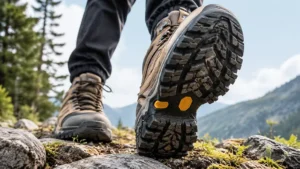
Wading boot soles are the whole story, so let’s compare them honestly.
| Sole Type | Grip on Slimy Rock | Trail Performance | Regulation Risk | Typical Boot |
|---|---|---|---|---|
| Felt | Excellent | Fair | High | Hodgman H3, Korkers Darkhorse (option) |
| Sticky rubber | Good to very good | Excellent | Low | Orvis Pro, Simms Freestone |
| Studded rubber | Very good | Good | Low | Redington Prowler-Pro |
| Aluminum bars | Excellent | Fair | Low | Patagonia x Danner Foot Tractor |
Felt’s advantage is real but narrowing. Modern sticky rubber like Vibram Idrogrip or Michelin compounds has closed most of the gap, and aluminum bars may beat felt outright on algae-coated stone. The trade-off: studs and bars are noisy and can scratch boat floors.
The deciding factor is often legal, not technical. The Alaska Department of Fish and Game, in its FAQ on felt-soled footwear, notes that its regulation prohibits footwear with felt or fibrous material on the soles, and that boots can be re-soled with non-felt alternatives. If you fish across state lines, rubber or swappable wading boot soles keep you compliant everywhere.
River Bottom Traction: What Actually Grips (And What Doesn’t)
River bottom traction depends on matching the sole to the surface, not on buying the “stickiest” rubber. Algae-slicked cobble, smooth bedrock, gravel, mud and ice each behave differently.
- Slimy, rounded cobble: felt or aluminum bars, with studded rubber a close third.
- Gravel and sand: nearly anything works. Wide soles help.
- Bedrock and ledges: sticky rubber performs well, and studs can skate on smooth stone.
- Ice and snow: studs or bars, but Patagonia’s own guidance admits sheet ice and untextured slate defeat even its bars.
The practical takeaway is that studs are a tool, not an upgrade. A reviewer of the Redington Prowler specifically suggested adding studs on fast, dangerous rivers, but other situations don’t need them.
Pair good river bottom traction with a wading staff. Boots grip; staffs give you a third point of contact, and that matters more than a fifty-dollar sole upgrade.
Stocking Foot Wading Boots vs Bootfoot Waders
Most serious anglers choose stocking foot wading boots because the separate boot delivers support a bootfoot design can’t match. But bootfoot has real strengths.
| Feature | Stockingfoot + Wading Boots | Bootfoot Waders |
|---|---|---|
| Ankle support | Excellent | Limited |
| Walking comfort | Better | Clunkier |
| Warmth | Depends on socks | Often warmer |
| Sand/gravel entry | Possible | Minimal |
| Total cost | Higher (two purchases) | Often lower |
| Best for | Hiking, rocky rivers | Cold weather, sandy shores |
Field & Stream’s waders guide points out that boots feel like hiking boots and make long treks safer on stony riverbeds. On the other hand, a surf-fishing guide notes bootfoot waders excel at keeping sand out and offer ankle support no better than deck boots.
So: stocking foot wading boots win for rivers. Bootfoot wins for cold, easy water and lazy exits. For true river wading footwear on uneven stone, separate boots are the standard choice for a reason.
River Wading Footwear Beyond Boots: When Wet-Wading Shoes Win
Full boots aren’t the only river wading footwear. In warm water, lighter wet-wading shoes drain faster and weigh far less. The Orvis Pro line includes an Approach wet-wading shoe with a Michelin outsole that reviewers praise as an amphibious do-it-all. Several reviews describe it as durable and comfortable for wading and hiking.
The cutoff is simple. If you wear neoprene stockingfoot waders in cold water, you want a full boot with ankle structure. If you wet-wade in summer, a low, light shoe like that is often the better choice. Many anglers own both.
Building a Fly Fishing Setup Around Your Boots
A good fly fishing setup starts at the feet and works up. Your boots determine your sock choice, your wader sizing and even how aggressively you can wade.
Think of your fly fishing setup as a chain: socks, stockingfoot booties, boots, gravel guards, wading belt and staff. A weak link anywhere defeats the rest. If boots are too tight over thick socks, your toes go numb. If gravel guards leak, debris grinds inside the boot.
A balanced fly fishing setup for cold-water rivers might pair Orvis Pro boots with mid-weight wool socks and a collapsible staff. For travel, a Korkers Darkhorse with spare soles covers most scenarios. For hike-in streams, a Simms Flyweight Access and lightweight waders keep the pack weight down.
Don’t forget drying. Dry boots between trips so neoprene booties and padding don’t stay damp.
Long-Term Cost & Maintenance: What Boots Really Cost Per Day
Price tags mislead. What matters is cost per day on the water.
| Tier | Boots | Price Range | Likely Trade-Off |
|---|---|---|---|
| Budget | Hodgman H3 | Under $100 | Shorter life, felt limits |
| Value | Redington Prowler-Pro, Simms Freestone | $150-$200 | Heavier, simpler |
| Premium | Orvis Pro, Korkers Darkhorse, Simms Flyweight Access | $200-$330 | Lighter, more refined |
| Heirloom | Patagonia x Danner Foot Tractor | $450-$550 | High upfront, repairable |
A $90 boot replaced every two seasons costs more over a decade than a rebuildable boot used 100 days a year. Flylords’ testers argue it’s worth spending at least $150 for a quality pair, and the logic holds: stumbling in cheap boots ruins the experience.
Maintenance is simple. Rinse after every trip, dry fully, inspect stitching and sole wear, and replace studs or lace hardware as they wear. These habits stretch any boot’s life.
Safety and Regulations: Why Felt Soles Can Ruin Your Trip
Felt soles can carry aquatic invasive species between waters, including didymo (rock snot), whirling disease and invasive plants, because the fibers hold moisture and sediment. That’s why several jurisdictions restrict them.
Maryland became the first state to ban felt-soled fishing boots in 2011, according to Associated Press reporting. Alaska prohibits felt or fibrous soles. South Dakota bans external felt footwear. Yellowstone National Park banned felt-soled boots, a move covered in GearJunkie’s report on the Yellowstone ban, which noted the three surrounding states did not.
The landscape is inconsistent. Vermont rescinded its ban after deciding it was ineffective, and Montana’s ban attempt died in committee. Critics argue felt isn’t the only path for invasives, and rubber boots can still carry organisms.
Practical advice: check current rules before every trip, clean and dry boots between waters, and consider swappable soles. Rules change, so verify locally.
Your First 30 Days: Setup, Fit and Break-In Guide
The first month decides whether your boots become favorites or regrets.
- Fit with your actual wader booties and socks. Try them on in the afternoon when feet are swollen, with the same socks you’ll fish.
- Walk before you wade. Wear them around the house and on a trail to find pressure points.
- Add studs deliberately. Only add them for water that demands it, and check compatibility. Some models accept studs, but not cleats.
- Test the lacing or BOA. Make sure heels don’t lift when you climb.
- Rinse and dry after each trip. Pull insoles and dry boots away from direct heat.
- Inspect weekly. Check stitching, sole edges and hardware.
Common first-month mistakes include buying too small, skipping drying, and wearing studs in boats. Avoid all three and your boots will outlast the competition.
Problem to Solution: Fixing the Five Most Common Wading Boot Headaches
Problem: slipping on algae-covered rocks. Solution: add studs or switch to a felt, aluminum-bar or swappable sole where legal, and use a wading staff.
Problem: cold, numb toes. Solution: size up for circulation, use wool or neoprene socks, and avoid over-tightening. Bootfoot designs can also run warmer in extreme cold.
Problem: gravel inside boots. Solution: use gravel guards and secure them properly. Sand is tough to beat with stockingfoot setups.
Problem: heel lift and blisters. Solution: re-lace with a heel lock, check sizing, and break in boots before long days.
Problem: boots staying wet for days. Solution: remove insoles, stuff with newspaper, and dry in a ventilated area. Padded boots take longer.
Decision Framework: Which Wading Boots Fit Your Situation?
- If you hike miles to remote water, choose the Simms Flyweight Access for weight and Vibram grip.
- If you fish multiple states with different rules, choose the Korkers Darkhorse for swappable soles.
- If you want one boot for a decade, choose the Patagonia x Danner Foot Tractor.
- If you want a balanced all-rounder, choose the Orvis Pro.
- If you want strong value, choose the Redington Prowler-Pro.
- If you have wide feet, try the Simms Freestone.
- If you fish occasionally in felt-legal water on a shoestring, the Hodgman H3 will do.
Picture a college student wading a local river twice a month: the Redington Prowler-Pro or Simms Freestone is plenty. Picture a guide working 150 days a year: the Foot Tractor starts looking cheap.
✨ Don’t Miss These Exclusive Deals!
🔍 Take your wading boots for fly fishing to the next level with these carefully selected options. Click on any highlighted boot to check current pricing and availability. The right pair will help you wade with confidence all season long!
FAQ
❓ How tight should wading boots fit over stockingfoot waders?
❓ Are rubber wading boots as grippy as felt?
❓ Do I need studs on my wading boots?
❓ How long do wading boots last?
❓ Can I use hiking boots for river wading?
Conclusion
The best wading boots for fly fishing are the ones that match your water, your walking distance and your local rules. The Orvis Pro is the safest all-rounder. The Korkers Darkhorse wins for adaptability. The Patagonia x Danner Foot Tractor is the long-haul investment. The Simms Flyweight Access is the hiker’s friend, the Redington Prowler-Pro and Simms Freestone deliver value, and the Hodgman H3 is a budget stopgap, with a felt caveat.
Whatever you pick, remember the system: stocking foot wading boots, good socks, solid wading boot soles, honest river bottom traction and a thoughtful fly fishing setup. Check rules, size generously and dry your gear. Your feet, and your fishing, will thank you.
✨ Ready to wade with confidence?
🎣 Compare current prices on the boots above and lock in a pair before the next hatch!
Recommended for You
- Fishing Boots For Women: 7 Best Picks Ranked For 2026
- Fishing Boots For Wide Feet: 7 Best Roomy Picks For 2026
- Fishing Boots For Pier Fishing: 7 Best Grippy Picks (2026)
Disclaimer: This article contains affiliate links. As an Amazon Associate, I earn from qualifying purchases. If you purchase products through these links, we may earn a small commission at no additional cost to you.
✨ Found this helpful? Share it with your friends! 💬🤗
